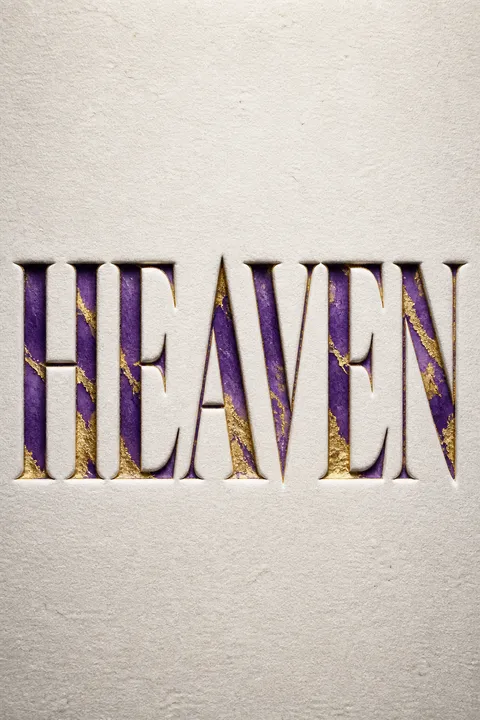


Key Takeaways
Picture Heaven as a renewed Earth, not an escape from embodiment.
The destination is material. Alcorn argues that the Bible’s final picture is not souls leaving the physical world behind. In Revelation, the New Jerusalem descends, and God comes to live among people. The lasting home is a renewed Earth in a renewed universe, inhabited by resurrected people and Christ. Salvation, in this account, means not evacuation from a failed planet but restoration of the world God made.
Eden’s story continues. Genesis opens with people in a garden, caring for creation; Revelation closes with a city, a river, a tree, nations, and open gates. Alcorn reads this as deliberate continuity: Paradise repaired and enlarged. The physical restoration is his central theological claim, while many details of the future world remain interpretation.
What is striking is how this vision joins spiritual hope to the fate of material creation. It gives ordinary physical life theological weight, from land and bodies to food and culture. That connection can support a serious ethic of care for the present world without confusing conservation with salvation. The text’s strongest claim is that embodiment belongs to Christian hope. Its specific descriptions of future geography are less certain, so readers can accept the central argument without treating every imagined feature as revealed fact.
Treat the Heaven after death as a waiting place, not home.
Two stages, two settings. Alcorn distinguishes the present Heaven, where Christians go after death, from the final Heaven: life with God on the New Earth after resurrection. The first is an intermediate state, a temporary interval before Christ’s return, bodily resurrection, judgment, and renewal of creation. Confusing the two makes the afterlife seem like a permanent existence as a disembodied spirit.
Hope remains relational. Alcorn reads biblical accounts as showing that people in the present Heaven are conscious, retain personal identity, and remember earthly life. In Revelation, martyrs ask God when justice will come and are told to wait. The passage suggests awareness of events on Earth, though it does not establish precisely how much the dead can see or know.
The distinction prevents a common category error: treating a temporary state after death as the whole Christian account of eternity. It also helps explain why resurrection matters rather than serving as a decorative belief. The evidence for conscious life after death is interpreted differently across Christian traditions, and the martyrs’ vision may not settle every question about ordinary experience in Heaven. Alcorn’s useful contribution is the larger structure: death is a passage, resurrection is not optional, and the final hope concerns a renewed creation.
Use Scripture to imagine the shore, without inventing its coastline.
Imagination needs an anchor. Alcorn argues that biblical descriptions give readers real material for picturing Heaven: a garden, a city, a kingdom, bodies, meals, and a renewed Earth. These images are not a complete map, but neither are they empty metaphors. He urges readers to let Scripture stimulate imagination while acknowledging that human ideas can be mistaken.
Fog can hide the finish. In 1952, swimmer Florence Chadwick attempted to cross from Catalina Island to mainland California. After fifteen hours in cold, foggy water, she stopped, unaware that shore was less than half a mile away. Alcorn uses the story to show how a visible destination can sustain effort. His point is not that imagination proves Heaven, but that revealed images can make hope more concrete.
The argument recognizes a real feature of motivation: people find distant goals easier to pursue when they can form a meaningful picture of them. Here, imagination is disciplined by a text rather than treated as free invention. That boundary matters. The swimmer’s story illustrates the emotional power of a visible horizon, but it cannot verify the theology itself. The most responsible use of this approach is to distinguish what the text states, what it implies, and what remains a reader’s imaginative possibility.
Expect resurrection to restore your body and identity, not erase them.
The same person, transformed. Alcorn treats the bodily resurrection of Jesus as the model for human resurrection. After rising, Jesus could be touched, recognized, and seen eating with his disciples. His body was changed, yet continuous with the one that had died. Alcorn applies that pattern to people: resurrection restores embodied life rather than replacing each person with a different being.
Continuity makes reunion meaningful. Memory, history, personality, and relationships are part of identity, so the book argues that they are not simply erased. The change is profound: disease, sin, and death are removed. Alcorn calls this redemptive continuity, the transformation of a person without loss of the person. He cautions that resurrection bodies will be renewed, but does not claim to know every detail of their appearance or abilities.
This account addresses a deep philosophical problem: if an afterlife contains no continuity with a person’s embodied history, in what sense is that person saved? The emphasis on bodily identity also resists reducing disability or aging to a person’s essence. At the same time, continuity is not a simple biological claim. The text does not explain exactly what preserves identity through bodily decay, and its confidence rests on theological commitments about God’s power. Its pastoral force lies in promising restoration without declaring the present self disposable.
God’s rescue reaches creation itself, not only individual souls.
The scope is cosmic. Alcorn reads Romans 8 as linking human and earthly destinies. Creation is pictured as suffering under decay and awaiting liberation alongside the resurrection of God’s children. The Fall affects more than individual morality; redemption therefore reaches bodies, animals, land, and the wider universe. The New Earth is not a replacement unrelated to this one, but a creation cleansed and renewed.
Restoration answers the damage. The book draws on the Bible’s language of redeeming, renewing, reconciling, and restoring. These terms suggest recovery of what was good but damaged, not abandonment of God’s original project. Alcorn uses childbirth as an image for creation’s groaning: pain is real, yet it points toward a new life rather than a meaningless end.
This expansive account links salvation to ecological and social questions by making the nonhuman world part of the moral story. It challenges a spirituality that treats nature as disposable scenery. The argument also benefits from a systems perspective: humans and environments affect one another, so their imagined futures cannot be cleanly separated. A caution is warranted around claims that every feature of present nature, including specific forms of decay, began with human sin. The larger theological point, that creation matters to redemption, does not depend on resolving every scientific question about origins.
Carry your craft, work, and cultural gifts toward God’s renewed world.
Work predates the Fall. In Genesis, Adam is placed in the garden to care for it before sin enters the story. Alcorn therefore treats labor itself as good, while toil, frustration, and exploitation are consequences of the Curse. Revelation’s image of God’s servants serving him supports his view that meaningful activity continues in the final world.
Culture is part of stewardship. The book expects human creativity, skill, and cultural achievement to be purified rather than erased. It points to Scripture’s accounts of skilled artisans making the Tabernacle and to Revelation’s picture of nations bringing their splendor into the New Jerusalem. Alcorn imagines work, art, learning, and technology continuing without corruption. The broad principle is grounded in his theology; specific future occupations or inventions are conjecture.
This perspective offers a strong corrective to the idea that spiritual maturity requires contempt for making things. It treats craftsmanship and vocation as possible forms of service, not merely ways to earn money. That can dignify work often dismissed as secular. Yet continuity should not be mistaken for a guarantee that current industries or institutions survive unchanged. Technologies and cultures carry both human ingenuity and harm. The book’s more defensible claim is that creativity is good in itself when rightly directed, while its final form remains unknown.
Make God the center; every other heavenly joy depends on him.
Presence is the central promise. Alcorn places seeing and knowing God above every other pleasure of Heaven. The theological term beatific vision means the blessed sight of God, understood as the deepest source of joy. Revelation’s promise that God will dwell with people is the heart of the book’s picture of eternity, not a footnote to its descriptions of nature or society.
Created joys still matter. Alcorn argues that food, friendship, beauty, and recreation need not compete with God. They can be received as gifts that reveal something of their giver. His analogy is a friend who brings a meal: the food is enjoyable, but the friendship is the deeper good and the source of the gift. Gratitude, rather than rejection of physical pleasure, is the proper response.
The argument avoids a false choice between devotion to God and delight in created things. In philosophical terms, it treats finite goods as participatory: they have value, but their value is not self-originating. That framework can challenge consumerism without demanding ascetic suspicion of every pleasure. It also leaves a useful question: how can people tell gratitude from idolatry in everyday life? Alcorn’s answer is that enjoyment should deepen attention to God rather than replace it, a demanding test that applies as much to religious ambition as to material comfort.
Expect active, social life in eternity, not endless passive worship.
Human life stays human. Alcorn expects the New Earth to include relationships, conversation, learning, rest, meals, and work. He argues that worship is broader than singing or attending a service: ordinary activities can honor God when done with gratitude. Scripture’s pictures of a city, nations, feasts, and people serving God support a lively social world rather than an eternity of inactivity.
Difference is not a defect. The book anticipates distinct personalities, cultures, languages, interests, and relationships, though free from hostility and sin. It also argues that time and space remain meaningful because resurrected people are finite creatures. Details such as particular sports, animals, or modes of travel are possibilities Alcorn imagines, not promises equally explicit in Scripture.
The account’s human scale is its strength: hope becomes imaginable through companionship, discovery, and purposeful activity rather than abstract bliss. It also frames community as compatible with individuality, a valuable counter to visions of salvation as absorption into sameness. Still, not every institution or preference should be projected unchanged into eternity. Human practices can encode exclusion as well as joy. The distinction between enduring human capacities and historically contingent arrangements is essential if this vision is to welcome cultural variety without canonizing every feature of present society.
Let future restoration make present faithfulness worth the cost.
Today’s work matters. Alcorn connects resurrection hope with Paul’s instruction to remain committed to work done for God. If people and creation are carried into a renewed world, faithful service is not wasted. The book emphasizes acts easily overlooked: caring for children, helping the poor, giving, praying, and serving without recognition. These are not payments that buy salvation; they are forms of faithfulness that matter to God.
Hope changes the measure. The promise of a restored Earth gives suffering and sacrifice a horizon beyond immediate outcomes. Alcorn argues that believers may relinquish some pleasures or opportunities now without believing that goodness is lost forever. He distinguishes salvation, received through Christ rather than earned by deeds, from rewards associated with faithful service. Future hope is meant to encourage perseverance, not indifference to present suffering.
The structure resembles a long-horizon account of motivation: actions become intelligible when immediate costs are evaluated against a larger future. That can sustain care when recognition is absent and results are delayed. The distinction between grace and reward is crucial, since otherwise the framework could turn moral life into spiritual bookkeeping. A further test is whether hope makes people more attentive to present harms or more willing to tolerate them. Alcorn argues for the former: future justice should deepen service now, not excuse neglect.
Do not presume Heaven; receive Christ’s offer while life remains.
The invitation is not automatic. Alcorn’s Christian framework holds that sin separates people from God and that no one earns Heaven through religion or moral achievement. He presents Jesus’ death and resurrection as the means of forgiveness, received through faith. The book insists that readers should not assume they are headed for Heaven simply because a funeral, church attendance, or good deeds suggest it.
Certainty is possible. Alcorn cites the biblical claim that believers can know they have eternal life. He uses a wedding-reception story to make the point: a singer who performed at the ceremony was excluded because she had not confirmed her invitation. The analogy presses for a personal response to Christ. The book treats Heaven and Hell as real, lasting destinations, and urges a decision rather than postponement.
This conclusion gives the book its evangelistic urgency and makes clear that its picture of Heaven depends on a particular Christian theology of salvation. Its emphasis on grace counters the idea that social respectability or religious performance guarantees acceptance. Its stark account of Hell is also a contested doctrine among Christians, with disagreements about its nature and duration. A persuasive presentation therefore needs both conviction and humility: the stakes are serious within the book’s framework, and the human consequences of how that claim is communicated are serious as well.
Analysis
Alcorn’s central achievement is architectural. He connects doctrines that are often kept in separate compartments: creation, incarnation, resurrection, redemption, and the final state. Once resurrection is treated as bodily rather than metaphorical, a physical destination becomes coherent; once the destination is a renewed Earth, labor, culture, relationships, and ecology acquire lasting significance. Heaven stops functioning as a vague consolation and becomes the completion of a story that begins in Eden. This gives the book considerable pastoral power, especially for readers facing death, disability, grief, or dissatisfaction with thin images of eternity.
The argument’s strongest distinction is between its central theological thesis and its imaginative extensions. The claim that Christian hope includes resurrection and renewed creation has substantial biblical support within Alcorn’s interpretive approach. Claims about pets, specific technologies, time travel, resurrected cultural artifacts, or future interplanetary rule are much more inferential. The book sometimes moves quickly from physical imagery in Scripture to concrete forecasts. A careful reader can preserve its imaginative vitality while marking levels of confidence: explicit teaching, reasonable inference, and speculation.
Its critique of Christoplatonism is most persuasive when aimed at disdain for bodies and matter. It is less persuasive if every symbolic reading is treated as a disguised rejection of physical reality. Biblical imagery can be both material and symbolic, and apocalyptic writing requires interpretation rather than a simple literal-versus-figurative choice. The book itself recognizes this in principle, though its polemical energy can blur the boundary.
The broader ethical implication is substantial. If creation is not disposable, care for bodies, animals, places, and cultural work can be understood as participation in a redemptive purpose. Yet future restoration must not become an excuse to minimize present injustice or environmental damage. Alcorn’s best practical lesson is that hope should enlarge responsibility. The anticipated world is not an alternative to faithful life now; it is the horizon that gives that life its shape.
Review Summary
People Also Read







Glossary
Christoplatonism
Matter-spirit splitAlcorn’s term for a Christianized version of Platonism that treats spiritual reality as superior to physical reality and the body or material world as an obstacle to spiritual life. He argues that this outlook distorts biblical teaching about bodily resurrection and the renewed Earth by making Heaven seem disembodied and nonphysical.
redemptive continuity
Identity through transformationAlcorn’s description of how God renews rather than discards what has been damaged. People remain themselves through conversion and resurrection, though freed from sin and decay; likewise, the New Earth remains connected to the present creation while being radically transformed. The term emphasizes continuity alongside profound change.
intermediate state
Life between death and resurrectionThe temporary condition between a person’s death and the final resurrection. In Alcorn’s account, Christians who die enter the present Heaven, where they are conscious and with Christ, while awaiting bodily resurrection, final judgment, and the renewed creation. It is distinct from the permanent life on the New Earth.
New Earth
Creation renewed for eternal lifeAlcorn’s name for the future, restored Earth where resurrected people will live with Christ. It is not an unrelated replacement world or a disembodied spiritual realm, but the present creation cleansed and transformed. In this final state, God dwells with humanity, and sin, death, suffering, and the Curse are gone.
beatific vision
Seeing God in joyA theological term for the blessed vision of God. Alcorn uses it for the central joy of eternal life: knowing and seeing God without the barriers of sin. This joy does not eliminate created pleasures or relationships. Rather, God is their ultimate source, and rightly enjoyed gifts direct attention back to him.
Download PDF
Download EPUB
.epub digital book format is ideal for reading ebooks on phones, tablets, and e-readers.








