Plot Summary
Two Crowns, One Fate
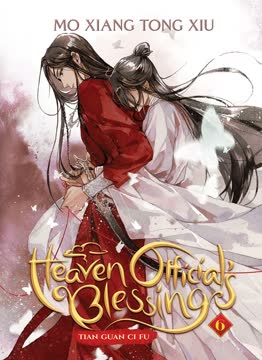
Xie Lian, once the beloved Crown Prince of Xianle, now a twice-fallen god, is summoned to the Heavenly Court. There, he meets Lang Qianqiu, the newly ascended Crown Prince of Yong'an—the kingdom that rose from Xianle's ashes. Their encounter is tense, shadowed by the history of their nations and the silent judgment of the gods. Xie Lian, used to isolation and scorn, faces suspicion over his connection to the infamous ghost king, Hua Cheng. The court's politics swirl around them, and the fate of both princes seems inextricably linked, their pasts and futures bound by the weight of history and the eyes of heaven.
Ghost City's Crimson King
Xie Lian, with the Wind Master Shi Qingxuan, infiltrates Ghost City, a den of vice ruled by the enigmatic Hua Cheng—Crimson Rain Sought Flower. The city teems with masked ghosts, bizarre spectacles, and deadly games. Xie Lian is separated from his companions and drawn into the city's heart, where the line between danger and allure blurs. Hua Cheng's presence is everywhere, his power absolute, his interest in Xie Lian unmistakable. Amidst the city's madness, Xie Lian must navigate both peril and the ghost king's mysterious affection, all while searching for a missing heavenly official.
Dice, Luck, and Longing
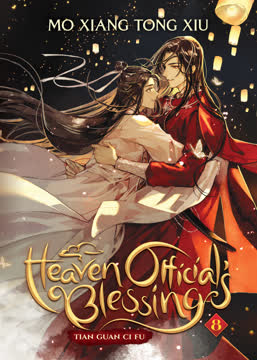
In the infamous Gambler's Den, Xie Lian is swept into a high-stakes game where fortunes—and lives—are wagered. Hua Cheng, hidden behind a red curtain, orchestrates the games with a languid, dangerous grace. When Lang Qianqiu's identity is exposed, he is captured as a prize, and Xie Lian must gamble for his freedom. The dice become a symbol of fate, luck, and the unspoken bond between Xie Lian and Hua Cheng. Their hands touch, and the world narrows to the rattle of dice and the heat of a gaze, as longing and trust flicker in the shadows.
Paradise Manor's Invitation
After the chaos of the den, Xie Lian is summoned to Paradise Manor, Hua Cheng's private sanctuary. The manor is opulent yet empty, a reflection of its master's loneliness. Here, the two share a rare moment of peace, discussing swords, homes, and the meaning of belonging. Hua Cheng's true form is revealed, older and more striking, his vulnerability laid bare. A gift—a ring—passes between them, a silent promise. Yet, beneath the warmth, danger simmers: the missing official's trail leads to secrets hidden within the manor's depths, and trust is tested by the shadows of the past.
Bandaged Boy's Secret
Xie Lian encounters a boy wrapped in bloodied bandages, a living remnant of the Human Face Disease that once ravaged Xianle. The boy, Lang Ying, is mute with trauma, his face a map of suffering. Xie Lian's compassion draws him in, and he vows to care for the child, sensing a connection to his own lost kingdom. Yet, the boy's origins are tangled with Yong'an, and his presence stirs old nightmares. As Xie Lian tends to his wounds, the scars of history—personal and national—bleed anew, and the line between savior and sinner blurs.
Armory of Silver and Blood
Hua Cheng unveils his armory to Xie Lian, a treasure trove of legendary weapons. Among them is Eming, the sentient, cursed scimitar feared by gods. The blade's playful affection for Xie Lian belies its bloody history. As they discuss swords and the burdens they carry, Xie Lian is reminded of his own past as a martial god and the violence that haunts him. The armory becomes a stage for trust and temptation, as well as a foreshadowing of the conflicts to come—where loyalty, power, and love are all edged with danger.
Night of Borrowed Luck
Xie Lian and Shi Qingxuan, disguised and desperate, navigate the labyrinth beneath Paradise Manor. Relying on luck—some of it borrowed from Hua Cheng—they face deadly traps, monstrous earthworms, and illusions. Each roll of the dice determines their fate, echoing the uncertainty of their mission and the fragility of trust. The journey tests their resolve and their friendship, as well as Xie Lian's guilt over deceiving Hua Cheng. In the darkness, the boundaries between ally and enemy, truth and lie, grow thin, and every step forward is a gamble.
Gambler's Den, Heart's Game
The den's games become a metaphor for the risks Xie Lian and Hua Cheng take with each other. As Xie Lian is forced to bet with nothing but a half-eaten bun, Hua Cheng's willingness to lose for his sake becomes a silent confession. The crowd watches, but the true stakes are invisible: trust, vulnerability, and the hope for redemption. The den's chaos mirrors the turmoil in Xie Lian's heart, as he grapples with his feelings for Hua Cheng and the consequences of their entanglement.
Truths Unveiled in Fire
The search for the missing official leads to a confrontation in the armory, where secrets ignite into violence. Allies and enemies clash, and the armory is set ablaze—a symbol of both destruction and revelation. Xie Lian, caught between old friends and new loyalties, is forced to act, absorbing the pain of others to prevent greater tragedy. The fire consumes Paradise Manor, leaving only ashes and regret. In the aftermath, relationships are tested, and the cost of truth becomes painfully clear.
The Gilded Banquet's Shadow
The truth behind the infamous Gilded Banquet is dragged into the light. Lang Qianqiu, haunted by the slaughter of his family, confronts Xie Lian, who is accused of being the State Preceptor Fangxin—the architect of Yong'an's ruin. The court demands answers, and Xie Lian, weary and resigned, confesses to crimes he did not commit, choosing to bear the burden alone. The shadow of the banquet stretches across generations, poisoning hope and fueling vengeance. In the face of hatred, Xie Lian's compassion becomes both his strength and his curse.
Cousins, Enemies, Kin
Qi Rong, Xie Lian's cousin and the notorious Green Ghost, emerges as both tormentor and mirror. Their shared blood is a source of pain, their choices shaped by love, envy, and loss. Qi Rong's madness is a dark reflection of Xie Lian's own suffering, and their confrontations are laced with both cruelty and desperate affection. The past refuses to die, and the bonds of kinship become chains, binding them to cycles of violence and regret.
The Star of Solitude
The bandaged boy's fate is revealed: he bears the Star of Solitude, destined to bring ruin to all around him. The Royal Holy Temple's masters demand his exile, but Xie Lian refuses, embracing the child despite the risk. The act of kindness becomes an act of defiance, challenging the fatalism of the world. Yet, the cost is high: disaster follows, and the palace burns. Xie Lian's determination to save even one lost soul becomes both his greatest virtue and the seed of his downfall.
The Path of Defiance
Xie Lian is confronted with impossible choices: to save one is to doom another, to act is to invite disaster. The State Preceptor's riddle—two people, one cup of water—becomes a metaphor for the limits of compassion. Xie Lian chooses a third path, refusing to accept the world's cruelty. His defiance sets him apart, earning both admiration and suspicion. The path he walks is lonely, but he refuses to bow, even as the heavens themselves seem to turn against him.
Swords, Scars, and Salvation
The scars of the past—physical and emotional—are laid bare. Xie Lian's memories of his kingdom's fall, his parents' deaths, and his own failures haunt him. Yet, in moments of pain, he finds solace in small acts of kindness, in the touch of a hand, in the promise of a better future. The sword becomes both a weapon and a burden, a symbol of the price paid for salvation. In the end, it is not victory but endurance that defines him.
The God Who Pleases None
Xie Lian's third ascension is met with suspicion and scorn. The gods of heaven see him as a joke, a failure, a threat. Yet, he persists, collecting scraps, helping the forgotten, refusing to abandon hope. His compassion is misunderstood, his strength overlooked. In the eyes of the world, he pleases no one—but in the quiet moments, he finds meaning in the lives he touches, however briefly.
Fate's Cup, Heaven's Choice
The State Preceptor's lesson lingers: fate is a cup with limited water, and not all can be saved. Xie Lian's refusal to accept this truth sets him at odds with the world. The gods debate, the mortals suffer, and the cycle of ascension and fall continues. In the end, the choice is not between right and wrong, but between hope and despair. Xie Lian chooses hope, even when it means standing alone.
The Price of Kindness
Every act of compassion carries a cost. Xie Lian's efforts to save others often lead to greater suffering—for himself, for those he loves, for the world. Yet, he cannot stop. The price of kindness is loneliness, misunderstanding, and pain. But it is also the only thing that gives his life meaning. In the ashes of failure, he finds the seeds of redemption.
Ascension and Ashes
The story ends where it began: with Xie Lian, alone, facing the ruins of his past and the uncertainty of his future. The palace is gone, the kingdom lost, but the will to rise remains. Ascension is not a reward, but a burden; to fall is not the end, but a chance to begin again. In the end, Xie Lian's journey is not about pleasing gods or saving kingdoms, but about finding the courage to keep walking, no matter how many times he falls.
Characters
Xie Lian
Once the adored Crown Prince of Xianle, Xie Lian's journey is one of repeated ascension and fall, marked by tragedy, exile, and ridicule. His compassion is boundless, often to his own detriment, as he refuses to abandon even the most cursed or reviled. Haunted by the collapse of his kingdom and the suffering of his people, he carries immense guilt and a deep sense of responsibility. His relationships—with friends, enemies, and especially Hua Cheng—are shaped by his refusal to give up on others or himself. Over time, Xie Lian's resilience becomes his defining trait: he endures scorn, loss, and pain, yet continues to act with kindness, even when the world offers none in return. His development is a testament to the power of hope and the cost of true empathy.
Hua Cheng
The Crimson Rain Sought Flower, Hua Cheng is a supreme ghost king feared by gods and worshipped by ghosts. His power is matched only by his singular devotion to Xie Lian, whom he has admired since youth. Hua Cheng's demeanor is a blend of playful mischief and deadly seriousness; he is both a protector and a tempter, testing Xie Lian's boundaries while offering unwavering support. His past is shrouded in pain and loneliness, and his affection for Xie Lian is both redemptive and possessive. Hua Cheng's actions—whether burning down his own manor or risking all to save Xie Lian—reveal a heart that is both wounded and fiercely loving. His development is a gradual unveiling of vulnerability, trust, and the longing for acceptance.
Lang Qianqiu
The Crown Prince of Yong'an and later Martial God of the East, Lang Qianqiu is defined by his black-and-white sense of justice and his struggle to reconcile the horrors of his past. The massacre of his family at the Gilded Banquet leaves him traumatized and obsessed with vengeance. His relationship with Xie Lian is fraught: once student and teacher, now adversaries bound by tragedy. Lang Qianqiu's journey is one of painful awakening, as he learns the complexity of truth, the weight of forgiveness, and the cost of hatred. His innocence is both his strength and his weakness, and his eventual confrontation with the past is a crucible that shapes his future.
Shi Qingxuan
The Wind Master, Shi Qingxuan is a rare source of levity and warmth in the heavens. Fluid in gender and form, they are sociable, open-hearted, and unafraid to stand up for justice—even against more powerful gods. Their friendship with Xie Lian is marked by genuine affection and a willingness to risk their own safety for others. Beneath the playful exterior lies a deep sense of responsibility and a keen understanding of the world's cruelties. Shi Qingxuan's development is a testament to the power of kindness, adaptability, and the courage to do what is right, even when it is unpopular.
Feng Xin
Once Xie Lian's bodyguard and now the Martial God of the Southeast, Feng Xin is defined by his unwavering loyalty and his quick temper—especially when it comes to injustice or those he cares about. His relationship with Xie Lian is complex: a mix of admiration, frustration, and deep-seated affection. Feng Xin's sense of duty often puts him at odds with the politics of heaven, and his straightforward nature makes him both a reliable ally and a frequent target of ridicule. His development is a journey from servitude to self-respect, learning to balance loyalty with self-worth.
Mu Qing
The Martial God of the Southwest, Mu Qing's history as Xie Lian's former servant colors his every action. He is sharp-tongued, easily slighted, and deeply insecure, masking his longing for recognition with aloofness and sarcasm. His rivalry with Feng Xin and his complicated feelings toward Xie Lian drive much of his behavior. Mu Qing's development is a slow, painful process of confronting his own envy, pride, and the wounds of the past. Beneath his cold exterior lies a desperate need to be seen and valued.
Qi Rong
The Green Ghost, Qi Rong is both Xie Lian's cousin and his tormentor. His obsession with Xie Lian is twisted by jealousy, resentment, and a desperate need for attention. Qi Rong's actions—ranging from petty cruelty to monstrous violence—are driven by a warped sense of love and kinship. He is both a mirror and a warning to Xie Lian: what happens when pain curdles into hatred. Despite his villainy, Qi Rong's madness is rooted in loss and longing, making him a figure of both horror and pity.
Lang Ying
The bandaged boy, later named Lang Ying, is a living embodiment of the suffering left in the wake of Xianle and Yong'an's conflict. Mute, traumatized, and shunned for his appearance, he clings to Xie Lian's kindness as a lifeline. His presence forces Xie Lian to confront the consequences of his actions and the limits of compassion. Lang Ying's development is a fragile journey toward trust, healing, and the hope of belonging.
Jun Wu
The Emperor of Heaven, Jun Wu is the ultimate authority in the celestial realm. His demeanor is calm, patient, and seemingly impartial, but beneath the surface lies a complex web of motives and affections—especially toward Xie Lian. Jun Wu's guidance is both a source of support and a subtle form of control, shaping the destinies of gods and mortals alike. His development is a study in the loneliness of leadership and the cost of maintaining order in a world of chaos.
State Preceptor Mei Nianqing
The Chief State Preceptor of Xianle, Mei Nianqing is both Xie Lian's mentor and a father figure. His teachings are laced with riddles and hard truths, challenging Xie Lian to think beyond dogma and tradition. He is both supportive and critical, pushing Xie Lian to grow while warning him of the world's harsh realities. His development is a reflection of the limits of wisdom and the pain of watching a beloved student suffer.
Plot Devices
Duality of Fate and Choice
The narrative is structured around the tension between destiny and agency. Xie Lian's repeated ascensions and falls, the intertwined fates of Xianle and Yong'an, and the curse of the Star of Solitude all serve as metaphors for the limits of human will. The story uses foreshadowing—such as the riddle of the cup of water, the dice games, and the recurring motif of borrowed luck—to explore whether compassion can overcome fate, or whether every act of kindness is doomed to bring suffering. The structure alternates between present action and flashbacks, gradually revealing the layers of trauma, guilt, and hope that define the characters. The use of unreliable narration—especially in the retelling of the Gilded Banquet and the shifting blame for past tragedies—forces both characters and readers to question the nature of truth and the possibility of redemption.
Masks, Disguises, and Hidden Selves
Characters frequently wear masks—literal and figurative—to hide their pain, their intentions, or their true selves. Hua Cheng's shifting forms, Xie Lian's roles as prince, god, and beggar, and the disguises used in Ghost City all serve to blur the line between appearance and reality. The motif of the mask is also used to explore vulnerability: to remove the mask is to risk rejection, but also to invite intimacy. The narrative uses dramatic irony, allowing the reader to see the truth behind the masks even when the characters cannot.
Cycles of Ascension and Fall
The story is structured around cycles: kingdoms rise and fall, gods ascend and are banished, kindness is rewarded with suffering. This cyclical structure is reinforced by the repetition of key events—the burning of palaces, the saving of children, the confrontation with fate. The use of parallelism—between Xie Lian and Lang Qianqiu, between past and present, between gods and ghosts—emphasizes the universality of suffering and the possibility of renewal. The narrative's refusal to offer easy answers or permanent victories is both a source of tragedy and a testament to the resilience of hope.
The Power and Peril of Compassion
Xie Lian's defining trait—his refusal to abandon anyone, no matter how cursed or reviled—is both his greatest strength and his undoing. The story uses this motif to explore the limits of empathy: can one person save the world, or does every act of kindness simply shift the burden elsewhere? The consequences of compassion—seen in the fate of the bandaged boy, the burning of the palace, and the endless cycle of suffering—force both characters and readers to confront the cost of doing good in a broken world.
Analysis
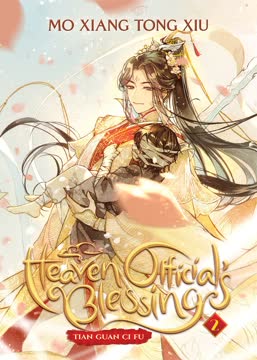
Heaven Official's Blessing Vol. 2 is a profound meditation on the nature of compassion, fate, and the cost of hope in a world shaped by cycles of suffering and renewal. Through the intertwined stories of Xie Lian, Hua Cheng, and the kingdoms of Xianle and Yong'an, the novel interrogates the limits of kindness: is it possible to save others without dooming oneself, or is every act of mercy a seed of future tragedy? The narrative's structure—alternating between present action and the haunted past—mirrors the characters' struggles to reconcile who they were with who they wish to become. The use of masks, dice, and games of chance underscores the uncertainty of life and the impossibility of controlling fate. Yet, the novel refuses nihilism: Xie Lian's resilience, his refusal to abandon even the most cursed, and his ability to find meaning in small acts of goodness offer a radical vision of hope. The story suggests that true divinity lies not in power or perfection, but in the courage to keep walking, to keep loving, even when the world offers only ashes in return. In a modern context, the book resonates as a call to empathy, endurance, and the quiet heroism of those who choose kindness, no matter the cost.
Last updated:
Review Summary
Heaven Official's Blessing receives high praise from readers, with an average rating of 4.65 out of 5. Fans adore the slow-burn romance between Xie Lian and Hua Cheng, praising their chemistry and character development. The book's vivid world-building, intricate plot, and beautiful artwork are frequently mentioned. Many readers express emotional investment in the characters and story, highlighting the novel's ability to evoke both laughter and tears. Some reviewers note the complex themes of hope, self-sacrifice, and redemption. The gambling den scene is particularly popular among fans.
天官赐福 [Tiān Guān Cì Fú] Series