Plot Summary
Kiln's Secret Unsealed
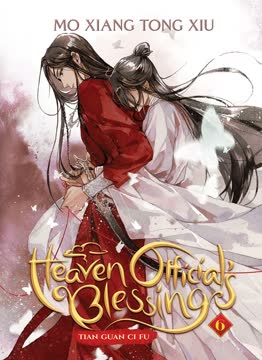
Trapped in the suffocating heat of the Kiln, Xie Lian faces White No-Face, whose mask and words drip with ancient malice. Through a tense exchange, Xie Lian deduces that White No-Face is the fallen Crown Prince of Wuyong, a being whose pain and ambition echo his own. The Kiln, a crucible of suffering and memory, becomes the stage for this revelation. As Xie Lian struggles against the mask's grip and White No-Face's psychological games, he glimpses a hidden, colossal statue—his own likeness, carved by Hua Cheng in the depths of despair. With a surge of spiritual power and the statue's aid, Xie Lian shatters the Kiln's seal, breaking free into the blinding cold, where Hua Cheng's embrace awaits, trembling with relief and love.
Divine Statue's Awakening
The world outside the Kiln is chaos: the mountain quakes, snow and lava threaten to consume all. Xie Lian and Hua Cheng, standing atop the giant divine statue, realize White No-Face has survived and the souls of Wuyong's dead are unleashed. The statue, animated by their combined spiritual power and love, becomes both shield and vessel for escape. Yet, exhaustion looms—spiritual power wanes, and the statue falters. In a desperate, intimate moment, Hua Cheng revives Xie Lian with a kiss, lending him strength. Together, they command the statue to run, carrying friends and allies to safety, even as the world behind them burns and ancient mountain spirits block their path.
Mountain Spirits' Pursuit
The trio of mountain spirits—Old Age, Sickness, and Death—rise to challenge the divine statue, embodying the relentless trials of fate. Xie Lian, Hua Cheng, and their companions are battered and nearly overwhelmed, the statue's sword revealed to be only a hilt, a flaw born of love's oversight. Forced to flee, they gather their scattered friends, including the martial gods, and the statue becomes a vessel of hope and awe for all who see it. The world trembles as the statue, battered but unbroken, carries them toward the next trial, while the barrier of Mount Tong'lu shatters, unleashing new horrors.
Sword of Four Gods
With the barrier broken and the Human Face Disease threatening a new epidemic, Xie Lian and Hua Cheng must act. The martial gods—Pei Ming, Feng Xin, Mu Qing, and Quan Yizhen—combine their powers, transforming into a sword of spiritual light wielded by the statue. In a dazzling display, Xie Lian slashes through the resentful spirits, but exhaustion and injury mount. The statue is crippled by White No-Face, and hope seems lost. Yet, the arrival of Jun Wu, the Heavenly Emperor, brings a blinding light that purifies the sky, and the battle's tide turns, though the true enemy remains hidden.
The Emperor's True Face
As the dust settles, Jun Wu's arrival brings both relief and unease. The martial gods are dispatched to contain outbreaks, but Xie Lian's suspicions grow. Through a series of revelations and confrontations, the truth emerges: Jun Wu and White No-Face are one and the same, the fallen Crown Prince of Wuyong reborn as the Heavenly Emperor. The Great Martial Hall becomes a stage for betrayal and violence, as Jun Wu's power is unleashed, confining the gods and revealing the depth of his pain and ambition. Xie Lian, caught between love and duty, must face the darkness at the heart of heaven.
Human Array of Hope
In the royal capital, Xie Lian and Hua Cheng race to prevent the spread of the Human Face Disease. They seek volunteers to form a human array, a living barrier powered by courage and faith. Rejected by the privileged, they find hope among beggars and the forgotten, led by the Wind Master, Shi Qingxuan, who returns in disguise. The array is tested as resentful spirits descend, but the unity of mortals, cultivators, and gods—spurred by Hua Cheng's cunning—holds firm. The battle is fierce, but the human spirit, when joined in purpose, proves a match for ancient evil.
Wind Master's Return
Shi Qingxuan, once a god, now a beggar, becomes the unlikely hero who rallies the downtrodden to Xie Lian's cause. His humor and warmth break through despair, and his presence rekindles old bonds. Through his efforts, hundreds join the array, and the city's fate hangs on their resolve. The chapter is a testament to the power of friendship, humility, and the enduring will to protect others, even when all seems lost.
The Guoshi's Revelation
The enigmatic Guoshi, Xie Lian's former master, is unmasked as one of Wuyong's Four Guardians. Through his testimony, the tragic history of the Crown Prince of Wuyong is revealed: a god who tried to save his people, only to be betrayed, fall, and become the monster White No-Face. The cycle of hope, failure, and vengeance is laid bare, and Xie Lian must confront the possibility that he, too, could have become such a being. The Guoshi's confession is both a warning and a plea for understanding, as the past and present intertwine.
The Bridge of Suffering
Xie Lian, Mu Qing, and Feng Xin are drawn into the remnants of the Heaven-Crossing Bridge, a symbol of doomed salvation. The bridge, suspended over a sea of lava and resentful spirits, becomes a crucible for their friendship and regrets. As they struggle to survive, old wounds are reopened, and forgiveness is sought and given. The bridge's collapse mirrors the collapse of old dreams, but also the possibility of new beginnings, as the trio's bond is reforged in adversity.
Flames of Karma
The battle reaches its zenith as Jun Wu, now unmasked, unleashes the full fury of his power. The Heaven-Crossing Bridge becomes the arena for a clash of gods, ghosts, and mortals. Xie Lian, empowered by Hua Cheng's unwavering faith and love, shatters the cursed shackles that have bound him for centuries. Together, they break through Jun Wu's white armour, exposing the wounded soul beneath. The fight is brutal, but in the end, it is compassion, not vengeance, that brings resolution, as Jun Wu is finally freed from his torment.
Shattering the White Armour
With Jun Wu defeated, the cycle of suffering is broken. The cursed shackles that bound Xie Lian are destroyed, and the white armour that shielded Jun Wu's pain is shattered. The gods and ghosts who survived bear witness to the end of an era. In the aftermath, forgiveness and understanding begin to heal old wounds. The world, though scarred, is given a chance to start anew, and Xie Lian and Hua Cheng's love stands as a beacon of hope.
Reunion Amid Lanterns
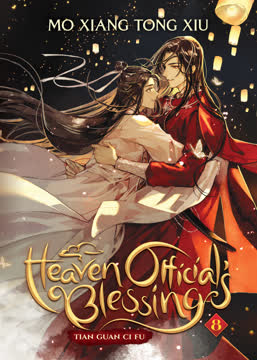
In the quiet that follows chaos, Xie Lian waits patiently for Hua Cheng's return, believing in the promise that love endures beyond time and suffering. Their reunion, beneath a sky filled with Blessings Lanterns, is both tender and triumphant. The world celebrates, and the gods and mortals alike find joy in simple things: food, laughter, and the warmth of companionship. The taste of yuanxiao becomes the taste of reunion, and the story's emotional arc finds its gentle, glowing resolution.
The Ghost King's Birthday
The City of Ghosts prepares for Hua Cheng's birthday, a day he has never celebrated. Xie Lian, anxious to find the perfect gift, seeks advice from friends and ghosts alike, only to realize that sincerity and presence are the greatest gifts. Amid laughter, mishaps, and heartfelt confessions, the celebration becomes a testament to the healing power of love and the joy of being seen and cherished for who one truly is.
The Taste of Yuanxiao
On the night of the Yuanxiao Festival, Xie Lian and Hua Cheng share a simple meal, recalling the taste of home and the comfort of belonging. The city is alive with riddles and laughter, and the two find peace in each other's presence. The taste of yuanxiao, once forgotten, becomes a symbol of reunion and the fulfillment of long-held dreams.
Memory's Gentle Return
In a playful yet poignant interlude, Xie Lian loses his memory and is gently guided back to himself by Hua Cheng's unwavering care. Through riddles, kindness, and the quiet persistence of love, the two rediscover their bond. The journey through memory and identity becomes a metaphor for healing and the enduring nature of true devotion.
Thousand Statues, One Devotion
Deep within the Thousand God Cavern, Xie Lian discovers the countless statues Hua Cheng carved in his likeness, each a testament to centuries of longing and faith. As the statues come to life, the two realize that their love has become legend, a story told in stone and spirit. Together, they create new statues, ensuring that every Xie Lian has a Hua Cheng, and every Hua Cheng is forever devoted to his god.
No Paths Are Bound
In the story's final movement, Xie Lian and Hua Cheng embrace a life of quiet joy, free from the burdens of destiny and the scars of the past. Their love, tested by gods and ghosts, endures as a blessing to the world. The legend of the Scrap Immortal and the Red-Robed Ghost King becomes a tale of hope, teaching that no path is truly bound, and that by the heaven official's blessing, all may find their way home.
Characters
Xie Lian
Once the beloved Crown Prince of Xianle, Xie Lian's journey is one of repeated ascension and devastating fall. His compassion for all, even in the face of betrayal and loss, defines his character. Psychoanalytically, Xie Lian embodies resilience and the refusal to surrender hope, even when the world turns against him. His relationships—with Hua Cheng, his friends, and even his enemies—are marked by empathy and forgiveness. Over the course of the story, Xie Lian confronts his own darkness, accepts his imperfections, and learns that true strength lies not in invincibility, but in the courage to love and be loved, to persist in kindness despite suffering. His arc is a testament to the power of faith, both in others and in oneself.
Hua Cheng
The Crimson Rain Sought Flower, Hua Cheng is a Supreme Ghost King whose love for Xie Lian transcends lifetimes. His devotion is obsessive yet pure, rooted in a childhood encounter that shaped his destiny. Hua Cheng's many faces—trickster, protector, craftsman, and lover—mask a deep vulnerability and longing for acceptance. Psychologically, he is driven by the need to be seen and cherished by the one he worships, willing to sacrifice everything for Xie Lian's happiness. Over time, Hua Cheng learns to accept love in return, allowing himself to be vulnerable and to trust. His journey is one of healing, as he moves from solitary longing to shared joy, his faith in Xie Lian unwavering even in the face of oblivion.
Jun Wu / White No-Face
Once the Crown Prince of Wuyong, Jun Wu's fall from grace is the story's dark mirror to Xie Lian's own path. Betrayed by gods and mortals alike, his attempts to save his people end in disaster, transforming him into White No-Face, a being of resentment and pain. As the Heavenly Emperor, he seeks to control fate, testing and tormenting Xie Lian in hopes of finding a worthy successor—or a companion in suffering. Psychologically, Jun Wu is consumed by the need for validation and the terror of abandonment, his cruelty a mask for profound loneliness. His arc is a cautionary tale of what happens when hope curdles into vengeance, and love is twisted by loss.
Shi Qingxuan
Once the Wind Master, Shi Qingxuan's fall from divinity to beggarhood is marked by grace and humor. Despite loss and hardship, he remains a source of warmth and levity, rallying the downtrodden and inspiring hope. His relationship with Xie Lian and the other gods is one of genuine friendship, unmarred by pride or bitterness. Psychologically, Shi Qingxuan represents the healing power of laughter and the importance of community. His journey is one of acceptance, finding meaning and joy in service to others, and proving that true nobility lies in the heart, not in status.
Guoshi Mei Nianqing
The enigmatic Guoshi, Xie Lian's former master, is revealed as one of Wuyong's Four Guardians, a survivor of ancient tragedy. His life is marked by secrets, betrayals, and the weight of history. Psychoanalytically, Guoshi is driven by guilt and the desperate hope that his mistakes can be redeemed through his disciple. His relationship with Xie Lian is complex—a mix of mentorship, manipulation, and genuine care. Over time, he confesses his failures and seeks forgiveness, embodying the painful necessity of confronting the past to move forward.
Feng Xin
Once Xie Lian's bodyguard and later the Martial God of the South, Feng Xin is defined by his unwavering loyalty and blunt honesty. His relationship with Xie Lian is that of a steadfast friend, willing to endure hardship and humiliation for his sake. Psychologically, Feng Xin struggles with guilt and the burden of unfulfilled promises, particularly regarding Jian Lan and their child. His arc is one of reconciliation—learning to accept his own limitations and to forgive himself for the past.
Mu Qing
The Martial God of the West, Mu Qing's relationship with Xie Lian is fraught with envy, resentment, and unspoken admiration. His pride masks deep insecurity and a longing for recognition. Over the course of the story, Mu Qing confronts his own failings, admits his desire for friendship, and ultimately chooses integrity over self-preservation. His psychological journey is one of self-acceptance, as he learns that vulnerability is not weakness, and that forgiveness—both given and received—is possible.
Pei Ming
The Martial God of the North, Pei Ming is a figure of both scandal and strength. His relationships are marked by passion and regret, particularly with Xuan Ji. Beneath his bravado lies a sense of responsibility and a willingness to atone for past wrongs. Psychologically, Pei Ming embodies the tension between desire and duty, learning to balance personal happiness with the greater good.
Lang Qianqiu
The Crown Prince of Yong'an, Lang Qianqiu's journey is one of loss, anger, and eventual understanding. His quest for vengeance against Qi Rong is complicated by the revelation of deeper truths and the burdens of leadership. Psychologically, he represents the struggle to reconcile justice with mercy, and the pain of growing into one's responsibilities.
Shi Wudu & Shi Qingxuan (Water & Wind Masters)
The Shi brothers' story is one of sacrifice, betrayal, and the limits of power. Shi Wudu's ambition leads to his downfall, while Shi Qingxuan's resilience brings hope. Their relationship is a study in the complexities of familial love and the consequences of choices made in desperation.
Plot Devices
Duality and Mirroring
The story is structured around the duality between Xie Lian and Jun Wu—two crown princes, two gods, two paths diverging at the crossroads of hope and despair. Their mirrored journeys explore the consequences of choice, the nature of suffering, and the possibility of redemption. This device is reinforced through recurring motifs: masks, bridges, and the act of falling and rising. The narrative structure weaves past and present, memory and reality, creating a tapestry where every character's arc reflects and refracts the central themes.
Foreshadowing and Revelation
The novel employs layered foreshadowing, with early hints about White No-Face's identity, the true nature of the Kiln, and the connections between gods and ghosts. Revelations are timed to coincide with moments of crisis, forcing characters to confront uncomfortable truths and reshaping their relationships. The use of masks—literal and metaphorical—serves as both a plot device and a symbol of hidden pain.
Human Array and Collective Action
The formation of the human array, where mortals and gods join hands to resist evil, is both a literal and symbolic device. It demonstrates the power of collective action, the necessity of faith, and the idea that salvation is found not in isolation, but in community. This device recurs throughout the story, as characters repeatedly find strength in each other.
Spiritual Power as Emotional Currency
Spiritual power in the novel is not merely a measure of strength, but a metaphor for emotional connection. The transfer of power—through touch, through trust, through love—becomes a means of healing, sacrifice, and transformation. The shattering of cursed shackles through Hua Cheng's devotion is the ultimate expression of this device.
Narrative Framing and Folklore
The story is framed as a legend, with folk tales, riddles, and bedtime stories blurring the line between myth and lived experience. The Thousand God Cavern, the taste of yuanxiao, and the recurring motif of lanterns all serve to root the narrative in a world where the extraordinary is woven into the fabric of the everyday.
Analysis
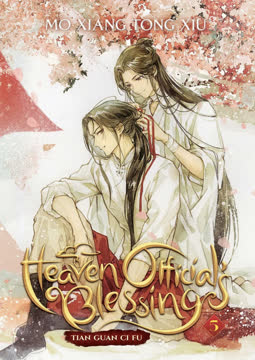
Heaven Official's Blessing Vol. 5 is a sweeping meditation on suffering, hope, and the redemptive power of love. At its heart, the novel asks what it means to persist in kindness when the world is cruel, and whether faith—in oneself, in others, in the possibility of happiness—is ever truly in vain. Through the mirrored journeys of Xie Lian and Jun Wu, the story explores the consequences of choice, the corrosive effects of resentment, and the healing that comes from forgiveness. The narrative's emotional arc is one of descent and ascent: from the depths of the Kiln and the collapse of heaven, to the quiet joy of reunion and the promise of a future unbound by fate. The novel's lessons are clear: that no one is beyond redemption, that love is both wound and balm, and that the paths we walk are shaped not by destiny, but by the courage to keep moving forward. In the end, Heaven Official's Blessing is a celebration of resilience, community, and the belief that, by the heaven official's blessing, no paths are truly bound.
Last updated:
Review Summary
Heaven Official's Blessing receives overwhelmingly positive reviews, with readers praising its compelling characters, intricate world-building, and slow-burn romance between Xie Lian and Hua Cheng. Many appreciate the humor, emotional depth, and gradual revelation of lore. Some readers note pacing issues in certain volumes, particularly the fifth, describing it as filler. However, most fans eagerly anticipate future installments, captivated by the story's blend of action, mystery, and heartwarming moments. The series has garnered a dedicated fanbase who express deep emotional connections to the characters and plot.
天官赐福 [Tiān Guān Cì Fú] Series