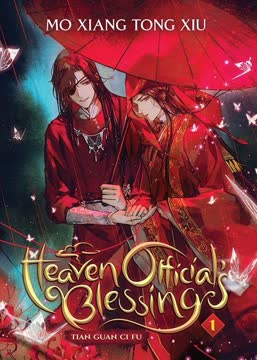
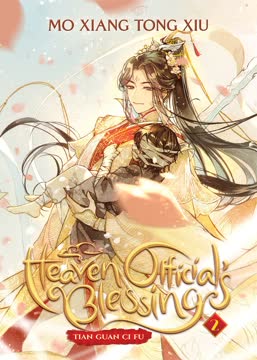
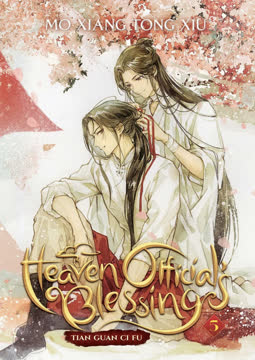
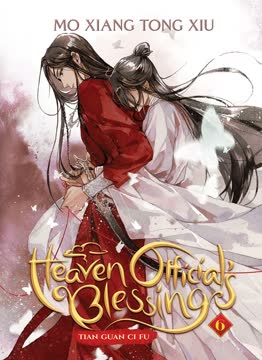
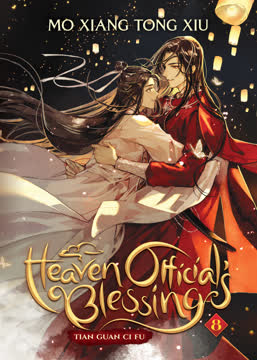
Plot Summary
Two Crowns, One Fate
Xie Lian, once the beloved Crown Prince of Xianle, now a twice-fallen god, is summoned to the Heavenly Court. There, he encounters Lang Qianqiu, the newly ascended Crown Prince of Yong'an—the kingdom that rose from Xianle's ashes. Their meeting is tense, shadowed by the history of their kingdoms and the silent judgment of the other gods. Xie Lian, used to isolation and scorn, faces the coldness of his peers, but remains dignified. The encounter is a reminder that the past is never truly buried, and that the fates of these two princes are inextricably linked, their actions and choices echoing through the heavens and the mortal realm alike.
Ghost City's Crimson King
Xie Lian, accompanied by the lively Wind Master Shi Qingxuan, embarks on a covert mission to Ghost City, the infamous den of spirits and vice ruled by the enigmatic Hua Cheng—Crimson Rain Sought Flower. Disguised and blending with the dead, they witness the city's grotesque wonders: masked ghosts, cannibal markets, and a world where the rules of mortals and gods are upended. Xie Lian is both repulsed and fascinated, but his true purpose is to investigate a missing heavenly official. The city's heart beats to Hua Cheng's will, and Xie Lian senses that every step draws him closer to the ghost king's gaze—and to secrets that will test his trust and resolve.
Dice, Luck, and Longing
In the Gambler's Den, Xie Lian is swept into a deadly game where fortunes and fates are wagered. Hua Cheng, hidden behind a red curtain, presides over the chaos, his presence both alluring and dangerous. When Lang Qianqiu's rash heroism lands him in peril, Xie Lian must gamble for his friend's life. Hua Cheng's guidance is intimate, his touch lingering, and the dice seem to dance to his will. The game becomes a dance of trust and vulnerability, with Xie Lian's heart as much at stake as any prize. In the end, it is not luck but Hua Cheng's quiet affection that tips the scales, leaving Xie Lian both grateful and unsettled by the ghost king's devotion.
Paradise Manor's Invitation
After the chaos of the den, Xie Lian is summoned to Paradise Manor, Hua Cheng's private sanctuary. The manor is a place of opulence and loneliness, filled with treasures and haunted by memories. Here, the mask between them slips: Hua Cheng reveals his true form, older and more striking, and gifts Xie Lian a mysterious ring. Their conversation is gentle, tinged with longing and unspoken promises. Xie Lian is offered comfort, friendship, and a place to belong, but he is also reminded of the gulf between their worlds. The manor is both a refuge and a cage, and Xie Lian leaves with his heart heavier, the lines between god and ghost, friend and something more, blurring.
Bandaged Boy's Secret
Amidst Ghost City's chaos, Xie Lian encounters a bandaged boy—Lang Ying—whose face is marred by the Human Face Disease, a curse from Xianle's tragic past. The boy's fear and pain mirror the wounds of a nation, and Xie Lian's compassion compels him to help. With Hua Cheng's aid, the boy is found and cared for, but his origins are a mystery. Is he a remnant of Xianle, or a victim of Yong'an's rise? The boy's presence stirs old guilt and unresolved grief in Xie Lian, forcing him to confront the consequences of his kingdom's fall and the suffering that lingers in its wake.
Armory of Silver and Blood
Hua Cheng unveils his armory to Xie Lian—a trove of legendary weapons, each with a story of violence and loss. Among them is Eming, Hua Cheng's sentient scimitar, feared by gods and ghosts alike. The blade's playful affection for Xie Lian belies its bloody history. Jun Wu's warnings echo: Eming is a cursed weapon, and Hua Cheng's power is not to be underestimated. Yet, in Hua Cheng's presence, the armory feels less like a threat and more like a testament to his loneliness and longing for connection. Xie Lian is both honored and unsettled, sensing the depth of Hua Cheng's devotion and the danger it brings.
Night of Borrowed Luck
As Xie Lian and Shi Qingxuan delve deeper into Paradise Manor's mysteries, they discover a network of magical doors, each opened by a roll of dice. With luck borrowed from Hua Cheng, they navigate deadly traps—giant worms, cannibal spirits, and illusions—each trial a test of trust and resourcefulness. The journey is harrowing, but also filled with moments of levity and camaraderie. The dice become a symbol of fate's caprice, and Xie Lian realizes that sometimes, survival depends not on strength, but on the kindness and luck others lend him.
Gambler's Den, Heart's Bet
The Gambler's Den becomes the stage for a high-stakes confrontation: Lang Qianqiu's life is wagered, and Xie Lian must outplay Hua Cheng to save him. The game is intimate, their hands entwined, the world watching. Hua Cheng's guidance is gentle, his losses deliberate, and the prize—a half-eaten bun—becomes a token of affection. The crowd is bewildered, but Xie Lian understands: the true bet is not for life or death, but for trust and understanding. In this moment, the boundaries between god and ghost, enemy and ally, blur, and Xie Lian's heart is left trembling with questions he cannot yet voice.
Truths Unveiled in Fire
The search for the missing Earth Master leads to a hidden chamber beneath Paradise Manor. There, Xie Lian and his companions uncover Ming Yi, wounded and imprisoned, and the truth of his double life as a spy. Their escape ignites a catastrophic fire, reducing the manor—and Hua Cheng's carefully guarded secrets—to ashes. The flames consume not only treasures, but also illusions: alliances are tested, betrayals revealed, and the cost of trust becomes painfully clear. Xie Lian is left with a wounded arm and a heavier heart, haunted by the knowledge that every act of kindness or loyalty can be twisted by suspicion and fate.
The Gilded Banquet's Shadow
In the Heavenly Court, Lang Qianqiu confronts Xie Lian with a terrible accusation: that Xie Lian, as the masked State Preceptor Fangxin, slaughtered the Yong'an royal family at the infamous Gilded Banquet. The court is thrown into chaos as old wounds are reopened and loyalties questioned. Xie Lian, weary and resigned, confesses to the crime, seeking banishment rather than further conflict. But the truth is tangled: vengeance, justice, and mercy are all at odds, and the gods' judgments are as flawed as those of mortals. The shadow of the banquet looms over all, a reminder that the past cannot be escaped, only confronted.
Cousins, Enemies, and Ashes
Qi Rong, Xie Lian's cousin and the notorious Green Ghost, emerges as both tormentor and victim. Their shared blood is a curse, binding them in a cycle of resentment and violence. Qi Rong's madness is a mirror to Xie Lian's own guilt and failures, and their confrontation is brutal—words and blows exchanged, old wounds reopened. The destruction of Paradise Manor and the desecration of Xie Lian's mother's tomb are acts of both vengeance and desperation. In the end, neither cousin finds peace, only ashes and the bitter taste of what might have been.
The Star of Solitude
The bandaged boy, Honghong-er, is revealed to bear the Star of Solitude—a fate that brings ruin to all around him. His presence draws calamity: fires, plagues, and the wrath of gods and ghosts. Xie Lian, moved by compassion, refuses to abandon him, even as others demand his exile. The boy's suffering is a reflection of Xie Lian's own: both are marked by misfortune, both long for acceptance. In choosing to protect Honghong-er, Xie Lian defies fate and the will of heaven, embracing the pain and hope that come with true kindness.
The Path of Defiance
Xie Lian is offered a choice: to repent for saving a life, or to let an innocent child bear the blame for misfortune. He refuses both, insisting that right and wrong are not dictated by tradition or fear. His defiance is quiet but unyielding, a declaration that gods and mortals alike must be guided by compassion, not dogma. The State Preceptor warns him that such idealism is dangerous, that the world's water is limited and not all can be saved. But Xie Lian persists, determined to walk his own path, even if it leads to isolation and suffering.
Swords, Scars, and Salvation
The aftermath of fire and accusation leaves Xie Lian battered—his arm mangled, his reputation in tatters. Old friends and rivals, Feng Xin and Mu Qing, confront him with their own grievances and regrets. Their fistfight is a release of years of tension, but also a reminder that even the closest bonds can be strained by pride and pain. Xie Lian's compassion extends even to those who hurt him, and his willingness to bear the blame for others' sins is both his strength and his curse. In the end, it is not victory or vindication that matters, but the quiet act of holding on to hope.
Reunion Beneath Heaven's Gaze
Hua Cheng storms the Heavenly Court, spiriting Xie Lian away in a display of power and devotion. Their flight is both escape and confession: Hua Cheng's feelings are laid bare, his loyalty unwavering. The gods are left in awe and fear, but Xie Lian is torn between gratitude and guilt. Their reunion is tender, but shadowed by the knowledge that love between god and ghost is forbidden, and that every act of kindness may carry a hidden cost. Yet, in Hua Cheng's presence, Xie Lian finds a rare sense of belonging—a fleeting glimpse of the home he has always longed for.
The Price of Kindness
Xie Lian's refusal to abandon those in need—be it a cursed child, a fallen friend, or a tormented ghost—comes at a steep price. His actions invite suspicion, exile, and endless hardship. Yet, he persists, believing that even in a world ruled by fate and power, small acts of mercy can change lives. The story of the two people and the cup of water becomes a parable for his life: he will always try to find a third way, to give another cup, even if the world insists it is impossible. In this, he is both saint and fool, and it is this stubborn hope that sets him apart.
Ascension's Bitter Triumph
Xie Lian's journey comes full circle: from crown prince to fallen god, from savior to outcast, from hope to despair and back again. His ascension is not a reward, but a testament to his resilience and refusal to give up on himself or others. The heavens may judge, the world may scorn, but Xie Lian endures—scarred, weary, but unbroken. His story is not one of victory, but of survival: the quiet, stubborn persistence of a heart that refuses to stop loving, no matter the cost.
Characters
Xie Lian
Once the adored Crown Prince of Xianle, Xie Lian's journey is marked by repeated ascension and exile, each fall etching deeper scars into his soul. His kindness is unwavering, even when it brings him pain; he cannot turn away from suffering, whether it's a cursed child, a fallen friend, or a tormented ghost. Xie Lian's relationships are complex: he inspires devotion in some (Hua Cheng), resentment in others (Qi Rong, Mu Qing), and confusion in many. Psychologically, he is both hopeful and haunted, carrying the weight of his kingdom's fall and the consequences of his choices. His development is a study in endurance—he learns to accept loneliness, to find meaning in small acts of mercy, and to walk his own path, even when it means defying heaven itself.
Hua Cheng
The Crimson Rain Sought Flower, Hua Cheng is a supreme ghost king whose power and reputation inspire awe and terror. Yet, beneath his fearsome exterior lies a heart wholly devoted to Xie Lian. His affection is expressed through acts of service, protection, and subtle gifts—a ring, a home, a borrowed luck. Hua Cheng's past is shrouded in mystery, but his actions reveal a longing for connection and acceptance. Psychologically, he is both confident and vulnerable, his bravado masking deep wounds. His relationship with Xie Lian is transformative: he finds in the fallen god a kindred spirit, someone who sees beyond his monstrous reputation to the lonely soul beneath.
Lang Qianqiu
The Crown Prince of Yong'an, Lang Qianqiu is defined by his sense of justice and his struggle to reconcile the sins of the past with his own ideals. He is quick to act, often without considering the consequences, and his black-and-white worldview is repeatedly challenged by the complexities of history and human nature. His relationship with Xie Lian is fraught: once student and teacher, now adversaries and, perhaps, reluctant allies. Psychologically, Lang Qianqiu is a study in disillusionment—his journey is one of painful growth, as he learns that kindness and justice are not always rewarded, and that forgiveness is harder than vengeance.
Shi Qingxuan
The Wind Master is a rare source of levity and warmth in Xie Lian's world. Sociable and adaptable, Shi Qingxuan moves easily between genders and roles, embracing both the joys and absurdities of life. Their friendship with Xie Lian is genuine, marked by acts of support and self-deprecating humor. Psychologically, Shi Qingxuan is both confident and self-aware, using humor to deflect pain and to build bridges between others. Their presence is a reminder that even in a world of gods and ghosts, laughter and kindness are powerful forms of resistance.
Feng Xin
Once Xie Lian's loyal bodyguard, now the Martial God of the Southeast, Feng Xin is defined by his sense of duty and his fierce protectiveness. His temper is quick, especially when it comes to old rivalries (Mu Qing) or perceived threats to those he cares about. Psychologically, Feng Xin is both simple and deep: he struggles with feelings of inadequacy, guilt, and longing for the past. His relationship with Xie Lian is complicated by pride and regret, but at its core is a deep, unbreakable bond.
Mu Qing
The Martial God of the Southwest, Mu Qing's relationship with Xie Lian is fraught with envy, admiration, and unresolved hurt. Once a servant, now a god, Mu Qing is haunted by feelings of inferiority and a desperate need to prove himself. His sharp tongue and cold demeanor mask a deep longing for acceptance and respect. Psychologically, Mu Qing is a study in self-sabotage: his pride and insecurity often lead him to push others away, even as he craves connection.
Qi Rong
The Green Ghost, Qi Rong is both Xie Lian's cousin and his tormentor. His love is twisted into hatred, his loyalty into cruelty. Psychologically, Qi Rong is a portrait of arrested development: unable to move past childhood grievances, he lashes out at the world, seeking validation through violence and mockery. His relationship with Xie Lian is a mirror of the story's central tragedy: the ways in which love, when warped by pain and pride, can become a source of endless suffering.
Ming Yi
The Earth Master, Ming Yi is a man of few words and many secrets. His double life as a spy reflects his divided loyalties and the heavy cost of survival in a world of shifting allegiances. Psychologically, Ming Yi is guarded, slow to trust, and deeply loyal to those few he allows close. His friendship with Shi Qingxuan is a rare source of warmth, and his suffering is a reminder that even the strongest can be broken by betrayal.
Lang Ying (Bandaged Boy)
The bandaged boy, later named Lang Ying, is a living symbol of Xianle's tragedy—a child marked by a curse, shunned and abused, yet still capable of hope. His relationship with Xie Lian is transformative: through small acts of care, he learns to trust and to believe in the possibility of redemption. Psychologically, Lang Ying is both fragile and resilient, his suffering a testament to the enduring power of compassion.
Jun Wu
The Emperor of Heaven, Jun Wu is the ultimate arbiter of fate and justice. His demeanor is calm, his judgments measured, but beneath the surface lies a complex web of motives and affections. His relationship with Xie Lian is paternal, sometimes indulgent, sometimes stern. Psychologically, Jun Wu is both wise and weary, burdened by the knowledge that even gods are powerless before certain truths.
Plot Devices
Duality of Fate and Choice
The narrative is structured around the tension between destiny and agency: Xie Lian and Lang Qianqiu are both crown princes, both marked by tragedy, yet their choices define their paths. The dice, the games of chance, and the repeated motif of borrowed luck all serve as metaphors for the unpredictability of life and the limits of control. The story uses parallelism—mirrored events, relationships, and betrayals—to highlight the ways in which history repeats, and how individuals can choose to break or perpetuate cycles of suffering.
Masks, Disguises, and Hidden Truths
Disguise is both literal and metaphorical: gods and ghosts change skins, truths are hidden behind lies, and even the most intimate relationships are shadowed by secrets. The motif of the mask—whether the golden mask of the God-Pleasing Martial Warrior or the many faces of Hua Cheng—underscores the difficulty of truly knowing oneself or another. Revelation is often painful, but necessary for growth and reconciliation.
The Cost of Kindness
Xie Lian's refusal to abandon those in need is both his greatest virtue and his greatest vulnerability. The narrative repeatedly tests the limits of mercy: saving a cursed child, forgiving a betrayer, risking exile for a single act of compassion. The story interrogates the price of goodness in a world that rewards power and punishes weakness, asking whether it is possible to remain kind without being destroyed.
Cycles of Ascension and Fall
The structure of the story mirrors its themes: Xie Lian's repeated ascensions and exiles, the rise and fall of kingdoms, the endless turning of fortune's wheel. The narrative uses foreshadowing—visions, prophecies, and the repetition of key events—to suggest that history is both inescapable and open to change. The ultimate message is one of endurance: that to fall is not to be defeated, and that to rise again is an act of hope.
Interwoven Timelines and Memory
The story moves fluidly between present action and memories of the past, using flashbacks and dreams to reveal character motivations and deepen emotional resonance. The interplay of timelines allows for dramatic irony, as the reader often knows more than the characters, and for moments of catharsis, as long-buried truths come to light.
Analysis
Heaven Official's Blessing Vol. 2 is a masterful exploration of the human (and divine) capacity for compassion, endurance, and transformation. At its heart, the novel interrogates the meaning of kindness in a world shaped by suffering and the relentless turning of fate's wheel. Through Xie Lian's journey—from crown prince to outcast, from savior to scapegoat—the story asks whether it is possible to remain true to one's ideals when every act of mercy is punished, every hope betrayed. The relationships at the core—between Xie Lian and Hua Cheng, between friends turned rivals, between gods and mortals—are rendered with psychological depth and nuance, revealing the ways in which love, envy, and regret can both heal and destroy. The narrative's use of parallelism, masks, and games of chance underscores the tension between destiny and agency, suggesting that while we cannot control the hand we are dealt, we can choose how to play it. Ultimately, the novel offers a hard-won optimism: that even in the face of loss and exile, the stubborn persistence of kindness can change lives, and that to ascend is not to escape suffering, but to embrace it with open eyes and an open heart.
Last updated:
Review Summary
Heaven Official's Blessing receives overwhelmingly positive reviews, with readers praising the slow-burn romance between main characters Xie Lian and Hua Cheng (HuaLian). Reviewers highlight the emotional depth, humor, and gorgeous artwork. The Ghost City and gambling den scenes are particularly beloved. Many appreciate Xie Lian's compassionate nature and Hua Cheng's devoted devotion. The flashback sequences revealing young Xie Lian's idealism and the mysterious bandaged boy Honghong-er deeply moved readers. Some note pacing issues and confusing timeline jumps. Overall, fans describe it as an addictive series with complex characters and meaningful themes about hope, sacrifice, and doing what's right.
天官赐福 [Tiān Guān Cì Fú] Series