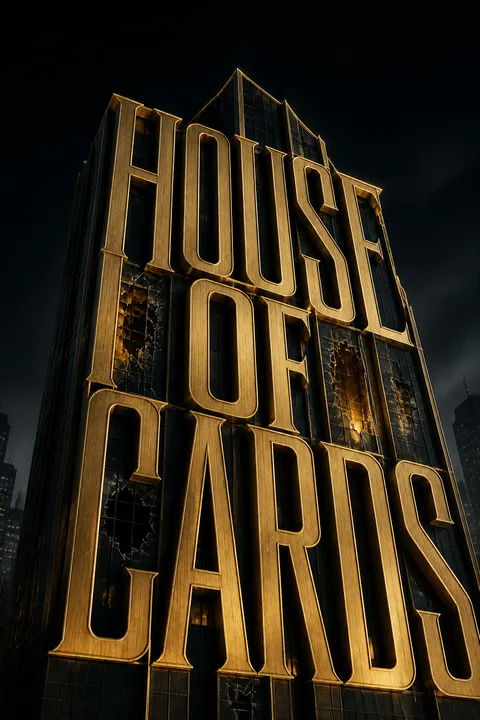


Key Takeaways
Treat liquidity as a survival asset, not a footnote
Solvency is not cash. In early 2008, mortgage lender Thornburg had a default rate below half a percent, yet its lenders demanded more collateral as the market marked down the mortgages it had pledged. From December through early March, margin calls totaled $1.777 billion. Thornburg could not meet $610 million of them. Its borrowers were mostly paying; the company was still running out of cash. The trigger was a February write-down by UBS, which caused other holders of similar securities to be repriced.
A working asset can fail. Firms like Thornburg and Bear Stearns depended on short-term borrowing to finance long-lived securities. If lenders would not renew those loans, even assets expected to pay eventually could not meet obligations due now.
What's striking is how a funding problem can become a solvency problem without any sudden wave of borrower defaults. This is the classic danger of maturity mismatch: short-term creditors can demand repayment faster than long-term assets can be sold. Modern financial stability analysis also emphasizes fire-sale feedback, where forced selling lowers prices, which triggers more margin calls and more selling. Yet a market price is not merely an accounting nuisance. It can reveal that yesterday's assumptions about future cash flows were too optimistic. The hard task is distinguishing temporary illiquidity from genuine losses before the panic makes the distinction impossible.
Never finance long-lived, hard-to-sell assets with overnight promises
Daily renewal was the business model. Bear Stearns borrowed tens of billions of dollars each morning in the repurchase, or repo, market, using securities as collateral. A repo is a short-term loan secured by assets that the borrower agrees to buy back. Most funding rolled over routinely, until lenders began demanding more collateral or refusing to renew. By Thursday evening, Bear's cash had fallen from about $18 billion to roughly $2.5 billion, with billions more due the next morning.
Leverage magnified the clock. Investment banks could run far more leverage than commercial banks. Bear's ratio sometimes approached 50 dollars of assets for each dollar of equity within a quarter. It also reused some client securities to borrow more, a practice called rehypothecation. When customers demanded their cash back at the same time lenders pulled funding, Bear had little room to maneuver.
The key vulnerability was not simply borrowing, but borrowing short against assets that could not be sold quickly at reliable prices. This resembles a bank run, even though Bear was not a deposit-taking bank: creditors and clients could withdraw confidence in a matter of hours. Leverage made small valuation changes consequential, while overnight funding made the firm vulnerable to decisions made each morning. A useful stress test therefore asks not only whether assets are sound in the long run, but whether they can be financed through a week of frightened counterparties. High returns can conceal how little time a business has to survive.
When trust cracks, reassurance can accelerate the run
The market questioned Bear's ability to pay. By March 2008, traders were asking whether Bear could complete ordinary transactions. Its credit-default-swap prices, which reflected the cost of insuring its debt, rose sharply. Customers withdrew cash, lenders demanded more collateral, and investors bought put options betting the stock would fall. Bear's leaders publicly denied a liquidity crisis, but they could not explain why counterparties were leaving or disclose enough detail to restore trust.
Fear became operational. A hedge fund's request to transfer a trade away from Bear took hours to resolve, and the delay itself fed suspicions. On Thursday, March 13, the firm faced withdrawals and lost overnight funding simultaneously. Bear was not merely rumored to be in danger. The rumor changed the behavior that made it dangerous.
This is a coordination problem: each creditor may be acting rationally by leaving early, while their combined actions destroy the institution. Public reassurance can fail when audiences observe contradictory signals, such as a rescue facility, falling share prices, and clients moving money. The story also resists an easy conspiracy narrative. Short sellers and competitors had incentives, but clients had sound reasons to protect their own funds. In a crisis, credibility depends less on confident language than on verifiable facts, consistent disclosures, and visible capacity to meet obligations. Silence can be damaging, but vague reassurance can sound like evidence of concealment.
Make risk control independent from the traders who profit from it
Bear advertised vigilance. Under Alan Greenberg, the firm held regular risk meetings, tracked aging inventory, and used internal investigators nicknamed ferrets to catch questionable conduct. Greenberg's rule was to cut losing positions rather than defend them indefinitely. But the firm also rewarded people who made money, gave successful desks more resources, and often resisted outside oversight.
The controls weakened with the culture. Under Jimmy Cayne, senior power concentrated among a small executive circle, while talented business leaders left and succession remained unresolved. In Ralph Cioffi's hedge funds, compliance staff repeatedly failed to secure required advance approval for trades with Bear affiliates. By 2006, 79 percent of those transactions had not been properly approved. The firm had procedures on paper, but weak independence and unclear responsibility left them easy to bypass.
A control system is only as strong as its authority to interrupt revenue. If compliance can identify a problem but cannot stop the trade, the organization has monitoring, not control. This is a principal-agent problem: executives benefit from short-term profits, while losses may be dispersed among shareholders, clients, or creditors. Bear's internal investigators and risk meetings show that formal safeguards can matter, but personal loyalty and status can hollow them out. Independence also requires access to information. When business units are siloed, the people best positioned to see a pattern may not know enough to recognize it.
Follow the collateral beneath the rating, not the label above it
High grades hid risky contents. Cioffi and his team marketed funds as steady investments largely holding AAA- and AA-rated structured securities. Investors were told that only about 6 percent of collateral was subprime. A later internal summary put the underlying subprime exposure near 60 percent. The funds used borrowed money to buy mortgage-linked securities, so modest price declines could produce large equity losses and margin calls.
The labels became less useful as the market turned. A collateralized debt obligation, or CDO, bundles debt and divides payments and losses into ranked slices. A high-rated slice could still depend on thousands of weak mortgages underneath it. Cioffi's funds reported losses, then sharply revised their valuations after Goldman Sachs sent much lower marks. Investors who thought they held a cautious strategy discovered that the collateral, leverage, and liquidity risk were very different from the reassuring summary.
The lesson is not that ratings are worthless, but that a rating compresses assumptions into a symbol. Investors need to understand the assets, the model, and the conditions under which the rating could change. Complexity creates a principal-agent problem: the issuer, arranger, rating agency, and buyer may each rely on someone else's analysis. When the same mortgage risk is sliced, repackaged, and resold, diversification can be more apparent than real. A strong due-diligence question is: what must happen for this highly rated claim to lose value, and who is forced to sell if it does?
Pay for durable risk-adjusted returns, not leverage-fueled quarterly wins
Success distorted incentives. Bear's leaders earned extraordinary compensation during years when mortgage trading and leverage produced strong returns. The firm's Capital Accumulation Plan, or CAP, let executives defer compensation into company stock and receive additional units over time. As the stock rose, the plan became extremely valuable. Cayne later ended it, angering Warren Spector, whose holdings had grown especially large.
The firm also rejected options. Bear passed on potential acquisitions including asset manager Neuberger Berman and clearing business Pershing, and remained heavily dependent on fixed income. Its leaders favored familiar businesses and protected their positions inside a small executive circle. When markets reversed, the firm had neither enough diversification nor a smooth succession plan. Rewarding gains while giving leaders weak incentives to absorb losses made risk seem attractive until the losses arrived.
Compensation design shapes what executives notice. A bonus tied to annual revenue can reward volume and leverage while leaving slow-moving risks outside the measurement window. Deferred stock can align leaders with shareholders, but only if executives cannot cash out or shift risk before losses emerge. Bear's experience also shows the limits of judging strategy by bull-market performance: a concentrated business may look disciplined when its main market rises. Diversification is not automatically wise, and acquisitions can fail, but rejecting every unfamiliar option can turn focus into fragility. A useful test is whether pay rewards survival through a cycle, not just a record year.
Stop treating a charismatic founder as a substitute for succession and oversight
Bear's culture was built by forceful personalities. Cy Lewis transformed the small firm through bold trading, including a major wartime bet on railroad bonds. Greenberg followed with a frugal, risk-conscious style, while also retaining tight control over compensation and decisions. Cayne rose through sales, bridge-table relationships, and political skill, then became the firm's dominant leader. Each handoff depended more on personal maneuvering than on a durable governance process.
The board was late to the crisis. Bear remained culturally close to a partnership despite being publicly traded. Senior executives held power for years, and the board did not meaningfully engage until the firm was near bankruptcy. In March 2008, CEO Alan Schwartz was golfing in Florida while staff in New York were losing lenders and customers. The firm had no clear, tested succession plan for a moment when leadership itself became a risk.
Founder-centered organizations can move quickly because trust and authority are concentrated. That same concentration makes dissent costly and succession awkward. Corporate governance is not merely a compliance layer; it is a mechanism for preserving institutional memory when a leader is unavailable, impaired, or wrong. Bear's history also complicates a simple villain story. Lewis, Greenberg, and Cayne each built valuable capabilities, but the culture that rewarded toughness and loyalty also discouraged challenge. A resilient institution needs both strong leadership and routines that do not depend on a leader's mood, relationships, or presence.
Rescue the payment system without pretending shareholders deserve protection
The Fed bought time, not a healthy future. On March 14, 2008, the Federal Reserve arranged emergency financing through JPMorgan so Bear could keep operating over the weekend. The initial public description suggested up to 28 days, but the firm soon learned the funding could end within days. The Fed later backed a $30 billion asset vehicle to make JPMorgan's acquisition possible. Bear's first proposed sale price was $2 per share, a steep fall from its earlier highs. The board ultimately accepted a revised $10 offer.
The intervention split stakeholders. Bear's shareholders suffered heavily, while creditors and trading counterparties received protection through the rescue. The Fed opened its discount window to investment banks only after the Bear sale was agreed. Officials feared a disorderly failure would spread through thousands of counterparties, but the timing fueled anger that the firm had been forced to sell before the policy change.
The rescue illustrates a real policy tradeoff, not a clean choice between virtue and corruption. Letting a deeply connected firm fail might discipline risk-taking, but it could also trigger fire sales and disrupt financing for businesses far beyond Wall Street. Protecting creditors can limit contagion while still imposing losses on shareholders and managers. Yet expectations matter: repeated rescues may encourage institutions to take risks whose downside is partly socialized. A credible resolution regime needs a way to keep critical functions operating while imposing predictable losses on investors. Bear's weekend showed how hard that is when no such plan is ready.
Trace a crisis across the whole system, not to one convenient culprit
The mortgage boom had many parents. The book follows low interest rates, aggressive mortgage lending, weak documentation, political pressure to expand home ownership, securitization, leverage, and rating agencies paid by issuers. Subprime lending grew from about $90 billion in 1996 to $530 billion by 2005. Mortgage brokers sometimes falsified applications, while investors bought complex securities without understanding their underlying loans. No single cause explains the scale of the crisis.
Bear was a warning, not the endpoint. Its March 2008 sale did not restore confidence across the system. Lehman Brothers failed in September after a private buyer could not be secured and the government declined to provide support. The subsequent market seizure brought emergency lending, bank rescues, and the $700 billion Troubled Asset Relief Program. The contrast shows how much crisis outcomes depend on timing, available buyers, and policy choices.
A systemic crisis is best understood as an interaction among incentives, institutions, and timing. Assigning blame to a single policy or borrower group may satisfy political narratives, but it obscures the chain connecting underwriting to securitization, ratings, leverage, and short-term funding. The book reports competing explanations, including disputes over housing policy, without making any one sufficient. Bear's rescue and Lehman's failure also reveal that policy consistency matters: different decisions can reflect different facts, yet inconsistent treatment can intensify uncertainty. The analytical challenge is to distinguish moral responsibility from causal contribution, because many actors can contribute to a failure without having equal power or knowledge.
Analysis
House of Cards works as financial history, institutional portrait, and crisis narrative at once. Its dramatic spine is the March 2008 run on Bear Stearns, but the deeper subject is how the firm became vulnerable long before that week. William Cohan moves from the granular mechanics of overnight funding to decades of personality-driven management, then back to the market's accelerating collapse. The result is a useful reminder that a crisis is rarely a single bad trade. It is a system of small decisions that seem tolerable while credit is cheap and confidence is abundant.
The book's strongest analytical contribution is its account of feedback. Falling prices weaken collateral, lenders demand more protection, borrowers sell into thin markets, and those sales validate the fear that began the cycle. Bear's collapse was not simply a story of bad mortgages or bad communication. It involved leverage, liquidity, client withdrawals, ratings, market structure, and policy uncertainty. The firm could appear profitable while its financing model left it vulnerable to a rapid change in confidence.
Cohan also shows how culture shapes what leaders can see. Bear had risk meetings, internal monitors, and experienced traders, yet authority remained concentrated and important warnings could be filtered through loyalty or business silos. The same scrappy, opportunistic culture that helped the firm survive earlier shocks also made it resistant to diversification, outside scrutiny, and succession planning. The account is strongest when it juxtaposes conflicting recollections rather than pretending every participant agrees.
Its limits are also instructive. Much of the narrative rests on interviews conducted after the collapse, when executives had powerful incentives to defend their own decisions, assign blame, or reconstruct what they knew. The text presents several political explanations for the housing boom, but no single policy can account for the combination of lending practices, financial engineering, leverage, and weak oversight. The lasting lesson is not that every firm needs to avoid risk. It is that risk must be visible, funded for long enough to be understood, and governed by people able to challenge the revenue producers. When those conditions fail, confidence can become both the firm's most valuable asset and its fastest route to ruin.
Review Summary
House of Cards receives mixed reviews, with praise for its detailed account of Bear Stearns' collapse and criticism for its excessive length and repetition. Readers appreciate the insider perspective and vivid portrayal of key players but find some sections tedious. The book is commended for its exploration of Wall Street culture and the factors leading to the 2008 financial crisis. While some struggle with financial jargon, others value the comprehensive history and insights into corporate decision-making. Overall, it's considered an informative, if occasionally overwhelming, examination of a pivotal moment in financial history.
People Also Read




Glossary
repurchase agreement (repo)
Collateral-backed short-term borrowingA repo is a short-term loan secured by securities. The borrower sells securities to a lender and agrees to repurchase them later, usually the next day, at a slightly higher price. Financial firms use repos to fund assets. If lenders demand more collateral or refuse to renew the loan, the borrower can face an immediate liquidity crisis.
credit default swap
Debt-default insurance contractA credit default swap is a contract that transfers the risk of a borrower failing to repay debt. The buyer pays a premium to the seller, who agrees to compensate the buyer if a specified credit event occurs. Its price can serve as a market signal of perceived default risk, though it can also rise as fear and trading pressures spread.
rehypothecation
Reuse of client collateralRehypothecation is a broker's reuse of securities pledged by a client, typically to secure the broker's own borrowing. It can make financing more efficient while markets are functioning. But if the client asks for assets back during a crisis, the broker may need to find cash or sell other holdings quickly, creating additional pressure on liquidity.
mark-to-market
Valuing assets at market pricesMark-to-market accounting values an asset using current market prices or estimates rather than its original purchase price. The valuation can reveal losses before an asset is sold. In illiquid markets, however, a distressed sale may set a price that forces similar assets to be marked down, potentially prompting margin calls and further sales.
ABX index
Subprime mortgage credit indexThe ABX index is a family of indices based on credit default swaps tied to securities backed by subprime mortgages. It gave market participants a way to trade views on the credit quality of those mortgages. Because it was one of the few visible instruments for betting against subprime, its prices could diverge from the prices of underlying mortgage securities.
collateralized debt obligation (CDO)
Sliced pool of debt claimsA CDO collects debt assets, such as bonds or mortgage-linked securities, and divides their cash flows and losses into ranked tranches. Senior tranches are paid before junior ones and are intended to be less risky. Their actual safety depends on the quality and diversification of the underlying assets, the structure, and the assumptions used to rate them.
Capital Accumulation Plan
Deferred executive stock compensationBear Stearns' Capital Accumulation Plan allowed executives to defer some or all of their compensation into company stock, with additional units accruing over time. The plan could substantially increase long-term rewards when the share price and firm earnings rose. Its value also created potentially large obligations for the firm, and its termination became a source of conflict with Warren Spector.
FAQ
What's House of Cards: A Tale of Hubris and Wretched Excess on Wall Street about?
- Focus on Financial Crisis: The book by William D. Cohan chronicles the collapse of Bear Stearns during the 2008 financial crisis, highlighting mismanagement and over-leverage.
- Detailed Timeline: It provides a minute-by-minute account of critical decisions made during Bear Stearns's liquidity crisis in March 2008.
- Interconnected Financial System: Cohan emphasizes the interconnectedness of financial institutions and the widespread repercussions of one institution's failure.
Why should I read House of Cards: A Tale of Hubris and Wretched Excess on Wall Street?
- Insight into Wall Street: The book offers a deep dive into the inner workings of Wall Street, essential for anyone interested in finance or economics.
- Lessons on Risk Management: Readers can learn about the consequences of excessive leverage and the importance of skepticism towards financial practices.
- Historical Context: Understanding the events leading to the 2008 financial crisis is crucial for grasping current economic conditions.
What are the key takeaways of House of Cards: A Tale of Hubris and Wretched Excess on Wall Street?
- Importance of Liquidity: The book illustrates how vital liquidity is for financial institutions, as seen in Bear Stearns's rapid decline.
- Consequences of Over-Leverage: Cohan details how high leverage ratios exposed Bear Stearns to significant risks, serving as a warning about excessive borrowing.
- Role of Regulatory Bodies: The book discusses regulatory failures and the need for better oversight in the financial sector.
What are the best quotes from House of Cards: A Tale of Hubris and Wretched Excess on Wall Street and what do they mean?
- "You’re only as solvent as people believe you to be solvent.": This quote highlights the importance of market confidence in financial stability.
- "The ultimate Roach Motel.": Refers to firms trapped in a cycle of declining confidence and liquidity, unable to escape a deteriorating position.
- "We’re now a sovereign credit.": Reflects Bear Stearns executives' misguided optimism after receiving emergency funding, illustrating overconfidence.
How did Bear Stearns's management contribute to its downfall in House of Cards: A Tale of Hubris and Wretched Excess on Wall Street?
- Excessive Leverage: The firm operated with high leverage ratios, making it vulnerable to market fluctuations.
- Failure to Address Risks: Executives ignored warning signs and failed to manage risks associated with mortgage-backed securities.
- Poor Communication: Ineffective communication with employees and stakeholders exacerbated the crisis, spreading rumors and misinformation.
What role did external factors play in Bear Stearns's collapse according to House of Cards: A Tale of Hubris and Wretched Excess on Wall Street?
- Market Conditions: The subprime mortgage crisis and declining housing prices severely impacted Bear Stearns's asset values.
- Regulatory Failures: Lack of adequate oversight allowed risky practices to proliferate, contributing to systemic vulnerabilities.
- Investor Sentiment: Fear and panic led to a rapid withdrawal of funds, making recovery nearly impossible once confidence was lost.
How did the Federal Reserve respond to Bear Stearns's crisis in House of Cards: A Tale of Hubris and Wretched Excess on Wall Street?
- Emergency Funding: The Fed provided a $30 billion emergency loan through JPMorgan Chase to prevent a broader financial collapse.
- Opening the Discount Window: Allowed investment banks to borrow against a wider range of collateral, stabilizing the financial system.
- Regulatory Oversight: The Fed's actions reflected a shift in regulatory philosophy, recognizing the interconnectedness of financial institutions.
How did Bear Stearns' culture contribute to its downfall in House of Cards: A Tale of Hubris and Wretched Excess on Wall Street?
- Aggressive Business Practices: The culture encouraged high-risk trading and short-term gains over long-term stability.
- Lack of Accountability: Executives were not held accountable, allowing risky practices to flourish without oversight.
- Resistance to Change: Management was inflexible and resistant to adapting to new market realities, hindering effective crisis navigation.
What role did the mortgage market play in Bear Stearns' downfall according to House of Cards: A Tale of Hubris and Wretched Excess on Wall Street?
- Heavy Exposure to Mortgages: Bear Stearns was heavily invested in mortgage-backed securities, which became risky as the housing market declined.
- Subprime Mortgage Crisis: Rising defaults and falling home prices severely impacted the value of Bear Stearns's securities.
- Liquidity Issues: The drying up of the market for these securities led to significant liquidity challenges and loss of investor confidence.
How did the sale of Bear Stearns to JPMorgan unfold in House of Cards: A Tale of Hubris and Wretched Excess on Wall Street?
- Emergency Sale: The sale was executed under duress, with Bear Stearns facing imminent collapse and a $2 per share price.
- Regulatory Involvement: The Federal Reserve facilitated the sale, providing guarantees to stabilize the transaction.
- Market Reactions: The sale marked a significant moment in the financial crisis, highlighting the fragility of major financial institutions.
What lessons can be learned from House of Cards: A Tale of Hubris and Wretched Excess on Wall Street?
- Importance of Risk Management: Emphasizes the need for robust risk management practices in financial institutions.
- Value of Transparency: Highlights the importance of transparency and communication within organizations, especially during crises.
- Need for Regulatory Oversight: Underscores the necessity of effective regulatory oversight to prevent future financial crises.
How did Bear Stearns' hedge funds contribute to its downfall according to House of Cards: A Tale of Hubris and Wretched Excess on Wall Street?
- High Leverage: The hedge funds operated with high leverage, amplifying losses as asset values declined.
- Illiquid Assets: Heavy investment in illiquid mortgage-backed securities made it difficult to meet redemption requests.
- Misleading Information: Executives provided misleading information to investors, eroding trust and triggering redemption requests.
About the Author


Download PDF
Download EPUB
.epub digital book format is ideal for reading ebooks on phones, tablets, and e-readers.








