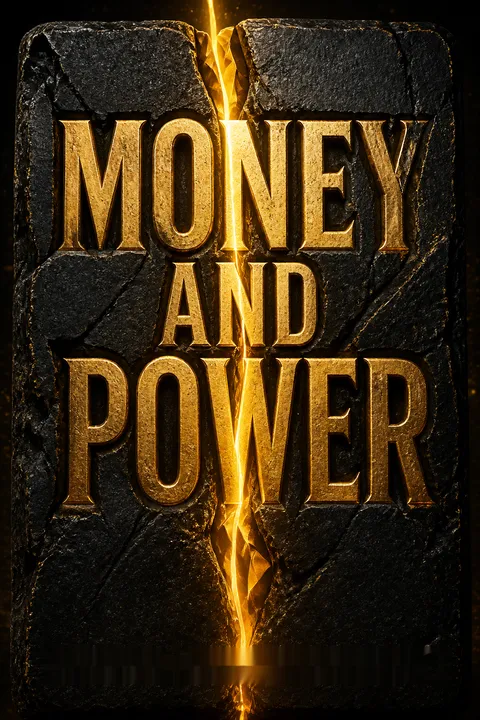


Key Takeaways
Goldman’s edge was a system of expertise, relationships, and access to power
More than a trading house. Founded in 1869, Goldman grew from a family business buying merchants’ IOUs into a global investment bank. Its recurring advantages were talented people, durable corporate relationships, political connections, and a willingness to enter profitable markets before competitors caught up. The firm also cultivated secrecy, making it difficult for outsiders to see how those assets were converted into reliable earnings.
Power carried a cost. Goldman survived repeated crises by adapting: it moved from commercial paper to underwriting, then expanded trading and principal investing. Its success inspired both admiration and suspicion, especially when profits rose during periods of widespread loss. The book’s central question is not simply whether Goldman was clever, but how a firm so proud of managing conflicts could repeatedly benefit from positions that put it on both sides of a deal.
The firm’s history is best understood as the construction of an institution, not a series of lucky trades. Relationships, information, reputation, and capital reinforce one another, creating a durable advantage that is difficult for competitors to copy. Yet the same system can make accountability harder: secrecy protects client confidence, but also shields decisions from scrutiny. Goldman’s persistent ability to survive is impressive; it does not, by itself, prove that every survival strategy served the public interest.
Make underwriting a bridge to growth, not a wager on fashionable finance
From IOUs to ownership. Marcus Goldman bought short-term business debts at a discount, then sold them to banks for a profit. His firm’s next generation moved into underwriting: temporarily buying a company’s securities, then selling them to investors to raise capital. Henry Goldman’s landmark opportunity was Sears. In 1906, instead of simply lending the retailer money, he proposed taking it public, giving Sears equity to finance growth.
Risk needs judgment. Underwriting could look almost effortless when investors were eager, but a badly priced issue could leave the bank holding unwanted securities. The family itself contained this tension. Samuel Sachs favored protecting the partnership’s capital; Henry Goldman was more willing to take calculated risks. That debate between growth and caution became part of Goldman’s operating character, long before the firm became a trading giant.
Underwriting performs a useful economic function: it connects companies that need capital with investors willing to supply it. The Sears example shows why financing structure matters, not just the amount raised. Equity can give a growing company room to withstand downturns, while debt creates fixed obligations. But the underwriter’s incentive is not automatically identical to the issuer’s or the investor’s. A fee-driven process still requires careful scrutiny of price, risk, and who ultimately holds the exposure.
Leverage turns confident forecasts into fragility when leaders stop questioning them
A boom sold as innovation. In 1928, partner Waddill Catchings led Goldman into investment trusts, companies that raised money and invested it in other securities. The Goldman Sachs Trading Corporation began with $100 million, then its share price surged far beyond the value of its holdings. Goldman helped push that price higher while preparing a merger, without disclosing its trading activity to shareholders.
The reversal was brutal. Catchings also launched the highly leveraged Shenandoah and Blue Ridge trusts. Their combined market value reached about $1.7 billion within months. After the 1929 crash, the Trading Corporation’s share price fell from a peak of $326 to $1.75. Goldman lost about $13 million, and investors lost far more. The firm had been late to the investment-trust boom, but joined it with enthusiasm and too little restraint.
The episode links financial fragility to organizational power. A celebrated leader can make a speculative strategy feel like proof of vision, while leverage hides how little room remains for error. The danger is not innovation itself, but innovation used to multiply exposure without equally strong governance. The book also leaves an uncomfortable question: a transaction can escape legal punishment and still damage the trust on which markets depend.
Institutionalize client development before one rainmaker becomes a single point of failure
Weinberg made relationships productive. After the Trading Corporation debacle, Sidney Weinberg helped rebuild Goldman through deep client ties, board service, and political relationships. He served on dozens of corporate boards, giving him insight into companies’ needs and opportunities. His work also reached Washington: he advised presidents and helped recruit business leaders into wartime service.
Whitehead made growth repeatable. Worried that Goldman relied too heavily on Weinberg, John Whitehead created a New Business Group that systematically called on potential clients instead of waiting for business to arrive. The team identified thousands of companies to approach. Goldman’s estimated share of potential financing business rose from 7.8 percent in 1968 to 11.6 percent in 1970. Whitehead turned one rainmaker’s instinct into a process the firm could scale.
Whitehead’s innovation is organizational: sales became a shared capability rather than an inherited personal network. That shift made growth less vulnerable to any one leader’s age, availability, or relationships. Weinberg’s board seats and political connections were powerful, but they also exposed Goldman to conflicts of interest. The distinction matters: a relationship can improve a client’s access to expertise while simultaneously giving the banker privileged access to information and future business.
Treat trading intelligence as a client-trust risk, not merely a competitive edge
The boundary kept moving. Goldman’s arbitrageurs called bankers, lawyers, and executives after mergers were announced to learn whether deals faced regulatory obstacles or delays. Traders argued that such conversations helped them assess public transactions. But the practice rewarded access to information that other investors did not have, making the line between market research and inside information difficult to police.
Penn Central exposed the cost. Goldman sold the railroad’s commercial paper while receiving warning signs about its worsening finances. It did not share key information with customers and reduced its own inventory while clients continued buying. The SEC’s investigation found the firm failed to investigate adequately or disclose material risks. A jury later ordered Goldman to repay three investors $3 million plus interest. The episode showed how using client relationships to win more business can undermine the very trust those relationships require.
Information gathering is essential to markets, but access is not ethically neutral when one party knows more and the other relies on its judgment. The defense that commercial paper buyers were sophisticated does not answer whether the seller withheld information it considered important for protecting itself. The episode also illustrates how small choices accumulate: failing to investigate, continuing sales, and quietly reducing inventory may each be explainable alone, yet together they create a serious breach of confidence.
A firm’s real values are its incentives, not the principles framed on its walls
A culture by design. John Whitehead wrote principles emphasizing clients, integrity, teamwork, and professionalism. Goldman reinforced them with collective decision-making, information sharing, and compensation systems that rewarded employees for contributing to the firm rather than claiming individual credit. The culture helped the firm coordinate a growing workforce and compete across banking and trading.
A culture by practice. The record was less flattering. Goldman faced a racial discrimination complaint from James Cofield after a banker said a senior partner opposed hiring Black professionals into corporate finance. Women employees described sexual harassment, exclusion, and weaker career opportunities. The firm also demanded extraordinary work hours and loyalty. These episodes show the limits of a strong internal identity: a team can enforce discipline, but it can also pressure employees to accept behavior that contradicts the official code.
A shared culture can reduce coordination costs and help a large organization act quickly. But slogans become credible only when promotion, pay, and discipline reinforce them. Goldman’s tension is especially revealing because its teamwork ethos was both an operational advantage and a means of suppressing individual dissent. The relevant test is not whether employees can recite the principles; it is whether those principles protect people with less power when doing so is inconvenient.
When trading expands, build independent risk controls before the first losses
A bigger business changed the firm. Goldman’s 1981 purchase of J. Aron brought in commodities trading, new staff, and a culture more willing to risk firm capital. The integration initially faltered: J. Aron’s profits fell from about $60 million to zero within two years, and Goldman eventually cut more than a quarter of its workforce there. The business recovered after Goldman changed its strategy and accepted calculated market risk.
Success did not guarantee control. In 1994, Goldman’s traders took large positions in fixed-income markets that moved against them, with losses reaching hundreds of millions of dollars. The firm’s leverage and a wave of partner departures made the crisis feel existential. Afterward, Goldman created a formal risk committee, strengthened independent controls, and developed systems to track positions across desks. The lesson was not to avoid risk, but to make risk visible and challengeable.
J. Aron shows that acquisition can import expertise and new revenue, but it can also import incompatible norms and managerial problems. The 1994 losses make the deeper point: risk control cannot depend on whether a trader happens to be right. Independent oversight matters most when a business is profitable, influential, and convinced its models are sound. Measures such as value-at-risk help organize attention, but no model can substitute for judgment about liquidity and crowded positions.
When housing data broke, hedge exposure before consensus catches up
The evidence accumulated quietly. By late 2006, Goldman traders saw repeated losses in mortgage positions and rising delinquency data. The firm began selling mortgage assets, marking them down, reducing new exposure, and buying protection through credit-default swaps and the ABX index. A credit-default swap is a contract that pays protection buyers if a named debt security loses value or defaults. The strategy was difficult to execute because the market was thin and many firms still expected mortgage prices to recover.
Goldman profited while others weakened. The firm’s internal records show it made billions from short positions during 2007, even as it wrote down long mortgage holdings. Its overall mortgage business over the crisis period was more complicated than a simple windfall, but the short trades helped it report record profits in 2007. Goldman’s lower marks also triggered losses and margin calls elsewhere, including at Bear Stearns and AIG.
The central strength here is not prediction alone. It is the combination of daily valuation, willingness to realize losses, and enough capital to maintain a hedge while markets were still skeptical. Yet mark-to-market prices in thin markets can become feedback mechanisms: a lower mark prompts collateral calls, which can force sales and push prices lower still. Goldman’s risk reduction may be prudent for the firm while intensifying pressure on counterparties.
A legal product can still betray the trust that makes markets work
ABACUS turned opposing views into one deal. A synthetic CDO is a security built from credit-default-swap exposure rather than from ownership of the underlying loans. In 2007, Goldman arranged ABACUS 2007-AC1 for hedge-fund manager John Paulson, who wanted to bet against mortgage securities. ACA helped select the reference portfolio, while European investors took the long side. The SEC alleged that investors were not told clearly that Paulson had helped choose securities he expected to fail.
Disclosure was the fault line. Within months, 83 percent of the referenced securities had been downgraded; by January 2008, 99 percent had been downgraded. Goldman earned a $15 million fee. It settled the SEC case for $550 million without admitting or denying the allegations, while acknowledging that its marketing materials contained incomplete information. The deeper issue was not simply that one side lost, but whether both sides understood whose interests shaped the product.
Synthetic products can help investors take or shed specific risks without buying the underlying assets. That flexibility is useful only when participants understand how a portfolio was constructed and who benefits from its failure. The notion that sophisticated institutions should protect themselves through due diligence has force, but it does not erase a dealer’s obligation to disclose material conflicts it helped create. Legal settlement and ethical clarity are not the same thing.
Count public rescue as part of the profit story, not an embarrassing footnote
Private success met public support. Goldman converted to a bank holding company during the 2008 crisis, gaining access to Federal Reserve borrowing while accepting heavier regulation. It also received $10 billion through TARP, the government’s emergency capital program, and repaid it nine months later with dividends and payments for warrants. The firm’s rapid recovery was real, but it unfolded after public intervention helped stabilize the financial system.
Power brought scrutiny. Goldman’s history of sending senior figures into government, from Sidney Weinberg’s White House access to Robert Rubin and Henry Paulson’s federal roles, intensified public suspicion when taxpayers helped rescue the financial sector. Goldman reported $13.2 billion in 2009 profits and paid $16.2 billion in bonuses, while many households still faced economic damage. The book’s final challenge is to distinguish a firm’s skill at surviving from a claim that it deserved to survive without public help.
A rescue can be justified because the failure of a deeply connected institution may damage the wider economy. That systemic argument, however, does not settle who should bear the cost or how gains should be distributed after stabilization. Goldman’s repayment of TARP mattered, but it cannot establish that the public backstop was irrelevant to its recovery. The distinction between successful risk management and successful crisis support deserves explicit accounting, not a public-relations contest.
Analysis
The book’s strongest insight is that Goldman’s power is organizational rather than mystical. The firm repeatedly combines three assets: people trained to read markets, relationships that generate information and mandates, and capital deployed with unusual speed. That combination explains why a small commercial-paper house could become central to corporate America, survive the 1929 crash, and later navigate a housing collapse that destroyed competitors. The same machinery also produces its recurring weakness: a firm that profits from information and intermediation can drift from serving clients toward competing with them, while maintaining a public language of teamwork and trust. The narrative is most persuasive when it contrasts decisions with their consequences: Catchings’s leveraged trusts, the commercial-paper sales during Penn Central’s deterioration, the 1994 trading losses, and Goldman’s mortgage hedges. These episodes show that risk management is not simply forecasting. It requires credible marks, authority to challenge revenue producers, and recognition that liquidity can vanish precisely when a model assumes it will be available. Goldman’s mark-to-market discipline is presented as a major advantage, but thinly traded securities do not have an objectively obvious price. A model can clarify uncertainty without eliminating it.
The book also complicates the usual distinction between legal and illegal conduct. ABACUS and Penn Central raise questions about disclosure, incentives, and what clients reasonably believe a financial intermediary is doing. Sophisticated counterparties have duties of their own, but that does not make disclosure irrelevant. The firm’s conduct may fit the rules in a given moment while weakening the trust that makes those rules workable.
The account is also shaped by its sources and its moment. It relies heavily on interviews, internal records, and disputes whose legal meaning was not always settled when the book appeared. Its sharpest judgments should therefore be read as an investigative interpretation, not a final judicial finding. Even so, its larger argument holds: exceptional performance and reputational legitimacy are separate achievements. Goldman mastered the first more consistently than the second, and public rescues made that gap impossible to ignore.
Review Summary
Money and Power: How Goldman Sachs Came to Rule the World receives mixed reviews. Many praise its comprehensive history and insights into Goldman's culture and practices. Readers appreciate the detailed accounts of key events like the 2008 financial crisis. However, some find it too long and repetitive. Critics argue it lacks objectivity and fails to fully expose Goldman's unethical behavior. Overall, reviewers consider it an important read for those interested in finance, though opinions vary on its balance and effectiveness in critiquing the firm.
People Also Read





Glossary
commercial paper
Short-term corporate debtUnsecured, short-term IOUs issued by businesses to raise cash, often for working capital. Marcus Goldman bought merchants’ promissory notes at a discount and resold them to banks, earning money from the difference. Because commercial paper was treated as a low-risk cash substitute, the Penn Central collapse exposed how dangerous it could be when investors relied on a dealer’s assessment.
underwriting
Securities issuance and saleThe process by which an investment bank helps a company raise capital by arranging, pricing, and distributing stocks or bonds. In a traditional underwriting, the bank may temporarily buy securities from the issuer and resell them to investors, taking the risk that demand or pricing will disappoint. Goldman’s early work for Sears helped establish its reputation in this business.
investment trust
Leveraged securities holding companyA company that raises money from investors and uses it to hold or trade other securities. In the 1920s, Goldman’s Trading Corporation and related trusts used layered structures and leverage to amplify potential returns. The structure also magnified losses when markets fell, making the trusts a central part of Goldman’s disastrous 1929-era speculation.
risk arbitrage
Trading on deal outcomesA trading strategy that seeks to profit from price differences between securities involved in a merger, restructuring, or other announced corporate event. An arbitrageur may buy the target’s shares while a deal is pending, expecting the price to rise if the transaction closes. The strategy can lose heavily if the deal fails or its terms change.
mark-to-market
Value positions at current pricesAn accounting and risk-management practice that updates the stated value of a financial position to reflect current market prices or estimates. Goldman treated frequent repricing as essential to seeing risk clearly and deciding whether to sell or hedge. When markets are thin, however, apparent market prices can be uncertain and disagreement over valuation can itself trigger stress.
synthetic CDO
CDO built from credit swapsA collateralized debt obligation that creates exposure to the performance of debt through credit-default swaps rather than by owning the underlying loans or bonds. Investors can take opposing positions on whether a referenced portfolio will perform. ABACUS used this structure to let one party bet against selected mortgage securities while others took the opposite side.
ABX.HE
Subprime mortgage credit indexAn index tracking credit-default-swap prices tied to a basket of securities backed by subprime home loans. It gave traders a standardized way to take or hedge broad positions on the subprime mortgage market. Goldman’s traders used the index as part of their short strategy, while its falling price became a visible signal of worsening market conditions.
value-at-risk
Estimated potential trading lossA quantitative method for estimating how much a portfolio might lose over a specified period under a defined level of probability. Goldman used value-at-risk to monitor trading exposure and set limits. The measure helped organize risk discussions, but it depended on assumptions about market behavior and could underestimate dangers during unusual or rapidly changing conditions.
Goldman Way
Firmwide operating cultureThe name used for Goldman’s internal ethos of teamwork, client service, rigorous recruiting, shared information, and high ethical expectations. John Whitehead codified some of these ideas in business principles as the firm expanded. The book contrasts the stated ideal with episodes involving conflicts, discrimination, overwork, and trading practices that strained client trust.
FAQ
What's Money and Power: How Goldman Sachs Came to Rule the World about?
- Focus on Goldman Sachs: The book chronicles the history and evolution of Goldman Sachs, detailing its rise to prominence in the financial world.
- Power and Influence: It explores how Goldman Sachs has leveraged its political connections and financial acumen to maintain its status as a leading investment bank.
- Crisis and Adaptation: The narrative examines various crises faced by Goldman Sachs, including the 2008 financial meltdown, and how the firm adapted to survive and thrive amidst challenges.
Why should I read Money and Power by William D. Cohan?
- Insightful Analysis: William D. Cohan provides a detailed analysis of the inner workings of one of the most powerful financial institutions in the world.
- Historical Context: The book places Goldman Sachs within the broader context of American financial history, making it relevant for understanding current economic issues.
- Engaging Storytelling: Cohan’s narrative style combines thorough research with compelling storytelling, appealing to both finance professionals and general readers.
What are the key takeaways of Money and Power?
- Importance of Relationships: The book emphasizes the significance of personal relationships and networking in the finance industry.
- Ethical Considerations: It raises questions about the ethical implications of investment banking practices, particularly regarding conflicts of interest and transparency.
- Resilience in Crisis: The ability of Goldman Sachs to navigate crises and emerge stronger is a recurring theme, showcasing its resilience and adaptability.
What are the best quotes from Money and Power and what do they mean?
- “Goldman Sachs has been both envied and feared.” This quote encapsulates the dual perception of Goldman Sachs in the financial world, highlighting its power and influence.
- “The firm has been described as everything from ‘a cunning cat that always lands on its feet’ to ‘a great vampire squid.’” This illustrates the contrasting views of Goldman Sachs, portraying it as both resourceful and predatory.
- “The combination of these two genetic strains—the ability to make boatloads of money at will and to appear to manage conflicts—has made Goldman Sachs the envy of its financial-services brethren.” This quote emphasizes the firm’s financial prowess and its skill in navigating conflicts of interest.
How does Money and Power address the 2008 financial crisis?
- Crisis Overview: The book provides a detailed account of the events leading up to the 2008 financial crisis, focusing on Goldman Sachs’s involvement in the mortgage market.
- “The big short” strategy: Cohan discusses how Goldman’s traders made a significant bet against the housing market, which ultimately paid off.
- Public Perception: The narrative explores the backlash against Goldman Sachs during and after the crisis, highlighting the firm’s struggle to maintain its reputation.
What role did the Penn Central bankruptcy play in Goldman Sachs' history?
- Catalyst for Change: The Penn Central bankruptcy exposed vulnerabilities in Goldman’s commercial paper business and led to significant legal challenges for the firm.
- Reputation at Stake: Goldman’s involvement in the bankruptcy raised questions about its practices and ethics, impacting its reputation in the financial community.
- Shift in Strategy: The fallout from the bankruptcy prompted Goldman to reevaluate its risk management and trading strategies, leading to a more cautious approach in subsequent years.
How did Goldman Sachs handle the insider trading scandal?
- Support for Freeman: The firm stood firmly behind Robert Freeman, providing legal support and maintaining his position despite the allegations against him.
- Crisis Management: Goldman’s leadership, particularly Bob Rubin and Steve Friedman, focused on managing the crisis internally while reassuring employees and clients.
- Long-term Impact: The scandal highlighted the need for stricter compliance and ethical standards within the firm, shaping its policies in the years that followed.
How did Goldman Sachs navigate the 1998 LTCM crisis?
- Proactive Investment: Goldman Sachs, under Jon Corzine, decided to invest $1 billion into Long-Term Capital Management (LTCM) to stabilize the firm and prevent broader market fallout.
- Risk Assessment: The firm conducted thorough due diligence on LTCM’s positions, demonstrating its commitment to understanding the risks before making significant investments.
- Collaboration with Regulators: Goldman worked closely with the New York Federal Reserve to manage the crisis, showcasing its influence and the importance of regulatory relationships.
What is the significance of the "big short" in Money and Power?
- Strategic Positioning: The "big short" refers to Goldman Sachs' strategy of betting against the mortgage market, which allowed the firm to profit while many others suffered.
- Ethical Implications: Cohan raises questions about the morality of profiting from the collapse of the housing market, particularly in light of the impact on ordinary homeowners and investors.
- Market Dynamics: The "big short" illustrates the broader dynamics of the financial markets, where firms can leverage information and positions to their advantage.
How did Goldman Sachs manage to avoid the worst of the financial crisis?
- Proactive Risk Management: Goldman Sachs implemented aggressive risk management strategies, including marking down its long positions and hedging against potential losses.
- Early Recognition of Market Trends: The firm recognized the signs of trouble in the mortgage market earlier than many others, allowing it to adjust its strategies accordingly.
- Strong Leadership Decisions: The decisions made by key executives, such as Lloyd Blankfein and Dan Sparks, played a significant role in steering the firm through turbulent times.
How does Money and Power address the concept of conflicts of interest?
- Dual Roles of Goldman: The book discusses how Goldman Sachs often operated in conflicting roles, acting as both an advisor and a trader.
- Client Relationships: Cohan examines how Goldman’s relationships with clients were sometimes compromised by its profit motives.
- Regulatory Implications: The narrative highlights the need for greater transparency and regulation in the financial industry to mitigate conflicts of interest.
What are the criticisms of Goldman Sachs presented in Money and Power?
- Ethical Concerns: The book raises significant ethical concerns about Goldman’s practices, particularly its approach to risk management and client relationships.
- Market Manipulation Allegations: Cohan discusses allegations that Goldman engaged in practices that manipulated market perceptions.
- Public Perception: The narrative explores how Goldman’s actions during the financial crisis contributed to a negative public perception of Wall Street.
About the Author

Download PDF
Download EPUB
.epub digital book format is ideal for reading ebooks on phones, tablets, and e-readers.








