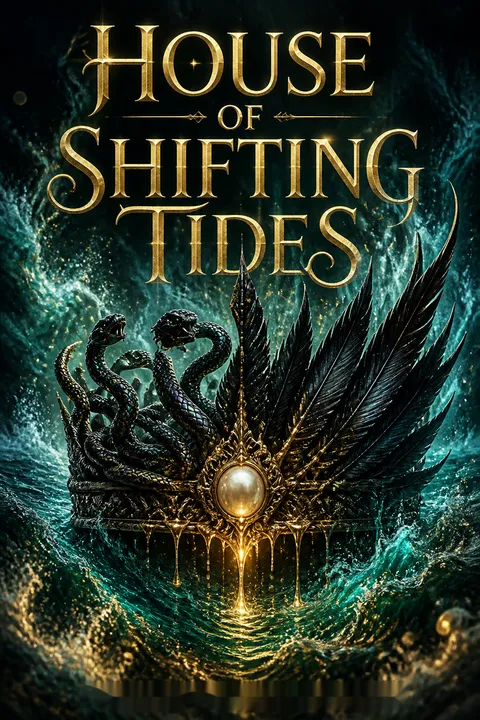


Plot Summary
Prologue
Two weeks after the Mahananda remade Zendaya from a serpent into a woman, Cathal watches her enter the moat, afraid she may never choose to return to human form. His daughter Fallon and the seer Behati help her shift back, but Zendaya has no memory of the life she shared with Cathal or the bond they once had.
He still loves her, yet she is no longer his mate in any way he can reach. As the gathered court sees a new kind of shifter emerge, Cathal sees only the distance between the woman he remembers and the stranger who has returned.
The opening makes the novel’s central wound visible before Zendaya can name it: physical return is not the same as restoration. Cathal’s fear that she may choose scales is sharpened by the fact that she has already lost a life, a family, and a psychic bond without knowing it. His restraint matters as much as his grief. He wants to protect her, but recognizes that her body and choices are no longer his to claim. The transformation therefore introduces both the fantasy premise and the intimate ethical problem of loving someone whose past gives one person a claim the other cannot remember.
The Watchful Crow
Living inside Shabbe’s palace, Zendaya studies the two-legged people around her while swimming by night and practicing her new human shape. She wants to explore beyond the moat, but cannot yet explain herself, and nearly every Shabbin fears the tusked serpent she becomes.
Cathal, a grim Crow shifter, watches her constantly, even when she thinks his vigilance means he despises her. When she finally speaks a word aloud, he teaches her its Crow equivalent, beginning a hesitant connection built from vocabulary and wary curiosity.
Before dawn, two Crows arrive with troubling news from their kingdom. Zendaya catches only fragments, but the tense faces make clear that Cathal’s people are in danger and that her new life is already entangled with theirs.
Zendaya’s language learning is not merely a charming obstacle. It places her in a social world where she can understand more than she can safely communicate, leaving her dependent on other people’s interpretations of her silence. Cathal’s watchfulness intensifies that imbalance: he knows their history, while she sees only a threatening guardian. Their first bond forms through translation, but translation is also a form of power. He can name her world for her, while she must decide whether his explanations deserve trust. The chapter’s political alarm interrupts her private education, showing that her attempt to belong cannot be separated from the conflicts surrounding Shabbe.
Fallon Enters the Cauldron
A vision shows Zendaya the Shabbin queen driving an obsidian dagger into Lorcan, king of the Crows. Fallon, Lorcan’s mate and Cathal’s daughter, understands that the image points toward her own sacrifice: she enters the Mahananda to break the Crows’ curse. Cathal fights the ward that keeps him from stopping her, while Zendaya realizes he knew what was coming.
Fallon returns alive, and the Crows turned to stone by the curse awaken, but their wounds still refuse to heal. To test the danger, Cathal stabs himself with the obsidian blade and discovers that its poison continues to spread. Fallon’s success has saved her people from one fate without freeing them from the weapon that can still kill them.
Fallon’s choice exposes a conflict between individual consent and collective need. She accepts a danger that others, especially Cathal, cannot bear to watch, while the Mahananda’s authority is treated as both trustworthy and impossible to verify. The ritual also complicates victory: the Crows awaken, but their continuing vulnerability shows that breaking a curse is not the same as undoing its history. Cathal’s self-inflicted wound turns an abstract political threat into a bodily countdown. Zendaya, still learning what the others know, watches a family make decisions around her and begins to recognize that silence can exclude as effectively as hostility.
A Tongue That Heals
At a farewell supper, the Shabbins discover that neither their blood magic nor a healer’s crystals can clear Cathal’s spreading wound. Zendaya offers to try her serpent tongue, then makes a bargain with him: she will stay away from the rising rivers, and he will take her to Fallon’s wedding in Luce. The promise burns a magical mark onto her skin.
When Cathal finally lets her examine his leg, Zendaya licks the poisoned wound until blackened blood gives way to healthy flesh. The effort overwhelms her. She shifts into serpent form and remains unconscious for days in the drained moat, while Cathal stays beside her. Her first act of healing saves him, but proves her power can exact a frightening physical cost.
The bargain turns an unequal relationship into a negotiated one, but Zendaya’s incomplete understanding of magical contracts means consent remains imperfect. She learns through consequence that a promise can become a mark on the body, not just an agreement between people. Her healing is similarly embodied: compassion requires her to ingest a poison that other healers cannot touch. The scene gives her a kind of agency unavailable to the established systems of magic, while also refusing to make that agency effortless. Cathal’s vigil contrasts with his earlier guardedness, revealing care through action rather than explanation. Their intimacy grows, but neither yet understands what their shared past asks of them.
The Life She Forgot
When Zendaya wakes on a small beach beyond the palace moat, she learns that Cathal carried her there and waited through her long sleep. She insists on traveling to Fallon’s wedding, despite the queen’s warning that serpents are hunted beyond Shabbe. Behati then explains the history Zendaya cannot remember: five centuries earlier, she was Meriam’s daughter, Cathal’s mate, and Fallon’s mother.
Meriam’s betrayal helped imprison Shabbe behind wards, and Zendaya was lost before the Mahananda returned her as a serpent. Cathal confirms that Fallon is their child, but Zendaya refuses to let him recount their romance, fearing that inherited memories will dictate her choice. She chooses to leave for Luce without knowing what she once felt.
The revelation makes identity a problem of both memory and consent. Cathal’s claim is true, but truth alone cannot recreate intimacy for someone who has no access to its emotional evidence. Zendaya’s refusal to hear their love story is not rejection of Cathal so much as resistance to being drafted into another person’s remembered self. Behati’s account also ties private loss to political history: the missing past includes the origin of Shabbe’s isolation and the injury inflicted on the Crow kingdom. Zendaya must move forward with information she did not choose to lose and cannot yet feel as her own.
The Wedding Waters
Cathal carries Zendaya out of Shabbe and into Luce, where she sees the ocean and the world her forgotten self once knew. At Fallon and Lorcan’s royal wedding, Zendaya’s serpent nature overwhelms her human form, and she dives into the water before the gathering can understand what she is.
The canals have been poisoned with a substance designed to keep serpents away; it closes her gills and leaves her unable to breathe. Cathal and the Shabbins rescue her, while Fallon learns the poison has been used to keep the waterways free of serpent life. Zendaya survives, but her first journey beyond Shabbe ends in proof that the wider world is not simply open to her. Its borders have been made dangerous.
The wedding places political unity on display while the poisoned canal reveals the exclusion beneath it. The ceremony celebrates a new alliance, yet the water has been altered to make a whole species unwelcome. Zendaya’s involuntary shift makes her body a public fact before she is ready to disclose it, turning private identity into political exposure. Her danger is not caused by an enemy’s face-to-face attack but by infrastructure: poison distributed through ordinary waterways. The episode broadens the novel’s conflict from personal mistrust to systemic harm, and makes safe movement through the realm a question of whose comfort its rulers have chosen to protect.
The Fisherman Becomes Serpent
After the poisoned canal nearly kills her, Zendaya is separated from Cathal and swims through the darkened waters, searching for help. A human fisherman takes a spear meant for her. She pulls it free and tries to heal his wound, only to realize that he has drowned. On the beach, Fallon finds a faint pulse.
Zendaya’s healing does more than close the wound: the young man wakes with a tusk, black eyes, and the ability to shift into a serpent. He names himself Enzo and can communicate with Zendaya through their minds. Cathal, already hurt by the possibility that Zendaya may be matched with someone else, watches her create a new kind of family even as he carries her back toward safety.
Enzo’s transformation converts a rescue into the beginning of a species, but it also binds Zendaya to a responsibility she did not plan to assume. Her power answers immediate compassion and produces consequences beyond the individual body. Enzo’s gratitude and dependence initially resemble a parent-child bond, while the Mahananda’s match-making framework threatens to label that intimacy as romance. Cathal’s reaction reveals how strongly he experiences the new shifter as a rival, even when Zendaya does not. The scene’s ethical pressure comes from a familiar fantasy wish, the power to save someone, complicated by the fact that salvation changes what that person is and what they may owe.
Agrippina’s Second Life
Using a bargain owed by the Crow Erwin, Zendaya secretly returns to Luce to visit Sybille and find another human who is near death. In the city, an attacker slashes Agrippina Rossi’s throat with iron.
Zendaya reaches her in time to seal the wound, but the healing transforms Agrippina into a serpent shifter and restores the memories that had been damaged. Agrippina recognizes Zendaya as the woman who once entrusted Fallon to her care. The revelation also explains why Meriam could speak through Agrippina’s mind and see through her eyes.
Back in Shabbe, Zendaya and Justus discover that Meriam is imprisoned beneath Behati’s bed. Their effort to uncover the truth leads toward a dangerous choice: whether to free the woman who shaped Zendaya’s lost life.
Agrippina’s restoration reverses the novel’s recurring association between transformation and loss. She gains a new body while recovering an old self, suggesting that change need not erase continuity. Yet her recovered memories expose another kind of invasion: Meriam has used her daughter’s mind as a channel of surveillance. Zendaya’s healing therefore creates kinship and uncovers coercion at once. Her return to Luce also marks a shift from being carried by others to making secret journeys of her own. The discovery of Meriam’s hidden prison brings that agency into conflict with the people who raised Zendaya, forcing her to weigh truth against loyalty.
A Crown from the Cauldron
Justus reveals that Meriam has been held in a cell beneath Behati’s rooms, despite the family’s belief that she was elsewhere. Zendaya uses a bargain to enlist him in finding the prisoner, then learns Meriam can use Agrippina’s senses to watch events outside her cell. Once released, Meriam confronts Zendaya and claims Priya bound her magic and kept her daughter mortal.
Meriam drains Priya, killing the Shabbin queen, then leaves Zendaya to face the throne and the Mahananda. Zendaya enters the Cauldron and refuses to rule as a puppet, insisting that a queen must be allowed to question power. The Mahananda accepts her terms and raises her as Shabbe’s new ruler, while several sorceresses reject her authority.
The succession is not a clean victory. Meriam’s account reframes Priya’s protection as control, while Priya’s death leaves Zendaya unable to test either woman’s motives. The Mahananda’s decision gives her authority, but only after she refuses the premise that obedience is the price of belonging. This is the first time Zendaya can define her relationship to power in her own terms. Her demand for a voice distinguishes legitimate rule from mere magical selection. The departing sorceresses show that the crown does not resolve political conflict; it makes visible the factions that had previously been contained by Priya’s authority.
Fallon Gives Up Wings
Now queen, Zendaya asks the Mahananda how to end the Crows’ lingering vulnerability to obsidian. The answer carries a terrible price: Fallon’s Crow magic must be transferred to Lorcan and his people. Fallon volunteers, provided the Mahananda preserves her Shabbin blood magic and her bond with Lorcan. She and Lorcan enter the Cauldron together, then emerge with Fallon’s eyes pink instead of violet.
The Crows can now withstand obsidian, and Fallon can no longer shift into a Crow. Although she and Lorcan remain bonded, her sacrifice changes the shape of their shared life. Zendaya supports her daughter’s choice, but the cure leaves a lasting question about how often the women in this family must surrender part of themselves to save others.
Fallon’s sacrifice is a deliberate transfer of power rather than a passive victimhood, but agency does not make its cost negligible. She chooses her people while bargaining to preserve the parts of herself that define her bond and Shabbin identity. The changed eyes make political consequence visible on her face. Zendaya’s role is different from the earlier scenes in which she watched decisions unfold: she now knows what the cure costs and must witness her daughter consent to it. The episode tests whether leadership can avoid reproducing the same pattern of women’s bodies serving as currency, even when the exchange is made voluntarily.
The Dead Ship Arrives
As Zendaya builds her court, a ship enters Shabbe carrying seventy-one murdered people. Kanti claims the dead prove Meriam is attacking the realm, while Fallon doubts that her mother could commit such a massacre. Among the bodies is the Glacin governor Antoni, Kanti’s lover. Enzo discovers that Zendaya’s healing can revive the dead and begins turning victims into serpent shifters, despite her warning to wait.
The ship’s arrival reveals that someone can breach Shabbe’s defenses and manipulate its waterways. Then the vessel breaks apart, dumping corpses and new Serpents into the poisoned moat. The disaster separates Zendaya from her allies and gives Kanti’s faction the confusion it needs to move against the new queen.
The ship turns grief into political evidence, but the evidence is deliberately difficult to interpret. Kanti has an apparent motive to accuse Meriam, yet Antoni’s presence makes her own distress credible. Enzo’s resurrection power further destabilizes the scene: an act that appears merciful may create beings whose condition and loyalties are unknown. The bodies are simultaneously victims, testimony, and material for a new community. By breaking the ship, the conspirators collapse those categories into one crisis. Zendaya’s kingdom is attacked not only through violence but through the uncertainty over who can be trusted to name what happened.
The Moat Becomes a Trap
The apparent rescues around the wreck conceal a coordinated betrayal. Sorceresses wearing familiar faces move among the survivors, while Lazarus, the Faerie healer, turns against Zendaya and drives an obsidian blade into Cathal. A false Fallon pushes Agrippina into the moat, and Kanti’s faction reveals that it has dosed the water with the toxin first used in Luce.
The poison incapacitates Enzo and Agrippina, and a magical ward seals the surface above Zendaya and Cathal. Meanwhile, the conspirators try to remove the queen and take control of the Mahananda. Cathal cannot shift while wounded, and Zendaya must keep them both alive in lethal water. The court’s betrayal becomes a struggle for air, not merely for the crown.
The conspiracy weaponizes recognition. Familiar faces and trusted roles become instruments of deception, forcing Zendaya to distrust the very cues that usually orient her. The poisoned moat also inverts her home: water, once her refuge and source of transformation, becomes a prison. Cathal’s inability to shift strips away his usual physical advantage, while Zendaya’s growing knowledge of blood magic offers a possible counterforce. The attack makes political legitimacy intensely material. Whoever controls the water, the wards, and the source of magic can decide who is able to breathe, move, or rule.
Blood Cuts the Ward
With Cathal injured and the moat sealed, Zendaya discovers that her own blood can cast spells underwater. She uses it to conceal herself and Cathal while the conspirators cross the ward above them, then recognizes that Behati’s supposed fall was part of the deception.
Zendaya wakes the seer and asks her to guide a counter-sigil. Above the water, Meriam, Fallon, and Justus draw the corresponding pattern, while Lorcan and the Crows attack the ward from the sky. Zendaya and Behati complete the spell together.
The magical barrier fractures, the poisoned moat erupts, and Cathal carries Zendaya and Behati clear. The escape saves them, but exposes the greater danger: the conspirators have drained the Mahananda and gathered enough power to threaten all of Shabbe.
Zendaya’s underwater bloodcasting joins inheritance to improvisation. She does not prevail through a power she fully understands, but by noticing what her body can do and accepting help from Behati. That cooperation matters: the older seer is not merely a source of prophecy but a partner whose knowledge becomes useful only when Zendaya can ask for it. The rescue also reconnects separated generations through a shared sigil, linking Meriam and Fallon above the water to Zendaya below. Their victory is tactical, not final. The emptied Mahananda reveals that the coup targets the source of magic itself, not only its queen.
The Mahananda Returns
As Kanti’s faction closes in, Zendaya, Meriam, and Fallon combine their blood to feed the drained Mahananda. The conspirators disappear into the force they tried to control, and the source of magic awakens.
It removes the serpent toxin from the waters, pardons Meriam, and agrees to unbind the spell joining the three women’s fates. Fallon secures her mother’s promise to remain alive for at least a century. Zendaya then asks for her lost memories, and the Mahananda returns centuries of childhood, love, motherhood, war, and grief.
She remembers Cathal and the daughter they made, but also the life that was taken from her. The restoration gives her history back without making its pain vanish, and leaves her newly able to choose what that history means.
The climax resolves a conflict over who may claim magic by making restoration an act of relationship rather than possession. The three women contribute blood, but none can restore the source alone; their cooperation counters the conspirators’ model of power as extraction. The Mahananda’s pardon of Meriam does not erase her actions, while Fallon’s bargain refuses to let forgiveness become permission for another self-destructive disappearance. Zendaya’s memories return as a complex inheritance, not a tidy key to identity. She regains love and loss together, preserving the novel’s insistence that healing restores the capacity to choose rather than returning anyone to an untouched past.
The Bond Comes Back
After the coup, Cathal stays in Shabbe to advise and protect Zendaya, though both remain wary of what their lost bond means. Zendaya’s attempt at intimacy with him first ends in pain, deepening her fear that the Mahananda may not have returned their connection.
Later, after Fallon and Lorcan break the obsidian curse without sacrificing Fallon’s remaining magic, Zendaya and Cathal speak honestly about jealousy, memory, and the future. They make love again, and their bodies knot, restoring their mental bond.
Zendaya chooses Cathal without an oath or magical compulsion. The epilogue brings their public marriage, with Fallon expecting a child and Zendaya pregnant again. Cathal’s family grows, while the recovered Erwin and the new Serpents point toward a repaired world.
The romantic resolution depends on distinguishing remembered love from present consent. Cathal’s grief and fear are real, but Zendaya’s recovered memories do not automatically obligate her to resume the relationship. Their reunion becomes meaningful because she chooses him after learning what their bond once contained and what it cannot guarantee. The knot functions as a bodily confirmation, not a substitute for their conversation. Their marriage then translates private commitment into public and political kinship. The closing family image does not cancel the costs of the story; it shows characters choosing continuity despite loss, with the next generation arriving into a world they have begun to remake.
Epilogue
At their wedding, Cathal worries that Zendaya’s mother may judge him, while Fallon steadies her father and teases away his nerves. Zendaya crowns Cathal as her king, and he vows to protect her, the Mahananda, and their people. Meriam binds their hands with blood magic, giving Cathal access to Shabbin power.
Then Zendaya reveals that she is pregnant. The news overwhelms him so completely that he faints before he can finish celebrating. When he wakes, he promises their unborn child the same enduring love he has promised Zendaya, and the family gathers beneath a sky crowded with Crows.
The wedding completes the movement from private attachment to chosen public kinship. Cathal once feared that Zendaya’s lost memories made their bond impossible to reclaim; now he accepts a crown and a magical bond because she freely offers both. His fainting punctures the formidable Crow persona at the moment of greatest tenderness, making fatherhood a vulnerability rather than a dynastic trophy. The return of Erwin and the wedding gathering widen the meaning of family beyond blood, species, and old political borders. The ending offers happiness without pretending the past has been erased; it gives the characters a future large enough to hold what they have lost.
Analysis
House of Shifting Tides makes transformation a question of consent, not merely a spectacle of magical change. Zendaya wakes in a body that can move between serpent and human, but her memory has been severed from the relationships that once defined her. The others know who she was; she alone must decide whether that history can speak for her. Cathal’s love is genuine, yet the novel recognizes that sincerity does not entitle him to her past self. Their reconciliation becomes credible only when Zendaya can choose him in the present.
The book extends this problem from romance into politics. Shabbe’s magic creates and sustains life, but its keepers can also bind, withhold, and control. Priya’s protection of Zendaya reproduces the very deprivation she fears, while Kanti’s ambition grows from real preparation and perceived injustice, even as she turns toward coercion. The Mahananda is not simply a benevolent answer machine. Its power must be questioned and negotiated if its authority is to become legitimate rather than absolute.
Bodies carry the political stakes. Obsidian wounds, poisoned canals, magical marks, altered eyes, and blood-written wards make history physically legible. Zendaya’s healing tongue offers a counter-politics based on tending rather than ruling through fear, though its cost prevents easy idealization. Her ability to make new serpents also asks whether rescue can become creation without becoming possession. Enzo’s emotional claims force her to distinguish care from romantic obligation, just as Cathal must distinguish devotion from ownership.
The novel’s eventual restoration depends on cooperation among generations and species. Meriam, Fallon, and Zendaya restore the Mahananda together, but their shared blood does not erase their distinct choices. Memory returns, the source of magic revives, and political authority changes hands; none of these events repairs the past automatically. Instead, they restore the conditions under which characters can act, remember, and consent. The final family is therefore not a return to an untouched home. It is a chosen structure built from people who have been changed, and who must keep choosing one another.
Review Summary
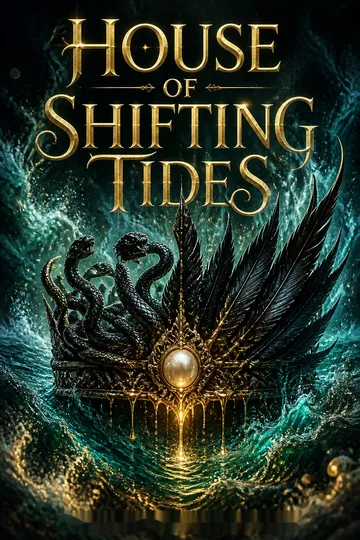
House of Shifting Tides is the fourth book in Olivia Wildenstein's Kingdom of Crows series. Readers praised the emotional story of Cathal and Zendaya, with many enjoying the second chance romance and character development. The book ties up loose ends from previous installments while introducing new plot elements. Some reviewers found the pacing slow at times and felt the ending was rushed. Overall, fans of the series appreciated returning to the world and characters, though a few thought it didn't quite match the quality of earlier books.
People Also Read




Characters
Zendaya
The reborn serpent princessZendaya is a Shabbin princess remade as a serpent shifter, then returned to human form without the memories that once anchored her. Her difficulty speaking and reading makes her dependent on other people’s explanations, but her curiosity and blunt questions keep her from becoming passive. She learns by observing bodies, customs, and consequences, often exposing assumptions that more experienced characters take for granted. Her healing tongue gives her a practical form of agency, though using it can leave her unconscious for days. Zendaya is motivated by belonging, knowledge, and the wish to protect those who trust her. Her central psychological tension is how to honor a former self without surrendering the right to choose who she is now.
Cathal
The grieving Crow guardianCathal is the Crow king’s brother, a powerful shifter and a devoted father to Fallon. He masks fear with anger and prefers action to explanation, especially when someone he loves is in danger. His history with Zendaya shapes his every response, even when she cannot recognize the intimacy behind his vigilance. Cathal’s protectiveness can become controlling, and his bluntness often wounds people he is trying to keep safe. Beneath the severe manner is a man whose loyalty is measured in endurance: he watches, waits, and repeatedly puts himself between danger and his family. His challenge is to care for Zendaya without treating memory, history, or love as ownership.
Fallon
The bridge between kingdomsFallon is Cathal’s daughter and Lorcan’s mate, raised in part by the Faerie women Ceres and Agrippina. She moves between Shabbin, Crow, and Faerie communities, often translating not only language but conflicting loyalties. Courageous and stubborn, she will accept personal danger when she believes her people need her, though her choices distress those who love her. Fallon is also playful and irreverent, a quality that keeps duty from consuming her whole identity. Her relationships make her a bridge between species and families, but that role carries pressure: others frequently ask her body, magic, and affection to settle political disputes.
Meriam
The imprisoned blood witchMeriam is Zendaya’s mother, a Shabbin blood witch whose past choices shaped the lives of several kingdoms. She is cunning, politically capable, and difficult to read, with a capacity for affection that coexists uneasily with manipulation. Her love for her daughter does not erase the harm she caused or the years of secrecy surrounding Zendaya’s life. Meriam’s history is entangled with the fall of the Regio dynasty, the imprisonment of Shabbe, and the magical bonds that connect her family. She is driven by a fierce desire to change the political order, but her methods raise the question of whether liberation can be pursued without exercising coercive power over others.
Lorcan
The storm-bearing Crow kingLorcan rules the Crows and is Fallon’s mate. He leads through patience and strategy, balancing his people’s safety against the need for alliances with Shabbe and Luce. His authority is linked to his people through a collective bond, which makes danger to him a danger to them. Lorcan trusts the Mahananda, but he also insists that rulers should be able to question the terms of magical decisions. As king and husband, he is protective without being indifferent to political costs.
Priya
The keeper of ShabbePriya is Shabbe’s queen and guardian of the Mahananda. She is a formidable sorceress, a grandmother to Zendaya, and a mother whose history with Meriam has left deep fractures in the family. Priya’s instinct is to protect through control, and she often believes that her knowledge of the realm gives her the right to make decisions for others. Her care is genuine, but her secrecy complicates it. She embodies the tension between stewardship and possession.
Behati
The queen’s seerBehati is Priya’s advisor, a seer whose visions help guide Shabbe through political and magical crises. Frail in body but forceful in mind, she is accustomed to carrying knowledge others cannot yet bear. Her predictions influence decisions long before their meaning is clear, which makes her both valuable and difficult to trust. Behati believes in the Mahananda, but her loyalty to its keeper and to its commands is not always easy to separate.
Enzo
Zendaya’s first serpentEnzo begins as a human fisherman whose life is shaped by poverty, abandonment, and the loss of his grandfather. After Zendaya heals him, he becomes a serpent shifter and her first denmate. He is earnest, observant, and hungry for belonging, often showing care through loyalty and practical attention. His feelings for Zendaya are intense, and his difficulty separating gratitude, kinship, and romantic desire creates strain between them. Enzo’s kindness is not weakness; it is a deliberate refusal to repeat the neglect that marked his early life.
Agrippina
Fallon’s Faerie motherAgrippina Rossi is a Faerie who helped raise Fallon and shares a complicated past with the Crow Reid. Her damaged memory has obscured much of her former self, but flashes of wit, ambition, and irreverence remain. She speaks plainly, dislikes being patronized, and meets unexpected changes with a mixture of sarcasm and courage. Her connection to Zendaya becomes significant because she is both family and a person whose mind has been used by others.
Kanti
The ambitious Shabbin cousinKanti is Priya’s granddaughter and a skilled Shabbin sorceress who has spent years preparing for political influence. Clever, socially perceptive, and fond of gathering information, she can be charming when it serves her aims and cutting when it does not. Her ambition is not merely vanity: she believes competence and preparation should matter in succession. Yet her certainty that she deserves authority makes her underestimate the claims and needs of others. Kanti’s relationship with Zendaya is shaped by kinship, rivalry, and competing visions of Shabbe’s future.
Asha
Zendaya’s steadfast guardAsha is one of Zendaya’s assigned guards and becomes her friend, teacher, and practical caretaker. She is warm, teasing, and attentive to ordinary needs such as food, clothing, and rest. Her humor eases Zendaya’s isolation, while her loyalty can turn fierce when anyone threatens her charge. Asha treats Zendaya as a person rather than a curiosity, making her one of the first reliable guides in the unfamiliar human world.
Abrax
The palace sword guardAbrax is a royal guard assigned to Zendaya. Steady and courteous, he helps her navigate the palace and watches over her without demanding that she understand every custom at once. His presence represents the formal protection of Shabbe, in contrast to Cathal’s self-appointed, emotionally charged vigilance. Abrax is reliable, though he sometimes follows orders that leave Zendaya feeling contained rather than protected.
Justus Rossi
The Crow king’s generalJustus is a Faerie general and the father of Agrippina. He is politically experienced, restrained, and deeply attached to the family he helped raise. His loyalties are complicated by his former marriage, his service to Lorcan, and the secrets he carries from the years of conflict. Justus understands that personal affection can become a political liability, but he is willing to risk his position when family is at stake.
Ceres
Fallon’s devoted caretakerCeres Rossi is Agrippina’s mother and one of the women who raised Fallon. She is perceptive, protective, and candid about the failings of the societies around her. Her attachment to Fallon is strong, but she also carries complicated ties to Justus and to Luce. Ceres offers Zendaya a living account of the daughter she missed raising, giving maternal knowledge a place outside blood and memory.
Erwin
The red-haired Crow allyErwin is a member of Lorcan’s inner circle and a loyal Crow whose humor often softens tense rooms. He is devoted to his mate, Liora, and willing to help Zendaya when she needs to travel between kingdoms. Beneath his casual manner is a strong sense of obligation to his people. He understands the danger posed by obsidian and the political risks of asking Zendaya to heal the injured.
Reid
Agrippina’s Crow counterpartReid is a Crow in Lorcan’s circle and Agrippina’s former lover. He is capable and loyal, but his feelings for Agrippina make him vulnerable to emotional confusion. Reid’s guardedness reflects the barriers between Faeries and Crows, especially around family and the possibility of children. He is one of the people who links the Sky Kingdom’s politics to Agrippina’s personal history.
Lazarus
The Faerie healerLazarus is a large Faerie healer who studies Shabbin remedies and crystals. His curiosity makes him eager to understand Zendaya’s unusual nature, and he initially serves as a bridge between Faerie and Shabbin healing traditions.
Soorya
The Shabbin healerSoorya is a Shabbin healer who carries medicinal crystals and knows how to treat many forms of injury. Her professional confidence reflects the reach of Shabbin magic, while her work introduces the limits of that magic against obsidian.
Antoni Greco
The Tarespagian governorAntoni Greco is a human who rises to govern a region of Luce. Enzo remembers him as a generous boat captain who fed and sheltered a poor child when no one else would. His reputation for fair hearings makes him an unusual political ally in a realm divided by species and class.
Cruaih
Cathal’s rescued kittenCruaih is a small black cat Cathal rescued after finding her family dead. She trusts few people, but her attachment to Cathal and gradual comfort around Zendaya reveal the tenderness he struggles to show in words.
Plot Devices
The Mahananda
Source and judge of magicThe Mahananda is the basin at the heart of Shabbe from which magic and transformation flow. It can remake bodies, break or impose magical conditions, communicate through its keeper, and guide the fate of shifters. Its judgments are treated as powerful but not always transparent, which creates tension whenever a character is asked to trust a vision or accept a sacrifice. The Mahananda is also physically vulnerable: when its power is drained, the wards, species, and political order around it become vulnerable. Its role connects personal transformation to the governance of an entire realm.
Magical bargains
Promises made physically bindingWhen two people with magical blood make a bargain, a mark appears on their bodies and can burn if they break the agreed terms. The bargains permit characters to negotiate across uneven power, as Zendaya does when she secures travel beyond Shabbe and later calls in favors to reach people who hold needed information. They can also become dangerous when one party lacks full knowledge of how the magic works. The device turns speech into lasting consequence and makes precision, consent, and trust essential parts of political as well as personal relationships.
Serpent healing
Tongue draws out corruptionZendaya’s serpent tongue can heal wounds by drawing out corrupted blood and tissue. The ability works where Shabbin crystals and ordinary blood magic fail, especially against obsidian damage, and later allows Zendaya to transform humans who are near death into serpent shifters. Healing is not free: it can leave her unconscious for days and makes the condition of the person she saves part of her own responsibility. The power begins as a means of caring for individuals, then becomes politically consequential as it creates a new people and offers a possible response to the Crows’ vulnerability.
The serpent toxin
Turns waterways into barriersA toxin developed in Nebba is poured into Luce’s canals to drive serpents away. It interferes with their gills and ability to shift, making ordinary water a hidden weapon against them. Its effects reach Shabbe when conspirators contaminate the moat and use poisoned water to trap Zendaya and Cathal beneath wards. Asha’s study of poisons helps Zendaya build partial resistance by taking tiny doses over time, a risky preparation that later allows her to remain active when others are incapacitated. The toxin makes environmental control a tool of political power.
Memory and mind links
Connects identity across bodiesThe novel uses erased memories, inherited visions, and mental bonds to make identity relational rather than purely bodily. Zendaya’s new form cannot remember her former life, though other characters still feel the history between them. Her new serpent companions can communicate mind to mind, while the Crows share their own collective link through their animal forms. These connections deliver information, but they also create risks of intrusion, mistaken intimacy, and manipulation. The restored memories do not simply solve the plot; they give Zendaya new evidence with which to decide whether her present relationships deserve the names they once carried.
The Kingdom of Crows Series


About the Author
Other books by Olivia Wildenstein



Download PDF
Download EPUB
.epub digital book format is ideal for reading ebooks on phones, tablets, and e-readers.








