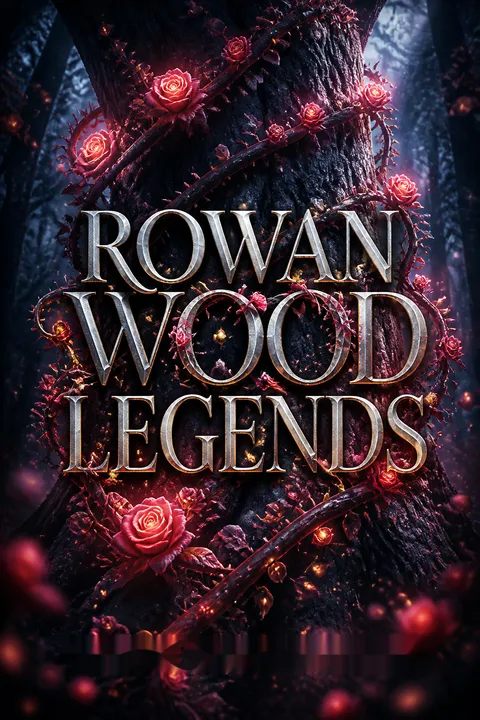


Plot Summary
Prologue
At dinner with her father and aunt, Catori Price tries to feel ordinary after her mother’s death and her best friend Blake’s loss. Her time with Kajika, a newly awakened hunter who has admitted he cares for her, offers a small comfort, but Stella has stolen the family book that might explain Catori’s strange heritage. When the doorbell rings, Catori hopes Kajika has come. Instead, a police officer arrives with news that the elderly gardener Holly is dead.
The opening places Catori between grief and discovery: she wants the familiar shelter of family life, yet every ordinary object sits beside an impossible fact. The stolen book turns private ancestry into a source of danger, while Kajika’s affection tempts her toward a new attachment before she has understood what she is. Her hope that he is at the door reveals how urgently she wants someone dependable. Holly’s death then converts the background mystery into an immediate investigation, binding mourning to plot.
Holly’s Last Ashes
The officer explains that Holly’s great-nephew reported her death, and Catori’s father, Derek, agrees to examine the body. Ace Wood arrives before the examination, warning that faeries disintegrate when their inner fire goes out. He denies killing Holly, shows Catori that faeries cannot read the stolen Wytchen Tree, and leaves behind the keys to her recovered car.
Later, Catori finds Holly’s body in the basement with a spreading rash. Kajika, who has returned from searching for Gwenelda, insists faerie guards may have pursued her. Before Catori can move the body, Holly’s flesh crumbles into silver ash. Catori carries the remains outside in a painted bowl and buries them beside Ley’s grave, concealing the truth from her father.
The body’s disintegration denies Catori the stable evidence her family’s mortuary work would normally provide. Her choice to bury Holly herself is both an act of care and an act of concealment, extending the pattern of shielding Derek from the supernatural world. Ace’s returned car complicates her suspicion without resolving it: kindness is not proof of innocence. The scene also makes grief material. Catori must handle the remains of someone who mattered to her while lacking the rituals, knowledge, and trusted authority that would make mourning feel safe.
A Rose From Ash
At Holly’s burial, Kajika refuses to sing the Gottwa funerary song because Holly chose faerie life, a refusal that wounds Catori and exposes how fiercely he still divides the two peoples. The ashes flow into the earth like liquid silver. Soon a thorned rose vine grows around the grave, the same kind of plant that surrounded the hunters’ burial place.
Kajika fears faerie essence has contaminated the hunters he helped bury, and his despair makes him question whether waking them was worth the cost. Catori cannot answer that, but gives him a reason to continue: find Gwenelda, then help recover the book. He leaves to search. Meanwhile Catori hangs an iron wind chime above her door and burns rowan wood to keep faeries away.
The rose turns funeral into evidence: faerie death does not simply end a life but leaves a living trace that unsettles the hunters’ own history. Catori’s burial honors Holly across a boundary Kajika refuses to cross, showing that her compassion is not the same as choosing a side. Yet her practical defenses, iron and rowan, reveal how precarious that ethic is. She wants to preserve relationship without surrendering safety. Kajika’s response is grief sharpened into absolutism, while Catori answers his despair not with reassurance but with a task that gives him a future tense.
Borgo’s Scar
After dropping her aunt at the airport, Catori spots a silver-haired faerie with a long scar at his throat. Kajika recognizes the scar as his own work and identifies the stranger as Borgo Lief, a former faerie guard who lost his magic to the hunters. Kajika gives Catori small rowan arrows that can immobilize faeries and orders her to stay guarded.
At Bee’s Place, Catori practices throwing them, then sees a flowering rose liana growing from Holly’s grave. Borgo follows her to Blake’s garage, where Catori has been punching a bag to manage her anger. He heals a deep cut on her palm, then uses captis to make her feel desire and affection. When he releases the spell, Catori realizes her feelings were manipulated.
Borgo’s entrance makes the past physically present through the scar Kajika left on him. Catori’s arrows offer a fragile substitute for the power she lacks, but their usefulness depends on preparation rather than confidence. Borgo’s captis complicates the idea that feeling is self-validating: Catori’s tenderness appears sincere to her precisely because the magic alters her access to judgment. Her discomfort afterward is not simply embarrassment. It is a renewed insistence that consent requires knowing what has shaped one’s desire, especially in a world where supernatural influence can imitate intimacy.
Ishtu’s Hidden Love
Borgo tells Catori that he loved Ishtu, Kajika’s former mate, and that Ishtu was killed by Lyoh Vega after Lyoh discovered their relationship. Borgo says he stayed alive for Cruz, the son of Lyoh and the slain Jacobiah, whom he helped raise. His account also exposes the brutal penalties faeries imposed on those who befriended hunters.
At Bee’s, Ace and Cruz interrupt to ask about a new huntress who killed a faerie named Simoni. They warn that more hunters could end the uneasy peace. Catori refuses to provide Kajika’s location and challenges Ace’s suspicion of the hunters. When she learns faerie bodies become plants, she connects Holly’s roses to the hunters’ burial flowers, a fact Ace had not told her.
Borgo’s testimony replaces a clean division between hunter virtue and faerie cruelty with a history of intimate betrayal, political punishment, and loyalties that cross species. His survival has been organized around caring for Cruz, but that care has also kept him tethered to the family that harmed him. The new huntress intensifies the present conflict before Catori understands its cause. Her refusal to hand over Kajika’s whereabouts is a moral choice and a relational one, yet it increases her isolation from both sides. Knowledge arrives through partial, interested accounts, so trust becomes an evidentiary problem.
Holly’s Burned Note
At Holly’s empty farmhouse, Catori finds an old photograph of twin sisters and a half-burned letter in the fireplace. Borgo translates its surviving words as a warning that faeries demanded the book and that Holly feared being killed with smoke. The rash on Holly’s skin now makes sense: rowan wood smoke, poisonous to faeries, caused her death.
Catori understands that Ace did not kill her, and that Gwenelda was involved. Borgo admits he has waited centuries to explain himself to Kajika, but agrees to let Catori prepare the hunter first. Kajika texts that he will not return that night. Catori keeps the letter and photograph, deciding to face him in person rather than send the truth by phone.
The note converts a suspicious death into a moral ambiguity rather than a simple murder mystery. Holly’s fear was real, but so was her wish to avoid being forced to reveal the book’s contents; Gwenelda’s role may therefore be protection, violence, or both. Catori’s new certainty about Ace does not produce easy reconciliation, since suspicion has already damaged their relationship. Her decision to tell Kajika face to face acknowledges that truth is not only information but an event between people. The family photograph further suggests that inherited conflict begins in relationships, not abstract racial categories.
Blood in the Cave
Kajika returns to the picnic grounds where Ishtu once met Borgo. Catori tells him about the note, and he admits that Ishtu truly had an affair with Borgo, then accuses Catori of resembling her in betrayal. His cruelty about Blake pushes Catori into a sudden surge of power: water rises from the lake and crashes over Kajika and the faeries.
Kajika reveals that Ishtu had not loved Borgo as Borgo believed, and the revelation breaks him. Borgo takes Catori’s rowan arrow, wounds her, and uses her blood to pierce his own heart. His body turns to ash despite Ace and Cruz’s attempts to save him. Catori survives the wound with their help, but Kajika leaves, and Cruz vows revenge.
The wave marks a bodily threshold Catori did not choose: anger becomes force before she can understand its source. Kajika’s attack on her is not merely personal cruelty; he uses his own betrayal to make her carry the weight of Ishtu’s. Borgo’s suicide then literalizes the cost of a story built on incomplete knowledge. He dies after learning that the love sustaining his survival may have been false, while Catori is left with dangerous blood and newly visible power. The scene refuses catharsis: each revelation produces another injury, and mercy must compete with revenge.
The Mark Changes Hands
Catori travels to Detroit with her friend Cass to search the archives of Forest Print for the plates used to print the Wytchen Tree. Ace finds them, admits he has been monitoring her, and then leaves when Catori asks him to go. Later, he and Lily join the women at dinner. Lily reveals she has found a way to remove Catori’s magical bond to Cruz without killing her: transfer it to another faerie.
Ace volunteers, despite Catori’s refusal. On a rooftop, Cruz performs a spell with Ace and Catori’s hands joined. The ritual uses Unseelie magic, which Lily obtained from the underground faeries called the forma, in exchange for the book. A kiss from Ace confirms the bond has moved from Cruz to him.
The transfer offers release from Cruz’s claim, but it does not restore Catori’s autonomy; it relocates the obligation to Ace. Her refusal matters, yet the group treats the procedure as a solution to competing loyalties rather than a decision she controls. The ritual’s price is especially consequential: the stolen book enters the hands of the forma, whose power and motives remain obscure. The new mark binds Catori to someone she distrusts and desires, making the plot’s central magical mechanism a precise analogue for intimacy under pressure. Protection, possession, and consent become difficult to disentangle.
The Book’s Missing Key
Catori and Cass locate the printing plates, but the archive owner will reproduce the book only for thousands of dollars. Ace pays the bill, asking Catori to share dinner with him in return. Their meal exposes his forced engagement to his father’s concubine and his dream of a more open faerie society.
When Catori tests his captis, she discovers her attraction is real, then rejects him as too bound to faerie prejudice and politics. The next morning, the owner says the plates were stolen by the ink supplier. Ace suspects a setup and later explains that he recovered the box, but the plates had been melted. The symbol Catori remembers from the book may be a key to the portals between worlds.
The lost plates turn a personal quest for family knowledge into a geopolitical emergency. Ace’s payment could be read as generosity or another form of leverage, but the dinner gives Catori a clearer view of his constraints and ambitions. Her rejection is an attempt to protect them both from a relationship shaped by unequal power and inherited contempt. The stolen plates then collapse that private question into public danger. Catori’s imperfect memory is suddenly consequential: the same fragment that might unlock a family history may also open a route for hostile forces.
Hunters Gather in Rowan
Back in Rowan, Catori finds Gwenelda at Holly’s farmhouse with a growing group of newly made hunters. Gwenelda explains that she created them after her blood accidentally transformed a woman, then continued after faerie guards threatened her. She says volunteers chose to join, though she erased the memories of those who refused.
Catori sees Kajika with Alice, the new huntress who killed a faerie, and learns he has begun training the group. Their meeting ends with Kajika accusing Catori of choosing the faeries over him. Before leaving, Catori sees Lily depart after warning that the faeries will not be able to kill more hunters. The gathering reveals that the conflict is no longer contained by the old sleepers’ return.
Gwenelda’s account complicates the language of consent: she describes voluntary recruitment, but memory erasure makes refusal impossible to retain. Her new clan answers a genuine threat while reproducing the coercive structures that threat has taught her to fear. Kajika’s attachment to Catori likewise turns protection into a demand for allegiance. Catori refuses to resolve either conflict through simple loyalty, but she has little leverage over the armed group forming around her home. Lily’s departure signals that the faeries are preparing for a wider confrontation, even as Catori tries to keep the conflict human-scale.
The Arrow Ambush
As Catori walks with Kajika through the cemetery, hidden hunters fire a volley of rowan arrows. Kajika throws himself over her and takes most of the shots. One arrow pierces Catori’s shoulder. To stop her pain, Kajika presses his own bloodied palm to the wound; her skin closes, though she fears his blood may turn her into a huntress.
He then discovers the W-shaped mark on her hand and learns that Cruz transferred his bond to Ace. Kajika condemns her for accepting faerie magic and leaves to confront his clan. Catori is shaken by the attack, the forced healing, and Kajika’s reproach. At the hospital, her friend Cass tells her that Astra has died, bringing Catori into a room with Stella and the family she betrayed.
The ambush makes the violence of the new hunters immediate: Catori is targeted not because of an action but because others read her as belonging to the enemy. Kajika’s body becomes a shield, and his blood saves her while threatening to redefine her identity. The rescue therefore carries both tenderness and coercion. His anger over the bond transfer shows that he experiences her choices as judgments on his people, not as decisions about her own safety. Astra’s death shifts Catori from one crisis to another before she can process the attack, sustaining the novel’s pressure on grief and care.
Stella’s Poisoned Dust
At Mercy Hospital, Catori confronts Stella over stealing the Wytchen Tree. Stella admits she took it to prevent hunters from entering Neverra, not to raise Negongwa. She also reveals that her mother, Astra, knew about the faerie world and feared the book’s power.
When Catori threatens to expose Stella’s secrets, Stella strikes her and blasts faerie dust into her face. Catori’s airway closes, and hospital staff intubate her as she loses consciousness. She wakes with Cass, Ace, and her father nearby.
Stella has fled to Neverra. Ace explains that he disguised a new mark on Catori’s neck as a bandage: her body absorbed Stella’s dust after Kajika’s blood changed its response to magic. Catori has acquired hunter power, though she still does not smell like a hunter.
Stella’s attack fuses family betrayal with political calculation: she protects her people by harming the person whose ancestry makes her dangerous to them. Catori’s near-suffocation is a consequence of speaking openly in a world where truth can trigger violence. The new tattoo makes that violence bodily and lasting. Its appearance after Kajika’s blood complicates any easy distinction between human, hunter, and faerie, while Ace’s concealment protects Derek at the cost of withholding the truth from him. Survival here is neither restoration nor certainty; Catori wakes alive but newly altered.
A Kiss Above Rowan
At the hospital window, Catori sees the tattoo around her neck and asks Ace whether she has become a huntress. He cannot settle the question, but confirms that she no longer smells like one. Their argument over trust and allegiance gives way to the admission that each has been hurt by the other. Catori realizes Ace returned because her brand began flickering during the Night of Mist, and he feared she had died.
He kisses her without using captis; she responds, then tests his power and learns it no longer affects her. After the danger of the night passes, Ace returns to Rowan. He takes Catori above the clouds, where she asks if he will stay in her life. Their kiss begins a relationship neither can guarantee will be safe.
The romantic resolution does not erase the political conflict or answer Catori’s identity question. Instead, it establishes a different basis for intimacy: she can recognize and test supernatural influence, and Ace must meet her without relying on it. Their mutual admissions do not create trust automatically, but they make vulnerability reciprocal rather than imposed. The flight above Rowan offers temporary distance from the factions, not escape from them. Catori’s choice is therefore neither a clean surrender to faerie life nor a return to humanity; it is a commitment made while the consequences remain unresolved.
Epilogue
As the Night of Mist ends, Catori waits for Ace to return from guarding the portals. At Bee’s Place, Cass presses her about the Faeli dictionary and notices how often Catori and Ace seem to seek each other out. Then Ace appears, and Catori asks him to reclaim the dust around her neck so he can protect himself among the hunters.
He refuses. Instead, he takes her into the night and carries her through the clouds. Catori touches the mist, then kisses him among the stars, aware that their new closeness is real even if the danger surrounding it has not passed.
The epilogue turns the book’s ending into a suspended beginning. The immediate intimacy between Catori and Ace is affirmed, but neither can leave the worlds that make their relationship dangerous: he must return to the portals, and she remains embedded in Rowan’s unstable hunter community. The dust around her neck is both a safeguard and an unresolved mark of violence. Her final flight recasts earlier abduction and rescue as chosen closeness, while the clouds preserve uncertainty. Their romance offers connection, not a solution to the political crisis.
Analysis
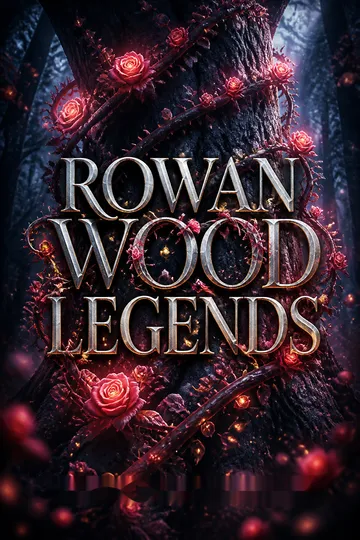
Rowan Wood Legends makes identity a bodily and political problem rather than a matter of private self-description. Catori wants to remain human, but her family history, the mark on her hand, the power that rises from the lake, and the magic her body absorbs all make that preference difficult to maintain. The book refuses a simple opposition between hunter and faerie: hunters protect one another through violence, faeries enforce hierarchy through punishment, and individuals such as Borgo, Ace, and Catori expose the failures of both groups’ moral stories.
The novel’s recurring bargains sharpen its account of consent. Catori’s obligations are written on her skin, while captis makes desire feel like an emotion she chose. Even benevolent acts, including Kajika’s healing blood and Ace’s protection, carry consequences she cannot fully evaluate beforehand. Her growing agency therefore consists less in escaping influence than in questioning it, naming what has happened, and refusing to let another person define her loyalties.
Grief is the emotional engine beneath the fantasy. Catori misses Nova and Blake; Kajika’s mourning for Ishtu has distorted his view of the living; Borgo has built centuries around an unresolved love. Their losses do not ennoble them automatically. They can make tenderness possible, but they can also turn into suspicion, possession, and revenge. The story’s strongest ethical counterforce is Catori’s refusal to treat another death as an adequate answer to the last. The ending offers intimacy rather than resolution. Catori and Ace choose each other, but the book leaves her altered, the portal mystery unsettled, and the hunters and faeries poised for further conflict. Love creates a reason to keep negotiating across divisions; it does not dissolve the systems that produced them.
Review Summary
Rowan Wood Legends received mostly positive reviews, with readers praising the improved character development, world-building, and romance compared to the first book. Many enjoyed the fast-paced plot, intriguing faerie mythology, and the growing relationship between Catori and Ace. Some critics found the love triangle frustrating, but overall, readers were engaged by the twists, mysteries, and Catori's struggle to choose between her faerie and hunter heritage. The audiobook narration received mixed reviews, with some preferring to read the physical book.
People Also Read

Characters
Catori Price
Between two inheritancesCatori is a nineteen-year-old aspiring doctor living with her father above Rowan’s cemetery. Her mother’s death and her friend Blake’s loss have left her grieving just as she discovers her family is tied to both hunters and faeries. She is observant, curious, and inclined to investigate what others would rather conceal, but her compassion often pulls her into conflicts she cannot control. She wants to remain human because she values knowledge, medicine, and the freedom to choose her own identity. Her loyalty is not automatic: she questions hunters and faeries alike, and her humor helps her resist being reduced to a symbol in their struggle.
Ace Wood
A guarded faerie princeAce is the wealthy faerie prince and older brother of Lily. He is charismatic, proud, and accustomed to turning discomfort into teasing, but his confidence conceals a sharp awareness of the constraints imposed by his family and the faerie court. He wants a more just Neverra, where people can choose their friendships and where status does not dictate every relationship. His history with Catori begins in suspicion and debt, then grows more complicated as he protects her while withholding information. He distrusts hunters, yet he is also capable of questioning the rules that make his world cruel.
Kajika
A grieving hunterKajika is a hunter awakened after two centuries of burial, carrying the memories of Catori’s deceased friend Blake. He is physically formidable, disciplined, and shaped by a history of faerie violence that makes trust difficult. His lost mate, Ishtu, remains the measure against which he interprets love and betrayal. He wants to protect his people and preserve their traditions, but that protective instinct can harden into control, especially when Catori’s choices challenge his certainty. His bond with her is complicated by her resemblance to Ishtu and by the memories he carries, leaving him unsure where grief ends and present affection begins.
Gwenelda
The awakened huntressGwenelda is an ancient hunter revived after centuries underground and the sister-in-law of Kajika. She carries the trauma of the old massacre and is fiercely protective of her surviving people. Her manners and worldview belong to another century, yet her choices respond to present threats with urgent practicality. She is capable of tenderness toward family and of severe action when she believes survival is at stake. Catori’s family history links them, but Gwenelda’s grief over her own mother and her suspicion of faeries leave little room for easy reconciliation. She wants her people to endure, even when the means of protecting them create new dangers.
Borgo Lief
The scarred former guardBorgo is a former faerie first guard who once served the royal family and is connected to Cruz through years of care. Hunters stripped him of his magic after a forbidden friendship crossed the species boundary. He is patient, sorrowful, and deeply shaped by a love he has carried for centuries. His account of the past challenges the stories that hunters and faeries tell about one another. Rather than seeking status or power, he wants his history understood and hopes to help prevent further violence. His courtesy can feel disarming, but his grief is never far from the surface.
Cruz Vega
A faerie bound by bargainsCruz is a faerie medical examiner and the son of Lyoh Vega and Jacobiah. He is engaged to Lily and has a long, complicated bond with Borgo, who helped raise him. Cruz is composed and politically alert, but his calm manner can conceal how readily he uses bargains and magic to get what he wants. He values loyalty and the fragile peace between faeries and hunters, though his actions sometimes deepen Catori’s mistrust. His role places him between family authority, court expectations, and the people he considers his own.
Lily Wood
The silent bridgeLily is Ace’s younger sister, a mute faerie who communicates through sign language and written messages. She is observant and emotionally perceptive, often understanding tensions before others name them. Her relationship with Cruz is close, and she is protective of it without being blind to its complications. Lily wants security and connection in a court that treats difference as a liability. Her choices can be brave and risky, especially when she seeks solutions the more powerful faeries have not found.
Stella Sakar
Catori’s estranged confidanteStella is a part-faerie woman who owns Astra’s Bakery and is Catori’s former friend. She is Faith’s mother and Etta’s sister. Stella is strategic, proud, and loyal to her faerie community, but she keeps important truths from the people closest to her. Her secrecy comes partly from a belief that knowledge itself can endanger those she loves. Catori’s anger at her betrayal reflects the intimacy of their long friendship, while Stella’s attention to family and political survival often leads her to treat trust as expendable.
Cass
Catori’s steadfast friendCass is Catori’s closest friend in Rowan and the daughter of Etta. Warm, persistent, and socially confident, she dreams of opening a bar far from their small town. She offers Catori ordinary companionship through food, jokes, dancing, and road trips, even when she can tell that something serious is being hidden from her. Cass is protective without being solemn and does not mistake a friend’s silence for lack of need. Her presence gives Catori a connection to human life beyond the hunters and faeries.
Derek Price
Catori’s grieving fatherDerek is Catori’s father and Rowan’s medical examiner. Gentle and dependable, he is still grieving his wife Nova while trying to give his daughter the steadiness she needs. He values honesty and responsibility, which makes Catori’s growing habit of concealing supernatural events painful between them. His care appears in practical gestures, from helping with daily needs to preserving his wife’s keepsakes. Derek represents the family life Catori wants to protect, even as that protection requires her to withhold the truth.
Aylen
The outspoken auntAylen is Nova’s younger sister and Catori’s aunt. Sociable, impulsive, and affectionate, she moves easily into conversations and can turn a tense room into a livelier one. She remembers her sister with warmth and offers Catori a living link to her mother’s childhood. Aylen’s instincts are often more ordinary and human than Catori’s new concerns, which makes her a reminder of the family world Catori is trying to keep intact. She is a loving presence, though her openness can complicate Catori’s efforts to keep secrets.
Holly
The keeper of old storiesHolly is an elderly gardener in Rowan whose knowledge of Gottwa history and faerie legends connects Catori to a largely hidden family past. She is thoughtful, private, and devoted to preserving stories in a world where few people remember their meaning. Her farmhouse and greenhouse hold traces of the lives that came before Catori. Holly’s age and long isolation make her both a cherished relative and a figure of mystery, someone whose choices have consequences beyond the quiet life she appears to lead.
Astra Sakar
The family’s beloved elderAstra is a part-faerie baker, mother to Stella and Etta, and grandmother to Cass and Faith. She helped raise Ace when he was young and remains important to the Woods family. Her bakery makes her a familiar figure in Rowan, but her knowledge reaches beyond ordinary town life. Astra is generous and capable, with a complicated history that her daughters do not fully share. Her influence is felt in the family loyalties, secrets, and inherited choices that shape the younger generation.
Jimmy
The town’s young deputyJimmy is Cass’s brother and a police officer in Rowan. He brings practical law enforcement into a town where supernatural conflict often slips past ordinary explanations. He is conscientious and protective of his sister, but he has no full understanding of the forces gathering around Catori’s family. His willingness to investigate reports and check on familiar people gives him a grounded role amid the magical danger.
Faith
Stella’s guarded daughterFaith is Stella’s daughter and Cass’s cousin. Sharp-tongued and defensive, she has learned to expect disappointment from her mother and resents being excluded from Stella’s life. Her hostility toward Catori is complicated by old tensions and by the fact that both young women are living with family secrets they do not fully understand. Beneath her confrontational manner is a desire to be treated as someone worth telling the truth.
Nova Price
The mother Catori missesNova is Catori’s late mother and Derek’s beloved wife. A caring, attentive parent, she encouraged Catori’s curiosity while trying to keep her safe. Her warmth survives in family memories, gardening habits, and the objects she left behind. Catori’s grief often becomes sharper when she remembers moments in which she failed to show her mother how much she mattered.
Gregor
Neverra’s ruling wariffGregor is the current faerie wariff, a powerful ruler whose demands shape the choices of Ace, Stella, and the other court figures. He values order and authority, and his position makes him a source of pressure even when he is absent from a scene. His rule reflects a society where political obedience and personal relationships are closely entangled.
Linus Wood
The powerful family patriarchLinus is Ace and Lily’s father, a wealthy faerie patriarch with influence over the Woods family and Neverra’s politics. His approval matters to his children, even when they question the choices he makes. Linus represents the authority of a powerful family whose private decisions can shape the lives of people well beyond its household.
Ishtu
The lost hunter mateIshtu was Kajika’s mate and remains central to the memories that shape his understanding of love. Catori resembles her, a likeness that affects how others respond to Catori and complicates Kajika’s feelings. Ishtu’s story is carried through conflicting accounts, making her a presence defined as much by memory and interpretation as by the life she lived.
Plot Devices
The Wytchen Tree
A book of hidden routesThe Wytchen Tree is a family book of stories and concealed knowledge, written so faeries cannot easily read it. Catori can see material on its pages that appears blank to them, making her ability valuable and dangerous. The faeries seek it for reasons that are initially obscured, while Catori wants it back as both family inheritance and a source of answers. Its diagrams may relate to the portals connecting worlds, so the loss of the book escalates the conflict beyond personal theft. Its language, ink, and hidden images make knowledge itself a contested magical object.
The gajoï brand
A magical debt made visibleA faerie bargain brands Catori’s hand with a V-shaped mark, linking her to Cruz and causing intense pain when the debt is claimed. The mark also signals distress and can alert faeries to her condition. It turns an abstract contract into a physical relationship Catori cannot simply ignore. Lily and Cruz later find a spell to transfer the bond to Ace, changing its visible shape without resolving the larger question of consent. The brand makes obligation legible on Catori’s body, while forcing her to negotiate with people who hold more magical power than she does.
Rowan wood and iron
A fragile human defenseRowan wood is poisonous to faeries and is used in smoke, arrows, and the boundary surrounding the hunters’ graves. Iron burns faeries and can repel them, so Catori wears iron jewelry and hangs an iron wind chime above her door. These protections are imperfect: they can hurt, delay, or deter supernatural beings, but they do not make Catori invulnerable. The materials also carry cultural meaning, connecting the town’s burial practices to the hunters’ history. Their repeated use grounds magical conflict in objects Catori can hold, build, and deploy even when she lacks control over her own powers.
Hunter blood and faerie dust
Power that changes bodiesHunters can confiscate faerie magic and retain it as tattoo-like marks beneath their skin. Blood can also awaken hunter abilities when it enters another person’s body, while faerie dust can influence, heal, or incapacitate depending on its use. Catori’s mixed ancestry makes the effects unpredictable: a hunter’s blood heals her, and later she absorbs dust from a faerie attack. These mechanisms transform conflict into physiology, so every injury can alter what a character is capable of. They also make identity less stable than the groups’ own divisions suggest.
The portals of Neverra
A passage between worldsPortals, called astiums, connect Earth with Neverra, the faerie world. Their locations and the means of opening them are guarded knowledge, and the symbol in the Wytchen Tree may provide access to them. The threat of hostile faeries crossing through turns the book’s missing diagram into a danger for both worlds. The portals also embody the larger tension between separation and contact: faeries visit Earth to explore, while hunters fear invasion and seek to prevent it. Guarding or sealing the passages becomes a political and personal burden for the characters.
The Lost Clan Series
About the Author
Other books by Olivia Wildenstein

Download PDF
Download EPUB
.epub digital book format is ideal for reading ebooks on phones, tablets, and e-readers.








