

Plot Summary
Prologue
Years before Amara is born, her mother, Catori, grieves another lost pregnancy while the storms stirred by her emotions darken Neverra. Her husband, Ace, fears the repeated losses are breaking both of them, but Catori cannot yet surrender the hope of having a child.
His humor steadies her without diminishing their grief, and she persuades him to try once more. Their private decision links the kingdom’s weather to the vulnerability beneath its royal power: the future princess begins in the shadow of losses her parents have never forgotten.
The prologue gives the royal family a history of vulnerability before the main plot presents Amara with extraordinary power and privilege. Catori’s storms make private grief physically consequential, while Ace’s humor offers connection rather than a cure. Their choice to keep hoping is neither triumph nor certainty; it is an act of intimacy made after repeated disappointment. That framing matters later, when parental protection becomes a political burden for Amara. Her parents’ fear of losing her is not simply possessiveness. It is shaped by a past in which love repeatedly met the possibility of loss.
A Favor Opens the Door
Amara Wood, the mixed-blood daughter of Neverra’s king, slips past her guards and into the Earthly bar York House. She is meeting Joshua Locklear, a Daneelie who once covered for one of her illegal deals and can now claim repayment through a binding faerie favor. Joshua says a hidden prison may hold his sister Kiera, who vanished after tormenting Amara’s aunt and uncle.
He believes its movable portal is concealed in a painted leaf inside Neverra’s council hall. Amara doubts him, but Joshua’s leverage makes refusal impossible. Before she can return home, her enemy Remo Farrow arrives with guards and orders her back to Neverra, where her father and the wariff are waiting.
Amara begins by using royal privilege to evade ordinary rules, then discovers that supernatural law can make a favor more binding than rank. Joshua’s leverage works because her earlier choice to let him take blame has converted embarrassment into obligation. The prison quest therefore begins not as a rescue mission freely chosen, but as a debt she cannot refuse without consequences. Remo’s arrival brings another form of constraint: public authority enforced by someone she already resents. These pressures establish Amara’s central problem. She has remarkable abilities, yet other people keep defining what she must do with them.
Remo Becomes the Match
In the council hall, King Ace and wariff Gregor Farrow tell Amara that royal custom requires her to become engaged before adulthood. Gregor names his grandson Remo, a lucionaga guard whom Amara openly despises.
Her father privately explains the political danger: he suspects Gregor has concealed Kingston, Ace’s illegitimate half-brother, who once attempted a coup. An alliance with Remo may keep Gregor satisfied while the dragon-formed Silas investigates.
At the public announcement, Amara’s mother Catori and Remo’s mother Faith erupt into accusations over Faith’s dead mother and Catori’s past. Despite the storm their anger raises, the betrothal proceeds, leaving Amara bound to Remo before either knows what waits in the council hall’s painted ceiling.
The engagement turns private desire into a matter of state. Ace asks his daughter to accept a public bond not because he thinks Remo is an ideal partner, but because political stability may depend on keeping Gregor from acting. Amara understands the logic and still experiences it as coercion. The mothers’ quarrel shows that the proposed alliance cannot erase inherited grievance; it makes the grievance visible before the court. The scene also gives Remo a double role. He is Amara’s personal antagonist, but his family position makes him a potential instrument in a larger struggle over succession.
A Bargain in Blood
During the engagement revel, Remo’s ten-year-old brother Karsyn corners Amara and drives a metal dagger into her chest. Remo breaks the blade with his own dust, but Karsyn attacks again. Amara’s wounded hand accidentally captures magical dust, leaving dark filigree across her palm and giving her an unfamiliar weapon.
Karsyn admits he meant to kill her because he thought she would ruin Remo’s life. Amara demands a bargain: Remo must owe her for his brother’s fate. He accepts, and she keeps Karsyn’s dust rather than immediately seeking a harsher punishment. The attack leaves her bleeding, her engagement more dangerous than ceremonial, and Remo indebted to the very girl he has spent years belittling.
Karsyn’s attack makes the political arrangement bodily real. Amara is no longer weighing an unwanted engagement in the abstract; she has been injured by a child who believes violence is loyalty. Her accidental capture of dust complicates the usual hierarchy between powerful Seelies and the Hunters who can seize their magic. The bargain with Remo is a response to danger, but it also gives Amara leverage over the man she believes wants her gone. His acceptance reveals a protective attachment to his brother that complicates his hostile public persona without yet making him trustworthy.
The Leaf Swallows Them
After the revel, Amara slips away to inspect the gold-leaf mural in the council hall. She finds the moving leaf Joshua described, tests it with salt, and is sucked through the ceiling before she can retreat. Remo has followed her, though he says he did so out of curiosity, and tumbles into the prison after her.
They land in a muddy frontier town where neither can fly, summon fire, use dust, or activate their Infinity bracelets. The portal hangs beyond their reach, while the town’s furniture and food are lifeless imitations. Amara realizes the prison has stripped away the powers and protections that define their lives. Remo, equally stranded, must decide whether to treat her as a rival or a partner.
The portal removes the social machinery that has made Amara a princess and Remo a guard. Their titles still matter to their memories, but neither can summon the abilities that would make those titles useful. That loss forces the relationship out of its familiar performance of insults and rank. Amara’s decision to investigate was compelled by a bargain, but Remo’s choice to follow is his own. His presence can be read as surveillance or concern, and the prison makes the difference between those motives a question neither can settle through status alone.
Wolves Guard the Train
Amara searches the empty frontier settlement and finds one impossible object: a fresh red apple in its schoolhouse. Remo dismisses the town as a dead end, but the two discover that the locomotive is real enough to move. Before they can escape on foot, a pack of enormous wolves charges from the mountain tunnel.
Remo hauls Amara out of the tracks, and they climb onto the train as the wolves batter its sides. Amara pulls the controls, sealing them inside and setting the train in motion. The carriage carries them away from the pack into a glass city, but the apple remains unexplained. For the first time, survival depends on their combined decisions rather than either one’s powers.
The frontier cell teaches Amara and Remo that appearances are unreliable, but not everything is false: the apple is solid, the wolves are lethal, and the train can carry them onward. Their cooperation develops through urgent action rather than trust. Remo rescues Amara without asking for recognition, while she risks operating an unknown machine because standing still is worse. The apple’s recurring presence introduces a quiet puzzle amid immediate danger. The prison’s design seems to offer useful objects and then punish assumptions about them, training its captives to question every apparent gift.
The City Remembers
In the glass city, a sealed elevator shows Amara scenes from Remo’s past and Remo scenes from hers. Amara watches Remo as a child, taught by Gregor to see her as a route to the crown, and as a boy planning to free his family’s confiscated dust. She also sees his mother fighting with Silas over Catori. The visions make Amara fear Remo may have wanted her mother dead.
Before they can make sense of them, the city cracks apart. Remo carries her through falling glass, then collapses as a shard wounds him. He appears to disintegrate in her arms, leaving her grieving among the ruins. When he returns from the mud field, alive, he confirms the prison can stage deaths as well as inflict them.
The elevator turns memory into a coercive spectacle. Its scenes expose real resentments, but the prison’s manipulative setting makes interpretation uncertain, so Amara must confront how readily she treats a glimpse as proof. The earthquake then transforms emotional doubt into physical dependence: Remo risks himself to carry her, and she believes she has watched him die. His return does not erase the fear; it makes the prison’s rules more unstable. Their bond deepens through a cycle of rescue and suspicion, with each act of care challenged by the possibility that the other has hidden motives.
The Inn Sets Its Trap
The next train carries them to a replica of Rowan, where Bee’s Place contains running water, warm peach pie, and a bathrobe that appears without an explanation. The comfort makes Amara and Remo suspect an unseen jailer. When the inn seals its windows and sounds an alarm, they search for a four-digit code.
Amara recognizes that the endlessly replenished pie points to the mathematical constant pi; the code opens the shelter just as a tornado tears through the town. In the cellar, Remo fashions a sling for her injured arm, and Amara uses her captured dust to bind wreckage into a climbable path. They survive the storm, and Remo reveals he followed her into the first portal because he thought she was looking for Karsyn.
The inn makes comfort part of the threat. Water, shelter, and food are not straightforward gifts; they invite the captives to relax just before the building locks them in. Amara’s mathematical insight gives her agency that does not depend on her royal powers, while Remo’s care for her injured arm changes the emotional texture of their partnership. Their closeness grows through practical attention rather than grand declarations. His explanation for following her also reveals that his actions were motivated by fear for someone else, though he still frames that concern as foolishness.
A False Neverra
A counterfeit Neverra surrounds the train with mist, snakes, and a candy shop modeled on the one Amara remembers. In a golden nightmare cage called a cupola, Remo sees imagined threats and attacks Amara, knocking her from the rising cage. She falls into the mud beneath the portal and revives, then finds Remo returned too, horrified by what he believes he has done.
Amara forgives him, and Remo admits he has cared for her since she was injured by a venomous creature as a child. They kiss, but Amara insists she wants a chosen relationship, not one imposed by their engagement. She reveals her illegal sale of Daneelie scales to a human army; Remo’s anger and her use of their bargain leave their trust newly strained.
The cupola externalizes the damage that fear can do to perception: Remo’s imagined enemy becomes Amara, and his attempt to escape the vision makes him harm the person trying to save him. Her forgiveness is not naïveté; she recognizes that he was manipulated, while still naming the history of cruelty between them. Their first kiss makes attraction undeniable but does not solve their incompatible expectations. Amara wants lasting commitment, while Remo has avoided attachments. Her confession about the scales tests whether intimacy can survive accountability, especially when she uses the bargain to prevent him from revealing her crime.
Kingston Is Alive
The train reaches a tropical valley and explodes, throwing Amara into a deep wound and a spell of unconsciousness. Remo carries her to a waterfall and binds her injury with torn cloth. When she wakes, she meets Kiera Locklear and Kingston, the uncle Ace believed Gregor had secretly kept alive. Kiera is wary of Amara’s royal identity and doubts she came to rescue anyone.
Kingston confirms that time does not age prisoners normally, while Kiera warns that the cell’s enormous tigri will soon hunt them. To repair Amara before the fight, Kiera deliberately kills her, relying on the prison’s power to return its captives. Amara revives healed and heads toward the others, now knowing the coup threat is physically present.
The revelation of Kingston’s survival converts Ace’s suspicions into immediate danger, while Kiera’s skepticism prevents Amara from assuming that royal status will earn trust. The prison’s resurrection rule has practical value, but Kiera’s deliberate use of it is still an assault that treats Amara’s body as a resource. Amara accepts the risk because her wound would otherwise make her a liability. This moment marks a shift from surviving the prison’s staged ordeals to confronting the political conflict that caused her betrothal. The cell is no longer only a maze; it holds witnesses, enemies, and evidence.
The Revenant Returns
After reviving, Amara crosses a river crowded with blood-red vamp beetles, using her captured dust to make a snorkel and breathe beneath them. She reaches the valley as the prisoners fight the tigri. Remo, Kiera, Kingston, and Quinn Thompson are among the survivors; a black-haired hunter kills the last beast. Amara recognizes him as Cruz Vega, the fae hero whose presumed death shaped her family’s history.
Cruz explains that Gregor injected him with venom and sent him into the prison decades earlier, leaving him unaware that his friends remained alive. His return means Catori’s sister Lily and King Ace may see him again, but Remo’s hostility shows that Gregor’s cruelty has not made it easy for him to reject his grandfather.
The beetle crossing makes Amara’s return to the group an act of improvisation: she does not defeat the swarm so much as find a way to breathe through it. Cruz’s appearance expands the scale of Gregor’s crime from a hidden coup plot to decades of concealed imprisonment. His survival offers hope to Amara’s family, but it also places Remo in a painful position. The man he has trusted most is responsible for an injustice he cannot dismiss. The scene asks whether family loyalty can remain morally coherent when the family’s authority depends on hiding its victims.
The Hunt Turns on Them
The prisoners prepare meat and shelter while the tigri continue stalking the valley. Amara refuses to remain a protected spectator and helps fight the predators with weapons shaped from Karsyn’s dust. When Giya arrives through another train wreck, she brings news that her twin Sook has also entered the prison, though she believes a three-headed water beast killed him.
During the next attack, Quinn turns on Remo, hoping Kingston’s return to power will secure his own future. Remo kills Quinn, who will revive unless he takes the apple. Kingston uses the confusion to seize Giya and press the apple toward her mouth, threatening Amara with the one object that can make death permanent.
The animal attacks make physical competence necessary, but the human danger comes from competing political loyalties. Amara insists on fighting rather than being guarded, testing whether Remo can respect her agency when protection would be easier. Giya’s arrival gives Amara a piece of home, then quickly places that bond under threat. Quinn’s betrayal shows how a weak promise of future status can recruit people into violence. Kingston’s use of the apple is more than intimidation: it turns the prison’s only permanent exit into a weapon against the family Amara loves.
The Apple Ends Kingston
When Remo draws Kingston away from Giya, Amara tackles her uncle and knocks the apple from his hand. She uses Karsyn’s dust to choke Kingston unconscious, then forces a piece of the fruit into his mouth with water. He dies permanently, and Amara remains numb as the act settles over her.
Remo kills himself with his machete to test whether the apple’s effect has spread; he returns, confirming the fruit must be eaten to end a life. Quinn, convinced that imprisonment has become unbearable, later takes the apple himself and dies. Amara is left beside Giya, uncertain whether Remo will return again, while the survivors face the weight of choices that cannot be undone.
Amara’s victory is also a moral rupture. She kills Kingston not in a clean act of self-defense alone, but from a desire to protect her father and end a threat permanently. The fruit makes that choice irreversible, stripping away the prison’s usual promise that violence can be survived. Remo’s self-inflicted death functions as a test of the rule, but also exposes how far he will go to resolve Amara’s fear. Quinn’s later choice clarifies that the apple can represent escape as well as murder. The survivors must live with different meanings attached to the same act.
The Families Find Them
Amara’s cousin Giya leads her family to the prison after Joshua finally reveals what he knows. Sook, who survived his encounter with the water beast, reaches Neverra just before the rescue party arrives with Kajika. Catori, Lily, Faith, guards, and King Ace enter the prison; Catori reunites with the long-missing Cruz, and Ace embraces his friend.
Back in Neverra, Silas becomes wariff and Gregor awaits judgment. At Amara’s urging, Gregor is stripped of his dust and exiled to Earth rather than executed. Joshua receives the draca position as the price of his information. Amara’s parents accept her feelings for Remo, though they ground her from portals for a month after learning of her illegal scale sale.
Rescue restores the family network that the prison severed, but it does not return everyone to the same emotional world. Cruz has missed decades; his friends have continued their lives without knowing he survived. Amara’s decision to spare Gregor from execution does not absolve him. Stripping his power and sending him away separates justice from vengeance, a distinction she has struggled to maintain. Joshua’s promotion shows that political information carries a price even when it helps rescue people. Amara’s parents also respond to her as both daughter and future queen, loving her while holding her accountable.
Epilogue
After a long swim, Amara finds Remo waiting on her deck with the pen he carried through the prison. He uses the bargain she owes him to make her confront her feelings, but the magical pressure hurts her before she admits that she loves him. Remo apologizes for the crude method and tells her he has loved her for years.
They tease each other about his impending conversation with her parents, then agree that neither will leave the other behind again. When Remo burns away their clothes in playful retaliation, Amara answers with her own fire, and their prison-born bond becomes a relationship they choose in freedom.
The epilogue makes an uneasy distinction between magical obligation and chosen intimacy. Remo’s use of the favor repeats the coercive structure that began the plot, and Amara’s pain exposes the cost of turning affection into a test. His apology matters because it acknowledges that love cannot be extracted as proof, even from someone already bound to him. Their teasing afterward restores the mutual play that has become part of their relationship, while their shared promise of not separating answers the opening fear of loss. The final fire is no longer a storm or weapon; it is an exchange between equals.
Analysis
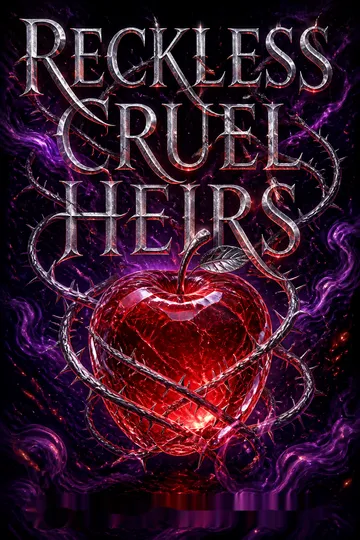
Reckless Cruel Heirs makes confinement a pressure test for both political power and romantic performance. Amara enters the prison as a princess whose many abilities seem to promise control; the cells remove those abilities, leaving her to solve problems through observation, improvisation, and help she cannot command. Her changing relationship with Remo follows the same pattern. Outside, their rivalry is reinforced by family history and public roles. Inside, his rescues matter, but so do his mistakes, especially when the cupola makes him attack her. Trust is not produced by danger alone. It grows when each character admits what they have done and allows the other person to remain capable of choice.
The plot’s political conflict is similarly grounded in family intimacy. Ace arranges the engagement to deter Gregor, but this protection turns Amara into a bargaining instrument. Gregor’s hidden prison reveals the extreme form of a court that treats people as pieces to be placed and concealed. The discovery of Kingston and Cruz exposes the human cost of that logic: apparent death, exile, and even family loyalty have been manipulated to preserve power. Yet the story does not resolve injustice through a simple restoration of the old order. Amara kills Kingston with the apple, then urges that Gregor lose his power and freedom rather than his life. Her choice does not erase what he did; it distinguishes accountability from the immediate appetite for revenge.
The recurring apple condenses the prison’s central moral problem. Most deaths are reversible, so courage can become reckless and cruelty can be disguised as temporary. The apple removes that safety net. When Quinn chooses it, escape becomes an act of agency as unsettling as Amara’s use of it against Kingston. The novel finally ties its supernatural machinery to ordinary ethical questions: who may decide another person’s fate, what protection costs, and whether love can survive when it begins as obligation. Amara and Remo’s relationship becomes credible not because danger makes them inseparable, but because they return to freedom still willing to choose one another.
Review Summary
Reckless Cruel Heirs is highly praised for its engaging enemies-to-lovers romance, thrilling plot, and well-developed characters. Readers appreciate the imaginative world-building, especially the supernatural prison setting. Many consider it the best book in The Lost Clan series, enjoying the continuation of the story with a new generation. The chemistry between Amara and Remo is frequently highlighted, as is the author's ability to create unexpected twists. Some readers express hope for more books in the series, particularly focusing on certain characters introduced in this installment.
People Also Read
Characters
Amara Wood
The many-powered heirAmara is the daughter of King Ace and Catori, heir to Neverra, and a rare blend of Seelie, Unseelie, Daneelie, and human heritage. Her powers make her formidable, but they also leave her conspicuous and isolated. She is quick-witted, impatient with condescension, and inclined to test authority rather than accept it quietly. Beneath her defiance is a strong need to be chosen for herself, not treated as a political asset or a dangerous collection of abilities. Her loyalty to her parents and cousins is fierce, though she sometimes hides mistakes rather than risk disappointing them. She is learning to distinguish independence from refusing help, and protection from control.
Remo Farrow
The guarded royal protectorRemo is a disciplined lucionaga guard, Gregor’s grandson, and the son of Faith and Silas. He is physically confident, politically observant, and accustomed to concealing concern behind provocation. His antagonism toward Amara grows from family loyalties, old resentment, and an attraction he does not know how to express without turning it into rivalry. Remo prizes competence and control, yet his protective instincts sometimes slide into deciding what other people can safely do. His deepest conflict is between inherited allegiance and personal judgment. He is capable of tenderness, but he must learn that care is not the same as authority and that Amara’s trust cannot be demanded as part of a royal arrangement.
Ace Wood
The calculating kingAce, whom Amara calls Iba, rules Neverra beside his wife Catori. He is loving and humorous at home, but as king he weighs his daughter’s wishes against threats to the realm. His decision to arrange Amara’s engagement is driven by fear that Gregor may be preparing another coup, not by indifference to her feelings. Ace tries to shield Amara from the full burden of political responsibility, even as that protection limits her agency. His strength is his ability to combine affection with strategic patience; his weakness is believing that a necessary compromise will feel less like coercion if he explains its purpose. He wants Amara prepared to rule without losing her capacity for love.
Catori Price Wood
The storm-hearted queenCatori, whom Amara calls Nima, is the queen of Neverra and a powerful Huntress whose emotions can shape the weather. She is fiercely protective, politically formidable, and marked by a painful history with Faith and the Farrow family. Her self-control is as important as her power: she can summon storms, but she works hard not to let anger govern every decision. Catori’s past includes the deaths of loved ones and repeated pregnancy losses, making her attachment to Amara especially profound. She believes in honesty and accountability, even when family loyalty complicates both. Her relationship with her daughter balances warmth and vigilance, and she wants Amara safe without diminishing the strength that makes her a future ruler.
Gregor Farrow
The calculating wariffGregor is Neverra’s wariff, a senior political adviser and the patriarch of the Farrow family. He is a master of institutional power who understands how tradition, family ties, and public appearances can be used to shape succession. His polished authority conceals a willingness to manipulate people and keep dangerous secrets. Gregor sees political order as something to manage through leverage, and he is particularly invested in securing his family’s influence. His relationship with Remo combines affection with expectation, making it difficult for his grandson to separate love from obedience. Gregor’s history with Ace and the royal family has left him both useful to the crown and deeply mistrusted by it.
Joshua Locklear
The indebted schemerJoshua is a Daneelie raised partly in Neverra and a habitual operator in the criminal margins between worlds. He is Amara’s former accomplice, Kiera’s younger brother, and a source of information whose motives are rarely uncomplicated. Joshua is clever enough to exploit faerie bargains and brazen enough to use his sister’s disappearance as leverage. His charm does not make him trustworthy; he often treats other people’s obligations as opportunities. Yet his connection to Kiera gives his schemes an emotional center. He wants access and influence, but he is also trying to learn what happened to the family member who was left behind when he moved to Neverra as a child.
Kiera Locklear
The hardened survivorKiera is Joshua’s older sister and a Daneelie who has learned to survive without the protections of Neverra. She is blunt, suspicious, physically capable, and unwilling to trust someone merely because that person carries a royal title. Her experiences have taught her to value immediate usefulness over promises, which can make her appear cruel even when she is making a practical calculation. Kiera is especially wary of abandonment and of people who claim to know what is best for her. She has a strong survival ethic and little patience for political niceties. Beneath her hard manner is a complicated attachment to the people who have shared danger with her, including those whose choices she does not approve.
Cruz Vega
The absent royal confidantCruz is a fae ally of Ace and Catori and was once close to Lily. He is remembered as a courageous, generous man who helped change Neverra’s political fortunes, but his history also carries unresolved responsibility for the pain others endured. Cruz approaches conflict with patience and a desire to protect rather than dominate. He is attentive to the people around him and does not claim credit for collective victories. His return to the world of the royal family would unsettle relationships built in his absence, especially because time has affected the people he once knew differently than it has affected him. He represents both a cherished past and the difficult work of returning to a life that continued without him.
Giya Geemiwa
Amara’s steady cousinGiya is Amara’s cousin and one of her closest friends. She is warm, patient, and usually gentler than her twin brother Sook, but she can become fiercely protective when someone threatens her family. Her instinct is to care for others, though she is capable of sharp anger when care is mistaken for weakness. Giya shares Amara’s childhood and understands the loneliness that comes with being treated as unusual. She offers the emotional steadiness Amara often lacks, while also challenging her when she hides danger or tries to shoulder every burden alone.
Adsookin Geemiwa
The inventive twinAdsookin, usually called Sook, is Giya’s twin brother and Amara’s cousin. He is inventive, restless, and attracted to experiments that other people might consider needlessly dangerous. His humor helps defuse tension, but his curiosity can lead him into trouble. Sook is loyal to Amara and Giya, and his easy familiarity gives Amara a rare relationship in which she is not treated as a princess or an unpredictable power. He is also close to his parents, Kajika and Lily, and has inherited their strong sense of family.
Kingston
The disputed royal uncleKingston is Ace’s illegitimate half-brother and a member of the royal family whose history is inseparable from questions of succession. He is vain, manipulative, and quick to treat other people as tools in the pursuit of status. His charm can make his cruelty seem playful until someone refuses to give him what he wants. Kingston understands political resentment and knows how to recruit people who feel overlooked. His presence in the family’s history keeps old fears alive, particularly the fear that royal power can be seized by someone who believes birthright matters more than consent.
Faith Farrow
The grieving matriarchFaith is Gregor’s daughter, Remo’s mother, and Silas’s wife. She is proud, emotionally direct, and fiercely devoted to her mother’s memory. Her grief has hardened into a conviction that Catori wronged her family, making reconciliation difficult even when other people try to mediate. Faith’s loyalty to Remo can make her both loving and demanding; she wants him to honor his family while also urging him not to treat marriage as another rank or prize. Her history with Catori shapes the emotional climate around Amara and Remo before either young person can make choices of their own.
Silas
The measured dragon guardSilas is a draca, a faerie able to take dragon form, and the husband of Faith. He is Remo’s stepfather and a trusted protector of the royal family. Unlike Gregor, Silas uses authority with restraint and is willing to investigate political danger without turning suspicion into public accusation. His ability to read minds makes discretion essential, especially around powerful rivals. Silas cares for Remo but does not demand that the boy share every loyalty he holds. His quiet judgment becomes important whenever family ties threaten to distort the distinction between duty and truth.
Quinn Thompson
The wary Earthly allyQuinn is a human-born Daneelie, a relative of the Locklears, and a survivor who has learned to distrust royal claims. He is physically resourceful and sharply suspicious of anyone whose power or family name might determine his future. Quinn values loyalty, but his definition of loyalty can shift when he believes one side offers a better chance of escape or recognition. His bond with Kiera is protective and complicated, shaped by shared confinement and a sense of responsibility for her.
Karsyn
Remo’s volatile younger brotherKarsyn is Remo and Faith’s younger son, raised among the guard and royal families. He is intense, stubborn, and deeply attached to his older brother. That attachment can curdle into possessiveness when he believes someone threatens Remo’s future. Karsyn is young enough to act impulsively, but old enough to understand the consequences of his choices. His relationship with Remo reveals the protective loyalties that sit beneath the Farrow family’s political ambitions.
Lily Wood Geemiwa
The silent family artistLily is Ace’s sister, a fae who is mute, and the mother of Giya and Sook. She communicates through signs and is known for her artistry and practical creativity. Lily’s past connects her to both the Woods and the Farrows, placing her in the difficult position of caring about people on opposing sides. She is a devoted mother and sister, but she is not merely a mediator; her own choices have shaped the family’s history. Her relationship with Kajika is a source of loyalty and stability.
Kajika Geemiwa
The protective Huntress fatherKajika is Lily’s husband, Giya and Sook’s father, and a prominent member of the Hunter community. He is imposing, protective, and deeply connected to his people’s traditions. His history includes long stretches of loss and separation, which have made his loyalty to family especially fierce. Kajika distrusts the Farrows and has little patience for political maneuvering, but his bond with Lily reveals a softer, more careful side. He values action over promises and expects those around him to take responsibility for the people they endanger.
Veroli
The royal family’s anchorVeroli, called Nana Vee by Amara, helped raise Ace and later Amara. She is affectionate, practical, and confident enough to scold the king when he neglects ordinary responsibilities. Her care gives Amara a sense of family that is not dependent on blood or royal status.
Derek Price
Amara’s human grandfatherDerek, whom Amara calls Pappy, is Catori’s human father and a former coroner. He is warm, curious about Neverra, and devoted to the people he loves. His stories and steady affection give Amara a model of family life beyond faerie politics.
Milly Price
The gentle second grandmotherMilly, known as Nana Em, is Derek’s wife and a loving presence in Amara’s extended family. She accepts the strange world around her with unusual openness and treats the history of Derek’s first marriage with generosity rather than rivalry.
Nova Price
The remembered first motherNova was Catori’s mother and Derek’s first wife. She cared for the living and the dead as a mortician, and family stories preserve her humor, generosity, and tenderness. Her memory remains part of Catori’s identity and of the family’s shared grief.
Addison Wood
The royal family’s elderAddison is Ace and Lily’s mother and Amara’s paternal grandmother. She carries the habits and authority of an earlier court, though grief and indulgence have made her unreliable in the eyes of younger relatives. Her presence connects Amara to the royal generation that preceded her.
Charlotte Locklear
The Locklear family elderCharlotte is the mother of Cole, Kiera, and Joshua, and a Daneelie living on Earth. Her family’s history with the Woods includes old violence and mistrust. Though not central to Amara’s journey, Charlotte’s kinship ties help explain why the Locklears’ grievances reach into Neverra’s royal household.
Cole Locklear
The absent twin brotherCole is Kiera’s twin and Joshua’s older brother. He is an Earthly Daneelie and a marine biologist involved in adapting Earthly life to Neverra’s waters. His quiet, practical nature contrasts with Joshua’s scheming, while his separation from Kiera remains a source of pain in their family.
Plot Devices
The Cauldron
A magical royal contractThe Cauldron binds the essences of two faeries during an engagement or marriage ceremony. Its magic makes the bond more than a public promise, and breaking it can bring punishment or exclusion from Neverra. Ace and Gregor use the ceremony to tie Amara to Remo as a political alliance, hoping it will stabilize the crown. The Cauldron therefore turns family strategy into a physical constraint while raising the question of whether a relationship formed under obligation can become freely chosen.
Gajoï
A favor with magical teethA gajoï is a faerie favor that binds the person who accepts it to fulfill the claimant’s demand. Amara owes Joshua one after asking him to take blame for her illegal sale of Daneelie scales. He claims the favor by sending her to investigate the prison. Later, Amara uses a bargain to secure Remo’s help and to keep her confession from becoming public. The device makes debt a continuing source of plot pressure, showing how generosity, guilt, and coercion can become difficult to distinguish.
The Infinities
A living-world linkInfinities are biometric bracelets powered by the wearer’s pulse. In Neverra and the human world, they provide communication, payment, clothing changes, object transfers, and location information. Inside the prison, they stop working because the same force that suppresses faerie abilities disrupts their operation. Their failure strips Amara and Remo of convenience and contact, while the loss of their tracking signals becomes one reason their families eventually investigate. Technology that normally makes Amara feel connected cannot cross the prison’s boundary.
The Scourge
A prison built from trialsGregor and Linus created a hidden prison reached through a portal that changes location. Its cells imitate places from human and Neverrian life, then distort them with predators, disasters, false memories, and deceptive comforts. Prisoners lose their ordinary powers and cannot use their Infinities, while death usually returns them to the mud field beneath a portal. This repeated structure forces Amara and Remo to adapt rather than rely on status or strength. Different prisoners endure different sequences, so no one can predict the next cell from another person’s experience.
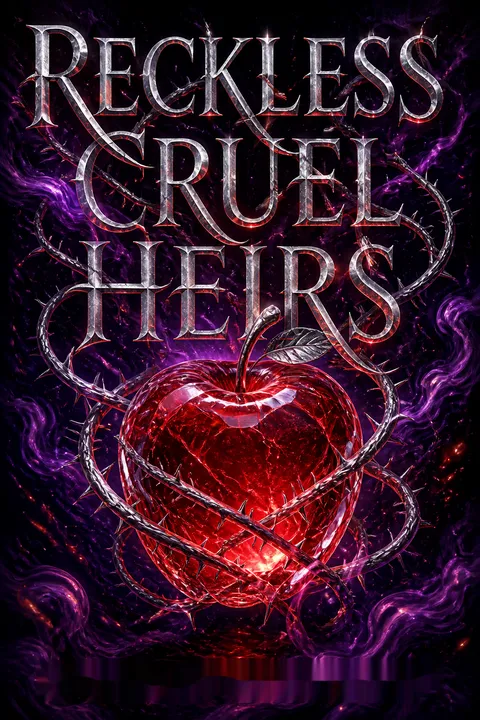
The Red Apple
The prison’s permanent exitA flawless red apple appears in several cells, often where food or safety seems scarce. It is the one exception to the prison’s usual cycle of death and return: eating it ends a prisoner’s life permanently. Kingston hides it and uses the threat of it to control the others. Amara eventually uses a piece to end his threat, while another prisoner chooses it as a way to escape continued confinement. The apple turns survival into an ethical question, because it can be used to save others, kill an enemy, or refuse another trial.
The Lost Clan Series
About the Author
Other books by Olivia Wildenstein

Download PDF
Download EPUB
.epub digital book format is ideal for reading ebooks on phones, tablets, and e-readers.








