

Key Takeaways
Turn a side project into proof before leaving the safety of a great job
Test conviction at work. Munaf Kapadia did not leave Google on a sudden whim. He had spent months building The Bohri Kitchen (TBK), a weekend home-dining venture with his mother Nafisa, and saw it sell out while still employed. When his boss asked about its future, the conversation helped him take the idea seriously. He also set a one-year window and an exit plan in case the business failed.
Choose fit over status. Earlier, Kapadia had left a fast-track role at Wrigley for a lower-paid Google job because he wanted work he could believe in and grow through. The lesson is not that everyone should quit a secure job. It is to use early work experience to discover what energizes you, then gather evidence before betting heavily on it.
This is a useful counterweight to the familiar romance of the dramatic resignation. Kapadia's first entrepreneurial move was not a leap into the unknown, but a side project that exposed him to customers, collaborators, and the actual work. That resembles staged commitment in decision theory: small, reversible experiments can reveal whether an idea deserves a larger bet. The caution is that a successful weekend venture does not prove a full-time company will work. The early evidence justified exploration, not certainty. His exit plan matters because it treats courage as a calculated allocation of risk rather than a performance of fearlessness.
Make the meal an encounter with a culture, not just a plate of food
Hospitality carried the idea. TBK began in the Kapadias' Colaba home, where guests paid to share food prepared by Nafisa and learn about Dawoodi Bohra customs. The centerpiece was the thaal, a large shared platter traditionally eaten by several diners seated together. A meal could move through savoury and sweet courses, while the host explained the food, rituals, and community behind it. The unfamiliar format turned dinner into an occasion, not simply a restaurant substitute.
Culture became accessible. Kapadia used the meal to introduce guests, many of them non-Bohra, to a community they might otherwise know little about. Guests shared food, learned how to eat from the platter, and left with context as well as a full stomach. The experience helped make a small community's cuisine visible beyond weddings and family gatherings.
The meal works as an example of experience design: the food, setting, ritual, and host all shape what customers remember. In service research, a service is often understood as a sequence of interactions rather than a single product. TBK made that sequence unusually tangible, from seating strangers together to explaining each course. Shared eating can also soften social distance by creating a low-stakes reason to ask questions. Still, hospitality is not a substitute for cultural expertise. A host who represents a community carries responsibility to distinguish personal family practice from universal custom, a duty Kapadia recognized when he prepared to answer guests accurately.
Give customers a story they can retell before buying your product
A brand needs a human face. Kapadia built TBK around more than Bohra dishes. Its story included a son trying to find a meaningful outlet for his mother's cooking, a home opened to strangers, and a family tradition presented to a new audience. He called this approach 3D branding: the product, its visual identity, and the emotion and story attached to it. The logo was simple, but the story gave people something memorable to repeat.
Small signals built demand. Social media photos, guest reviews, and check-ins helped turn early visits into word of mouth. Kapadia used limited seats and sold-out notices to heighten interest, while the home setting and premium pricing reinforced the sense of rarity. TBK earned substantial press without hiring a PR agency. A later estimate put the advertising equivalent of that coverage at ₹6 crore, not cash the business had earned.
A repeatable story lowers the effort required for customers, journalists, and partners to explain a business to someone else. That is a real strategic asset, especially for an unfamiliar cuisine. The story also made the mother-son relationship a credible point of difference rather than decorative marketing. But reach and reputation should not be confused with revenue or durable loyalty. An advertising-equivalent estimate assigns a price to exposure, not to its conversion into profitable customers. Scarcity can sharpen demand when capacity is genuinely limited; used carelessly, it can instead look like manufactured exclusivity.
Interview customers before building the platform suppliers say they need
Supply was not demand. After home chefs began asking Kapadia for help, he imagined The Dining Table, a digital platform where cooks could list experiences and customers could reserve seats. The supply side looked promising: dozens of home chefs joined his network, shared food, and wanted more visibility. He even developed an app concept and attracted investment interest.
Customers exposed the friction. Before building further, he asked fifty friends and relatives across Mumbai whether they would buy a seat through the platform. Most said no. They trusted TBK, but felt uncertain about eating in an unknown person's home, asking for a refund, paying in advance, or travelling farther for a meal. Kapadia paused the app and focused on growing TBK instead. The customer interviews did not prove home dining had no market; they revealed how much trust and convenience the platform would need to create.
This is a sharp illustration of the difference between a supplier problem and a marketplace problem. A platform can attract willing providers and still fail to create enough customer confidence for transactions. The interviews also surfaced specific frictions that a product could address, such as verified hosts, clear cancellation terms, or tighter travel radii. Their weakness is the sample: friends and relatives are not a representative market, and their stated preferences may not predict actual purchases. Even so, cheap, direct research is far better than treating enthusiasm from potential sellers as proof of customer demand.
Do not let publicity outpace the kitchen that must fulfill it
Attention raised the stakes. TBK's first major pop-up sold out quickly, encouraging Kapadia to test a larger music festival. He outsourced cooking so Nafisa could focus on home dining. The production kitchen turned out to be four hours from the venue, the food court drew little traffic, and the outsourced food did not match the quality guests expected from TBK. Familiar customers saw the brand at a low point, and the team struggled with weak sales and morale.
Delivery exposed the same gap. In its early kitchen, inconsistent recipes led to poor reviews and mistakes, including an order delivered a day early. Kapadia apologized directly, offered refunds when warranted, and simplified production while rebuilding quality. The lesson was concrete: public attention creates an expectation, and every operational failure is experienced as a broken promise.
In a service business, operations are part of the product. Customers do not separate a powerful brand from a late delivery or a disappointing dish; the whole encounter becomes the evidence they use to judge quality. This is why marketing can amplify both strengths and defects. The Pune festival also shows the danger of scaling a tacit craft by simply writing down a recipe. Nafisa's skill included timing, sensory judgment, and adaptation. The episode does not mean founders should avoid outsourcing. It means a brand needs quality controls and realistic logistics before transferring its promise to a new team.
Design delivery operations around repeatability, not the romance of home cooking
A new channel needs new rules. Home dining depended on Nafisa's hands-on cooking and a leisurely, hosted meal. Delivery customers wanted familiar flavours, consistent portions, and prompt service. For delivery, TBK worked with food partners to standardize much of the menu while keeping its spice mixes in-house. Kapadia's hub-and-spoke model used central production partners to prepare food for smaller outlets that mainly assembled or reheated orders.
The economics were tight. Aggregators could take about 20 percent of a sale, food and packaging 40 to 45 percent, and promotions another 10 to 20 percent, leaving roughly 10 percent before waste. To make small outlets viable, Kapadia adopted five constraints:
1. Outsource most of the menu.
2. Avoid open flames where possible.
3. Keep cash out of kitchens.
4. Centralize phone orders and customer service.
5. Keep rent and equipment costs low.
By August 2019, five kitchens handled about two hundred orders a day.
The operational pivot reflects a familiar distinction in manufacturing: craft quality and repeatable process are related, but they are not identical. Standardization can protect consistency across multiple locations, while central production reduces the number of skills required at each outlet. Yet outsourcing the majority of a menu can weaken differentiation if the distinctive element is also outsourced. TBK's choice to retain control over its masalas preserved one source of identity. The unit economics also explain why growth in order volume is not the same as profitability. A thin margin leaves little room for spoilage, discounts, or mistakes.
Treat investor money as governance, and raise enough runway to build
Capital changes the relationship. Kapadia initially thought of fundraising as a way to expand. He learned that equity also brings ongoing accountability and gives investors a stake in decisions. With investment banker Mihir Mehta, he examined sales, expenses, unit economics, and brand value before pitching. In 2017, TBK raised ₹1 crore at a stated pre-money valuation of ₹9 crore.
Fundraising consumes the business. The seed money helped build kitchens and a wider team, but the company later struggled to attract the ₹5 crore it sought for expansion. Meetings and pitches competed with operating the business, and investor enthusiasm did not guarantee agreement on strategy. When a further round failed, TBK closed outlets, let go of most of its staff, and returned to a smaller operation. Kapadia's lesson is to plan capital for a meaningful period of building, and to consider whether debt or a smaller model better suits the company.
The important distinction is between money as fuel and money as a relationship. Investors can bring expertise and networks, but their expectations may favor rapid growth even when a founder values control, craft, or a different path to sustainability. This creates a governance problem, not merely a valuation problem. Kapadia's experience also challenges the idea that fundraising itself validates a business. Capital can postpone a difficult business model without repairing it. His advice to raise more should be read contextually, not as a universal rule: sufficient runway matters, but a smaller, profitable design may require less capital and preserve more autonomy.
Protect the founder's health before the business becomes the whole identity
Stress became physical. After clearing unexpected tax dues, Kapadia found himself broke and began experiencing episodes he first dismissed as crying fits. He later sought therapy and understood them as anxiety or panic responses. He also described stress-linked skin symptoms, digestive problems, headaches, and chronic neck pain. Professional recognition, including appearing on the Forbes India 30 Under 30 list, did not make the anxiety disappear.
A company is not a self. Kapadia had tied his personal worth to TBK's wins and setbacks, making every business event feel like a verdict on him. Therapy, meditation, and exercise helped him respond differently. The account does not present stress as proof of entrepreneurial seriousness. It shows the cost of hiding distress because founders fear appearing weak to employees, investors, or family.
This account usefully treats founder health as part of organizational risk. A founder under sustained stress may struggle with judgment, communication, and the ability to notice deteriorating systems. Psychological research on role enmeshment describes a related hazard: when identity becomes fused with a single role, setbacks can feel existential rather than practical. The limits of individual coping deserve attention too. Therapy and exercise can help, but founders also need workable staffing, financial controls, and social support. Framing distress solely as a personal challenge could obscure the conditions that produce it.
Build around talent without mistaking a loved one's gift for unlimited capacity
Nafisa had a life before TBK. She had studied science, completed secretarial training, and worked as an assistant before leaving employment after marriage. She later tried small home businesses, but cooking became the work that drew out her skill and gave her public recognition. TBK began partly because Kapadia wanted to give his mother a more meaningful outlet than television and household routines.
Support includes respecting limits. Nafisa excelled at hosting and managing TBK's home meals, but did not want to become the daily production lead for a delivery business. Kapadia came to see that his ambition to scale could take away the flexibility she valued. Their partnership succeeded not because she could do everything, but because her particular strengths shaped the experience and the business had to adapt around her boundaries.
The family story adds an important question to entrepreneurship: who supplies the labor behind a founder's opportunity? Nafisa's cooking, home, hospitality, and knowledge were foundational assets, but those assets did not automatically make her an unlimited resource. The chapter also complicates the rescue narrative. Kapadia hoped to help his mother find purpose, yet she became central to his own professional development. A feminist analysis would ask whether recognition and awards translate into control, pay, and choice. The useful principle is not simply to discover hidden talent, but to build a venture in a way that respects the talented person's agency.
When scale stops working, return to the offerings that earn trust and cash
Growth had a cost. By 2019, TBK had five delivery kitchens and around two hundred daily orders, but expansion needed more capital than the company could secure. Kapadia cut outlets and staff, then focused on large preorders, catering, Travelling Thaals, and the original home-dining experience. These formats used TBK's strongest assets and could bring in larger, more dependable orders than chasing high volumes of low-margin delivery.
The ending stayed uncertain. The COVID-19 lockdown forced TBK to suspend operations; the company could not afford to restart its kitchens. Yet Kapadia came to see that the skills, cultural visibility, employment, and independent brand built through TBK did not vanish with its outlets. The story ends without a guaranteed comeback. It argues for recognizing what has been built without pretending that persistence alone can defeat a global shock.
This is a more credible account of resilience than a simple victory lap. Strategic contraction can preserve a company's most valuable capabilities when the cost of maintaining scale exceeds its returns. Returning to catering and hosted meals was not retreat to an identical past; it was a choice to concentrate on formats where TBK's distinctiveness was strongest. The pandemic also marks the limit of founder control. Good execution cannot neutralize every external shock, and closure is not always evidence of poor character or insufficient grit. Resilience includes learning, preserving what can be preserved, and judging a business separately from the founder's worth.
Analysis
This memoir is at once a family story, a cultural introduction, and a case study in the distance between creating demand and delivering a repeatable service. Its most revealing tension is that the quality that made The Bohri Kitchen distinctive was initially inseparable from a home, a mother, and a particular style of hospitality. The same intimacy that built trust was difficult to standardize, delegate, and reproduce across delivery kitchens.
Kapadia's path therefore resists a simple startup formula. Press coverage and a compelling founder story attracted customers, celebrity clients, and investors, but attention did not solve kitchen capacity, recipe consistency, working capital, or the economics of delivery. His account makes visible the hidden work behind a brand: permits, inventory, packaging, tax compliance, staff management, customer apologies, and operational redesign. It also shows that channels are not interchangeable. A seven-course hosted meal, a catered thaal, and a fast delivery order ask for different products and processes, even when they share a cuisine.
The book's strongest contribution is its refusal to treat entrepreneurship as a clean ascent. The founder experiences genuine growth, financial strain, anxiety, recognition, and contraction. His candid account of stress counters the public image of founders as endlessly resilient, while his mother's story complicates the idea that a family business simply uncovers unused talent. A loved one's skill can become the company's core asset, but respecting that person's limits is part of responsible design.
The narrative also has limits. One founder's outcome cannot establish that quitting a corporate job is wise, and early customer research among friends cannot establish a market's size. The story is best read as a rich account of judgment under uncertainty, not a universal playbook. Its deepest lesson is to keep testing the fit between promise, customer, operations, capital, and human capacity. Growth is valuable only when those elements can support it, and a smaller business may sometimes preserve more of what made the original idea worth building.
Review Summary
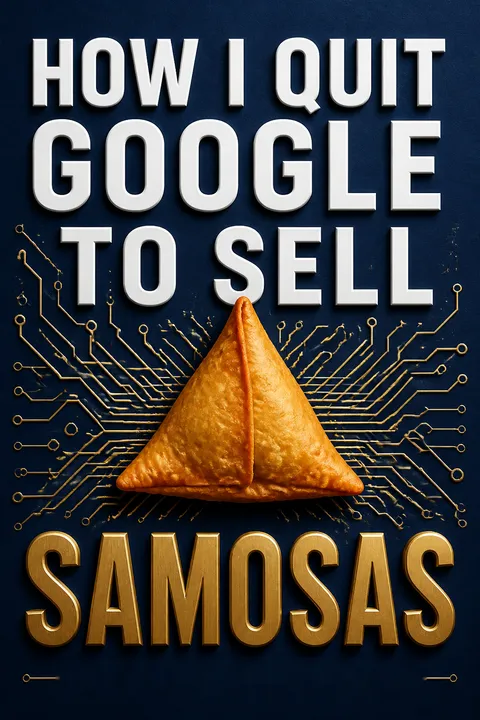
How I Quit Google to Sell Samosas by Munaf Kapadia chronicles the author's journey from Google employee to founder of The Bohri Kitchen. Readers praise the book's honesty, inspiration, and engaging writing style. Many appreciate Kapadia's insights into entrepreneurship, Bohri cuisine, and the challenges of starting a business. The book resonates with aspiring entrepreneurs and food enthusiasts alike. Reviewers highlight the author's passion, perseverance, and innovative marketing strategies. While some found the narrative non-linear at times, most enjoyed the mix of personal anecdotes, business advice, and cultural insights.
People Also Read










Glossary
thaal
Shared dining platterA large platter from which several diners eat together, traditionally seated around it. In a Dawoodi Bohra meal, courses are brought to the thaal in sequence, and eating together is part of the hospitality and social experience. At TBK, the shared platter also gave guests a practical way to encounter Bohra food customs.
andaaz
Cooking by practiced judgmentA style of cooking guided by experience, sensory judgment, and estimation rather than precise written measurements. Nafisa Kapadia had developed this approach over decades. It helped her cook intuitively at home, but made her recipes difficult to standardize for new cooks and larger delivery volumes.
3D branding
Product, identity, and emotionKapadia's term for building a brand through three connected elements: what it sells, how it looks, and the human story or emotion attached to it. For TBK, the cuisine was the product, its name and logo formed the visual identity, and the mother-son origin story gave customers a personal connection they could remember and share.
Home Chef Revolution
Network for home chefsA WhatsApp community Kapadia created for home cooks who were developing small food businesses. Members could discuss problems, exchange advice, and make connections. The group helped him understand the supply of home chefs and regional cuisines, and informed his proposed platform for connecting cooks with diners.
The Dining Table
Proposed home-dining platformKapadia's proposed digital marketplace for home-dining experiences. It would let home chefs present menus, stories, photographs, booking options, and payment methods, while customers could reserve and review experiences. Customer interviews revealed obstacles around trust, travel, advance payment, and complaints, so the platform was put on hold.
Thaal-in-a-Box
Portable thaal-inspired mealTBK's delivery meal designed to adapt parts of a Bohra thaal to a single-serving box. It combined a savoury course, a main dish, a dessert, and an accompaniment, with instructions explaining how the meal reflected thaal dining. The idea carried the experience into delivery without requiring diners to gather around a large platter.
Travelling Thaal
Thaal experience served elsewhereTBK's name for bringing its hosted Bohra thaal meal to a customer's home or event. It carried the food, service, and cultural explanation of the Colaba home-dining experience into another venue. The format let TBK serve private parties and celebrations without operating a conventional restaurant.
Bohri Food Coma
Post-feast food sleepinessKapadia's playful name for the sleepy, overfull feeling some guests experienced after TBK's generous multi-course meals. The phrase became part of the brand's informal personality and online storytelling. It refers to the effect of the meal, not a medical condition.
FAQ
What's "How I Quit Google to Sell Samosas" about?
- Entrepreneurial Journey: The book chronicles Munaf Kapadia's transition from a corporate job at Google to becoming an entrepreneur in the food industry with The Bohri Kitchen (TBK).
- Cultural Exploration: It delves into the rich culinary traditions of the Dawoodi Bohra community, offering readers a taste of its unique food culture.
- Personal Growth: The narrative highlights Munaf's personal growth, challenges, and the lessons learned while building a successful business.
- Family and Tradition: It emphasizes the role of family, particularly Munaf's mother, in preserving and promoting cultural heritage through food.
Why should I read "How I Quit Google to Sell Samosas"?
- Inspiration for Entrepreneurs: The book provides a motivational blueprint for aspiring entrepreneurs, showcasing the highs and lows of starting a business.
- Cultural Insight: Readers gain an understanding of the Dawoodi Bohra community and its culinary practices, enriching their cultural knowledge.
- Relatable Story: Munaf's journey is relatable to anyone considering a career change or pursuing a passion project.
- Practical Advice: The book offers practical insights into brand building, marketing, and navigating the challenges of the food industry.
What are the key takeaways of "How I Quit Google to Sell Samosas"?
- Follow Your Passion: Munaf's story emphasizes the importance of pursuing what you love, even if it means leaving a stable job.
- Embrace Challenges: The book highlights the necessity of facing and overcoming obstacles in the entrepreneurial journey.
- Value of Family: It underscores the significance of family support and collaboration in achieving success.
- Cultural Appreciation: Readers learn the value of preserving and sharing cultural heritage through food.
How did Munaf Kapadia transition from Google to The Bohri Kitchen?
- Initial Dissatisfaction: Munaf felt unfulfilled in his role at Google, prompting him to explore other opportunities.
- Family Inspiration: His mother's culinary skills and the desire to keep her engaged led to the idea of The Bohri Kitchen.
- Entrepreneurial Spirit: Munaf's entrepreneurial drive and willingness to take risks were crucial in making the transition.
- Support and Validation: Encouragement from his boss and the initial success of TBK validated his decision to leave Google.
What is The Bohri Kitchen (TBK)?
- Culinary Venture: TBK is a food business that offers home dining experiences centered around Dawoodi Bohra cuisine.
- Family-Run: It was co-founded by Munaf and his mother, who plays a pivotal role as the head chef.
- Cultural Experience: The venture aims to introduce non-Bohras to the community's unique culinary traditions.
- Growth and Expansion: TBK has grown from a home-based project to a recognized brand with various business verticals.
What challenges did Munaf face in building The Bohri Kitchen?
- Operational Hurdles: Munaf encountered difficulties in standardizing recipes and managing kitchen operations.
- Financial Struggles: He faced financial challenges, including VAT dues and the need for investment to scale the business.
- Brand Perception: Overcoming misconceptions about home dining and establishing credibility in the food industry were significant challenges.
- Personal Stress: Munaf dealt with stress and anxiety, which affected his mental and physical health.
How did Munaf Kapadia leverage branding and marketing for TBK?
- Storytelling: Munaf used compelling storytelling to create a strong brand identity and engage customers.
- Social Media: He effectively utilized social media platforms to promote TBK and connect with a wider audience.
- Collaborations: Strategic collaborations with other brands and participation in food festivals helped increase visibility.
- Authenticity: Emphasizing the authenticity of Bohra cuisine and the personal touch of home dining experiences was key to TBK's branding.
What role did Munaf's family play in The Bohri Kitchen?
- Mother's Culinary Skills: Munaf's mother, Nafisa, was instrumental in developing the menu and cooking for TBK.
- Father's Support: His father provided operational support and helped manage the business.
- Family Dynamics: The book highlights the collaborative efforts and occasional tensions within the family as they worked together.
- Cultural Custodians: The family played a crucial role in preserving and promoting Bohra culinary traditions through TBK.
What are some memorable experiences Munaf had with TBK?
- Celebrity Encounters: TBK attracted Bollywood celebrities like Rani Mukerji and Farah Khan, enhancing its reputation.
- Media Coverage: The venture received significant media attention, including features on BBC and in Forbes India.
- Cultural Impact: Hosting diverse guests allowed Munaf to share Bohra culture and cuisine with a broader audience.
- Personal Growth: These experiences contributed to Munaf's personal development and understanding of his cultural heritage.
What advice does Munaf Kapadia offer to aspiring entrepreneurs?
- Embrace Failure: Munaf emphasizes the importance of learning from failures and using them as stepping stones to success.
- Be Authentic: He advises entrepreneurs to stay true to their values and create authentic brand experiences.
- Build Relationships: Networking and building relationships with mentors, investors, and customers are crucial for growth.
- Stay Resilient: Persistence and resilience are key to overcoming challenges and achieving long-term success.
What are the best quotes from "How I Quit Google to Sell Samosas" and what do they mean?
- "The best company in the world to work for is the one that knows when to let you go." This quote highlights the importance of recognizing when it's time to move on and pursue one's true passion.
- "Creating that first social media page is as important as raising a million bucks." It underscores the power of social media in building a brand and reaching a wider audience.
- "The difference between a million dollars and one crore is peace of mind." This reflects the idea that financial success should not come at the cost of personal well-being.
- "You had them at 'I'm an entrepreneur'." This quote emphasizes the inherent respect and admiration people have for those who take the leap into entrepreneurship.
How does "How I Quit Google to Sell Samosas" explore cultural themes?
- Bohra Cuisine: The book provides an in-depth look at the unique culinary traditions of the Dawoodi Bohra community.
- Cultural Preservation: It highlights the importance of preserving cultural heritage through food and family traditions.
- Community Engagement: Munaf's interactions with guests and the broader community showcase the role of food in fostering cultural understanding.
- Personal Identity: The narrative explores Munaf's journey of self-discovery and his connection to his cultural roots through TBK.
Download PDF
Download EPUB
.epub digital book format is ideal for reading ebooks on phones, tablets, and e-readers.








