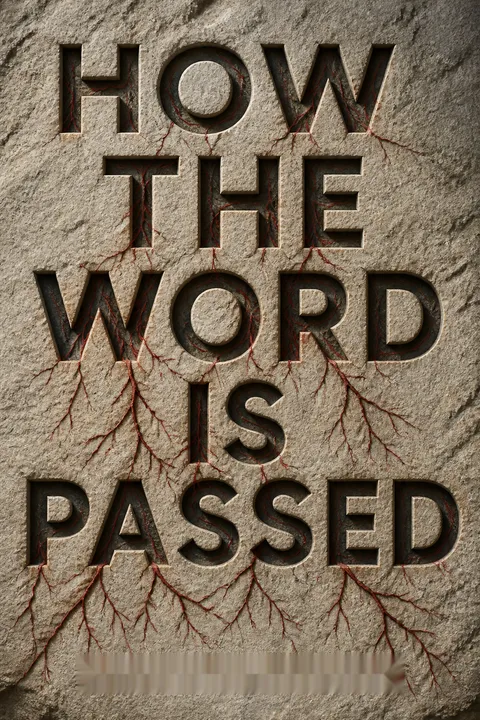


Key Takeaways
Treat slavery's history as part of the present, not a completed chapter
The past is visible. Clint Smith begins in New Orleans, where a plaque marks the city’s role in the slave trade. The city’s streets, levees, buildings, and place names also carry that history. After the international trade was outlawed in 1808, about a million enslaved people were forcibly moved from the upper South to the lower South; more than 100,000 traveled down the Mississippi to New Orleans. The history was all around Smith, but he had not been taught how to see it.
Memory takes work. Across the book, Smith visits sites that reveal, distort, or avoid slavery’s place in American life. He finds that a memorial is not only a statue or plaque. It can be a prison, a bank, a school, or a family story. Remembering, then, means asking what a place preserves, whose experience it centers, and what it leaves out.
What's striking is how the opening turns historical interpretation into a practical skill: learning to notice what everyday surroundings commemorate. This resembles the idea of a cultural landscape, where roads and buildings preserve choices made long before current residents arrived. Such attention can make history less abstract, but noticing a name or marker is only a beginning. The same streets can carry competing meanings, and a plaque cannot explain every consequence of slavery. The book’s method asks readers to connect visible traces to records, testimony, and present institutions rather than treating the landscape itself as a complete account.
Measure Jefferson's ideals against the lives his household controlled
Principles met property. At Monticello, roughly 130 enslaved people lived under Thomas Jefferson’s ownership. His Farm Book recorded their names, births, work, and sales, turning people into entries that helped manage his plantation. Jefferson wrote about liberty and recognized slavery’s moral damage, yet kept people in bondage, used their labor to sustain his life, and sold them to meet debts. After his death, enslaved families were sold to settle what he owed.
The evidence complicates the legend. Jefferson’s sexual relationship with Sally Hemings began when she was about sixteen and he was in his mid-forties. Because he owned her, the power imbalance makes any suggestion of free consent untenable. Documentary research and DNA evidence led Monticello to recognize Jefferson as the father of Hemings’s children. Smith finds that a tour focused on the house can still give slavery little attention, while only about one visitor in five takes the dedicated slavery tour.
The chapter shows why contradictions should be examined, not averaged into a simple verdict. Jefferson’s political ideas mattered, but so did the coercive labor and family separations that made his life possible. This is a useful model for assessing celebrated leaders: ask who bore the costs of their achievements, and whether their stated principles constrained their behavior. The account also shows that evidence is not self-presenting. A museum can possess records and still organize visitors’ attention around architecture or genius. Context changes what an audience can see, even when the underlying facts remain the same.
Restore enslaved people's ordinary lives, not only their suffering
People were more than victims. At Louisiana’s Whitney Plantation, memorials name hundreds of people who were enslaved there, while sculptures of children make their presence difficult to overlook. By 1860, 57 percent of enslaved people were under twenty. Smith also recounts the 1811 Louisiana revolt, the largest slave rebellion in US history, led by Charles Deslondes and joined by hundreds of enslaved people. Their resistance mattered, but not every life can be represented by a dramatic act of rebellion.
Ordinary life deserves evidence. Enslaved people formed families, celebrated, taught children, and built community under constant threat of sale and violence. The Federal Writers’ Project collected more than 2,300 accounts from formerly enslaved people in the 1930s, offering rare testimony about daily experience. Those interviews have limits: interviewers and transcription could shape what was recorded. Still, they help counter a history told only through enslavers’ paperwork or a few exceptional escape narratives.
The distinction between recognizing harm and reducing people to harm is essential. A history made only of violence risks repeating the erasure it means to correct, because it leaves little room for relationships, judgment, creativity, and resistance. At the same time, emphasizing resilience can become another burden if it implies that survival proves the system was bearable. The chapter’s strongest balance is to keep both realities in view: enslaved people made lives and communities, and the power to destroy those lives remained with enslavers. Testimony expands the record, while its limits call for careful interpretation.
Follow slavery's wealth into northern streets, banks, and institutions
The North was entangled. Smith’s New York walking tour begins near Wall Street, where a slave market operated from 1711 to 1762. By the mid-eighteenth century, about one in five New Yorkers was enslaved. The city’s prosperity also relied on cotton shipping, finance, and businesses connected to plantation production. Some banks accepted enslaved people as loan collateral, and New York’s financial networks helped sustain an economy that extended far beyond the South.
Freedom did not end dispossession. The tour also reveals Seneca Village, a thriving community with Black property owners that the city seized and cleared to create Central Park. New York’s history complicates a tidy division between a free North and a slaveholding South. Smith’s examples connect forced labor to urban wealth, then show how Black people’s land and political rights remained vulnerable after formal emancipation.
The New York chapter is persuasive because it follows relationships, not just geography. A system can be concentrated in one region while its profits and political support travel elsewhere. That insight is useful beyond slavery: tracing a product or institution back through its supply chain often reveals forms of participation hidden by distance. The comparison should not flatten every participant into the same role. A bank accepting human beings as collateral, a consumer buying sugar, and an enslaver exercising direct control involved different powers and responsibilities. Naming the network makes those differences easier to examine, not less important.
Trace emancipation's loopholes into prison labor and modern punishment
A legal exception became a labor system. At Angola, a Louisiana prison built on a former plantation, Smith traces how convict leasing supplied coerced labor after emancipation. The Thirteenth Amendment prohibited slavery except as punishment for crime. Southern states exploited that exception through laws and policing that drove Black people into prison and then leased their labor. Louisiana’s non-unanimous jury rule, adopted in the post-Reconstruction era, made convictions easier and was openly justified as a way to maintain white supremacy.
The land connects the eras. Norris Henderson, who spent nearly thirty years at Angola, describes working in prison fields for seven cents an hour. The prison tour discusses past brutality and present programs but gives little attention to the plantation history beneath its fields. The comparison does not mean slavery and incarceration are identical. It shows how forced labor and racial control changed legal form while remaining embedded in institutions and policy.
This chapter makes institutional continuity more precise than a simple claim that the present repeats the past. Laws, labor arrangements, and punishment systems change, but their effects can still be shaped by earlier racial hierarchies. The distinction matters: calling every injustice slavery can obscure the specific mechanisms at work, while treating each era as unrelated conceals how those mechanisms were built. The prison tour’s focus on reform also raises a broader question about institutional storytelling. Improvements in current conditions matter, yet they do not by themselves explain how an institution acquired its authority or whose interests it serves.
Ask what Confederate monuments teach, not merely whom they honor
Commemoration makes arguments. At Blandford Cemetery, stained-glass windows praise Confederate soldiers while the tour gives little attention to the cause they fought for. The Lost Cause, a movement that recast the Confederacy as honorable and denied slavery’s central role, shaped monuments, school materials, and public ceremonies. Smith contrasts this story with secession documents that explicitly defend slavery and with evidence of Confederate violence against Black soldiers.
Public memory is selective. At a Confederate Memorial Day event, speakers called the soldiers defenders of freedom and portrayed monument removal as an attack on history. Yet these monuments were often erected during Jim Crow and the civil rights era, when Black political power was being attacked. Smith also visits an underfunded Black cemetery across the street. The imbalance shows that public remembrance is not neutral: funding, location, ceremony, and omission all teach people whose loss deserves honor.
A monument does more than store information. It elevates a person or cause, gives that choice public authority, and asks passersby to live with the result. Historical context can improve interpretation, but context is not automatically a cure: a plaque beside a celebrated statue may leave its visual message intact. The chapter also resists an easy division between preserving history and removing symbols. A society can document a monument’s history without treating the monument as a neutral object. The key question is what form of remembrance serves public understanding rather than inherited prestige.
Treat Juneteenth as an unfinished freedom, not a final victory
Freedom arrived unevenly. On June 19, 1865, General Order Number 3 announced emancipation in Texas, more than two years after the Emancipation Proclamation. The familiar story that General Gordon Granger read the order from an Ashton Villa balcony has no contemporaneous evidence, though the reenactment has become part of local tradition. Even after the announcement, enslavers withheld the news, resisted emancipation, and used violence against people trying to leave.
Celebration carries a demand. Smith attends a Galveston Juneteenth event where children teach local history and the community honors emancipation. Texas made the date a state holiday in 1979. The day celebrates a major turning point, but it does not mean freedom brought equal resources: the book notes that Black Americans held about 0.5 percent of US wealth in 1863 and less than 4 percent at the time of writing. The holiday joins joy to an unfinished struggle over what freedom means in practice.
Juneteenth makes a powerful distinction between a legal declaration and the material ability to act on it. A right can exist on paper while enforcement, safety, and resources remain absent. The celebration also shows how communities preserve memory when official recognition is delayed or incomplete. Its emotional force does not depend on every detail of the balcony story being proven, but historical uncertainty should be stated rather than hidden. Tradition can keep an event alive; transparent explanation helps it remain credible and gives celebrants more, not less, to understand.
Preserve memorial power without surrendering historical accuracy
Symbols can outgrow their evidence. On Senegal’s Gorée Island, the House of Slaves and its Door of No Return have become a global memorial to the transatlantic slave trade. The island was once said to have sent millions of enslaved people to the Americas. Scholars estimate a figure closer to 33,000, and research suggests the famous door probably did not lead directly to departing ships. The correction does not erase the island’s role in the trade or the suffering it represents.
Meaning needs stewardship. The site’s longtime curator, Eloi Coly, describes the house as a symbol of a much wider history. Smith weighs that commemorative power against the danger of repeating inaccurate claims as fact. The problem is not solved by choosing either pure data or pure emotion. Memorials need evidence, local trust, and clear distinctions between what is documented, what is uncertain, and what a place has come to represent.
This is the book’s most difficult argument about public memory: symbolic truth can matter even when a particular historical claim is wrong, but symbolism cannot excuse preventable misinformation. A memorial often condenses a vast history into one place, which makes it accessible and also makes it vulnerable to oversimplification. The responsible response is neither to discard the site nor to shield its claims from scrutiny. Shared stewardship matters because outside researchers can correct errors while missing the local reasons a story carries weight. Accuracy and community meaning are competing obligations that must be negotiated openly.
Teach the whole history so young people can name the present
Context can restore agency. In Galveston, children at a Freedom School present a timeline that places Juneteenth within a longer history. Smith recalls that he was not taught enough to understand how slavery and later racial policies shaped the communities around him. Learning that history as an adult gave him language for experiences that had seemed disconnected. In Senegal, teacher Hasan Kane also insists students learn Africa’s history before, during, and after slavery, so the continent is not defined only by enslavement and colonization.
Education needs more than a date. The book shows how textbooks can soften slavery into ordinary labor or ask students to weigh its supposed positives against its harms. Such framing hides coercion. Teaching the full history means linking slavery to family separation, emancipation, racial exclusion, and institutions that followed. It gives students tools to question inherited explanations, rather than asking them to accept either comforting national myths or an identity defined only by injury.
Historical education is most useful when it gives students causal language: not just what happened, but how power shaped what followed. That approach can support agency without pretending that knowledge alone repairs material inequality. There is also a pedagogical balance to maintain. Too little history leaves inherited myths undisturbed; a curriculum that presents only trauma can make people feel trapped inside it. The chapter’s strongest proposal is expansive rather than defensive: teach African histories and Black life beyond bondage, while still showing how slavery and its aftermath shaped institutions students encounter now.
Ask your elders what textbooks left out, while they can still answer
Family is a living archive. Near the end of the book, Smith learns that an ancestor in his grandfather’s line was enslaved. Conversations with his grandparents bring history close: his grandfather recalls segregated schooling and racial threats in Mississippi, while his grandmother describes exclusion, fear, and the limits placed on Black children. Their memories make clear that slavery was not a remote era. Its aftermath shaped people still living within Smith’s family.
Listen before the record closes. The conversations also reveal what was never asked or remembered. Smith’s grandmother wonders about her own grandfather’s life, including how he learned to read and what he endured. Family testimony cannot supply every missing fact, and memory may be partial. But listening creates a chance to preserve details that official archives often neglected, then set those stories alongside documents and other accounts.
The closing turns historical research into a relationship, with all the tenderness and limits that implies. An elder’s recollection is not a substitute for corroboration, but it can reveal which questions matter and where formal records fail. Listening also requires care: relatives may not wish to revisit painful experiences, and silence can have its own history. The important practice is not extracting testimony on demand. It is making space for conversation, recording what can be shared, and treating family knowledge as intellectually serious rather than merely personal.
Analysis
How the Word Is Passed is both a history of slavery and an inquiry into who gets to narrate history. Its structure is a sequence of visits, but the sites are not merely settings. Monticello, a plantation museum, a prison, a cemetery, a city, and a Senegalese memorial each reveal a different struggle over evidence, responsibility, and public meaning. Smith’s own position as a Black Southerner and a descendant of enslaved people gives the inquiry urgency, while his conversations with guides, visitors, descendants, activists, and relatives prevent it from becoming a single-voice argument.
The book’s central achievement is to connect three layers often kept apart: slavery itself, the stories later told about it, and the institutions those stories help legitimate. The account of Angola shows how legal exceptions and labor systems can carry racial power into new forms. The New York chapter unsettles the idea that slavery belonged only to the South. Monticello and Blandford show that the reputations of founders and generals are actively maintained through tours, monuments, and omission. Juneteenth and the family epilogue then make memory a community practice, not simply a museum’s responsibility.
The method has a productive tension. A site can make history tangible, but its exhibits are curated, its guides have constraints, and its symbolism can outrun the available evidence. Gorée makes that tension explicit: commemorative significance does not erase factual error, and correction alone cannot account for why a community relies on a particular story. Smith’s response is not to treat all accounts as equally true. He emphasizes documentation while recognizing that memory also carries emotional and political meaning.
The result is less a single verdict on America than a demand for better historical habits. Read records against one another, notice who is missing, distinguish documented fact from cherished story, and connect the past to present arrangements without pretending the eras are identical. The book’s personal ending supplies the reason for that discipline: what goes unasked can disappear from families as surely as from public archives.
Review Summary
How the Word Is Passed receives widespread acclaim for its powerful exploration of slavery's history and legacy across America. Readers praise Smith's lyrical prose, meticulous research, and personal reflections as he visits significant sites. Many consider it essential reading, highlighting its ability to uncover lesser-known aspects of slavery's impact. The book is lauded for its thought-provoking content, emotional resonance, and potential to educate. Reviewers consistently emphasize its importance in understanding American history and reckoning with the ongoing effects of slavery.
People Also Read






Glossary
chattel slavery
Hereditary human ownershipA system in which people were treated as property that could be bought, sold, inherited, and forced to labor. In the American system described by Smith, enslavement was racialized and generally inherited by children, making bondage a multigenerational legal condition rather than a temporary status.
Lost Cause
Mythologized Confederate memoryA post-Civil War movement that recast the Confederacy as honorable and minimized or denied slavery’s central role in secession and war. It spread through monuments, ceremonies, literature, and education, presenting Confederate soldiers as defenders of home and heritage while obscuring the political project they fought to protect.
convict leasing
Prisoners leased as laborA post-emancipation system in which governments leased incarcerated people to private businesses or landowners for forced labor. In the South, discriminatory laws and policing supplied prisoners, many of them Black, to replace labor lost after slavery. Conditions could be lethal, while the people and companies using the labor profited.
Juneteenth
Emancipation remembered on June 19A holiday commemorating June 19, 1865, when General Order Number 3 announced emancipation in Texas. The date marks a major moment in the end of slavery, not an instant, universally enforced freedom. Enslavers continued to resist, and many formerly enslaved people faced violence, coercion, and economic deprivation.
Federal Writers' Project
New Deal-era oral historiesA Works Progress Administration initiative that collected more than 2,300 accounts from formerly enslaved people during the 1930s, along with hundreds of photographs. The accounts provide rare testimony about slavery and emancipation, but their use requires care because interviewers, transcription, and the circumstances of the interviews could shape what was recorded.
Getting Word
Monticello descendants' oral historiesAn oral history project begun by Monticello in 1993 to gather and preserve the memories of descendants of people enslaved at the plantation. Researchers traveled widely and interviewed descendants, whose family accounts informed the site’s historical interpretation and helped restore enslaved families to a story long centered on Thomas Jefferson.
mortuary apartheid
Racial exclusion from burial groundsThe restriction that prevented Black people in colonial New York from burying their dead in churchyards used by white residents. Beginning in 1697, free and enslaved Black New Yorkers were forced to use a burial ground beyond the city’s limits, later known as the African Burial Ground. The term identifies segregation continuing through death and burial.
sincere fiction
Symbolic story with factual gapsA term Smith discusses through scholarship on Gorée Island, describing a commemorative narrative that may contain inaccurate specifics while carrying genuine cultural and historical meaning. The concept does not make factual errors irrelevant. It highlights the challenge of correcting a memorial story while respecting the local relationships and public purposes that have formed around it.
FAQ
What's How the Word Is Passed about?
- Exploration of Sites: The book examines historical sites across America linked to slavery, such as plantations and memorials, to reflect on slavery's legacy.
- Personal Narratives: Clint Smith uses personal stories and conversations to provide a multifaceted view of how people engage with slavery's history.
- Reckoning with History: It emphasizes confronting uncomfortable truths about America's past to address contemporary racial issues.
Why should I read How the Word Is Passed?
- Timely Exploration: The book is crucial in today's discussions about race and history, encouraging reflection on historical understanding.
- Engaging Writing: Smith's poetic and accessible style makes complex themes relatable, inviting emotional connections.
- Broader Understanding: It challenges readers to think critically about how slavery is remembered and its impact on modern America.
What are the key takeaways of How the Word Is Passed?
- Lasting Impact: Slavery's legacy continues to influence social and racial dynamics in America today.
- Diverse Perspectives: The book stresses the importance of including diverse voices in American history narratives.
- Memory and Commemoration: It discusses how monuments and museums shape public understanding of slavery.
What are the best quotes from How the Word Is Passed and what do they mean?
- “One slave is too much.”: Highlights the moral imperative to acknowledge every individual's suffering under slavery.
- “The history of slavery is the history of the United States.”: Asserts that slavery is central to understanding American history.
- “We can’t forget it.”: Emphasizes the necessity of remembering the past to inform the present and future.
How does Clint Smith approach the topic of slavery in How the Word Is Passed?
- Personal Reflections: Smith shares his experiences at historical sites, creating a personal connection to the narrative.
- Interviews and Conversations: He includes diverse perspectives through interviews, revealing complexities in how people relate to slavery's history.
- Historical Context: Smith provides historical context for each site, enriching the reader’s understanding of slavery's ongoing impact.
What specific historical sites does How the Word Is Passed explore?
- Monticello: Examines Thomas Jefferson’s plantation and the contradictions of his legacy as a founding father and slave owner.
- Whitney Plantation: Focuses on the lives of enslaved people, offering a counter-narrative to traditional plantation tourism.
- Gorée Island: Reflects on its significance in the transatlantic slave trade and its role in the broader narrative of slavery.
How does How the Word Is Passed address the concept of memory?
- Memory as Reckoning: Argues that memory is crucial for societies to confront their pasts and address ongoing effects.
- Sites of Memory: Discusses how museums and monuments shape public understanding of slavery, advocating for honest storytelling.
- Collective Memory: Highlights how a society’s understanding of its past influences its present and future.
What role do personal narratives play in How the Word Is Passed?
- Humanizing History: Personal stories make the history of slavery more relatable and accessible.
- Diverse Perspectives: Various personal stories provide a richer understanding of how individuals relate to slavery's legacy.
- Emotional Resonance: Encourages readers to reflect on their own connections to history, fostering empathy and understanding.
How does Clint Smith connect the history of slavery to contemporary issues in How the Word Is Passed?
- Racial Inequality: Links slavery's legacy to current social and racial inequalities in America.
- Cultural Memory: Explores how cultural memory of slavery influences modern perceptions of race and identity.
- Calls to Action: Encourages readers to confront uncomfortable truths about America’s past for social change.
What challenges does How the Word Is Passed highlight regarding the teaching of slavery in schools?
- Inadequate Curriculum: Many curricula fail to adequately address slavery's history and implications.
- Resistance to Truths: Educators often face resistance when teaching about slavery and its legacy.
- Inclusive Education: Advocates for centering the experiences of enslaved people in history education for a more equitable society.
How does How the Word Is Passed explore the theme of memory and commemoration?
- Memory as a Tool: Smith argues that memory is essential for reckoning with the past and addressing its present effects.
- Sites of Memory: Discusses how monuments and museums shape public understanding, advocating for truthful representations.
- Collective Memory: Emphasizes the role of collective memory in shaping national identity and confronting uncomfortable truths.
How does Clint Smith use personal narratives to enhance the understanding of slavery's history in How the Word Is Passed?
- Humanizing History: Personal narratives make historical events more relatable and accessible.
- Diverse Voices: Inclusion of various stories provides a richer understanding of slavery's legacy.
- Emotional Connection: Encourages readers to reflect on their own historical connections, fostering empathy and understanding.
Download PDF
Download EPUB
.epub digital book format is ideal for reading ebooks on phones, tablets, and e-readers.








