

Key Takeaways
Compare philosophical traditions to uncover the assumptions your culture made invisible.
Ideas become cultural ground. Philosophy does not stay inside books. Over centuries, concepts settle into customs and institutions, shaping what people consider knowledge, virtue, freedom, or a good life. The book calls this process sédimentation. Confucian ideals inform the Forbidden City’s design, while the Alhambra expresses Islamic ideas of divine unity. Everyday assumptions work similarly: many Westerners prize individual freedom without studying its philosophical history, just as many Indians live with ideas of karma without tracing their origins.
Comparison makes the familiar strange. The author began with a Western education that treated Western philosophy as universal, then found that studying other traditions also clarified his own. Even practical projects, such as foreign aid, can fail when planners overlook local beliefs and values.
What's valuable here is the shift from treating philosophy as a museum of arguments to seeing it as cultural infrastructure. That move makes comparison practically relevant: it can reveal why a policy that appears rational to its designers feels alien or coercive to its recipients. The caution is that cultural influence is rarely a simple one-way pipeline. Institutions, economic pressures, and popular habits also reshape philosophical ideas. The strongest use of comparison is therefore diagnostic, not deterministic: it helps identify assumptions in play without claiming that every member of a culture thinks alike.
Treat perception, testimony, practice, and argument as different routes to knowledge.
Knowing is not one method. Indian philosophy uses the term pramāṇa for a valid source of knowledge. Its schools debate sources such as perception, inference, analogy, and the testimony of reliable authorities. A prominent source is pratyakṣa, direct apprehension that can include sensory, intellectual, or spiritual perception. This helps explain why the Indian Philosophical Congress gave great respect to teachers seen as bearers of wisdom, rather than centering every session on novel arguments.
Skill can be embodied. The Daoist wheelwright Slab can adjust a tool by feel, yet cannot fully explain the fine judgment behind his craft. Yoga likewise treats posture, breathing, and sustained attention as parts of inquiry. These traditions do not reject reasoning, but resist the idea that everything worth knowing can be reduced to propositions.
The section usefully broadens the category of knowledge to include trained judgment and practical skill. That matters in fields where expertise is partly tacit, from medicine to craft: a procedure can be described, but applying it well still depends on experience. Yet trust in an authority creates a problem of accountability. If a teacher's insight cannot be checked by ordinary standards, how can students distinguish wisdom from charisma or self-protection? A mature epistemology needs both respect for expertise and ways to question its claims.
Use reason confidently, but do not mistake its concepts for reality itself.
Words both reveal and filter. Daoist and Zen thinkers warn that language cannot fully capture reality. Zhuangzi's wheelwright describes a practiced skill that neither instruction nor imitation can simply transmit. His point is not that words are useless, but that texts cannot replace experience. In Zen, a teaching can be like a finger indicating the moon: attention belongs on what it points toward, not on the gesture alone.
Objectivity is a discipline. The book sets this insight beside Kant's argument that people experience the world through human perceptual and conceptual capacities. That does not make knowledge worthless. Shared concepts, measurement, and science can reduce the distortions of any one person's perspective, even if no observer can occupy a view from nowhere.
This is a productive middle position between worshipping language and romanticizing wordless insight. Concepts make comparison and correction possible; direct experience can expose what a concept leaves out. The distinction resembles the gap between knowing a recipe and knowing how to cook it under changing conditions. Still, claims of direct access to reality need scrutiny too. An experience can feel unusually vivid without proving that it reveals the world independently of the person experiencing it.
Do not define philosophy by secular Western rules alone.
Faith and reasoning overlap. A dispute at a conference on Islamic philosophy exposed a familiar boundary fight: are thinkers such as Avicenna and al-Ghazālī philosophers, theologians, or both? Falsafa refers to the tradition of inquiry drawing heavily on Greek learning, while kalām is rational reflection on Islamic revelation. Their histories overlap: al-Ghazālī's critique of philosophers also brought philosophical argument into theology, and Averroes argued that religious law could support philosophical study.
Secular reason is powerful, not neutral. Modern Western thought increasingly treats human inquiry as capable of studying nature without supernatural assistance. This has helped science flourish, but the claim that inquiry should be independent of ethical aims is itself a philosophical position. The author argues that philosophy and theology have mixed in many traditions, including Christian and Indian thought.
The boundary dispute is not merely about labels. Calling one tradition philosophy and another theology can quietly grant one culture authority to define the discipline. Recognizing that secularism is also a position makes the debate more honest. At the same time, intellectual openness should not erase differences between kinds of justification. A claim grounded in revelation and one grounded in public evidence may be philosophically engaged while still requiring different standards of evaluation.
Test beliefs by what they change, without reducing truth to convenience.
Meaning shows itself in action. American pragmatists such as William James, Charles Peirce, and John Dewey asked what practical difference a belief makes. A belief is not just an abstract sentence; it shapes habits and expectations. This approach can dissolve questions detached from lived consequences, redirecting philosophy toward problems people actually face.
Useful does not mean anything goes. Pragmatism is often mistaken for the claim that whatever feels helpful is true. Its more demanding version asks whether a belief can be tested, supported by evidence, and integrated with other justified beliefs. The book uses the persistence of American religious belief to show how beliefs can provide meaning and community, while political rhetoric that dismisses inconvenient facts illustrates how a loose, popular pragmatism can become an excuse for manufacturing reality.
Pragmatism is strongest when it forces abstract debate to answer a practical question: what would count as a consequence of this belief being true? That test can expose empty distinctions and clarify stakes. But practical success alone cannot settle truth, since a false belief may comfort a group or help a powerful actor. The crucial distinction is between consequences as evidence about meaning and consequences as a substitute for evidence. A useful belief still needs to answer to more than its usefulness.
Ask whether a tradition seeks universal truth or a workable way to live.
Philosophies may begin with different questions. The book contrasts truth-seeking, the effort to describe reality as it is, with way-seeking, the effort to find a sound way to live. Western philosophy often emphasizes the first; classical Chinese thought often emphasizes the second. India includes both: it asks about ultimate reality, while linking knowledge closely to the transformation of life. The Buddha's poisoned-arrow parable makes the practical priority vivid: some metaphysical questions can wait when they do not help relieve suffering.
Time reflects these priorities. Linear time, with history moving toward an endpoint, has been influential in the Christian West. Many Indian traditions instead imagine recurring cycles of creation and dissolution. Some Aboriginal accounts join time to place, treating past, present, and future as connected within particular locations.
This distinction helps explain why traditions can appear to disagree while addressing different needs. One inquiry asks what exists; another asks what action fits this situation. Both can be valuable, and one can support the other. The difficulty is that broad contrasts risk turning regions into caricatures. Western thinkers also ask how to live, and Chinese thinkers also make claims about the world. The distinction works best as a map of emphasis, not a strict border between civilizations.
Read emptiness as dependence, and karma as moral consequence across time.
Emptiness is not nothingness. In Buddhist philosophy, Nāgārjuna's idea of dependent origination says that things lack an independent, unchanging essence because they exist through relations to other things. A color cannot be considered apart from shape, and the present depends on its relation to past and future. Emptiness names this dependence, not nonexistence. It also explains impermanence: what relies on changing conditions cannot remain fixed forever.
Actions reach beyond the moment. In Indian traditions, karma develops from the idea that actions, and in Buddhism especially intentions, carry moral consequences that may extend across rebirths. This can encourage restraint and compassion, but popular versions can become fatalistic. The book warns that invoking karma to explain poverty or caste inequality can obscure economic and political causes that demand action.
The account of emptiness offers a useful correction to the instinct to treat people and objects as self-contained units. Dependence does not make something unreal; it changes what counts as an adequate explanation. The karmic idea similarly stretches moral attention across time. Its danger appears when explanation becomes resignation: a social harm attributed to fate can disappear from public responsibility. A humane interpretation should preserve moral reflection without turning hardship into proof that its victims deserve it.
Understand yourself as both a changing process and a web of relationships.
The self has no single model. Some Indian schools describe ātman as a universal self, while Buddhism rejects an enduring soul in its doctrine of anattā. The Buddhist image of a chariot makes the point: the vehicle exists, but there is no separate chariot substance beyond its assembled parts. David Hume offers a related account of personal identity as a changing collection of perceptions. This does not mean people are unreal; it challenges the idea of a permanent inner core.
Relationships also make a person. In East Asian and many African traditions, identity is strongly shaped by roles and ties to family, community, and place. The book contrasts this relational emphasis with Western ideas of the self as a distinct, self-authoring individual. Neither emphasis rules out individuality, but each changes how responsibility, belonging, and freedom are understood.
The image of a self as process can soften the belief that identity is fixed, while relational accounts reveal how much personality and choice depend on social conditions. Together, they counter the fantasy of total self-authorship. Yet a relational view can also make it harder to protect a person from coercive group expectations. The useful question is not whether the self is independent or connected, but which relationships sustain agency and which ones narrow it.
Build character through repeated practice, then use judgment when rules collide.
Virtue is trained conduct. Aristotle and Confucius both treat good character as something formed through repeated action, not merely a set of principles one endorses. Confucian li means ritual propriety, the patterned ways of treating others that train attention and respect. Ordinary gestures matter because repeated conduct becomes habit. The ideal is not mechanical obedience, but the ability to respond well without needing a rule for every moment.
The mean depends on the case. Aristotle and Confucius describe virtue as avoiding both excess and deficiency: courage lies between timidity and recklessness, though the right balance depends on the person and situation. Moral exemplars offer models of judgment, while the example of Mencius persuading a ruler to extend his compassion for an ox to his people shows how a partial instinct can be cultivated into broader concern.
Habit-based ethics explains why moral education is more than teaching rules: people need practice in noticing what matters and responding with proportion. It also makes example and mentorship central. The cost is that appeals to virtuous judgment can sound circular: good people know what is right because they are good. A useful safeguard is to pair character formation with public reasons and attention to those affected, especially when a tradition's inherited roles preserve unequal power.
Pursue harmony through productive difference, never through enforced silence.
Harmony needs variety. In Confucian thought, harmony is not uniformity. A good composition or soup requires distinct elements that complement one another. Socially, this means disagreement and difference can contribute to a stable whole, provided people are willing to adjust and preserve mutual obligations. The ideal can support compromise, patience, and cooperation across family and political life.
The word can be abused. Chinese rulers have also invoked harmony to legitimize censorship and suppress dissent. Confucian texts themselves distinguish proper accommodation from merely agreeing with what is wrong. The book argues that hierarchy is not automatically unjust: a teacher's expertise or a parent's responsibility can serve others. But legitimate hierarchy should be limited to its proper domain, open to change, and directed toward the flourishing of those below it.
Harmony is a richer political idea than consensus at any cost because it makes difference part of the desired outcome. That offers an alternative to treating every disagreement as a contest with one winner. Still, a call for balance can conceal who has the power to define what counts as disruptive. The test is whether dissent can be heard and whether relationships remain reciprocal. Without those conditions, harmony becomes a polished word for obedience.
Protect equal justice without pretending family and friendship mean nothing.
Impartiality has a severe edge. Utilitarian Zell Kravinsky reasoned that donating a kidney carried a one-in-4,000 risk to him, while a recipient without a transplant faced certain death. His example exposes how far impartial ethics can demand that people treat strangers' interests as equal to their own. In ordinary terms, utilitarianism can imply giving away nearly every nonessential resource if it could produce greater benefit elsewhere.
Partial ties also matter. Confucian role ethics gives special duties to parents, children, and friends, while Western traditions emphasize equal rights and fair treatment. These aims can conflict, but neither must erase the other. Public institutions can apply equal standards while private relationships retain distinctive obligations. The question is how to prevent partiality from becoming favoritism in civic life without demanding that people love everyone equally.
The tension is not simply selfishness against generosity. Partial commitments create care, trust, and responsibility that impersonal rules cannot reproduce; impartial rules help prevent those same bonds from becoming nepotism or exclusion. The book's kidney example makes the moral cost of strict consistency vivid, but a single dramatic sacrifice does not settle what institutions owe people collectively. A durable ethic needs both fair public procedures and room for special obligations that do not deny others' equal worth.
Borrow ideas across cultures by translation and adaptation, not extraction.
Ideas travel with their surroundings. The book's mixing-desk image treats moral life as a combination of values such as autonomy, harmony, community, and impartiality. Cultures often share these values but give them different weight. Importing one idea unchanged can distort it, because its original meaning depends on other beliefs and practices around it. Translation and adaptation can let a concept take root without pretending that its history is irrelevant.
More viewpoints improve the map. The conclusion offers three benefits of comparison: different perspectives can reveal separate parts of a problem, expose when one question hides several questions, and show that more than one good arrangement of values may be possible. This is pluralism, not the claim that every practice is equally defensible. The aim is a more informed judgment, not a universal recipe.
The mixing-desk metaphor makes pluralism concrete: values can be shared without being arranged identically, and increasing one may lower another. It also gives comparison a practical purpose, namely improving a culture's own balance rather than importing a supposedly complete foreign system. The harder issue is who gets to adjust the controls. Cross-cultural learning works best when those whose lives are shaped by a borrowed idea participate in interpreting it, rather than serving merely as its setting.
Analysis
This book is best understood as a guided change in philosophical perspective, not a catalog of doctrines. Its central claim is that traditions differ not only in their answers, but in what they count as knowledge, what questions deserve attention, and how a person is situated in the world. That makes comparison more demanding than matching one Western concept to one Eastern equivalent. The reader has to notice how assumptions about logic, revelation, selfhood, time, and moral obligation support one another.
The book's most useful discipline is its insistence on emphasis rather than absolute cultural division. Western thought is not only individualist, Asian thought is not only relational, and religious traditions are not simply anti-rational. This qualification matters because broad comparison can reproduce the very simplification it seeks to challenge. The distinctions are most illuminating when treated as tendencies that invite inquiry, not as labels that settle it.
A deeper implication is that philosophical competence includes learning to switch frames. A person may need impartial rules in a court, particular obligations in a family, analytic explanation in science, and experiential attention in art or skilled practice. These are not automatically contradictions. They become conflicts when one frame claims authority over every domain. The book therefore offers no single world philosophy to adopt. It offers a way to interrogate the default settings of one's own tradition, borrow carefully, and judge which combination of values fits the situation without mistaking a local balance for a universal endpoint.
Review Summary
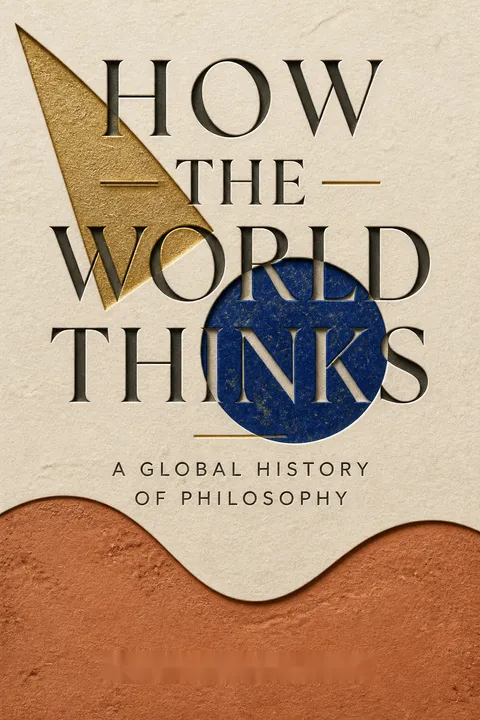
How the World Thinks receives mixed reviews (3.68/5). Readers appreciate Baggini's exploration of global philosophies, particularly Asian traditions, and his comparative approach using themes rather than separate treatments. Many found it intellectually stimulating and mind-expanding. However, critics note significant issues: heavy Western and male bias, limited coverage of African and indigenous philosophies, excessive generalizations, poor structure with frequent topic-jumping, and dense academic writing that assumes prior knowledge. Some felt the title oversells its scope. The book works best for readers with philosophical background seeking comparative perspectives, less so for beginners wanting accessible introductions.
People Also Read




Glossary
sédimentation
Cultural ideas settlingThe gradual absorption of philosophical assumptions into a culture and then into the habits of people raised within it. The ideas become so familiar that they can feel like plain common sense rather than inherited commitments. Comparative philosophy can make this accumulated background visible by placing it beside traditions organized around different assumptions.
pramāṇa
Valid source of knowledgeA source or means by which a claim can count as knowledge in Indian philosophy. Schools disagree about which pramāṇas are valid and how they should be ranked. Commonly discussed sources include perception, inference, analogy, postulation, non-perception, and reliable testimony.
pratyakṣa
Direct apprehensionA form of direct perception or apprehension recognized as a source of knowledge in Indian philosophy. Its scope can extend beyond ordinary sensory perception to intellectual or spiritual awareness. It is often associated with trained attention and insight, but it does not replace reasoning in every Indian school.
falsafa
Greek-derived philosophical inquiryA term used in the Islamic intellectual world for philosophy associated especially with ancient Greek learning, including Aristotle and the sciences connected with that tradition. It is often contrasted with kalām, but the historical relationship was not a simple battle between secular reason and religion. Thinkers and methods crossed between the two.
kalām
Rational theological discourseAn Islamic tradition of systematic reasoning about religious doctrines and revelation. It is sometimes translated as theology, though its arguments and methods overlap with philosophy. The book cautions against treating kalām as simply the opposite of falsafa, since philosophical reasoning also entered theological debates.
anattā
No enduring selfThe Buddhist teaching that there is no permanent, independent self or soul behind the changing elements of a person. It does not mean that people do not exist in ordinary life. Rather, what is called a person is understood as a changing assembly of bodily and mental processes, not an immutable inner entity.
dependent origination
Existence through conditionsA Buddhist account of how phenomena arise through dependence on other phenomena and conditions. In Nāgārjuna's Madhyamaka philosophy, this means things lack inherent, self-sufficient existence. Emptiness names this lack of independent essence, not a claim that things are simply nonexistent.
wu-wei
Effortless, attuned actionA Daoist ideal of acting in accord with the patterns of a situation rather than forcing action through rigid plans or excessive control. It is not mere inactivity. Skilled action can appear spontaneous because practice has developed sensitivity to the circumstances and reduced the need for deliberate, step-by-step calculation.
li
Ritual proprietyA Confucian term for appropriate conduct in social relationships, encompassing formal rites as well as ordinary manners and conventions. Practicing li is meant to shape habits of respect and consideration. It is not valuable as empty ceremony; its purpose is to cultivate character and support well-ordered relationships.
quan
Context-sensitive judgmentA Confucian idea of weighing a particular situation and exercising discretion when general rules do not settle what should be done. Quan recognizes that an action appropriate in one context may be wrong in another. Its promise is flexibility; its risk is arbitrary treatment when judgment is not transparent or accountable.
intimacy or integrity
Relational or distinct orientationTom Kasulis's contrast between two broad cultural orientations. Intimacy emphasizes overlap, interdependence, and relationships that help constitute things. Integrity emphasizes distinct boundaries and the identity of things as separate units. Every culture contains both orientations, but their relative prominence can shape ideas about selfhood, knowledge, and ethics.
truth-seeking and way-seeking
Reality or practice emphasisA distinction between philosophical traditions that prioritize describing what is ultimately true and those that prioritize finding a way to live well. The terms mark differences of emphasis rather than exclusive categories. Traditions can pursue both goals, but the distinction helps explain why they may ask different questions even when they use similar words.
About the Author
Other books by Julian Baggini


Download PDF
Download EPUB
.epub digital book format is ideal for reading ebooks on phones, tablets, and e-readers.








