

Key Takeaways
Choose a demanding Way, not a samurai costume or borrowed identity
A path, not a costume. The book presents the Way as a sustained discipline that shapes how someone thinks, works, relates to others, and pursues a chosen craft. Its opening parable imagines people climbing different ladders toward light: each ladder represents a path, and the climb means leaving familiar habits for a demanding purpose. The author warns against confusing historical study with dressing up as a samurai. The goal is to adapt the teachings, not reenact medieval life.
Measure your own progress. Toyotomi Hideyoshi, born outside the elite, rose to rule Japan, illustrating that a person's starting position need not define their ambition. The book asks readers to judge success against their own aims and prior efforts, rather than against other people's rank or achievements.
The book's strongest hook is its insistence that commitment has consequences: a Way is not a mood or an aesthetic, but a structure for repeated choices. That makes its historical material useful beyond martial arts. The ladder image also carries a real cost: purpose can separate someone from familiar comforts and relationships. A path therefore needs honest self-assessment, not just intensity. The author's warning against cosplay is especially apt because borrowed symbols can feel like progress while leaving everyday conduct unchanged.
Train calm attention until you can rest, prepare, and act without panic
Two directions of attention. The samurai mindset combines internal focus, the effort to notice and steady one's own thoughts, with external awareness, the effort to read people and circumstances accurately. The book does not promise permanent calm. It treats composure as a practice of repeatedly correcting course, supported by meditation, journaling, and focused activities such as walking or making art.
Three levels of readiness. The author distinguishes genuine rest, calm preparedness, and alert action. Rest replenishes energy; preparedness means staying relaxed while noticing the setting; alert action is for situations where a response is needed. A difficult meeting may call for the last state, while a trusted evening with family can allow the first. The point is readiness without turning vigilance into constant anxiety.
This model is more useful than the familiar demand to stay calm at all times. It recognizes that attention must change with context: recovery and readiness serve different purposes. The book's image of a mind that needs continual correction also makes composure an activity, not a personality trait. Its language of never being off guard, however, can be misread as a prescription for hypervigilance. The distinction between calm preparedness and chronic suspicion is therefore essential to applying the lesson well.
Make room for culture, family, and rest inside an ambitious daily life
Discipline includes more than work. Samurai life joined military skill with intellectual and artistic cultivation through bunbu, the pairing of the warrior's discipline with the scholar's and artist's learning. The book recommends planning the day, keeping careful records, and setting aside distinct periods for earning a living and advancing a longer-term goal. It also stresses adequate sleep and deliberate recovery rather than relying on exhaustion as proof of seriousness.
Make life richer and more durable. Family attention, festivals, poetry, calligraphy, painting, flower arranging, and tea are presented as practices that strengthen relationships and train concentration. The author also urges readers to learn their family history. These activities are not substitutes for a chosen ambition; they broaden the life around it and connect personal effort to people and traditions beyond the self.
The pairing of martial and artistic study resists a narrow picture of competence. The book treats cultural practice not as decoration, but as training in attention, patience, and social connection. That is a persuasive counterweight to productivity cultures that count only visible output. Still, the proposed schedule assumes a degree of control over time that many people do not have. Its most adaptable principle is not waking early at all costs, but consciously protecting time for obligations, ambition, recovery, and the people who matter.
Treat speech as a weapon: pause, preserve face, and control disclosure
Keep three kinds of information distinct. The book separates secret information, private information shared with a trusted few, and public information intended for a wider audience. It argues that privacy should be deliberate, while public claims should remain truthful. The distinction is especially relevant to a world where personal information can travel far beyond its intended audience.
Choose the right moment. Samurai teachings warn against drawing a sword in haste, a metaphor for reacting before understanding a situation. The book distinguishes moments that require immediate action, such as stopping a child from entering traffic, from ambiguous encounters where it is wiser to observe first. It also recommends correcting people privately when possible, so disagreements do not needlessly humiliate them or turn a small mistake into a public contest.
This is a practical account of social judgment: restraint is not silence, and speed is not automatically courage. The emphasis on preserving another person's dignity can make disagreement more productive, while the information categories help readers think before sharing. The framework does have limits. Protecting privacy should not become a cover for deception, and avoiding public correction can preserve a harmful mistake if others are at risk. The governing question is not simply whether to speak, but what the situation requires and who may bear the consequences.
Design a home that protects attention, safety, and a sense of belonging
A home is a working environment. Samurai residences used layered walls, offset entrances, guarded gates, and clear sightlines to make intrusion more difficult. The book translates the principle into practical readiness: keep essential items organized, light dark approaches, and use appropriate alerts. Its historical interest in weapons should not be mistaken for a requirement to acquire them; any modern security choice must follow local law and safe-storage practices.
Make protection meaningful. The book also proposes a dedicated place for art, a nature view, a contemplative or sacred area, and a record of family members who have died. These elements turn the home into more than a defensive shell. Order, beauty, memory, and ritual give the household a sense of continuity and make the space restorative as well as secure.
The fortress metaphor works best when read broadly. Security is not only about keeping threats out; it is also about creating conditions in which attention can settle and relationships can deepen. Pairing defensive design with gardens, display spaces, and remembrance keeps the home from becoming a bunker. The historical focus on weaponry is less transferable than the underlying principle of preparedness. A modern adaptation should emphasize proportionate, lawful safety measures and avoid letting fear dictate the character of the household.
Turn an interest into a practiced discipline, not a passing enthusiasm
Choose a path and work it. The book urges readers to select a craft that suits their interests and abilities, then practise regularly rather than waiting for inspiration. A ryu is a school or tradition that preserves teachings and trains practitioners; samurai could join an established school or assemble a body of study for themselves.
Move from reading to mastery. Reading for pleasure is different from studying: study means examining sources, breaking a subject into parts, recording observations, and testing what has been learned. The author recommends maintaining notebooks and distilling useful knowledge into a finished book or scroll. He also calls for basic practical competence, including first aid, while warning against pretending to master every skill. Depth in a chosen field matters more than a scattered collection of enthusiasms.
The book offers a useful progression from curiosity to practice to organized knowledge. Its notebooks and compiled teachings turn learning into something visible, revisable, and potentially shareable. That process also forces a learner to distinguish what is understood from what merely sounds impressive. The emphasis on schools adds community and continuity, but institutions are not automatically trustworthy. Whether learning alone or with a group, a serious practitioner still needs to examine sources, acknowledge limits, and revise claims when evidence changes.
Make loyalty and trust the structure of your team, not personal charisma
Build a dependable group. Samurai armies divided large forces into smaller units with clear leaders, allowing a commander to coordinate many people through a limited number of trusted officers. The modern lesson is to clarify roles and build relationships before a crisis. The book places loyalty above brilliance alone: a capable person who will not show up is less useful than a dependable colleague.
Develop people without breaking them. The author advises against assigning leaders more responsibility than they can handle, using the historical example of giving a commander only about half of their estimated capacity. He also insists that every member deserves respect, not just senior figures. Finally, a group needs aims and structures that outlast its founder. Without succession and shared purpose, a strong leader can become a single point of failure.
The chapter's most durable insight is that leadership is infrastructure, not just personal force. Clear roles, manageable responsibility, and respect help a group remain functional when the central leader is absent. Its preference for loyalty is understandable in a high-risk military setting, yet loyalty without competence or dissent can protect bad decisions. A strong modern team needs both reliability and honest feedback. The book's concern with succession usefully shifts the question from how admired a leader is to whether the work can continue without them.
Plan the whole campaign, including setbacks, retreat, and what comes after victory
See the full course. Samurai strategy treats an undertaking as a beginning, a middle, and an end. Before acting, clarify the goal, map a route, consider opposition, prepare alternatives, and decide how to withdraw if needed. A plan without an exit can turn persistence into entrapment.
Protect what you gain. The book favors steady expansion over rapid growth that cannot be sustained. It uses Toyotomi Hideyoshi's invasion of Korea, which was ultimately driven back, to illustrate the risks of reaching too far too quickly. It also urges leaders to change tactics when circumstances shift, hold position when a team cannot absorb change, and avoid underestimating opponents. A victory is only one stage of a conflict, not a reason to abandon readiness.
The campaign model is a strong antidote to plans that describe only the desired outcome. Including fallback routes makes adaptation part of planning rather than a confession of weakness. The distinction between changing course and holding position is also valuable: flexibility without judgment can become churn. The military metaphor can encourage a combative view of ordinary life, however. Its most constructive use is for complex projects and genuine conflicts, not for treating colleagues, family, or every disagreement as an enemy force.
Gather information carefully, but do not confuse insight with permission to manipulate
Information shaped military decisions. The book describes ninja, or shinobi, primarily as military intelligence gatherers. It presents the gokan, five categories of spies drawn from Sun Tzu: local informants, insiders, converted agents, agents sent with false information, and agents who return with reports. Their work included learning about people, places, plans, and routes.
Translate the method with care. In ordinary modern life, the useful version is to understand the people affected by a decision, ask good questions, notice incentives, and verify what is heard. The book also warns that a reputation for gossip destroys trust. Its more coercive advice, including exploiting vulnerabilities and planting false information, belongs to a wartime tradition, not a general license for personal or professional relationships.
The intelligence chapter makes a compelling case that decisions improve when people seek information rather than act on assumption. It also exposes a tension in the book: trust is presented as a virtue and as an instrument for extracting secrets. That tension should not be blurred. Curiosity, careful listening, and checking claims can support good judgment; covertly exploiting someone’s private vulnerabilities can damage the very relationships a leader depends on. The useful boundary is whether information is gathered with consent and used for a legitimate, proportionate purpose.
Use four spiritual traditions to examine conduct, mind, nature, and ancestry
Four lenses, four concerns. The book calls Confucianism, Taoism, Buddhism, and Shinto the Four Great Paths. Confucianism guides social conduct; Taoism considers a person's place in the universe; Buddhism focuses on the mind, suffering, and liberation; Shinto connects people with kami, ancestors, and the land. The author describes these traditions as overlapping in Japanese life rather than requiring a single exclusive system.
Ritual can anchor attention. The book discusses meditation, household altars, prayers, purification, and protection rituals such as kuji-kiri, a sequence of symbolic cuts intended to ward off harmful influences. Readers need not accept the supernatural claims to understand the practices as historical expressions of belief. The author presents them as part of samurai life, while asking each reader to decide how much spiritual practice belongs in their own path.
The four-part map is memorable because it assigns distinct questions to different traditions: how to treat people, how to live within nature, how to understand the mind, and how to remember those who came before. It offers a broad spiritual vocabulary without forcing every concern into one category. The account is an interpretive simplification, not a full representation of complex religions. Its most responsible use is as an invitation to study traditions on their own terms, rather than treating their rituals as interchangeable techniques.
Choose creation over conquest when success need not require someone else's loss
Two routes to achievement. The book distinguishes the approach of purity, which pursues a goal while building with and benefiting others, from the approach of destruction, which takes positions from rivals and accepts harm as a cost of winning. Both demand effort, but the author argues that they leave different consequences and reputations. His preferred path is to create something new and defend it rather than make another person's defeat the objective.
Test the reason beneath the action. The book asks readers to examine their intent, avoid boasting about good deeds, and seek comfort and harmony rather than excessive wealth or power. Its Buddhist discussion of karma frames actions as carrying consequences beyond the moment. Whether or not a reader accepts that spiritual account, the practical test remains: who benefits, who pays, and what kind of success is being built?
This ethical distinction gives the book a standard by which to judge its own strategic tools. It recognizes that ambition can be pursued through creation or through displacement, and that the latter may win while corroding trust. The framework is not always clean: competition can produce useful work, while collaboration can conceal unequal power. The key question is not whether conflict exists, but whether harming others is necessary to the goal. That test makes intention concrete by asking readers to inspect the costs their success imposes.
Analysis
The book is a hybrid: part historical primer, part personal-development manual, part spiritual guide, and part leadership handbook. Its ten-step structure moves from the individual outward. First comes attention and conduct, then home and craft, then teams, strategy, intelligence, and spiritual commitments. That sequence gives the work a coherent narrative of growing responsibility, even though its lessons range from meditation to fortress design and ritual magic.
Its most valuable contribution is the correction of the familiar samurai caricature. The historical warrior was not merely a symbol of honor, but a political actor, strategist, artist, family member, and participant in a varied religious culture. The book uses that complexity to argue that self-command requires more than combat skill. Planning, cultural practice, social restraint, learning, and succession all belong to a serious life path.
The adaptation to modern life is uneven by design. Advice on preparation, study, recovery, discretion, and team development transfers readily. Instructions shaped by wartime espionage, violence, or supernatural belief require more careful interpretation. The text sometimes treats manipulation as a normal strategic instrument, creating friction with its praise of honesty and loyalty. That friction is not a reason to discard the book; it is a reason to separate situational awareness from coercion and defense from domination.
The spiritual claims also need to be read in context. Karma, divine protection, and magical rituals are presented as elements of historical belief, not as conclusions established by scientific testing. Their value to a modern reader may lie in practice, symbolism, or religious commitment, but those are different kinds of value. Overall, the book works best as a historically rooted menu of disciplines rather than a universal code. Its central challenge is to build a purposeful life through steady training, while deciding which inherited methods deserve adaptation and which should remain in their historical setting.
Review Summary
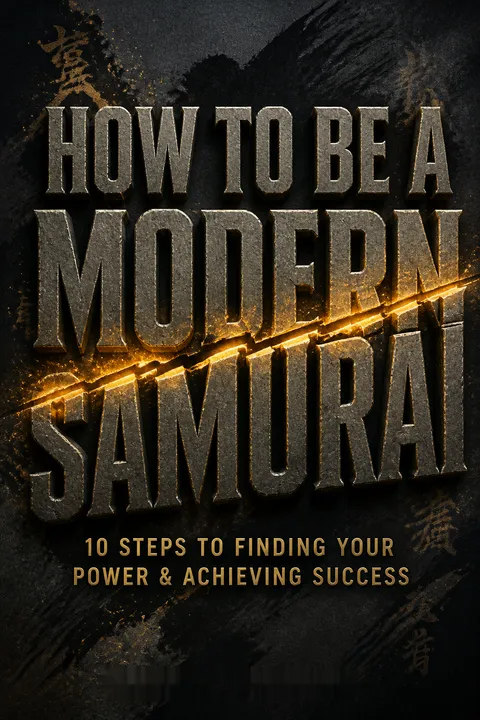
How to Be a Modern Samurai receives mixed reviews, with an average rating of 3.49/5. Readers appreciate the book's insights into samurai philosophy and practical advice for self-improvement. Some find it helpful for personal growth, while others criticize its historical accuracy and applicability to modern life. The book covers topics like meditation, discipline, and spiritual practices, but some readers find certain sections irrelevant or far-fetched. Overall, it's seen as an interesting exploration of samurai culture with potential benefits for those open to its teachings.
People Also Read




Glossary
The Way
A disciplined life pathThe Way is a chosen path of practice and conduct that shapes a person's skills, character, social role, and sense of purpose. The book describes many possible Ways, including those of the artist, scholar, teacher, monk, and warrior. The samurai path is one demanding option, not a costume or a requirement for everyone.
kannin
Determined perseveranceKannin is the capacity to persist steadily toward a goal despite difficulty. The book presents it as a foundation of the samurai mindset, but pairs determination with awareness of changing circumstances. A practitioner should strengthen resolve without confusing stubbornness with sound judgment.
bunbu
Warrior and cultural learningBunbu describes the pairing of military or martial discipline with intellectual, philosophical, and artistic cultivation. In the book's account, a samurai should not become narrowly skilled in warfare alone. Study of the arts and culture rounds character and develops attention, while remaining secondary to the person's main path.
chi
Vital life energyChi is the life force or animating energy described in Chinese and Japanese traditions discussed by the book. The author uses the concept both spiritually and in practical language about replenishing energy through rest. Its meaning varies across traditions, and the book does not treat it as a scientifically established physical substance.
ryu
A flowing traditionRyu refers to a school or tradition that preserves teachings in a particular field and passes them among practitioners. The book describes samurai joining existing schools or creating their own by collecting relevant instruction. A ryu may contain multiple branches or study groups, each helping maintain the larger tradition.
gokan
Five spy categoriesGokan is the five-part spy classification presented in the book through Sun Tzu's discussion of intelligence. The categories include local informants, insiders, converted enemy agents, agents who carry false information, and agents who return with reports. The framework describes wartime intelligence roles, not a blanket ethical guide to everyday relationships.
The Four Great Paths
Four complementary traditionsThe Four Great Paths are Confucianism, Taoism, Buddhism, and Shinto as the book presents them. Each addresses a different area: social conduct, the relation between humans and the universe, the mind and suffering, and connection to kami, ancestors, and place. This is a simplified guide to the traditions, not a complete account of any one of them.
mui
Action without forcingMui is the Japanese term the book uses for the Taoist idea also known as wuwei. It does not mean doing nothing. It means responding to circumstances at the appropriate time without forcing events according to personal desire. The book illustrates it as moving with a river's current rather than struggling to control its direction.
approach of purity
Achievement without harming othersThe approach of purity pursues goals by creating, cooperating, and building networks that can rise together. It does not mean avoiding conflict or refusing to defend a goal. In the book's formulation, force may be used defensively, but success is not based on taking another person's position or making their loss the purpose.
approach of destruction
Achievement through displacementThe approach of destruction seeks success by taking power or position from others and removing obstacles through rivalry or conquest. The book says it can produce worldly success, but associates it with damaged trust and negative spiritual consequences. It contrasts this route with achievement through creating something new and supporting others.
kuji-kiri
Nine-cut protection ritualKuji-kiri is a ritual described in the book as a simplified form of protection magic. The practitioner forms a symbolic hand posture, makes nine cuts through the air while reciting syllables, then makes a final cut. The book presents it as a traditional spiritual practice, not as a demonstrated physical defense against harm.
FAQ
What's "How To Be a Modern Samurai" about?
- Purpose and Path: The book is a manual for following the Way of the Samurai, offering authentic techniques and training that guided the Japanese samurai for hundreds of years.
- Stoic and Virtuous Path: It describes the Way of the Samurai as a stoic and virtuous path requiring complete dedication and an iron-clad will.
- Historical Research: The teachings are based on historical research and primary evidence, describing what the samurai actually did.
- Personal Journey: The author, Antony Cummins, shares that this is the path he follows himself, offering readers a chance to decide if the Way of the Warrior is for them.
Why should I read "How To Be a Modern Samurai"?
- Self-Improvement: The book provides a structured approach to self-improvement through the disciplined and strategic mindset of the samurai.
- Cultural Insight: It offers a deep dive into Japanese culture and the historical practices of the samurai, enriching your understanding of this iconic warrior class.
- Practical Lessons: Each step in the book includes practical lessons that can be applied to modern life, helping you achieve personal and professional success.
- Spiritual Growth: The book also explores spiritual paths, offering insights into how to connect with the universe and your own inner self.
What are the key takeaways of "How To Be a Modern Samurai"?
- 10 Steps Framework: The book is structured into 10 steps, each focusing on different aspects of the samurai lifestyle, from controlling your mind to treading the spiritual path.
- Historical Accuracy: The teachings are based on historical samurai ways, laws, rules, and guidelines, providing an authentic perspective.
- Personal Development: It emphasizes building mental strength, strategic thinking, and self-discipline to become the best version of yourself.
- Cultural and Spiritual Integration: The book integrates cultural practices and spiritual teachings, offering a holistic approach to personal growth.
What are the best quotes from "How To Be a Modern Samurai" and what do they mean?
- "If you postpone achievement today, intending to perform with excellence tomorrow, you will simply find old age waiting for you." This quote emphasizes the importance of taking action now rather than delaying your goals.
- "The Way is so extensive that it covers everything within the world, be it movement, breathing, speech, the written word, in and out, eating and drinking, the beginning and the end…" It highlights the all-encompassing nature of the Way of the Samurai, suggesting that it influences every aspect of life.
- "In most cases failure occurs from rushing. If situations are contemplated with serenity then scarcely will mistakes be made." This quote advises against haste and encourages thoughtful consideration to avoid errors.
- "The powerful take power, for to be given power by another is to be submissive to them." It underscores the idea that true power comes from self-assertion and not from relying on others.
How does Antony Cummins define the "Way of the Samurai"?
- Ancient Path: The Way of the Samurai is described as an ancient path that offers techniques and training for personal mastery and leadership.
- Stoic and Virtuous: It is a stoic and virtuous path requiring dedication and an iron will, testing mental strength to the breaking point.
- Cultural and Spiritual Depths: The path opens up hidden depths of culture, tradition, and spirituality, making life more profound.
- Historical Basis: The teachings are based on historical research, describing what samurai actually did, not modern stereotypes.
What are the 10 Steps in "How To Be a Modern Samurai"?
- Step 1: Control Your Mind: Focuses on internal focus and external awareness, meditation, and maintaining a calm mind.
- Step 2: Lead a Samurai Lifestyle: Emphasizes planning, attention to detail, and balancing work with cultural pursuits.
- Step 3: Engage Strategically with the World: Covers public behavior, sharing information selectively, and strategic interactions.
- Step 4: Build a Fortress: Involves defending your home, following the Way of Weapons, and creating a sacred space.
- Step 5: Follow a Way: Encourages choosing a personal path, practicing regularly, and becoming a person of note.
- Step 6: Build an Army: Focuses on finding your place, raising a following, and valuing loyalty.
- Step 7: Understand the Way of War: Teaches strategic planning, flexibility, and knowing when to hold or change position.
- Step 8: Adopt the Way of the Ninja: Involves cultivating spies, building psychological profiles, and using deception.
- Step 9: Study Samurai Magic: Explores protection spells, talismans, and rituals for spiritual and physical safety.
- Step 10: Tread the Spiritual Path: Integrates Confucianism, Taoism, Buddhism, and Shinto for spiritual growth.
How does "How To Be a Modern Samurai" integrate cultural and spiritual teachings?
- Cultural Practices: The book includes lessons on traditional Japanese arts like tea ceremonies, poetry, and flower arranging.
- Spiritual Paths: It explores Confucianism, Taoism, Buddhism, and Shinto, offering insights into each path's teachings.
- Holistic Approach: The integration of cultural and spiritual teachings provides a comprehensive approach to personal development.
- Practical Application: Each step includes practical lessons that incorporate these teachings into modern life.
What is the significance of the "Way of the Ninja" in "How To Be a Modern Samurai"?
- Espionage Skills: The Way of the Ninja involves gathering information and using deception to achieve goals.
- Historical Role: Ninja were command-spies in samurai clans, and their skills were crucial for military strategy.
- Modern Application: The book teaches how to use ninja techniques for personal and professional success today.
- Deception and Honesty: It emphasizes appearing honest while using deception strategically to outmaneuver opponents.
How does "How To Be a Modern Samurai" address the concept of honor?
- True Honor: Honor is based on the perception of a person's refined and honest character, rewarded with respect.
- Sincerity and Consistency: True honor requires sincerity and consistency in actions, not just outward performance.
- Avoiding False Honor: The book warns against fake honor, which is easily detected and repelling to others.
- Honor in Action: It advises making the right choices at the right time, based on insights from internal focus and external awareness.
What role does meditation play in "How To Be a Modern Samurai"?
- Mental Discipline: Meditation is a key practice for developing mental discipline and maintaining a calm mind.
- Zen Influence: The book highlights Zen meditation as a common practice among samurai for enhancing focus and facing challenges.
- Daily Practice: It encourages daily meditation or focused activities to declutter the mind and maintain mental hygiene.
- Variety of Forms: Meditation can take many forms, including seated, standing, walking, and moving meditations.
How does "How To Be a Modern Samurai" guide readers in building a personal legacy?
- Enduring Legacy: The book emphasizes the importance of establishing goals beyond individual achievements for lasting impact.
- Structured Goals: It advises setting clear objectives and structures to ensure the continuity of your group or organization.
- Cultural Influence: The book draws on Japanese traditions of legacy, such as bonsai trees, literature, and military arts.
- Personal Vision: Readers are encouraged to create a legacy that benefits wider society and outlasts the individual.
Download PDF
Download EPUB
.epub digital book format is ideal for reading ebooks on phones, tablets, and e-readers.








