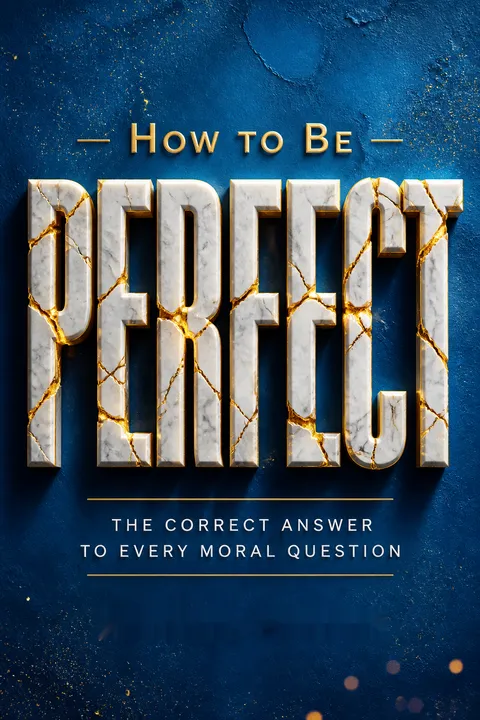


Key Takeaways
Treat ethical life as four questions, not a test of purity.
Start with the decision. Schur organizes moral inquiry around four linked questions: What is happening? What motivates the choice? Is there a better option? What makes it better? Philosophers offer tools for answering, not a calculator that settles every case. Aristotle asks what kind of person to become, utilitarians compare outcomes, and Kant tests duties and rules.
Expect to revise. The book opens with a well-meaning person whose choices have hidden costs, from supposedly humane food to a helpful act that might aid someone cruel. The lesson is not to give up, but to investigate, learn from mistakes, and try again. Sartre adds a bracing point: choosing not to act is still a choice, even when no theory supplies a comfortable answer.
The four questions work less like a moral formula than a repeatable audit. Their strength is that they separate action, motive, alternatives, and justification, preventing a good intention from ending the inquiry prematurely. This resembles reflective practice in professions such as medicine, where decisions are reviewed to improve future judgment. The limitation is equally important: reflection cannot guarantee correct foresight. Ethical maturity is therefore better measured by how someone responds to new evidence than by a spotless record.
Practice virtues until good judgment becomes flexible, not automatic.
Character takes rehearsal. Aristotle calls a life of deep fulfillment eudaimonia, often translated as flourishing. It requires virtues such as courage, honesty, and generosity, developed through repeated action, teaching, and experience rather than acquired fully at birth. Natural tendencies may give someone a head start, but practice can strengthen neglected qualities.
Aim for proportion. The golden mean describes a virtue between harmful extremes: courage lies between cowardice and rashness, while appropriate anger avoids both passive acceptance and explosive overreaction. Schur illustrates the risk with his own excessive dutifulness, which turned rule-following into a habit that could irritate others. Judith Shklar adds a useful priority: cruelty is especially grave because it inflicts suffering on another person, not merely because it violates an abstract rule.
Virtue ethics treats character as a learnable capacity, much like musicianship: repetition builds speed, while reflection keeps skill responsive to the situation. That distinction matters because a rigid habit can look virtuous while producing harm, as dutifulness can become obedience without judgment. The golden mean is not a measurable midpoint, however. It depends on context, power, and consequences, so its practical value comes from disciplined calibration, not from pretending every virtue has a precise numerical setting.
Count consequences, but never treat a person as a disposable number.
Outcomes matter. Utilitarianism judges choices by how much well-being they produce and how much suffering they prevent. In the trolley problem, diverting a runaway trolley from five workers onto a track with one worker appears to save more lives. Bentham proposed assessing pleasure and pain by factors including intensity, duration, certainty, and how many people are affected.
Arithmetic can mislead. The same calculation can seem to justify pushing a bystander onto the tracks, or killing a healthy hospital custodian to supply organs to five patients. Many people reject these acts despite their similar totals. Bernard Williams argues that a person must answer for what they themselves do, not become a mere instrument of a supposed social benefit. Consequences are indispensable, but incomplete when intentions, rights, and personal integrity disappear from view.
Consequentialist reasoning is valuable when institutions must allocate scarce resources, as in distributing emergency food or vaccines according to need. It forces decision-makers to count people whose suffering might otherwise remain invisible. Yet aggregate benefit can conceal who bears the cost. A useful safeguard is to ask both how much good a policy creates and whether it imposes severe burdens on individuals who cannot refuse them. The challenge is not to discard calculation, but to prevent the total from erasing its human parts.
Choose rules you could accept if everyone followed them.
Test the rule. Kantian deontology grounds morality in duties rather than outcomes. Its categorical imperative asks whether the principle behind an action could be adopted universally. A world where everyone lies would undermine trust and communication, so Kant regards lying as impermissible even when a lie seems convenient.
Respect people themselves. Kant's second formulation says people must not be treated merely as tools for someone else's goals. That helps explain why pushing a bystander or harvesting a custodian's organs feels different from redirecting a trolley: the person becomes a device for saving others. Kant's strictness creates hard cases, including whether to lie to a murderer seeking someone's hiding place. The framework offers a powerful check on expediency, but formulating a suitable rule can be difficult in urgent, complicated situations.
Universal rules can protect people from being sacrificed whenever a majority finds that convenient. The test also exposes special pleading: a principle that works only when one person benefits is unlikely to be fair as a general rule. Still, universalization does not automatically identify the right description of an action. A maxim can be framed narrowly or broadly, and different descriptions produce different answers. Kantian reasoning is most useful alongside practical judgment about what the rule permits people to do to one another.
Make fair, mutually defensible rules your floor, then help beyond them.
Ask who can object. T. M. Scanlon's contractualism tests principles by asking whether reasonable people could reject them. A rule allowing one driver to use a highway breakdown lane because he owns a luxury car fails that test; a rule that protects the lane for emergencies can be justified to everyone.
Go beyond compliance. This approach establishes a minimum for living together, not a complete ideal of goodness. Returning a shopping cart may not be required if store workers collect them, but returning it can save them effort and help the next shopper. Ubuntu deepens the case for care by emphasizing that people develop and thrive through their relationships with others. The cart is a small reminder that public life is shared, not a sequence of private transactions.
Contractualism turns fairness into a question of justification: could the people affected accept the rule without surrendering their interests entirely? This is a useful model for public policy, where legitimacy depends on more than efficiency. Ubuntu adds a relational emphasis, reminding readers that well-being is partly produced through care and cooperation. The approach nevertheless relies on a demanding idea of reasonableness. In practice, unequal power can determine whose objections are heard, so mutual agreement must be supported by genuine inclusion.
Refuse sainthood, but don't turn moral fatigue into a permanent excuse.
Perfection has a cost. Susan Wolf's critique of moral sainthood shows how a person devoted every moment to helping others could lose room for friendship, art, hobbies, and a distinct personality. Aristotle's balanced virtues likewise leave space for self-protection: charging into a fire without training may be rashness, not courage. A person is not required to give up an entire life to serve strangers.
Make small exceptions carefully. Schur calls the strain of constant ethical choices Moral Exhaustion. It can tempt people to break a minor rule, such as jaywalking on an empty street in intense heat. James C. Scott sees occasional small rule-breaking as practice in independent judgment. But exceptions should not cause clear harm, and should be acknowledged honestly, since repeated excuses can shift what someone considers acceptable.
The rejection of moral sainthood protects plural goods: people need relationships, creativity, rest, and projects that are not reducible to service. At the same time, fatigue is a reason to simplify ethical demands, not to declare other people's needs irrelevant. The distinction between a minor exception and an expanding permission structure is difficult to draw. Regular reflection helps, but institutions also matter: better systems can reduce the exhausting number of private choices individuals must solve alone.
Give without making recognition the hidden recipient.
Notice the motive. Schur catches himself tipping a barista only after the worker has turned away, then waiting until he can be seen. The episode raises the idea of moral desert: the sense that good deeds earn praise or a reward. Buddhist teacher Thich Nhat Hanh connects mindful action with doing the act for its own sake, rather than turning it into a bid for status.
Consider what recognition does. Maimonides ranks anonymous charity highly, but public giving can also draw attention and motivate others to contribute. Schur's example of a competitive entertainment executive shows how self-interest can raise substantial money for a worthy cause. William James's pragmatism asks whether competing descriptions make a practical difference. Motives matter, but judging them should not obscure real help or excuse harm.
The barista story captures how easily generosity becomes social performance. Research on reputation and cooperation often suggests that visibility can encourage prosocial behavior, so anonymity is not always the strategy that produces the most help. The deeper question is whether recognition remains a side effect or becomes the main objective. A practical standard can hold both concerns: welcome actions that materially benefit others while remaining alert when publicity distorts priorities or launders a giver's reputation.
Compare each luxury with the lives your money could protect.
See the alternative. Peter Singer's drowning-child example asks whether someone should rescue a child from a shallow pond if doing so ruins expensive shoes. Most would say yes. Singer then asks why distant children in danger seem less compelling when a modest donation could help them. His argument makes moral opportunity cost visible: money spent on a luxury cannot also be used to relieve suffering.
Scale responsibility to capacity. Singer presses the case much further, arguing that money beyond necessities should go to those in greater need. Schur finds the logic powerful but resists demanding that everyone surrender ordinary pleasures, savings, or family security. The book's compromise is not complacency: the more resources and freedom a person has, the more they can reasonably do, especially during a crisis.
Singer's thought experiment counters distance bias by making an unseen emergency resemble an immediate rescue. It also exposes how affluent consumption can appear harmless only because its alternatives are out of sight. Yet a strict demand to donate every nonessential dollar risks ignoring dependents, uncertainty, and the value of personal commitments. The strongest application is graduated rather than all-or-nothing: identify effective ways to help, protect genuine necessities, and let greater wealth bring greater responsibility.
Keep moral complexity visible when loving flawed art or institutions.
Don't confuse attachment with approval. Chick-fil-A's leadership opposed same-sex marriage, while the Washington football team's owner defended a racist name for years. In such cases, the source of harm can change, but fans must decide whether to keep supporting it. Other attachments, such as a film by a troubling or deceased artist, cannot be repaired by the consumer. The practical effect of buying new work may also differ from watching an old copy already owned.
Draw a line somewhere. No single rule settles every case. Schur's proposed discipline is to hold two facts together: a work may matter deeply, and its creator's conduct may remain objectionable. Avoiding excuses preserves concern for victims; acknowledging attachment preserves honesty about one's own identity. Decisions can still conflict, and those contradictions are reasons to reconsider a line, not abandon the task.
This problem resembles ethical consumption more broadly: supply chains, institutions, and cultural works rarely arrive with clean moral histories. A binary demand for total purity can become impossible to apply, while total indifference rewards powerful actors for ignoring criticism. Distinguishing new financial support from private engagement is useful, though not decisive. The central discipline is transparent reasoning: name what is troubling, identify who is affected, and explain why a particular attachment remains worth keeping.
Let luck and hardship change what you reasonably owe.
Circumstances shape choices. Schur contrasts a person who steals food to feed a starving family with a comfortable person stealing without need. The act resembles itself, but the pressures and options differ. Robert Frank's account of luck challenges the idea that success comes only from talent and effort: Michael Jordan's height and birthplace, as well as the timing of career opportunities, helped shape his path.
Design fairness before knowing your place. John Rawls's veil of ignorance asks people to choose society's rules without knowing their future wealth, abilities, or social position. That uncertainty encourages protections for those who might draw the hardest circumstances. Sartre insists choices remain ours, but that insight must not erase constraints people did not choose. Responsibility should reflect both agency and the conditions that make agency easier or harder.
The veil of ignorance is a powerful antidote to policies written by people who assume they will remain advantaged. It encourages robust protections because anyone might occupy a vulnerable position. Luck also complicates merit-based praise without making effort meaningless: people can work hard and still benefit from favorable conditions. The framework's practical challenge is deciding how much context should mitigate responsibility. That judgment should avoid both extremes, blaming people for hardship or denying their agency altogether.
Apologize directly, repair what you can, and stop defending the mistake.
Name the harm. After Schur's wife lightly damaged a car, he used Hurricane Katrina to shame the owner for seeking an $836 repair. The resulting campaign raised more than $27,000 for relief, but the good outcome did not make the public pressure fair. Guilt is an inward recognition of wrongdoing; shame is judgment imposed from outside. Whataboutism, pointing to an unrelated worse problem or someone else's fault, dodges the issue rather than answering it.
Make the apology real. A useful apology acknowledges what happened, takes responsibility, and recognizes the people affected. Tom Petty did this when he regretted using a Confederate flag in a concert design. By contrast, a defensive speech that denies the offense or pivots to the speaker's virtues is, in Harry Frankfurt's terms, performance without regard for truth. Repair begins with candor.
Apology is not merely politeness. It restores shared reality by acknowledging that an action harmed someone and that the harm matters. A sincere apology cannot guarantee forgiveness or erase consequences, but it gives the injured person evidence that the offender understands the breach. The distinction between guilt and shame also cautions against humiliation as a default tool: public condemnation can trigger defensiveness rather than change. Accountability works best when it is proportionate, specific, and connected to repair.
Analysis
Schur's central contribution is not a new moral algorithm. It is a case for ethical pluralism disciplined by ordinary attention. Aristotle notices the kind of person an action cultivates. Utilitarianism insists that outcomes and distant suffering count. Kant protects people from being reduced to instruments. Scanlon asks whether rules can be justified to those who bear them. Each approach catches a failure the others can miss, and the book's comic thought experiments make those disagreements memorable rather than merely technical.
The narrative also makes uncertainty part of moral education. Its author recounts real mistakes, including an ill-judged campaign over a car repair, so philosophy becomes a way to diagnose conduct rather than a badge of superiority. This is a notable strength: moral seriousness is compatible with fallibility. A person can admit that good intentions do not guarantee good consequences, and that a fortunate life creates responsibilities rather than proof of merit.
The book's most productive tension is between demanding more and refusing perfection. Singer's challenge exposes the opportunity cost of comfort, while Wolf and Aristotle protect the varied activities that make a human life more than a service project. The balance is not precisely specified, which may frustrate readers seeking a rule. That incompleteness is also honest. Circumstances differ, consequences are uncertain, and values can conflict without a neutral referee.
One further implication follows: ethical reflection should not be mistaken for a substitute for collective solutions. Returning a cart or choosing a bank can matter, but individual virtue cannot alone correct exploitative institutions, unequal starting conditions, or public systems that make the decent choice costly. The book's best practical model therefore combines personal examination with fair institutions, attention to power, and willingness to repair harm. Its enduring instruction is modest but demanding: stay engaged, revise judgments when facts change, and do not use imperfection as an excuse to stop caring.
Review Summary
How to Be Perfect receives mixed reviews. Many praise its accessible approach to moral philosophy, blending humor with complex ethical concepts. Fans of Schur's TV show "The Good Place" particularly enjoy it. Some find it entertaining and thought-provoking, while others criticize its liberal bias and superficial treatment of philosophical ideas. The audiobook narrated by Schur and "The Good Place" cast is highly recommended. Overall, readers appreciate Schur's attempt to make ethics relatable, though some find the humor forced and the arguments lacking depth.
People Also Read








Glossary
eudaimonia
Human flourishingAn Aristotelian term for the highest human good, often translated as happiness or flourishing. It does not mean a passing pleasant feeling. It describes a fulfilled life shaped by reason and developed virtues, reached through sustained choices and practice.
virtue ethics
Character-centered moralityAn ethical approach associated with Aristotle that asks what kind of person one should become, rather than judging actions only by rules or results. It treats virtues such as courage, generosity, and honesty as qualities developed through practice, instruction, and experience.
golden mean
Virtue between extremesAristotle's idea that a virtue generally lies between a deficiency and an excess of a quality. Courage, for example, avoids both cowardice and rashness. The appropriate balance is not a fixed midpoint; it depends on the person, situation, and reasons for acting.
utilitarianism
Maximize shared well-beingA form of consequentialism associated with Jeremy Bentham and John Stuart Mill. It evaluates actions by their effects on happiness and suffering, seeking the greatest overall benefit. Its appeal is impartial concern for everyone, while its difficulty is that aggregate gains can seem to justify severe burdens on individuals.
categorical imperative
Universal moral dutyKant's principle for testing moral action through reason. A person should act only on a rule that could be adopted universally, and should treat humanity as an end rather than merely as a means. The principle supplies firm constraints but can be difficult to apply when rules conflict.
contractualism
Rules nobody can reasonably rejectT. M. Scanlon's approach to morality, which tests principles by asking whether they could be reasonably rejected by people affected by them. It emphasizes mutual justification and equal consideration of interests. It establishes standards for coexistence, though it does not define every generous action people might choose.
ubuntu
Humanity through relationshipA Southern African ethical and social outlook that emphasizes shared humanity, care, respect, and community. It sees people as interconnected rather than self-sufficient individuals. The term varies across African languages and contexts, but it commonly expresses the idea that a person's well-being is bound up with other people's.
Moral Exhaustion
Fatigue from ethical demandsSchur's term for the fatigue produced by facing many moral choices while also managing ordinary responsibilities and crises. The strain can make a person retreat from ethical effort or justify small rule-breaking. Recognizing the exhaustion can support realistic limits without turning fatigue into indifference.
moral desert
Reward for good conductThe philosophical question of what people deserve because of their actions. In Schur's discussion, it includes the temptation to expect gratitude, praise, or moral credit after doing good. The concept helps distinguish helping someone from using the act chiefly to improve one's own reputation.
moral opportunity cost
Good forgone for another choiceThe potential benefit that is lost when time or money is spent on one option rather than another. Singer uses the idea to compare luxuries with help that could relieve serious suffering. It makes alternative uses of resources visible, while raising questions about necessities, obligations, and reasonable sacrifice.
Overton window
Range of acceptable behaviorA term for the range of ideas considered politically acceptable at a particular time. Schur also applies it to personal conduct: repeated small exceptions can gradually change what someone regards as acceptable. The concept warns that habits and justifications can shift standards incrementally.
veil of ignorance
Fairness without knowing one's placeJohn Rawls's thought experiment for choosing principles of justice without knowing one's future social position, abilities, wealth, or circumstances. Because anyone might end up disadvantaged, the exercise encourages rules that protect people across different starting points rather than favoring the chooser's own group.
happiness pump
Self-sacrifice without limitsA label for the worry that strict utilitarianism can require a person to devote nearly all available resources to increasing other people's well-being. Without a clear stopping point, ordinary security, relationships, and personal projects may be sacrificed, turning moral concern into an impossible demand.
FAQ
What's How to Be Perfect about?
- Exploration of Ethics: The book delves into moral philosophy, aiming to simplify complex ideas into four key questions: What are we doing? Why are we doing it? Is there something better? Why is it better?
- Personal Journey: Michael Schur shares his journey from ignorance to understanding moral philosophy, inspired by his work on The Good Place, making these concepts accessible to all.
- Engaging Style: Written humorously, the book uses anecdotes and thought experiments to illustrate philosophical principles, making it enjoyable and relatable.
Why should I read How to Be Perfect?
- Accessible Introduction: It serves as an excellent introduction to moral philosophy, breaking down complex theories into digestible parts for easy understanding.
- Practical Application: Readers learn to apply ethical theories to everyday situations, encouraging self-reflection and personal growth.
- Humor and Insight: Schur's engaging style, filled with humor, invites readers to think critically about their actions and their impact on others.
What are the key takeaways of How to Be Perfect?
- Four Key Questions: The book emphasizes guiding ethical decision-making through four fundamental questions about actions and their better alternatives.
- Moral Philosophy Simplified: Schur introduces major ethical theories like virtue ethics, utilitarianism, and deontology, highlighting their importance in navigating moral dilemmas.
- Embracing Failure: Accepting failure in moral endeavors is crucial, as trying to be good is a continuous process that involves learning from mistakes.
What are the best quotes from How to Be Perfect and what do they mean?
- Continuous Improvement: “Do the best you can until you know better. Then when you know better, do better.” – Maya Angelou. This emphasizes learning and improvement in moral lives.
- Embrace Failure: “Try again. Fail again. Fail better.” – Samuel Beckett. It suggests that each attempt, even if unsuccessful, contributes to growth.
- Interconnectedness: “A person is a person through other people.” – Ubuntu philosophy. This underscores the interconnectedness of humanity and the importance of community.
How does How to Be Perfect explain virtue ethics?
- Focus on Character: Virtue ethics emphasizes developing good character traits like courage, honesty, and generosity, as introduced by Aristotle.
- Golden Mean Concept: It advocates for a balanced approach to virtues, finding the right balance between extremes.
- Lifelong Process: Acquiring virtues is a lifelong journey requiring practice and self-reflection, focusing on striving to be better over time.
How does utilitarianism work in How to Be Perfect?
- Consequentialist Approach: Utilitarianism focuses on maximizing happiness and minimizing suffering, with the best action producing the greatest good for the most people.
- Hedonistic Calculus: Jeremy Bentham's method measures pleasure and pain to determine an action's overall utility.
- Critiques: Schur discusses limitations, such as justifying harmful actions for a net gain of happiness, illustrated through thought experiments like the Trolley Problem.
What is deontology according to How to Be Perfect?
- Duty-Based Ethics: Deontology emphasizes following moral rules or duties, with actions considered right if they adhere to universal maxims.
- Categorical Imperative: Kant's concept states we should act according to maxims that can become universal laws, considering if actions could be universally applied.
- Moral Absolutism: It requires strict adherence to moral rules, leading to dilemmas like whether to lie to protect someone from harm.
How does How to Be Perfect address moral failure?
- Acceptance of Imperfection: Schur emphasizes that moral perfection is unattainable, encouraging readers to embrace mistakes as growth opportunities.
- Learning from Mistakes: Reflecting on failures can lead to better decision-making, adjusting actions to strive for improvement.
- Continuous Improvement: The goal is to be better today than yesterday, fostering resilience and encouraging perseverance despite setbacks.
How does How to Be Perfect address the concept of privilege?
- Acknowledgment of Luck: Schur highlights how luck and privilege influence circumstances and ethical choices.
- Moral Responsibility: Those with more privilege have a greater obligation to help others and be aware of systemic inequalities.
- Empathy and Understanding: Readers are encouraged to consider others' experiences and approach moral discussions with compassion.
What role do apologies play in How to Be Perfect?
- Healing and Growth: Sincere apologies help mend relationships and facilitate personal growth after mistakes.
- Moral Accountability: Apologizing is crucial for taking responsibility and acknowledging the impact of one's actions.
- Examples: The book contrasts effective apologies with ineffective ones, emphasizing sincerity and accountability.
How does Schur suggest we make ethical decisions in How to Be Perfect?
- Ask Key Questions: Reflect on actions by considering if choices would be acceptable if universally applied.
- Consider Consequences: Weigh potential happiness and suffering from decisions, aligning with utilitarian principles.
- Balance Virtues: Find a middle ground in virtues, suggesting moderation is key to ethical behavior and decision-making.
What is the "veil of ignorance" concept in How to Be Perfect?
- Rawls' Theory: A thought experiment where individuals design a society without knowing their social status, ensuring fairness.
- Fairness in Decision-Making: Encourages creating just principles benefiting everyone, protecting the most vulnerable.
- Application to Ethics: Highlights the importance of fairness and equity in moral discussions, advocating for rules that protect all.

Download PDF
Download EPUB
.epub digital book format is ideal for reading ebooks on phones, tablets, and e-readers.








