

Key Takeaways
Make meatless meals satisfying by giving vegetables equal billing, not supporting roles
A different center of the plate. Mark Bittman writes as an omnivore who wants to eat less meat, not as a recruiter for strict vegetarianism. He uses the term flexitarian for people who mix meatless eating with occasional animal products. His practical test came in Oklahoma: after a day of meat-heavy meals, he fed fifteen guests a summer spread of corn, watermelon, peaches, beans, potatoes, and quick pickles. The meal took about an hour and a half, and the committed meat-eaters enjoyed it without needing a substitute steak.
Build a table, not a replacement. A vegetarian meal can give grains, vegetables, salad, bread, cheese, or nuts comparable importance. Variety matters because palate satiety, the tendency for interest in one flavor to fade as a person keeps eating it, can make several complementary dishes more satisfying than one large serving of a single food.
What's striking is how the Oklahoma meal challenges a social convention, not merely a menu. Many diners expect one protein to carry the meal and everything else to orbit it. Several contrasting dishes redistribute attention across color, temperature, sweetness, acidity, and texture. That resembles the logic of a well-composed tasting menu, but it is achievable with ordinary produce. The approach also leaves room for cultural and personal differences: a shared table need not impose one definition of vegetarianism, and not every meal needs a dozen dishes to feel complete.
Cook at home to reclaim control, flavor, and a calmer daily rhythm
Control the ingredients. Bittman argues that cooking at home gives eaters more control over freshness, fat, and what goes into a meal than takeout or prepared foods can provide. He estimates that a decent meal often takes thirty to sixty minutes, and notes that a stocked kitchen can make cooking faster than organizing a restaurant trip. He also admits it will not beat microwaving a frozen dinner on speed alone; the case is better flavor, lower cost, and choice.
Let repetition become ease. A novice does not need restaurant technique to cook well. Washing, chopping, browning, stirring, and tasting become more natural with practice, and imperfect dishes are usually still edible. The book treats cooking not only as production but as a focused daily activity that can be calming once the cook is familiar with the work.
The argument joins practical economics to habit formation. A stocked pantry lowers the number of decisions between arriving home and eating, while repeating basic techniques reduces the cognitive load of cooking. That makes the kitchen less a stage for performance and more a usable routine. The claim that home cooking is broadly cheaper or healthier still depends on the household, its time, equipment, and access to ingredients. The stronger point is agency: preparing food makes its ingredients and trade-offs visible, even when convenience occasionally wins.
Build dinner from cooked grains, beans, and vegetables already on hand
Cook once, assemble repeatedly. Bittman suggests making extra grains and beans on purpose, then storing them in the refrigerator or freezer as ingredients rather than treating them as scraps. Cooked rice becomes fried rice with oil, garlic, and a leftover vegetable. Beans can turn into soup, refried beans, or croquettes. Extra grilled vegetables can be served warm, folded into a salad, or paired with grains.
Keep components flexible. A few prepared basics, plus fresh vegetables, eggs, cheese, flour, nuts, and condiments, make many combinations possible without repeating the original dish. The book encourages cooks to think in ingredients rather than in a sequence of isolated meals. That approach also reduces the pressure to use every component in the same way: grains can be eaten hot, at room temperature, or added near the end of another recipe.
This is a kitchen version of modular design: a small number of durable components can be recombined into many different outcomes. The benefit is not only speed. Planned leftovers reduce waste and make cooking more resilient when schedules change. The method works best when components are stored safely and plainly, without being committed too early to a single seasoning profile. That restraint preserves options. A pot of neutral beans is more adaptable than one already locked into a strongly flavored sauce.
Stock twenty-one pantry essentials and buy equipment only when cooking demands it
Start with a working pantry. Bittman offers a compact list of twenty-one basics, including olive oil, vinegar, soy sauce, rice, pasta, beans, flour, canned tomatoes, aromatic vegetables, eggs, cheese, nuts, citrus, and durable produce. A second list adds useful extras such as miso, seaweed, frozen vegetables, ginger, and coconut milk. The point is not to buy everything at once, but to keep enough variety to make a meal without a special shopping trip.
Let use justify equipment. A sharp chef's knife, a paring knife, a serrated knife, a few pans, and basic utensils cover much of the book. Bittman advises against buying a full suite of gadgets before knowing what gets cooked often. For ingredients, he favors buying local when practical, while accepting good supermarket, frozen, or conventional food when that is what is available.
The book favors a low-friction kitchen over a showroom kitchen. Its buying advice is strongest when read as a hierarchy: reliable staples first, specialized ingredients and tools only as habits become clear. That resembles just-in-time investment, where purchases respond to demonstrated need rather than imagined future enthusiasm. The sourcing advice is pragmatic but necessarily incomplete: local, organic, seasonal, affordable, and convenient do not always point in the same direction. Flexibility prevents food ideals from becoming another reason not to cook.
Preheat boldly and leave food room to brown instead of steam
Heat is a cooking tool. The book's central technical advice is to trust a properly heated pan, oven, pot, or grill. Dry food browns better than wet food; a crowded skillet releases moisture and steams its contents instead of searing them. In sautéing, the fat should be hot before ingredients go in, and food should be left alone until it browns and releases easily. Roasting also depends on space: vegetables need room for moisture to evaporate.
Read the food. Bittman asks cooks to use smell, sound, color, and touch to judge what is happening. A bright vegetable is often close to its best texture; a faintly browned edge, a vigorous sizzle, or a piece that releases from the pan offers useful information. Even cutting helps: similar-size pieces cook more evenly, while smaller pieces cook faster.
The practical lesson is grounded in heat transfer. Browning requires a surface hot enough to drive off moisture; crowding slows that process because ingredients release water faster than it can evaporate. That is why confidence here is not the same as cooking recklessly. Observation and batch cooking matter as much as burner strength. The advice also corrects a common misconception that every vegetable should be treated gently. Some benefit from a forceful start, provided the cook watches closely and adjusts before char becomes burning.
Choose each cooking method by the texture and flavor you want
The method changes the vegetable. Steaming cooks quickly without leaving produce waterlogged; boiling is useful for pasta, beans, and vegetables that will go into soups, but can dilute flavor if prolonged. Roasting concentrates flavor and browns exposed surfaces. Sautéing creates a crust, while braising combines initial browning with covered cooking in liquid. Bittman's braising-and-glazing method cooks vegetables with a small amount of liquid, then uncovers the pan to reduce that liquid into a glossy coating.
Stop cooking deliberately. A skewer, knife tip, or bite helps identify doneness; vegetables continue cooking briefly after leaving the heat. Shocking vegetables means parboiling them until nearly tender, then plunging them into ice water to halt cooking. The method preserves color and lets a cook finish vegetables quickly in a skillet or salad.
What's useful is the book's implicit map of water, heat, and time. Steaming preserves shape, roasting removes moisture, and braising softens fibers while building a sauce. Shocking is a small piece of process control: it separates the timing of preparation from the timing of serving. The nutrition discussion is sensible as a caution against prolonged boiling, but no single cooking method maximizes every nutrient in every vegetable. In practice, choosing methods that make vegetables appealing and frequently eaten is a sounder goal than chasing one ideal technique.
Make beans and grains the meal's anchor, not an automatic side
Use the full range of staples. The book presents beans, lentils, peas, rice, barley, bulgur, quinoa, and wheat berries as substantial building blocks. They become salads, soups, stews, pilafs, fritters, and baked dishes, not merely small sides beside a main course. Bittman notes that grains and legumes provide complementary proteins when eaten together, while beans contribute fiber and substantial texture.
Cook beans for the dish. For salads, beans should be just tender, with their skins intact, and dressed while still warm so they absorb flavor. For stews or purées, cooking longer creates a creamier result. Cooking beans from scratch gives the broth and beans more flavor, but canned beans are a practical fallback. Rice and other grains can be cooked ahead, and brown rice can be parboiled before use in recipes designed for white rice.
The change is conceptual as much as nutritional: beans and grains become the organizing center of dinner, not a dietary correction added around a meat-based template. That gives a home cook an unusually flexible repertoire, because the same pot of beans can support a salad one day and a stew the next. The book's protein-complementarity point is helpful, though a complete vegetarian diet involves more than pairing two ingredients in one meal. Its more durable insight is culinary: these staples offer flavor, satiety, and structure at low cost.
Turn salads and soups into flexible formats for leftovers and seasonal produce
Salad is broader than raw leaves. A salad can contain cooked vegetables, grains, beans, noodles, or leftovers, served warm, chilled, or at room temperature. A simple vinaigrette combines oil, acidity, and seasoning; salt watery vegetables such as cabbage or cucumbers ahead when a firmer, less diluted result is wanted. Dress tender greens just before serving so they do not wilt.
Soup is a forgiving improvisation. Start with aromatics cooked in fat, add seasonings, then stock or water, followed by ingredients in order of cooking time. Beans, grains, and vegetables can be combined, while cooked leftovers go in near the end. Good stock improves a soup, but it is not essential: water can become flavorful when simmered with onion, carrot, celery, herbs, or other suitable ingredients.
These formats turn recipes into adaptable structures. A salad can absorb whatever is already cooked, while soup converts mismatched ingredients into a coherent meal because its liquid carries flavor across the pot. That flexibility is particularly valuable for seasonal cooking, when the same method can accommodate different produce without requiring a new recipe. There is one useful constraint: improvisation still depends on tasting. Acid, salt, fat, and texture must be adjusted as ingredients change, so adaptability is a skill, not a license to combine everything indiscriminately.
Let tofu, eggs, and cheese contribute their own textures and strengths
Avoid the imitation trap. Bittman argues that vegetarian ingredients need not pretend to be meat. Tofu is mild and absorbs seasoning; freezing, pressing, baking, frying, or grilling it changes its texture and helps it take up flavor. Eggs can anchor a meal beyond breakfast: poached over grains, baked in a ramekin, folded into a frittata, or used to enrich soup. Cheese adds richness, salt, and contrast, but is usually best used with restraint.
Use the ingredient's behavior. Silken tofu can soften into soups and sauces, while firm tofu holds cubes or slices. Fresh cheese stays intact during cooking; melting cheeses become smooth, and Parmesan works as a strong finishing accent. The book also offers vegan substitutions for many recipes, while acknowledging that a substitute may taste different rather than identical.
The culinary gain comes from treating ingredients as materials with distinct physical properties. Firm tofu can be seared; silken tofu can thicken; egg proteins set; melting cheeses form a cohesive sauce. This is more useful than asking whether a food convincingly impersonates meat. It also encourages honest expectations: substitutions can produce good dishes without reproducing the original's flavor or texture. That distinction makes vegetarian cooking less apologetic and gives the cook more freedom to build around what each ingredient does well.
Master a few base recipes, then vary ingredients across cuisines
Recipes are starting points. The book repeatedly pairs a basic method with variations, charts, and ingredient notes. One vinaigrette can become a mustard, citrus, or herb dressing; a simple tomato sauce can take mushrooms, olives, vegetables, spices, or pesto. Rice, beans, and vegetables can move among salads, soups, gratins, and stuffed breads. The recipe titles use familiar English names, while notes explain less familiar ingredients and offer substitutions.
Build range through repetition. The most reusable foundations include cooking rice and grains, preparing beans, making tomato sauce, mixing a basic dough, and learning a few ways to cook vegetables. The book also marks recipes that are quick, make-ahead, or vegan, making a large reference work easier to use in an ordinary kitchen. The goal is not to memorize hundreds of dishes but to recognize which parts can change without losing the logic of the dish.
The book's architecture is itself a teaching method: a home cook sees a stable base, then a set of controlled variations that reveal which ingredients and techniques are doing the work. This resembles learning a language through reusable grammar rather than memorizing isolated sentences. The approach supports genuine improvisation, but it still asks for judgment. A substitution that changes moisture, cooking time, or acidity may require a corresponding adjustment. Flexibility grows most reliably when each variation teaches a reason, not merely a list of alternatives.
Analysis
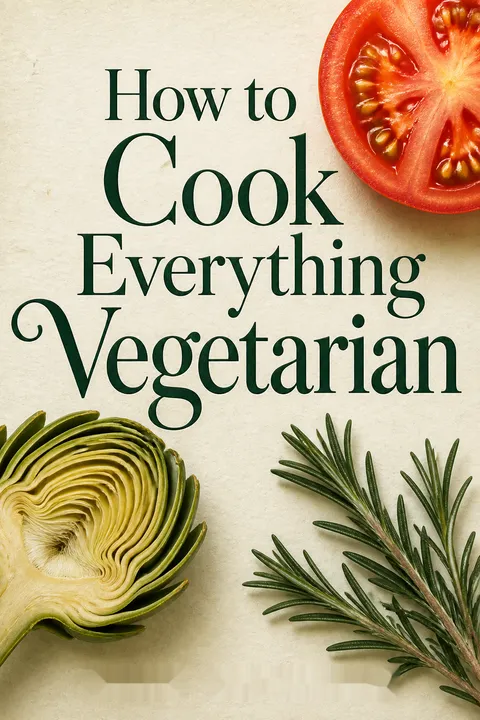
How to Cook Everything Vegetarian is best understood as a practical reference book organized around a quiet argument: meatless cooking becomes easier when it is treated as ordinary cooking rather than as a special diet requiring imitation products or culinary heroics. Its scale is both its strength and its main summarizing challenge. The book ranges from pantry advice and knife skills through vegetables, grains, beans, tofu, eggs, breads, sauces, and desserts. A recipe-by-recipe synopsis would reproduce the table of contents while losing the connective tissue.
That connective tissue is method. Bittman repeatedly pairs a reliable base with flexible variations, emphasizing shopping for usable ingredients, cooking components ahead, and learning how heat changes texture. The reader is invited to move from following recipes to understanding why a technique works. A pot of beans is not only one meal; it can become a salad, purée, filling, or stew. A vegetable is not confined to a side dish; roasting, grilling, or braising can turn it into the center of the table.
The book's strongest cultural move is its rejection of the meat-centered plate as the default. The Oklahoma dinner story makes that point concrete: a gathering accustomed to meat enjoyed a meal built from summer produce without treating the absence of meat as a deprivation. The book is also notably non-dogmatic about identity, sourcing, convenience, and equipment. It encourages local food when practical, accepts frozen vegetables and canned beans when they make cooking possible, and urges cooks to buy tools only when repeated use justifies them.
Some claims reflect the book's 2007 moment, particularly its broad statements about nutrition and the environmental necessity of reducing animal foods. Those claims should not replace individualized medical or nutritional advice. The enduring contribution is more practical: a large, mostly plant-based repertoire can be accessible, flavorful, adaptable, and compatible with ordinary schedules. Its promise is not that every meal is virtuous or effortless, but that more meals can be cooked well with skills and ingredients already within reach.
Review Summary
How to Cook Everything Vegetarian is widely praised as a comprehensive and invaluable vegetarian cookbook. Readers appreciate its simple, honest recipes using common ingredients, flexible variations, and practical cooking tips. Many consider it their go-to reference for vegetarian cooking. The book is lauded for its extensive information on ingredients, techniques, and adapting recipes for vegans. While most reviewers find the recipes delicious and easy to follow, a few note inconsistent results. Overall, the book is highly recommended for both novice and experienced cooks interested in vegetarian cuisine.
People Also Read



Glossary
Flexitarians
Flexible plant-forward eatersA term the book uses for people who eat some meals entirely from plants without necessarily avoiding all animal foods. It includes people who identify as vegetarian but are not strict, as well as meat-eaters trying to eat in a more health-conscious or planet-conscious way. The book uses the term to emphasize practice over a fixed dietary identity.
Palate satiety
Fading interest in one flavorThe tendency to enjoy a particular dish less as a person continues eating the same flavor and texture. The book uses this idea to explain why a vegetarian meal composed of several complementary dishes can feel more satisfying than a large serving of one item. Contrasting flavors keep the meal interesting without requiring a meat-centered centerpiece.
Shocking Vegetables
Stopping cooking in ice waterA technique in which vegetables are briefly boiled or parboiled, then immediately plunged into ice water to halt cooking. The rapid cooling helps preserve color and prevents vegetables from becoming overcooked while they wait to be finished. It is especially useful for green vegetables prepared ahead for salads, stir-fries, or quick reheating in butter or oil.
Braising and Glazing Vegetables
Steam, then reduce to a glazeA method that cooks vegetables in a covered pan with fat and a small amount of water or stock until nearly tender. The pan is then uncovered and the remaining liquid is boiled away, leaving the vegetables coated in a glossy mixture of cooking juices, starches, and sugars. It combines moist cooking with a final browned or glazed finish.
Tarka
Spices fried in fatA finishing mixture of aromatics and spices cooked briefly in hot oil or butter, then stirred into a finished dish or spooned over it. The book describes it as a common Indian way to flavor legumes and grains at the end of cooking. Heating the spices releases their aroma and gives the dish a distinct final layer of flavor.
Kombu Dashi
Kelp-based Japanese stockA light stock made by steeping dried kombu, a type of kelp, in water, sometimes with ginger. The book presents it as a vegetarian foundation for soups, dipping sauces, and other Japanese-style dishes. It can be made with gentle heat or by soaking the kelp in cold water for several hours, then straining.
Nixtamal
Partially cooked treated cornWhole corn kernels that have been treated with an alkaline solution, traditionally lime, and partially cooked. The process changes the corn's texture and flavor and makes it suitable for grinding into masa, the dough used for tortillas and tamales. The book also uses nixtamal directly in dishes such as pozole and notes that it cooks faster than dried hominy.
FAQ
What's How to Cook Everything Vegetarian about?
- Comprehensive Guide: How to Cook Everything Vegetarian by Mark Bittman is a complete resource for vegetarian cooking, offering a wide range of recipes and techniques.
- Focus on Simplicity: The book emphasizes straightforward, easy-to-follow recipes that make vegetarian cooking accessible to everyone, regardless of skill level.
- Variety of Recipes: It includes dishes from various cuisines, ensuring that readers can explore global flavors while adhering to a vegetarian diet.
- Emphasis on Fresh Ingredients: Bittman highlights the importance of using fresh, seasonal produce to enhance flavor and nutrition in meals.
Why should I read How to Cook Everything Vegetarian?
- Encourages Healthy Eating: The book promotes a plant-based diet, which is associated with numerous health benefits, including lower risks of chronic diseases.
- Inspires Culinary Creativity: With a plethora of recipes and variations, it encourages readers to experiment with ingredients and flavors, enhancing their culinary skills.
- Practical Advice: Bittman provides tips on meal planning, ingredient substitutions, and cooking techniques, making it a valuable resource for everyday cooking.
- Accessible Recipes: The straightforward, easy-to-follow instructions cater to both novice and experienced cooks, making vegetarian cooking approachable.
What are the key takeaways of How to Cook Everything Vegetarian?
- Emphasis on Fresh Ingredients: Using fresh, seasonal produce is crucial for enhancing flavor and nutrition in meals.
- Flexibility in Recipes: Bittman encourages readers to adapt recipes based on personal preferences and available ingredients, promoting a more intuitive cooking style.
- Techniques Over Recipes: The book focuses on mastering cooking techniques rather than memorizing recipes, allowing cooks to adapt and create their own dishes.
- Diverse Cooking Methods: It covers various cooking techniques, from grilling and roasting to sautéing and baking, allowing readers to expand their culinary repertoire.
What are the best quotes from How to Cook Everything Vegetarian and what do they mean?
- "Cooking is about making choices.": This quote emphasizes the importance of personal preference in cooking, encouraging readers to experiment and find what works best for them.
- "The best meals are made with love.": Bittman suggests that the emotional connection to cooking can enhance the experience and outcome of meals, making them more enjoyable.
- "Don’t be afraid to improvise.": This quote encourages creativity in the kitchen, reminding readers that cooking is an art that allows for personal expression and adaptation.
- "Use what you have.": Bittman emphasizes the importance of utilizing available ingredients, which fosters creativity and reduces food waste.
How does Mark Bittman define vegetarian cooking in How to Cook Everything Vegetarian?
- Inclusive Approach: Bittman defines vegetarian cooking as a celebration of vegetables, grains, legumes, and other plant-based ingredients.
- Focus on Flavor: He emphasizes that vegetarian dishes can be just as flavorful and satisfying as their meat-based counterparts.
- Simplicity and Accessibility: Bittman advocates for straightforward recipes that anyone can make, regardless of their cooking experience.
- Flexibility in Ingredients: He encourages the use of various ingredients, allowing for personal preferences and dietary restrictions to shape the cooking process.
What cooking techniques are covered in How to Cook Everything Vegetarian?
- Basic Techniques: The book covers fundamental cooking techniques such as chopping, sautéing, boiling, and roasting, which are essential for any cook.
- Advanced Methods: Bittman introduces more advanced techniques like braising, baking, and grilling, providing a comprehensive skill set for readers.
- Adaptability: Each technique is presented in a way that encourages readers to adapt and modify based on their preferences and available tools.
- Emphasis on Flavor Development: Techniques for building flavors, such as seasoning and layering ingredients, are key to creating delicious meals.
How does How to Cook Everything Vegetarian address meal planning?
- Seasonal Ingredient Focus: Bittman encourages planning meals around seasonal ingredients, which enhances flavor and supports local agriculture.
- Flexible Recipes for Meal Prep: The book includes recipes that can be easily scaled or adapted for meal prep, making it convenient for busy individuals.
- Suggestions for Leftovers: Bittman provides tips on how to use leftovers creatively, ensuring that nothing goes to waste.
- Batch Cooking Ideas: He encourages batch cooking to save time during the week, allowing readers to prepare multiple meals in advance.
How can I adapt recipes from How to Cook Everything Vegetarian for dietary restrictions?
- Vegan Adaptations: Many recipes can easily be made vegan by substituting dairy products with plant-based alternatives.
- Gluten-Free Options: Readers can substitute all-purpose flour with gluten-free alternatives in recipes that require flour.
- Low-Sodium Adjustments: The book allows for adjustments in seasoning, enabling readers to reduce salt or use low-sodium alternatives.
- Nutritional Considerations: Bittman emphasizes the importance of balanced meals, encouraging readers to incorporate a variety of ingredients to meet their nutritional needs.
What are some popular recipes in How to Cook Everything Vegetarian?
- Tofu-Stuffed Wontons: A versatile dish featuring a delicious filling made from silken tofu, chives, and ginger, wrapped in wonton skins.
- Beer-Glazed Black Beans: A flavorful dish that combines black beans with beer, onions, and spices, creating a rich and hearty meal.
- Millet Mash: A creamy and nutritious alternative to mashed potatoes, combining millet with cauliflower for added texture.
- Bruschetta with Tomatoes and Basil: A classic summer dish that showcases fresh tomatoes and basil on toasted bread, perfect for appetizers.
How does How to Cook Everything Vegetarian promote sustainability?
- Focus on Plant-Based Meals: By encouraging a vegetarian diet, the book promotes sustainability through reduced meat consumption.
- Minimizing Food Waste: Bittman emphasizes using every part of the ingredient, from stems to peels, to minimize waste.
- Supporting Local Agriculture: The book advocates for shopping at local farmers' markets and using seasonal produce, which supports local economies.
- Sustainable Cooking Practices: Bittman provides tips on minimizing food waste, such as using vegetable scraps for stocks and composting.
What are some common mistakes to avoid when cooking from How to Cook Everything Vegetarian?
- Overcooking Vegetables: Bittman warns against overcooking vegetables, which can lead to loss of flavor and nutrients.
- Neglecting Seasoning: Proper seasoning enhances the overall flavor of dishes and makes them more enjoyable.
- Ignoring Ingredient Quality: Using fresh, high-quality ingredients is crucial for achieving the best results.
- Not Considering Texture: The book highlights the need to consider texture in vegetarian cooking, encouraging the use of various cooking methods to create appealing dishes.
What are some unique recipes featured in How to Cook Everything Vegetarian?
- Coconut Meringue Pie: Combines the lightness of meringue with the rich flavor of coconut, creating a delightful dessert.
- Buttermilk-Blueberry Pie: A twist on the classic pie, using buttermilk to add tanginess and depth to the filling.
- Spicy Winter Squash Galette: A free-form tart featuring winter squash and spices, perfect for colder months.
- Crisp-Cooked Sunchokes: Highlights the unique flavor of sunchokes, sautéed until tender and browned.
About the Author


Download PDF
Download EPUB
.epub digital book format is ideal for reading ebooks on phones, tablets, and e-readers.








