

Key Takeaways
Rehearse mortality so fear does not quietly govern your choices.
Practice before crisis. Seneca treats preparation for death as repeated mental rehearsal, not prediction of when it will happen. In one letter, sudden attacks of suffocation become an unsought trial. He reminds himself that the time before birth contained no felt suffering, and that death may be like it. The goal is not to welcome dying, but to stop fear from dictating conduct. He argues that awareness of mortality can help people resist sacrificing their principles just to preserve life.
Bring it into today. Seneca recommends treating each day as potentially complete. His own respiratory illness grounds this advice in bodily vulnerability, rather than abstract bravado. Reflection on death matters because it clarifies how to live while life is still present.
What's striking is that Seneca turns an uncontrollable event into a rehearsal for present-day judgment. This resembles the useful side of exposure: approaching a feared thought can make it less capable of commandeering attention. But rehearsal can also become rumination if it circles endlessly around catastrophe. The distinction is practical. Productive reflection returns attention to commitments, relationships, and decisions available now. Seneca's aim is not emotional numbness, and readers need not achieve perfect calm for the exercise to have value.
Separate death itself from the terrors people build around it.
Question the story. In Stoic vocabulary, an “indifferent” is an external condition that does not, by itself, make someone virtuous or vicious. Seneca says death appears especially frightening because people love life, dread the unknown, and inherit frightening stories about the afterlife. He argues that if death is an absence of experience, it cannot be experienced as a continuing torment. The nonexistence before birth serves as his analogy.
Watch fear change shape. Seneca visits the aging philosopher Aufidius Bassus, whose body is failing while his mind remains composed. The encounter helps Seneca distinguish the approaching event from the terror of imagining it. He does not claim that loss is painless for those left behind; he challenges the belief that death must be an evil experienced by the dead.
This argument is strongest as a limit on speculation, not as a command to stop grieving. A death may not be a felt harm to the person who dies, yet it can radically alter the lives of those who remain. Bereavement involves lost routines, shared plans, and parts of one's identity, not merely mistaken beliefs about the afterlife. Seneca's reasoning can loosen the grip of imagined posthumous punishment. It cannot make relational loss disappear, and treating those as separate questions makes the argument more humane.
Measure life by completion, not by years accumulated.
Length is not fullness. Seneca rejects the idea that a longer life is automatically a better one. He asks readers to consider whether a person has fulfilled the duties of a good citizen, friend, and family member, and whether the mind has gained wisdom. An eighty-year life spent passively may amount to little, while a shorter life can still be complete.
Tomorrow is not owned. Seneca describes Cornelius Senecio, a man rising toward wealth and influence who dies suddenly after visiting Seneca and spending the day beside a gravely ill friend. His plans for future success cannot protect him from chance. Seneca's answer is not to abandon plans, but to stop treating an imagined old age as guaranteed and to make each day count as part of a whole life.
Seneca's distinction between duration and fullness resembles the difference between chronological age and a person's lived sense of meaning. It exposes the danger of postponing every valued activity until some future period of security. Yet “completion” can become another demanding scorecard if it is equated with constant achievement or philosophical mastery. Seneca's own standard emphasizes character and duties, not simply productivity. A useful reading asks whether life is being inhabited, while leaving room for rest, dependence, unfinished work, and ordinary pleasure.
A death's moral meaning comes from conduct, not from death itself.
Character supplies the judgment. Seneca argues that death is not inherently honorable or shameful. Its moral meaning depends on the choices made around it. He contrasts Cato, who chose death rather than submit to Caesar's political domination, with Decimus, who tried to bargain for continued life while facing execution. Seneca regards Cato's decision as principled and Decimus's as degrading, not because one died and the other feared dying, but because he sees their motives and actions differently.
Do not confuse outcome and virtue. The same event can carry different meanings in different circumstances. Seneca's examples ask readers to assess courage, integrity, and judgment rather than praise death as an achievement in itself.
This distinction is philosophically useful because it resists the idea that an outcome alone proves whether a life was good. It also warns against romanticizing death: courage is a quality of a person's commitments, not a property of dying. Seneca's historical comparisons, however, depend on confident judgments about motives, and those motives are not always accessible to observers. In modern settings, illness, coercion, and distress can complicate the appearance of free choice. Ethical evaluation benefits from humility about what outsiders can know.
Read Seneca's freedom-to-die claims through Rome's coercive politics.
Freedom had political stakes. Seneca wrote under emperors who could order suspected opponents to die and confiscate their property. For people facing enslavement, torture, or a tyrant's command, he presents death as an escape from another person's absolute control. His argument is rooted in a world where political power could reach into a citizen's household and dictate the manner of death.
Not a single rule. Seneca's position shifts with the situation. He discusses enduring illness when it is curable, leaving when it destroys the capacities that make life worth living, and staying alive when loved ones depend on him. These are historical philosophical arguments, shaped by Roman coercion, not a universal prescription for responding to illness or distress today.
The political context makes Seneca's emphasis on an available exit more intelligible: it is an attempt to deny tyrants total ownership of another person's choices. But autonomy is not made simple by naming it. Severe distress can narrow a person's sense of future possibility, and illness or coercion can undermine the conditions for a stable decision. Contemporary readers should treat these passages as evidence of an ancient debate, not as instructions for handling a personal crisis. Their enduring question is how to protect agency without mistaking desperation for freedom.
Treat relationships as moral claims, not obstacles to autonomy.
Choice is relational. Seneca usually emphasizes individual freedom, but his account of his wife Paulina complicates that picture. When she urges him to protect his health, he decides that her dependence on him gives him reason to care for himself. He says a person may need to turn back toward life when family or friends need them.
Duty can run both ways. In another example, the philosopher Socrates remains in prison rather than escaping before his execution. Seneca presents his decision as respect for the law and a way of giving friends time with him. These stories suggest that a life is not held in isolation: loyalty and care can shape what a person ought to do, even when private preference points elsewhere.
This is a more relational picture of freedom than the language of individual choice usually suggests. Decisions affect people who depend on one another, and care can be a reason to stay engaged rather than a mere constraint. The counterweight matters too: family obligation can become pressure, especially when someone is ill or suffering. A serious account of relational autonomy recognizes both dependence and consent. Seneca's examples open that question, even if they do not provide a simple formula for resolving it.
See yourself as part of nature's cycle, not its exception.
Nothing stands outside change. Seneca comforts grieving readers by placing human death within the larger changes of nature. Seasons return, bodies dissolve, cities fall, and even the earth may be transformed. He draws on Stoic ideas of cosmic renewal and, at times, on the thought that physical elements reappear in new forms. He is uncertain about what happens to an individual soul, but insists that no possible afterlife needs to be feared.
A world in motion. After an earthquake near Pompeii, Seneca argues that no place is permanently safe from disaster. A small accident can kill as surely as a catastrophe. The point is not to seek danger, but to recognize that mortality is shared, rather than an injustice that singles out one person.
Seneca's cosmic scale can make private grief feel less like a personal punishment and more like participation in a common condition. Modern ecological thinking also encourages people to see themselves as embedded in systems larger than the individual. The analogy has limits: nature's cycles do not prove that every loss is fair, or that individuals are interchangeable. Seneca's cyclical picture is a consoling philosophical model, not a scientific account of the afterlife. Its value lies in widening perspective without requiring certainty about what follows death.
No refuge defeats fragility, so practice composure before disaster.
Safety is never absolute. In his discussion of the earthquake near Pompeii, Seneca lists the shelters people trust against war, storms, fire, and disease, then considers what happens when the ground itself moves. Every refuge has limits. He uses the event to challenge the belief that disaster is so exceptional that it need not enter ordinary thought.
Fragility is ordinary. Seneca notes that small bodily accidents can be fatal too. A dramatic catastrophe is not uniquely capable of ending a life; vulnerability is built into living. His advice is to prepare the mind for uncertainty rather than spend life imagining that one perfect location, fortune, or plan can guarantee safety.
The argument distinguishes preparedness from the fantasy of total control. Disaster planning can reduce preventable harm, while philosophical acceptance can help with what planning cannot prevent. Those are compatible responses, not competitors. Seneca's rhetoric risks making all dangers sound equivalent, although their probabilities and consequences differ greatly. A modern reader can keep his central insight, that no one has complete protection, without abandoning practical risk reduction or treating every possible threat as equally likely.
Seneca's own final hours expose the gap between doctrine and death.
Philosophy meets the body. In AD 65, Nero ordered Seneca to die after accusing him of involvement in a plot. Tacitus's account describes Seneca speaking to friends and wife Paulina, who wanted to share his fate. Seneca's body did not die quickly, and the means he had prepared failed to bring an immediate end. His final hours were prolonged and physically difficult, despite decades spent writing about composure.
Practice is not perfection. The episode closes the collection with a lived test of Seneca's teaching. It does not show that his ideas were meaningless, nor that he achieved complete control. It shows how political force, attachment, illness, and bodily limits can converge at the moment when a person has least control.
The ending is powerful because it refuses the tidy image of a philosopher smoothly performing his own doctrine. Seneca's death was both a political command and a bodily ordeal, so it cannot be treated as a simple demonstration of voluntary mastery. The account, preserved by Tacitus, is also a historical narrative shaped by an outside observer. Still, its tension is instructive: ethical preparation may orient a person under pressure, but it cannot guarantee a painless death or perfect composure. A philosophy is tested in crisis, not proven by escaping vulnerability.
Analysis
This collection presents Seneca less as the author of one systematic treatise than as a thinker returning to mortality across letters, consolations, and essays written over roughly a quarter century. That form matters. The repeated claims about fear, freedom, and the brevity of life can sound like a single doctrine, but the passages reveal variation: Seneca sometimes praises a chosen death, sometimes favors waiting, and sometimes argues that relationships create a duty to remain alive. The differences are not simply errors to smooth away. They show a moral framework attempting to respond to radically different circumstances.
The political setting sharpens the argument. Seneca writes within a regime where emperors could turn death into an instrument of confiscation and control. His claim that a person retains some freedom under tyranny is therefore more than abstract bravado. Yet the same claim becomes ethically hazardous when removed from that context and applied as a general rule. His examples often treat rational choice as more available than it may be during severe illness, fear, or despair. The collection's own tensions offer a reason to resist reducing it to permission or prohibition.
Seneca also uses several accounts of what death might mean: absence of sensation, dissolution into nature, renewed cycles of matter, or a soul's possible passage into a larger realm. He does not settle the metaphysics. Instead, he argues that uncertainty about the afterlife need not dominate conduct in this life. That move is psychologically astute, though it differs from proving that death is harmless to survivors or that all forms of dying are morally equivalent.
The introduction's comparison with psychedelic experiences of connectedness helps frame the book's appeal, but it is an analogy, not evidence that Stoic exercises and drug experiences have identical effects. Seneca's more durable contribution is a practical question: if life is vulnerable and finite, what should fear be prevented from making a person betray? His answer centers on judgment, virtue, and obligations, while his own difficult end keeps that answer human rather than triumphant.
Review Summary
How to Die receives generally positive reviews, with readers appreciating Seneca's insights on death and living well. Many find his Stoic philosophy thought-provoking, though some caution against his views on suicide. Readers value the book's reminders to live meaningfully and not fear death. The translation is praised for its accessibility. Some reviewers note the relevance of Seneca's ancient wisdom to modern life, while others critique his occasionally extreme stance on embracing death.
People Also Read


Glossary
Stoicism
Virtue-centered philosophyA Greek philosophical tradition adopted by Roman thinkers, including Seneca. It treats virtue and sound judgment as central to a good life, while regarding many external conditions, such as health, wealth, and status, as unable by themselves to make a person happy or morally good. Stoic practice aims to align judgment and conduct with reason and the order of nature.
indifferent
Neither virtue nor viceIn Stoic vocabulary, an indifferent is an external condition that is not itself a moral good or evil. Health, wealth, and length of life may be preferred, but they do not determine whether someone acts virtuously. Seneca stresses that death is not automatically good or bad, while also recognizing that its frightening appearance makes it difficult to treat as morally neutral.
Logos
Reason ordering the cosmosIn Stoic thought, Logos is the rational principle understood to order the universe. Human reason participates in this larger order, making ethical life a matter of aligning judgment and action with nature's rational structure. Seneca's reflections on accepting mortality and cosmic change draw on this view, though his accounts of the soul and what follows death are not wholly consistent.
sage
Ideal Stoic practitionerThe sage is Stoicism's ideal of a person whose judgments consistently accord with reason and virtue. Seneca uses the figure to describe someone who can face fortune, bodily decline, and death without surrendering moral integrity. The sage is a demanding philosophical ideal, not a claim that ordinary people feel no fear, grief, or pain.
meditatio mortis
Rehearsal for deathA Latin phrase Seneca uses for mentally preparing for death. The practice means contemplating mortality before a crisis, so that fear of losing life is less likely to govern a person's choices. Seneca connects it with freedom from slavery to the fear of death, not with predicting when death will occur or seeking it for its own sake.
FAQ
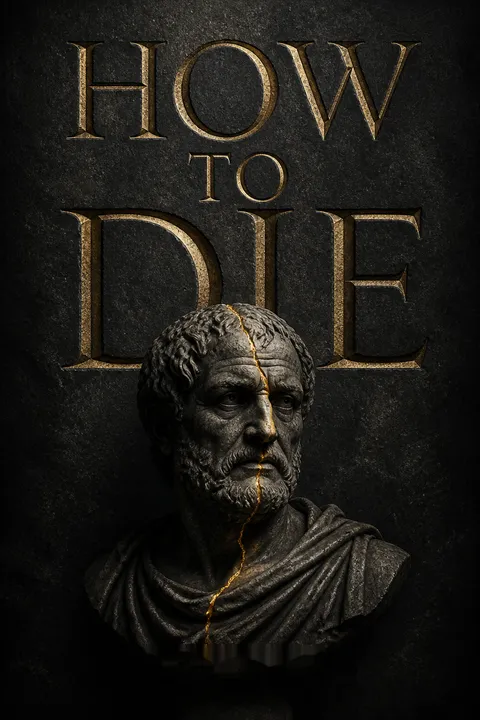
What's "How to Die: An Ancient Guide to the End of Life" about?
- Ancient Stoic Philosophy: The book is a collection of writings by Seneca, a Roman Stoic philosopher, focusing on the theme of death and how to approach it with wisdom and serenity.
- Preparation for Death: It emphasizes the importance of preparing for death throughout one's life, viewing it as a natural and inevitable part of existence.
- Philosophical Insights: Seneca offers insights into the Stoic belief that understanding and accepting death can lead to a more fulfilling life.
- Modern Relevance: The book, edited and translated by James S. Romm, connects ancient wisdom with contemporary issues surrounding death and dying.
Why should I read "How to Die: An Ancient Guide to the End of Life"?
- Timeless Wisdom: Seneca's teachings provide timeless wisdom on dealing with the fear of death, which remains relevant in today's world.
- Philosophical Perspective: It offers a philosophical perspective on life and death, encouraging readers to live with purpose and integrity.
- Practical Guidance: The book provides practical guidance on how to live a life free from the fear of death, promoting mental freedom and peace.
- Cultural Insight: Reading this book offers insight into ancient Roman culture and the Stoic philosophy that influenced many aspects of Western thought.
What are the key takeaways of "How to Die: An Ancient Guide to the End of Life"?
- Acceptance of Death: Accepting death as a natural part of life can lead to greater peace and freedom.
- Preparation is Essential: Preparing for death throughout life helps in living a more meaningful and less fearful existence.
- Interconnectedness of Life: Understanding the interconnectedness of all things can reduce the fear of death and enhance the appreciation of life.
- Philosophical Consistency: Living in accordance with one's values and beliefs is crucial for a dignified life and death.
What are the best quotes from "How to Die: An Ancient Guide to the End of Life" and what do they mean?
- "He lives badly who does not know how to die well." This quote emphasizes the importance of understanding and accepting death as a part of living well.
- "Study death always." Seneca advises constant contemplation of death to diminish its fear and to live a more liberated life.
- "Those who have learned how to die have unlearned how to be slaves." This highlights the Stoic belief that accepting death frees one from the fear that enslaves the mind.
- "A whole lifetime is needed to learn how to live, and—perhaps you’ll find this more surprising—a whole lifetime is needed to learn how to die." It suggests that both living and dying require lifelong learning and preparation.
How does Seneca suggest we prepare for death in "How to Die"?
- Constant Reflection: Seneca advises regular reflection on death to reduce its fear and to live more freely.
- Embrace Mortality: Accepting mortality as a natural part of life helps in reducing anxiety and living with purpose.
- Live with Integrity: Living a life aligned with one's values and beliefs prepares one for a dignified death.
- Philosophical Practice: Engaging in philosophical practice and contemplation helps in understanding and accepting the inevitability of death.
What role does Stoic philosophy play in "How to Die"?
- Core Framework: Stoic philosophy provides the core framework for Seneca's teachings on death, emphasizing rationality and acceptance.
- Virtue and Reason: It promotes living in accordance with virtue and reason, which prepares one for death.
- Freedom from Fear: Stoicism teaches that understanding and accepting death frees individuals from the fear that limits their lives.
- Interconnectedness: The philosophy highlights the interconnectedness of all things, encouraging a broader perspective on life and death.
How does Seneca address the fear of death in "How to Die"?
- Rational Understanding: Seneca encourages a rational understanding of death as a natural and inevitable process.
- Philosophical Rehearsal: He suggests rehearsing for death through philosophical contemplation to diminish its fear.
- Focus on Life's Quality: Emphasizing the quality of life over its length helps in reducing the fear of death.
- Examples and Analogies: Seneca uses examples and analogies to illustrate that death is not to be feared but accepted as part of life.
What is Seneca's view on suicide in "How to Die"?
- Rational Choice: Seneca views suicide as a rational choice in certain circumstances, particularly when life becomes unbearable or compromises one's integrity.
- Freedom and Control: He sees it as a means of maintaining control over one's life and death, aligning with Stoic values of freedom.
- Contextual Decision: The decision to end one's life should be based on individual circumstances and philosophical reasoning.
- Moral Considerations: Seneca acknowledges the moral considerations involved, suggesting that one's responsibilities to others may influence the decision.
How does "How to Die" relate to modern discussions on death and dying?
- Relevance to Euthanasia: Seneca's discussions on rational suicide and self-euthanasia resonate with modern debates on euthanasia and the right to die.
- Fear of Death: The book addresses the universal fear of death, offering insights that remain relevant in contemporary society.
- Philosophical Guidance: It provides philosophical guidance on living a meaningful life, which is applicable to modern existential concerns.
- Cultural Reflection: The book encourages reflection on cultural attitudes toward death and how they shape our understanding of life.
What is the significance of interconnectedness in "How to Die"?
- Universal Connection: Seneca emphasizes the interconnectedness of all things, suggesting that understanding this can reduce the fear of death.
- Part of a Larger Whole: He views individuals as part of a larger whole, which provides comfort in the face of mortality.
- Natural Cycles: The interconnectedness reflects the natural cycles of life and death, promoting acceptance of mortality.
- Philosophical Perspective: This perspective encourages a broader understanding of life and death, aligning with Stoic philosophy.
How does Seneca's personal life influence his views in "How to Die"?
- Political Experience: Seneca's experience in the political turmoil of Rome influenced his views on the importance of philosophical integrity and freedom.
- Health Challenges: His lifelong health challenges informed his reflections on mortality and the acceptance of death.
- Forced Suicide: Seneca's own forced suicide under Nero's regime exemplifies his teachings on facing death with dignity.
- Philosophical Consistency: His life reflects a commitment to Stoic principles, providing authenticity to his teachings on death.
What are the main themes explored in "How to Die"?
- Acceptance of Mortality: The book explores the theme of accepting mortality as a natural and inevitable part of life.
- Philosophical Preparation: It emphasizes the importance of philosophical preparation for death to live a more meaningful life.
- Freedom and Control: Themes of freedom and control over one's life and death are central to Seneca's teachings.
- Interconnectedness and Universality: The interconnectedness of all things and the universality of death are explored as sources of comfort and understanding.
About the Author
Other books by Seneca


Download PDF
Download EPUB
.epub digital book format is ideal for reading ebooks on phones, tablets, and e-readers.








