

Key Takeaways
Treat access to a few decisive people as a campaign, not a cold call.
A small list changes the economics. Contact Marketing is a tightly targeted effort to reach specific people who can unlock a major sale, partnership, or introduction. Unlike broad advertising, the sender is also the response channel: the aim is a real conversation, not a click or form submission. Because the audience may be just one person or a few dozen, the campaign can be unusually personal and imaginative.
The reported returns are striking. The author describes contacting about two dozen publishing executives for under $100, then winning clients whose assignments were worth as much as $25,000. In another example, a mortgage broker spent $175 to approach seventy home builders; twenty-five became referral sources, generating about $1.1 million in fees. These are exceptional case histories, not a promise that every campaign will perform similarly.
The strongest idea is not that unusual mail beats ordinary mail. It is that scarce attention can justify unusually high effort when each relationship has substantial potential value. This resembles account-based selling, where a team concentrates research and resources on a small number of strategically important organizations. The asymmetry is appealing: a modest budget can compete with larger firms through relevance and ingenuity. But the celebrated returns come from selected examples, and campaign costs may omit labor, overhead, or the value of follow-up. The useful lesson is to test a focused approach, not to plan a forecast around a reported outlier.
Aim at the person who owns the problem, not the most famous title.
Authority depends on the opportunity. The book uses Center of Enterprise Opportunity to mean the person with the authority and interest to advance the problem being addressed. That might be a CEO, but it could be a chief operating officer, a department leader, or several stakeholders. Reaching the highest-ranking person is wasteful if the offer is irrelevant to their responsibilities.
Build a short, changing target list. Salespeople can maintain a Top 100 of high-value prospects, while owners and executives can create a Strategic 100 of potential partners and influential contacts. An Engagement 100 tracks existing clients and advocates. The NoWait restaurant app campaign contacted thirty-five people and found that operating leaders, rather than the CEOs or finance chiefs, were the strongest fit. Their position matched the operational problem the app addressed.
This is a useful correction to simplistic advice to always sell upward. Organizational buying is less like a ladder than a network of people with different authority, expertise, and exposure to risk. The right contact is the one who can recognize the problem, mobilize resources, and secure approval, which may require mapping several people rather than finding one powerful sponsor. Researching public profiles, company news, and professional interests can reveal useful context, but personal details should be used with restraint. Relevant familiarity builds trust; overly intimate personalization can feel like surveillance.
Earn the meeting by making your value obvious in one breath.
Lead with their stakes. Senior executives face crowded schedules, so a caller must quickly connect an offer to a current business goal. The book recommends researching the company, its priorities, and its competitors, then expressing the benefit in a very short statement. The point is not to recite features. It is to give the executive a reason to ask how the result might be achieved.
Explore rather than declare. In an Anti-Pitch, the seller presents a plausible benefit, explains why it might matter, and asks whether the idea is worth examining. For example, the author approached an email marketing company with evidence that personalized cartoons had increased clients' email open rates. He framed this as a possible way to support the company's engagement goals, then invited discussion instead of demanding a purchase. The call should end with a clear next step or a referral.
Concise value statements work because they lower the cognitive cost of understanding why a stranger is calling. They also force the seller to distinguish an outcome from a product description. The collaborative tone is important: asking whether there is a fit gives the buyer room to correct the seller's assumptions, which can improve the quality of discovery. Still, brevity is not a magic formula. A claim compressed into a few words can sound glib or unsupported. A strong opening needs evidence behind it, and a seller should be ready to explain both the expected benefit and the limits of that claim.
Make your outreach memorable because it is relevant, not merely outrageous.
Creativity should carry meaning. A personalized object, image, or piece of mail can cut through routine because it demonstrates thought and effort. The author describes a cartoon used for a fishing magazine that playfully referred to the recipient's name and the subject of fishing; the campaign nearly doubled the paid orders of the earlier control. The creative piece worked because it connected to the audience and the message, without turning the artwork into an advertisement for the sender.
Choose a device that fits the person and purpose. Gifts, books, videos, interviews, and unusual packages can all open a conversation. A visual metaphor can make an abstract benefit tangible, but a costly gift can look like a bribe, and an extreme stunt can damage trust. The book explicitly separates thoughtful campaigns from tricks that invade someone's space or create a spectacle at their expense.
A well-chosen creative object can function as a signal: it shows that the sender invested attention before asking for attention. That is more persuasive than novelty alone. The recipient may also remember an idea more easily when it is attached to a vivid image or experience. Yet the signal is ambiguous. A dramatic package may communicate resourcefulness to one person and poor judgment to another, especially in organizations with gift policies or a strong preference for professional restraint. The practical test is whether the gesture helps the recipient understand a relevant idea, while leaving them free to decline without embarrassment.
Turn the executive assistant into a trusted partner in access.
Treat the assistant as a decision-maker. Executive assistants filter requests, but they also identify opportunities their executives should consider. The book's practical approach is to be clear about who is calling, why the request may matter, and what the assistant can do next. A brief email can give the assistant an accurate explanation to forward, rather than forcing them to reconstruct a caller's pitch from memory.
Make the relationship reciprocal. Confirm names and delivery details, respect the assistant's time, and thank them for useful help. The author often sends a handwritten thank-you card. In a campaign using personalized cartoon prints, he alerts the assistant before delivery so the package is a surprise to the executive, but not to the person managing the office. That small courtesy makes the assistant a participant in the process instead of an obstacle to defeat.
This advice recognizes that access is socially organized. Assistants often have context about priorities, calendars, and internal routing that an outside seller lacks, while the executive depends on their judgment. A respectful interaction can therefore improve both access and the accuracy of the approach. The book's emphasis on treating assistants as influential is valuable, though it should not become a tactic for flattering someone solely to reach their boss. The relationship is stronger when the offer is genuinely relevant to the organization and the assistant is given honest information, not a rehearsed pretext.
Design follow-up around a useful next step, not repeated pressure.
Plan a sequence, not a single interruption. A Contact Campaign can combine a researched introduction with a phone call, email, physical item, social interaction, or follow-up note. The channel should suit the recipient and the reason for contact. Examples in the book range from a short email and a call to a personalized video delivered on a tablet, or an interview request that gives an executive a platform to explain their work.
Use the Hold-Back Device carefully. This is something of relevant value offered when the recipient agrees to a meeting or conversation. In a Sandler Training test, a personalized version of the founder's book was offered to five Fortune 1000 CEOs as a meeting reward. All five met; two bought introductory programs worth about $50,000 each. The reward reinforced the campaign's idea, but the seller still had to deliver a worthwhile conversation. An incentive should create interest, not substitute for value.
The sequence matters because a first touch may create awareness without enough confidence to prompt action. A useful follow-up gives the recipient a new reason to engage instead of merely repeating the same request. This is compatible with the psychology of reciprocity, in which a meaningful contribution can encourage a response, but reciprocity is not a debt that can be ethically forced. If the reward is more attractive than the proposed meeting, it can draw people who want the item rather than the conversation. The best follow-up advances the recipient's understanding and preserves a genuine choice.
Use social channels to warm a relationship, not replace human judgment.
Research where the person already participates. LinkedIn can reveal career history and shared connections; Twitter and other public profiles can show current interests and ideas. The book recommends noticing whether a target writes, which platforms they use, and who might provide a trusted introduction. A relevant article, thoughtful comment, or shared connection can make an eventual email or call less cold.
Watch for timing. The author highlights triggers such as a new job, fresh funding, or a public business challenge, when a person may be more open to a new approach. Interviews and podcasts offer another route: a request to discuss an executive's expertise can provide exposure and start a substantive relationship. Social activity should support a specific purpose. The goal is not to accumulate followers or manufacture familiarity, but to find a respectful opening for a useful conversation.
Digital research makes preparation cheaper, while social interaction can reveal context that a static company profile misses. It also offers a way to establish credibility before a direct request. In that sense, social platforms extend relationship-building rather than abolishing it. The danger is confusing visible activity with personal access. A retweet or a shared connection does not mean someone knows or trusts the sender, and automated engagement can make a supposedly personal approach feel generic. Good judgment means using public information to improve relevance, then shifting toward a direct, human exchange when there is a real reason to do so.
Keep pressing after the meeting; stalled deals are not wins.
A meeting is an opening, not an outcome. The book describes contact as a progression from unfamiliarity, to interest, to commitment, and finally to active advocacy. These stages help a seller see whether a prospect needs more information, internal agreement, or support to move ahead. Even a promising conversation can stall if the budget is missing or an unconsulted stakeholder objects.
Make progress concrete. Agree on the next action, responsible person, and timing before ending a positive call. Follow through quickly, secure promised referrals, and identify other stakeholders who can affect the decision. One campaign reportedly generated a 96 percent response rate and a 30,000 percent return, yet the work paused when the client had not secured the necessary budget commitments. The campaign's attention-getting success did not remove the need to navigate the buying process.
The distinction between interest and commitment is central to complex sales. A senior person's enthusiasm may open a door, but purchasing, finance, technical, and operating teams can shape whether anything passes through it. Treating these people as part of the decision system is more realistic than assuming a leader's approval settles every issue. The author's warning about delay is useful as a prompt to diagnose stalled work, but urgency should not become manufactured pressure. Some delays reflect legitimate constraints. The seller's task is to discover the cause, update the plan, and establish whether the opportunity still deserves effort.
Measure profitable access, then replace winners with the next strategic targets.
Count more than meetings. The book defines a meaningful response as direct contact, a useful referral, or an introduction that advances the campaign. Response rate matters, but it cannot stand alone: a low response rate may still be valuable if each deal is large, while many meetings can produce little income. Track campaign spending against business generated, while remembering that a complete return calculation should include more than postage or gifts.
Keep the list alive. Move converted prospects into an engagement group, maintain relationships with clients and advocates, and add new prospects as priorities change. Those relationships may lead to cross-selling within a company, partnerships, or referrals beyond it. The author presents the lists as a continuing discipline, not a one-time project. The aim is a growing network of people who can create opportunities for one another, not an ever-expanding pile of names.
This measurement system links marketing activity to business outcomes rather than rewarding visible activity alone. It also encourages learning: weak response may indicate poor targeting or an unclear message, while strong response without revenue may expose a mismatch between the offer and the value of the target. The broader emphasis on maintaining advocates is equally sound, because networks gain value through continued exchange, not simply through initial introductions. One caution is attribution. A deal may result from several relationships and channels, so campaign ROI is often an estimate. Treat the metrics as decision aids, not proof that one tactic caused every sale.
Analysis
The book's central contribution is a change in scale and posture. Instead of treating difficult-to-reach executives as a mystery to crack, it frames access as a designed, small-audience marketing problem: identify the few people who can alter the outcome, learn their context, create an opening worth noticing, and then do the relational work that makes a meeting consequential. Its strongest material is operational. It explains why a target list should be narrow, why the assistant belongs inside the strategy, how a concise value statement differs from a pitch, and why follow-through matters more than the initial flourish.
Its stories make the method vivid, but they also create a selection problem. Campaigns that produced spectacular response or revenue are memorable precisely because they are unusual. They cannot establish that a tactic will generalize across sectors, cultures, or executives. Results also depend on the offer, the sender's credibility, delivery skill, and the value of each sale. The book sometimes treats access and conversion as closer than they are. A meeting is an intermediate event, while procurement, consensus, budget, and implementation remain separate hurdles.
The ethical boundary is therefore central, not incidental. Personalization can communicate care, but excessive research or an extravagant gift can feel intrusive. A clever package can earn attention, yet it cannot make an irrelevant proposition valuable. The book is most persuasive when audacity serves a specific insight and the recipient retains a comfortable way to decline. Its lasting lesson is not to imitate a sword, cartoon, or unusual delivery. It is to align creative outreach with a real business need, treat every participant with respect, and judge the campaign by durable value rather than access alone.
Review Summary
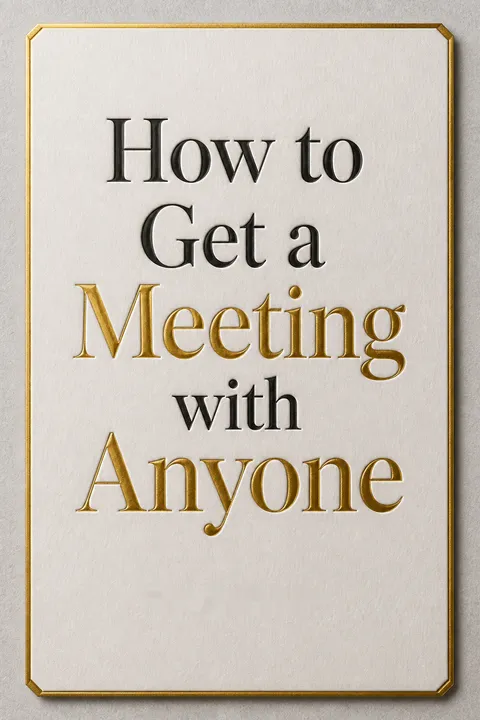
"How to Get a Meeting with Anyone" presents creative strategies for contacting high-level executives, but receives mixed reviews. Many readers find the book's ideas useful, particularly for sales and marketing professionals. However, numerous reviewers criticize its repetitive content and outdated references. Some praise the practical advice and real-world examples, while others feel the techniques are too specific to the author's experiences. The book's concept of "Contact Marketing" intrigues many, but its execution and writing style divide opinions. Overall, readers appreciate the innovative approach but desire more concise presentation.
People Also Read





Glossary
Contact Marketing
Targeted executive outreachA focused form of marketing and selling used to reach specific people who could materially affect a sale, partnership, or business opportunity. It uses personalized outreach to prompt direct conversation with the sender. The target audience is deliberately small, often a single person or a selected list, rather than a broad market.
Contact Campaign
One focused contact effortA particular execution of Contact Marketing. It combines a carefully chosen target, research into that person's context, and one or more coordinated ways to request a conversation. A campaign may use a phone call, email, mail, social media, an interview, or a relevant gift, but its intended response is direct contact with the sender.
Center of Enterprise Opportunity
The key decision ownerThe book's term for the person with the authority and interest needed to advance a particular opportunity or solve a particular problem. This may be the CEO, but it can also be another executive, a functional leader, or a group of stakeholders. The term directs outreach toward relevant authority rather than rank alone.
Top 100
Highest-value sales prospectsA salesperson's working list of up to one hundred people or accounts with the greatest potential to produce valuable business. The list may contain fewer than one hundred names and should change as prospects become clients, prove unsuitable, or lose priority. Its purpose is to focus research and outreach on the strongest opportunities.
Strategic 100
Priority alliance contactsA business owner's or executive's selected list of up to one hundred people who could help the enterprise grow through relationships, partnerships, market access, or other strategic advantages. The list is intended for sustained, peer-level relationship building, not only immediate selling, and it should evolve as business priorities change.
Engagement 100
Existing advocates and clientsA list of important current customers, supporters, and other people already helping a business succeed. Contact with this group focuses on appreciation, useful information, and continued value. The aim is to strengthen existing relationships and support advocacy, referrals, and further opportunities rather than treating every interaction as new prospecting.
Hold-Back Device
A meeting-linked rewardAn item or piece of value offered to a prospect when they agree to a requested meeting or conversation. It may be a personalized book, a meaningful report, or the missing part of a divided gift. The device is meant to reinforce a relevant campaign idea, not serve as a bribe or replace the business value of the meeting.
Anti-Pitch
Collaborative fit explorationA conversational approach that presents a possible business benefit while acknowledging that the fit is not yet certain. The seller briefly explains the reasoning, invites the executive to assess it, and explores next steps together. Instead of delivering a forceful product pitch, the seller seeks permission to investigate whether an opportunity genuinely exists.
Four Stages of Contact
A relationship progress scaleA framework for tracking movement from a target's lack of awareness or interest, through curiosity and commitment, toward active support and referrals. It helps a seller decide whether to provide more context, clarify a business case, resolve obstacles, or maintain an established relationship. The stages measure relationship progress, not a guarantee that a deal will close.
BigBoard
Oversized personalized mail pieceThe author's name for a large foam-core board, roughly 18 by 24 inches, designed as a personalized contact piece and delivered to an executive. One side typically carries a customized cartoon, while the other explains the reason for requesting a meeting. Its unusual size is intended to attract attention and remain visible in an office.
Psych
Self-guided coaching exerciseThe author's name for a self-hypnosis exercise intended to create relaxation, motivation, and personal direction. It uses an imagined descent and counting sequence, followed by a period of reflection on goals and priorities, then a deliberate return to wakefulness. The book presents it as a personal coaching aid, separate from the Contact Marketing method.
FAQ
What's How to Get a Meeting with Anyone about?
- Contact Marketing Focus: The book introduces Contact Marketing, a method to connect with VIPs and decision-makers using creative and personalized outreach strategies.
- Strategies for Success: It provides tactics like personalized gifts and humor to break through barriers and establish relationships with high-level executives.
- Real-World Examples: Stu Heinecke shares case studies demonstrating how these strategies can lead to significant business growth.
Why should I read How to Get a Meeting with Anyone?
- Unique Approach: The book offers a fresh perspective on sales and marketing, focusing on human connections rather than traditional sales pitches.
- Proven Techniques: It shares successful techniques that have helped achieve remarkable success in reaching difficult-to-contact individuals.
- Transformative Potential: Reading it can transform your networking and sales approach, enabling you to build valuable relationships impacting your career or business.
What are the key takeaways of How to Get a Meeting with Anyone?
- Contact Marketing Definition: It is the discipline of using micro-focused campaigns to connect with strategically important people.
- Importance of Personalization: Personalization is crucial in Contact Campaigns, making outreach feel genuine and effective.
- Role of Executive Assistants: Viewing executive assistants as allies can significantly increase your chances of reaching decision-makers.
What are some effective methods for Contact Campaigns mentioned in How to Get a Meeting with Anyone?
- Personalized Cartoons: Sending personalized cartoons to executives can create a memorable introduction using humor.
- Gifts and Visual Metaphors: Thoughtful gifts that serve as visual metaphors can convey messages and create connections.
- Interviews and Media Exposure: Conducting interviews with target executives provides them exposure and helps build relationships.
How does How to Get a Meeting with Anyone define success in Contact Marketing?
- Response Rates: Success is often measured by high response rates, with instances of 100% response rates highlighted.
- Return on Investment (ROI): The book emphasizes campaigns that yield extraordinary returns on investment.
- Building Relationships: Success is about building lasting relationships with key decision-makers for long-term value.
What role do executive assistants play in How to Get a Meeting with Anyone?
- Allies, Not Gatekeepers: Executive assistants are potential allies who can facilitate connections with their bosses.
- Understanding Their Role: They have significant influence over executives' schedules and priorities.
- Strategies for Engagement: Effective communication with them can enhance your chances of success.
What are some examples of successful Contact Campaigns from How to Get a Meeting with Anyone?
- NoWait Campaign: Personalized videos on iPads sent to restaurant CEOs resulted in a 75% response rate.
- Sandler Training Campaign: A “BigBoard” postcard with a personalized cartoon led to a 100% response rate.
- Paul McCord's Campaign: A mailing using a cardboard tube and flow chart generated a 628,571% ROI.
What are some common pitfalls to avoid in Contact Marketing according to How to Get a Meeting with Anyone?
- Avoiding Gimmicks: Relying on gimmicks can undermine your brand; authenticity is crucial.
- Neglecting Research: Failing to research your target contacts can lead to missed opportunities.
- Ignoring Executive Assistants: Viewing them solely as obstacles can hinder your efforts.
What role does social media play in Contact Marketing according to How to Get a Meeting with Anyone?
- Engagement Platform: Social media is a powerful platform for engaging with target contacts before reaching out.
- Research Tool: It provides insights about your targets, informing your outreach strategy.
- Building Relationships: Engaging with VIPs on social media helps establish a connection and fosters familiarity.
What is the significance of the "hold-back device" in How to Get a Meeting with Anyone?
- Creating Leverage: It is a tool used to create leverage in securing meetings by offering something of value.
- Enhancing Engagement: It adds intrigue and encourages recipients to take action.
- Examples of Hold-Back Devices: Personalized books or reports tailored to the recipient's interests are effective examples.
What are the best quotes from How to Get a Meeting with Anyone and what do they mean?
- “Contact Marketing is the discipline of using micro-focused campaigns to break through to specific people of strategic importance.”: Emphasizes the targeted approach needed to connect with key decision-makers.
- “Personalization is key to success with gifts as Contact Campaign devices.”: Highlights the importance of tailoring outreach to resonate with the recipient.
- “People buy from people they know, like, and trust.”: Reinforces the need for genuine connections in sales and marketing.
How can I implement the strategies from How to Get a Meeting with Anyone in my own career?
- Start with Research: Identify your Top 100 contacts and conduct thorough research on each individual.
- Experiment with Contact Campaigns: Implement various methods like personalized gifts and creative outreach techniques.
- Build Relationships: Focus on nurturing relationships over time with consistency and authenticity.
Download PDF
Download EPUB
.epub digital book format is ideal for reading ebooks on phones, tablets, and e-readers.








