

Key Takeaways
Treat dreams as possible guidance, never as a substitute for Scripture.
A possible channel. Stone argues that dreams and visions may carry warnings, direction, or encouragement from God, while insisting that Scripture remains the standard for judging them. His opening example is a vision he says he experienced in 1996: a tower resembling the World Trade Center, black smoke, and five gray tornadoes tearing through a field. After the September 11 attacks, he interpreted the tower as the trade center, the storms as destruction affecting five other buildings, and the uprooted crop as economic damage.
Meaning needs testing. The story introduces the book’s central claim, but Stone presents it as his interpretation of events, not as a publicly testable method for proving that a dream predicts the future. His practical invitation is to take a vivid experience seriously enough to examine it, without letting it override biblical teaching or sound judgment.
The account is memorable because it shows how an image can acquire meaning over time, rather than arriving with a clear caption. That can be spiritually significant for a believer, and it also resembles how people organize experience into a coherent narrative. The key distinction is between personal meaning and independent evidence: a later event can make an earlier image feel unmistakable, even when several interpretations remain possible. Treating the vision as a prompt for reflection, rather than conclusive proof of prediction, preserves its spiritual value while limiting overconfidence.
Record vivid dreams, then allow their meaning to unfold without forcing it.
Keep the first account. Stone recommends writing down a striking dream soon after waking, when its sequence and details are still available. He describes keeping notebooks and paper nearby because forgotten details can make later interpretation harder. He also warns against forcing an early explanation onto an unclear image. In his account, he saw a vision of a tower years before the 2001 attacks, but entertained an alternative interpretation involving computer systems before deciding afterward that it concerned the World Trade Center.
Allow for long waits. The book uses Joseph as a model of delay: his youthful dreams preceded their fulfillment by about twenty-two years, through slavery, imprisonment, and eventual authority in Egypt. Stone also recounts dreaming of a daughter named Amanda in 1988, thirteen years before his daughter was born. He treats the interval as a reason for patience, not for manufacturing a fulfillment.
A dated record creates a useful distinction between what was actually experienced and what was added in hindsight. That practice is valuable in spiritual reflection, but also in any uncertain forecasting: it makes later revisions visible and reduces the temptation to remember only the details that fit. Patience can protect a person from premature action, especially when a dream is ambiguous. It should not, however, become a reason to reinterpret every later event as confirmation. An interpretation remains stronger when its meaning was specific before the outcome was known.
Pray over warnings before assuming the future is fixed.
A warning can invite action. Stone distinguishes between a prediction that announces an outcome and a warning that may be given so people can pray, change course, or seek protection. He points to Abraham pleading for the people of Sodom, Moses interceding after Israel’s disobedience, and Hezekiah praying after being told that he would die. In the biblical accounts he cites, human response is part of the unfolding story, not an irrelevant afterthought.
Intercession means petitioning for another. Stone describes it as praying on someone else’s behalf, asking for protection or for a harmful situation to change. His family stories include his father praying after receiving warnings of danger. The book does not claim that every danger can be prevented, but it rejects passive fatalism: a troubling dream should lead first to prayer and careful attention, not panic or resignation.
This view gives a warning a constructive role: it can mobilize care rather than merely announce doom. In practical terms, prayer may also focus attention on steps that are available, such as checking on someone, delaying a risky decision, or seeking help. That combination of spiritual practice and concrete action is more useful than treating a prediction as unavoidable. A necessary limit is that prayer cannot guarantee control over events. If a dream suggests immediate danger, ordinary safety measures and appropriate professional assistance remain important alongside religious response.
Test prophetic claims against Scripture, character, and accountable community.
Use more than confidence. Stone cautions against accepting a dream or prophecy simply because someone claims divine authority. He recommends checking whether the message conflicts with Scripture, considering the speaker’s conduct and record, and allowing other mature believers to weigh the claim. He cites the biblical story of Micaiah, whose warning to King Ahab contradicted a chorus of court prophets predicting victory. For Stone, the story shows why popularity and agreement do not establish truth.
Reject spiritual salesmanship. He describes a preacher who offered different lengths of prayer and prophecy according to how much money people gave. He also warns against predictions that are repeatedly missed and then patched with new explanations. The same scriptural test applies to claimed angelic messages: a messenger cannot authorize teaching that contradicts the Bible. A dream or prophecy should not be used to manipulate another person’s money, relationships, or major decisions.
This is one of the book’s strongest safeguards because it distributes judgment across texts, conduct, and community instead of granting one person unchecked authority. The same approach can be made more rigorous by recording predictions before events occur and reviewing both accurate and inaccurate claims. That helps separate a reliable pattern from selective memory. Communal review also has limits: groups can reinforce shared assumptions. Accountability works best when listeners are free to disagree, ask for evidence, and refuse pressure without being accused of spiritual failure.
Read dream symbols through biblical context, not a universal dictionary.
Symbols depend on their setting. Stone argues that Scripture provides patterns for interpreting dream imagery, but the image must be understood in its surrounding story. In Pharaoh’s dreams, healthy and sickly cows appear alongside full and withered grain. Joseph interprets both pairs as signs of seven years of abundance followed by seven years of famine. The meaning comes from how the images work together, not from treating a cow as a fixed symbol in every dream.
Look for a coherent sequence. The book offers possible biblical associations, such as a serpent with deception or a sword with God’s word, while cautioning that a dream can also be ordinary and meaningless. Stone’s own interpretations of corn, fields, smoke, and storms show how context may change a symbol’s application. His advice is to compare an image with Scripture and the dream’s progression, not to impose a ready-made answer.
Symbolic reading can help a person connect a dream to a familiar religious vocabulary, much as metaphor helps people think through complex experience. Context is essential: a symbol’s role in a story may matter more than a list of supposed meanings. At the same time, flexible symbolism can explain almost any outcome after the fact. A useful discipline is to ask what interpretation best fits the whole dream, what alternatives remain plausible, and what evidence would count against the preferred reading. That keeps interpretation thoughtful rather than automatic.
A disturbing dream is not proof of guilt or spiritual attack.
Separate dreaming from choosing. Stone calls sexually troubling dreams dirty dreams and argues that a person is not morally responsible for images that arise during sleep. He proposes several possible causes, including spiritual oppression, the atmosphere of a place, and material absorbed before bed, such as violent or sexual media. These are his religious interpretations, not conclusions established by the dream itself.
Prepare for rest. His practical suggestions include prayer before sleep, worship music, reading Scripture, and limiting disturbing material before bed. He also describes praying with children as a way to reassure them and make bedtime feel safe. The main pastoral point is that a frightening or shameful dream should not automatically be treated as evidence of wrongdoing. The dreamer can respond with calm, reflection, and ordinary care for sleep and emotional wellbeing.
The reassurance that involuntary dream content is not the same as deliberate conduct can reduce needless shame. Dreams can also reflect memories, stress, and emotional concerns, so an unsettling image does not by itself identify a spiritual cause. The book’s bedtime practices may offer comfort to readers who share its faith, while other readers may prefer a broader sleep routine. Recurrent nightmares, disrupted sleep, or distress that affects daily life can warrant discussion with a qualified health professional. A spiritual explanation should not prevent someone from seeking that support.
Take a trusted spouse's warning seriously, then verify it without surrendering judgment.
Close relationships can notice risk. Stone repeatedly describes his wife, Pam, having dreams that he regarded as warnings. In one story, she dreamed that a woman seeking to work with him was acting seductively and used the image of a spider’s web. He declined the collaboration, and he says the woman’s affairs became known months later. He presents the episode as an example of a spouse’s intuition protecting a relationship and a ministry.
Treat intuition as a signal. Stone especially urges husbands to listen to their wives, while also warning that spiritual gifts must not be used to control a partner. The practical lesson is broader than the book’s gendered framing: a trusted person may notice something that an emotionally involved person overlooks. A warning deserves attention, but it should be checked against observable facts and discussed without treating a dream as a verdict.
Intimate partners often see patterns that a person invested in a new opportunity or relationship may miss. Taking that perspective seriously can interrupt motivated reasoning, the tendency to favor what one already wants to believe. But intuition is not automatically accurate, and gender does not make one person infallible. The most useful response is neither dismissal nor obedience: ask what concrete behavior prompted concern, consider alternative explanations, and set reasonable boundaries. That process respects both the relationship and each person’s independent judgment.
Let dreams of the dead comfort you without proving contact.
Memory can revisit the living. Stone says that dreams of deceased family members are often ordinary expressions of memory and affection. He recounts regularly dreaming of his grandfather in familiar family settings, without believing every dream carried a special message. He also allows that, within his faith, God may sometimes use such an experience to comfort someone. One story describes a widow who dreamed that her husband pointed toward blankets in a closet, where she later found money he had hidden.
Do not force a meaning. The book offers several possible interpretations: comfort, the return of positive memories, hope in resurrection, or, in some cases, a warning about approaching death. Stone stresses that a dream of a deceased person does not mean that the dreamer or someone nearby is going to die. He also warns against trying to summon the dead or treating a dream as proof that the deceased has returned.
Dreams of people who have died can be emotionally vivid, and remembering a loved one can bring genuine comfort without settling what happens after death. That distinction allows religious hope and psychological meaning to coexist without either being mistaken for proof. Bereavement can make people especially eager for certainty, so claims about messages from the dead deserve care. The book’s distinction between remembrance and deliberate spirit-seeking is protective within its theology. A reader can receive comfort from a dream while remaining modest about what caused it.
Distinguish sleeping dreams from waking visions before interpreting either.
Not every image arrives alike. Stone describes dreams during sleep, visions experienced while awake, and inward mental images that arise during prayer or a strong sense of concern. He also discusses biblical terms used for different forms of vision, including night revelation and visual appearance. In his framework, an open vision occurs when someone is awake and aware of their surroundings, while a night vision takes place during sleep.
Notice the experience first. Stone’s father, for example, reportedly saw a mental image of his son in danger while driving and stopped to pray. The book treats such experiences as possible spiritual communication, but it also recognizes that ordinary imagination can produce vivid scenes. Recording when an image occurred, how it felt, and what was actually seen helps prevent a vague impression from becoming a more elaborate story over time.
Describing an experience carefully before explaining it is a sound habit of observation. Sleep, half-waking states, focused prayer, and ordinary daydreaming can feel different, even if their boundaries are not always clear. Naming the state does not establish a supernatural source, but it can prevent different experiences from being collapsed into one category. The book’s distinctions are most useful as a vocabulary for reflection, not as a diagnostic test. A vivid image may invite attention while still leaving its cause uncertain.
Use spiritual insight to take the next faithful step, not demand the whole map.
Follow the sequence. In its conclusion, the book uses Abraham’s journey to Mount Moriah to frame four elements of religious guidance: a plan, a place, provision, and purpose. Abraham is told what to do and where to go; a ram is found when the sacrifice is stopped; the larger meaning becomes clear through the story’s connection to later Christian teaching about Christ. Stone’s point is that a person may receive direction without being shown every reason in advance.
Keep action grounded. Dreams and visions, in this account, may help someone choose a direction, prepare for danger, or serve others. They are not meant to replace Scripture or guarantee success. Stone urges readers to write down experiences, pray, seek wise counsel, and act with humility. The value of a revelation is measured not by how dramatic it feels, but by whether it supports faithful, responsible conduct.
The four-part sequence gives spiritual direction a process rather than turning it into a hunt for hidden messages. It can help a reader ask practical questions about what is being asked, where action belongs, what resources are available, and what purpose might be served. That is a useful alternative to demanding certainty before moving. Yet the framework should not be read as a promise that every chosen path will receive material provision or resolve neatly. Faithful action still involves uncertainty, limits, and responsibility for consequences.
Analysis
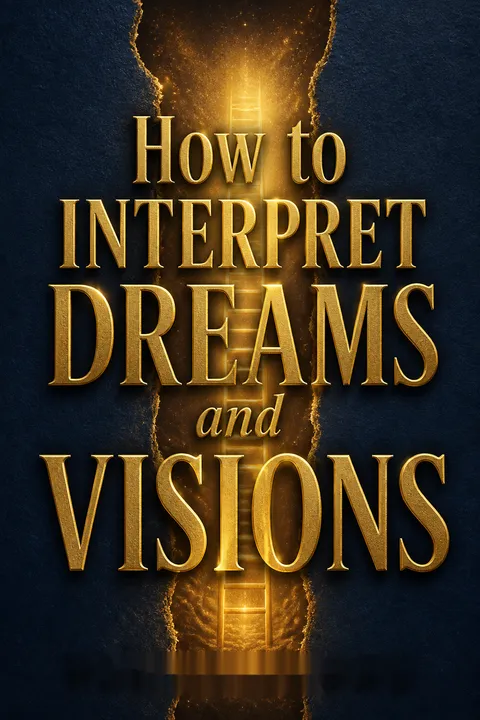
Stone’s book is a charismatic Christian guide to interpreting dreams and visions, built from biblical stories, family testimony, and personal accounts. Its central claim is that God may use dreams, visions, inward impressions, and spiritual gifts to warn or guide believers, while Scripture remains the final authority. The narrative begins with Stone’s interpretation of a 1996 vision as anticipating the September 11 attacks, then broadens into advice on delayed fulfillment, prayer, nightmares, prophecy, symbolism, angels, and dreams of deceased relatives.
The book’s practical strength lies in its insistence on discernment. It warns readers not to accept every claimed prophecy, not to pay for spiritual access, not to let a dream contradict Scripture, and not to confuse a disturbing dream with a moral choice. Recording experiences, praying before reacting, and consulting trusted people are useful habits even for readers who do not share Stone’s theology. His emphasis on humility also sits productively beside the certainty of some of his claims. The main interpretive difficulty is that many examples are explained retrospectively. The symbols in the 9/11 and oil-spill visions gain meaning after the events, and the book allows several possible meanings for individual images. That flexibility can make a symbol insightful, but it can also make an interpretation hard to disprove. The memoir offers testimony of conviction, not independent verification that a particular image predicted a particular event. Readers can respect the religious meaning Stone finds without treating the accounts as established evidence of predictive ability.
The most balanced reading preserves both sides: spiritual experience can be meaningful and can prompt prayer or prudent action, while its source and interpretation may remain uncertain. The book is most valuable when it encourages reflection, ethical restraint, and communal accountability. It is least reliable when broad symbolism or a striking coincidence is treated as conclusive proof. A careful reader can take the invitation seriously without surrendering judgment.
Review Summary
How to Interpret Dreams and Visions receives mostly positive reviews, with readers praising its biblical approach and personal examples. Many find it insightful and helpful for understanding prophetic dreams. Some criticize the book for not providing enough practical interpretation techniques or for being too focused on the author's experiences. The dream symbol appendix is appreciated, though some wish it were more extensive. Overall, readers value the book's spiritual perspective on dreams and visions, even if they don't agree with everything presented.
People Also Read



Glossary
Law of the Double Dream
Repeated dream as confirmationStone’s name for the principle he draws from Pharaoh’s repeated dreams in Genesis. He argues that when the same dream occurs twice in one night, it signals that the matter is firmly established and likely to occur. He does not say that a single dream must be false or meaningless, only that repetition can serve as added confirmation.
familiar spirit
Spirit impersonating the deadIn Stone’s Christian theological account, a familiar spirit is a demonic entity that can imitate a deceased person or provide information through a medium. He uses the term to explain why a fortune-teller might appear to know details about someone’s past. This is the book’s religious interpretation of spirit communication, not a claim established by the stories themselves.
law of first mention
First use sets a patternA biblical interpretation principle Stone uses for numbers, colors, objects, and animals. It proposes that the first appearance of an image in Scripture establishes a pattern for its later symbolic uses. Stone applies it to dream interpretation, while also arguing that the specific dream and its context matter.
open vision
Vision while fully awakeStone’s term for a visual spiritual experience occurring when the person is awake, alert, and aware of the physical surroundings. He contrasts it with a dream or night vision experienced during sleep. In his framework, an open vision may present a scene or message, but the experience still requires interpretation and spiritual discernment.
spiritual burden
Inner pressure prompting prayerStone uses this term for a strong inward feeling of concern, urgency, or emotional weight that he associates with the Holy Spirit’s prompting. He says prayer and intercession may clarify the concern or bring relief. A felt burden, in the book’s account, is a cue to pray, not by itself proof of what will happen.
dirty dreaming
Disturbing sexual dream contentStone’s label for dreams with lewd, seductive, or sexually compromising scenes that trouble a believer after waking. He argues that involuntary dream content is not the same as a conscious moral choice. He proposes spiritual and environmental explanations, and recommends prayer and practices that support peaceful sleep.
About the Author
Other books by Perry Stone

Download PDF
Download EPUB
.epub digital book format is ideal for reading ebooks on phones, tablets, and e-readers.








