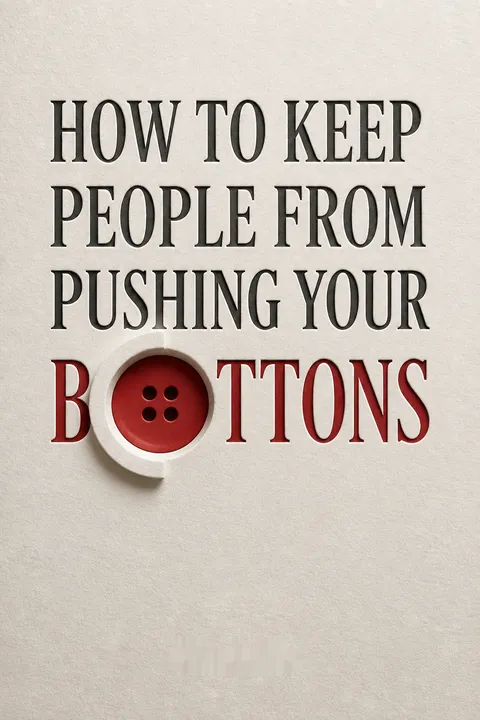


Key Takeaways
Treat the trigger as a prompt to inspect your thinking, not your verdict.
Events begin the chain. Ellis’s ABC model separates an activating event, the belief or interpretation that follows it, and the emotional and behavioral consequences. The event matters, but the meaning assigned to it helps shape the response. A smoking ban on a flight made one passenger furious enough to insult staff and break the rule. Another passenger objected calmly and was offered a free drink. Neither got to smoke; their reactions were very different.
Notice the middle link. The model’s practical value is not that circumstances are imaginary or harmless. It is that a pause to examine interpretation can create room for a more effective response, even when the situation cannot be changed.
What’s striking is how closely this resembles cognitive appraisal theories of emotion: people respond not only to events, but to what those events signal about danger, status, fairness, or loss. That gap can be a genuine point of leverage. It is not proof that thought alone controls emotion, however. Pain, trauma, exhaustion, and unequal power can shape reactions before deliberate reflection is possible. The model is most useful as a way to find some agency, not as a reason to dismiss the force of circumstances.
Spot awfulizing, shoulding, and rationalizing beneath your strongest reactions.
Three traps magnify trouble. Awfulizing turns a possible setback into a disaster. Shoulding treats a preference as a rigid rule for oneself or others. Rationalizing minimizes a problem or supplies excuses to avoid dealing with it. A job interview may prompt useful planning, but imagining that rejection would ruin everything is awfulizing. Believing a boss must always be fair is shoulding. Telling oneself that unfair treatment does not matter, while silently resenting it, is rationalizing.
Look for the underlying demand. Ellis identifies four common roots: excessive need for approval, fear of failure, low tolerance for frustration or unfairness, and blaming oneself or others. He also flags perfectionism, avoidance, and the belief that worry improves outcomes. Naming the pattern makes it easier to challenge than a vague feeling of being upset.
The three labels work because they help distinguish different ways people get stuck: inflating risk, demanding certainty or fairness, and avoiding an uncomfortable truth. That distinction can improve self-observation, much as naming a cognitive distortion can help someone examine it rather than automatically obey it. The categories are best treated as prompts, not diagnoses. A person may be accurately recognizing danger or injustice, even while their response becomes counterproductive. Clear thinking requires testing the interpretation, not assuming every intense reaction is irrational.
Replace demands with preferences without pretending the problem is harmless.
Want strongly, demand less. Ellis’s alternative is a realistic preference: wanting a good outcome while accepting that it is not guaranteed and that failure, rejection, or frustration can be endured. Before his first public presentation, Lange imagined embarrassment, failure, and audience disapproval. He did not try to convince himself that success was certain or that he did not care. He reminded himself that he wanted to do well, could regret a poor performance, and could learn from it. His anxiety eased enough for him to give the talk and assess it afterward.
Practise the emotional shift. Rational-emotive imagery, developed by Maxie Maultsby and adapted here, involves imagining a feared setback, noticing the excessive feeling it produces, then rehearsing a more manageable response. Repetition is intended to make that response more available under pressure.
This is more grounded than forced optimism. It resembles cognitive reappraisal: changing the meaning of a setback without denying its cost. It also protects motivation, because caring about an outcome remains compatible with tolerating failure. The distinction matters in high-stakes settings, where reassurance that everything will work out may ring false. A useful preference should make room for grief, disappointment, or anger when warranted. Its purpose is not to make every loss feel small, but to keep distress from becoming an extra barrier to wise action.
Choose concern, disappointment, or frustration over panic, rage, and despair.
Strong feelings are not the enemy. The book calls excessive anxiety, anger or defensiveness, depression or burnout, and guilt the “Fatal Foursome.” The key word is excessive. A parent can be seriously concerned about a teenager’s drug use without attacking the teenager or denying the danger. A worker can feel disappointed by a poor evaluation and seek specific feedback instead of collapsing into self-condemnation. In both cases, the problem remains real; the aim is to respond in ways that preserve judgment and effectiveness.
Judge feelings by their effects. The book suggests asking whether a reaction helps relationships, health, and progress toward goals, or instead fuels avoidance, hostility, or harmful choices. Frustration can prompt a firm conversation. Rage that derails it is less useful.
This distinction is a practical form of emotion regulation, not a command to stay pleasant. Anger can register a violated boundary, and sadness can be an appropriate response to loss. The question is whether the feeling helps someone respond to the situation or overwhelms the response. The framework is less reliable as a blanket explanation for severe depression, which can have biological, social, and clinical dimensions beyond a person’s beliefs. As a self-help guide, it is strongest when it helps people choose behavior, not when it implies they should be able to think their way out of every condition.
Take responsibility for reactions without turning accountability into self-condemnation.
Responsibility is not blame. Ellis argues that people can take ownership of their feelings and behavior without declaring themselves bad for having reacted poorly. The distinction also applies to others: a colleague may act carelessly without being reduced to a worthless person. In a workplace meeting, teams that focus mainly on who caused a problem can spend their energy defending themselves. Teams that identify who is responsible for fixing it can move toward a solution.
Separate the act from the person. A parent can object firmly to a child’s behavior without calling the child rotten. A spouse can describe a hurtful action without turning the conversation into a verdict on character. Accountability asks what happened and what should change. Condemnation adds a broader judgment that often invites defensiveness and distracts from repair.
This distinction has clear value for learning and conflict resolution. When mistakes can be acknowledged without global humiliation, people have more reason to share information and correct the problem. The same principle appears in approaches to organizational safety that distinguish human error from reckless behavior. Still, responsibility should not be confused with equal power: a junior employee may have less control over a workplace failure than a manager. The model’s emphasis on personal agency works best alongside a fair account of who had authority, information, and practical options.
Turn a flare-up into a four-question review before you respond.
Follow the reaction backward. A practical reset starts with the upset itself, then traces the belief beneath it, tests that belief, and ends with a workable preference and action:
1. What am I feeling and doing right now?
2. What am I telling myself about me, them, or the situation?
3. Does that belief hold up, and must the outcome be catastrophic?
4. What do I want, and what can I do next?
Use a real problem. Joann feared her husband’s recent distance meant rejection or infidelity. Instead of accusing him or pretending not to care, she recognized the uncertainty, challenged the demand for reassurance, and planned a direct conversation. The point was not to declare her fears false. It was to discuss what she had observed without letting speculation dictate her behavior.
The sequence turns an abstract principle into a repeatable self-monitoring skill. It is also compatible with structured approaches to problem solving: name the feeling, examine the interpretation, consider alternatives, and choose an action. Writing the answers down can help, especially when emotion narrows attention. The questions should not become a ritual for endlessly debating every feeling. Their value lies in returning the person to a decision or conversation, not in achieving perfect certainty about motives that may remain unknown.
Practise with manageable irritations instead of avoiding every difficult encounter.
Avoidance brings short relief. Skipping an intimidating conversation may reduce immediate anxiety, but it leaves the belief behind and can restrict a person’s choices. Ellis recommends deliberately approaching some frustrating situations when doing so is feasible and unlikely to cause real harm. That might mean disagreeing calmly with a difficult colleague or addressing a recurring household problem instead of staying silent until resentment boils over.
The practice is imperfect. Lange describes a 47-hour trip from Los Angeles to Munich filled with delays, missed connections, a security search, and a mistaken train transfer. He still found the journey miserable, but used the book’s techniques to keep setbacks from becoming a series of emotional crises. The lesson is practice, not invulnerability: stay engaged with manageable difficulty and work on the response.
This resembles exposure-based learning: approaching a feared but manageable situation can teach that discomfort is survivable and avoidance is not the only option. The book’s caution to choose situations without likely harm is essential. Facing a difficult colleague is different from remaining in an abusive relationship or unsafe workplace. In those cases, boundary-setting, support, or leaving may be wiser than repeated exposure. The aim is to reduce unnecessary avoidance, not to train people to tolerate conditions they have good reason to escape.
Be direct about behavior, set limits, and keep the person’s worth intact.
Self-control supports assertiveness. In the book’s workplace, marriage, and parenting examples, calm does not mean passive. A worker can tell an overloaded boss that the workload is harming performance. A spouse can ask for less sarcasm. A parent can set a clear expectation and follow through with a consequence. The emphasis is on describing the behavior and its effect, stating what change is wanted, and choosing a boundary if it does not change.
Relationships need active care. Drawing on Leo Buscaglia, the authors highlight communication, humor, commitment, flexibility, and expressed love and respect. Their examples show how criticism, defensiveness, silence, and avoidance erode connection. A difficult conversation handled without insults gives both people a better chance to address the actual problem.
The combination of emotional steadiness and clear limits is important: politeness without boundaries can become appeasement, while anger without restraint can obscure a legitimate request. This section links intrapersonal regulation to interpersonal effectiveness. Communication research and conflict-resolution practice similarly emphasize specific descriptions, direct requests, and listening over character attacks. Calm delivery cannot guarantee cooperation, however. If the other person persists in harmful behavior, the response may need to shift from persuasion to a consequence, outside support, or ending the relationship.
Track whether upsets become less frequent, less intense, and shorter.
Progress is not perfect calm. Ellis proposes three measures: overreact less often, reduce the intensity when it happens, and recover sooner. The third matters because a brief argument can expand into hours or days of sulking, even after both people have forgotten what started it. Repeated practice is meant to make realistic preferences easier to reach, but the authors do not claim that anyone becomes immune to irritation.
Keep the result and the experience. The book argues that achievement matters, but so does how a person lives while pursuing it. A successful presentation, career, or relationship is not the whole story if its pursuit becomes a constant cycle of worry, blame, and resentment. Better emotional habits are meant to help people keep working toward meaningful aims while remaining present for ordinary life.
These measures offer a more humane standard than demanding flawless self-control. They resemble process tracking in behavior change: improvement can show up in frequency, severity, and recovery time, even when the underlying trigger remains. The focus on recovery is especially useful because rumination can prolong a conflict after the event has ended. Still, speed is not the only measure of health. A person may need time to process grief or injustice. The relevant question is whether reflection supports adjustment and action, rather than trapping someone in repetitive self-punishment.
Analysis
The book’s central move is to shift attention from the difficult person to the interpretive step between an event and a response. That shift is powerful because it identifies a skill readers can practise even when they cannot control a boss, spouse, child, bureaucrat, or delayed flight. The recurring stories give the idea a useful test: the same inconvenience can produce different behavior, and composure can preserve options that an outburst closes.
The approach is also more demanding than simple positive thinking. It does not ask readers to deny rejection, unfairness, or loss. It asks them to loosen rigid demands while remaining committed to addressing the problem. That combination of acceptance and action is the book’s strongest contribution. Responsibility becomes useful when it means ownership of one’s next response, not guilt for circumstances beyond one’s control.
Its main limitation is the force of its rhetoric. Saying that people do not make someone upset can be liberating, but taken literally it underplays automatic threat responses, trauma, illness, exhaustion, and structural power. Emotions are not always chosen, and distress is not proof of faulty reasoning. The most defensible interpretation is narrower: interpretations influence emotional intensity and behavior, and people can often learn to influence those interpretations. That framing preserves agency without turning hardship into personal failure.
The book is most useful as a practical workbook, not a universal theory of every emotional problem. Its repeated exercises, concrete scripts, and examples across work and family life invite application rather than passive agreement. The lasting lesson is not to become unbothered. It is to feel the appropriate weight of a problem, then respond in a way that can actually improve it, protect a boundary, or support a deliberate choice.
Review Summary
How to Keep People from Pushing Your Buttons received mixed reviews. Many readers found it helpful for managing emotions and reactions, praising its practical advice and real-life examples. The book's emphasis on rational thinking and cognitive behavioral therapy techniques was appreciated. However, some critics found the content repetitive, obvious, or outdated. The writing style and structure were divisive, with some enjoying the casual tone while others found it frustrating. Overall, readers who applied the book's principles reported positive results in controlling their emotional responses.
People Also Read





Glossary
Rational Emotive Behavior Therapy (REBT)
belief-focused psychotherapyA form of psychotherapy developed by Albert Ellis that examines how beliefs influence emotional and behavioral responses. REBT helps people identify rigid demands and extreme interpretations, question whether those beliefs are useful or accurate, and adopt more flexible preferences. The book presents its ideas as skills for self-help and everyday interactions, while also recognizing that professional help may be needed for serious problems.
ABC's
event-belief-consequence mapEllis’s model for tracing an emotional reaction. A is an activating event, B is the belief or interpretation applied to it, and C is the resulting emotional and behavioral consequence. The model emphasizes that the event alone does not fully explain the response. Examining the belief at B can reveal a point where a person may change how they react.
awfulizing
turning difficulty into disasterA pattern of interpreting an unwanted outcome as catastrophic or unbearable. It often appears when a person imagines a possible failure, rejection, delay, or conflict and concludes that the result would be disastrous. The book distinguishes this from realistic concern: a setback can be serious and painful without being impossible to endure or address.
shoulding
rigid demandsThe use of inflexible rules about how oneself or other people must behave. A preference, such as wanting fair treatment, becomes a demand that fairness must always be delivered. When reality violates the rule, the person may become excessively angry, guilty, or self-critical. The book recommends replacing rigid demands with strong but flexible preferences.
realistic preferences
flexible wants without demandsA way of thinking that identifies what a person wants while accepting that the outcome is not guaranteed. Realistic preferences allow disappointment, concern, or frustration without treating failure or rejection as unbearable. They do not require indifference or passive acceptance. A person can want change, take practical steps, and set limits without insisting that events must go a particular way.
rational-emotive imagery
imagined emotional rehearsalAn exercise in which a person imagines a feared or painful situation, notices the excessive emotion it brings up, and deliberately practises replacing that reaction with a more manageable one. The book attributes the technique to Maxie C. Maultsby Jr. and recommends repeating it over time so that a more flexible response becomes easier to access during real difficulties.
FAQ
What's "How To Keep People From Pushing Your Buttons" about?
- Overview: The book, authored by Albert Ellis and Arthur Lange, provides strategies to prevent others from affecting your emotional state negatively.
- Focus: It emphasizes understanding and controlling your reactions to avoid being manipulated by others' actions or words.
- Approach: The authors use Rational Emotive Behavior Therapy (REBT) principles to teach readers how to manage their emotional responses.
- Practicality: The book includes exercises and real-life examples to help readers apply the concepts in everyday situations.
Why should I read "How To Keep People From Pushing Your Buttons"?
- Emotional Control: It offers tools to help you gain control over your emotional responses, leading to a more balanced life.
- Practical Advice: The book provides actionable strategies and exercises that can be applied immediately to improve personal and professional relationships.
- Self-Improvement: By understanding and changing your thought patterns, you can reduce stress and improve your overall well-being.
- Expert Insights: Authored by Albert Ellis, a pioneer in cognitive-behavioral therapy, the book is grounded in well-researched psychological principles.
What are the key takeaways of "How To Keep People From Pushing Your Buttons"?
- ABC Model: The book introduces the ABC model (Activating Events, Beliefs, Consequences) to help understand how thoughts influence emotions.
- Irrational Beliefs: Identifying and challenging irrational beliefs is crucial to preventing emotional overreactions.
- Realistic Preferences: Replacing demands and shoulds with preferences can lead to healthier emotional responses.
- Practice and Commitment: Consistent practice of the book's techniques is necessary for long-term change and emotional resilience.
How does the ABC model work in "How To Keep People From Pushing Your Buttons"?
- Activating Events (A): These are the situations or people that could potentially push your buttons.
- Beliefs (B): Your thoughts and beliefs about the activating events, which largely determine your emotional response.
- Consequences (C): The emotional and behavioral outcomes that result from your beliefs about the activating events.
- Application: By changing your beliefs, you can alter the consequences, leading to more positive emotional and behavioral outcomes.
What are some common irrational beliefs discussed in "How To Keep People From Pushing Your Buttons"?
- Fear of Rejection: Worrying excessively about what others think of you.
- Fear of Failure: Believing you must not fail at important tasks and that failure is catastrophic.
- Frustration Intolerance: Thinking that things should always go your way and that it's unbearable when they don't.
- Blame: Focusing on blaming others or yourself when things go wrong, rather than taking constructive action.
How can I change my irrational thinking according to "How To Keep People From Pushing Your Buttons"?
- Awareness: Recognize when you are experiencing dysfunctional feelings and behaviors.
- Challenge Beliefs: Question the validity of your irrational beliefs and replace them with more rational thoughts.
- Realistic Preferences: Substitute demands and shoulds with preferences, reducing emotional intensity.
- Practice: Regularly apply these steps to develop healthier emotional responses over time.
What is the role of realistic preferences in "How To Keep People From Pushing Your Buttons"?
- Definition: Realistic preferences involve wanting something without demanding it must happen.
- Emotional Impact: They help reduce emotional overreactions by lowering the stakes of unmet desires.
- Application: By focusing on preferences rather than demands, you can maintain emotional balance even when things don't go as planned.
- Outcome: This approach leads to more constructive interactions and less stress in personal and professional relationships.
What are some practical exercises from "How To Keep People From Pushing Your Buttons"?
- Identifying Triggers: Make a list of situations and people that frequently push your buttons.
- Challenging Beliefs: Use practice sheets to identify and dispute irrational beliefs that lead to emotional overreactions.
- Role-Playing: Simulate difficult conversations to practice maintaining control over your emotional responses.
- Daily Reflection: Regularly review your emotional responses to improve awareness and control over time.
How does "How To Keep People From Pushing Your Buttons" address workplace challenges?
- Common Issues: The book discusses dealing with difficult colleagues, unfair workloads, and office politics.
- Strategies: It provides techniques to manage stress and maintain professionalism in challenging work environments.
- Communication: Emphasizes the importance of assertive communication to address issues without escalating conflicts.
- Emotional Resilience: Encourages developing emotional resilience to handle workplace stressors effectively.
What are the best quotes from "How To Keep People From Pushing Your Buttons" and what do they mean?
- "We push our own buttons": This quote emphasizes personal responsibility in managing emotional reactions.
- "It's not what happens to you, but how you react to it that matters": Highlights the importance of perception and response over external events.
- "You cannot control button-pushers, but you can control your reactions to them": Encourages focusing on self-regulation rather than trying to change others.
- "Life is short and precious. We want to help you to succeed at what you are doing and enjoy the trip": Stresses the importance of balancing achievement with personal happiness.
How does "How To Keep People From Pushing Your Buttons" apply to personal relationships?
- Communication: The book stresses the importance of open and honest communication to resolve conflicts.
- Empathy: Encourages understanding others' perspectives to reduce misunderstandings and emotional reactions.
- Boundaries: Teaches setting healthy boundaries to protect emotional well-being in relationships.
- Conflict Resolution: Provides strategies for resolving disagreements without resorting to emotional overreactions.
How can "How To Keep People From Pushing Your Buttons" help with parenting challenges?
- Understanding Triggers: Helps parents identify situations where children push their buttons and why.
- Emotional Control: Offers techniques to maintain composure and respond constructively to children's behavior.
- Modeling Behavior: Encourages parents to model healthy emotional responses for their children.
- Consistency: Stresses the importance of consistent application of rules and consequences to manage children's behavior effectively.
About the Author
Other books by Albert Ellis
Download PDF
Download EPUB
.epub digital book format is ideal for reading ebooks on phones, tablets, and e-readers.








