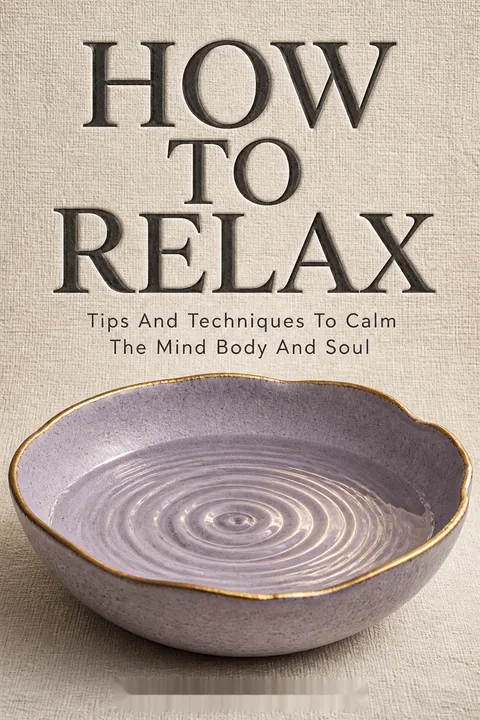


Key Takeaways
Treat relaxation as a practiced skill, not a lucky break
Stress has two sides. In a crisis, the body’s fight-or-flight response prepares it to act: muscles tense, the heart beats faster, and breathing quickens. The problem is not stress itself, but pressure that continues without recovery. The book’s central promise is practical: relaxation can be learned, and calming the body can help settle the mind, just as easing anxious thoughts can loosen physical tension.
Practise before you need it. The book recommends trying a chosen technique at least a couple of times a week, rather than saving it for a moment of panic. Breathing exercises, a walk, a quiet activity, or a body scan can all serve as practice. No single method suits everyone, so the useful goal is to discover which ones reliably help.
The strongest idea here is that calm is not merely a personality trait or a reward for finishing every task. It is a capacity that can be rehearsed. That framing reduces the pressure to produce instant serenity and makes experimentation sensible: a method that helps one person may irritate another. It also distinguishes emotional regulation from solving the source of stress. Breathing can make a difficult meeting more manageable, but it cannot remove an unfair workload or an unsafe situation. Relaxation is a resource for responding, not proof that a problem is harmless.
Slow the breath to give your body's alarm system another cue
Use a simple rhythm. Under pressure, breathing often becomes fast, shallow, and concentrated in the chest. The book offers a short exercise: sit upright, breathe in for a count of four, hold for four, then exhale fully through the nose. Continue for a few minutes and notice whether the body feels different. The aim is not to force a perfect breath, but to interrupt the hurried pattern that can accompany stress.
Keep it practical. The book also suggests blowing up a balloon as a way to encourage slower, deeper breathing when stress spikes. Either method can give attention a concrete job instead of letting it circle around a worry. If a technique feels uncomfortable, stop and return to ordinary breathing.
Breathing is unusually accessible because it is both automatic and partly controllable. Deliberately slowing it can create a small point of influence during an otherwise overwhelming moment, while the counting gives attention something specific to follow. The value may come from this combination of bodily rhythm and attentional focus, not from a single magic pattern. The exercise should therefore be treated as an option, not a test of discipline. For someone who finds breath focus unsettling, looking around and naming visible objects may be a more comfortable way to regain orientation.
Scan the body early; tension often announces stress before words do
Notice the signals. Stress can show up as a tight jaw, a stiff neck, digestive discomfort, or a headache. A body scan is a quiet check-in that moves attention from the head down through the shoulders, arms, torso, legs, and feet. Notice pressure, discomfort, or tension without immediately judging it. The book suggests breathing gently toward a tense area and allowing it to soften.
Practise releasing tension. Progressive muscle relaxation, or PMR, means tensing and then releasing one muscle group at a time, beginning with the toes and moving upward. Hold each contraction for about five seconds, then relax. Alternating tension and release helps make the physical difference between the two states easier to recognize. Regular practice can improve awareness of the body’s stress signals.
This approach makes a vague feeling more legible. In psychology, attention to internal bodily sensations is often described as interoceptive awareness; it can help people notice changes before distress becomes harder to manage. The scan also slows interpretation: a clenched jaw becomes information, not a personal failing. Still, bodily sensations have many possible causes, and a relaxation exercise cannot diagnose them. Persistent or severe pain deserves appropriate medical attention. Used as a check-in, rather than a substitute for care, body awareness can help connect emotional pressure with practical self-care.
Prevent avoidable stress with priorities, boundaries, and honest conversation
Reduce preventable friction. Disorganization and last-minute work can turn ordinary tasks into crises. The book recommends writing daily or weekly priorities so time feels less reactive, while leaving room for unexpected problems. A plan is not a promise that nothing will go wrong; it is a way to see what matters before everything feels equally urgent.
Protect your capacity. Saying no to some requests prevents overcommitment, and brief personal breaks can help restore energy during a crowded day. The book also recommends talking with a trusted person or counsellor when worries become a negative spiral. Putting concerns into words can clarify what is known, what is feared, and which next step is possible. Together, planning, boundaries, and conversation address different sources of pressure.
These suggestions recognize that stress is often produced by logistics and relationships, not just by thought patterns. A list externalizes decisions; a boundary limits new demands; conversation can bring perspective or practical assistance. Their usefulness depends on the conditions around the person, however. Someone with little control over work hours may not be able to plan away a heavy workload, and saying no can carry real social or economic costs. The most empowering version of this advice asks both, what can be changed, and what support is needed where individual control ends.
Return attention to the present instead of rehearsing every worry
Notice where the mind goes. Replaying past conflicts and imagining future disasters can keep attention caught in a loop. Mindfulness, as the book uses the term, means attending to what is happening now rather than living entirely in those mental replays. A familiar task can become practice: while making tea, notice the kettle, steam, cup, and taste. When attention wanders, gently bring it back to the task.
Change the mental frame. The book also suggests writing down recurring thought patterns, considering practical ways to handle a challenge, and using reassuring self-talk. A brief visualization, such as imagining worries drifting away in a balloon, can help some people create distance from anxious thoughts. These exercises are not about denying problems; they offer a pause in which to respond more deliberately.
Present-moment attention is useful partly because it separates an event from the mind’s running commentary about that event. That distinction is central to several therapeutic approaches: thoughts can be observed without being treated as facts or commands. The tea exercise is especially effective as a model because it requires no special setting or equipment. Positive thinking, by contrast, can become pressure to feel cheerful. A more durable aim is flexible thinking: acknowledge what is difficult, then identify what is within reach instead of demanding that every thought turn optimistic.
Stop task-switching and schedule real pauses for your mind
Give one task your attention. What feels like multitasking is often rapid switching between activities. Each switch takes attention away from the work at hand, and the mind can feel scattered as a result. The book recommends finishing one task before starting another when possible, rather than answering a message while writing a document.
Make room for recovery. A short walk, a few pages of a book, or a quiet spell away from a screen can create distance from a stressful task. The book notes that sustained focus often fades after an hour or two, though the right interval varies. It also recommends turning off devices for a regular period and reducing unnecessary email alerts. Rest is not simply idle time; it gives attention a chance to reset.
The advice connects attention management with stress management. Every notification invites a decision, and frequent switching can leave unfinished concerns competing for mental space. A pause can interrupt that accumulation before it feels like exhaustion. The important qualification is that not everyone controls their interruptions: caregiving, service work, and urgent responsibilities can make uninterrupted focus unrealistic. In those settings, small recovery moments and clearer handoffs may be more feasible than an idealized block of silence. The useful principle is not perfect concentration, but fewer avoidable demands on attention.
Design home and evening routines to make rest easier
Let the setting help. A cluttered room can make it harder to find what is needed and easier to feel rushed. Rather than attempting a whole-house transformation, the book suggests spending ten minutes at a time removing things that are no longer useful or enjoyable. It also recommends making the bedroom cool, dark, clean, and free of work-related items, with comfortable bedding and calming scents if those appeal.
Create a transition. A wind-down routine helps mark the shift from work to rest. Changing clothes, reading, listening to soothing music, or taking a bath can provide that signal. The book advises limiting bright screens and alcohol before bed, and keeping caffeinated drinks to the earlier part of the day. The point is to make restful choices easier to reach when energy is low.
Environmental design matters because intentions are vulnerable to friction. A clear place for keys, fewer notifications, and a bedroom associated with sleep can reduce the number of decisions required at the end of a demanding day. The same logic appears in behavioral design: make the desired action easier to begin. Yet orderly surroundings are not a moral requirement, and a messy home is not a diagnosis. The best changes are modest and personally useful. A routine should lower pressure, not become another standard a tired person feels obliged to meet.
Move, make things, and connect to change your emotional state
Use more than stillness. Relaxation does not always mean sitting quietly. The book recommends walks, yoga, swimming, dancing, and simple movement such as shrugging tense shoulders. These activities can redirect attention and loosen physical tension. Creative tasks such as baking, drawing, knitting, or gardening offer another route: hands and attention become engaged in a concrete process, while worries may temporarily recede.
Let pleasure be practical. Playing a childhood game, reading, laughing with friends, or spending time with a pet can also make stress feel less dominant. The book links hugs with relaxation and social connection, and describes music as a way to shift mood or settle down. These are options to test, not obligations. A short walk or a few minutes of making something may be enough to create a useful change of pace.
The range of activities is a strength: it avoids equating calm with one temperament or one formal practice. Movement may suit someone who feels restless, while knitting or reading may suit someone who needs quieter absorption. Social contact can add perspective and belonging, dimensions that solitary relaxation techniques cannot provide. But claims about particular hormones or universal effects should be read cautiously; a hug, pet, or group activity is not soothing for everyone. The practical test is whether an activity feels safe, accessible, and restorative for the person using it.
Eat regularly, move often, and protect sleep when stress rises
Support the body under pressure. Stress can disrupt meals, sleep, and exercise, leaving a person less prepared to cope. The book recommends regular meals with fruits and vegetables, whole grains, and protein sources such as nuts and pulses. It notes that going hungry can contribute to irritability, anxiety, and difficulty concentrating, so keeping a simple snack nearby may help. Eating slowly and noticing taste and texture can make a meal more restorative.
Build recovery into the day. Regular physical activity is presented as a way to ease tension and improve mood. The book also suggests a short nap when practical and a calmer evening routine to support rest. These are foundations, not quick cures: an occasional snack or workout cannot cancel prolonged distress. Their value lies in reducing avoidable physical strain while other pressures are addressed.
This section treats basic care as part of emotional regulation rather than a separate wellness project. Hunger, fatigue, and inactivity can make ordinary demands harder to meet, so attention to meals and rest may improve the conditions for coping. The approach is most useful when kept flexible. Food access, disability, shift work, and health conditions shape what is realistic, and advice about eating or exercise can become harmful if delivered as blame. Regularity and suitable movement are better principles than a rigid ideal of perfect nutrition or sleep.
If stress keeps impairing daily life, ask a clinician for help
Self-help has limits. The book offers many ways to handle everyday pressure, but it explicitly recommends contacting a doctor when stress continues to affect day-to-day life despite trying these approaches. A clinician can ask about symptoms, functioning, and what has already been attempted, then discuss appropriate next steps.
Treat help-seeking as care. The book names talking therapies such as cognitive behavioural therapy, or CBT, and medication as possibilities a doctor may recommend. Its practical advice is to describe the experience honestly and in enough detail for the clinician to understand it. Relaxation techniques can complement professional support, but they are not a replacement when distress is persistent, severe, or interfering with ordinary life.
This boundary gives the book’s many low-cost suggestions an important context. Self-care is valuable for everyday strain, but it should not become a reason to delay assessment when symptoms persist or functioning declines. A clinician can help distinguish situational stress from problems that need more targeted support, and can adapt care to the person’s circumstances. The advice also counters a common stigma: needing help is not evidence of weak character. Relaxation is one tool in a broader continuum of care, not a pass-or-fail measure of resilience.
Analysis
How to Relax is best understood as an accessible catalogue of experiments, not a single theory or a tightly argued program. Its organizing premise is that stress has bodily, cognitive, social, and environmental dimensions, so no single intervention should be expected to solve every instance. Breathing and muscle release address physical activation; planning and boundaries reduce preventable pressure; attention exercises interrupt rumination; sleep routines and nourishing meals support the body; play and connection make recovery more than solitary self-control.
That breadth is the book’s practical strength. Readers can select a low-effort action that fits the moment, whether it is a short walk, a deliberate cup of tea, a calmer bedroom, or talking with someone trusted. Repetition matters because a technique is easier to use when it is familiar. The book also avoids making relaxation entirely cerebral: movement, touch, sound, food, and surroundings all count.
Its main limitation is that the recommendations do not carry equal evidential weight. Some are broad behavioral practices, while other claims about specific foods, scents, colors, pressure points, and physiological effects are presented briefly without enough context to judge their reliability or suitability. These suggestions are safer to treat as optional experiments than as established treatments. The book’s own recommendation to seek medical advice when stress disrupts daily life helps set a necessary boundary.
A useful way to apply the material is to treat each suggestion as a small trial. Choose one method, notice whether it helps in a particular situation, and keep it only if it is workable. At the same time, ask whether the stressor itself can be changed or requires support. This preserves the book’s reassuring message without implying that calm is always a matter of personal choice. Relaxation can improve a person’s capacity to respond, but it cannot by itself correct every harmful demand or difficult circumstance.
Review Summary
How to Relax receives mostly positive reviews, with readers appreciating its simplicity, beautiful illustrations, and practical tips for relaxation. Many find it a comforting and enjoyable read, perfect for unwinding. While some note that the advice isn't groundbreaking, they still find value in the reminders and the book's overall calming effect. Readers praise its accessibility, making it suitable for those who don't typically read self-help books. The colorful layout and short, easy-to-digest sections are frequently mentioned as strengths.
People Also Read






Glossary
Fight or flight
body's rapid stress responseA bodily response to perceived danger or pressure that prepares a person to act. In the book, it is illustrated by tense muscles, faster heartbeat, and quicker breathing. This response can be useful in an immediate challenge, but prolonged activation can contribute to physical and mental strain.
Mindfulness
attention to the presentA way of directing attention to present experience rather than becoming absorbed in memories, predictions, or worries. The book illustrates it through ordinary activities, such as noticing the sounds, smells, and sensations involved in making tea. When attention wanders, the practice is to bring it back gently.
Progressive muscle relaxation (PMR)
sequential muscle releaseA relaxation technique in which a person tenses and then releases successive muscle groups, typically moving from the toes upward through the body. The book suggests holding each contraction for about five seconds before relaxing. Comparing tension with release can help a person recognize and practise the bodily feeling of relaxation.
Abhyanga
Ayurvedic oil self-massageAn Ayurvedic self-massage practice described in the book as a way to relax and ease bodily tension. It involves warming massage oil until comfortably warm, then using gentle strokes and circular motions while working from the head down toward the feet. The book recommends resting after the massage before washing off the oil.
Flow
absorbed creative attentionA state of deep involvement in an activity, in which attention is focused on what is being done and ordinary worries recede temporarily. The book connects this experience with creative activities such as drawing, photography, and other hands-on tasks. It may feel meditative, though the activity itself need not be formal meditation.
Relaxation response
physical shift toward calmThe book uses this term for a bodily pattern associated with relaxation, including reduced tension and a calmer physical state. It connects the response with practices such as knitting, swimming, and progressive muscle relaxation. The term describes the intended effect of these activities, not a guarantee that each method will work for everyone.
Download PDF
Download EPUB
.epub digital book format is ideal for reading ebooks on phones, tablets, and e-readers.








