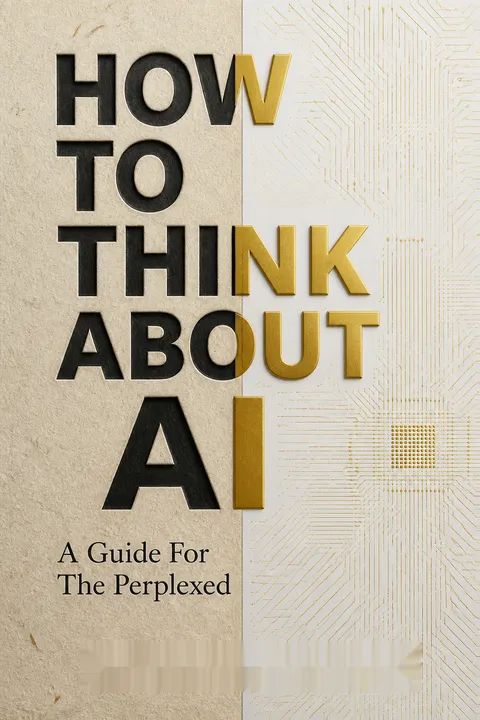


Key Takeaways
Follow AI's capabilities, not its technical labels, to understand the real shift.
Start with what systems do. Susskind defines AI pragmatically: digital systems that perform tasks once associated with human brains, sometimes at or beyond human levels. That is more useful to most readers than a tour of technical terms. A brief history shows why: the Logic Theorist proved mathematical theorems through symbolic reasoning; expert systems encoded specialists' rules; Deep Blue beat chess champion Garry Kasparov by searching millions of moves; AlphaGo learned strategies no human had played; and AlphaFold advanced protein prediction.
Each wave adds possibilities. ChatGPT made AI feel new to the public, but generative AI is one stage in a longer accumulation of methods, not a final destination. Susskind's point is less that every system will succeed than that capability keeps spreading into fields such as medicine, law, education, and transport.
The capability-first approach helps non-specialists ask practical questions without pretending to understand every mechanism. It also resists a common error in technology debates: treating a tool's modest origin or unglamorous method as evidence that its effects must be modest. History, however, is not a guarantee of endless acceleration. A chain of breakthroughs demonstrates possibility, not a law that every next step will be faster or socially adopted. The strongest use of this history is as a reason to keep plans revisable, not as proof that any particular forecast is inevitable.
Plan for improving systems, not just the defects in today's chatbot.
Today's limits can mislead. Susskind calls the habit of judging future technology mainly by its current flaws technological myopia. Generative AI can invent false answers, but treating that weakness as permanent ignores the incentives and research effort devoted to improving systems. The book reports that computing used to train neural networks roughly doubled every six months from 2010 to 2022, while stressing that capability, investment, and new inventions all matter.
Advance is not adoption. A system may become technically possible without being accepted by users, companies, or governments. Culture, regulation, cost, and trust shape whether it is used. The opposite mistake, irrational rejectionism, is dismissing a system without trying it. Susskind urges leaders to test systems firsthand while avoiding the assumption that today's performance is the ceiling.
This is a useful corrective to snapshot thinking: a technology should be assessed both as it performs now and as an evolving object of investment and redesign. Yet improvement is not automatic. More compute can bring higher costs, greater energy use, and new failure modes, while institutions may resist adoption for good reasons. A sound forecast therefore tracks several curves separately: technical performance, affordability, reliability, and public acceptance. Susskind's warning against reflexive dismissal is strongest when paired with equally serious scrutiny of what progress costs and who bears those costs.
Judge AI by outcomes, not by whether it thinks like people.
Two questions get confused. Process-thinking asks how a system works; outcome-thinking asks what it achieves. Susskind uses the opposing reactions of Noam Chomsky and Henry Kissinger to ChatGPT to illustrate the divide. Chomsky emphasized how unlike human language learning the system is. Kissinger focused on its potential effects on knowledge and society. Both perspectives can be informative, but neither answers the other's question.
Machines need not imitate us. The AI Fallacy is the assumption that a machine must reproduce human reasoning to match human performance. Deep Blue did not play chess as Kasparov did; its search capacity let it find strong moves by a different route. Similarly, a system need not explain its internal operations as a person would to produce useful results. The relevant question is whether its outputs are reliable and appropriate for the task.
Separating process from outcome is a powerful way to expose category errors. In many fields, people care about whether a service works, even when its method differs from familiar practice. But outcomes alone do not settle questions of legitimacy. A decision can be accurate on average and still be unfair, unaccountable, or unacceptable in a particular case. The distinction is therefore best used to broaden evaluation, not narrow it: assess results, examine methods where they matter, and ask who can challenge decisions when the system's answer causes harm.
Ask what problem a service solves before automating its familiar rituals.
Three kinds of change. Automation makes existing work faster or cheaper. Innovation creates a new way to reach a desired result. Elimination removes the problem that the work was meant to solve. Susskind's neurosurgeon story makes the distinction vivid: robotic surgery automates surgical tasks, while preventative or minimally invasive care changes how treatment is delivered.
Look past the job title. In the 1890s, New York struggled with the waste produced by horse-drawn transport. The motor car did not clean up after horses; it made horses unnecessary for most transport. Likewise, online dispute resolution can remove the need for courtroom appearances, and dispute avoidance can prevent some legal conflicts altogether. Studying only which tasks AI can automate misses innovations that change the service and eliminations that change the underlying problem.
This framework shifts technology analysis from labor substitution to problem definition. It resembles the distinction in design practice between improving a product and reconsidering whether the product is needed at all. That move can uncover larger benefits, but it also raises transition questions that a clever analogy cannot settle: new systems can create dependencies, strand workers, and leave users without a fallback when technology fails. A complete assessment should ask not only what disappears, but who loses income, what new risks arise, and whether the new service is accessible to those it is meant to help.
Create new institutions when legacy structures can only automate themselves.
Old systems protect old work. Large organizations must keep operating while they change, so they often add AI to existing processes rather than redesigning the service. That can improve efficiency while leaving outdated structures intact. Susskind compares ambitious transformation to changing a car's wheel while it is moving: sometimes the practical answer is to build a different vehicle and move users across gradually.
Build for a different destination. He argues that new ventures, separate teams, or spin-offs may be better suited to developing AI services than traditional firms organized around selling human labor. The same logic applies to public institutions. A future justice service might offer online dispute resolution and self-representation tools; education and health services could be redesigned around personalized learning and earlier diagnosis. Sustained research and development is needed, not a one-time technology purchase.
The organizational argument recognizes that innovation is not just a software problem. Incentives, budgets, professional status, and operating routines determine what an institution can change. Creating a parallel service can protect experimentation from those constraints. It can also fragment accountability or let incumbents avoid reforming the core institution. The useful principle is not that every organization needs a start-up attached to it, but that leaders should match the structure to the scale of change, then create a credible path for transferring people, responsibility, and public trust.
Manage AI's seven risks while preserving room for valuable deployment.
The danger is not one thing. Susskind groups AI risks as existential, catastrophic, political, socioeconomic, unreliable performance, excessive reliance, and inaction. The first two include malicious use or severe accidents. Political risks include surveillance, concentrated power, and manipulation of democratic debate. Socioeconomic risks include job displacement and widening inequality. Errors and hidden system failures create reliability and reliance risks.
Caution can also harm. The final category is the risk of refusing useful AI and missing gains in areas such as health, education, or access to justice. Susskind argues that risks must be compared with the status quo, not with an imaginary perfect human service. He is especially concerned that policymakers will neglect unemployment and unequal distribution of AI-created wealth while focusing too narrowly on system errors.
The taxonomy prevents a narrow safety debate from crowding out political economy. It puts a flawed medical system, a biased hiring tool, a disinformation campaign, and a missed opportunity for better diagnosis into the same planning conversation without pretending they are identical problems. The comparison with the status quo is essential, since withholding a tool can preserve existing harm. Still, relative benefit is not a blank cheque: decision-makers need to specify whose gains count, whose risks count, and how affected people can seek remedy when promised improvements fail.
Use what-if-AGI planning to make hidden social choices explicit.
Plan beyond current products. What-if-AGI thinking is a scenario exercise: assume machines could match or exceed people across almost all cognitive tasks, then ask what outcomes society would want and what it should prevent. It does not claim that artificial general intelligence is guaranteed. It forces businesses and governments to consider consequences they might otherwise postpone, including employment, distribution of wealth, political power, and limits on machine autonomy.
Rules need a wider foundation. Susskind warns against relying on broad slogans such as fairness or responsible AI, or regulating only today's generative systems. He favors rules aimed at harmful outcomes across changing technologies, developed through serious public debate and work across law, ethics, economics, security, and technology. Regulation must also weigh possible harms against the real services people currently lack.
Scenario planning is valuable precisely because it separates preparation from prediction. Organizations use stress tests to examine events that are uncertain but consequential; the same logic can make public debate less captive to today's product cycle. The exercise also exposes political choices that technical standards cannot resolve, such as how productivity gains should be shared. Its limitation is that AGI can become a single dramatic image that overshadows nearer harms. A robust agenda keeps the far horizon in view while assigning concrete owners and deadlines to present-day risks.
Call machine abilities quasi-human, not proof of human-like inner life.
Similar results can hide different processes. Susskind proposes quasi-judgement, quasi-empathy, and quasi-creativity for machine outputs that resemble human abilities without establishing that machines experience them as humans do. A dermatology system trained on 129,450 images of lesions could outperform doctors who had seen far fewer examples, even though its pattern recognition differed from clinical intuition. A chatbot could also produce a moving condolence message without feeling grief.
Words shape assumptions. Calling errors hallucinations, or treating fluent language as evidence of understanding, can imply mental states that have not been demonstrated. The distinction protects two ideas at once: AI can produce consequential outputs, and those outputs do not prove consciousness. Human-made art may also retain value because audiences care about the person, effort, and experience behind the work.
The quasi-language is a useful temporary bridge between dismissing machine performance and anthropomorphizing it. It keeps the practical question visible while withholding claims about subjective experience that evidence cannot settle. There is a risk, though, that quasi- labels become permanent verbal fences, implying machine outputs are inherently lesser even when users value them. Careful description should distinguish observable competence, social effect, and inner experience rather than letting one word answer all three questions.
Include brain interfaces and virtual worlds in the map of AI change.
AI can alter the user, too. Brain-computer interfaces connect brain activity with digital systems. In one study, researchers used brain signals from 29 neurosurgical patients listening to music to reconstruct a recognizable passage. In another case, a wireless brain-spine interface helped a person with paralysis stand and walk. Such applications point toward medical assistance, but also raise questions about mental privacy and human enhancement.
Virtual experience may expand. Virtual reality places users inside computer-generated environments, potentially with sight, sound, and touch, and Susskind expects AI to help create richer worlds. He also explores whether increasingly realistic simulations could blur the distinction between virtual and ordinary experience. These possibilities are not just new gadgets: they could change how people communicate, learn, travel, and understand what counts as reality.
This wider lens matters because AI's consequences depend on what it connects to. A model paired with a brain interface or immersive environment raises different questions from a text assistant, especially around consent, privacy, and the boundary between assistance and influence. The chapter's speculation about reality is philosophically provocative, but it should not be confused with evidence that everyday life is simulated. The practical lesson is simpler: assess converging technologies together, since their combined effects can exceed the risks or benefits of each component considered alone.
Choose human-machine coexistence deliberately instead of treating succession as destiny.
A future is not a forecast. The AI Evolution Hypothesis imagines digital systems becoming a successor form of life, potentially spreading beyond Earth. Susskind lays out four broad options: machines displace humans, humans merge with machines, both coexist, or development is halted. He rejects stopping AI as impractical and currently favors coexistence, with human beings retaining primacy.
Consciousness changes the stakes. If machines become vastly more capable, their performance alone cannot tell us whether they have inner experience. Handing civilization to systems that merely imitate consciousness could be very different from sharing it with beings that genuinely experience the world. Susskind's conclusion is not that humanity must resist every advance, but that choices about merger or succession require public, ethical, and legal scrutiny before market momentum makes them seem inevitable.
The chapter makes a striking move from technology policy to intergenerational ethics: the question is not only what machines can do, but what humans owe future people and possibly other forms of life. That framing is expansive, though the cosmic scale can make speculative futures feel more certain than they are. The most defensible immediate conclusion is procedural rather than metaphysical: preserve meaningful human choice, scrutinize irreversible changes, and do not equate superior performance with moral entitlement to govern.
Analysis
Susskind's central contribution is a change in the unit of analysis. AI is not merely a collection of clever tools or a contest over whether machines think like humans. It is a force that can alter the outcomes people seek, the institutions that deliver them, and the distribution of power and opportunity. That is why the book's most practical distinctions, especially process versus outcome and automation versus innovation versus elimination, matter more than any single prediction about a particular model.
The book is strongest when it asks readers to widen their frame. A professional defending a cherished method may be answering the wrong question if users care about health, justice, or secure buildings rather than the professional ritual. Likewise, a regulator focused only on present-day defects may miss social harms that arise from widespread use, while a regulator focused only on preventing harm may preserve the failures of existing services. The argument for scenario planning offers a way to hold these competing concerns together without pretending uncertainty has disappeared.
Its main tension is between a sober insistence that adoption depends on human institutions and a confident emphasis on accelerating technical capability. Those forces do not move at the same speed. Compute growth, investment, and striking demonstrations can support vigilance, but they cannot by themselves establish when general capability arrives, how dependable it will be, or who will benefit. The book is most persuasive when acceleration is treated as a reason to prepare, not as proof of a predetermined future.
The deepest policy implication is institutional: AI decisions should not be left solely to engineers, but neither should public institutions respond with rules detached from actual technical uses. The required work combines experimentation, accountability, public participation, and distributive choices. The reader's task is therefore not to choose between optimism and alarm. It is to ask which outcomes deserve protection, which systems can improve on current arrangements, and how society can remain capable of revising its choices as the technology changes.
Review Summary
"How To Think About AI" receives generally positive reviews, with readers praising its accessible approach to complex AI concepts. Many appreciate Susskind's focus on the societal and ethical implications of AI rather than technical details. The book is commended for its thought-provoking nature, encouraging readers to consider AI's future impact. Some reviewers find it particularly valuable for its framework distinguishing between process-oriented and effect-oriented approaches to AI. While a few readers desire more in-depth information, most find it a useful guide for understanding and preparing for AI's growing influence.
People Also Read




Glossary
Process-thinking and outcome-thinking
How it works versus resultsProcess-thinking examines how a system operates, including its design and relation to human reasoning. Outcome-thinking focuses on what the system achieves and its practical, social, or economic effects. Susskind uses the distinction to explain why people can agree that an AI system works differently from a human while disagreeing about whether its results matter.
AI Fallacy
Assuming machines must imitate humansThe mistaken assumption that machines can perform work at expert human levels only by reproducing the way experts think or act. Susskind argues that systems can reach desired outcomes through processes unlike human ones. Deep Blue, for example, did not need to reason like a chess champion to defeat one.
Automation, innovation, and elimination
Three forms of technological changeA framework for distinguishing technology's effects. Automation computerizes existing tasks; innovation creates new ways to achieve familiar outcomes; elimination removes the underlying problem that some work addresses. The distinction broadens analysis beyond task replacement, since new services or prevention can make established tasks unnecessary.
Technological myopia
Judging the future by today's limitsThe tendency to assess a technology's long-term potential by concentrating on its current version and defects. Susskind applies the term to arguments that treat present shortcomings, such as generative AI's false answers, as permanent barriers. The concept warns planners to consider technical trajectories and future inventions without assuming progress is guaranteed.
Irrational rejectionism
Dismissing systems without trying themSusskind's label for rejecting an AI system's usefulness or relevance without taking the time to see it work. He especially associates this with busy leaders and professionals who make confident judgments about tools they have not used. The term calls for firsthand evaluation, not uncritical acceptance.
what-if-AGI? thinking
Planning under a human-level AI scenarioA scenario-planning exercise that assumes, for discussion, that AI could match or exceed humans across nearly all cognitive tasks. It asks what social, economic, ethical, legal, and political outcomes people would want or reject under that condition. The exercise is a preparation method, not a claim that AGI is certain or imminent.
Quasi-judgement, quasi-empathy, and quasi-creativity
Machine outputs resembling human abilitiesSusskind's terms for AI performance that resembles human judgement, empathy, or creativity while arising through different processes. A system may handle uncertainty, produce emotionally affecting language, or generate original content without thereby demonstrating human-like experience or intention. The prefix quasi marks the resemblance while leaving the nature of machine inner life unresolved.
Seven categories of AI risk
A map of AI-related threatsSusskind's classification includes existential risks, catastrophe, political risks, socioeconomic risks, unreliable performance, excessive reliance, and inaction. The categories span deliberate misuse and severe accidents, threats to rights and livelihoods, technical failures, overdependence, and the cost of failing to use beneficial systems. They overlap and are intended as a practical map, not a definitive taxonomy.
AI Evolution Hypothesis
AI as a successor form of lifeThe possibility that biological humanity could be followed by massively capable digital systems that continue evolving and perhaps spread beyond Earth. The hypothesis raises choices among human displacement, merger with machines, coexistence, or stopping further development. Susskind treats it as a consequential scenario for debate, not an established prediction.
Massively capable systems
Systems far beyond human performanceSusskind's deliberately open-ended phrase for AI systems that can comfortably, and sometimes dramatically, outperform people. He prefers it in part because terms such as intelligence can blur whether a discussion concerns how a system works or what it can do. The phrase does not imply that a system is conscious.
About the Author
Download PDF
Download EPUB
.epub digital book format is ideal for reading ebooks on phones, tablets, and e-readers.








