

Key Takeaways
Choose a novel idea you can love past page fifty
Choose for staying power. A novel can occupy six months or seventeen years of a writer’s life. A promising idea that merely seems appealing may carry someone through an opening burst, then lose its grip. Bransford’s test is whether the premise, a character, or the world itself matters enough to keep returning to it when writing gets difficult. The book’s own origin story illustrates the gap between a seed and a story: a child stranded among substitute teachers on another planet began as a simple premise, then grew through questions about how the child got there and what mattered to the characters.
Know your shelf. Writing to chase a trend is risky because manuscripts take time to finish and reach readers. Instead, build a distinctive version of a familiar story, and learn the genre expectations you may want to meet or challenge. The book offers rough debut word-count ranges, such as 60,000 to 80,000 words for young adult fiction and 90,000 to 120,000 for science fiction.
What's useful here is the distinction between an idea that attracts attention and one that sustains effort. Motivation research often separates external rewards, such as money or status, from interest in the work itself; the latter is more dependable when progress is slow. Still, affection is not a quality-control system. A writer can love a premise that lacks dramatic potential, so the feeling should start exploration, not end evaluation. Genre knowledge also serves readers, not only publishers: it helps a novel make a clear promise before it asks to surprise.
Borrow a writing process, but keep the one that gets pages written
No universal method. Bransford spent years studying famous writers and successful authors, then found no shared process beyond their ability to produce the work. Some writers plan closely; others discover the story while drafting. Many fall between these poles. A planner may move slowly but face less structural repair later. An improviser may draft quickly, then need substantial rearrangement. Neither approach is inherently superior.
Find your rhythm. The author, who once struggled to write another novel despite having published a guide, argues for noticing what conditions help a writer work, then being diligent within them. The actual draft is also where a writer finds voice, the book’s distinctive style and outlook. Early pages can be rough. Trying to imitate another writer’s schedule or polish every sentence before continuing can become another way not to write.
This advice aligns with a basic principle of self-regulation: a method is useful when it fits the person and the task, not when it conforms to an idealized image of a writer. Planning can reduce uncertainty; improvisation can preserve discovery. The practical question is whether a chosen process produces material that can be shaped. Flexibility matters, too. A writer who treats a preferred method as identity may keep using it after it stops helping. Process should be a tool, not a badge.
Build plot from a premise, a desire, and a growing complication
Give the story motion. A theme explains what a novel means; a premise describes the event that starts it. Neither alone creates a plot. Bransford’s model adds a major complication that blocks the protagonist from restoring order or reaching a goal. From there, the character pursues something important, encounters increasingly difficult obstacles, and reaches an outcome that changes them. The source calls this an Aristotelian Arc.
Mark the big turns. The author calls major, consequential turning points tentpoles. They give a novel shape without requiring a rigid act formula. Before drafting, identify several, including the climax, then build scenes that make those moments feel earned. A spreadsheet can track the main plot, characters’ external and internal wants, unanswered questions, and turning points. Improvisers can make the same map after a draft to find missing links.
The model gives writers a diagnostic distinction that is easy to miss: a striking setup is not yet a sustained narrative. A protagonist’s goal and the forces blocking it create forward pressure, while tentpoles help manage a project too large to hold in working memory. Cognitive offloading, putting complex information into an external representation, can free attention for invention. The caution is that a map should support causal development, not dictate it. Turning points feel powerful because of accumulated choices and consequences, not because they occupy a prescribed position.
Test characters through conflicting motives and choices that reveal their flaws
Make desire specific. A character becomes legible through what they pursue and what they fear losing. Stronger tension comes when wants compete: a person might seek justice, protect their family, and preserve their principles, but discover that one aim threatens another. Every significant character should have some motivation, even if it is modest, and the more central the character, the more developed their goals and contradictions should be.
Let the plot expose them. Characters and plot depend on each other: events test a person, and their responses make those events matter. Bransford points to Ned Stark in A Game of Thrones as a decent character whose pride and past complicate his virtue. He also uses redeemability to explain why readers may follow a morally compromised character: admirable or compelling traits can offset bad actions, but not without limit. A protagonist’s choices should display both strengths and weaknesses.
This approach treats character as a pattern of decisions under pressure, rather than a biography attached to a plot. That connects naturally to moral psychology, where people reveal priorities most clearly when values conflict. Flaws also prevent the convenient but unconvincing hero who always has the perfect response. One nuance: readers do not all use the same moral ledger. Charm may make a transgression interesting to one reader and intolerable to another. The writer can guide sympathy, but cannot fully control it; credible motives and proportionate consequences help.
Make each reversal raise the cost of what your character wants
Change the direction. A reversal shifts a character’s fortune or position, from advantage to setback or the reverse. Stories gain energy when characters do not simply accumulate victories or losses. Bransford uses Luke Skywalker’s journey from frustrated farm boy to threatened hero to show how alternating outcomes sustain attention. In relationships, the same principle applies: encounters can move characters closer, then create new distance, with the emotional stakes intensifying as they become more invested.
Build suspense honestly. A mystery is not just concealed information. It grows from something a character wants, meaningful consequences if they fail, obstacles that make success uncertain, and a delay before the answer. The reader should generally know what the character knows. If the character already knows the truth and the author withholds it without a story reason, suspense can feel like a trick rather than a genuine problem.
Reversals work because readers continually update their expectations. A setback matters most when it changes what success now requires, rather than merely adding another obstacle of the same kind. This resembles the logic of suspense in games: uncertainty keeps attention, but only when outcomes feel consequential and rules feel fair. Escalation should not be mistaken for making every scene louder. A quiet reversal, such as a character discovering that a trusted ally has different priorities, may alter the story more than another physical threat.
Orient readers before asking them to care about your spectacular opening
Earn the first page. Bransford says an opening should establish the novel’s tone and voice, help the reader enter its flow, and build trust. It need not begin with an extravagant shock. Sudden action without grounding can leave readers unsure where they are or why the event matters. A character waking up or studying a mirror can also feel familiar unless the scene gives the choice a fresh purpose.
Choose a stable viewpoint. Perspective determines whose knowledge and experience shape a scene. First person, third person limited, and omniscient narration offer different kinds of intimacy and flexibility, but abrupt shifts can disorient. A consistent voice, including a clear narrator in omniscient fiction, gives readers a reliable place from which to imagine events. Setting should contribute more than scenery: its values, tensions, and changes can constrain characters and make their choices specific to this world.
The opening advice recognizes that readers face an orientation problem before they can experience suspense or emotion. In cognitive terms, a small amount of context lowers the effort required to build a mental model of the scene. That does not mean openings must be slow. Fast action can work when the reader receives enough sensory and causal information to follow it. Consistent viewpoint serves a similar function: it preserves the reader’s sense of location. The tradeoff is intentional flexibility, which requires stronger signals when the narrative camera moves.
Make dialogue and exposition earn their place in the scene
Shape conversation. Novel dialogue is not a transcript of ordinary speech. It should have a purpose, build toward a change, and reveal character through what is said, avoided, or misunderstood. Long exchanges that explain facts both speakers already know tend to sound like information delivered for the reader. Small actions and gestures can help the reader follow a conversation, but they should also carry meaning rather than merely decorate it.
Explain at the point of need. World history and backstory are easiest to absorb when they matter to an event unfolding now. If a character knows the relevant information, the narration can supply only what the reader needs at that moment. If the character does not know, discovering the information can become a scene, such as investigating a forbidden place or witnessing a memory. A novel can imply a deep past without pausing to explain all of it.
The distinction between information and dramatized information is central to narrative immersion. Readers accept explanation more readily when it answers a question the scene has already raised. Dialogue has a related economy: fictional speech benefits from the selectivity that real conversation lacks, while still preserving the feeling of human interaction. The danger is overcorrecting into cryptic exchanges where every character speaks in riddles. Subtext is engaging when readers can infer the pressure beneath the words, not when basic meaning becomes inaccessible.
Treat stuckness as a story problem, not a supernatural curse
Name the blockage. Bransford uses writer’s block for the experience of writing becoming difficult, not as an outside force that makes completion impossible. The useful move is to identify what specifically is not working: a transition, a plot thread, a character’s motivation, or an earlier choice that has undermined the scene. He suggests writing from another character’s perspective to uncover wants or feelings the draft has neglected.
Restart small. After an interruption, a writer may begin with an easier task, such as revising or drafting a scene whose outcome is clear, then return to the main sequence. A walk or exercise can create room to think; so can turning off distractions and sitting with the unresolved problem. The first session back may be unproductive. Its job is to restore contact with the work, not to prove that the writer has instantly regained full momentum.
The strongest part of this reframing is its move from identity to diagnosis: instead of concluding that someone is blocked, it asks what problem the story presents. That is compatible with problem-solving research, where defining a problem often narrows the search for solutions. The claim that writer’s block does not exist is best read as a practical provocation, not a complete account of creative difficulty. Fatigue, anxiety, illness, or competing demands can be real constraints. A writer needs both craft strategies and permission to address those conditions.
Revise the structure before polishing sentences, then seek informed readers
Edit in layers. A first draft is a starting point, not evidence that the novel is finished. Bransford recommends rereading after some distance, recording problems before making large changes, and addressing plot and character issues before line-level polish. A major revision can trigger a Cascade Effect: one change forces further adjustments elsewhere, especially when it alters an early event. Fixing small details too soon can waste effort if the scene or plotline later disappears.
Use feedback diagnostically. Friends may be supportive but not always objective or equipped to identify craft problems. A critique partner or editor can help, but no reader’s proposed solution is automatically correct. Look for the underlying issue that prompted the comment, then decide whether the suggested fix serves the book’s intentions. Paid help is not a guarantee of publication, and it should never require spending money the writer cannot afford.
Revision here is treated as systems work. A novel is interdependent, so changing one early cause can alter many later effects. Addressing the largest structural risks first is a form of dependency management, not just an editorial preference. Outside readers add value because authors know too much about their own intentions and may unconsciously fill gaps. Yet feedback is evidence, not command. Repeated confusion among readers is especially informative; a single reader’s preferred rewrite may reflect taste rather than a defect in the manuscript.
Build a writing life that can survive an unpublished book
Separate work from outcome. Bransford warns that publishing depends partly on timing and luck, so a writer cannot reliably make success the sole reward for years of work. The finish of one milestone can quickly become a demand for another: an agent, a sale, a bestseller. Protecting time with family, keeping needed employment, and staying connected to other writers make the work more sustainable. If a manuscript does not find a home, writing a new, self-contained novel may be wiser than producing dependent sequels to an unpublished one.
Keep continuity outside your head. A writer planning a series can create a Series Bible, a reference record of characters, places, rules, backstory, and inventions. It helps prevent contradictions when details from earlier books become relevant again. The broader principle is modest but powerful: celebrate finishing, learn from the process, and continue the craft without treating one book’s commercial fate as a verdict on the writer.
This closing argument resists the success narrative that makes artistic work appear worthwhile only when it converts into status or income. In behavioral terms, it favors goals a writer can influence, such as finishing and improving a manuscript, over outcomes governed by gatekeepers and markets. The advice to protect relationships and a livelihood also counters the romantic myth that suffering proves seriousness. At the same time, the book acknowledges ambition rather than requiring writers to suppress it. The durable balance is to pursue publication while refusing to let it define the entire value of writing.
Analysis
Bransford’s guide is a craft manual organized around an unusually candid premise: expertise does not exempt a writer from difficulty. Its author describes struggling to write another novel even after publishing a book about writing one. That admission gives the advice a practical tone. The rules are not presented as a magical formula, but as reminders a writer can return to when a draft stops cooperating.
The book’s most coherent model is causal. A premise disrupts a character’s life; a desire gives that disruption direction; obstacles create conflict; reversals change the apparent odds; and choices reveal character. This explains why its most useful distinctions are not merely technical. Theme is not plot, a compelling setup is not a complete story, and description is not setting unless the world exerts pressure on its inhabitants. These distinctions help diagnose why a draft feels inert.
The guide also manages the cognitive burden of novel writing. Its advice to use outlines, tentpoles, and spreadsheets externalizes information that would otherwise compete for attention. Yet it leaves room for discovery, since writers differ in how much they need to plan. That combination is stronger than a rigid template: structure is necessary, but the route to it can vary.
Some claims are deliberately absolute for comic force. Saying writer’s block does not exist may help a writer replace helplessness with a solvable question, but difficulty can arise from exhaustion or life circumstances, not only a story problem. Likewise, the claim that a protagonist must retain reader sympathy depends on genre and artistic purpose. Such tensions are best understood as craft prompts, not laws.
The book’s practical destination is not simply a finished manuscript. It is a repeatable writing life: one that can survive revision, interruption, uncertain publication, and the discovery that success does not arrive on schedule. Its deepest promise is therefore less about controlling outcomes than about learning to make the next useful decision on the page.
Review Summary
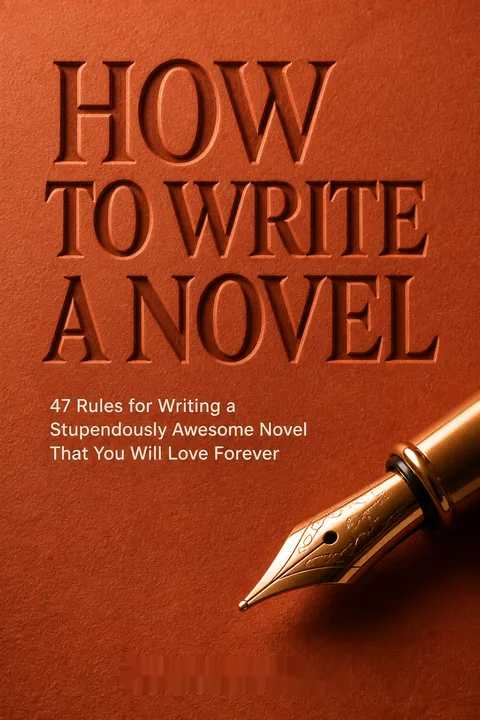
How to Write a Novel receives overwhelmingly positive reviews, with readers praising its practical advice, humor, and accessibility. Many find it helpful for both new and experienced writers, appreciating Bransford's friendly tone and comprehensive coverage of the writing process. Reviewers highlight the book's organization into 47 rules, making it easy to reference. Some note that much of the content is available on Bransford's blog, but prefer the book format. A few critics find the advice general, but most readers consider it a valuable resource for novel writing.
People Also Read





Glossary
Aristotelian Arc
Goal-driven narrative shapeIn the book, an Aristotelian Arc is a story pattern in which an event unsettles a protagonist’s life, the protagonist pursues an important goal, and obstacles intensify along the way. The outcome shows whether the goal is achieved and how the protagonist has changed. The framework emphasizes a journey and consequential resistance, not a particular act count.
tentpoles
Major story turning pointsTentpoles are the major events that give a novel its shape. They often involve a consequential decision, separation, reunion, revelation, confrontation, or climax. They should feel like points after which the story cannot simply return to its previous condition. Writers can identify several in advance, then develop the scenes and plot threads that make each turning point feel earned.
plot arc
A character’s pursuitA plot arc is the extended movement from a character wanting something to attempting to obtain it, facing complications, and ultimately succeeding or failing. A novel can contain multiple arcs, including arcs for secondary characters. Their goals may concern external outcomes, inner needs, or both, and the interactions among arcs can shape the larger plot.
redeemability
Reader tolerance for wrongdoingRedeemability describes how a character’s appealing or admirable qualities affect a reader’s willingness to remain engaged when that character behaves badly. It depends on more than the action itself: the character’s motives, charisma, and the scale of the harm matter. The book argues that sympathy has limits, especially when severe behavior lacks a credible explanation.
Cascade Effect
Revisions triggering revisionsThe Cascade Effect is the chain of changes that can follow a single revision to a novel. Altering an early event may require changes to later scenes, character relationships, or plot logic. Because small edits can be swallowed by larger structural changes, the book recommends addressing consequential plot and story problems before polishing sentences or minor details.
Series Bible
Continuity reference for a seriesA Series Bible is a writer’s reference document for details that must remain consistent across multiple books. It can track character descriptions and relationships, locations, laws, history, inventions, and special abilities. By recording both prominent and minor facts, it helps a writer avoid contradictions and prevents the need to rely on memory when returning to a fictional world.
revision fatigue
Exhaustion during revisionRevision fatigue is the weariness and loss of perspective that can arise after prolonged work on a manuscript. It may make the novel seem worthless and the editing process endless. The book treats this reaction as common, while warning writers not to mistake exhaustion for proof that the manuscript is ready. Continuing methodically can turn fatigue into a more critical view of the work.
writer’s block
Writing that has become difficultBransford uses writer’s block to name the felt experience of writing no longer coming easily, rather than a force that makes writing impossible. He recommends identifying the precise craft problem behind the difficulty, such as an unclear motivation or broken plot thread, and then working toward a solution. This reframing is practical guidance, not a claim that fatigue or life pressures are unreal.
Download PDF
Download EPUB
.epub digital book format is ideal for reading ebooks on phones, tablets, and e-readers.








