Key Takeaways
1. Our Cosmic Address: A Journey from Center to Insignificance
This is my ascent into insignificance; a road travelled by many and yet one that remains intensely personal to each individual who takes it.
Cosmic demotion. Humanity's understanding of its place in the universe has been a continuous journey of demotion from a perceived central position. Initially, ancient civilizations believed Earth was the unmoving center, with celestial bodies revolving around it. This geocentric view, championed by Aristotle and codified by Ptolemy, persisted for millennia, despite its contrived complexity in explaining planetary motions like retrograde loops.
Copernican revolution. Nicolaus Copernicus initiated a profound shift by proposing a heliocentric model, placing the Sun at the center of the solar system. This simpler, more elegant explanation for planetary orbits, later refined by Kepler and mathematically grounded by Newton's law of universal gravitation, began our intellectual "ascent into insignificance." Further astronomical discoveries continued this trend:
- Milky Way's scale: Henrietta Leavitt's work on Cepheid variables and Harlow Shapley's subsequent measurements revealed our Sun was not at the galaxy's center.
- Galaxies beyond: Edwin Hubble's observation of Cepheid variables in Andromeda proved it was a separate "island universe," one of billions.
- Earthrise: The iconic Apollo 8 photograph visually cemented Earth's status as "just another world," a fragile crescent in the vastness.
Relativity's perspective. Einstein's theories of relativity further dissolved notions of absolute rest or motion, emphasizing that our perception of stillness is relative. This scientific journey, from a central Earth to a speck in an expanding universe, is not a cause for despair but for elation, demonstrating humanity's magnificent intellectual climb to understand reality.
2. The Universe's Laws: Elegant Simplicity Underpins Complexity
Mathematics, rightly viewed, possesses not only truth, but supreme beauty – a beauty cold and austere, like that of sculpture, without appeal to any part of our weaker nature, without the gorgeous trappings of painting or music, yet sublimely pure, and capable of a stern perfection such as only the greatest art can show.
Fundamental rules. At its core, the universe operates according to a remarkably concise set of fundamental laws, primarily described by Einstein's General Theory of Relativity for gravity and the Standard Model of particle physics for all other forces and matter. These laws, expressed through elegant mathematical equations, dictate the behavior of everything from subatomic particles to galaxies.
Building blocks. The Standard Model identifies twelve fundamental particles of matter (quarks and leptons like electrons) and force-carrying particles (gauge bosons like photons and gluons). These few ingredients, interacting via four fundamental forces (strong, weak, electromagnetic, and gravity), are sufficient to construct all observed complexity:
- Atoms: Quarks form protons and neutrons, which combine with electrons to make atoms.
- Molecules: Atoms bond to form molecules like water and DNA.
- Stars: Gravity initiates collapse, nuclear forces fuse elements, electromagnetism balances forces.
Emergent complexity. While the fundamental laws are simple, their interactions lead to boundless complexity. Just as simple rules in cricket create infinite game variations, or basic physics creates unique snowflakes and leopard spots, the universe's laws allow for the emergence of intricate systems like living organisms and human consciousness. This "data compression" of nature means the blueprints are far simpler than the outcomes, a testament to the profound elegance of the cosmos.
3. Life's Fortuitous Emergence: A Series of Unlikely Accidents
If it is correct that at least two of the necessary foundations for the emergence of complex multicellular life on Earth arose from barely credible accidents, then they might be seen as potential bottlenecks in the evolution of intelligence elsewhere in the Milky Way.
Early, but not inevitable. Life on Earth emerged remarkably early, with evidence of microbial ecosystems dating back 3.48 billion years, shortly after the planet became hospitable. This rapid appearance might suggest life is chemically inevitable given the right conditions. However, the subsequent evolution of complex, intelligent life involved several highly contingent steps, making its widespread emergence across the galaxy far from certain.
Evolutionary bottlenecks. The journey from simple single-celled organisms (LUCA) to complex multicellular life and eventually intelligence spanned billions of years and required crucial evolutionary innovations that appear to be "fateful encounters" rather than inevitable progressions:
- Oxygenic Photosynthesis: The evolution of this complex process, which uses water to produce oxygen, took over a billion years. It led to the "Great Oxidation Event," rusting the Earth and creating the oxygen-rich atmosphere necessary for energetic multicellular life. This innovation appears to have evolved only once.
- Eukaryotic Cell: The origin of eukaryotic cells (with a nucleus and specialized organelles), essential for all multicellular life, is thought to have arisen from a singular, accidental event where one simple cell (an archaeon) engulfed another (a bacterium, which became mitochondria). This "fateful encounter" provided an unprecedented energy supply, unlocking the potential for vast biological complexity.
Long timescales, rare outcomes. These bottlenecks highlight that even if simple life is common, the path to intelligence is fraught with improbable steps. The three billion years it took for eukaryotes and oxygenic photosynthesis to pave the way for the Cambrian explosion (530 million years ago) suggests that planetary stability over immense timescales is critical. This long, contingent history on Earth implies that technological civilizations might be stupendously rare, making our existence a colossal, fortunate accident.
4. The Fermi Paradox: Why the Great Silence?
Fermi’s question is a powerful and challenging one that deserves an answer. It has become known as the Fermi Paradox.
The perplexing silence. Given the billions of stars and potentially habitable planets in the Milky Way, and the vast age of the galaxy (13 billion years), it seems statistically probable that many intelligent civilizations should have arisen, some billions of years ahead of our own. Yet, despite extensive searches like SETI (Search for Extraterrestrial Intelligence), we have detected no definitive signals or evidence of their existence. This profound contradiction is known as the Fermi Paradox.
Drake's framework. Frank Drake's equation provides a quantitative framework for estimating the number of contactable civilizations (N) in our galaxy by multiplying several probabilities:
- Rate of star formation (R*)
- Fraction of stars with planets (fp)
- Number of habitable planets per star (ne)
- Fraction of planets where life emerges (fl)
- Fraction of life that becomes intelligent (fi)
- Fraction of intelligent life that develops communication technology (fc)
- Lifetime of such civilizations (L)
Possible resolutions. While astronomical terms like the prevalence of planets (fp ≈ 1) are now known to be high, the biological terms (fl, fi) and the lifetime of civilizations (L) remain highly speculative. The "Great Silence" could be explained by:
- Rarity of complex life: The evolutionary bottlenecks on Earth (eukaryotic cell, oxygenic photosynthesis) suggest intelligent life might be exceedingly rare.
- Short civilization lifetimes: Civilizations might inevitably destroy themselves shortly after developing advanced technology (e.g., nuclear war, environmental collapse), making their "flickers of intelligence" non-overlapping.
- Von Neumann probes: If self-replicating probes could colonize the galaxy in millions of years, their absence is puzzling, unless civilizations choose not to build them or they are too small to detect.
The paradox forces us to confront the possibility that our civilization might be unique, or at least isolated, in the Milky Way, a sobering thought that underscores the preciousness of our existence.
5. From Ape to Spaceman: A Rapid, Contingent Ascent
Together, they speak eloquently of our unlikely, magnificent ascent from the Rift Valley to the stars.
Evolutionary leaps. Our journey from ape-like ancestors to space-faring humans is a remarkably rapid and contingent story, unfolding over a mere 3 million years—a blink in geological time. Early hominins like Lucy (Australopithecus afarensis), living 3.2 million years ago in the East African Rift, were bipedal but possessed small, chimpanzee-sized brains. The significant increases in brain size, leading to species like Homo erectus and Homo heidelbergensis, and eventually Homo sapiens, were not gradual but occurred in distinct "jumps."
Climate as a driver. Recent research suggests a direct link between these rapid increases in hominin brain size and dramatic climate variability in the Rift Valley. The Earth's orbital cycles (Milankovitch cycles), influenced by the gravitational pull of other planets and the Moon, caused periodic shifts in climate, particularly rainfall, around:
- 1.8 million years ago: Coinciding with the emergence of Homo habilis and Homo erectus, and a proliferation of hominin species.
- 1 million years ago: Another jump in brain size with Homo heidelbergensis.
- 200,000 years ago: The appearance of Homo sapiens.
Fortuitous coincidences. The unique geology of the Rift Valley amplified these orbital-driven climate changes, creating intense selection pressures for adaptability and potentially social complexity. This "Pulse Climate Variability hypothesis" suggests that our intelligence is a response to a highly specific, improbable set of coincidences involving planetary orbits and Earth's axial tilt. Without this "inconceivably unlikely set of coincidences," the complex human brain, with its 85 billion neurons and capacity for consciousness, might never have evolved, leaving us as mere "upright chimpanzees."
6. The Power of Knowledge: Writing as Civilization's Engine
Writing created a cultural ratchet, an exponentiation of the known that allowed humanity to innovate and invent way beyond the constraints of a single human brain.
Beyond memory's limits. The invention of writing, emerging independently in several cultures around 5,000 years ago (e.g., Sumerian cuneiform, Egyptian hieroglyphs), was a pivotal moment in human history. It fundamentally transformed civilization by freeing the acquisition and transmission of knowledge from the limitations of individual human memory. Before writing, knowledge was largely oral and vulnerable to loss with each generation.
Foundations of complexity. Writing initially served practical administrative purposes, such as tracking trade, accounts, and legal matters, as seen in early cuneiform tablets and Nabataean scrolls. This ability to record and manage complex information enabled:
- Larger societies: Supporting the growth of cities and complex social structures beyond Dunbar's number (approx. 150 individuals).
- Division of labor: Freeing individuals from immediate survival tasks to specialize in crafts, administration, and intellectual pursuits.
- Monumental architecture: Facilitating the planning and coordination of large-scale projects like Petra or the Egyptian pyramids.
Collective intelligence. Writing allowed knowledge to accumulate, be shared across vast distances, and endure across millennia. It created a "cultural ratchet," where each generation could build upon the discoveries and insights of its predecessors, leading to an exponential growth of understanding. This collective effort, transcending individual brain limitations, is what enabled humanity's journey from early agrarian societies to the International Space Station, making works like Newton's Principia or Shakespeare's Hamlet possible.
7. The Multiverse: Our Inevitable Existence in an Infinite Cosmos
We live in an eternal universe, in which everything that can happen does happen. And we are one of the things that can happen.
Beyond the Big Bang. Modern cosmology, particularly the Theory of Inflation, offers a compelling explanation for the observable properties of our universe, such as its extreme uniformity and flatness. Inflation posits that before the "Big Bang" (the hot, dense phase of our observable universe), spacetime underwent a period of exponential expansion, driven by quantum fields. This expansion smoothed out pre-existing curvature and density variations, explaining the Cosmic Microwave Background Radiation.
Eternal inflation. A natural extension of inflationary theory is "eternal inflation," which suggests that inflation doesn't stop everywhere simultaneously. Instead, regions of spacetime continue to inflate exponentially, constantly spawning an infinite number of "mini-universes" (or "pocket universes") where inflation has ended, leading to Big Bangs. This creates an infinite, immortal, fractal-like multiverse.
Anthropic selection. This concept of an infinite multiverse provides a powerful, albeit controversial, solution to the "fine-tuning problem"—the observation that fundamental constants of nature (like the strength of dark energy, which is incredibly small) appear precisely tuned for the existence of life. In an eternal multiverse:
- Each mini-universe can have different values for these constants and different "effective" laws of physics.
- All possible combinations of physical laws and constants will be realized somewhere.
- Therefore, the existence of a universe like ours, perfectly suited for life, becomes statistically inevitable, not a matter of luck.
We exist not because our universe is special, but because in an infinite array of possibilities, our existence is guaranteed to occur somewhere. This shifts the question from "Why are we here?" to "What does it mean to be one of the inevitable outcomes?"
8. Our Fragile Future: Challenges and the Call for Collective Action
The collective goal of ensuring that there is never less than one human civilisation must surely override our personal prejudices.
Existential threats. Despite our remarkable ascent, humanity faces profound existential threats that highlight the fragility of our civilization. These challenges, unlike historical conflicts, are global in scale and demand collective action, yet our political systems and ingrained tribalism often hinder effective responses.
- Asteroid impacts: Events like the Chelyabinsk meteor (2013) and the Tunguska event (1908) demonstrate the constant threat from space. Larger impacts, like the Chicxulub event that wiped out dinosaurs, could destroy civilization.
- Climate change: Greenhouse gas emissions from fossil fuels are projected to cause significant global temperature rises, threatening widespread disruption.
- Self-destruction: The rapid development of civilization-ending technologies (e.g., nuclear weapons) coupled with human "idiotically primitive destructive urges" poses an ever-present danger.
Science as foresight. Science provides the tools to predict these future dangers, from asteroid trajectories to climate models. However, these predictions, based on differential equations, are often subject to chaos theory, meaning approximate knowledge of the present does not always precisely determine the distant future. This inherent uncertainty necessitates continuous observation and a humble understanding of our calculational limits.
Investment in survival. Addressing these threats requires a fundamental shift in priorities, moving beyond short-term economic gains or nationalistic prejudices. Projects like the Svalbard Global Seed Vault, which safeguards agricultural biodiversity for millennia, and fusion energy research, which promises limitless clean power, exemplify the long-term, science-driven investments necessary for our survival and flourishing. The question is whether humanity can overcome its "myopic and cavalier disregard for our long-term safety" to make these crucial investments.
9. The Wonder of Being Human: Meaning in a Meaningless Universe
Our existence is a ridiculous affront to common sense, beyond any reasonable expectation of the possible based on the simplicity of the laws of nature, and our civilisation is the combination of seven billion individual affronts.
Intrinsic value. Objectively, in a vast and potentially infinite universe, humanity might appear insignificant—a "clump of atoms" present for an instant. Yet, the very act of asking questions, of experiencing wonder, love, and consciousness, imbues our existence with profound meaning. This meaning is not inherent in the universe itself, but an emergent property arising from the complex biological machines we are.
The human paradox. Our civilization is the most complex emergent phenomenon known, a synthesis of literature, music, technology, art, philosophy, and science. This richness arises from "infinite faculties" within each human being, themselves composed of a finite number of quarks and electrons. This paradox—immense complexity and meaning from simple, fundamental components—is what makes humanity an "outrageous imprint on reality."
A call to cherish. Our existence is "necessarily temporary and our spatial reach finite," making us all the more precious. The journey from early hominins in the Rift Valley to walking on the Moon, from simple tools to understanding the multiverse, is a testament to our unique capacity for exploration and knowledge. This "indescribable significance as an isolated island of meaning in a sea of infinite stars" compels us to:
- Value life: Cherish our own existence and that of others.
- Invest in education: Empower future generations with the knowledge to make better decisions.
- Act collectively: Overcome divisions to protect our singular civilization.
Ultimately, the human universe is a love letter to humanity, a celebration of our improbable existence and our capacity to find meaning and wonder in a cosmos that, by itself, offers none.
Last updated:
Review Summary
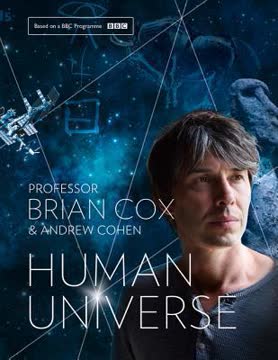
Human Universe receives overwhelmingly positive reviews (4.28/5 stars), with readers praising Brian Cox's ability to make complex scientific concepts accessible and inspiring. Reviewers appreciate the book's blend of physics, cosmology, and human evolution, describing it as a "love letter to humanity" that explores big questions about our existence and place in the universe. Many compare Cox to Carl Sagan for his wonder-filled approach. Some criticisms include occasional dry sections, lack of focus, and mixing too many topics. The beautifully illustrated companion to the BBC series is recommended for anyone curious about science and our cosmic significance.
Wonders of Brian Cox (with Andrew Cohen) Series
Similar Books