

Key Takeaways
See humans as nature’s paradox: ordinary in origin, extraordinary in cultural reach
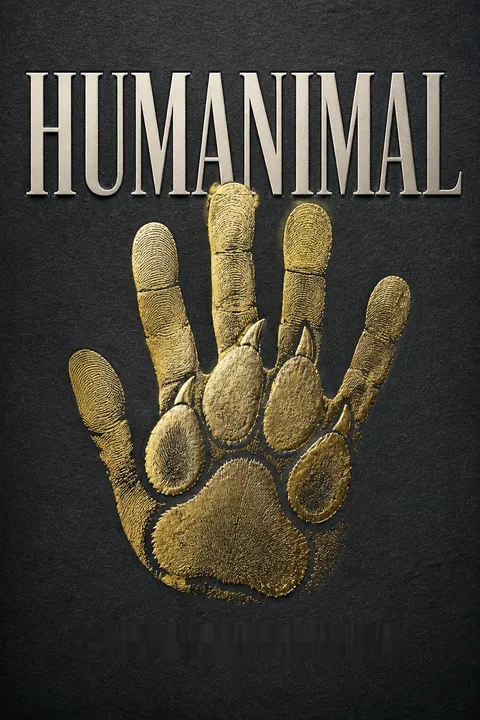
One family tree. Humans share life’s basic genetic, cellular, and metabolic machinery with every organism. We are animals shaped by evolution, not a separate creation. Yet our ability to build tools, exchange ideas, and accumulate knowledge has made us unusually powerful. Rutherford calls this paradox humanimal: a species rooted in nature that has reshaped its surroundings through culture. People living 100,000 years ago were physically much like people today, even though human societies and behavior changed profoundly.
Difference without rank. The book rejects both extremes: humans are neither wholly unlike other animals nor merely one more interchangeable species. Our distinctiveness lies in the scale and organization of our abilities, not in a break from biology.
The book’s central move is to replace a ladder of life with a branching, shared history. That matters because comparisons with animals often smuggle in a ranking: a species is treated as impressive only when it resembles humans. A better question is what a capability does in its own environment. Human culture is extraordinary, but extraordinariness is not a license to treat other life as lesser, or to imagine humans stand outside ecological limits.
Look for cultural change, not a sudden genetic upgrade, in human modernity
Bodies before behavior. Modern human anatomy existed long before the archaeological record shows the full range of behaviors associated with people today. By roughly 40,000 years ago, art, jewelry, musical instruments, and increasingly elaborate tools appear across multiple regions. Behavioral modernity means this cluster of cultural practices, not a sudden change in the human body or a single mental mutation.
No clean monopoly. The ivory Lion Man, a human figure with a lion’s head, shows imagination and skilled carving. But a 2018 study dated Spanish cave markings to more than 64,000 years ago, suggesting Neanderthals made art before Homo sapiens arrived in Europe. That dating has been challenged, and some modern behaviors appeared much earlier in scattered places. The record suggests a gradual, uneven transition, not a single leap.
The archaeological record is a fragmentary archive, not a video of the past. A missing artifact can mean a behavior did not exist, or that its materials failed to survive, or that no one has found it yet. This makes claims about a sudden cognitive revolution especially fragile. The Neanderthal evidence is valuable not because it settles every question, but because it forces a broader view of who may have imagined, made, and taught.
The human edge is passing skills forward, not merely picking up tools
Tools extend bodies. A tool is an external object deliberately used to make an action easier or more effective. Tool use is rare across species, but it is not uniquely human. Stone tools at Lomekwi in Kenya date to about 3.3 million years ago, before the genus Homo. New Caledonian crows shape hooked sticks, and can use one tool to retrieve another. In Shark Bay, bottlenose dolphins protect their snouts with sea sponges while searching for prey, a learned technique passed from mothers to daughters.
Knowledge accumulates. These examples show that other animals can innovate and learn. The human distinction is the scale of cultural transmission: skills and information spread between people, including people who are not close relatives, and can build on earlier knowledge rather than being reinvented from scratch.
This is a shift from asking which species uses a tool to asking how knowledge moves through a population. It connects toolmaking to education, apprenticeship, and the preservation of expertise. Cultural skill is not simply stored in an individual brain; it depends on other people who can teach, copy, and improve it. That advantage is powerful, but unevenly distributed. A society can possess knowledge that most of its members cannot access or use.
Treat fire as technology that remade bodies, diets, and social life
A risky advantage. Evidence for deliberate human fire use is difficult to distinguish from natural wildfires. The earliest secure archaeological evidence discussed here comes from Wonderwerk Cave in South Africa, around one million years ago. Fire supplied warmth and light, helped people move into colder regions, and made food easier to digest. Cooking also reduced the time spent chewing, freeing energy and time for other activities.
More than human use. Fire became a social center for shared meals, stories, and teaching. In Australia, Aboriginal knowledge describes firehawks carrying burning sticks to start new blazes and flush prey from grass. Researchers reported this behavior formally in 2017. Humans remain the only known animals able to make a spark, but other animals can exploit or manipulate fire. The human relationship with fire grew through many steps, not one dramatic discovery.
Fire illustrates how a technology can change the conditions that shape a species. It affects food, movement, social gathering, and the landscape itself, so its consequences are biological as well as cultural. The same leverage carries costs: the book notes that burning fossil fuels now warms the planet. The lesson is not that technology is inherently good or bad, but that extending control over an environment can create effects far beyond the original purpose.
Farming altered evolution by making culture and biology reshape each other
A cultural turning point. Agriculture emerged around 10,000 years ago and transformed human life. Growing crops and domesticating animals encouraged settled communities, food storage, specialized work, and trade. Farming depended on learned skills and tools, but it also changed the environments in which people lived and what they ate.
Culture changes bodies. In parts of Europe, a genetic variant allowed adults to keep producing the enzyme that digests lactose. The book places this change around 7,000 years ago, after people were already keeping dairy animals. Access to fresh milk then became a possible advantage. This is gene-culture co-evolution: inherited biology and learned practices influence each other over generations. Humans are not the only farmers. Leaf-cutter ants have cultivated fungi for more than 20 million years, using plant material to nourish the crops they depend on.
The milk example makes evolution feel less like a contest between nature and culture. A social practice can alter the environment, changing which inherited traits are useful; biology then affects which practices people can sustain. This resembles ecological niche construction, the process by which organisms modify the conditions that shape their own survival. Still, an adaptation is not universal progress. Lactose digestion is useful in some dietary settings, not a measure of human advancement.
Do not confuse shared sexual behavior with shared motives or identities
Sex exceeds reproduction. Human sexual activity often serves pleasure, bonding, or social purposes rather than conception. Other animals also engage in sex that cannot produce offspring. Bonobos use sexual contact in social interactions, while male giraffes frequently engage in same-sex mounting. In one three-year observation of giraffes, researchers recorded sixteen male-to-male mountings and one male-to-female mounting, though such observations cannot capture every encounter.
Resemblance is not explanation. Homosexual behavior occurs across many animal species, but the reasons vary and may not resemble human sexual identity or relationships. The book separates the observable act from the motivation behind it. Similar behavior in two species does not prove a shared evolutionary origin, and animal behavior cannot determine how human relationships should be judged.
The distinction between behavior and identity is essential. Biology can establish that same-sex behavior occurs in nature; it cannot, by itself, resolve the meanings people give their relationships or the rights they deserve. The comparison is strongest when it dismantles the claim that homosexuality is unnatural, and weakest when it treats animal behavior as a direct model for human life. Evolutionary explanations need evidence about causes and consequences, not just a striking resemblance.
Never turn an evolutionary possibility into a moral excuse
Nature is not a rulebook. Animals compete, injure, and sometimes kill members of their own species. Chimpanzees have carried out coordinated raids that killed rivals and expanded territory. At Naturuk in Kenya, archaeologists found 27 people killed in a group attack about 10,000 years ago. Such evidence shows that organized violence is ancient, but it does not make violence inevitable or justified.
Explanation needs evidence. Some researchers have proposed that rape evolved as a reproductive strategy in humans. Rutherford argues that the evidence does not demonstrate that men who rape father more children, a key test for a proposed adaptation. Animal coercion also cannot simply be labeled by human legal categories. Evolution can help explain the capacities and pressures behind behavior; it cannot supply a moral defense for human crimes or political violence.
This distinction is a safeguard against biological storytelling that sounds rigorous while doing little more than naturalizing existing power. An evolutionary hypothesis should make testable predictions, including measurable effects on reproductive success. Even a well-supported explanation would not settle what conduct is acceptable. Human institutions, laws, and norms shape behavior in ways that evolutionary accounts alone cannot capture. Description can inform responsibility, but it cannot replace it.
Language emerged from interacting systems, not one magic gene
A gene, not a language switch. FOXP2 became famous after researchers linked a mutation in it to speech and language difficulties in members of one family. It encodes a protein that helps regulate the activity of other genes and is involved in brain development. Related versions occur in many animals; the human version is important, but it is not a standalone language gene.
Many parts must work. Speech depends on neural control, vocal anatomy, hearing, and the ability to learn shared symbols and rules. The hyoid bone and muscles of the tongue and larynx help produce speech sounds, while brain systems coordinate them. Neanderthals had a version of FOXP2 like ours and a hyoid suited to speech, but neither fact proves exactly how they communicated. Language is a system, not a single genetic invention.
The gene story is a useful antidote to genetic determinism. A regulator can affect many biological processes, and a complex ability depends on networks of genes, anatomy, learning, and social interaction. This is also why a genetic association should not be mistaken for a complete explanation. The same caution applies beyond language: identifying a component of a system is important, but it does not reveal the whole system’s history or function.
Judge animal minds with multiple tests, not human-shaped assumptions
A test is not a mind. The mirror test asks whether an animal recognizes its reflection as itself, often by checking whether it investigates a mark on its own body. Some dolphins, elephants, and one magpie have shown evidence of recognition. Yet the test privileges vision, and pigeons have learned to pass a version when rewarded, raising questions about what it measures.
Look for converging evidence. In the Restaurant Row experiment, rats chose among foods after waiting through different delays. Rats that abandoned a preferred food for a less-liked one, then faced a longer wait, later looked back toward the missed option and changed their choices. Brain activity also resembled activity associated with regret in humans. The result suggests a shared process, but it cannot establish that a rat’s private experience is identical to ours.
Animal cognition research faces a measurement problem: a human-designed task can reveal a real ability while still overlooking abilities that matter to another species. A mirror is a poor test for an animal that relies on smell, for example. Stronger conclusions come from combining behavior, physiology, and tests suited to the animal’s sensory world. This approach avoids two errors at once: denying animal experience because it is hard to measure, and assuming it must feel exactly like human experience.
Keep culture connected: isolated populations can lose skills they once mastered
Population size matters. Models of cultural transmission suggest that larger populations make it easier to preserve specialized skills and pass them between learners. When Tasmania became separated from mainland Australia around 10,000 years ago, its Indigenous population gradually lost some technologies, including fine bone tools and fishing equipment. The archaeological record shows a toolkit of about 24 items, while mainland Australians developed more than 120 new tools during the same period.
Culture is collective memory. A craft can disappear if too few people know how to perform or teach it. Human capability therefore depends not only on intelligence, but also on the structure and connections of communities. These models help explain why cultural sophistication can grow, stall, or decline without a corresponding genetic change. Isolation is not simply a smaller version of a large society; it can change what knowledge survives.
This account places social organization inside the explanation of human capability. In network terms, knowledge survives when there are enough skilled people, learners, and routes for information to travel. Yet Tasmania is a compelling case, not a controlled experiment. Population size, geography, available resources, and local history can all matter, and archaeology preserves some technologies better than others. The broader insight is sturdy: cultural achievement is not stored in genes alone, but in relationships that keep skills circulating.
Analysis
Humanimal’s strongest argument is not that humans and other animals are alike, but that resemblance is a poor shortcut to explanation. Tool use, sexual behavior, social learning, and violence all appear beyond our species, yet similar actions can arise from different histories or serve different purposes. This keeps comparison scientifically productive: animals are not miniature humans, and humans are not exceptions to biology.
The book’s narrative moves from visible behavior toward the less visible machinery beneath it. Tools lead to hands, brains, and teaching; fire leads to diet and social life; speech leads to genes, anatomy, and shared symbols. This structure makes evolution feel integrated rather than like a parade of isolated discoveries. It also supports a subtle central claim: human distinctiveness is less a single trait than a system of capacities that reinforce one another, especially the ability to accumulate and transmit culture.
That argument has limits worth keeping in view. Archaeological gaps make apparent timing uncertain, while animal studies often rely on small samples and human-designed tests. The Tasmanian case and the proposed demographic explanation are suggestive, but population size is entangled with environment, migration, and resource access. Likewise, the presence of a behavior in several species does not establish a common motive or genetic origin. Rutherford is most persuasive when he treats uncertainty as part of the evidence, and least secure when broad evolutionary stories risk outrunning what can be measured.
The book’s ethical value follows from its scientific restraint. Evolution explains neither human destiny nor moral permission. Showing that violence or sexual behavior has analogues in nature does not tell societies what to tolerate. Conversely, recognizing human cultural power should not become a claim of superiority over other life. The result is a grounded account of a species that is continuous with nature, unusually capable of changing its environment, and responsible for what it does with that capacity.
Review Summary
The Book of Humans receives mixed reviews, with an average rating of 3.83 out of 5. Readers appreciate Rutherford's accessible writing style and fascinating exploration of human evolution. The book examines traits shared between humans and animals, highlighting both our uniqueness and similarities. Some praise its informative content and engaging approach, while others criticize its organization and depth. The extensive focus on animal sexual behavior is noted as surprising. Overall, readers find it an interesting, if sometimes superficial, look at what makes humans distinct.
People Also Read

Glossary
Humanimal
human animal paradoxRutherford’s term for the tension at the center of human identity. Humans share the evolutionary history and biological foundations of other animals, yet their unusually powerful cultural abilities have made them distinct in practice. The term rejects both the idea that humans are separate from nature and the idea that human differences are insignificant.
behavioral modernity
modern cultural behaviorA term for the cluster of behaviors associated with people living much as humans do today, including making varied tools, creating art and ornaments, using symbols, and transmitting skills. The archaeological signs appear at different times and places, so the term does not imply a single genetic event or sudden cognitive transformation.
gene-culture co-evolution
genes and culture interactingThe reciprocal influence of inherited biology and learned cultural practices across generations. A cultural practice can change the environment in which particular genetic variants are useful, while biological traits affect which practices people can adopt. Adult lactose digestion is one example discussed in the book, alongside dairying and the use of milk.
Oldowan tool set
early chipped stone toolsA collection of early stone tools associated with sites such as Olduvai Gorge in Tanzania. The tools were made by striking stones to produce sharp edges and flakes, and could be used for cutting or processing food. The book notes that older stone tools at Lomekwi predate the genus Homo, complicating the idea that toolmaking defines humans.
FOXP2
speech-related regulatory geneA gene that encodes a transcription factor, a protein that regulates the activity of other genes. A mutation in FOXP2 was linked to speech and language difficulties in one family, making it important in research on speech. It is not a single gene for language: speech depends on many genes, brain systems, anatomy, and learning.
mirror test
visual self-recognition testA test of whether an animal recognizes its reflection as its own image rather than another animal. In a common version, researchers place a mark somewhere the animal cannot see without a mirror and observe whether it investigates the mark on its own body. Passing the test is evidence of visual self-recognition, not a complete measure of self-awareness.
cultural transmission
socially learned knowledgeThe passing of behaviors, skills, or information between individuals through learning rather than direct genetic inheritance. It can occur between parents and offspring, or among unrelated members of a group. The book describes examples in dolphins and birds, while emphasizing that humans transmit knowledge on a much larger scale and build on what earlier generations learned.
FAQ
What's Humanimal about?
- Exploration of Human Evolution: Humanimal by Adam Rutherford examines how Homo sapiens evolved as a unique species while remaining part of the animal kingdom. It explores the paradox of human exceptionalism versus shared traits with other animals.
- Cultural and Biological Insights: The book discusses the interplay between culture and biology, highlighting how behaviors like tool use and social structures have evolved. It emphasizes cultural transmission's role in shaping human identity.
- Interconnectedness of Life: Rutherford argues that all life on Earth is interconnected through common ancestry, focusing on genetics and evolution. This perspective challenges the notion of human superiority.
Why should I read Humanimal?
- Engaging Storytelling: Adam Rutherford is praised for making complex scientific concepts accessible and enjoyable. His wit and clarity help readers grasp intricate ideas about evolution and biology.
- Challenging Myths: The book intellectually challenges popular myths about human uniqueness, encouraging readers to reconsider their place in the natural world.
- Rich Scientific Insights: Readers gain a deeper understanding of biology, anthropology, and genetics, as Rutherford weaves together various scientific disciplines to paint a comprehensive picture of human evolution.
What are the key takeaways of Humanimal?
- Humans as Animals: Humans are fundamentally animals, sharing DNA and evolutionary history with countless other species. This idea is encapsulated in the phrase, “We are special, but we are also merely matter.”
- Cultural Evolution: The role of culture in human development is emphasized, suggesting that our ability to create and transmit knowledge sets us apart. Rutherford notes, “It was in the teaching of others, the shaping of culture, and the telling of stories, that we created ourselves.”
- Sexual Behavior Diversity: The book explores the complexities of sexual behavior in humans and other animals, highlighting that many sexual acts do not directly relate to reproduction.
What are the best quotes from Humanimal and what do they mean?
- “What a piece of work is a man!”: This quote from Hamlet reflects the duality of human nature—our capacity for greatness and our animalistic origins. It sets the stage for Rutherford's exploration of human exceptionalism.
- “Everyone is special... which is another way of saying that no one is.”: This challenges the notion of human uniqueness, suggesting that while we may see ourselves as exceptional, we share many traits with other species.
- “We are the only ones who can appreciate it.”: This emphasizes the unique human ability to reflect on our existence and evolution, highlighting the importance of understanding our place in the natural world.
How does Humanimal address the concept of tool use?
- Historical Context: Rutherford traces the history of tool use back to early humans, specifically Homo habilis, who were defined by their ability to create and use tools.
- Cognitive Abilities: The book discusses the cognitive skills required for tool-making, emphasizing the connection between brain development and manual dexterity.
- Cultural Transmission: Tool use is presented as a culturally transmitted skill, with knowledge passed down through generations, crucial for understanding human technological advancement.
How does Humanimal redefine human exceptionalism?
- Challenging Myths: Rutherford challenges the idea of human exceptionalism by highlighting our shared traits with other animals, emphasizing our biological connections to the broader animal kingdom.
- Cultural vs. Biological Evolution: The book explores the interplay between cultural and biological evolution, suggesting that our unique cognitive abilities have allowed us to develop complex societies.
- Interconnectedness of Life: The author emphasizes the interconnectedness of all life on Earth, arguing that understanding our place in the natural world requires recognizing our shared ancestry.
How does Humanimal connect genetics to human history?
- Genetic Insights: The book illustrates how advancements in genetic research have transformed our understanding of human history, tracing ancestry and migration patterns.
- Interconnectedness of Populations: Rutherford discusses how genetic data reveals complex relationships between different human populations, challenging traditional notions of race.
- Cultural Evolution: Cultural practices and knowledge are also passed down through generations, influencing our identities and intertwining with genetic evolution.
How does Humanimal address the relationship between biology and culture?
- Interdependence of Biology and Culture: The book emphasizes that biological evolution and cultural evolution are intrinsically linked, with changes in one influencing the other.
- Cultural Adaptations: Cultural practices can arise from biological imperatives, such as the need for social bonding or resource sharing, highlighting culture's adaptive nature.
- Evolutionary Implications: Understanding the relationship between biology and culture is essential for comprehending human evolution, encouraging readers to consider how both factors contribute to human life.
What role does fire play in Humanimal?
- Control and Use of Fire: The ability to control fire was a significant turning point in human evolution, allowing for cooking, warmth, and social gatherings.
- Cultural Significance: Fire fosters community and communication, with social bonds forged and consolidated around it, illustrating its importance in human relationships.
- Evolutionary Impact: Fire is portrayed as a tool that has shaped human evolution, enabling expansion into new environments and access to different food sources.
How does Humanimal explore the concept of violence in nature?
- Inherent Violence: Rutherford examines the role of violence in the animal kingdom, noting that competition for resources and mating opportunities often leads to aggressive behavior.
- Human Uniqueness: The book contrasts human violence with that of other animals, suggesting that while we share aggressive tendencies, our capacity for organized conflict is unique.
- Chimpanzee Behavior: The author discusses violent behaviors observed in chimpanzees, drawing parallels to human aggression, but noting differences in systematic organization.
How does Humanimal address the future of humanity?
- Technological Dependence: Rutherford discusses the implications of our reliance on technology, suggesting it has fundamentally altered our relationship with nature.
- Cultural Evolution: The importance of cultural evolution in shaping human identity and behavior is emphasized, suggesting adaptability and innovation are crucial for future challenges.
- Environmental Considerations: The author highlights the need for a deeper understanding of our place in the natural world, urging consideration of human actions' impact on the environment.
How does Humanimal redefine our understanding of race?
- Race as a Social Construct: Rutherford argues that race is not a biologically valid concept but rather a social construct with no grounding in genetics.
- Genetic Diversity: The book highlights genetic similarities among all humans, regardless of perceived racial differences, encouraging reconsideration of assumptions about race.
- Cultural Implications: Misinterpretation of genetic data has historically justified discrimination; understanding true genetic diversity can promote a more inclusive society.
About the Author
Download PDF
Download EPUB
.epub digital book format is ideal for reading ebooks on phones, tablets, and e-readers.








