

Key Takeaways
Start with the client's worry, not the solution they requested
The request may mislead. A power company asked Schein to change its supposedly rigid culture. When its leaders described employees sitting in familiar conference-room seats, he asked what the executives had done about it. They had done nothing. The problem was not an elaborate cultural mystery. The leaders' own inaction was allowing the behavior they disliked. Once they saw this, they could act without a survey, a formal diagnosis, or a major change program.
Help can be immediate. Schein's point is not that complex problems are easy. It is that the client's stated assignment may obscure the concern actually driving it. A curious question can expose a more useful way to frame the problem, letting the client take a first practical step rather than wait for a consultant's full report.
The case distinguishes a useful intervention from an impressive-looking project. A consultant could have billed for culture analysis and delivered accurate observations while leaving the executives' passivity untouched. The sharper question changes what the client can see and do. This is a strong argument for testing the problem statement before building a solution around it. Still, speed should not become a fetish: a quick reframe is valuable only if the client recognizes it as true and the consequences of acting are acceptable.
Build task-focused trust beyond politeness, without confusing it with intimacy
Professional distance has limits. Schein distinguishes routine, role-based interaction from a more personal working relationship. In a Level Two relationship, people know one another as individuals and can expect honesty, relevant information, and commitments kept. It is still bounded by the work. It is neither formal stranger-to-stranger politeness nor intimate friendship.
Trust changes what gets said. In an early consulting project, Schein and a colleague interviewed engineers, analyzed the answers, and presented a report that criticized management. The department head read the criticism, ended the meeting, and never contacted them again. They had gathered information without building a relationship or clarifying what the managers wanted to address. The report might have been careful, but the conditions for using it were absent.
The useful distinction is not between professional and personal, but between role-only contact and enough mutual recognition to make candor possible. The failed interview project shows that data quality and usefulness are relational, not merely technical. At the same time, trust cannot be declared into existence by a consultant. It develops through reciprocal tests, and clients should be free to prefer a bounded transaction when the task is clear, low-risk, and genuinely technical.
Listen for the problem and the person experiencing it
Two kinds of empathy matter. Schein calls attention both to the situation being described and to what is troubling the person describing it. A manager who asks for help building employee engagement may need questions about what engagement means in practice. The manager may also need to explain why the issue feels urgent. Focusing only on the topic risks missing the concern underneath it.
Choose your attention deliberately. Helpers can listen mainly for how the situation relates to their own expertise, for the details of the problem, or for the speaker's experience and emotion. Schein warns that self-focused listening can make the helper leap toward a familiar service before understanding the request. Asking for a concrete example, or asking what is worrying the client, keeps the conversation open long enough to learn what help might fit.
This approach treats listening as an active choice rather than a passive virtue. The distinction between the described problem and the speaker's concern is especially useful when people use broad labels such as culture, engagement, or resistance. Those labels sound explanatory but can hide different realities. The method also asks the helper to monitor personal incentives, including the temptation to hear a request as a sale. That self-awareness matters because expertise can narrow attention as readily as it can improve judgment.
Personalize only as far as the work's interdependence requires
More openness is not always better. Schein uses personalization to mean moving beyond official roles enough to build task-related trust. The necessary degree depends on how much people rely on one another. At a Massachusetts Audubon board task force, members shared why the organization mattered to them before discussing a fund-raising campaign. Their commitment became visible, and later staff members heard board members explain that commitment directly.
The same technique can misfire. In a volunteer group exploring ways for older residents to remain in their homes, Schein allowed long discussions in an effort to involve everyone. Members wanted brisk, structured meetings instead. In another company, he publicly pointed out that a quiet employee was being ignored, unaware that colleagues were preserving a dignified role for a former star who had suffered a stroke. Personalization without understanding the group's task and history can embarrass rather than help.
The contrast makes personalization a diagnostic decision, not a universal virtue. A highly interdependent team may need to know how colleagues think and what they will disclose under pressure. A committee with divided tasks may function well with less personal exchange. The overlooked employee also shows why visible behavior cannot be interpreted in isolation: apparent exclusion may serve a humane purpose. Before increasing openness, a helper needs to ask who depends on whom, and what the current boundaries are protecting.
Fix the work process before prescribing a content solution
How people work may be the blockage. Schein's most useful contribution is often not subject-matter expertise but a better way for clients to examine their own issue. At Alcoa Australia, executives could not explain their unease about promoting a strong administrator. Schein asked what the job actually involved. The group realized that public relations had been bundled into the role, though the candidate was not suited to it. They separated that responsibility and resolved the succession problem.
Test the system behind the request. A sales leader wanted teamwork training because different product divisions gave customers conflicting offers. When asked how salespeople were rewarded, he acknowledged that the company paid for individual performance and would not change that system. Rather than prescribe a team-building program that contradicted incentives, they considered simpler coordination steps to reduce customer confusion.
These examples show why process expertise can travel across industries: the consultant does not need to know every technical detail to notice that a problem is being examined through an unhelpful lens. The shift from evaluating a person to defining a role makes discussion safer and more precise. The sales case adds a systems check: desired behavior cannot be separated from rewards that encourage its opposite. Process questions are not neutral, however. They steer attention, so the client should be able to challenge the frame they create.
Let insiders own diagnosis, or sound recommendations may go nowhere
Outsiders miss local constraints. A consulting firm hired by Digital Equipment Corporation studied the company and recommended creating a powerful marketing executive role. Schein, who knew the organization, warned that DEC had repeatedly undermined people in such roles and distrusted the function. The consultants delivered their recommendation anyway. The CEO cut off the presentation, and the central proposal went nowhere. The data could not overcome a mismatch with the company's culture and power structure.
Give problem owners the work. At a General Electric plant, engineers were leaving soon after being hired. Instead of conducting interviews and handing management a report, Schein coached a task force of young engineers to investigate the turnover. They discovered that new hires had too little freedom to plan their work. The insiders understood the plant, could make a credible case to managers, and helped implement changes that reduced turnover and improved morale.
The contrast is between information delivered to an organization and learning carried by people inside it. Insiders bring tacit knowledge about which proposals will be heard, where friction lies, and how implementation actually happens. Their ownership also makes diagnosis itself a signal that management is willing to listen. This does not make outside expertise dispensable. It makes its role more precise: improve the inquiry, surface consequences, and strengthen insiders' ability to act rather than substitute for their judgment.
Treat every small move as both intervention and investigation
A move is not a master plan. Schein's adaptive move is a small, jointly chosen action that may improve conditions while revealing what to try next. In the Alcoa conversation, asking what the administrator's job required changed the discussion and exposed the real source of hesitation. In a bank, an effort to install new software produced unexpected consequences: some clerks kept paper files, a proposed specialist role threatened existing career structures, and management ultimately retained both old and new practices.
Actions change the evidence. A survey, interview, meeting, or new rule does not simply observe an organization. It alters what people notice and how they respond. Because the system changes as people act, a diagnosis can become outdated quickly. A small move gives the client a way to learn from the response instead of pretending that one initial analysis can predict every consequence.
The framework is a practical response to uncertainty: do not confuse a reversible experiment with a complete solution. It resembles iterative design in that action generates information, but the human setting adds power, trust, and interpretation. A move that looks small to a consultant may carry serious consequences for employees, so joint choice and advance discussion matter. The approach is strongest when the next step has a clear purpose, its effects can be observed, and the people affected can speak honestly about what happened.
Protect safety reporting from becoming a tool for judging people
Good systems can create bad incentives. At a power company, employees received cards they could use to stop work when they saw a safety risk. The program initially encouraged people to speak up. Managers later began asking supervisors why their crews used the cards more often than others. The questions were meant to gather information, but some supervisors felt exposed and signaled that frequent stoppages made a crew look weak. The reporting channel began to undermine the behavior it was created to support.
Look beyond blame. After a damaged transformer released oil containing hazardous chemicals, an engineer delayed raising the alarm while he checked unexpected test results. The company later learned the equipment contained an old source of contamination. Rather than focus only on fault, Schein helped redirect attention toward public mistrust and proposed clearer immediate reporting rules and regular contact with regulators.
Safety depends on information moving upward before certainty is complete. A reporting mechanism can fail if its data become a scoreboard for judging teams, even when no punishment is formally announced. The example encourages leaders to examine how information will be used, not just how it will be collected. It also complicates simple blame narratives: an action can be understandable within a worker's professional norms and still expose a dangerous gap. Accountability remains necessary, but it should not make early warnings feel costly.
Use dialogue to expose different goals, not force false consensus
Some disagreements are about purpose. In a Shell exploration and production group, participants could not agree on how to measure performance. A structured round in which each person explained what measurement meant to them revealed the divide: exploration workers wanted recognition for taking risks to find oil, while production workers wanted recognition for avoiding risks during extraction. The disagreement was not a wording problem. The groups were doing different work and valued different outcomes.
Conversation can reveal incompatibility. Digital Equipment Corporation's senior executives could discuss strategy, yet competing product leaders continued to defend their own projects and reportedly fought over resources. Their interests and commitments did not yield to a meeting designed to produce agreement. Dialogue can make differences visible and create shared understanding, but it cannot guarantee consensus or erase conflicts rooted in authority, identity, or competing objectives.
Dialogue is most useful when it improves the map of disagreement rather than promising harmony. The Shell example shows how a single organizational metric can conceal incompatible definitions of good work. Naming those definitions creates a better basis for negotiation. DEC provides an important limit: understanding a conflict does not dissolve the incentives or loyalties sustaining it. A facilitator should therefore distinguish a communication problem from a genuine distributional conflict, where some parties may gain at another's expense.
Leaders get better information when they admit they do not know
Uncertainty can invite useful voices. Schein's recurring lunch group at an academic medical center brought together doctors and administrators whose responsibilities and fears differed. A hospital leader's worst concern was an avoidable patient death; a medical school dean's was research misconduct that damaged the institution. Rather than pretend these groups shared one priority, the conversations made their different concerns discussable and helped participants consider possible next steps.
Make speaking up safe. Schein argues that managers often assume employees will report problems because it is their duty. Yet a worker who expects impatience or the demand to arrive with a solution may stay silent. A leader who asks for help, listens with genuine curiosity, and works through a problem with subordinates can learn what formal reporting channels miss. This is not abdication of authority. It is a way to make authority better informed.
The leadership implication is epistemic as much as interpersonal: admitting uncertainty can widen the evidence available to decision-makers. In complex organizations, the people nearest the work often see risks and constraints that senior leaders cannot observe directly. Humility can therefore improve control by improving feedback, rather than weakening it. The qualification is important: leaders cannot use openness as a substitute for decisions. They still have to allocate resources, clarify priorities, and act when discussion identifies a serious risk.
Analysis
Humble Consulting is best understood as a theory of how knowledge is made in helping relationships. Its central claim is not simply that consultants should be nicer or ask more questions. It is that a problem description is provisional because the client may be protecting face, repeating an inherited label, or asking for a familiar service that does not address the actual concern. The consultant's first task is therefore to create conditions in which the description can be revised together.
That premise connects naturally to systems thinking. In a system with many interdependent actors, an intervention changes the conditions it was meant to diagnose. A survey affects what employees believe management is watching; a new reporting mechanism changes what supervisors feel safe recording; a staffing plan exposes career structures that were previously invisible. Schein's adaptive move responds to this by treating action as a source of information, not merely the execution of a plan. The resulting practice is closer to iterative inquiry than to the expert model of diagnosis followed by prescription.
The book also makes power central, even when it does not always name it as such. A junior employee's candor depends on the senior person's response. A coach hired by a company may face competing obligations to the executive, the boss, and the employer. Personalization can improve communication, but it does not erase those asymmetries. The distinction between task-focused trust and intimacy is therefore ethically important: openness should serve the work, not become a demand for private disclosure.
The model's main risk is that humility can be misread as hesitation, especially when an urgent technical answer is already available. Schein explicitly preserves the expert role for clear, bounded problems. The practical discipline is to recognize when uncertainty is genuine, then choose the smallest responsible step that increases both understanding and capacity to act. The measure of consulting is not how much analysis the outsider produces, but whether the client system becomes better able to see, discuss, and respond to its own problems.
Review Summary
Humble Consulting receives mixed reviews, with ratings ranging from 1 to 5 stars. Readers appreciate Schein's emphasis on building trust, asking questions, and adapting to clients' needs. Many find the case studies and examples valuable, particularly for those new to consulting. However, some criticize the book for being long-winded, repetitive, and lacking novelty in its ideas. The concept of humble consulting is generally well-received, but the presentation and writing style are often found lacking. Overall, the book is seen as potentially useful for consultants, leaders, and managers seeking a more personalized approach.
People Also Read









Glossary
Humble Consulting
Collaborative help amid complexityA way of helping clients with complex, unclear, and changing problems by building a trusting working relationship, exploring what is actually troubling them, and deciding together what to do next. The helper does not assume an outsider can diagnose the whole system or prescribe a complete solution from limited information.
Level Two relationship
Task-focused personal trustA working relationship in which people recognize one another as individuals and can expect honesty, relevant information, and commitments kept in matters related to their shared task. It is more open than formal professional interaction, but it does not require intimate friendship or disclosure unrelated to the work.
Level One, Level Two, and Level Three relationships
Levels of trust and opennessSchein's vocabulary for degrees of relationship. Level One describes civil, transactional, or professional role-based interaction. Level Two adds task-related personal trust and openness. Level Three describes close friendship, love, or intimacy, usually beyond appropriate boundaries for professional helping. The levels clarify how much disclosure and mutual support a situation calls for.
Personalization
Moving beyond formal rolesThe gradual process of treating one another as people, rather than only as occupants of professional roles, to develop the trust and openness needed for joint work. In Humble Consulting, personalization stays connected to the task and is calibrated to the situation. It can involve relevant questions, personal reactions, or limited self-disclosure.
Adaptive move
Small action that revealsA jointly considered action intended to improve a complex situation without claiming to solve it completely. Because the action changes the system, its effects also provide new information that can shape the next step. An adaptive move may be a conversational change, a new meeting process, or a practical intervention.
Content seduction
Getting absorbed in the presented issueThe pull that leads a helper to focus on the subject matter of a client's request and quickly apply the helper's own expertise. This can distract from the client's underlying concern, the organizational context, or the process being proposed. Schein advises empathy for the client's situation without assuming the outsider knows what will work inside it.
Empathy One and Empathy Two
Listening to situation and concernTwo complementary forms of attention in helping conversations. Empathy One concerns the situation or problem the client describes. Empathy Two concerns what is personally troubling the client as they describe it. Attending to both helps the helper avoid mistaking the stated topic for the client's underlying worry.
Three Cs
Commitment, curiosity, and caringSchein's shorthand for the attitude a helper brings to an initial conversation. Commitment means being genuinely ready to help. Curiosity means wanting to understand the person and situation rather than rushing to a familiar answer. Caring means attending to the client as a person and treating the concern as important.
FAQ
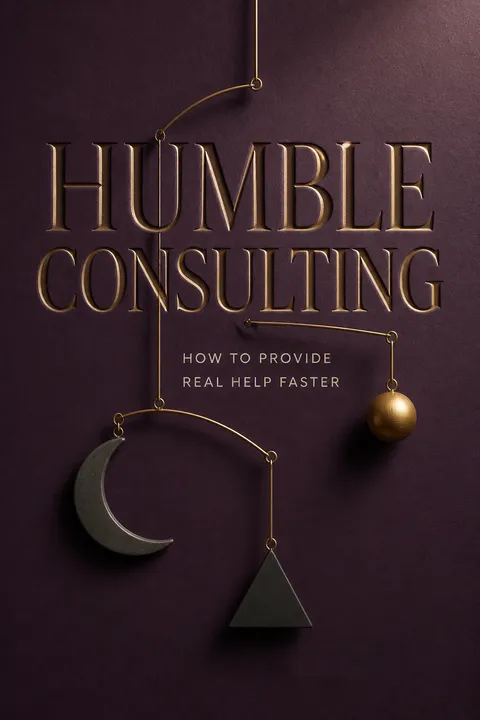
What's "Humble Consulting: How to Provide Real Help Faster" about?
- Overview: "Humble Consulting" by Edgar H. Schein explores a new model of consulting that emphasizes building personal, trusting relationships with clients to provide effective and rapid help.
- Core Concept: The book introduces the idea of "Humble Consulting," which involves moving away from traditional, formal consulting methods to a more personalized, empathetic approach.
- Focus on Relationships: Schein argues that real help requires a Level Two relationship, characterized by openness and trust, rather than the professional distance typical of Level One relationships.
- Adaptive Moves: The book emphasizes the importance of adaptive moves—small, strategic actions that help clients address complex, messy problems without needing a complete solution upfront.
Why should I read "Humble Consulting"?
- Practical Insights: The book offers practical insights into how consultants, leaders, and managers can improve their effectiveness by building more personal relationships with clients and colleagues.
- Complex Problem Solving: It provides strategies for dealing with complex, dynamic problems that do not have straightforward solutions, which is increasingly relevant in today's fast-paced world.
- Innovative Approach: Schein's approach challenges conventional consulting practices, making it a valuable read for anyone looking to innovate in their professional interactions.
- Broad Applicability: While focused on consulting, the principles of Humble Consulting can be applied to various helping relationships, including leadership, management, and personal interactions.
What are the key takeaways of "Humble Consulting"?
- Level Two Relationships: Building personal, trusting relationships is crucial for effective consulting and problem-solving.
- Adaptive Moves: Instead of seeking complete solutions, focus on small, strategic actions that can lead to meaningful progress.
- Curiosity and Empathy: A genuine interest in understanding the client's situation and feelings is essential for providing real help.
- Cultural Awareness: Understanding the cultural context of the client is vital for tailoring the consulting approach and ensuring its effectiveness.
How does Edgar H. Schein define "Humble Consulting"?
- Definition: Humble Consulting is a consulting approach that prioritizes building personal, trusting relationships with clients to provide effective help.
- Focus on Personalization: It involves moving beyond professional distance to engage with clients on a more personal level, fostering openness and trust.
- Commitment to Helping: The approach emphasizes a genuine commitment to helping clients, driven by curiosity and empathy.
- Adaptive and Innovative: Humble Consulting encourages adaptive moves and innovative thinking to address complex, messy problems.
What is the significance of "Level Two Relationships" in "Humble Consulting"?
- Trust and Openness: Level Two relationships are characterized by a higher degree of trust and openness, essential for effective problem-solving.
- Beyond Professional Distance: These relationships go beyond the formal, transactional nature of Level One relationships, allowing for more meaningful interactions.
- Personalization: Building Level Two relationships involves personalizing interactions, which helps uncover the real issues and concerns of the client.
- Foundation for Help: Such relationships are the foundation for providing real help, as they enable the consultant to understand and address the client's true needs.
What are "Adaptive Moves" according to "Humble Consulting"?
- Small, Strategic Actions: Adaptive moves are small, strategic actions that help clients make progress on complex problems without needing a complete solution upfront.
- Diagnosis and Intervention: These moves serve as both a diagnostic tool and an intervention, revealing new information and improving the situation.
- Flexibility and Innovation: Adaptive moves require flexibility and innovative thinking, as they are tailored to the specific context and needs of the client.
- Iterative Process: The approach involves an iterative process of making adaptive moves, learning from them, and planning the next steps.
How does "Humble Consulting" address complex, messy problems?
- Understanding Complexity: The book acknowledges that many organizational problems are complex and messy, requiring a different approach than traditional consulting.
- Focus on Relationships: Building personal, trusting relationships helps uncover the real issues and enables more effective problem-solving.
- Adaptive Moves: Instead of seeking complete solutions, the book advocates for adaptive moves that provide immediate help and reveal new insights.
- Dialogue and Collaboration: Encourages dialogue and collaboration with clients to jointly explore and address the complexities of the problem.
What role does "Curiosity" play in "Humble Consulting"?
- Driver of Engagement: Curiosity is a key driver of engagement, helping consultants understand the client's situation and build a trusting relationship.
- Openness to Learning: It involves being open to learning about the client's context, challenges, and feelings, which is essential for providing real help.
- Empathy and Understanding: Curiosity fosters empathy and understanding, allowing consultants to connect with clients on a deeper level.
- Foundation for Innovation: By being curious, consultants can identify innovative solutions and adaptive moves that address the client's needs.
How does "Humble Consulting" differ from traditional consulting models?
- Personalization vs. Professional Distance: Humble Consulting emphasizes personalization and building Level Two relationships, unlike traditional models that maintain professional distance.
- Adaptive Moves vs. Complete Solutions: It focuses on adaptive moves and iterative problem-solving rather than seeking complete solutions upfront.
- Curiosity and Empathy: The approach prioritizes curiosity and empathy, contrasting with traditional models that often emphasize expertise and authority.
- Cultural Awareness: Humble Consulting highlights the importance of understanding the client's cultural context, which is often overlooked in conventional consulting.
What are some best quotes from "Humble Consulting" and what do they mean?
- "Real help can be fast, but it requires an open, trusting relationship with the client." This quote emphasizes the importance of building trust to provide effective and timely help.
- "The essence of Humble Consulting is to get past the formality of professional distance." It highlights the need to move beyond formal interactions to engage with clients on a personal level.
- "Adaptive moves are small efforts to improve the situation, not grand plans or huge interventions." This quote underscores the value of taking small, strategic actions to address complex problems.
- "Curiosity is the most important driver of the whole process." It stresses the role of curiosity in understanding the client's needs and fostering meaningful interactions.
How can "Humble Consulting" be applied beyond consulting?
- Leadership and Management: Leaders and managers can use Humble Consulting principles to build trust and improve communication with their teams.
- Coaching and Mentoring: Coaches and mentors can apply the approach to better understand and support their clients or mentees.
- Personal Relationships: The principles of personalization, curiosity, and empathy can enhance personal relationships by fostering deeper connections.
- Service Industries: Service providers can improve customer interactions by adopting a more personalized, empathetic approach, similar to Humble Consulting.
What are the broader implications of "Humble Consulting"?
- New Leadership Model: The book suggests a new model of leadership that embraces humility, personalization, and adaptive problem-solving.
- Cultural Shift: It calls for a cultural shift in organizations towards more open, trusting, and empathetic interactions.
- Improved Problem-Solving: By focusing on adaptive moves and dialogue, organizations can improve their ability to address complex, dynamic challenges.
- Universal Application: The principles of Humble Consulting can be applied across various fields and contexts, promoting more effective and meaningful interactions.
About the Author
Other books by Edgar H. Schein
Download PDF
Download EPUB
.epub digital book format is ideal for reading ebooks on phones, tablets, and e-readers.








