

Key Takeaways
Treat DNA as a responsive system, not a script for your life.
Genes need a context. Identical twins Ladan and Laleh shared the same DNA and grew up together, yet differed in temperament, interests, and habits. Their story challenges the idea that genes alone dictate who a person becomes. Spector proposes epigenetics: chemical signals around DNA that help regulate whether genes are active, without changing the DNA sequence itself. One example is methylation, the attachment of chemical groups that can reduce a gene's activity.
The setting matters. In plants, fleas, and mice, environmental conditions can change gene activity and sometimes preserve those changes through cell divisions or generations. A mouse's diet, for instance, altered the coat colour and health of genetically similar offspring. These findings make biology look less like a fixed blueprint and more like a system that responds to its surroundings.
What's valuable here is the shift from asking which gene causes a trait to asking how cells regulate genes in context. That fits developmental biology, where the same genome supports many cell types because genes are used differently across tissues. It also resists genetic fatalism without pretending that DNA is irrelevant. The caution is that epigenetic change within an organism is not the same as reliably inheriting acquired traits across generations. The book's animal examples support biological plausibility, while human transgenerational claims require more evidence than the metaphor of genes being switched on or off can provide.
Read heritability as population math, never as personal destiny.
A group statistic, not a forecast. Heritability estimates how much of the variation in a trait, within a particular population and setting, is associated with genetic differences. It does not tell an individual what fraction of their trait is genetic. Spector explains the logic by comparing identical twins, who share almost all their genes, with fraternal twins, who share about half on average. Greater similarity among identical pairs suggests genetic influence.
Influence is not inevitability. In the book's examples, rheumatoid arthritis is described as 60 to 70 percent heritable, yet 85 percent of identical twin sisters with the disease did not both develop it. Likewise, dozens of obesity-associated genes explained only a small share of weight differences. A high estimate can coexist with substantial uncertainty about who will develop a condition.
Heritability is often misread because a percentage sounds like a personal diagnosis. It is better understood as a description of variation under current conditions: if environments change, the estimate can change too. The measure is useful for deciding whether genetic differences matter to a population, but it cannot distinguish a biological pathway from every social or developmental influence that travels alongside genes. Twin studies also depend on assumptions about how similarly twins experience their environments. Their results are informative, not a licence to treat complex traits as fixed or to rank individuals by genetic potential.
Ask why identical twins diverge before calling a trait genetic.
Shared lives are not identical. The book's central puzzle is not just why twins resemble one another, but why they differ despite nearly matching genes and often similar homes. In one study, ten-year-old identical twins in the same classrooms agreed only moderately about their daily experiences. A twin who felt more positively treated by teachers and peers later did better in some subjects. Small differences in attention, interpretation, or response can accumulate into different paths.
Environments are filtered. Genes can influence which activities people seek, how they react to the same event, and how others respond to them. A stressful event may affect one twin more than the other, even when both are present. This means that “the environment” is not a single dose delivered equally to everyone. Individual biology helps shape the experience, and experience can in turn alter biology.
This account anticipates a useful idea from developmental science: people are not passive recipients of environments. They select, evoke, and interpret social conditions in ways partly related to their temperaments. That makes the nature-versus-nurture split too simple. It also complicates causal research, since a correlation between parenting and a child's behavior may reflect reciprocal influence rather than a one-way parental effect. The idea should not be used to blame children for adversity. Differences in response explain variation, but they do not make harmful conditions harmless or remove society's responsibility to reduce exposure to them.
Build skill through practice, while noticing who can sustain it.
Practice changes the performer. The book questions the search for a single “talent gene.” Early studies linked variants in genes such as ACE and ACTN3 to athletic performance, but larger follow-up studies did not find reliable predictive power. Kenyan distance runners offered a different explanation for elite results: many grew up at altitude and ran long distances to school, accumulating extensive training from childhood.
Effort has biology too. Mozart and golfer Tiger Woods both had intensive training from a young age, while London's taxi drivers developed enlarged regions of the hippocampus after learning thousands of routes. Yet equal practice does not produce equal outcomes. The book cites twin research showing inherited influences on sports participation and fitness response, as well as the role of motivation in persisting with difficult training. Practice matters, but access, aptitude, and willingness to continue shape who gets enough of it.
The strongest version of the practice argument is not that innate differences are imaginary, but that performance emerges from interacting capacities, training, motivation, and opportunity. Brain changes among taxi drivers make that interaction tangible: expertise is embodied, not merely accumulated as abstract knowledge. Still, celebrated success stories create survivorship bias. The public sees the Woodses and Mozarts, not all the children who practised intensely without reaching elite levels. A fair account of talent therefore asks both what training can do and who receives the resources, health, coaching, and social support that make sustained training possible.
Parent with care, not panic: one household is not one experience.
Ordinary parenting is not destiny. A meta-analysis discussed in the book estimated that shared family environment explained only a small portion of differences in behavior. The NEAD study followed different kinds of siblings and found that links between parenting and adolescent behavior were often entangled with genetic influences. Identical twins can also respond differently to the same classroom or parental treatment.
Neglect is different. Children raised in severely deprived Romanian institutions often faced lasting problems with attention and attachment, although some recovered substantially after adoption and better care. This does not mean parents are irrelevant. The distinction is between claiming that every routine or parenting style determines a child's personality and recognizing that emotional security, protection, and early stimulation matter. The book also describes nurse-visiting programs that improved outcomes for high-risk families, though exactly which parts of the support produced the benefits remained uncertain.
This is a useful corrective to a parenting culture that can turn every imperfect choice into a lifelong threat. It also guards against the opposite mistake: interpreting modest average effects as proof that care does not matter. Severe deprivation differs from normal variation in routines, and averages can hide especially vulnerable children. Intervention programs may work through several routes at once, including material support, reduced parental stress, and better responsiveness to a particular child. The most practical stance is neither parental omnipotence nor parental helplessness: provide safety and connection, then resist the fantasy that one technique can engineer a child.
Take ancestral exposures seriously, but treat human inheritance claims cautiously.
History can leave biological traces. The Dutch Famine Birth Cohort followed people whose mothers experienced severe food shortages during pregnancy in 1944 and found later differences in health, including greater risks of obesity and metabolic disease in some groups. The book also describes records from Överkalix, Sweden, where food availability during grandparents' childhood was associated with health outcomes in grandchildren. Such findings suggest that conditions before conception or during development may matter beyond the exposed individual.
Soft inheritance is the proposal. Spector uses this term for the possibility that environmentally influenced biological marks can affect descendants without changing DNA sequence. Animal studies offer clearer examples than human studies. Human records are observational, and famine, poverty, family structure, and other factors can be difficult to separate. The evidence invites attention to ancestry and development, but it does not show that every exposure is transmitted or that descendants inherit a specific fate.
The historical cohorts are compelling because they turn population catastrophe into a natural experiment, but they cannot randomly assign famine or isolate every pathway. Epigenetic marks in a person may arise from direct exposure, and demonstrating stable transmission through reproductive cells is a stricter claim. Distinguishing those possibilities matters for both science and public messaging. The broader insight remains important: health is shaped by conditions before a person can make choices, including prenatal nutrition and social hardship. That insight supports better maternal and public health policy without converting family history into inherited blame.
Include gut microbes in the biology of health and behavior.
The body has microbial residents. The book recounts how Barry Marshall challenged the view that stress caused stomach ulcers by showing that Helicobacter pylori, a bacterium living in the stomach, could cause them. Antibiotics transformed ulcer treatment. But the story also raises a broader question: microbes can be harmful in one context and useful in another. The gut contains a large community of organisms whose genes add greatly to the body's biological repertoire.
Microbes may shape metabolism. Experiments described in the book found that gut bacteria from obese mice could help extract more energy from food than bacteria from lean mice. Human studies also linked microbial differences to health, while changes in gut bacteria after gastric bypass were proposed as one contributor to rapid metabolic improvement. Fecal transplants showed promise for certain infections and bowel conditions, but the field was still developing. Antibiotics and dietary changes can alter microbial communities, sometimes with consequences that are hard to predict.
The microbiome expands the unit of analysis from an isolated human genome to a living ecosystem. That perspective helps explain why diet, medication, immunity, and digestion can interact in unexpected ways. It also creates a risk of replacing one oversimplification with another, such as treating a particular bacterial profile as a universal cause of obesity or mood. Microbial communities vary across people and over time, and association alone cannot establish which changes drive disease. The practical lesson is intellectual as much as medical: interventions that alter ecosystems deserve careful testing, especially when they involve broad antibiotics or unproven supplements.
Treat belief and desire as predispositions, not single-gene identities.
No single gene explains a person. Twin studies reviewed in the book estimated a genetic contribution to religious belief and spirituality, while also showing that upbringing and culture strongly shape affiliation and specific doctrines. Adopted twins raised in different faiths could share a tendency toward religious participation while holding very different beliefs. The same distinction appears in sexual orientation: twin studies suggest genetic influence, but identical twins do not always share the same orientation, and claims of one defining “gay gene” proved unreliable.
Labels oversimplify. The book argues that traits such as belief, humor, and sexual behavior arise from many influences, including biological predispositions, social worlds, and personal experience. It also shows how quickly cultural practices can spread without being genetically programmed. These examples matter because claims about the genetic basis of identity carry social consequences. A statistical influence on a trait is not evidence that an individual is predictable, or that a group is biologically uniform.
This section's central distinction is between a predisposition and the content a person builds around it. A biological tendency toward social belonging, for example, cannot specify which community or doctrine someone will adopt. Likewise, measurement choices matter: self-reported identity, attraction, and behavior are related but not interchangeable. Research on sensitive traits should therefore avoid presenting group averages as individual explanations. The book is strongest when it uses twin differences to unsettle simple labels. Its numerical estimates should be read as historical population findings, not as universal values across cultures or as a basis for judging any person's identity.
Use DNA scores to refine choices, not announce your future.
Risk is not a verdict. When Spector compared two consumer genetic tests, their disease predictions often disagreed. One estimated his lifetime diabetes risk at 15 percent, while a higher-risk result moved it to 19 percent. That is a four-point absolute increase, not a certainty of disease. The tests also identified a rare Canavan disease variant for which he was a carrier, a different kind of result with implications if a partner carried the same variant.
Prediction depends on the condition. Rare single-gene disorders can sometimes be predicted with much greater precision than common diseases, which involve many genes and environmental influences. Genetic testing already had practical uses in the book, including helping guide certain cancer treatments and medication doses. For common disease, however, small genetic effects often add little predictive value. A useful result is one that changes a sensible decision, not one that turns probability into a fixed identity.
The four-point risk shift illustrates why absolute risk is more informative than dramatic relative-risk headlines. Genetic information can support prevention or treatment when the result is sufficiently accurate and actionable, but it can also create anxiety without changing care. Interpretation depends on the population used to build the prediction, the quality of the evidence, and the person's broader health context. A sound testing culture pairs results with clear counselling: what is known, what remains uncertain, and which actions follow. Access to a genome is not the same as access to a reliable forecast.
Protect individuality: shared genes never produce shared biographies.
Cloning does not copy a life. Dolly the sheep was created by reprogramming an adult cell, but the process required hundreds of attempts and raised questions about development and aging. A cloned cat also differed visibly from its genetic source because the activity of one X chromosome varies between cells, influencing coat colour. These examples show that matching DNA sequences do not guarantee matching bodies, much less matching personalities.
Identity is built over time. Identical twins share far more genetic material than most relatives, yet they develop distinct memories, relationships, and interpretations of events. The book argues that these histories help form a sense of self. Its closing warning is against using genetic forecasts to sort people into fixed categories. Biology constrains and enables, but a person's development remains a process involving cells, experiences, and chance.
The distinction between genetic sameness and personal sameness has ethical force. A clone would begin with a genome resembling someone else's, not with that person's memories, relationships, or historical moment. This also clarifies why genetic privacy and prediction are social questions, not merely technical ones: institutions may treat a probability as a label even when biology does not justify that certainty. Dolly's story is evocative, though one animal's health cannot settle the general effects of cloning. The durable point is broader: identity is not stored in DNA as a complete, ready-made biography.
Analysis
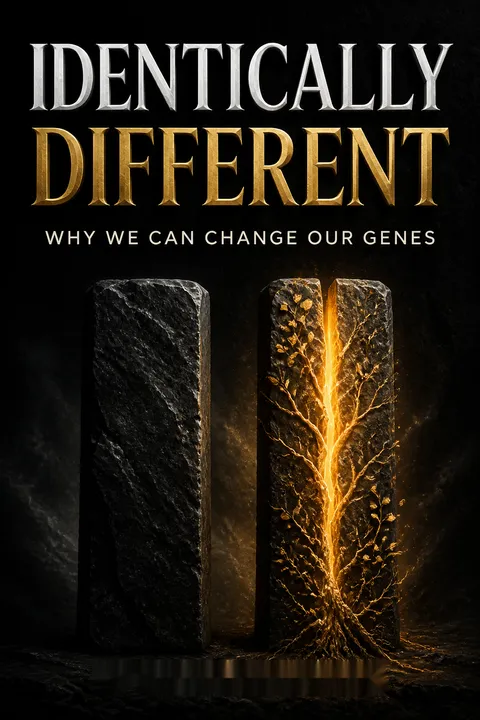
Identically Different is a science book built around a productive contradiction: genes matter enormously, yet identical genes do not make identical people. Its narrative engine is the twin, a natural comparison that lets Spector move from familiar cases of resemblance to the harder puzzle of divergence. The book's most valuable contribution is not simply promoting epigenetics. It is insisting that inherited DNA, gene regulation, development, behavior, and social context operate together, so that the old nature-versus-nurture contest asks the wrong question.
The argument is strongest when it separates genetic influence from genetic prediction. Twin studies can show that genetic differences contribute to variation in a population, while the discordant pairs demonstrate that genes do not settle outcomes. The distinction is especially useful for readers encountering headlines about a gene for talent, obesity, belief, or behavior. Heritability is not a personal percentage, and a genetic association is not a forecast. The book's weakness is that its 2012 account sometimes moves quickly from animal mechanisms and human correlations to claims of inherited epigenetic effects. A molecular mechanism can make a hypothesis plausible without proving that it explains a human outcome across generations. The book's own evidence varies widely in strength: experimental animal work, long-running cohorts, twin comparisons, and anecdotal histories are not interchangeable forms of proof. Some claims about environmental chemicals, personality, and disease are best treated as questions the research raised, not settled conclusions.
The book also gives readers a humane alternative to fatalism. A genetic predisposition can help explain vulnerability without excusing harm or defining identity. Conversely, emphasizing plasticity must not imply that people can simply choose their way out of poverty, illness, or trauma. The most responsible synthesis is probabilistic: biology shapes the range of possible responses, environments influence which responses emerge, and uncertainty remains substantial. That framework supports curiosity and prevention while resisting both genetic determinism and the promise that every outcome can be engineered.
Review Summary
Identically Different receives mixed reviews, with an average rating of 3.77/5. Readers appreciate Spector's exploration of epigenetics and twin studies, finding the content fascinating and thought-provoking. Many praise the accessible writing style and interesting case studies. However, some criticize outdated social ideas, lack of depth in certain areas, and repetitive conclusions. The book is recommended for those interested in genetics and epigenetics, though scientific background may enhance the reading experience. Overall, readers find the book informative but with room for improvement in organization and depth.
People Also Read




Glossary
Epigenetics
Regulation around DNAEpigenetics refers to chemical and structural processes that affect how genes are used without changing the underlying DNA sequence. Examples discussed in the book include DNA methylation and histone modification. These processes help cells with the same genome develop different functions and can preserve patterns of gene activity through cell divisions. Whether particular acquired marks pass reliably between human generations is a separate, more difficult question.
Heritability
Genetic share of variationHeritability estimates how much of the observed variation in a trait within a particular population and environment is associated with genetic differences. It is a population-level statistic, not the percentage of an individual's trait caused by genes. Estimates can differ between populations and across time if genetic or environmental conditions differ.
Methylation
A gene activity markMethylation is the attachment of small chemical groups to DNA, often at cytosine bases. In many cases, methylation reduces the activity of a gene, though its effects depend on where it occurs and the biological context. The book presents methylation as one important epigenetic mechanism that can regulate gene expression without altering DNA sequence.
Soft inheritance
Possible inherited acquired effectsSoft inheritance is the book's term for the possibility that environmental experiences alter gene regulation and that some resulting effects can influence descendants without changing the DNA sequence. Animal studies provide examples of such effects. In humans, evidence from famine and historical cohorts is suggestive, but separating inherited biological marks from direct exposure and social conditions is challenging.
Imprinting
Parent-specific gene silencingImprinting is an epigenetic process in which the activity of a gene depends on whether it was inherited from the mother or father. In an imprinted gene, one parental copy may be silenced while the other remains active. The book discusses imprinting in fetal development and in the regulation of genes involved in traits such as growth and metabolism.
Plasticity genes
Genes linked to sensitivityPlasticity genes is the proposed label for genetic variants associated with unusually strong responses to environmental conditions. Under this idea, the same individuals who fare poorly in harmful settings may benefit especially in supportive ones, while others respond less to either. The concept reframes some variants as sensitivity to context rather than simple vulnerability.
Metagenome
Combined microbial gene poolA metagenome is the collective genetic material of the microorganisms living in a community, such as the bacteria in the human gut. Sequencing a metagenome can identify microbial genes without first growing every organism in a laboratory. The book uses the term to emphasize that people carry a large microbial gene pool alongside their own human genome.
Enterotypes
Broad gut microbe profilesEnterotypes are broad groupings of gut microbial communities based on which bacterial types are most prominent. The book describes research proposing several such profiles and notes that they were not simply determined by race or birthplace. The category is a way to compare microbial patterns, not a complete description of an individual's health or digestive function.
NEAD study
Sibling environment researchThe Non-shared Environment in Adolescent Development study followed different kinds of sibling pairs, including identical twins, fraternal twins, half-siblings, and step-siblings. Researchers interviewed young people, parents, and peers over time to examine family influences on development. The book cites the study as evidence that parenting effects are difficult to separate from genetic similarities and individual responses.
Minnesota Twin Study
Twins raised apart researchThe Minnesota Twin Study refers to research on twins, including some separated and raised in different families, used to investigate the relative contributions of genetic and environmental factors. The book draws on its findings about similarities in behavior, personality, and belief. Its value lies in the comparisons it enables, while its conclusions still depend on study design and how traits are measured.
FAQ
What's Identically Different: Why You Can Change Your Genes about?
- Exploration of Genetics and Environment: The book examines how genetics and environmental factors interact to shape human behavior, health, and personality.
- Focus on Epigenetics: Tim Spector introduces epigenetics, explaining how environmental factors can switch genes on or off, affecting their expression.
- Real-Life Examples: Through case studies, including identical twins raised apart, the book illustrates how different environments can lead to significant differences in behavior and health outcomes.
Why should I read Identically Different by Tim Spector?
- Challenging Conventional Wisdom: The book encourages readers to rethink the deterministic view of genetics, offering a nuanced understanding of how our lives are shaped.
- Insightful Research: Spector draws on extensive research, including twin studies and epigenetic findings, making the content scientifically rigorous and accessible.
- Practical Implications: It offers practical advice on how understanding genetics and epigenetics can empower individuals to make healthier lifestyle choices.
What are the key takeaways of Identically Different?
- Genes Are Not Destiny: While genes play a significant role, they do not determine our fate; environmental influences and personal choices can modify gene expression.
- Importance of Epigenetics: The book highlights how experiences can lead to changes in gene expression that can be passed down to future generations.
- Individual Variability: Even identical twins can exhibit vastly different traits due to their unique experiences and environments.
What are the best quotes from Identically Different and what do they mean?
- “If our genes and environment are the same, how can there be any room for differences between us?”: This quote prompts readers to consider how individuality arises despite genetic similarities.
- “Armed with this new science, we may even have to rewrite some of the Darwinian principles that have dominated scientific thinking for so long.”: It reflects the book's challenge to traditional evolutionary theories.
- “You can change your genes, your destiny and that of your children and grandchildren.”: This statement emphasizes the influence of epigenetics on future generations.
How does Identically Different explain the concept of epigenetics?
- Definition of Epigenetics: Epigenetics involves changes in gene expression without altering the DNA sequence, influenced by environmental factors.
- Mechanisms of Action: Processes like DNA methylation and histone modification can activate or silence genes, showing how the environment affects gene function.
- Long-term Effects: Epigenetic changes can be stable and passed down through generations, affecting not just the individual but also their offspring.
How do lifestyle choices affect our genes according to Identically Different?
- Physical Activity's Role: Regular physical activity can mitigate genetic predispositions to health issues by influencing gene expression.
- Dietary Influences: Specific diets can affect gene expression, particularly in relation to weight management and metabolic health.
- Stress and Mental Health: Managing stress through mindfulness or therapy can lead to positive changes in gene expression and health outcomes.
What role do twin studies play in Identically Different?
- Understanding Genetic Influence: Twin studies help disentangle the effects of genetics and environment by comparing identical twins raised apart.
- Insights into Health Conditions: They explore the heritability of conditions like obesity and mental health disorders, revealing the balance of genetic and environmental influences.
- Epigenetic Variability: Even identical twins can exhibit differences due to epigenetic changes, highlighting the complexity of gene-environment interactions.
How does Identically Different address the nature versus nurture debate?
- Complex Interactions: The book argues that both genetics and environment play significant roles in shaping who we are, emphasizing their complex interactions.
- Twin Studies as Evidence: Spector uses twin studies to illustrate how identical twins raised apart can exhibit significant differences, highlighting environmental influence.
- Revising Traditional Views: The author advocates for a more integrated understanding of how both nature and nurture contribute to human behavior and health.
What is the gene myth discussed in Identically Different?
- Fixed Genetic Determinism: The gene myth is the belief that genes are fixed and solely determine traits and behaviors, which Spector argues is overly simplistic.
- Epigenetic Influence: Environmental factors can modify gene expression, leading to changes that can be inherited, challenging the notion of fixed genetic traits.
- Real-World Examples: Case studies, such as identical twins raised in different environments, demonstrate significant differences despite identical genetic backgrounds.
How does Identically Different redefine our understanding of genes?
- Genes as Dynamic: The book posits that genes are not static but can be influenced by environmental factors, leading to changes in expression and function.
- Focus on Individuality: Individual experiences and choices can significantly alter genetic expression, leading to diverse outcomes even among genetically identical individuals.
- Implications for Health and Behavior: Understanding the dynamic nature of genes can empower individuals to make informed choices that positively impact their health and well-being.
What are the future implications of genetic research discussed in Identically Different?
- Personalized Medicine: Advances in genetic research and epigenetics could lead to more personalized healthcare approaches tailored to an individual's genetic makeup and lifestyle.
- Preventive Strategies: Understanding gene-environment interplay can inform preventive strategies for health conditions, mitigating genetic risks through lifestyle changes.
- Ethical Considerations: As genetic testing becomes more common, ethical considerations regarding privacy, discrimination, and genetic modification will become increasingly important.
How does Identically Different explain the concept of the happiness gene?
- Genetic Influence on Happiness: Certain genetic variants can influence levels of happiness, but happiness is also shaped by environmental factors and personal experiences.
- Mindsets Matter: A growth mindset can lead to greater happiness, indicating that happiness is not solely a genetic trait.
- Complex Interplay: While genetics may predispose individuals to certain emotional responses, the environment and personal choices play a crucial role in shaping overall happiness.
About the Author
Other books by Tim Spector
Download PDF
Download EPUB
.epub digital book format is ideal for reading ebooks on phones, tablets, and e-readers.








