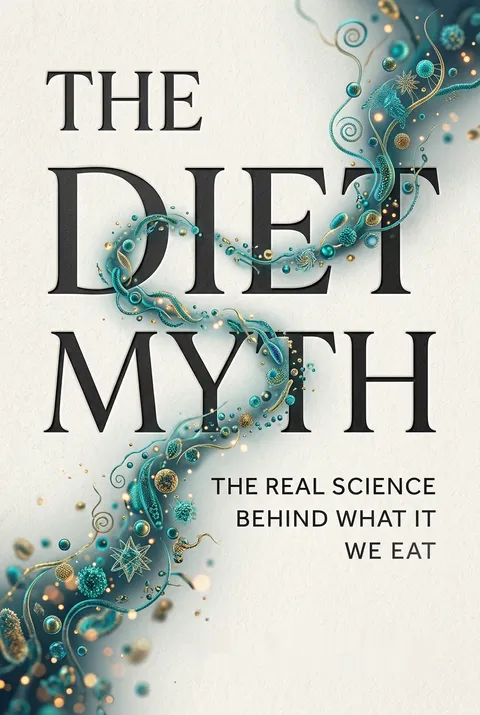


Key Takeaways
Personalize your diet: the same meal can produce different bodies.
A scare opened the inquiry. While ski-touring in the Alps, Tim Spector began seeing double and later discovered he had high blood pressure. The episode prompted him to examine how food might affect health, but the evidence he found resisted simple rules.
Bodies process food differently. The microbiome is the community of microbes living in the gut and elsewhere in the body. Twin studies cited in the book suggest genes account for a substantial share of differences in body weight, while identical twins can still diverge. Spector argues that microbes add another layer, helping explain why people respond differently to the same food. Dietary advice, then, is a starting point for personal observation, not a guaranteed forecast.
What's striking is the move from a single health scare to a population-level question: why do people respond differently to the same inputs? That is a useful shift away from moral judgments about appetite and willpower. In biology, variation is often the signal, not noise to be averaged away. Still, a plausible microbial explanation is not automatically a practical prescription. A person’s microbiome changes with diet and circumstance, and broad microbial categories rarely tell someone exactly what to eat. The strongest application is modest: notice individual responses while keeping conclusions provisional.
Use calorie counts as rough clues, not a full model of weight.
Calories describe energy. The book does not dispute the basic physics of energy balance. It questions whether a food label’s calorie number accurately predicts how a particular body absorbs, uses, or stores that energy. Label calculations rely on averages and can miss differences caused by cooking, digestion, fiber, and the person eating the food.
Bodies compensate. In a controlled Quebec study, identical twins were overfed by about 1,000 calories daily for 100 days. The twins gained similar amounts to each other, but weight gain varied widely between pairs, from roughly 5.5 to 13 kilograms. Exercise is valuable for health, yet the body can partly offset its energy cost by changing appetite, metabolism, or everyday movement. Calories remain useful accounting, but they do not explain why intake and expenditure differ.
The distinction between an accounting identity and a useful explanation matters. Energy balance describes what must happen to stored energy, but it does not tell a person why hunger rises, why activity falls, or why two people respond differently. The same distinction appears in economics: a budget constraint is real, but it does not explain behavior by itself. The caution cuts both ways, however. Imperfect calorie estimates do not make energy irrelevant. They make precise promises based on calorie arithmetic less credible, especially when individual physiology and food composition are ignored.
Feed microbial diversity with many kinds of plants, not one magic superfood.
Variety feeds variety. Prebiotics are food components, usually fibers, that nourish microbes in the colon. Bacteria ferment some of these materials into short-chain fatty acids, which can affect gut and immune function. Useful sources include onions, garlic, leeks, beans, artichokes, nuts, whole grains, and many fruits and vegetables.
Aim for breadth. Spector’s practical suggestion is to eat around 10 to 20 different foods that support microbes each week, rather than relying on a fashionable single ingredient. The book describes ancestral diets as far more varied than many modern diets, which often depend on a few processed staples. Fermented foods such as traditional yogurt and cheese can also deliver microbes, but commercial probiotic products have not shown consistent benefits for every healthy person.
The garden metaphor captures an ecological principle: a diverse habitat may be more resilient than one dominated by a few species. Dietary variety also has a practical advantage because it makes nutritional adequacy less dependent on any one supposedly perfect food. But microbial diversity is not a universal scorecard. Different communities can be healthy in different diets, and studies do not yet establish that maximizing a diversity number directly improves every outcome. The sensible goal is variety among minimally processed foods, not obsessive tracking of a microbiome or a weekly plant quota.
Choose a Mediterranean pattern, not a low-fat crusade against every fat.
Patterns beat nutrient labels. The Mediterranean diet described here centers on vegetables, legumes, fruit, whole grains, nuts, fish, and olive oil, with less red and processed meat. In the Spanish PREDIMED trial, about 7,500 people at high cardiovascular risk were assigned to a Mediterranean-style diet supplemented with extra-virgin olive oil or nuts, or to a low-fat diet. The trial ended after about four and a half years, when the Mediterranean groups showed roughly 30 percent fewer major cardiovascular events.
Context matters. Spector also challenges the blanket suspicion of saturated fat, noting evidence that cheese and yogurt do not behave like butter or processed cheese. These findings do not mean that every high-fat food is beneficial. They support judging foods within an overall dietary pattern rather than condemning a nutrient in isolation.
The trial’s important contribution is that it tested a way of eating, not a lone nutrient. That makes its result more relevant to real meals, where foods arrive in combinations. It also limits what can be concluded: the study cannot identify olive oil, nuts, or any other single ingredient as the sole cause of benefit. The book’s interest in traditional cheese and yogurt adds a microbial hypothesis, but that explanation is less firmly established than the broader pattern evidence. A dietary pattern is a sturdier guide than a villain-and-hero list of nutrients.
Avoid industrial food chemistry, especially trans fats and liquid sugar.
Processing changes the stakes. Artificial trans fats were created to make vegetable oils more stable and shelf-friendly, then promoted as healthier replacements for butter and lard. The book describes evidence linking even modest trans-fat consumption to harmful blood-lipid changes and increased heart risk. These manufactured fats are a clearer target than natural fat as a whole.
Liquid sugar hides easily. Spector recounts realizing that his supposedly healthy breakfast of cereal, soy milk, orange juice, and low-fat yogurt contained the equivalent of many teaspoons of sugar. Juice lacks much of the fiber present in whole fruit, while sweetened drinks deliver sugar quickly. In a ten-day fast-food experiment with his son, detectable microbial species fell sharply within days. That small experiment cannot establish general effects, but it illustrates how quickly a repetitive processed diet can alter gut ecology.
This distinction helps prevent a common policy error: replacing one nutrient with another without considering the food system that delivers it. The history of trans fats is a warning about treating an industrial substitute as healthier simply because it sounds modern or plant-based. The fast-food experiment is vivid, but its one-person design makes it illustrative rather than decisive. The broader case against frequent sugary drinks and highly processed foods rests on multiple lines of evidence, while dramatic claims about a specific meal instantly transforming everyone’s microbiome deserve more restraint.
Expect weight loss to trigger biological resistance, not prove weak willpower.
The body pushes back. Spector’s twin studies found no weight difference between a small group of identical women who had dieted repeatedly and their twins who had not. In a separate group of younger twins, the dieting twin was slightly heavier by age 25. The results do not prove that dieting always causes weight gain, but they challenge the assumption that repeated failure reflects laziness.
Short-term success is not the whole story. Restricting food can lower weight at first, while the body responds by reducing energy use and increasing pressure to regain lost fat. High-protein diets may work faster for some people in the short term, but long-term results are less certain. The book favors sustainable changes in food quality, variety, and routine over rigid bans that are hard to maintain.
This account replaces a character judgment with a physiological model, which can make weight management more humane and more realistic. It also encourages a better question: which changes can be sustained in a person’s actual life? Still, the twin comparisons described are small, and biological adaptation does not make outcomes fixed. Social conditions, food access, medical care, and support can shape what is feasible. The insight is not that effort is pointless, but that effort works better when plans account for the body’s responses instead of treating them as personal failure.
Treat meal timing as personal, not a fixed three-meal rule.
Breakfast is not compulsory. Spector questions the claim that everyone must eat breakfast to control weight. He notes that brief controlled studies of skipping breakfast did not show the expected increase in weight or total calorie intake. People’s preferred eating schedules also vary, partly with cultural habits and biological rhythms.
Fasting evidence has limits. The popular 5:2 approach restricts calories on two days each week while allowing usual eating on the others. Short-term fasting may alter gut microbes and metabolism, but much of the proposed microbial benefit comes from animal research or early human evidence. The practical lesson is not that fasting suits everyone. It is that meal schedules need not be treated as medical laws, and any pattern should be judged by whether it is safe, workable, and nutritionally adequate.
Meal timing is a reminder that health advice can confuse custom with necessity. A routine that suits one person may be awkward for another, and the book’s challenge to breakfast orthodoxy makes room for individual schedules. Yet flexible timing should not be mistaken for proof that fasting is a longevity treatment. Short studies can test immediate changes but rarely settle long-term benefits or risks. The most defensible point is narrow: there is no reason to force a meal solely because a slogan says the day must begin with one.
Protect early-life microbes without confusing hygiene with sterility.
The first community matters. A newborn’s microbes are shaped by birth, feeding, and early surroundings. The book reports that C-section birth changes the initial microbial exposure, while antibiotics can remove many bacteria along with the infection being treated. Studies cited associate these changes with later differences in allergies and weight, though much of the human evidence is observational.
Use antibiotics carefully. Antibiotics can be lifesaving, but they do not treat viral colds, and unnecessary use can disrupt microbial communities and promote drug resistance. This is not a case for refusing prescribed treatment. Spector’s broader argument is for avoiding casual use, especially in early childhood, and for recognizing that ordinary contact with people, animals, and the outdoors is not the same as dangerous contamination.
The ecological framing makes an important distinction between reducing genuine infection risks and trying to sterilize everyday life. It also places antibiotic decisions in a wider social context, since resistance and agricultural use affect more than an individual patient. The evidence connecting birth mode or early antibiotics to later disease is suggestive, not proof that these exposures determine a child’s fate. Necessary C-sections and antibiotics remain essential care. The useful principle is stewardship: preserve medical tools and microbial communities where possible, without turning cautious hygiene into fear of ordinary life.
Treat diet headlines as hypotheses, not medical instructions.
Study design changes the claim. Nutrition advice often rests on observational studies, which can show that two things occur together but cannot reliably show that one caused the other. Spector points to UK fruit-and-vegetable guidance based on a large survey: the reported relative benefit sounded dramatic, while the absolute difference in deaths was about 0.3 percent. A larger analysis found no clear added benefit beyond five portions daily.
Supplements need testing too. Randomized trials reviewed in the book found no general disease-prevention benefit from most vitamin supplements, with some antioxidant supplements linked to harm. That does not apply to treating a confirmed deficiency or following individualized medical advice. The broader rule is to ask whether a claim comes from a controlled trial, an association, an animal study, or a sales pitch before changing a diet or buying a product.
The book is strongest when it teaches readers to examine the evidence behind a confident recommendation, not merely to swap one food rule for another. Absolute risk is particularly useful: it translates a relative statistic into the difference a person might actually experience. At the same time, uncertainty is not evidence that all advice is arbitrary. A repeated pattern across well-designed studies can still justify action, even when every mechanism is not known. Skepticism works best as disciplined appraisal, not as blanket distrust of clinicians or nutrition research.
Analysis
The Diet Myth is a science-led challenge to the idea that food can be reduced to calories and nutrient categories, told through Spector’s health scare, research career, and self-experiments. Its central move is ecological: humans eat within living systems that include genes, microbes, immune responses, food production, and social habits. This makes the book more than a rebuttal of low-fat or low-carb diets. It argues that the same meal can have different consequences in different bodies, and that dietary diversity may support a more resilient microbial community.
The book’s most durable practical message is also its least dependent on speculative mechanism: favor varied, minimally processed foods, especially plants and fiber-rich ingredients; be wary of sugary drinks and industrial trans fats; and do not confuse exercise’s health benefits with reliable weight loss. Its case against one-size-fits-all diets is strengthened by twin comparisons and overfeeding studies, which show meaningful variation under similar conditions. Its account of dieting also usefully replaces shame with biological adaptation.
The microbiome gives the narrative a compelling explanatory lens, but sometimes the lens becomes a causal answer before human evidence can fully support it. Animal experiments, short interventions, observational associations, and individual anecdotes illuminate possibilities, yet they do not all carry the same evidential weight. Microbial diversity is an intriguing marker, not a complete definition of health or a ready-made prescription. Likewise, evidence that people respond differently does not prove that commercial microbiome tests can currently specify an ideal diet.
The book is therefore best read as a corrective to nutritional certainty, not as a new biological certainty. Its strongest advice survives even if particular microbial explanations change: eat a broader range of real foods, avoid making one nutrient the villain, and assess health claims by the quality and scale of the evidence behind them.
Review Summary
The Diet Myth receives mostly positive reviews for its evidence-based approach to nutrition and microbiome research. Readers appreciate Spector's balanced perspective on various diets and his emphasis on gut health. Many find the book informative and eye-opening, praising its scientific rigor and readability. Some criticize the lack of concrete dietary recommendations, while others find the focus on microbes narrow. Overall, reviewers value the book's debunking of diet myths and its promotion of dietary diversity for optimal health.
People Also Read





Glossary
microbiome
community of resident microbesThe community of microbes living in a particular environment, such as the human gut. In this book, the term includes the many bacterial species and other microscopic organisms that interact with food, digestion, immunity, and the body. The community differs between people and can change with diet, medication, and surroundings.
prebiotic
food for beneficial microbesA food component that resists digestion in the upper gut and can nourish microbes in the colon. Many prebiotics are fibers found in foods such as onions, garlic, leeks, artichokes, beans, and some grains. They can support microbial growth and fermentation, although the effects of a particular prebiotic may vary between people.
probiotic
live microbes with potential benefitsA live microorganism provided in food or as a supplement with the intention of benefiting the person who consumes it. Yogurt and other fermented foods can contain such organisms, as can commercial probiotic products. The book stresses that evidence differs by strain and condition, and that benefits found in one group do not establish a benefit for everyone.
PREDIMED study
Spanish Mediterranean diet trialA Spanish randomized study involving people at elevated risk of cardiovascular disease. Participants received advice to follow a Mediterranean-style diet, with groups also supplied extra-virgin olive oil or nuts, or received low-fat diet advice. The trial reported fewer major cardiovascular events in the Mediterranean diet groups, supporting a dietary pattern rather than a single isolated nutrient.
drifty gene hypothesis
theory of variable fat limitsA hypothesis that natural selection once constrained excessive body fat because heavier individuals were more vulnerable to predators. As those pressures weakened, genetic control of the upper limit of body fat may have relaxed and drifted differently across individuals. The hypothesis offers an alternative to the idea that famine survival selected universally efficient fat-storage genes.
TMAO
microbe-linked meat metaboliteTrimethylamine N-oxide, a compound that can form after gut microbes process nutrients such as L-carnitine and choline found in animal foods. The book describes studies linking higher TMAO levels with cardiovascular risk and experiments suggesting microbes are involved in its production. The proposed pathway is biologically interesting, but it is not a complete explanation of heart disease.
Treg cell
immune response regulatorA type of regulatory T cell involved in controlling immune activity. In the book’s account, these cells communicate with gut microbes and help keep immune responses from becoming excessive. They are part of the proposed connection between microbial communities, inflammation, and the body’s tolerance of food and other exposures.
FODMAP diet
restricted fermentable carbohydratesA dietary approach that reduces certain short-chain carbohydrates that can be poorly absorbed and fermented in the gut. It is used by some people with irritable bowel symptoms to reduce bloating or discomfort. The book notes that restriction can also remove sources of fiber and plant compounds, so the diet may narrow food variety if followed without thoughtful reintroduction.
FAQ
What's The Diet Myth about?
- Exploration of Diet Myths: The Diet Myth by Tim Spector examines common misconceptions about diet and nutrition, challenging the simplistic view of calories in versus calories out.
- Role of Microbes: The book highlights the significant role of gut microbes in our health, emphasizing the importance of a diverse microbiome in preventing obesity and other health issues.
- Personalized Nutrition: Spector advocates for a personalized approach to nutrition, recognizing that individual genetic and microbial differences affect dietary responses.
Why should I read The Diet Myth?
- Scientific Insights: The book provides evidence-based insights into how diet affects health, drawing on Spector's expertise in genetics and microbiology.
- Debunking Common Beliefs: Spector challenges widely accepted dietary beliefs, encouraging readers to question popular diet trends and make informed choices.
- Practical Advice: Readers will find actionable guidance on improving their diets by focusing on whole foods and increasing dietary diversity.
What are the key takeaways of The Diet Myth?
- Microbial Diversity is Key: A diverse diet supports a healthy microbiome, which is crucial for overall health and preventing diseases.
- Not All Calories are Equal: The source of calories matters more than the quantity, as different foods affect the body in various ways.
- Skepticism Towards Diet Fads: Spector encourages critical thinking about popular diet trends and promotes a balanced diet with healthy fats, proteins, and carbohydrates.
How does The Diet Myth address the role of microbes in our diet?
- Microbes Influence Digestion: Gut microbes play a crucial role in digesting food and extracting nutrients, breaking down complex carbohydrates and producing essential vitamins.
- Microbial Imbalance and Health: An imbalance in gut microbes can lead to health issues like obesity and diabetes, highlighting the importance of a balanced microbiome.
- Personalized Nutrition: Understanding our unique microbial composition can lead to more personalized dietary recommendations, improving individual health outcomes.
What dietary changes does Tim Spector recommend in The Diet Myth?
- Emphasize Whole Foods: Spector advocates for a diet rich in whole, unprocessed foods, including fruits, vegetables, and healthy fats, to support a diverse microbiome.
- Limit Processed Foods: Reducing processed foods high in sugar and unhealthy fats is advised to improve gut health and prevent obesity.
- Incorporate Fermented Foods: Consuming fermented foods like yogurt and sauerkraut can introduce beneficial microbes into the gut, enhancing microbial diversity.
How does The Diet Myth challenge traditional views on fats?
- Fats are Not the Enemy: Spector argues that not all fats are harmful, emphasizing the benefits of healthy fats found in olive oil and nuts.
- Saturated Fats Reconsidered: The book challenges the misconception that all saturated fats are bad, citing evidence of populations thriving on high-fat diets.
- Focus on Food Quality: The quality of fats consumed is more important than the quantity, advocating for a balanced intake of healthy fats.
What is the significance of the "French Paradox" discussed in The Diet Myth?
- Healthy Diet Despite Fat Intake: The French Paradox illustrates that dietary patterns matter more than individual components, as the French have lower heart disease rates despite high saturated fat consumption.
- Cultural Eating Habits: Spector highlights the role of cultural practices, like enjoying meals with family, in promoting healthier eating habits.
- Microbial Influence: The diversity of the French diet, including fermented foods, may support a healthier microbiome, contributing to lower heart disease rates.
How does The Diet Myth explain the obesity epidemic?
- Complex Causes of Obesity: Obesity is influenced by genetics, environment, and gut microbes, challenging simplistic explanations of overeating.
- Impact of Processed Foods: The rise of processed foods high in sugar and unhealthy fats has contributed to the obesity epidemic by disrupting gut health.
- Role of Microbes: Certain gut microbes can promote fat storage and inflammation, complicating the issue of obesity and highlighting the need for microbial understanding.
What does Tim Spector say about the future of dietary recommendations in The Diet Myth?
- Need for Personalized Nutrition: Spector advocates for personalized dietary recommendations based on individual microbiomes and genetic factors for more effective changes.
- Questioning Conventional Guidelines: The book calls for reevaluating current dietary guidelines, which may not be based on the latest scientific evidence.
- Focus on Diversity and Quality: Emphasizing dietary diversity and food quality over strict calorie counting could improve public health outcomes.
How does the microbiome affect our health according to The Diet Myth?
- Microbial Diversity: A diverse microbiome is linked to better health outcomes, including lower rates of obesity and allergies.
- Gut-Brain Connection: Gut health influences mental well-being, affecting mood and cognitive function, underscoring the importance of a healthy microbiome.
- Impact of Diet on Microbes: Dietary choices directly affect gut microbiota composition, with whole foods promoting beneficial microbes and processed foods leading to dysbiosis.
What is the relationship between sugar and obesity as described in The Diet Myth?
- Genetic Susceptibility: Some individuals are genetically predisposed to obesity when consuming high-sugar diets, highlighting the role of genetics in dietary responses.
- Empty Calories: Sugar provides empty calories that do not contribute to satiety, leading to overeating and weight gain.
- Industry Influence: The food industry's resistance to sugar regulations has contributed to rising obesity rates, emphasizing the need for policy changes.
How does The Diet Myth suggest we can improve our gut health?
- Eat a Diverse Diet: Consuming a wide variety of foods supports a healthy microbiome, with a goal of at least ten to twenty different food types weekly.
- Incorporate Prebiotics: Including prebiotic-rich foods like artichokes and garlic nourishes beneficial gut bacteria, acting as fertilizers for microbes.
- Limit Processed Foods: Reducing processed foods and added sugars is crucial for maintaining gut health and preventing microbial imbalances.
About the Author
Other books by Tim Spector

Download PDF
Download EPUB
.epub digital book format is ideal for reading ebooks on phones, tablets, and e-readers.








