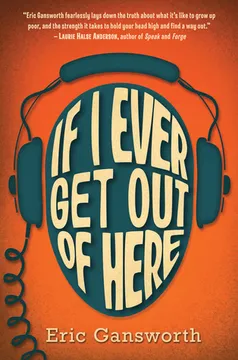


Plot Summary
The Braid Comes Off
In August 1975, Lewis Blake, a Tuscarora seventh-grader, asks his cousin Carson to cut off the braid he has grown for five years. He hopes a shorter haircut will make the white students in his advanced class less likely to mark him as an outsider.
The cut goes badly, and Lewis's mother finishes the job with clippers, warning him against changing himself to please white people. Her warning lands in a complicated home: years earlier, she had discouraged his Tuscarora language skills as little use beyond school displays.
Lewis remembers being isolated in sixth grade after bungling attempts to make friends, while his family explains that some white children are raised to fear the reservation. He starts the new year wanting acceptance, but already knows the rules are uneven.
Lewis's haircut is a practical experiment in passing, not a rejection of Tuscarora identity. He changes what is visible because the school has made his difference costly, while his mother recognizes that accommodation can become self-erasure. Her own earlier dismissal of his language complicates her warning: she resists white judgment but has also absorbed the pressure to value skills by their usefulness in a white world. The scene establishes Lewis's central bind through concrete choices. He wants recognition as an individual, yet the world keeps treating his body and address as a complete explanation of him.
A Friend From Guam
On the first day of seventh grade, Lewis notices George Haddonfield, a new student whose Air Force family has recently moved from Guam. When classmates warn George away from Lewis and another girl, George decides to judge people for himself.
He and Lewis discover a shared love of Beatles records and novelty stickers, and George invites Lewis to visit his home. Lewis hesitates because he has never brought a school friend into his impoverished house, but George's direct interest gives him a first reason to look forward to class.
George also explains that military children learn to make friends quickly because orders can move their families without warning. His mobility feels alien to Lewis, whose reservation home has always seemed permanent.
The friendship begins with a small act of independent judgment: George declines to inherit the school’s social map. His military upbringing has taught him that delay can mean losing the chance to connect, while Lewis has learned to treat invitations as risks because they may expose what he lacks. Their shared music gives them a language that precedes their differences, but it does not erase those differences. George can choose to cross boundaries because his family can move again; Lewis experiences place as both belonging and constraint. Their first connection is genuine, yet the conditions around it are unequal.
Pizza Across the Threshold
George's mother brings Lewis to Red-Tail Manor, where a military storekeeper refuses to let him buy anything because he has no base identification. At George's house, Lewis orders locally delivered pizza and teaches the family to try chicken wings, then listens with George and his father, James, to Beatles and Wings records.
James lends him Band on the Run, trusting him with an album George says his father never lends out. On the ride home, James sees how dark and exposed Lewis's house is. Lewis's mother has kept the outside lights off so George will not see their living conditions, and she insists the boy cannot visit. Lewis wants to return the invitation, but shame and his mother's fear keep the door closed.
The visit turns hospitality into a measure of unequal access. Lewis can enter a comfortable military household, learn its habits, and contribute his knowledge of local food, but the exchange cannot yet work in reverse. The BX clerk makes that boundary explicit through identification rules, while Lewis's mother enforces it at home to protect the family from scrutiny. Music briefly loosens the hierarchy: James treats Lewis as a trusted listener rather than a charity case. Yet the borrowed record also sharpens the dilemma. Lewis can accept an object and an invitation more easily than he can reveal the conditions under which he lives.
New Year, Two Orbits
When Carson secretly takes his mother's car, he pressures Lewis into an illegal drive and uses the ride to accuse him of preferring his new white friend. Lewis refuses to let Carson dictate his friendships and gets out at home, giving up their usual New Year custom rather than being manipulated again.
He chooses George's invitation instead. During their overnight visit, George admits he sought Lewis partly because his father grew up among reservation children at a school in Minnesota.
Lewis wonders whether it was a boarding school like the one his own grandparents survived. At dawn, he returns home for the Tuscarora New Year visits, leaving George behind. After the break, George and Stacey arrive at school as a couple, and Lewis feels the new friendship slipping away.
The car ride makes visible the difference between teasing that belongs to a shared community and coercion that demands loyalty. Carson's familiarity does not excuse his control, so Lewis makes a costly choice to step away. Yet his new friendship is not a clean escape: George's family history touches the boarding-school trauma Lewis has inherited, and George's first romance redirects his attention. The planetary image that recurs through the book begins as Lewis's attempt to explain social distance, but here it describes emotional timing too. Lewis has crossed toward George just as George's life begins orbiting someone else.
Bug's Guitar Lessons
As George spends more time with Stacey, Lewis returns to the reservation's familiar loneliness. His uncle Albert nudges him toward Bug Jemison, a local musician who teaches him guitar on a full-sized instrument.
Bug makes Lewis build calluses through daily practice before allowing him to tackle Beatles songs. When Carson appears for a lesson, the boys play Yesterday together, though Carson remains ahead and keeps some of his musical knowledge to himself.
Their playing restores a rhythm to a friendship that has become strained, but Lewis does not abandon school or deliberately lower his grades to rejoin the lower academic sections. Music gives him a private skill that does not depend on George's attention or on classmates recognizing his worth.
The guitar is not a substitute for friendship so much as a practice in agency. Lewis cannot control George's new relationship or Carson's habits, but he can repeat a difficult chord until his fingers answer him. Bug's insistence on the larger instrument resists the assumption that Lewis should begin with a reduced version of the work. Carson's partial companionship is similarly imperfect: he shares a song while retaining his advantage. The scene gives Lewis a source of competence outside school rankings and racial recognition, without pretending that self-sufficiency cures loneliness.
The Stick and the Ticket
At the end of the school year, Evan Reiniger, a boy protected by his father's booster-club influence, strikes Lewis with a branch during a fire drill, then jumps him inside the school. Teachers watch without stopping the pattern, and Evan promises more trouble next year.
George tells Lewis not to provoke him, but soon offers a trip to Toronto to see Paul McCartney and Wings. Rose, whose father sells tickets, changes the arrangement so she, Summer, and Stacey can attend with their families, leaving George without the three seats he had expected.
James Haddonfield searches the sold-out crowd and finds Lewis a single ticket. Lewis experiences the concert among strangers, then joins James in a shared burst of excitement when McCartney performs a Beatles song.
The schoolyard attack exposes how institutional protection follows money: Evan can turn violence into a joke because adults preserve the appearance of order rather than enforce it. George's concert invitation offers Lewis a different kind of inclusion, but the ticket change repeats the social exclusion in a new setting. James's search does not erase the injury or restore the promised group outing; it gives Lewis a place in the event on less favorable terms. The concert matters because Lewis belongs to the crowd without needing to explain himself. Its communal sound briefly grants what the school withholds: participation without permission.
Fireball at Home
At the reservation's annual Picnic, Lewis brings George and James to eat corn soup and fry bread, then watch Fireball, a night game played with a burning ball and flaming goalposts. George and his father are captivated by the speed and lack of formal rules.
Lewis also sees Marie, a former classmate who moved to the city and now seems more at ease without the nickname that followed her at school. James studies the dances and asks about local jewelry, showing more interest than most outsiders.
Later, James notices George's reluctance to choose a gift for Stacey because she resents the time George spends with Lewis. The evening lets Lewis host his friend in his own world, while revealing that their friendship still creates friction elsewhere.
Lewis reverses the usual direction of cultural education: instead of entering George's home as a guest, he becomes guide and host. Fireball is not staged folklore for outsiders. Its shifting teams, brief duration, and crowd movement make it a living community practice, and Lewis explains it on its own terms. The scene also avoids making cultural welcome simple. James's attention is generous, but George's relationship with Stacey is shaped by the same prejudice and social pressure Lewis encounters at school. Hosting creates intimacy, not immunity from the structures surrounding them.
Reiniger's Classroom Reign
In eighth grade, Evan renews his attacks, targeting Lewis between classes and using a music lesson about Native drums to make him a spectacle. When Lewis asks vice principal Doyle for help, Doyle stages a meeting with Evan hidden nearby, then calls the violence a misunderstanding. Lewis leaves school and stays home, arguing that he will not return to be beaten.
He considers taking a baseball bat to Evan, but George catches him before he can act and removes the weapon. Lewis's reservation counselor, Groffini, first minimizes the danger, then returns with news that Evan has been sent to an apprenticeship after attacking another student. Albert gives Lewis his prized lacrosse jacket, and Lewis goes back to school wearing it.
Lewis's absence is a protest against a school that treats his body as less urgent than its reputation and donors. The failed meeting with Evan is especially damaging because the institution reproduces the bully's power under the language of fair procedure. Lewis's plan with the bat shows how prolonged exposure to violence narrows his imagined choices; George's intervention interrupts that narrowing without resolving the danger. Evan's removal comes only after another family's complaint becomes difficult to ignore. Albert's jacket offers solidarity, not protection by magic, and Lewis returns knowing that safety and belonging are not the same.
A Ticket Meant for Lewis
After Lewis returns, George invites him to see Queen in Toronto and gives him a ticket bought without Rose's help. George also gives Lewis the concert recording of Wings Over America, while Lewis gives George a Queen album. At home, Lewis's mother, Albert, and Bug surprise him with a full-sized guitar, bought through savings from his summer work and the family's careful budgeting.
The gift confirms that his lessons have mattered to all three of them. A February snowstorm begins just as George and James drive Lewis toward the store to collect the Queen tickets. They retrieve them, but the blizzard closes the roads and strands the three in a fire hall, where Lewis encounters Evan and his brother.
The gifts gather the book's forms of care into material objects: a ticket, a recording, a guitar assembled through family sacrifice. Lewis's music no longer depends on access to George's collection or Bug's instrument. At the same time, the approaching storm interrupts the planned future before it can be enjoyed. The fire hall becomes a forced meeting place where separate social worlds cannot simply drive away from one another. The sequence shifts the story from chosen visits to shared vulnerability, testing whether the trust built through music can survive a crisis involving violence and public disbelief.
Fire Hall in the Blizzard
At the crowded fire hall, Evan and his brother attack Lewis in a corridor and tear Albert's jacket. Lewis uses the defensive leg move George once taught him, then drives Evan back before relatives separate them.
George finally explains why he has a black eye: after Lewis disappeared from school, George deliberately provoked Evan in front of witnesses so the school could not dismiss the violence as Lewis's word against Evan's. His father challenged the administration, and Evan was removed.
George admits he had also let Stacey's friends recast Lewis as dangerous and had failed to understand the prejudice until it touched him. When Evan's father threatens the boys, James steps between them and takes the confrontation outside, leaving Lewis and George together inside.
This is the novel's moral hinge because Lewis's physical resistance and George's belated understanding arrive together, but neither is treated as an easy cure. Lewis uses a move learned from a friend, turning care into practical knowledge under pressure. George's engineered confrontation forced institutional witnesses into view, yet his explanation also names the earlier harm of standing aside. His recognition is not abstract sympathy: he has seen how quickly people doubt Lewis and how easily they accepted Summer's version of him. James's intervention extends protection without claiming that order has already been restored.
The Door Gives Way
Reservation families organize plows to escape the fire hall, and James drives George and Lewis to Lewis's house before returning through the storm. The road closes behind them, trapping James and George with Lewis's family.
When James pulls open the kitchen door, he finds snow blowing through the damaged roof, a failing stove, and Albert beside the drift. Lewis's lie about his mother being a spiritual healer collapses with the sight of the house.
Over a meal, James explains that his parents first taught at a boarding school before moving to a different government school on a reservation, where he grew up among Native children. The family lets the Haddonfields stay. After the storm, James arranges practical home repairs, including a pump and indoor sink.
The storm removes the protection of distance and makes concealment physically impossible. Lewis's house is not merely shabby scenery; its broken roof, unreliable water, and improvised heat are consequences of poverty and of reservation land rules that limit access to loans. James's presence matters because he recognizes these conditions without turning them into a spectacle, while Lewis's mother must decide whether accepting help means surrendering dignity. His account of his parents' work also complicates the fear of inherited guilt. The history is neither absolution nor accusation; it is an uncertain inheritance that requires honest limits.
Songs Without an Address
After the storm, Lewis discovers the Haddonfields are being transferred to Texas. His mother hosts them for a farewell meal, and she gives James and George Tuscarora beadwork she has secretly made and sold for years. George and Lewis share a real embrace before the family leaves. At school, George leaves Lewis Papa Smurf, the figure that represented his years in Germany.
Months later, a package arrives from Lubbock with a Beatles live album but no letter or return address. Lewis cannot know for certain who sent it, though he suspects George. He listens, then plays Two of Us on his new guitar using the harder chords James taught him. Artie and Albert remain beside him as he carries the friendship into music.
The ending refuses the neat reassurance of continuous correspondence. George's departure repeats the military family's pattern of sudden relocation, while Lewis remains rooted in a place where leaving is rarely available. The beadwork changes the meaning of his mother's earlier discouragement: she has preserved a skill and used it privately, outside the life she once presented to her son. The unsigned album offers memory without proof, allowing Lewis to hear care without demanding certainty. His final music joins knowledge from Bug, Albert, his family, and the Haddonfields, turning influence into something he can keep making himself.
Analysis
The novel's central conflict is not simply whether Lewis can make friends across racial lines. It is whether friendship can survive the unequal conditions that shape what each boy can risk. George may invite Lewis into his home, take him to Toronto, or decide to stand beside him, but Lewis cannot reciprocate those gestures without exposing poverty, family history, and the structural limits of reservation life. That asymmetry produces many of the book's most intimate misunderstandings: Lewis lies to preserve dignity, George mistakes silence for distance, and both boys discover that affection does not automatically confer understanding.
The adults and institutions make those private choices political. The school treats Evan's violence as negotiable while donor influence protects him; Lewis's careful complaint is converted into a procedure designed to discredit him. By contrast, the blizzard suspends ordinary movement and forces people into one another's physical presence. The storm does not create moral clarity by itself. It creates conditions in which the Haddonfields must see the house Lewis has concealed and in which George must explain the decisions he made while Lewis was absent. Recognition follows contact, not good intentions alone.
Music offers a different model of continuity. Lewis's records connect him to Albert, George, Bug, and James, but the songs do not erase their differences or guarantee that relationships last. They give Lewis forms he can carry and remake: the guitar is acquired through family sacrifice, and the final, more difficult chords reflect learning rather than escape. The closing album remains unsigned, so the book resists turning friendship into a tidy promise of permanent contact. Lewis can value what George gave him without knowing exactly what George intended. In this story, belonging is neither a place one simply enters nor a feeling one can demand. It is a practice of attention, mutual risk, and memory, made more meaningful because it cannot repair every injustice or prevent every departure.
Review Summary
If I Ever Get Out of Here receives mostly positive reviews, averaging 3.9 out of 5. Readers praise its authentic portrayal of Native American reservation life, themes of friendship, poverty, and identity, and its vivid 1970s setting enriched by Beatles and Paul McCartney references. The cross-cultural friendship between Lewis and George is widely celebrated as heartfelt and realistic. Some critics note slow pacing and an educational tone, but most agree it fills an important gap in YA literature featuring Native American protagonists.
People Also Read
Characters
Lewis Blake
Tuscarora music seekerLewis is a bright, observant Tuscarora boy who reads social situations closely, often using humor to protect himself before anyone can expose his insecurity. Poverty, isolation, and racial prejudice shape his sense of what other people are allowed to expect from him, but they do not diminish his appetite for music, comics, and new knowledge. He wants to be recognized as Lewis, not reduced to a representative of his nation or his family's circumstances. His careful attention to language, songs, and small acts of kindness makes him a perceptive narrator, though his self-protective wit can also keep friends at a distance.
George Haddonfield
Air-force boy in motionGeorge is the son of a career Air Force officer and a German mother. Having moved between Germany, Guam, and military communities, he adapts quickly and treats friendship as something worth pursuing before circumstances change. His confidence can look like ease, but it is built around a life in which home and friendships are repeatedly temporary. He shares Lewis's love of music and approaches him without the warnings other students follow. George is caring, sometimes impulsive, and capable of misreading the racial pressures surrounding Lewis until he sees their effects more clearly.
Albert
Vietnam veteran uncleAlbert is Lewis's uncle, a Vietnam veteran who lives with the family and shares Lewis's room, music, and daily routines. His thinking can be nonlinear, but his observations often cut through explanations that others accept too easily. A former lacrosse player, he values the jacket his teammates gave him and understands the power of being claimed by a group. He teases Lewis with the same rough humor used throughout the reservation, while quietly noticing when the boy needs advice, practical help, or simply company. His care is expressed more through action than sentiment.
Vera Blake
Protective working motherVera supports her family through housecleaning and other low-paid work, often leaving before Lewis has finished preparing for school. She is fiercely protective of her children and wary of outsiders, especially when poverty makes the family vulnerable to judgment or dependence. Her insistence on self-reliance sometimes shuts Lewis out of experiences he longs to share, yet she is not simply resistant to change: she preserves skills and family traditions privately, on her own terms. The tension between her defenses and her affection reflects the exhausting labor of protecting dignity when economic choices are scarce.
James Haddonfield
Military father, old witnessJames is George's Air Force father, a disciplined officer and devoted Beatles fan whose warmth emerges through hospitality, shared records, and practical attention. He has spent much of his life moving between postings, but his childhood on a Minnesota reservation gave him lasting familiarity with Native communities and their histories. He is neither an all-knowing ally nor a simple authority figure; he carries incomplete knowledge about his own parents and their earlier work. His readiness to listen to Lewis and his respect for family obligations make him a bridge between worlds, without erasing the distance between them.
Carson Mastick
Rez friend with sharp edgesCarson is Lewis's longtime reservation friend and cousin, a clever, provocative boy who enjoys controlling a situation and getting the last laugh. His joking style reflects familiar community banter, but he sometimes uses their history to claim more loyalty than Lewis owes him. Carson is drawn to risk, music, and the excitement of breaking rules, while guarding his own social status carefully. He can offer companionship and shared memories, though his friendship is often tangled with competition and pressure.
Evan Reiniger
Connected school bullyEvan is a physically imposing student from a family with influence in the school district. He uses intimidation and sudden violence to command attention, while adults often treat his behavior as a manageable joke or misunderstanding. His hostility toward Native students is connected to family and community tensions, but the story never presents those pressures as an excuse for the harm he causes. Evan's confidence depends on expecting others to move aside and expecting institutions to protect him.
Stacey Lodinsky
Quietly shifting classmateStacey is a military child and one of Lewis's former classmates from sixth grade. She shares his interest in novelty stickers and becomes close to George after he arrives. Her life has taught her that friendships can be disrupted by family orders, but school status still affects how she treats people. Stacey is neither a simple antagonist nor a passive bystander: she can be kind and welcoming, yet she is susceptible to pressure from more socially powerful classmates.
Artie Critcher
Cautious piano friendArtie is a curly-haired classmate who plays piano and initially keeps Lewis at arm's length after Lewis gives him an insulting nickname. He is cautious about school trouble and alert to the unwritten rules that protect some students more than others. His dry humor and musical interests make him an important part of Lewis and George's school circle, even when he does not always show open loyalty.
Summer Barnes
School's fashion gatekeeperSummer is the vice principal's daughter, socially confident and attentive to clothes, status, and who belongs in her circle. She offers Lewis fashion advice while using the school hierarchy to define who is acceptable company. Her influence extends beyond her own actions because classmates often adopt her judgments. Summer's polished manners can make exclusion sound like ordinary social preference rather than deliberate harm.
Bug Jemison
Blunt guitar mentorBug is a reservation elder and guitarist who teaches Lewis with teasing, practical discipline. He expects the boy to practice through sore fingers and discourages him from taking shortcuts that will weaken his technique. His humor tests Lewis's confidence, but it also welcomes him into a musical tradition and treats him as capable of serious work.
Willy Haddonfield
German-born hostWilly is George's German mother, warm and attentive to hospitality, family rituals, and the cultures she has carried between postings. Her accented English sometimes produces comic misunderstandings, but her care is unmistakable in the way she includes Lewis and remembers what makes guests feel welcome. Like George, she has left a large extended family behind and understands the ache of displacement.
Mr. Groffini
Counselor between systemsGroffini is the guidance counselor assigned to reservation students and has known Lewis since elementary school. He values academic achievement and believes he is helping Lewis move through a system that can close doors quickly. Yet his familiarity with institutional pressures sometimes makes him minimize the unequal treatment Lewis faces. He occupies an uneasy position between advocacy and compliance.
Tami
Cousin with clear eyesTami is Carson's cousin and a reservation peer who recognizes how easily attempts to assimilate can fail to change white classmates' attitudes. She speaks plainly and sees the risks in Carson's concealed friendship with Evan.
Zach
Older brother, comic foilZach is Lewis's older brother, who has moved out and built a more independent life. He teases Lewis relentlessly but also explains the racial assumptions behind the junior high's social divisions. His greater experience outside the home makes him a blunt, sometimes frustrating source of advice.
Marie
Former rez classmateMarie was a kind classmate whom Carson saddled with an insulting nickname when they were younger. After moving to the city, she returns to the reservation for community events. Her presence reminds Lewis that a person's school identity can follow them, even after they have left.
Mrs. Tunny
School clerk with tiesMrs. Tunny is a school secretary who knows the reservation students and has family connections there through her marriage. She understands that school rules do not operate evenly when a powerful family is involved. Her advice to Lewis is pragmatic and protective, though it also reflects how little leverage she believes he has.
Mr. Doyle
Rules-first vice principalDoyle is a vice principal who presents himself as a defender of order but responds more forcefully when a favored teacher is harmed than when Lewis is repeatedly attacked. He relies on procedure selectively, turning a complaint into a confrontation Lewis explicitly feared. His conduct shows how authority can preserve its own comfort while claiming neutrality.
Mr. Barnes
Summer's vice-principal fatherMr. Barnes is the school's vice principal and Summer's father. He is a volunteer firefighter who takes school discipline personally and expects students to follow his instructions. His authority also gives Summer a measure of status among classmates.
Miss Ward
Well-meaning music teacherMiss Ward teaches music with enthusiasm and a sincere love of popular songs, especially the Beatles. Her intentions are often generous, but she can turn Lewis into a classroom example of Native culture without asking what he wants to share. Her class becomes a place where musical curiosity and institutional blind spots sit side by side.
Plot Devices
Beatles and Wings records
Music as shared languageRecords give Lewis and George a way to meet before they know how to discuss poverty, race, or family history. Albums move between houses as gifts and loans, and songs become a private vocabulary for friendship, loneliness, and memory. Lewis also uses music to develop a skill independent of George, learning guitar from Bug and later from James. The changing lineups of the Beatles and Wings echo Lewis's question about whether a person can grow beyond the identity others attach to him while still honoring where he began.
Venus and Mars
Distance made visibleThe planets give Lewis an image for the distance between his reservation life and George's military community. They appear separate in the sky, yet both belong to the same view, making the metaphor more complicated than a simple division between two worlds. Lewis and George share meals, music, and friendship without having equal freedom to travel between homes or choose what their futures will hold. Their attempts to watch the planets together turn an abstract difference into a recurring, physical experience.
Tuscarora customs and treaty
Culture as lived practiceThe novel presents Tuscarora identity through specific practices rather than as a lesson delivered for outsiders. Lewis explains the New Year visits, the cross-border treaty, the reservation's Picnic, and Fireball as parts of ordinary community life. These traditions give him knowledge he can share with George, while also showing how sovereignty and cultural continuity meet daily realities. The practices are not relics or uncomplicated symbols of pride; they are maintained by people negotiating historical loss, economic limits, and the expectations of the surrounding society.
The Haddonfields' mobility
Home as temporary groundMilitary orders shape George's friendships, household, and sense of home. His family can move across continents, live in base housing, and meet new communities, but each relocation breaks attachments and leaves memories behind. Lewis's experience is nearly the opposite: his family is rooted in reservation land, yet poverty and housing restrictions make that home materially insecure. The two forms of instability are not equivalent, but their contrast lets the novel examine how movement can be both privilege and loss, while staying can mean belonging and constraint at once.
Download PDF
Download EPUB
.epub digital book format is ideal for reading ebooks on phones, tablets, and e-readers.








