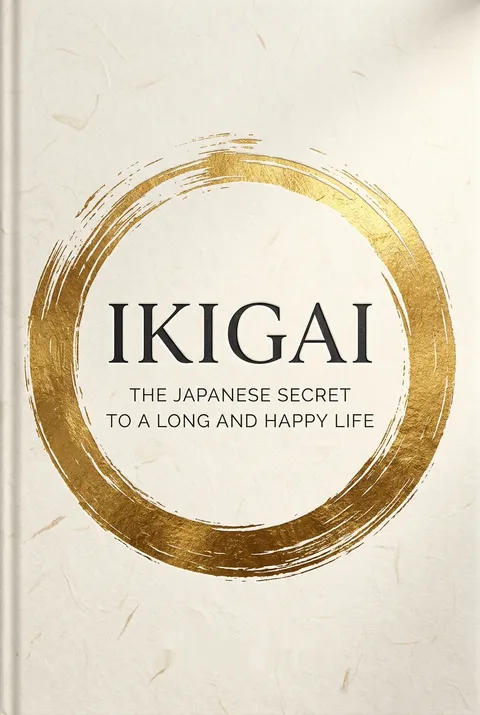


Key Takeaways
Let ikigai give ordinary days a purpose worth returning to
Purpose for the day. Ikigai is a reason for living: the activity, role, or commitment that makes getting up feel worthwhile. It need not be a grand mission. In Ogimi, Okinawa, the authors met older residents who tended gardens, helped neighbors, made things, and kept up local traditions. Their purpose was woven into daily life, not saved for a future milestone.
Purpose and longevity. The book links ikigai with the health and long lives found in Okinawa, where it reports 24.55 people over 100 per 100,000 residents. The authors also emphasize diet, movement, and social connection. Their account suggests a practical starting point: notice which useful, enjoyable activities you would miss if they vanished, then make room for them regularly.
The useful shift is from asking for one perfect life mission to noticing what gives ordinary days shape. That makes purpose less like a career test and more like a pattern of commitments. The longevity story is compelling, but it cannot establish that ikigai itself causes longer life. Community, healthcare, diet, and other conditions travel together, and interviews with people who reached extreme old age are vulnerable to survivorship bias. The idea is strongest as a guide to a more engaged life, not as a promise of extra years.
Turn friendship into a dependable institution, not a once-in-a-crisis favor
Support with a schedule. An Okinawan moai is a close-knit group whose members meet, share interests, and look out for one another. Some groups collect regular contributions, using the money for gatherings or practical help. In Ogimi, the authors found that neighborhood groups acted less like clubs with a single goal and more like extended families. Residents volunteered, celebrated birthdays, played gateball, and helped each other with everyday needs.
Belonging is practiced. The authors describe yuimaaru as a shared spirit of cooperation. It shows up in ordinary gestures: greeting neighbors, helping with a harvest, or giving someone a ride to an appointment. To apply the idea, make contact routine. A recurring meal, walk, or shared activity gives friendship a structure that can survive busy weeks and make asking for help feel natural.
A moai makes social support concrete. Instead of treating friendship as a feeling that should somehow persist, it gives people repeated occasions to notice one another and exchange help. This resembles the broader idea of social infrastructure: relationships depend partly on dependable places and routines, not just individual goodwill. The model also raises a fair question: who gets included, and who does the work of maintaining the group? A supportive community needs reciprocity and room for different needs, rather than turning belonging into an obligation.
Act on meaningful work before insisting your mood must improve
Feelings need not lead. Morita therapy is a Japanese approach that teaches people to acknowledge emotions without trying to force them away, then focus on the action the moment calls for. The book contrasts this with the hope that changing a feeling must come before behavior changes. In Morita’s view, feelings shift on their own; useful action can begin while anxiety or sadness is still present.
Meaning can change pain. Logotherapy, developed by Viktor Frankl, helps people identify what gives their life meaning and what responsibility they can answer. Frankl once helped a grieving doctor see that his sorrow reflected the suffering his wife had been spared. The point is not that grief disappears, but that a person can find a way to bear it. These approaches suggest asking: what small, worthwhile action is available now?
This is a strong corrective to the belief that action must wait for emotional readiness. It also respects emotions rather than treating them as defects to eliminate. In contemporary behavioral approaches, small actions can create evidence that a person is capable of moving despite discomfort, which can loosen avoidance. Still, purpose-focused therapy is not a substitute for clinical care when distress is severe or persistent. Meaning can help someone carry pain, but it should not be used to deny pain or imply that suffering is a personal failure.
Set a clear challenge, then give it your undivided attention
Aim for the stretch. Flow is a state of deep absorption in an activity, when attention is concentrated and time seems to recede. The book says it is most likely when a task is challenging but still within reach: easy work becomes dull, while work far beyond a person’s skill can create anxiety. A craftsperson selecting brush bristles, a chef refining a recipe, or a writer drafting one section can each find this kind of focused engagement.
Make focus easier. Flow is supported by clear next steps, useful feedback, and fewer interruptions. The authors recommend defining a concrete objective, then attending to the work rather than obsessing over the final result. They also warn that multitasking is usually rapid switching between tasks, not truly doing several things at once. Put distractions away, work on one meaningful task, and add a manageable challenge.
Flow offers a practical bridge between purpose and daily behavior: a valued activity becomes easier to sustain when its next step is clear and appropriately demanding. The idea also explains why protecting attention is not merely a productivity trick; it can make work feel more coherent. Yet deep absorption is not the only measure of worthwhile activity. Caregiving, routine maintenance, and collaborative work may matter even when they rarely feel absorbing. Flow is best treated as a valuable experience to cultivate, not a test that every meaningful task must pass.
Eat varied foods, and stop before fullness becomes discomfort
Less, with variety. Hara hachi bu is an Okinawan reminder to stop eating before becoming completely full. The book connects this practice to smaller portions and meals served across several modest plates. It describes a diet rich in vegetables, tofu, sweet potatoes, and grains, with fish several times a week and relatively little sugar and salt. One cited estimate puts Okinawan daily calorie intake at about 1,785, compared with about 2,068 for Japan overall.
Favor patterns over miracles. The authors emphasize eating many kinds of foods, especially vegetables, rather than relying on one supposed longevity ingredient. Green tea and local citrus appear in their account, but the broader pattern is more useful than any single food. A practical version is to serve moderate portions, include varied plant foods, and pause before taking more. The book also cautions that calorie restriction should not become malnutrition.
The memorable part is not a special fruit or tea, but the combination of moderation and variety. Smaller portions can make it easier to notice satiety, while diverse foods reduce reliance on a narrow menu. The book sometimes presents calorie restriction and individual ingredients with more confidence than its evidence warrants, and population comparisons cannot isolate diet from other differences. Its most defensible advice is modest: avoid habitual overconsumption and build meals around a range of nourishing foods. Extreme restriction is neither the point nor a safe shortcut.
Build movement into daily life instead of reserving it for workouts
Keep the body in use. In Ogimi, older residents gardened, walked, visited friends, and joined low-impact games. They were not described as following strenuous gym routines; movement was part of getting through the day. Gardening, in particular, combined practical work with regular activity. The book’s larger point is that a life with frequent movement may be more sustainable than one that alternates long periods of sitting with occasional intense exercise.
Start small and together. Radio taiso, a group warm-up practiced in Japan, takes about five to ten minutes and uses simple movements to wake up the joints. Some residents in a nursing home did modified versions from their wheelchairs. Tai chi and other gentle practices offer additional ways to move with attention to balance and breath. A walk, a stretch, or a shared game can count; consistency matters more than making every session impressive.
The emphasis on movement as part of ordinary life is valuable because it lowers the threshold for participation. A garden, a walk to see a neighbor, or a group warm-up can be easier to maintain than an ambitious exercise plan. Shared activity also joins physical movement to social connection. The book’s examples should not be read as evidence that formal exercise is unnecessary for everyone; needs vary with health, ability, and age. The more transferable lesson is to make movement frequent and adaptable, with professional guidance when a medical condition calls for it.
Give your mind novelty and your nervous system room to settle
Break automatic patterns. The book argues that learning unfamiliar things, playing games, and talking with others provide mental stimulation. A routine can be efficient, but when every task runs on autopilot, there is less reason to adapt. The authors also distinguish manageable challenges from prolonged stress. They describe research linking stress with cellular changes and give mindfulness, breathing, and meditation as ways to notice reactions before being swept into them.
Use challenge selectively. A long-term study discussed in the book found that people who faced modest demands and stayed engaged in work tended to live longer than those who withdrew into an entirely relaxed life. That does not make chronic pressure healthy. A practical balance is to seek learning that stretches existing skills, reduce unnecessary alerts, and protect sleep and quiet periods so recovery can follow effort.
The distinction between useful challenge and relentless strain matters. Novelty can interrupt rigid habits, while attention practices can help people respond rather than react to stress. Together, they frame wellbeing as flexible engagement, not permanent calm. The claims about stress biology are more complicated than a simple story of stress directly aging the body, and the book’s examples cannot establish that every form of stimulation protects cognition. The practical question is therefore not how to stay busy at all costs, but which demands feel meaningful, recoverable, and worth the effort.
Meet imperfection and loss with attention, not futile control
Let change be real. Resilience is the ability to recover from setbacks and return to what matters. The book draws on Buddhist and Stoic ideas: distinguish what can be changed from what cannot, and avoid letting fear about the future consume the present. Wabi-sabi is a Japanese sensibility that finds beauty in things that are imperfect, incomplete, and temporary. Ichi-go ichi-e, a reminder used in settings such as tea ceremonies, treats each encounter as unrepeatable.
Notice what is here. These ideas do not require liking hardship. They invite attention to the people and experiences available now, while accepting that conditions change. A cracked cup can be valued without pretending it is flawless; a gathering can be appreciated without assuming it will happen the same way again. When a setback arrives, identify the part that can be influenced, take that step, and allow the rest to remain uncertain.
Acceptance is easily mistaken for passivity, but this account pairs it with action: respond where possible, and stop spending energy on what cannot be controlled. The focus on impermanence can sharpen appreciation rather than invite despair. It also offers a counterweight to perfectionism, which can make ordinary life feel like a defective draft. A necessary caution is that acceptance should not be demanded from people facing preventable harm. Sometimes the wise response to an imperfect situation is to change it, seek help, or leave.
Make setbacks survivable by diversifying what supports your life
Build more than one support. Antifragility describes a system that can gain from disruption, rather than merely withstand it. The book applies the idea to personal life through redundancy: cultivate more than one source of income, maintain friendships beyond a single relationship, and keep interests outside one role. In Ogimi, many older residents had a main occupation and a garden that provided food or money on the side.
Limit the downside. The authors also recommend taking small risks with potential benefits while protecting what would be disastrous to lose. Another tactic is to remove recurring sources of fragility, such as debt, harmful habits, or relationships that consistently undermine wellbeing. These steps cannot guarantee that a crisis will improve life. They can, however, reduce dependence on one fragile arrangement and leave more options available when circumstances change.
This is a useful way to translate resilience into design. Instead of relying on exceptional toughness during a crisis, a person can build options beforehand. Multiple skills, relationships, and sources of meaning reduce the chance that one loss becomes total collapse. The term also needs careful handling: some shocks are so severe that no amount of personal flexibility turns them into gains, and the language of antifragility can understate unequal resources. The practical aim is not to celebrate adversity, but to make ordinary life less dependent on a single point of failure.
Analysis
Ikigai is most persuasive here not as a secret longevity mechanism, but as a description of a life whose days contain purpose, activity, and belonging. The book’s narrative journey to Ogimi gives that claim human scale: older residents are not presented as passive symbols of age, but as gardeners, friends, volunteers, and celebrants. Their example makes the central argument memorable: a meaningful life is built from repeated participation, not postponed until retirement or a dramatic discovery.
The book’s strength is its synthesis. It connects purpose to Frankl’s logotherapy, emotional acceptance to Morita therapy, concentration to flow, and daily habits to food, movement, and community. These strands reinforce one another. A role can supply motivation to move; a group can make the role reliable; focused work can make effort rewarding. The reader receives a usable orientation rather than a single technique.
Its weakness is evidentiary compression. Okinawan longevity is linked to purpose, diet, climate, social ties, and other conditions, but interviews and comparisons cannot show how much each factor contributes. Stories from centenarians are vivid, yet they cannot distinguish causes from circumstances that happened to accompany survival. The book also gathers claims about foods, stress, and anti-aging that deserve more caution than its practical advice requires.
The strongest reading is therefore neither literal nor dismissive. Treat the longevity narrative as a source of hypotheses and the habits as invitations to experiment, not guarantees. Purpose should be allowed to change across a lifetime; a person need not turn every interest into a vocation. Likewise, calm is not always possible, and community can be supportive or constraining. The enduring insight is more modest and more useful: build a life with regular reasons to participate, people to share it with, and enough flexibility to keep participating when circumstances shift.
Review Summary
Ikigai: The Japanese Secret to a Long and Happy Life received mixed reviews. Many readers found it inspiring and insightful, praising its exploration of Japanese culture and longevity secrets. They appreciated the practical advice on finding purpose and living a fulfilling life. However, some critics felt the book was superficial, repetitive, and lacked depth in explaining the concept of ikigai. Despite these criticisms, many readers found value in the book's emphasis on staying active, eating well, and cultivating strong social connections as keys to a long and happy life.
People Also Read



Glossary
ikigai
reason for livingA Japanese concept combining the ideas of life and worth. In the book, ikigai means a reason to get up in the morning: a purpose, activity, or commitment that gives daily life meaning. It can be modest, practical, and change over time, rather than being one fixed career or grand mission.
moai
mutual-support groupAn informal group of people, often connected by shared interests or a local community, who meet regularly and look out for one another. In Okinawa, a moai can provide friendship, practical assistance, and sometimes financial help. Its value lies both in the support exchanged and in the dependable sense of belonging.
yuimaaru
community cooperationAn Okinawan principle of teamwork and mutual assistance. In the book’s account of Ogimi, yuimaaru is visible in neighbors helping with farming, building, local projects, and everyday needs. It describes a practical recognition that people are connected, rather than a formal organization or a single activity.
Logotherapy
therapy through meaningA therapeutic approach developed by Viktor Frankl that helps people discover meaning and responsibility in their lives. Rather than treating purpose as a reward for feeling well, logotherapy uses a person’s possible contribution, relationship, or task as a reason to keep moving through difficulty. The book presents it as a related idea to ikigai.
Morita therapy
accept feelings, take actionA Japanese therapeutic approach developed by Shoma Morita. It teaches people to acknowledge emotions without trying to control or erase them, and to attend to the useful action required in the present. The book describes its central premise as allowing feelings to change naturally while behavior remains guided by purpose.
flow
deep task absorptionA state of intense involvement in an activity, associated with psychologist Mihaly Csikszentmihalyi. Attention becomes focused, distractions recede, and the activity itself feels rewarding. The book connects flow with tasks that offer clear aims and feedback, challenge a person’s abilities, and remain difficult without becoming overwhelming.
microflow
flow in routine tasksA small experience of absorption created within an ordinary or repetitive task. The book illustrates it through people who add attention, a personal sequence, or a modest challenge to routine work, such as washing dishes or operating an elevator. The idea is that everyday tasks can become more engaging without changing their basic purpose.
hara hachi bu
stop before completely fullAn Okinawan expression used as a reminder to stop eating before feeling completely full. The book presents it as a practical approach to moderation, not a precise measurement of stomach capacity. It is paired with modest portions and varied foods, and should not be interpreted as encouragement to undereat or become malnourished.
wabi-sabi
beauty in imperfectionA Japanese aesthetic sensibility that values the imperfect, incomplete, and temporary. Rather than treating flaws as failures to be hidden, wabi-sabi recognizes that change and imperfection are part of the natural world. In the book, this perspective supports accepting life’s limits while remaining attentive to what is beautiful in the present.
ichi-go ichi-e
each meeting is unrepeatableA Japanese expression reminding people that a particular encounter or moment will not occur in exactly the same way again. Associated with practices such as tea ceremony, it encourages attention to the present gathering rather than distraction by past or future concerns. The book connects it with appreciating the temporary nature of experience.
antifragility
benefiting from disruptionA term used by Nassim Nicholas Taleb for a quality beyond resilience. A resilient system can withstand a shock and remain much the same; an antifragile one can improve under some kinds of disorder. The book applies the concept to personal life through redundancy, limited risks, and removing dependencies or habits that create vulnerability.
FAQ
What's "Ikigai: The Japanese Secret to a Long and Happy Life" about?
- Exploration of Ikigai: The book delves into the Japanese concept of ikigai, which translates to "the happiness of always being busy." It explores how this concept contributes to longevity and happiness, particularly in Okinawa, Japan.
- Longevity and Happiness: It examines the lifestyle and habits of the world's longest-living people, focusing on how ikigai plays a role in their extended lifespans and overall well-being.
- Cultural Insights: The authors provide insights into Japanese culture, including diet, exercise, and community practices, that contribute to a long and fulfilling life.
- Practical Guidance: The book offers practical advice on finding one's own ikigai and incorporating it into daily life to achieve a sense of purpose and satisfaction.
Why should I read "Ikigai: The Japanese Secret to a Long and Happy Life"?
- Discover Purpose: The book helps readers find their own ikigai, or reason for being, which can lead to a more meaningful and satisfying life.
- Learn from Centenarians: It provides valuable lessons from Japanese centenarians, offering insights into habits and mindsets that contribute to longevity.
- Cultural Appreciation: Readers gain a deeper understanding of Japanese culture and its emphasis on community, simplicity, and mindfulness.
- Practical Tips: The book includes actionable advice on diet, exercise, and mental well-being that can be applied to improve one's quality of life.
What are the key takeaways of "Ikigai: The Japanese Secret to a Long and Happy Life"?
- Stay Active: Remaining active and engaged in life is crucial for longevity and happiness, as seen in the lifestyles of Japanese centenarians.
- Find Your Ikigai: Discovering and pursuing your ikigai can provide a sense of purpose and fulfillment, leading to a more satisfying life.
- Community and Connection: Strong social ties and a sense of community are vital for well-being and longevity, as demonstrated by the residents of Okinawa.
- Mindful Living: Embracing simplicity, mindfulness, and gratitude can enhance life satisfaction and contribute to a longer, healthier life.
What is Ikigai according to the book?
- Definition: Ikigai is a Japanese concept that translates to "the happiness of always being busy" and is akin to having a purpose or reason for living.
- Cultural Significance: It is deeply embedded in Japanese culture and is believed to be a key factor in the longevity of the Japanese people, especially in Okinawa.
- Personal Discovery: The book emphasizes that everyone has an ikigai, though it may take time and introspection to discover it.
- Life's Purpose: Finding one's ikigai is associated with living a longer, more fulfilling life, as it provides motivation and direction.
How does "Ikigai: The Japanese Secret to a Long and Happy Life" suggest finding your Ikigai?
- Self-Reflection: The book encourages introspection to identify what you love, what you are good at, what the world needs, and what you can be paid for.
- Experimentation: Trying new activities and exploring different interests can help uncover your ikigai.
- Mindfulness Practices: Engaging in mindfulness and meditation can aid in the process of self-discovery and clarity.
- Community Engagement: Being part of a community and interacting with others can provide insights and support in finding your ikigai.
What role does diet play in the longevity of Okinawans according to the book?
- Variety and Balance: Okinawans consume a wide variety of foods, particularly vegetables, which contribute to their health and longevity.
- Hara Hachi Bu: They practice eating until they are 80% full, which helps in maintaining a healthy weight and reducing stress on the body.
- Low Sugar and Salt: Their diet is low in sugar and salt, which reduces the risk of chronic diseases and promotes longevity.
- Rich in Antioxidants: The diet includes foods high in antioxidants, such as tofu, miso, and green tea, which help combat aging and disease.
What are the best quotes from "Ikigai: The Japanese Secret to a Long and Happy Life" and what do they mean?
- "Only staying active will make you want to live a hundred years." This Japanese proverb emphasizes the importance of staying active and engaged in life to promote longevity.
- "The secret to a long life is not to worry." This quote from an Okinawan centenarian highlights the role of a positive and stress-free mindset in living a long life.
- "Happiness is always determined by your heart." This quote by Mitsuo Aida suggests that true happiness comes from within and is a matter of perspective and attitude.
- "Fall seven times, rise eight." This Japanese proverb underscores the importance of resilience and perseverance in overcoming life's challenges.
How does "Ikigai: The Japanese Secret to a Long and Happy Life" relate to the concept of flow?
- Flow State: The book discusses the concept of flow, a state of complete immersion and enjoyment in an activity, as a key component of ikigai.
- Achieving Flow: It suggests that finding activities that naturally lead to a flow state can help individuals connect with their ikigai.
- Benefits of Flow: Experiencing flow regularly can lead to increased happiness, productivity, and a sense of purpose.
- Practical Application: The book provides strategies for achieving flow, such as focusing on challenging tasks and minimizing distractions.
What is the significance of community in "Ikigai: The Japanese Secret to a Long and Happy Life"?
- Social Connections: The book highlights the importance of strong social ties and community involvement in promoting longevity and well-being.
- Moai Groups: In Okinawa, people form moai groups, which are informal social support networks that provide companionship and assistance.
- Shared Activities: Engaging in communal activities, such as gardening and festivals, fosters a sense of belonging and purpose.
- Emotional Support: Being part of a community offers emotional support and reduces feelings of isolation, contributing to a longer, healthier life.
How does "Ikigai: The Japanese Secret to a Long and Happy Life" address stress management?
- Mindfulness and Meditation: The book advocates for mindfulness practices and meditation to manage stress and maintain mental clarity.
- Positive Outlook: It emphasizes the importance of maintaining a positive attitude and focusing on the present moment to reduce anxiety.
- Resilience Building: Developing resilience through practices like negative visualization and acceptance of impermanence helps in coping with stress.
- Balanced Lifestyle: Encouraging a balanced lifestyle with regular physical activity, social interaction, and relaxation techniques aids in stress management.
What is the role of resilience in "Ikigai: The Japanese Secret to a Long and Happy Life"?
- Definition of Resilience: Resilience is the ability to recover from setbacks and adapt to change, which is crucial for a fulfilling life.
- Cultivating Resilience: The book suggests practices like mindfulness, community support, and maintaining a positive outlook to build resilience.
- Stoicism and Buddhism: It draws parallels between Stoic and Buddhist philosophies in managing emotions and developing resilience.
- Antifragility: The concept of antifragility, or benefiting from adversity, is introduced as a way to grow stronger through challenges.
How does "Ikigai: The Japanese Secret to a Long and Happy Life" incorporate Japanese cultural concepts like wabi-sabi and ichi-go ichi-e?
- Wabi-Sabi: The book explains wabi-sabi as the appreciation of imperfection and transience, encouraging acceptance of life's imperfections.
- Ichi-go Ichi-e: This concept emphasizes the uniqueness of each moment, encouraging mindfulness and presence in daily life.
- Cultural Influence: These concepts reflect the Japanese cultural emphasis on simplicity, mindfulness, and appreciation of the present.
- Application to Ikigai: Embracing wabi-sabi and ichi-go ichi-e can help individuals find beauty and meaning in everyday life, aligning with the pursuit of ikigai.
About the Author
Other books by Héctor García



Download PDF
Download EPUB
.epub digital book format is ideal for reading ebooks on phones, tablets, and e-readers.








