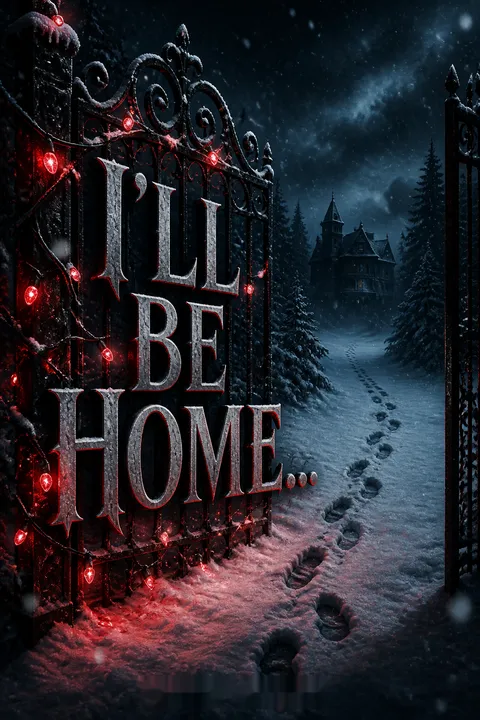


Plot Summary
Prologue
Rayne has spent years building a life under another name, far from the Northland orphanage where she grew up. When her editor sends her back to investigate children who have vanished from that same home, she knows the assignment will drag her toward the worst parts of her past.
She does not want to return, but the missing children matter more than her fear. Northland is waiting, dressed for Christmas and hiding what she once escaped.
The opening makes return a choice shaped by both professional ambition and unresolved obligation. Rayne has constructed a new identity not as a disguise for its own sake, but as protection from a place that taught her no authority could be trusted. The missing children collapse the distance she has tried to establish between past and present. Her decision to go back therefore carries two stakes: she may uncover a public crime, and she may have to confront what survival cost her. Northland’s festive appearance is introduced as a cover that the story will gradually strip away.
The Story Sends Her Home
Rayne Dean has arranged her December leave to escape Christmas, but her editor, Connie, cancels those plans with an urgent assignment. Children are disappearing from Northland’s Yule House, and local authorities are dismissing reports or denying the children existed. Rayne recognizes the town as the place she fled more than a decade earlier, though Connie does not know her real history or that Rachel Dean is an assumed identity.
The story is too consequential to refuse, so she negotiates extra paid leave and heads north. As she drives into the snowbound town, the name Northland strips away the composure she built elsewhere. Her arrival begins as journalism, but her private past is already pulling her into the investigation.
The assignment joins Rayne’s chosen profession to the injury she has tried to make private. Investigative reporting gives her a socially legitimate reason to return, but it also lets her approach danger through a role she controls: she can ask questions, collect evidence, and decide what becomes public. Her assumed identity signals not deceit for personal gain, but a survival strategy built around the belief that being known is unsafe. The missing children unsettle that strategy because they resemble the vulnerable person she once was. The inciting incident is therefore both external and intimate. Rayne returns to Northland not because she has healed completely, but because she has developed skills she can use where she once had none.
Frost Beneath the Headlights
Near town, Rayne’s car strikes a man dressed in dark clothes: Frost Jackson, one of the boys she grew up with. He has a dislocated shoulder, and she insists on taking him to urgent care despite his hostility. There she meets Alfred Buddie, now a doctor and Frost’s friend. Their old familiarity returns unevenly.
Alfie treats Frost, draws Rayne into helping reset the shoulder, then kisses her before she can recover from their reunion. Rayne resists the intimacy because both men once left Northland without her, but the sight of them as adults stirs attraction alongside resentment. She leaves the clinic determined to concentrate on work. The town’s hotels are full, however, and a helpful valet directs her to Ginger’s themed boarding house.
This reunion makes the past physically present before Rayne can decide how much of it she wants to face. Her collision with Frost reverses the rescue dynamic: she is the driver, he is injured, and she chooses responsibility even while he rejects her help. Alfie’s kiss then exposes how little emotional distance she has gained from her first attachments. Her anger is not merely a barrier to romance; it protects a coherent account of what happened when the boys left. The encounter also establishes the men’s adult identities through action. Alfie’s medical skill and Frost’s stubbornness have matured, but their familiar ways of pulling Rayne into their orbit remain intact.
Nick Behind the Open Door
At Ginger’s boarding house, Rayne walks into the wrong room and finds a man with a consenting adult partner. When he turns, she recognizes Nick Klores, the third boy who once promised to return for her. Nick pretends not to know her, and the shock makes Rayne faint.
Frost and Alfie join him beside her bed, revealing that all three men live in Northland and are temporarily staying at the boarding house during renovations. Rayne refuses their demand that she leave town and keeps her investigation secret, claiming she is writing about Northland’s Christmas tourism.
Ginger, the kindly owner, gives her tea and flower-decorated cookies rather than forcing the holiday theme on her. The gesture offers Rayne her first small comfort in a town that feels hostile.
Nick’s false denial sharpens the wound of abandonment: Rayne experiences it as a fresh rejection before she has even learned why he acted that way. The men’s return complicates her self-protective story that they simply forgot her, but their presence does not yet repair the years of silence. Her invented cover story mirrors the identity she adopted after leaving, showing how readily she still defaults to concealment when she feels exposed. Ginger’s small act of attention matters because it does not demand gratitude or disclosure. The flowered cookies recognize Rayne’s dislike of Christmas without asking her to explain it. Care, in this scene, begins not as a grand rescue but as someone noticing what would make a stranger feel less cornered.
Santa’s Sheriff Shoots Tinker
Rayne begins canvassing Northland, counting young workers and studying the town’s festive events for clues about where children might be hidden. Deputy Brick, cheerful and eager to help, gives her a local’s tour and reveals how deeply the Christmas spectacle is woven into civic life. At the sheriff’s office, Rayne recognizes Scut Vynachts, once a deputy during her childhood and now the town’s sheriff.
She later searches the crowded sleigh-ride grounds for Tinker, a repairman she hopes may know what happened to the missing children. In a barn, she sees Vynachts shoot Tinker at close range while dressed as Santa. The sheriff spots her in the crowd, points her out to an accomplice, and warns her not to speak about what she witnessed.
The murder turns Rayne’s investigation from a story about negligent institutions into a direct contest with an active criminal authority. The Christmas performance is not simply decoration; it provides Vynachts with visibility, access to children, and a public persona that makes his violence harder to imagine. Brick’s friendliness shows how ordinary civic rituals can coexist with corruption without every participant understanding the whole system. Rayne’s choice to observe before accusing is a reporter’s instinct, but it is also the caution of someone who knows the sheriff’s office from experience. Tinker’s death removes a potential ally and teaches Rayne that reliable knowledge in Northland can carry a lethal price.
The Snowbound Ambush
After threatening Rayne, Vynachts sends a powerful accomplice after her. Her rental car’s brakes fail, a truck rams it off the road, and the crash leaves her dazed and bleeding. She escapes into the woods, but the attacker catches her and strangles her. Frost arrives with Jolly, his enormous trained dog. Jolly attacks the man, and Frost shoots him to end the threat.
Frost carries Rayne to safety, where Alfie treats her head wound and bruises. The men know Vynachts arranged the attack, but Rayne will not yet explain why the sheriff recognizes her. She also refuses to abandon the assignment. Her injuries and the men’s fierce response make clear that the investigation has become a fight for her survival.
The ambush makes Rayne’s return irreversible. She is no longer a journalist who can leave after filing a story; the people she is investigating have identified her as a threat and tried to kill her. Frost and Jolly’s intervention reveals a capacity for organized violence that sits uneasily beside Rayne’s old memories of them as boys. Her refusal to leave is not simple recklessness. She understands that the danger is connected to children who have even fewer options than she does, and leaving would restore the silence that protects Vynachts. Still, the scene exposes the cost of her self-reliance: she needs others to keep her alive, even as she struggles to accept protection without surrendering control.
A Name on the Warrant
Rayne tells the men that more than fifty children have vanished in eight weeks, including young children whose records appear to have been erased. Before she can explain the full story, deputies arrive at Ginger’s boarding house with a warrant for Rayne Dear.
Nick uses his legal training to challenge the warrant and misdirect them while Rayne packs. He then leads her out in his truck. A pursuing car opens fire, so Nick rams it and deals with the attackers while Rayne stays hidden.
He takes her to the secluded cabin once used by Doc Kane, the local doctor who has disappeared. Earlier, at the clinic, Rayne had encountered her former matron, Mrs. Mechante, and collapsed in panic. The men recognize that her past is tied to the danger now closing in.
This sequence shifts the men from emotionally entangled former friends into an operational unit around Rayne. Nick’s legal fluency protects her from a warrant built on her former name, while his willingness to use force shows how narrow the lawful options have become. The cabin offers temporary safety, but its association with the missing Doc Kane points toward a larger hidden history. Rayne’s reaction to Mechante makes visible what she has kept from the others: the danger is not only about a journalist who witnessed a murder. Her body recognizes the matron before she can explain her fear. The narrative thus treats trauma as information, even when the survivor is not yet ready to translate it into speech.
Grandmother at the Clinic
At Doc Kane’s cabin, Rayne finally tells Frost, Nick, and Alfie what happened after they left. At seventeen, she was sent to work for businessman Olaf Schneemann, who groomed and sexually assaulted her. When she returned to Yule House, Mechante rented her to other men and kept the payments. Vynachts dismissed her report and later beat her when she tried again.
Rayne hid the bonus money she could keep, and Doc Kane eventually found her badly injured and helped her escape under a new identity. The account forces the men to confront how much worse Yule House became after they aged out. They also discover the painful misunderstanding behind their separation: Mechante told them Rayne had run away and withheld their letters and invitations.
Rayne’s testimony revises the group’s shared past without erasing anyone’s pain. The men believed she chose to disappear; she believed they chose to forget her. Mechante engineered both beliefs, turning isolation into a tool of control. The most consequential revelation is not only the abuse, but the system that made reporting it dangerous: the matron profited, the deputy suppressed evidence, and the child was punished for seeking help. Rayne’s account does not ask the men to rescue a helpless version of her. She has already escaped and built a life. By telling them now, she gives them the knowledge needed to understand the present threat and to act with her rather than on her behalf.
Two Girls Reach the Cabin
Nick and Frost bring two girls to the cabin after a vehicle strikes one of them during their escape from Yule House. Alfie stabilizes the badly injured girl, Karol, while Rayne comforts Holly, the teenager who ran with her.
Holly explains that children have been disappearing from the home through a secret rescue effort. The men, Ginger, Doc Kane, and other local allies have been moving children to safety and arranging new identities and medical care.
Rayne understands why the men discouraged her investigation: they were protecting the operation and the children, not hiding their own crimes. She helps Holly prepare for transfer, guards the cabin while the men handle a police inquiry, and sees the work she came to expose also contains a fragile route out.
The rescue turns Rayne’s investigation into a relationship with living witnesses rather than an abstract count of missing children. Holly’s account gives the men’s secrecy a credible motive, but it does not make their decision to exclude Rayne harmless. The story distinguishes protection from paternalism: the network saves children, yet Rayne has a right to understand the danger she has entered. Her care for Holly also reverses the old arrangement in which adults controlled the terms of her survival. She offers the girl practical warmth, food, and a promise of future contact, not a demand that she disclose everything. The rescue network becomes meaningful because it is made of specific people taking concrete risks.
The Sheriff Keeps Everything
Rayne insists that her article needs records strong enough to withstand denial, not only testimony and suspicion. The four of them break into Vynachts’s house while he is away. Behind a concealed bookcase, they find a private office filled with case files, photographs, medical reports, and records documenting abused children.
One file contains Rayne’s own reports and a rape kit from when she was seventeen. Vynachts kept the evidence rather than acting on it. Nick also finds a ledger tracking payments and names, linking the sheriff to Mechante’s operation over many years.
Rayne learns that her early attempts to seek help were documented, even though Vynachts made her believe they had vanished. They remove the archive, giving the investigation proof that can reach beyond Northland.
The hidden office materializes the difference between being disbelieved and being erased. Vynachts did not lack evidence; he collected it, stored it, and used his position to bury it. The archive makes institutional violence legible through paperwork, connecting individual assaults to a durable economy of payments and protection. Rayne’s own file is especially destabilizing because the record confirms both that she sought help and that the authority responsible knew what was happening. The discovery can validate her memory, but it cannot undo the years in which she was forced to doubt herself. By taking the files, the group converts evidence hoarded for leverage into evidence that can support public accountability.
Jingle Bells for Vynachts
When Vynachts returns home, Nick, Frost, and Alfie capture him and bring him to the hidden office. They show him that his files and ledger have been removed, then bind small explosives to his limbs. Rayne chooses to stay rather than let the men shield her from the confrontation. Vynachts recognizes her and tries to intimidate her as he did when she was a teenager.
The old Christmas song tied to his abuse returns to her, so she orders him to sing it and triggers several of the charges herself. Frost activates the remaining explosives, killing the sheriff. The group stages the death as a house fire, leaving Northland with a public explanation that conceals the revenge while preserving the evidence they took.
The scene gives Rayne agency inside a violent act without pretending that violence is the same as justice. Her participation is anchored in a precise sensory memory: Vynachts used a Christmas song while abusing and silencing her. By making him perform the song under her control, she reverses the power relation, though the reversal remains morally complicated. The men do not offer a courtroom resolution because they believe the local system is compromised and immediate danger persists. Their choice of extralegal punishment may satisfy vengeance, but it also risks reproducing the secrecy they oppose. The documents they remove matter for exactly this reason: physical retaliation can stop one perpetrator, while evidence is needed to expose the structure that made him powerful.
The Stable of Bells
After the sheriff’s death, Rayne falls asleep at the cabin and wakes chained in a stable, dressed in the maid’s uniform Schneemann used during her abuse years earlier. He has drugged her and plans to assault her again. This time Rayne refuses to submit: she bites him, injuring him badly enough to break his control.
Jolly reaches the stable and pins Schneemann by the throat while Frost, Nick, and Alfie arrive. Alfie cuts the bell collar from Rayne’s neck; Frost and Nick bind Schneemann. Rayne asks them to make him suffer for what he did to her and other girls, then decides she does not need to watch. The men take Schneemann away on a sleigh pulled by reindeer. His fate remains unknown.
The abduction deliberately echoes Rayne’s first assault, but the repetition does not mean she has returned to her former helplessness. Her body is frightened, her surroundings are staged to reproduce old terror, and still she chooses a response that disrupts Schneemann’s plan. The bite is an immediate act of self-defense, not a cure for trauma. Jolly and the men arrive because the protective network has become real and dependable, yet Rayne makes the crucial decision about what she wants next. Her refusal to witness the punishment is also agency: she can desire retribution without being required to watch it. The scene distinguishes reclaiming power from being forced to perform invulnerability.
A Byline Against Yule House
Rayne writes the article under the byline R. Dear, identifying Yule House as a site of child labor, sexual trafficking, and official complicity. She documents her own history, the children’s disappearances, Doc Kane’s rescue work, and the evidence gathered from Vynachts’s office.
The story appears online and in print a week before Christmas. Federal agents arrive as public attention rises; officials and business figures face arrest or investigation, while Mechante is taken into custody.
Rayne prepares to testify and watches the woman who controlled her childhood lose her authority in public. The article does not promise that every accomplice will be punished, but it breaks the town’s ability to present itself as innocent. Rayne tells the men she loves them, no longer hiding her attachment behind anger.
Publication completes the work Rayne began as a reporter while restoring the name she had abandoned. The byline is not simply a return to her old identity; it is a deliberate decision to attach her testimony to the public record. Her article distinguishes between a corrupt network and the Northlanders who helped children escape, refusing the easy claim that an entire town is uniformly guilty. That nuance gives the reporting moral credibility without softening the accusations. The arrests show that visibility can create pressure where private complaints failed, though the story remains wary about complete justice. Rayne’s declaration of love belongs to this same movement from concealment to chosen exposure. She is no longer alone in telling the truth.
A Christmas Chosen Together
On Christmas morning, Rayne celebrates with Frost, Nick, and Alfie at Doc Kane’s cabin. She accepts their gifts and joins them for a snowmobile ride to Evergreen House, the home they are restoring together. The holiday no longer belongs only to the memories Schneemann and Mechante forced upon her. Rayne can enjoy the men’s teasing, food, and closeness while admitting she is still learning how to feel about Christmas.
The men do not demand that she declare the season healed; they let her set the pace. Their shared home is not finished, and the children they have helped remain central to their plans. Rayne’s first Christmas back in Northland becomes an imperfect beginning, built from affection and choices she can make for herself.
The romantic resolution works through consent and pacing rather than a sudden cure. Rayne does not recover Christmas as a universally joyful tradition; she reclaims particular parts of it through people and rituals she chooses. The unfinished house is an apt image for this future: a place shaped by shared labor, still under construction, and not defined by Yule House’s history. The men’s care is most convincing when it accommodates Rayne’s boundaries instead of treating love as a treatment for trauma. Their relationship offers belonging without requiring her to surrender her career or independence. The emotional movement is modest but substantial: she can stand inside a holiday scene and decide what it means.
Mechante Returns at Christmas
One year later, Rayne is married to the three men and still working as a journalist. Doc Kane’s body has been found at one of Schneemann’s properties, while Schneemann himself remains missing. On Christmas morning, Alfie reveals that Mechante has been released from prison after a terminal cancer diagnosis and may be returning to Northland.
At Yule House, now transformed into a refuge for children, Mechante arrives carrying a gun and points it at Alfie. Rayne drives her snowmobile into the former matron before she can fire. Holly arrives moments later with a warning, sees Mechante dead, and embraces Rayne. The child who once needed protection now recognizes Rayne’s act as the end of a danger that haunted them both.
The epilogue refuses to let legal resolution stand in for emotional safety. Mechante’s release reopens the threat, showing that institutions can temper punishment in ways survivors experience as renewed danger. Rayne’s response is immediate and physical, a stark contrast with the child who once had to plead for adults to act. Yet the scene does not present violence as a general cure; it is an emergency intervention that prevents Mechante from shooting Alfie. Holly’s arrival completes the emotional circle by making the consequences communal. Rayne’s choices now protect the children who came after her, while the former site of abuse has become a home intended to shelter them.
Epilogue
On Christmas Day, one year later, Rayne is married to Frost, Nick, and Alfie, and the four are building a life centered on the children rescued from Yule House. Mechante, released after a terminal diagnosis, arrives armed and threatens Alfie.
Rayne knocks her down with a snowmobile before she can shoot. Holly reaches the refuge just afterward, sees what happened, and embraces Rayne with gratitude. The woman who once escaped Northland alone now stands among people she has protected and people who protect her.
The final reversal is concrete: a place built to confine children has become a refuge, and Rayne is no longer the person waiting for an adult to believe her. Mechante’s return prevents the ending from claiming that arrest or marriage can erase danger. Instead, the scene tests whether Rayne’s new community can respond when the old power reappears. Her intervention protects Alfie, while Holly’s embrace confirms that the act has meaning beyond private revenge. The epilogue closes the book’s central cycle of abandonment by placing Rayne in a network of chosen family and mutual responsibility, even as the unresolved status of Schneemann leaves the larger world imperfectly settled.
Analysis
The novel’s central conflict is over who gets to define what happened. Mechante and Vynachts control institutions, records, and public appearance; their power depends on making children’s testimony seem unreliable and their disappearances unremarkable. Rayne’s reporting counters that system by linking details that were meant to remain isolated: a missing entry, an old medical file, a payment ledger, a witness who remembers. The Christmas setting sharpens the contrast between public benevolence and private exploitation. A town can market itself as a haven of generosity while its most vulnerable children are treated as labor and merchandise.
Rayne’s survival strategy initially depends on distance. She changes her name, invents a family, and builds a career that lets her approach danger as an observer. Returning to Northland collapses the boundary between observer and subject. Her work becomes more credible, not less, when she acknowledges that she was part of the story, but that disclosure is a choice she controls. The narrative distinguishes testimony from helplessness: Rayne can be traumatized, frightened, and supported without losing authority over what she does next.
The romance develops through the same problem of trust. The men’s shared history with Rayne is real, but so is the harm caused by years of silence and mistaken assumptions. Their renewed bond cannot simply restore childhood; it must be renegotiated among adults with different skills, fears, and forms of power. The story’s strongest emotional movement is from protection as unilateral control toward protection as collaboration. Rayne accepts care without surrendering her judgment, while the men learn that love does not authorize them to choose her risks for her.
The book offers no clean equation between justice and healing. Vynachts and Mechante face consequences, but the survivors’ nightmares do not disappear, Schneemann remains unaccounted for, and the investigation cannot guarantee that every accomplice will be punished. What changes is the distribution of responsibility. Rayne no longer carries the past alone, and the children who come after her have a refuge, witnesses, and adults willing to act. Christmas becomes bearable not because the town’s history is redeemed, but because Rayne can make new choices inside it.
Review Summary
I'll Be Home is a polarizing dark holiday romance with a reverse harem twist. Readers praise its steamy scenes, dark themes, and Christmas-themed humor, while others criticize its tonal shifts and pacing issues. The story follows Rayne Dear, a journalist investigating missing children in her Christmas-obsessed hometown, where she reunites with three former lovers. Many readers enjoyed the unique blend of dark elements and festive cheer, but some found the combination jarring. Overall, it's recommended for fans of spicy, unconventional holiday romances who can handle darker content.
People Also Read





Characters
Rayne Dear
The returning investigatorRayne is an investigative journalist who has spent years living as Rachel Dean after escaping Northland. She is observant, professionally ambitious, and practiced at turning fear into action, but her independence is partly built from expecting that help will fail. Her work draws her back to Yule House, where the missing children echo her own childhood. Frost, Nick, and Alfie were her closest companions before they left town, and her affection for them survives alongside anger at what she believes was abandonment. Rayne’s strength is not an absence of vulnerability. It is her growing ability to name what happened, ask for support, and decide for herself what justice, intimacy, and home can mean.
Frost Jackson
The guarded protectorFrost is the youngest of the three men who grew up with Rayne, a physically imposing man whose reserve often arrives as irritation or command. He is deeply protective, skilled in dangerous situations, and more comfortable acting than explaining what he feels. His old attachment to Rayne is complicated by jealousy and by the mistaken belief that she chose to disappear from their lives. Frost’s gruffness conceals a fear of being unwanted, which he often manages by keeping emotional distance. He understands Rayne’s stubbornness as both a strength and a risk, and he has to learn that protecting her does not give him authority over her choices.
Nicholas Klores
The persuasive strategistNick is a lawyer with an easy confidence, a sharp practical mind, and a talent for taking control when circumstances turn dangerous. As a teenager, he was one of Rayne’s first loves and the one who promised he would return for her. He later believes she left without looking back, a misunderstanding that shapes his guarded reunion with her. Nick’s charm can make him seem carefree, but he takes responsibility seriously and tends to treat protection as a promise that must be kept through action. His challenge is to offer safety without turning affection into possession. With Rayne, his playfulness and intensity coexist with a genuine wish to rebuild trust.
Alfred Buddie
The steadfast doctorAlfie, as Rayne knew him growing up, is now a physician whose instinct is to care for people others overlook. Warm, observant, and emotionally direct, he provides medical attention without reducing Rayne to her injuries. He was the oldest of the three boys and left Northland first, believing he could build a future and keep his bond with Rayne intact. When contact fails, he assumes she has moved on rather than understanding how others manipulated their separation. Alfie’s affection is patient and reassuring, but he is also capable of firm action when someone is in danger. He offers Rayne closeness while respecting that healing cannot be imposed.
Mrs. Mechante
The matron behind the maskKnown to the children as Grandmother, Mechante runs Yule House and presents herself as a benevolent guardian. She is disciplined, calculating, and attentive to the image she shows townspeople. Her authority depends on controlling the children’s resources and access to outside help. She understands how a kindly title can disguise exploitation and how institutional respectability can shield cruelty. Mechante is a central source of Rayne’s distrust of adults and official systems.
Scut Vynachts
The compromised sheriffVynachts begins as a deputy in Rayne’s childhood and later becomes Northland’s sheriff. He uses the appearance of law and order to discourage scrutiny, and he is adept at making vulnerable people doubt that their complaints will be believed. His public role in the town’s Christmas celebrations contrasts with his private willingness to intimidate. Vynachts represents the danger of a system in which one official can decide which evidence counts and which victims are ignored.
Olaf Schneemann
The respectable predatorSchneemann is a wealthy businessman whose genial public manner conceals a predatory interest in vulnerable young people. He presents access to comfort and opportunity as generosity, making the power imbalance difficult for a child to recognize. His influence and connections help protect him from ordinary scrutiny. Schneemann embodies the way abuse can arrive through an apparently respectable benefactor rather than an obvious stranger.
Doc Kane
The doctor who intervenesDoc Kane is Northland’s longtime physician and one of the few adults Rayne remembers as genuinely dependable. He notices injuries and patterns that others choose to ignore, and he tries to help children without drawing the attention of those who control the town. His practical compassion shapes Rayne’s belief that a single person can make a difference, even when formal institutions fail. He is also connected to the network surrounding the boys and the clinic.
Holly
The teenage escapeeHolly is a teenager who has spent years moving between care placements before arriving at Yule House. Cautious and perceptive, she acts when an opportunity to escape appears, choosing to run with a younger girl rather than leave her behind. Her fear is understandable, but it does not erase her courage or her ability to protect someone else. Holly’s bond with Rayne grows from their shared understanding of what it means to survive adults’ decisions.
Karol
The injured young escapeeKarol is a fourteen-year-old girl recently transferred into Northland’s care. She is quieter than Holly and is badly hurt while trying to escape. Her presence makes the danger facing the children immediate and bodily, rather than something Rayne can keep at the level of reporting and numbers. Karol’s need for medical care gives Alfie a direct role in the effort to protect the girls.
Ginger Bridges
The welcoming innkeeperGinger owns the Ginger Bridge Boarding House, a home decorated with unapologetic Christmas enthusiasm. Beneath her cheerful manner is a perceptive, practical woman who notices what guests need and offers help without pressing them for explanations. Her hospitality gives Rayne room to settle in, and her local connections make her useful beyond the boarding house. Ginger demonstrates that Northland’s kindness is real even though its public cheer can conceal wrongdoing.
Connie
The demanding editorConnie is Rayne’s editor at The Arigin, a blunt and experienced journalist who trusts her instincts enough to send her into a difficult investigation. He pushes her professionally but also worries about her safety and values her beyond the story she can deliver. Connie understands that reporting can require personal risk, yet he insists on regular contact. His mix of pressure and loyalty gives Rayne a professional relationship that does not depend on her invented family history.
Jolly
The enormous guard dogJolly is Frost’s exceptionally large Dogo Argentino, trained to protect his people and respond to commands. His fierce presence makes him intimidating, but he is also affectionate, food-motivated, and eager to play. Rayne’s changing comfort with him mirrors her gradual trust in Frost’s world. Jolly provides physical protection while also offering uncomplicated companionship during moments when Rayne cannot yet explain what she feels.
East
The discreet medical allyEast is a nurse who helps transport children to safety and provides calm, competent care. He communicates clearly, gives people time to verify who he is, and understands that trust must be earned in a dangerous situation. His practical steadiness complements Alfie’s medical work and shows how the rescue effort depends on ordinary professionals choosing to help.
Candice Kane
The clinic’s steady presenceCandice works at Northland’s clinic and is Doc Kane’s wife. Warm and attentive, she remembers Rayne from childhood and welcomes her back without demanding that she explain the years away. Her role at the clinic gives her a view of the town’s daily needs, while her loyalty to Doc connects her to the people trying to protect children.
Brick
The cheerful deputyBrick is a young Northland deputy who adopts the town’s elf persona during the Christmas season. Friendly and eager to show Rayne around, he knows the town’s routines and introduces her to local landmarks. He is a useful guide whose easy manner contrasts with the sheriff’s menace.
Tinker
The toy repairmanTinker repairs broken and unwanted toys and has a reputation for looking after children who are treated as unwanted themselves. He is one of the adults Rayne hopes might offer reliable information about the home. His quiet trade makes him a natural point of contact for children and townspeople.
Donna
Nick’s adult partnerDonna is an adult sexual partner of Nick’s when Rayne first encounters him at the boarding house. She is confident, direct about her preferences, and unembarrassed by her sexuality. Her brief appearance shocks Rayne and sets the scene for Nick’s awkward reunion with her.
Plot Devices
Rachel Dean’s identity
A name built for escapeRayne has lived for years under the name Rachel Dean, complete with an invented family history and deliberately limited digital presence. The identity lets her work and move through the world without being easily traced to Northland. It also reflects a painful compromise: she can protect herself by hiding, but that protection makes it harder to ask for help or reclaim the story of what happened. When the investigation forces Rayne to use her original name again, the shift becomes part of her decision to attach personal testimony to public reporting.
The Christmas facade
Cheer conceals exploitationNorthland’s Christmas tourism gives the town a polished identity made of lights, decorations, parades, and toy-making traditions. The festive presentation helps disguise the labor performed by children and the officials who suppress reports about them. The contrast is especially sharp because Rayne already associates Christmas with traumatic memories, while the town treats the holiday as a marketable spectacle. As she investigates, familiar holiday rituals become places where violence and evidence surface, forcing her to distinguish genuine kindness from a performance built to protect powerful people.
The missing records
Erasure as a weaponChildren disappear not only from Yule House but from the records that should make their absence visible. Rayne compares reports, dates, and state provisions to prove that children existed before their entries were removed. Vynachts’s hidden files and payment ledger later reveal that records were also collected and concealed for leverage. The device turns paperwork into a battleground: official records can erase victims, but careful reporting can reconnect names, dates, injuries, and payments into evidence. The archive also validates Rayne’s memory of having reported abuse when she was young.
Doc Kane’s refuge network
A route out of NorthlandDoc Kane and a circle of local allies move children through safe locations, provide medical treatment, and arrange transport beyond the reach of Yule House and the sheriff. The network relies on people who can pass unnoticed in ordinary roles, including medical workers, business owners, and helpers around town. Its secrecy protects the children, but it also creates friction with Rayne, who initially mistakes the men’s silence for further abandonment. The network’s success depends on trust, practical coordination, and the willingness of adults to take risks without making themselves the center of the rescue.
Rayne’s investigative article
Evidence turned publicRayne’s article begins as a story about missing children and grows into an account of forced labor, trafficking, official corruption, and the efforts to move children to safety. Her reporting combines personal testimony with records, witness accounts, and material taken from Vynachts’s concealed office. The publication transforms what Northland’s authorities could suppress locally into a public controversy that draws federal attention. The article also forces Rayne to choose how much of her own identity to expose. Publishing under R. Dear lets her reclaim her history while making clear that the children’s experiences are larger than her individual case.
About the Author






Download PDF
Download EPUB
.epub digital book format is ideal for reading ebooks on phones, tablets, and e-readers.








