

Key Takeaways
Read Navarro as a West Wing advocate, not a neutral plague-year historian
An insider’s account. Navarro builds his story from a journal he says he kept during his White House tenure, beginning with the January 2020 signing of the US-China Phase One trade agreement. He presents himself as a persistent China hawk and pandemic alarm bell, often isolated among advisers he portrays as complacent or politically opposed to President Trump.
A political explanation. The book argues that Trump’s pandemic response was undermined by internal resistance, while the 2020 election was stolen through coordinated irregularities. It ends by calling for investigations into China, public-health officials, and the election. These are Navarro’s interpretations, not conclusions established merely by his access to the West Wing.
The memoir’s strongest asset is proximity: it offers a vivid account of how policy is argued, delayed, and pushed through a crowded executive branch. But access is not the same as independence. Navarro is both a participant and a defendant of sorts, defending his own actions and his preferred political outcome. That makes the book valuable as evidence of how one faction understood the crisis, while making corroboration essential for claims about other people’s motives or hidden coordination.
Turn low-probability catastrophes into explicit decisions before consensus hardens
Make risk legible. After opposing advisers resisted a China travel ban, Navarro used a decision model to compare aggressive containment with inaction. His memo argued that if the chance of a severe pandemic exceeded roughly 1 percent, the expected cost of doing nothing justified acting. It cited a potential cost of $3.8 trillion and as many as half a million American deaths in a worst-case scenario.
Change the meeting. Navarro says the memo helped reverse the task force’s opposition. His point is that a decision does not require certainty when the downside is enormous. A clear comparison of probabilities, costs, and consequences can expose when “wait for more information” is itself a risky choice.
The useful move is translating vague dread into a decision rule. Expected-loss thinking is especially helpful when delay is costly and the worst outcome is hard to repair. Yet the arithmetic does not decide the question by itself: estimates depend on assumptions, and interventions have costs too. A sound model makes those assumptions visible rather than disguising judgment as mathematics. The memo’s larger lesson is procedural: put the risk estimate on the record, identify who owns the decision, and state what new evidence would change it.
Fight a pandemic on five fronts, not with one silver bullet
A five-part plan. Navarro calls his response framework the Five-Vector Pandemic Attack Strategy. It treats a pandemic as a connected set of problems, rather than a single vaccine race: develop vaccines, find therapeutics, secure protective equipment, expand medical equipment such as ventilators, and build testing capacity.
Why coordination matters. His February memos pressed officials to act across all five areas while the threat was still developing. A vaccine could take months; protective gear and tests were needed immediately, and treatments could reduce pressure on hospitals. Navarro presents the memos as evidence that the administration was not idle in February, despite the public story he calls a “Lost February.”
The framework’s strength is its refusal to treat one breakthrough as a complete response. Public-health emergencies are coupled systems: scarce tests can hide spread, inadequate protective gear can disable staff, and limited treatment capacity can overwhelm hospitals. A portfolio approach also prevents a single failed intervention from becoming a national failure. The harder lesson is governance. Naming five priorities does not guarantee execution; each needs a responsible owner, measurable targets, and a way to resolve conflict across agencies.
Use industrial capacity as emergency infrastructure, not just an economic asset
Factories can switch roles. Navarro describes pressing companies to expand domestic production of protective equipment and medical devices. He says Honeywell began moving machinery for two N95 mask factories within a day of a call, and that General Motors, after resistance, worked with Ventec to establish a ventilator factory in seventeen days under pressure from the Defense Production Act.
Solve the bottleneck. A separate episode involved moving testing swabs from Italy by military aircraft, then using FedEx planes to distribute them across the United States. These stories support Navarro’s broader argument for domestic capacity, quick procurement, and public-private coordination when normal markets cannot supply urgent needs.
The chapter’s memorable insight is that resilience depends on capabilities that can be redirected, not only on stockpiles. A factory, freight network, or procurement office becomes part of emergency response when ordinary supply chains break. Still, domestic production is not the same as self-sufficiency. Redundancy across suppliers and countries can reduce dependence on any single source. A robust plan would combine local surge capacity with diversified sourcing, transparent contracts, and stockpile rules tied to realistic threat scenarios.
Parallelize vaccine production as insurance, without skipping clinical trials
Spend before certainty. Navarro argues that traditional vaccine development waits for successful trials before investing heavily in mass production. His proposed alternative was to fund several candidates at once and prepare production capacity while clinical testing continued. The government would risk spending money on candidates that failed, but a successful candidate could be manufactured as soon as it cleared review.
A faster pipeline. In a February 2020 memo, Navarro predicted a workable vaccine by October or November and proposed producing up to 150 million doses by year’s end. He presents this parallel investment strategy as a major feature of Operation Warp Speed. The intended acceleration concerned manufacturing and funding, not abandoning clinical trials.
This is the book’s clearest economic argument: government can absorb risks that private firms may avoid when the social cost of delay is vast. Parallel investment reduces the time between evidence of safety and efficacy and large-scale availability. The distinction between manufacturing risk and clinical risk matters. Building capacity early can be prudent; weakening evidence standards cannot. The model also requires fair allocation rules, careful monitoring, and public explanations of uncertainty so speed does not erode confidence.
Treat claims of political vaccine delay as allegations needing proof
A disputed accusation. Navarro argues that Pfizer and an FDA unit delayed authorization until after the November 2020 election. He points to Pfizer’s stated trial timeline, its decision to store some participant samples before testing, and FDA guidance requiring two months of safety data after vaccination. He claims these choices prevented a pre-election announcement and cost lives.
The inference at issue. The book treats timing, political conflict, and company incentives as evidence of deliberate obstruction. But those facts do not, on their own, establish intent or show that the vaccine could safely have been authorized sooner. Navarro’s claim is central to his account of the election year, yet it remains an accusation rather than a demonstrated finding.
The episode illustrates how institutional timing can become politically explosive even when a decision has a plausible scientific rationale. A timeline can prompt scrutiny, but proving deliberate delay requires more than showing that actors had incentives or that a decision had political consequences. The relevant questions are whether the safety threshold was justified, whether it was applied consistently, and whether decision-makers concealed information. Separating those questions makes accountability sharper, not softer.
Treat treatment hypotheses as questions, not verdicts
Navarro’s treatment case. A major portion of the book defends hydroxychloroquine, a long-used medicine, as a possible early outpatient treatment for COVID-19. Navarro and his adviser Steven Hatfill argue that early use could help, while studies of hospitalized patients may miss any benefit because treatment begins late. They accuse regulators and media outlets of dismissing the drug too quickly and of using weak or misleading evidence.
A caution about certainty. The book presents its preferred studies and interprets the regulatory response as politically motivated. That is the author’s case, not proof that hydroxychloroquine prevents or treats COVID-19. The distinction between early and late treatment is a legitimate research question; it does not establish that the drug works.
The book is right to make timing and study design central to the dispute: a medicine tested in one stage of illness may not behave the same way in another. But a large pile of studies is not automatically strong evidence. Randomization, comparison groups, adequate sample sizes, and replication matter more than the number of papers cited. In a crisis, the responsible path is rapid, well-designed testing, clear communication, and willingness to revise a hypothesis when results fail to support it.
Separate China’s pandemic conduct from the still-unproven lab-origin claim
Two kinds of blame. Navarro distinguishes “Speculative Blame,” about whether the virus came from a Wuhan laboratory, from “Indisputable Blame,” which he bases on China’s conduct after the outbreak began. His Five Heinous Acts framework alleges that Chinese authorities hid the danger, withheld the virus genome, destroyed evidence, restricted domestic movement while allowing international travel, and hoarded protective equipment.
A case, not a verdict. Navarro uses these allegations to argue that China helped turn an outbreak into a global crisis, even if the virus did not originate in a lab. The framework shifts the debate from a difficult question of origin to a set of claims about disclosure, travel, and supplies. Each claim still requires evidence and careful assessment.
Separating origin from response is analytically useful because uncertainty about the first does not erase the importance of the second. It also prevents a weak origin claim from carrying the weight of every criticism of China. The categories differ, however: delayed disclosure, evidence destruction, and deliberate intent are not interchangeable allegations. A disciplined investigation should establish what happened, what officials knew, and when they knew it before assigning motive or legal responsibility.
Demand audit trails, but distinguish procedural defects from outcome-changing fraud
The election reports. Navarro says he studied affidavits, court filings, news coverage, and statistical claims, then organized alleged problems in six battleground states into categories including ballot handling, signature checks, observer access, voter eligibility, and counting procedures. He called his first report The Immaculate Deception and a follow-up The Art of the Steal.
The leap he makes. Navarro argues that many small irregularities combined to change the result. He also repeats a statistical claim that Biden’s early leads in four states were extraordinarily unlikely. Neither a procedural flaw nor an improbable-looking pattern alone proves coordinated fraud or shows that enough votes were affected to alter the outcome.
Auditable elections require records, consistent rules, and meaningful observation. Those safeguards deserve scrutiny regardless of which party benefits. The analytical danger is collapsing distinct questions: Was a rule violated? Was the violation intentional? How many ballots were affected? Could the error change the result? Statistical claims are especially sensitive to assumptions about vote patterns and selection effects. A credible audit addresses each question with transparent methods instead of treating suspicion as a substitute for evidence.
A procedural challenge cannot substitute for proof or constitutional authority
The proposed sweep. Navarro describes the Green Bay Sweep, a plan associated with Steve Bannon, to have Vice President Mike Pence delay certification while members of Congress challenged electoral votes state by state. The aim, as Navarro presents it, was to create time for investigations and public debate, not to reverse the result immediately.
The collapse. The January 6 attack on the Capitol interrupted the proceeding. Navarro portrays Pence’s refusal to pause certification as a betrayal and the violence as destructive of Trump’s last chance to contest the election. His framing leaves out a crucial distinction: a political strategy to delay certification is not itself proof of fraud or a source of constitutional power to change state results.
The episode shows how procedural ambiguity can become fuel in a moment of intense distrust. Objections and recounts can be legitimate democratic tools, but their legitimacy depends on evidence, lawful authority, and an agreed process. When a leader’s supporters are told that a result is stolen before the evidence is established, ordinary procedure can be recast as treachery. Institutional trust requires both the right to challenge outcomes and a clear limit on what officials may do in response.
Analysis
The book is most revealing when read as an account of institutional friction, and least reliable when it treats the author’s political interpretation as settled fact. Navarro describes a government in which unclear authority, rivalry among senior aides, and procurement delays complicated the response. His stories about swabs, masks, ventilators, and vaccine manufacturing show why emergency capacity depends on logistics and coordination as much as on expertise. The account also makes a strong case for recording decisions and testing plans against explicit risks.
Its central weakness is evidentiary overreach. The book repeatedly infers hidden motives from political incentives, timing, and disagreement. In particular, a vaccine announcement after Election Day does not establish that Pfizer or the FDA deliberately delayed approval. The vaccine was authorized in December 2020 after safety and efficacy data became available. The distinction between parallel manufacturing and clinical review is important, but it does not demonstrate that regulators obstructed a safe vaccine for political reasons.
The treatment chapter is similarly one-sided. Large randomized trials, including the RECOVERY trial, found no benefit from hydroxychloroquine for hospitalized COVID-19 patients, and later evidence did not establish it as an effective preventive or early outpatient treatment. The book’s insistence that this medicine could have saved tens of thousands of lives exceeds what its cited evidence can show.
The election claims require the same discipline. Courts, recounts, and certification processes did not establish fraud sufficient to change the 2020 result; statistical improbability claims do not prove ballot manipulation. The origins of SARS-CoV-2 remain a contested research question, but the book’s certainty that it was engineered as a bioweapon and that Anthony Fauci caused the pandemic is unsupported by the evidence presented. The durable lesson is not to accept Navarro’s verdicts, but to preserve the distinction between firsthand observation, testable allegation, and demonstrated conclusion.
Review Summary
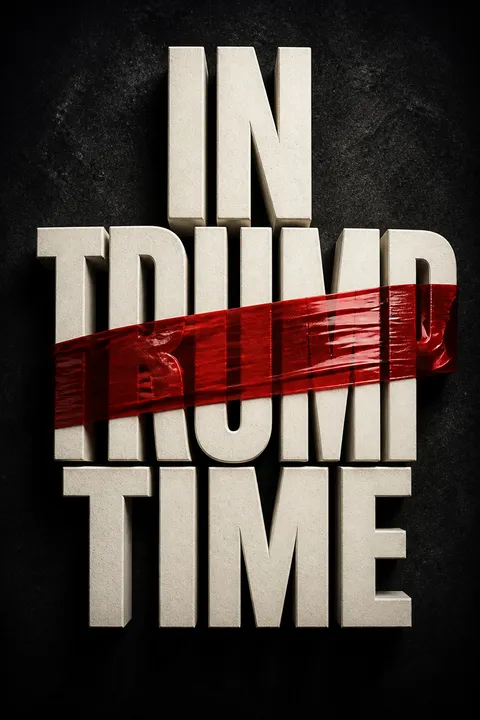
In Trump Time receives mixed reviews, with supporters praising its insider perspective and criticism of Fauci, while detractors view it as biased and filled with unsubstantiated claims. Many readers appreciate Navarro's account of the Trump administration's pandemic response and his warnings about China. However, some criticize his ego and confrontational style. The book's coverage of the 2020 election and January 6th events is controversial, with some readers finding it eye-opening and others dismissing it as conspiracy theories.
Glossary
Trump Time
Rapid government actionNavarro’s term for implementing a government policy or action as quickly as possible. In the book, it describes rapid work such as moving testing supplies, launching domestic production, and coordinating emergency deliveries. He also uses it to mean the period of Donald Trump’s presidency, blending a speed claim with a political label.
Five-Vector Pandemic Attack Strategy
Five-part pandemic responseNavarro’s framework for addressing a pandemic on five fronts: vaccines, therapeutics, personal protective equipment, medical equipment such as ventilators, and testing. It reflects his argument that no single intervention can manage a crisis, especially when different supplies and capabilities are needed at different stages.
Speculative Blame
Unproven origin claimsNavarro’s label for responsibility claims tied to the possibility that SARS-CoV-2 originated in a laboratory in Wuhan. He treats the lab-origin question as uncertain in his proposed rhetorical strategy, distinguishing it from allegations about China’s conduct after the outbreak began.
Indisputable Blame
Claims about China’s responseNavarro’s label for responsibility he assigns to China based on its alleged actions after the outbreak emerged. He includes concealment, delayed sharing of information, evidence destruction, international travel, and protective-equipment hoarding. The term describes his argument, not an independent finding that every allegation is proven.
Five Heinous Acts
Five-part China indictmentNavarro’s framework for describing China’s alleged conduct during the early pandemic: hiding the outbreak, withholding the virus genome, destroying evidence, limiting domestic travel while international travel continued, and hoarding protective equipment. He argues that these acts helped turn an outbreak into a global emergency.
Hydroxy Hysteria
Navarro’s label for drug fearsNavarro’s pejorative term for what he viewed as excessive public and regulatory fear of hydroxychloroquine as a possible COVID-19 treatment. He argues that officials and media dismissed the medicine too quickly, especially for early outpatient use. The term is not a medical diagnosis or a recognized description of the scientific evidence.
Green Bay Sweep
Proposed electoral-count challengeA plan described by Navarro and associated with Steve Bannon for challenging electoral votes during the January 6, 2021, congressional count. It envisioned objections and extended debate over several states, with Pence delaying certification to allow further investigation. The book presents it as a procedural challenge, not an immediate reversal of results.
FAQ
What is In Trump Time: A Journal of America's Plague Year by Peter Navarro about?
- Insider account of pandemic: The book provides a first-hand journal from Peter Navarro, a senior Trump advisor, detailing the Trump administration’s response to the COVID-19 pandemic.
- Focus on China and origins: Navarro explores the origins of COVID-19, emphasizing the Chinese Communist Party’s alleged cover-up and the global impact.
- Political and economic context: The narrative intertwines pandemic management with trade wars, economic policy, and the 2020 election controversies.
- Critique of institutions: Navarro offers a critical perspective on U.S. government agencies, media coverage, and election integrity.
Why should I read In Trump Time by Peter Navarro?
- Firsthand White House perspective: Readers gain rare insights into the Trump administration’s internal decision-making and pandemic response, directly from a senior advisor.
- Detailed pandemic chronology: The book documents key moments, including the travel ban, vaccine development, and internal conflicts, offering a comprehensive timeline.
- Analysis of political warfare: Navarro explores the intersection of politics, media, and public health, making it valuable for those interested in government and crisis management.
- Election and trade insights: The book also covers trade policy, economic nationalism, and the 2020 election, providing a broad view of the Trump era.
What are the key takeaways from In Trump Time by Peter Navarro?
- Economic security as national security: Navarro stresses that protecting American industries is vital for national defense, criticizing globalist policies.
- Pandemic origins and response failures: The book asserts COVID-19 likely originated in a Wuhan lab, with U.S. funding involvement, and criticizes both China’s cover-up and U.S. bureaucratic delays.
- Election fraud allegations: Navarro presents evidence and arguments for widespread election irregularities in 2020, claiming a coordinated effort to undermine Trump.
- Internal White House conflicts: The narrative reveals behind-the-scenes clashes among officials, impacting pandemic and policy outcomes.
How does Peter Navarro define "Trump Time" in In Trump Time?
- Rapid action philosophy: "Trump Time" means implementing government policy or action as quickly as possible, especially in crisis situations.
- Era of Trump presidency: The term also refers to the period of Donald Trump’s presidency, marked by urgency and efficiency.
- Symbol of decisiveness: Navarro uses "Trump Time" to encapsulate the administration’s approach to fast, bold policymaking.
- Examples in action: The development of a COVID-19 vaccine and rapid manufacturing responses are cited as achievements made "in Trump Time."
How does In Trump Time by Peter Navarro describe the early White House response to COVID-19?
- Early alarm and travel ban: Navarro recounts President Trump’s decision to ban travel from China on January 31, 2020, as a pivotal move.
- Internal opposition: Key figures like Dr. Fauci and others initially downplayed the threat, causing delays and confusion.
- Strategic persuasion: Navarro used a game-theory memo to convince the Coronavirus Task Force to support the travel ban.
- Bureaucratic challenges: The book highlights resistance and slow action from within the administration.
What role does Dr. Anthony Fauci play in In Trump Time by Peter Navarro?
- Contradictory public messaging: Fauci is portrayed as downplaying the virus’s threat and opposing early travel bans.
- Blocking therapeutics: Navarro accuses Fauci of delaying approval of treatments like hydroxychloroquine and favoring expensive alternatives.
- Gain-of-function controversy: Fauci’s agency is implicated in funding research at the Wuhan lab, which Navarro links to the pandemic’s origin.
- Political adversary: Fauci is depicted as undermining President Trump and contributing to public mistrust.
How does In Trump Time by Peter Navarro address the origins of COVID-19 and China’s responsibility?
- Lab leak theory support: Navarro strongly supports the theory that COVID-19 originated from the Wuhan Institute of Virology, citing lab safety lapses and U.S. funding.
- Five "heinous acts": He accuses China of virus concealment, genome withholding, evidence destruction, enabling global spread, and PPE hoarding.
- Political strategy for accountability: Navarro advocates for a bipartisan approach to hold China responsible, including calls for reparations.
- Commission proposal: He drafted an executive order for a commission to investigate the pandemic’s origins and China’s role.
What is the "Scurrilous Case of Hydroxy Hysteria" in In Trump Time by Peter Navarro?
- Hydroxychloroquine advocacy: Navarro argues hydroxychloroquine is a safe, effective early treatment for COVID-19, supported by studies and decades of use.
- Media and FDA opposition: The book details how the FDA, Dr. Fauci, and media outlets blocked its use, spreading fear and misinformation.
- Scientific and political failures: Navarro criticizes flawed studies and politicization that led to the drug’s suppression.
- Human cost: He estimates tens of thousands of lives could have been saved with early hydroxychloroquine use.
How does In Trump Time by Peter Navarro portray the Trump administration’s supply chain and manufacturing response?
- Defense Production Act (DPA) use: Navarro coordinated efforts to ramp up production of ventilators, masks, and PPE, invoking the DPA to compel companies.
- Bureaucratic and political challenges: The book describes internal resistance and delays from officials that hampered response efforts.
- Success stories: Rapid factory conversions, such as GM’s ventilator plant and Honeywell’s mask production, are highlighted as "Trump Time" achievements.
- Critique of imports: Navarro criticizes reliance on Chinese PPE and Jared Kushner’s "Project Airbridge" for favoring imports over American manufacturing.
What is the "Curious Case of the Delayed Vaccine" in In Trump Time by Peter Navarro?
- Vaccine development timeline: Navarro predicted a workable vaccine by October 2020, aligning with Operation Warp Speed’s goals.
- Alleged deliberate delays: He accuses Pfizer and the FDA of intentionally delaying vaccine approval to avoid a pre-election announcement.
- Political and financial motives: Navarro claims the delay was driven by profit protection and political interests, including undermining Trump’s reelection.
- Impact on public health: The delay allegedly cost thousands of American lives by postponing vaccine availability.
How does In Trump Time by Peter Navarro describe the 2020 U.S. presidential election and the "Green Bay Sweep" strategy?
- Allegations of widespread fraud: Navarro presents evidence of election irregularities in key battleground states, including fake ballots and signature abuses.
- "Immaculate Deception" report: He authored a report detailing these claims, calling for forensic audits and investigations.
- Green Bay Sweep strategy: Navarro and Steve Bannon devised a plan to challenge the election results during congressional certification, relying on Vice President Pence’s cooperation.
- Outcome and aftermath: The strategy failed due to Capitol violence and Pence’s refusal to block certification, which Navarro views as a betrayal.
What are the best quotes from In Trump Time by Peter Navarro and what do they mean?
- "Economic security is National Security": This mantra encapsulates Navarro’s and Trump’s philosophy that protecting American jobs is essential for national defense.
- Churchill on war and dishonor: Navarro quotes Churchill to criticize appeasement of China, warning that dishonor leads to greater conflict.
- On the 2020 election: Navarro asserts, “the winner of the 2020 election is not sitting in the White House today,” reflecting his conviction that the election was stolen.
- "Trump Time" as a legacy: The term symbolizes the administration’s urgency and efficiency in crisis response and policymaking.
About the Author
Other books by Peter Navarro


Download PDF
Download EPUB
.epub digital book format is ideal for reading ebooks on phones, tablets, and e-readers.








