

Key Takeaways
Treat the China Price as a system, not simply cheap labor
More than low wages. The China Price is the ability of Chinese producers to undercut foreign competitors across many industries. Navarro attributes it to a combination of low labor costs, weak worker and environmental protections, foreign investment, piracy, an undervalued currency, subsidies, and trade barriers. He argues that industrial clustering, where suppliers and producers operate close together, is the one advantage in this list compatible with fair competition.
A competitive package. Foreign investment brought advanced machinery and management practices, while specialized industrial towns reduced transport costs and sped up production. Together, these factors helped China become a global manufacturing center. The book’s larger claim is that this growth model creates conflicts over jobs, trade, pollution, intellectual property, and resources, while also risking instability within China.
What's striking is the systems view: price is not just a wage comparison, but the result of institutions, infrastructure, investment, and enforcement. That distinction is useful for policymakers and businesses because competing on wages alone misses the sources of productivity. Yet the book groups very different mechanisms under one indictment. Dense supplier networks can improve efficiency without being unfair, while low wages alone do not prove exploitation. Separating productive capacity from weak protections makes the argument more precise and points toward targeted remedies rather than treating all Chinese competitiveness as misconduct.
A vast labor reserve keeps exports cheap and grievances combustible
Surplus labor suppresses wages. Navarro describes a reserve army of unemployed and underemployed workers, a Marxian term for a large pool of people competing for jobs. He estimates that China’s pool exceeded 100 million, fed by layoffs from state enterprises, rural poverty, and migration to cities. The government’s stated ambition to move 300 million or more farmers into urban work would intensify the pressure if job creation fell behind.
The price is paid at work. The book recounts factories where young migrants worked long shifts, lived in employer-controlled dormitories, and had little ability to organize. It also notes that labor unions were not independent representatives of workers. The result, Navarro argues, is not only low production costs, but a large population with reasons to protest when wages go unpaid or conditions become dangerous.
The account connects labor economics to political stability: a surplus of workers strengthens employers’ bargaining position, but it can also make growth dependent on constantly creating new jobs. This resembles a pressure valve that works only while factories keep expanding. The comparison should be handled carefully, however. A large migrant workforce is not automatically evidence of forced labor, and urbanization can raise incomes. The key diagnostic is whether workers can leave, bargain, and obtain remedies when employers violate agreements. Those institutions determine whether low-cost production becomes mobility or coercion.
Counterfeit goods turn intellectual-property theft into a public-safety crisis
Fakes reach beyond luxury goods. Navarro distinguishes piracy, which sells unauthorized copies, from counterfeiting, which passes a copy off as the genuine brand. He cites estimates that counterfeit goods made up 5% to 7% of global merchandise trade, with China responsible for a large share. The products described range from software and cigarettes to auto parts and medicines.
The risk can be physical. Fake brake components may fail, while counterfeit drugs may contain no active ingredient, too much of it, or harmful substitutes. Navarro argues that local officials often tolerate the trade because it supports jobs, taxes, and cheap goods, even when central authorities announce crackdowns. He also warns that widespread copying can undermine companies’ incentive to invest in new designs and technologies.
The chapter’s strongest move is to shift the issue from brand owners’ lost revenue to risks borne by ordinary users. That makes product testing and supply-chain traceability central, not merely legal enforcement. The book also recognizes a difficult transition problem: a sudden shutdown could harm workers and consumers who rely on inexpensive goods. Effective policy therefore needs credible penalties for dangerous products alongside safer access to medicines and practical routes for legitimate firms to compete. Intellectual-property protection is strongest when it supports innovation without making essential goods inaccessible.
China's pollution crosses borders because its costs stay local
Growth carries an environmental bill. The book describes coal as the foundation of China’s energy supply, accounting for about three quarters of energy use in its account. It reports severe pollution in many cities, acid rain affecting neighboring countries, and dust and smog carried across the Pacific. Navarro cites an estimate of more than 400,000 premature deaths in China each year from air-pollution-related illness.
Rules without enforcement change little. China had environmental laws, but local agencies were understaffed and often faced pressure to protect employers and tax revenue. Some businesses treated fines as a cost of doing business. The book also argues that foreign firms could shift pollution-heavy production to China, gaining lower costs while exporting environmental harm beyond the factory and beyond national borders.
This is an account of externalities: producers and consumers can enjoy low prices while workers, nearby residents, and people downwind absorb costs that do not appear on the invoice. The cross-border dimension makes pollution a coordination problem, since one government cannot fully protect its citizens through domestic regulation alone. The book rightly includes foreign investors in the picture, although its language often puts responsibility chiefly on China. A fair assessment asks who benefits, who bears the damage, and which governments have the power to change production standards.
Oil security can convert commercial deals into geopolitical liabilities
Securing supply, not just buying oil. Navarro describes China as the world’s second-largest petroleum consumer at the time of publication, importing more than 40% of its needs. He says its limited reserves made it vulnerable to disruption. Rather than relying only on an open global market, China sought bilateral deals that secured access to particular oil supplies.
Partners come with consequences. The book argues that some deals linked energy access to arms transfers, diplomatic protection, or support for governments accused of repression. It highlights Iran and Sudan, and warns that competition over offshore resources in the South and East China Seas could heighten tensions with neighboring states. In this framework, energy policy is not simply a matter of price and supply. It can influence weapons proliferation, international institutions, and military calculations.
Energy security often encourages governments to insure against disruption, but the choice of insurance matters. Exclusive contracts and political backing can reduce one country’s perceived vulnerability while making other states feel excluded or threatened. That is a classic security dilemma: defensive steps by one actor can prompt defensive steps by others. The book’s zero-sum framing captures this danger, but it can overstate how inevitable confrontation is. Shared markets, diversified energy sources, and transparent agreements offer alternatives to treating every barrel as a strategic prize.
Infrastructure aid can lock resource-rich countries into raw-material dependence
Build first, extract next. Navarro characterizes China’s overseas model as financing roads, dams, ports, and government buildings, then using the resulting access to secure minerals, timber, oil, or agricultural goods. He calls the construction workforce and projects “weapons of mass construction,” a label for infrastructure used as an instrument of economic influence. The book gives examples from Zambia, South Africa, and Latin America.
The distribution of gains matters. Navarro argues that some countries export raw materials to China while importing manufactured goods, leaving less processing and industrial capacity at home. Loans and political relationships may also benefit ruling elites while local communities bear environmental damage or displacement. The central concern is not that infrastructure is inherently harmful, but that its financing and purpose can shape who controls resources and where value is created.
The useful question is not whether a road or dam is good in the abstract, but what economic options it creates. Infrastructure can expand trade and public services, yet extraction-focused links may channel value outward while leaving local economies dependent on commodity prices. This resembles debates about development traps and resource dependence. The book’s imperialism analogy draws attention to unequal bargaining power, but it risks treating diverse countries as passive victims. Local governments, firms, and citizens have agency, though corruption and opaque contracts can sharply limit it.
Track chemical precursors, not just finished drugs, to understand China's drug role
The supply chain begins upstream. Navarro argues that China’s role in illegal drugs extends beyond trafficking finished products. It was a major supplier of precursor chemicals, substances used to manufacture drugs. The book names acetic anhydride for heroin processing, ephedrine for methamphetamine, and chemicals used in Ecstasy production. These materials also have legitimate industrial uses, which makes control difficult.
Legal trade can conceal illegal diversion. The text describes shipments routed through front companies, mislabeled containers, and international ports. It also recounts how drug networks profited from manufacturing and distribution, while China’s banking system became a venue for laundering illicit proceeds. Navarro’s larger point is that the global drug economy depends on chemical suppliers, logistics, criminal networks, and weak enforcement, not only on the country where a drug is sold.
Following precursors exposes a general feature of illicit economies: they often depend on ordinary supply chains that serve legitimate industries too. That makes blanket bans blunt instruments. Effective control requires attention to suspicious orders, documentation, and patterns of diversion, while preserving access for lawful chemical production. The book presents China as a central node, but the chain it describes also involves producers, transit countries, traffickers, and consumers elsewhere. Treating the problem as a single-country failure obscures shared responsibilities and can make international cooperation harder.
Treat dams and water scarcity as regional security, not engineering
Water stress has several causes. The book reports that much of China’s river water was badly polluted and that water availability varied sharply by region. Northern farming and industrial areas had far less water than the south. Low water prices, inefficient irrigation, groundwater extraction, pollution, and rising urban demand all added pressure.
A river connects countries. China’s dams on the Mekong could alter water flows and sediment reaching downstream communities in Cambodia, Vietnam, Laos, and Thailand. Navarro emphasizes the river’s role in fishing, farming, and transport for tens of millions of people. He also describes domestic displacement linked to major projects, including the Three Gorges Dam. The warning is that engineering choices upstream can affect livelihoods, ecosystems, and political relations far downstream.
A river basin is a shared system even when political borders divide it. This makes dams a governance question as much as an engineering one: the benefits may be concentrated upstream, while ecological and livelihood costs travel downstream. The book is persuasive about the importance of cumulative effects, especially when several projects alter a river together. Still, dams can provide electricity, flood control, and stored water. Good analysis compares those benefits with environmental and social costs, then asks whether affected communities have information, representation, and compensation.
Economic growth cannot stabilize a system that keeps displacing its people
Unrest grows from everyday grievances. Navarro describes protests over unpaid wages, land seizures, pollution, taxes, and unequal treatment. He cites nearly 100,000 protests and riots annually in China during the period he discusses. In one example, a dispute involving a student and a wealthy businessman grew into a large public confrontation. Other protests involved farmers whose land was taken for development or infrastructure projects.
Local corruption magnifies the conflict. Officials could approve land deals, divert compensation, or enlist force to suppress dissent. Workers lacked independent unions, while rural residents had few reliable ways to challenge decisions. The book’s argument is that rapid growth does not guarantee legitimacy. If its gains go to connected elites while its costs fall on workers, farmers, and polluted communities, economic development can generate the very instability it is supposed to prevent.
The book frames unrest as a problem of distribution and procedural fairness, not simply a byproduct of poverty. That distinction matters: people may tolerate difficult change when rules are predictable and compensation is credible, but arbitrary treatment turns material loss into political grievance. The reported protest count is striking, though such numbers depend on definitions and reporting quality. The broader insight remains useful without treating every demonstration as evidence of imminent state collapse. Protest can also be a channel for correcting policy when institutions allow it.
China's growth model faces a pension and health-care bill it cannot ignore
Aging meets a weakened safety net. Navarro warns that China could grow old before it became rich. The state enterprise system once tied work to housing, health care, and pensions, but privatization weakened those guarantees. A pay-as-you-go pension system depends on current workers supporting retirees, while the one-child policy and early retirement increase the pressure on each worker.
Illness compounds the strain. The book describes a health system increasingly financed through patient fees, leaving many poor people unable to afford care. It also recounts the blood-plasma scandal in Henan, where unsafe collection practices spread HIV. The author feared a much larger epidemic, alongside pollution-related illness and drug use. These were forecasts made in 2006, not current measurements, but they illustrate how public health failures can become economic and political risks.
The chapter’s underlying model is a feedback loop: weak health and pension systems reduce household security, while illness and aging place more pressure on public finances and workers. Demography makes that challenge predictable, but policy choices determine how severe it becomes. The HIV projections in a 2006 book should not be read as present-day facts. Their analytical value lies in showing how censorship, poor public-health practice, and unequal access can magnify an epidemic. Social insurance is not merely a cost; it can also support trust and economic resilience.
Reduce financial codependence before trade disputes become coercive
Both sides had incentives to keep the imbalance. Navarro argues that U.S. budget and trade deficits helped sustain demand for Chinese exports, while China recycled dollars into U.S. financial markets and maintained an undervalued currency. He calls this relationship mutually parasitic: American borrowing supported consumption, while Chinese purchases of U.S. debt helped preserve export flows.
Leverage grows with dependence. The book warns that a major shift in Chinese purchases or sales of U.S. assets could unsettle financial markets, making Washington less willing to confront disputes over trade, counterfeiting, or currency policy. Navarro’s prescriptions include enforcing trade rules, raising labor and environmental standards, improving energy independence, and correcting U.S. fiscal habits. The broader lesson is that external pressure is difficult to resist when domestic policy has created vulnerability.
The strongest part of this argument is its refusal to cast the United States as a detached referee. Domestic borrowing, consumption, and political incentives help sustain the relationship being criticized. That is a valuable correction to narratives that assign all responsibility abroad. The book’s language of financial blackmail, however, can make interdependence sound more one-sided than it is: abrupt disruption could damage both parties. Durable policy therefore means reducing exposure gradually, strengthening domestic institutions, and negotiating shared rules rather than relying on threats.
Analysis
The book is a polemical geopolitical-economic argument, not a neutral survey. Its organizing idea is that China’s export-led growth model connects apparently separate disputes: cheap manufacturing, intellectual-property theft, pollution, energy competition, resource extraction, water management, public health, and domestic unrest. That breadth is its chief strength. It asks readers to follow costs beyond the checkout price and across borders, then to notice how environmental and social pressures at home can interact with foreign policy.
Its most useful analytical move is to distinguish a country’s productive advantages from the rules and institutions governing them. Industrial clustering and technology transfer can raise efficiency; weak labor protections, pollution enforcement, subsidies, or currency policy raise different questions. Keeping those mechanisms separate makes the book’s critique more actionable. It also clarifies that low prices are not evidence, by themselves, of unfair conduct.
The book’s main limitation is its tendency to turn many distinct problems into one sweeping narrative of an adversarial China. It often attributes actions to a unified national strategy where local officials, firms, criminal groups, foreign investors, and central authorities may have different interests. Its dramatic forecasts, especially around conflict, disease, and economic collapse, should be treated as arguments made in 2006 rather than contemporary facts. The numerical claims also vary in certainty and source quality within the text.
A balanced reading preserves the book’s central warning without adopting all its conclusions: economic interdependence can hide real costs, and institutions that fail to distribute gains or enforce rules create vulnerabilities. But conflict is not automatic. The same cross-border connections that transmit pollution, financial exposure, and supply-chain risks can also support shared standards and negotiated solutions. The book is most valuable as a map of linked risks and a provocation to examine incentives on every side, including those of the United States and its businesses.
Review Summary
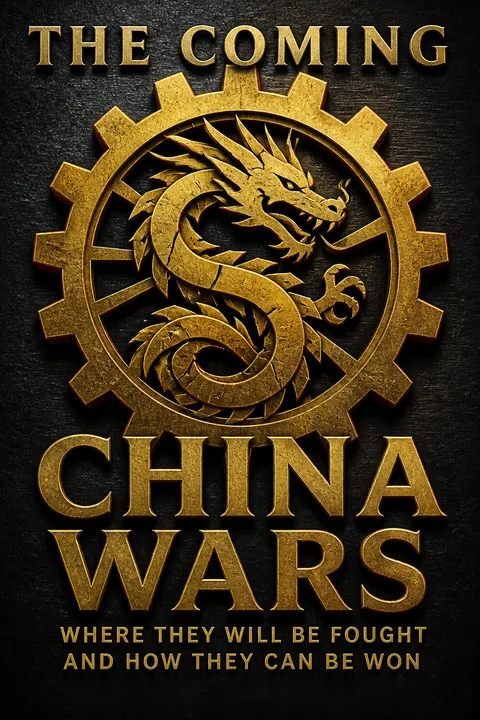
The Coming China Wars receives mixed reviews, with ratings ranging from 1 to 5 stars. Some readers praise it as eye-opening and informative about China's global impact, while others criticize it as biased, alarmist, and lacking in-depth analysis. Positive reviews highlight the book's insights into China's economic and environmental issues, while negative reviews point out its perceived anti-China stance and reliance on quotes. Several readers express concern about China's growing influence and recommend the book for its thought-provoking content, despite its flaws.
Glossary
China Price
Low-cost export advantageThe China Price is the ability of Chinese manufacturers to offer goods at prices substantially below foreign competitors. Navarro attributes it to several factors operating together, including low labor costs, foreign investment, industrial clustering, weak enforcement of protections, subsidies, currency policy, and barriers shielding domestic industries. The term describes a broad competitive outcome, not one single policy.
reserve army of the unemployed
Large surplus labor poolA Marxian term for unemployed and underemployed workers whose availability increases competition for jobs and can restrain wages. Navarro applies it to China’s large migrant and surplus workforce, which he says grew through state-enterprise layoffs, rural poverty, and urbanization. In the book, the labor pool supports low production costs but also creates pressure for continued job growth.
network clustering
Co-located industrial suppliersAn industrial arrangement in which producers, suppliers, and related services are concentrated in the same region or town. Navarro describes Chinese clusters where businesses making components, packaging, and other production inputs work near manufacturers. This proximity can reduce transport and coordination costs, speed production, and spread practical knowledge through a supply chain.
weapons of mass construction
Infrastructure as influenceNavarro’s label for Chinese construction capacity deployed abroad through workers, companies, financing, and large projects. Roads, dams, ports, government buildings, and other infrastructure can create commercial access and political relationships. The book argues that some projects also support the movement of raw materials to China, although infrastructure can serve multiple purposes.
quanxi
Business through connectionsA Chinese term used in the book for relationships and personal connections that help people navigate business and government. Navarro describes entrepreneurs using such connections to obtain approvals, build partnerships, or move through bureaucracy. The term is presented as a practical feature of economic life, but the book links it to risks of favoritism and corruption when decisions lack transparency.
iron rice bowl
State-provided lifetime securityThe pre-reform employment arrangement in which state-owned enterprises provided workers with jobs, wages, housing, health care, and pensions. Navarro argues that dismantling this system improved incentives and competitiveness but left many workers without its former security. The term captures the link between employment and social welfare in the earlier system.
bloodheads
Informal blood-buying operatorsThe book’s term for operators who collected blood or plasma from rural donors, sometimes after official collection programs retreated. In the Henan case described by Navarro, unsafe practices included pooling blood components and returning them to donors, along with contaminated equipment. These practices helped spread HIV and other infections among donors and recipients.
chog
Transboundary Chinese smogNavarro’s informal term for polluted air originating in China and carried by winds across regions and oceans. The book describes dust storms gathering industrial pollutants as they move over China, then affecting neighboring countries and, at times, North America. The term emphasizes that airborne pollution does not remain within the borders where it is produced.
luan
Social and political disorderA Chinese term for disorder or chaos, used in the book to describe a feared breakdown in social and political stability. Navarro connects that fear to pressures including unemployment, inequality, corruption, environmental damage, public-health problems, and local unrest. It is a historical and political concept in the text, not a specific economic measure.
FAQ
1. What is [The Coming China Wars] by Peter Navarro about?
- Comprehensive conflict analysis: The book examines the wide-ranging economic, environmental, political, and military conflicts arising from China’s rapid growth and global expansion.
- Eight major “China Wars”: Navarro identifies ongoing and future conflicts, including piracy, counterfeiting, environmental degradation, resource competition, and internal social unrest.
- Global impact: It explores how China’s rise as the world’s manufacturing hub is reshaping international power dynamics and creating new tensions.
- Call for action: The book urges global awareness and strategic responses to prevent catastrophic outcomes for both China and the world.
2. Why should I read [The Coming China Wars] by Peter Navarro?
- Insight into global shifts: The book provides a detailed macroeconomic and geopolitical analysis of China’s rise and its worldwide consequences.
- Understanding multifront conflicts: Readers gain a nuanced view of how China’s policies affect jobs, resources, technology, the environment, and international relations.
- Policy relevance: Navarro’s work is essential for policymakers, business leaders, and concerned citizens seeking to anticipate and address the “China Wars.”
- Practical foresight: The book serves as both a warning and a guide for navigating the challenges posed by China’s emergence.
3. What are the key takeaways from [The Coming China Wars] by Peter Navarro?
- China’s growth triggers conflict: Rapid economic expansion is fueling disputes over trade, resources, environment, and security.
- Internal and external challenges: The book highlights China’s internal social unrest, environmental crises, and demographic pressures, as well as its global impact.
- Economic codependence risks: The U.S.-China financial relationship is mutually parasitic, creating vulnerabilities for both nations.
- Urgency for global action: Navarro stresses the need for international cooperation and policy reforms to address these multifaceted challenges.
4. What is the “China Price” and why is it important in [The Coming China Wars]?
- Definition of China Price: It refers to China’s ability to undercut global competitors by offering extremely low prices across a wide range of products.
- Nine economic drivers: These include low wages, lax regulations, foreign investment, industrial clustering, piracy, undervalued currency, subsidies, and protectionist barriers.
- Unfair trade advantage: Most drivers violate international trade rules, giving China a significant and often unfair edge in global markets.
- Source of global tension: The “China Price” is a central factor in economic conflicts and trade disputes highlighted in the book.
5. How does [The Coming China Wars] by Peter Navarro describe China’s counterfeit and piracy economy?
- Scale of the problem: China produces about two-thirds of the world’s counterfeit goods, including dangerous fakes like pharmaceuticals and auto parts.
- State-sanctioned piracy: The government often turns a blind eye, as piracy supports domestic jobs, keeps prices low, and boosts exports.
- Global consequences: Counterfeiting undermines intellectual property rights, stifles innovation, and imposes huge costs on legitimate businesses worldwide.
- Legal and enforcement issues: Weak enforcement and corruption in China’s legal system allow piracy to flourish despite existing laws.
6. What are the key environmental challenges posed by China in [The Coming China Wars]?
- Severe pollution: China has some of the world’s most polluted cities, with air and water pollution causing hundreds of thousands of premature deaths.
- Transboundary effects: Pollution from China spreads to neighboring countries and even North America, contributing to acid rain, dust storms, and global warming.
- Dam-building and water scarcity: Aggressive dam construction threatens ecosystems, displaces millions, and creates regional water disputes.
- Regulatory failures: Environmental laws exist but are poorly enforced due to understaffed agencies, corruption, and conflicting economic priorities.
7. How does [The Coming China Wars] by Peter Navarro explain China’s “Blood for Oil” diplomacy and energy conflicts?
- Rising oil demand: China’s growing economy has made it the world’s second-largest oil consumer, with increasing reliance on imports.
- Amoral foreign policy: China secures oil through deals with rogue regimes, often providing arms and diplomatic protection in exchange.
- Geopolitical risks: This approach fuels arms races, nuclear proliferation, and territorial disputes, especially in the South and East China Seas.
- Potential for conflict: China’s energy strategy increases the risk of military clashes with neighbors and the United States.
8. What is China’s “New Imperialist” strategy according to [The Coming China Wars] by Peter Navarro?
- Infrastructure as leverage: China invests heavily in infrastructure projects in developing countries, especially in Africa and Latin America.
- Resource extraction focus: These projects secure access to minerals, metals, and raw materials for export to China.
- Political influence: Aid and loans often enrich local elites, prop up dictators, and are tied to military support, undermining democratic reforms.
- Environmental and social costs: Local economies and environments often suffer as a result of China’s resource-driven investments.
9. How does [The Coming China Wars] by Peter Navarro describe China’s role in the global drug trade and the HIV/AIDS epidemic?
- Precursor chemical supplier: China is a leading producer of chemicals used to manufacture heroin, methamphetamine, and Ecstasy.
- Drug trafficking networks: Chinese criminal syndicates, often with official complicity, operate drug labs and smuggle narcotics worldwide.
- HIV/AIDS crisis: The epidemic is fueled by contaminated blood sales, intravenous drug use, and a sexual revolution, threatening social stability.
- Government challenges: Stigma, lack of awareness, and weak health infrastructure hinder effective responses to the epidemic.
10. What are the internal social and demographic challenges facing China in [The Coming China Wars] by Peter Navarro?
- Rural-urban divide: Privatization and the collapse of the “iron rice bowl” have created massive unemployment and labor unrest.
- Peasant discontent: Forced evictions, heavy taxation, and corruption have led to widespread protests and riots.
- Demographic time bomb: The one-child policy and rapid aging are straining China’s pension and health-care systems.
- Social instability risks: These internal pressures threaten to undermine China’s economic and political stability.
11. What are the economic codependence and financial risks between the U.S. and China in [The Coming China Wars] by Peter Navarro?
- Mutually parasitic relationship: The U.S. relies on China to finance its deficits, while China depends on U.S. markets for exports.
- Currency manipulation: China’s purchase of U.S. debt keeps the yuan undervalued, making Chinese exports cheaper.
- Political constraints: Both governments avoid addressing the imbalance due to domestic pressures, creating a “balance of financial terror.”
- Risk of financial blackmail: China’s large holdings of U.S. securities give it leverage to destabilize U.S. markets if tensions escalate.
12. What are the best quotes from [The Coming China Wars] by Peter Navarro and what do they mean?
- “A single spark can start a prairie fire.” —Mao Zedong: Small incidents of unrest can quickly escalate into widespread upheaval in China’s vast population.
- “China supports 21 percent of the world’s population with just 7 percent of its water supplies.” —Qui Baoxing: Highlights the severe water scarcity threatening China’s future.
- “If ordinary people in China don’t make trouble, nothing is resolved. But if everyone thinks problems can only be resolved with violence, that’s a very dangerous situation.” —Professor Lang Youxing: Reflects the delicate balance between social stability and the risk of violent protest.
- “China is at the crossroads. It can either smoothly evolve into a medium-level developed country or it can spiral into stagnation and chaos.” —Lu Xueyi: Captures the critical juncture China faces amid its challenges.
- “The United States and China have a mutually parasitic economic codependence.” —Lawrence Summers: Warns of the dangerous financial interdependence limiting U.S. leverage over China.
About the Author
Other books by Peter Navarro


Download PDF
Download EPUB
.epub digital book format is ideal for reading ebooks on phones, tablets, and e-readers.








