

Key Takeaways
Choose advisers who will execute the mandate, not quietly replace it.
Personnel shapes policy. Navarro’s central diagnosis is that Trump entered office promising to prioritize American manufacturing, trade reform, and border security, then surrounded himself with officials who often opposed those priorities. He traces the problem from the transition, when Gary Cohn received the National Economic Council position Navarro says Jared Kushner had offered him, to the weakening of Navarro’s own trade office. In his account, five failures followed: China was not made central to the 2020 campaign, economic nationalism was inconsistently pursued, the campaign was badly managed, pandemic relief stalled, and communications failed to answer hostile coverage.
Loyalty is not enough. Navarro’s prescription is to select people who both share the president’s goals and can carry them out. He presents the White House as a struggle between officials advancing the campaign agenda and those diluting it.
The useful distinction is between loyalty to a leader and loyalty to an agreed program. Organizations function better when people can challenge proposals without quietly sabotaging decisions. Navarro’s account is especially valuable as a description of how hiring, access, and competing chains of command can alter policy before a president makes a visible choice. Yet a leader who appoints only loyalists risks replacing obstruction with groupthink. The harder task is building a team that can disagree candidly, decide clearly, and then implement the decision.
Build a coalition around factory work, secure borders, and ending endless wars.
Three grievances, one coalition. Navarro calls this combination Populist Economic Nationalism. He argues that it joined voters concerned about lost industrial jobs, competition for low-wage work, and the human and financial costs of prolonged wars. He links the political anger to NAFTA and China’s entry into the World Trade Organization, arguing that offshoring hollowed out manufacturing communities. He cites estimates of more than five million manufacturing jobs lost and over 50,000 factories closed, and recounts an Ohio worker’s complaint that a factory’s machinery was shipped to China and its workers asked to train their replacements.
The local damage matters. A closed plant, Navarro argues, harms suppliers, service businesses, and families as well as the workers on its payroll. His framework says that a political message about jobs gains force when it addresses this broader community fallout.
This argument treats economic identity as more than an income measure. Work can supply status, routine, social ties, and a sense of usefulness, so a factory closure can injure a town in ways that conventional employment figures miss. The same logic helps explain why economic policy can reshape political coalitions. Still, the book’s account compresses complex changes into a few causes. Trade, automation, technology, and local policy can all affect employment, and the relative contribution of each varies by industry and place.
Control the policy pipeline before bureaucratic delay becomes policy defeat.
Procedure decides what moves. Navarro describes a White House process in which proposals passed through staff-level committees, agency deputies, cabinet secretaries, legal review, and the staff secretary before reaching the president. He argues that each stage created opportunities for delay, revision, or quiet rejection. He says that executive orders prepared for Trump’s first business day were held up, and that a memo warning the president about internal resistance never reached him. In contrast, Navarro credits a direct presidential push with getting withdrawal from the Trans-Pacific Partnership signed promptly.
The process can work. He recounts negotiating changes to international postal rates through the Universal Postal Union, which he says saved the United States $500 million and reduced a subsidy benefiting foreign mail operators. His lesson is to understand procedural choke points and build routes through them.
This is a sharp account of organizational power: control over the queue, the briefing packet, or the definition of a completed review can matter as much as control over a formal vote. The wider lesson applies to any large institution where information and decisions travel through layers. Yet speed is not automatically good governance. Legal review and interagency consultation can expose errors, surface consequences, and constrain overreach. The challenge is not simply to remove friction, but to distinguish necessary scrutiny from avoidable delay.
Make toughness on China legible, consistent, and impossible to mistake.
Actions must match the message. Navarro argues that Trump’s China-focused campaign promise lost credibility when the administration appeared to retreat from its own measures. He points to the ZTE case: after the company faced restrictions for violating an earlier settlement, Trump shifted toward allowing it back into business after pressure from China’s president and a proposed fine. Navarro also criticizes waivers allowing some US chip sales to Huawei and the effort to arrange a sale of TikTok rather than ban it. He says these reversals made the administration look inconsistent to voters and weakened its negotiating position.
Policy and politics converged. Navarro cites polling showing unfavorable views of China rose from 55 percent late in the Obama administration to 73 percent during Trump’s final year. He argues that the campaign failed to turn that shift into a clear electoral advantage.
The section highlights a basic problem of credibility: audiences judge a policy by repeated behavior, not by its slogan. In diplomacy, inconsistent signals can reduce leverage because counterparts wait to see whether threats are real. But toughness is not a complete strategy. Restrictions can impose costs on domestic firms, complicate alliances, or invite retaliation. A stronger test of policy is whether it reduces a defined security risk at acceptable cost, not simply whether it looks resolute.
Run a lean campaign, then spend when battleground voters are listening.
Scale was not strategy. Navarro contrasts the compact 2016 campaign, built around rallies, free media, and a small War Room, with the 2020 operation he describes as bloated and divided. He says the campaign grew from roughly 800 staff and volunteers to more than 2,000 staff, while Brad Parscale managed largely from Florida and Kushner carried competing White House responsibilities. Navarro also faults the campaign for spending $10 million on a Super Bowl ad before Trump had a Democratic opponent, then running short of advertising money in the final weeks. He cites a late spending gap of about $75 million in Biden’s favor.
Timing is a strategic asset. In Navarro’s account, early spending and high overhead reduced the campaign’s ability to reach voters when the race was most competitive.
The operational lesson is broader than campaign finance: resources have value only when they reach the right people at the right moment. A lean team can also coordinate faster because fewer units are competing for attention and budget. But the account’s causal story is not conclusive. Spending, organization, candidate behavior, voter turnout, and the pandemic all interacted; a late advertising advantage alone cannot explain an election result. A useful postmortem should separate avoidable management errors from factors no campaign could control.
Treat economic relief and crisis communication as election strategy, not side issues.
Relief had both economic and political stakes. Navarro says Trump wanted a $2 trillion pandemic relief package before Election Day, combining manufacturing incentives with support for workers and small businesses. He criticizes negotiators Steve Mnuchin and Mark Meadows for failing to reach a deal and argues that delayed aid worsened economic hardship while depriving Trump of a visible achievement. He also disputes Larry Kudlow’s claim that recovery was strongly V-shaped. Navarro instead describes a K-shaped economy: some sectors recovered while travel, restaurants, energy, and retail remained battered.
Urgency required a plan. Navarro proposed a public, three-day negotiation process he called speed chess, with both parties making timed offers. He believed this could pressure Congress to act and show voters who was blocking agreement.
The chapter connects policy delivery to public confidence: people evaluate leaders partly by whether help arrives while a crisis is still acute. Its K-shaped image is useful because one headline growth figure can conceal sharply different experiences across sectors and households. Yet a large relief package can also carry fiscal and inflation risks, and a public negotiating format does not guarantee compromise. The strongest version of Navarro’s point is that leaders should acknowledge uneven conditions, set explicit priorities, and explain the tradeoffs instead of offering blanket optimism.
Make visible local manufacturing wins the proof behind national promises.
A factory can make policy tangible. Navarro’s example is Whirlpool’s washer plant in Clyde, Ohio. He says Korean manufacturers shifted production between countries to evade earlier duties, so he urged Whirlpool to seek a safeguard measure that applied regardless of where the machines were made. After an investigation, Trump imposed tariffs in 2018. Navarro later helped arrange a factory visit and speech in 2020, presenting the plant as evidence that trade policy could support domestic production. He also points to an executive order requiring government agencies to buy essential medicines from US sources.
The calendar mattered. Navarro says his planned event at a new Arizona steel mill was rejected, despite the jobs it represented in a close battleground state. He presents such missed opportunities as a failure to connect policy to voters’ local lives.
The example shows why visible projects can outperform abstract policy descriptions: a factory, its workers, and its suppliers give voters something concrete to evaluate. Localized gains can also strengthen the political durability of industrial policy. But one plant’s recovery cannot establish the overall effect of tariffs. Consumers may pay more, other industries may face higher input costs, and some protected firms may not become more productive. Evaluations should track jobs, wages, prices, and investment together rather than treating a ribbon-cutting as proof by itself.
Treat communication as a staffed operation, not a daily improvisation.
The news cycle rewards preparation. Navarro argues that the Trump White House struggled to respond to negative coverage because its press secretaries, chiefs of staff, and cabinet officials were often unprepared or unwilling to defend policy publicly. He describes five methods he believed hostile outlets used: elevate damaging stories, ignore favorable ones, repeat shared talking points, rely on like-minded commentators, and limit access for administration spokespeople. He says Trump’s approval and favorability fell during the pandemic, while the White House often left opponents to define the day’s story.
The response needs depth. Navarro’s account emphasizes that a president cannot rely on one charismatic speaker. Press staff, senior advisers, and cabinet members must understand policy, answer difficult questions, and work from a coordinated message.
The book is right to treat communication as an organizational capability rather than a cosmetic layer. A team that cannot explain decisions clearly leaves a vacuum that critics, rumors, and confusion can fill. The same principle applies to public institutions and companies during emergencies. Yet media bias alone is not a sufficient explanation for poor messaging. Leaders can lose credibility through contradictory statements or evasive answers. Transparency, consistent evidence, and timely correction are more durable defenses than merely repeating a preferred narrative.
Build the next team around competence, accountability, and a real election plan.
Prepare before taking office. Navarro’s closing proposal is to assemble a shadow cabinet, vet senior appointments in advance, and put experienced operators in charge of personnel, communications, policy, and campaign strategy. He also argues that a modern campaign needs legal teams prepared for election disputes, alongside fundraising, field operations, and media work. His advice extends to congressional races and state election offices, which he sees as consequential to national outcomes.
His prescription is partisan. Navarro urges Trump to exclude officials he regards as disloyal, names preferred personnel, promotes alternative media, and calls for investigations into the 2020 election. These are the recommendations of a political advocate, not a neutral institutional blueprint. The book’s practical point is to plan staffing and legal capacity early; its claims about election theft are not established simply by being asserted.
Advance preparation can improve a transition: clear job requirements, conflict checks, and contingency plans reduce the scramble that invites poor appointments. Election law expertise is also a legitimate campaign need, provided it is used to protect accurate counting and lawful procedures. The danger lies in defining competence as personal loyalty or treating institutional independence as disloyalty. A resilient team needs both mission alignment and credible checks. Election disputes, in particular, require evidence assessed through impartial processes, not confidence built inside a partisan circle.
Analysis
Taking Back Trump’s America is part memoir, part campaign autopsy, and part partisan strategy manual. Its narrative follows Navarro from an economics professor studying the China Price to a presidential adviser who believes he repeatedly saw policy proposals obstructed from inside the White House. That insider vantage gives the book texture: it explains how staff roles, document review, access to the president, and political messaging can affect outcomes beyond the public-facing speeches and executive orders.
Its strongest analytic contribution is organizational. The repeated pattern is not merely that a president needs better advisers, but that appointment choices interact with process design. A staff secretary can control information flow; a campaign manager can shape spending and morale; and an uncoordinated communications operation can surrender control of a daily narrative. These are plausible mechanisms, and the concrete episodes help readers understand them.
The book is also an interested account. Navarro is a participant defending his own work, assigning blame to colleagues, and advocating for a future administration. His anecdotes are often vivid, but his claims about motives, counterfactual election outcomes, and the decisive effects of specific policies are difficult to verify from memoir alone. The book repeatedly treats the 2020 result as stolen and presents disputed claims about the pandemic’s origin, public health, and election administration with high certainty. Those claims should not be confused with conclusions demonstrated by the narrative.
A careful reader can retain the useful lessons about staffing, institutional bottlenecks, campaign discipline, and the political importance of visible economic policy without accepting every accusation or causal claim. The central question is not whether every failure described here cost Trump the election. It is how leaders can build teams that execute a mandate, tolerate internal candor, preserve legal safeguards, and respond to voters’ material concerns before those concerns become political crises.
Review Summary
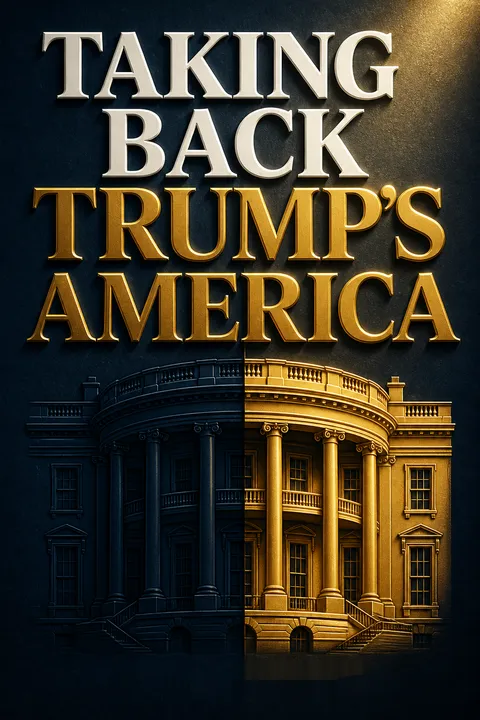
Taking Back Trump's America receives mostly positive reviews, with readers praising Navarro's insider perspective and candid analysis of the Trump administration's challenges. Many appreciate his insights into personnel issues and policy failures. Supporters find the book informative and entertaining, while critics argue it's self-aggrandizing. Readers value Navarro's suggestions for future improvements and his explanation of the MAGA movement. Some note his criticism of other administration officials and his unwavering support for Trump. Overall, the book is seen as a revealing account of Trump's presidency from a loyal advisor's viewpoint.
People Also Read



Glossary
Populist Economic Nationalism
National economic prioritiesNavarro’s political and economic approach, presented as prioritizing domestic manufacturing, American workers, secure borders, and a reduced reliance on foreign supply chains. He contrasts it with globalism and emphasizes measures such as tariffs, Buy American procurement, and bringing production back to the United States.
China Price
China’s unusually low pricesNavarro’s label for the exceptionally low prices Chinese manufacturers could offer in global markets, which he argues were driven not only by lower labor costs but also by subsidies, currency policy, counterfeiting, and weaker environmental and workplace rules. He uses the term to explain competitive pressure on US manufacturers.
Seven Deadly Mercantilist Sins
Unfair trade practicesNavarro’s grouping of practices he attributes to China’s trade strategy, including cheap labor, pollution havens, state-owned enterprises, government subsidies, currency manipulation, and counterfeiting or piracy. He argues that these practices distort competition and contribute to manufacturing job losses in the United States.
Iron MAGA Triangle
Three-part political coalitionNavarro’s model of the Trump movement’s working-class coalition. Its three policy legs are rebuilding American manufacturing, securing borders, and ending prolonged foreign wars. He argues that these concerns connect voters across racial and regional lines through shared interests in jobs, wages, and the costs of overseas commitments.
Bad Personnel PLUS Bad Process Is Bad Policy Is Bad Politics
A failure chainNavarro’s explanation of how government decisions can drift from a president’s campaign commitments. Officials who oppose the agenda can use decision procedures, information control, or delay to shape policy. If the resulting policies disappoint voters, he argues, the administration pays a political price.
Trump Time
Rapid policy executionNavarro’s informal term for moving quickly from a presidential priority to action. He contrasts this pace with extended review processes that, in his account, delayed or weakened proposals. The term expresses his preference for urgency, though it does not by itself distinguish avoidable bureaucracy from necessary legal review.
Speed chess
Timed public negotiationsNavarro’s proposed method for negotiating a pandemic relief package with Congress. Rather than prolonged private bargaining, negotiators would agree quickly on shared provisions, take timed turns proposing the remaining spending, and send the result to Congress for a vote. He intended the public format to create urgency and make political responsibility visible.
About the Author
Other books by Peter Navarro


Download PDF
Download EPUB
.epub digital book format is ideal for reading ebooks on phones, tablets, and e-readers.








