

Key Takeaways
Your conscious mind is a late-arriving narrator, not the brain's chief operator.
The hidden majority. The brain performs most of its work outside conscious awareness. Consciousness receives a useful summary, not a full account of how a choice or idea formed. Like a newspaper reader who sees only the headline, the conscious mind often learns what the brain has already decided, then takes credit for it. In one experiment, men preferred photographs of women with dilated pupils without noticing the feature that influenced them.
Action can outrun awareness. A baseball traveling at 100.9 miles per hour reaches home plate in about four-tenths of a second, faster than the roughly half-second required for conscious awareness. Batters can still hit it because unconscious processes guide their movements. This does not make consciousness useless, but it puts it far from the command center.
The distinction between having a mental process and knowing how it works matters well beyond neuroscience. Skilled musicians, surgeons, and athletes often act on expertise they cannot fully verbalize, while people explaining their choices may mistake a plausible story for the actual cause. The headline metaphor is useful because it makes limited access intuitive without implying that awareness is an illusion. Its limit is that conscious reflection can still shape later behavior: planning, rehearsal, and deliberate attention can train the systems that operate automatically. The mind is not the whole brain, but it can still influence what the brain learns to do.
Treat perception as a useful construction, not a faithful recording.
Attention edits the scene. Vision feels like a complete picture, but the brain registers only selected details and fills in the rest. Change blindness is the failure to notice a change in a scene when attention is elsewhere. In one experiment, most people giving directions failed to notice that the person they were speaking to had been replaced while a door passed between them. The eyes received the information; attention did not secure it for conscious experience.
The brain fills gaps. Each eye has a blind spot where the optic nerve leaves the retina. Rather than seeing a hole, people experience a continuous scene because the brain fills in missing information from its surroundings. Even visual sharpness is uneven: central vision is far clearer than peripheral vision, though ordinary experience makes the whole field seem detailed.
This account helps explain why confident eyewitnesses can be mistaken: seeing a scene is not the same as encoding every detail needed to remember it. The same principle affects interface design, safety warnings, and everyday conversations. Important information should not depend on a person noticing one subtle cue in a crowded field. Still, constructed perception is not arbitrary fantasy. The outside world constrains what the brain can successfully infer, and most everyday perceptions are dependable enough for action. The key distinction is between practical reliability and perfect recording. Confusing the two makes people overconfident about what they saw.
Expect your brain to predict first and notice surprises second.
Perception runs on expectations. The brain does not simply wait for sensory information and assemble it into a picture. It uses prior experience to predict what is likely, then updates its interpretation when new information conflicts. This is unconscious inference: the brain's automatic use of assumptions to interpret incomplete sensory signals. A shadow that shifts can make a stationary square appear to move, because movement seems a likelier explanation than a sudden change in lighting.
Experience can retrain the senses. Mike May regained sight after decades of blindness, but his working eyes initially delivered shapes and colors without recognizable objects. His brain had not learned how to interpret those signals. Experiments with tactile devices offer a related demonstration: blind users can learn to interpret patterns of vibration as information about the space around them. Conscious awareness becomes especially important when a familiar prediction fails.
Prediction is a powerful way to understand why familiar skills feel effortless: the brain anticipates the sensory consequences of action instead of processing every signal from scratch. This connects to modern predictive-processing accounts of perception, which treat error signals as especially informative. It also clarifies why surprise attracts attention. The framework should not be mistaken for a claim that the brain invents the world at will. Predictions are continually corrected by incoming evidence, and their quality depends on the task, the learner, and the available signals. A useful question is not whether perception is constructed, but when its assumptions are reliable.
Practice deliberately, then let trained circuits handle the performance.
Consciousness teaches; practice automates. Procedural memory is learned knowledge of how to perform an action, even when a person cannot describe its steps. Steering a car, typing, and riding a bicycle rely on it. Expert Japanese chicken sexers, for example, learned to distinguish male from female chicks through repeated attempts and feedback, although they could not explain the subtle cues they used.
Automaticity saves time and effort. A novice tennis player must consciously follow instructions about grip, wrist, and footwork. Repetition gradually transfers the work to faster, more efficient circuits. In a study of people learning Tetris, brain activity fell as they became skilled. The quieter activity did not mean less effort or ability; the game had become easier for the trained system to run. Conscious micromanagement can disrupt a well-practiced performance.
The movement from explicit instruction to fluent execution appears in language learning, musical practice, and professional training. Conscious attention is valuable when building a skill, but constant self-monitoring can interfere once timing and coordination become automatic. That makes practice design important: repetition without useful feedback can harden mistakes as efficiently as it builds expertise. The account also cautions against treating effortless performance as simple. A tennis serve may look easy precisely because a complicated system has been trained to make it look that way. Expertise is not the absence of work; it is work stored in a form that no longer needs constant narration.
Your instincts shape which realities and thoughts can reach you.
Every species has a sensory world. Umwelt is the part of the environment an organism can detect and use. Humans see only a tiny fraction of electromagnetic radiation; bees can detect ultraviolet, and rattlesnakes can sense infrared. These animals do not experience the missing signals as a dark hole. Their reality is built from the information their biology can register.
Thought has its own limits. Evolution shaped brains to solve recurring problems, not to perform every kind of reasoning equally well. Babies show preferences for face-like patterns early in life, and people often solve a logical puzzle more easily when it concerns social rules, such as whether a teenager may drink alcohol, than when it uses abstract cards and numbers. The brain's instincts are not merely reflexes. They shape what feels obvious, attractive, or worth considering.
The sensory example offers a useful antidote to the assumption that human experience is the measure of reality. Scientific instruments extend perception by making otherwise inaccessible signals observable, while unfamiliar people and cultures can reveal assumptions that feel natural only because they are familiar. Evolutionary explanations are most useful when treated as hypotheses about constraints, not complete accounts of a person's motives. A preference that might have had ancestral value can be reshaped by culture, learning, and circumstance. The important lesson is neither that biology dictates every thought nor that people can reason their way beyond all biology. It is that the mind begins with a particular set of filters.
Make present-you bind future-you before temptation takes the vote.
Present and future compete. People tend to value rewards available now more than larger rewards delayed into the future. That conflict helps explain why Christmas savings clubs became popular: customers accepted rules and early-withdrawal fees so the bank would protect money they might otherwise spend. In 1909, customers at one bank saved an average of $28 each through the new club.
Precommit while thinking clearly. A Ulysses contract is a choice made in advance that limits what a future self can do under temptation. In the ancient story, Ulysses ordered his sailors to tie him to the ship's mast before they passed the Sirens, knowing that their music would overwhelm his judgment. Removing alcohol from home before a stressful evening works on the same principle. Good intentions are easier to honor when the environment supports them.
This insight connects neuroscience with behavioral economics: people often design rules, defaults, and savings plans because their future preferences are not perfectly stable. Precommitment can turn self-knowledge into practical protection rather than a vague promise to be stronger. The approach also raises a question of consent. A safeguard chosen freely can support autonomy, while rules imposed by employers, governments, or family members may restrict it. Precommitment is most defensible when the person understands the tradeoff, chooses the constraint, and can revisit it when circumstances change. Its power comes from planning for predictable temptation, not from assuming that every future desire is illegitimate.
Model the self as rival neural systems negotiating one action.
Many specialists share one body. The team of rivals is a model of the brain as overlapping systems that can compete to control behavior. Some systems favor immediate rewards, while others weigh risks and longer-term aims. The final action reflects which influences prevail, not the decision of a single inner ruler. Split-brain experiments made this division vivid: when information was shown to only one hemisphere, a patient's speaking hemisphere sometimes invented a reason for an action prompted by the other.
The brain explains itself. Zombie systems are automatic processes that guide behavior without conscious access. The speaking hemisphere can act like an interpreter, creating a coherent account of behavior after the fact. That helps explain why a person can experience conflicting motives, or tell a confident story about a choice whose causes remain hidden.
The political metaphor makes internal conflict easier to grasp, and it helps explain why a person can sincerely hold competing impulses without either being a sham. The model also fits the broader idea of distributed cognition: complex behavior can emerge from many interacting processes rather than a single executive mechanism. But neural factions are not literal parties with speeches or stable ideologies. The metaphor describes competition and coordination, not tiny people inside the skull. A further complication is that the brain's after-the-fact stories can be useful as well as inaccurate: narrative helps people coordinate, communicate, and revise their behavior, even when it does not reveal the original cause.
Take hunches seriously, but test the hidden learning beneath them.
Learning can stay below awareness. Implicit memory is retained learning that influences behavior without conscious recollection. Priming is one example: prior exposure to a word or image can make it more likely to come to mind later, even when the exposure is not remembered. People with severe amnesia can improve at a game they insist they have never played, showing that learning and conscious recall are separable.
A hunch may contain data. In a card-choice experiment, participants' bodily stress responses began warning them about disadvantageous decks before they could explain which decks were risky. Yet unconscious influence can also bias judgments. Experiments described in the book use reaction times and mouse movements to investigate associations people may not report. A gut feeling is evidence that the brain has registered something, not proof that its conclusion is accurate.
The distinction between explicit knowledge and implicit learning is valuable in education and decision-making: people can acquire patterns before they can explain them. It also helps make sense of expertise that is real but difficult to teach through verbal rules alone. However, a bodily signal does not carry a label telling its owner whether it reflects valid experience, fear, prejudice, or noise. Measures such as implicit association tests can reveal patterns in a task, but they should not be treated as definitive verdicts about a person's character or conduct. Hunches deserve attention, followed by a search for evidence and alternative explanations.
Replace blame with risk, rehabilitation, and capacity for change.
Behavior depends on biology. A brain tumor preceded one man's sudden, extreme sexual behavior, which subsided after surgery and returned when the tumor grew back. Some Parkinson's patients developed compulsive gambling after taking a dopamine-related medication. These cases show how biology can change behavior, although most people cannot have their causes measured so clearly.
Ask what helps next. The principle of sufficient automatism is the author's argument that the free-will debate need not determine social policy, because much behavior is already produced by automatic neural processes. The proposed alternative is to focus on modifiability: whether a person's behavior can be changed through rehabilitation or other interventions. Safety still matters. The book cites an assessment of 22,500 sex offenders in which actuarial measures predicted reoffending better than professionals' unaided judgments.
A forward-looking legal system can preserve public safety while taking causal explanations seriously. The distinction between explaining behavior and excusing harmful conduct is essential: understanding why an act occurred does not erase its consequences or the need to prevent further harm. Risk assessment also demands restraint. Statistical tools can be more consistent than intuition, but their predictions are probabilistic, and biased data can reproduce social inequalities under a scientific-looking label. Individual liberty, transparent methods, and opportunities to challenge assessments must remain central. The strongest contribution here is the question shift from moral condemnation alone toward evidence about safety, treatment, and the likelihood of change.
Explain the brain biologically without mistaking its parts for the person.
The brain shapes identity. Phineas Gage survived an iron rod passing through his skull, but accounts described a marked change in his behavior and ability to manage plans. Other examples in the book show drugs, hormones, genes, and brain injuries influencing mood and action. Such cases make the dependence of the self on biology difficult to dismiss.
Parts do not explain the whole. Emergence describes how a system can display properties that its individual components do not have. Neurons are necessary for thought, but a list of neurons does not by itself explain love, memory, or a traffic jam. Genes and surroundings also interact: the same predisposition can lead to different outcomes in different environments. Understanding the self therefore requires biology and patterns of behavior, plus the social world in which those patterns develop.
This closing view avoids two tempting extremes. A disembodied self cannot be cleanly separated from the brain, but a person cannot be adequately described as a bag of cells either. Many sciences need explanations at multiple levels: biology constrains what people can do, while social settings and learned meanings help explain what they actually do. The account's humility is especially valuable because brain scans and genetic findings can sound more conclusive than they are. A measured difference is not automatically an explanation of an individual life. The self is biologically grounded, socially shaped, and best understood through several connected levels of description.
Analysis
The book's strongest move is to make self-knowledge a scientific problem rather than a matter of confidence. Its recurring demonstrations show that perception, skilled action, preference, and explanation depend on processes that consciousness cannot inspect directly. The shift from a single inner commander to competing, partially overlapping systems gives those findings a memorable structure. It also links laboratory puzzles to ordinary stakes: why people misremember scenes, struggle to delay gratification, or tell stories about choices they did not consciously design.
That model is illuminating, but its metaphors need careful handling. Newspapers, executives, and political factions help readers picture distributed processing, yet they can imply a central observer who simply receives reports. Neuroscience has not established one neat boundary where unconscious work ends and consciousness begins. Conscious reflection may be late relative to an action and still influence future learning, planning, and social coordination. Causation does not automatically settle philosophical questions about agency; a compatibilist account, for example, can define freedom in terms of acting according to one's reasons, even if those reasons have causes.
The legal argument is consequential precisely because it separates explanation from safety. Brain science can weaken simplistic judgments of character without requiring a society to ignore harm. But the proposed turn toward prediction and modifiability creates its own danger: probabilistic risk scores can become durable labels, especially when built from unequal social conditions. Better data are not automatically fair data, and brain measures remain far from individual moral diagnostics. The book is most persuasive when it asks for more evidence and less intuitive certainty, and least secure when speculative evolutionary or legal proposals sound more settled than their evidence allows.
Its final intellectual lesson is methodological. Biological dependence does not mean that a complete inventory of neural parts will explain a person. Higher-level patterns, development, culture, and relationships are not decorative additions to biology; they are part of the causal story. The dethronement of the conscious self is therefore not a verdict that people are unreal or powerless. It is an invitation to replace a simple picture of the self with a richer one: embodied, internally plural, shaped by history, and only partly transparent to itself.
Review Summary
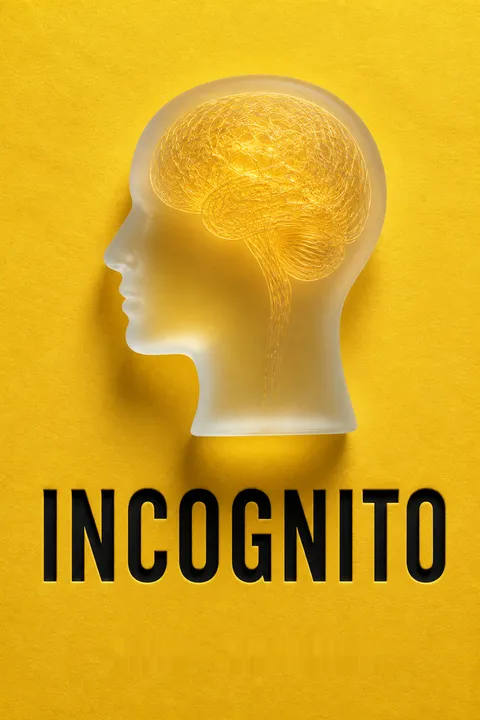
Incognito explores the hidden workings of the brain, challenging readers' understanding of free will and consciousness. Eagleman presents fascinating case studies and experiments demonstrating how unconscious processes shape our behavior and decisions. While some reviewers found the book thought-provoking and enlightening, others criticized its simplification of complex topics. The author's writing style is praised for making neuroscience accessible to a general audience. Many readers appreciated the book's implications for understanding human behavior and potential applications in fields like criminal justice.
People Also Read





Glossary
unconscious inference
automatic sensory interpretationA process in which the brain uses prior experience and assumptions to interpret incomplete sensory information without conscious awareness. For example, the visual system may infer an object's shape from shading and its usual assumptions about lighting. The perceived scene is therefore an interpretation of sensory signals, not a direct copy of them.
change blindness
missed scene changesA failure to notice a change in a visual scene when attention is not directed toward the changed feature. Even substantial changes, such as a person being replaced during a brief interruption, can go unnoticed. The phenomenon shows that seeing a scene does not mean that every detail in it has been consciously recorded.
umwelt
an organism's sensed worldThe portion of the environment that an organism can detect and use through its particular sensory equipment. Humans, ticks, bees, and bats inhabit different umwelts because they register different kinds of information. Each organism may take its own perceptual world for the whole of reality, despite signals beyond its sensory reach.
implicit memory
learning without conscious recallMemory that affects performance, preference, or judgment without requiring conscious recollection of the experience that produced it. A person can improve at a task or respond more readily to a familiar word while sincerely believing the material is new. Implicit memory can persist even when explicit memory is badly impaired.
priming
prior exposure shapes responseAn influence of prior exposure that makes a related idea, word, or response more accessible later. Someone who has encountered a word may be more likely to complete a partial version of it, even without remembering the earlier exposure. Priming illustrates how experience can alter later thought without entering conscious recollection.
Ulysses contract
precommitment against temptationA commitment made in advance that limits a person's later options when judgment may be weakened by temptation or emotion. The name refers to the mythic sailor who arranged to be restrained before hearing the Sirens. Such a contract lets a calmer present self protect a future self from a predictable impulse.
team of rivals
competing neural systemsA model of the brain as overlapping systems that can offer different responses and compete to control behavior. The systems may favor different goals, such as immediate reward or longer-term safety. A single action results from their interaction and arbitration, rather than from one unified inner decision-maker.
zombie systems
automatic processes without awarenessThe book's term for neural processes that perform tasks without conscious access. Some are inherited, while others are acquired through learning and practice. They support activities such as speech, skilled movement, and rapid reactions. Their operation can feel foreign when a system acts without the conscious person's awareness of how it works.
cognitive reserve
alternative routes for thinkingThe capacity to maintain cognitive performance despite damage or disease by drawing on alternative ways of solving problems. The book describes people whose brains showed signs of Alzheimer's disease after death but who had shown few symptoms during life. Continued mental activity is presented as one contributor to this resilience.
principle of sufficient automatism
volition need not settle policyThe author's proposed principle that legal and social policy need not wait for a final answer about free will. Human behavior is shaped so extensively by automatic biological processes that the practical question is how to respond to harmful actions, regardless of whether a small role for free choice exists.
modifiability
capacity for behavioral changeA forward-looking criterion for asking whether a person's behavior can be changed through rehabilitation, incentives, or other interventions. In the book's proposed legal approach, it would help distinguish cases where punishment or treatment may improve future behavior from cases where public safety requires incapacitation instead.
emergence
system-level propertiesThe appearance of properties in a complex system that are not present in its individual components. Neurons are physical parts of the brain, but thought is not a property of one neuron considered alone. The concept explains why studying components is essential yet insufficient for understanding a whole system's behavior.
FAQ
What's Incognito: The Secret Lives of the Brain about?
- Exploration of the subconscious: The book delves into the hidden workings of the brain, emphasizing that much of our behavior and thought processes occur outside of conscious awareness.
- Neuroscience and psychology: David Eagleman combines insights from neuroscience with psychological concepts to explain how our brains operate, often without our conscious input.
- Implications for human behavior: It discusses how understanding these subconscious processes can illuminate various aspects of human behavior, including decision-making, attraction, and morality.
Why should I read Incognito: The Secret Lives of the Brain?
- Insight into human nature: Reading this book provides a deeper understanding of the complexities of the human mind and the subconscious influences on our actions.
- Engaging storytelling: Eagleman presents scientific concepts in an accessible and engaging manner, making complex ideas relatable and easy to understand.
- Practical applications: The insights gained can be applied to everyday life, enhancing self-awareness and understanding of others' behaviors.
What are the key takeaways of Incognito: The Secret Lives of the Brain?
- Subconscious control: A significant portion of our thoughts and actions are governed by subconscious processes, which operate independently of our conscious mind.
- Team of rivals: The brain functions as a "team of rivals," with different neural circuits competing for control over our thoughts and actions, leading to internal conflicts.
- Evolutionary programming: Many of our instincts and preferences are hardwired into our brains through evolutionary processes, shaping our perceptions and behaviors.
What are the best quotes from Incognito: The Secret Lives of the Brain and what do they mean?
- “There’s someone in my head, but it’s not me.” This quote encapsulates the idea that much of our mental life is governed by subconscious processes that we are not aware of, highlighting the complexity of self-awareness.
- “Most of what we do and think and feel is not under our conscious control.” This emphasizes the extent to which our subconscious influences our behavior, suggesting that we often misattribute our actions to conscious decision-making.
- “In each of us there is another whom we do not know.” This reflects the idea that our subconscious holds parts of ourselves that we may not fully understand or recognize, pointing to the multifaceted nature of identity.
How does David Eagleman explain the concept of the subconscious in Incognito?
- Neural processes: Eagleman describes the subconscious as a collection of neural processes that operate without conscious awareness, influencing our thoughts and actions.
- Automatic functions: Many behaviors, such as driving or playing an instrument, become automatic through practice, allowing the subconscious to take over while the conscious mind focuses on other tasks.
- Conflict and competition: The subconscious is not a single entity but rather a collection of competing systems that can lead to internal conflicts, as different parts of the brain vie for control over our actions.
What is the "team of rivals" concept in Incognito: The Secret Lives of the Brain?
- Multiple systems: Eagleman posits that the brain consists of multiple systems that compete for control over our thoughts and behaviors, akin to a political system with rival parties.
- Internal conflicts: This competition can lead to internal conflicts, where different neural circuits may have opposing goals, resulting in feelings of indecision or ambivalence.
- Dynamic interactions: The interactions among these rival systems allow for flexibility and adaptability in behavior, as the brain can draw on different resources depending on the situation.
How does Incognito address the relationship between consciousness and decision-making?
- Limited access: Eagleman argues that our conscious mind has limited access to the vast array of processes occurring in the brain, which often dictate our decisions.
- Influence of emotions: Emotional responses can heavily influence decision-making, often overriding rational thought processes, leading to choices that may not align with our conscious intentions.
- Ulysses contracts: The book discusses how individuals can create "Ulysses contracts" to bind their future selves to decisions made in a more rational state, illustrating the struggle between immediate desires and long-term goals.
How does David Eagleman define consciousness in Incognito?
- Consciousness as a Small Part: Eagleman argues that consciousness is just a small fraction of our overall mental processes, primarily serving to narrate and justify actions initiated by unconscious systems.
- Conflict and Competition: He describes consciousness as a battleground for competing neural systems, where different impulses vie for control.
- Narrative Construction: The conscious mind is portrayed as a storyteller that fabricates explanations for our actions, often without awareness of the true influences at play.
How does Incognito relate neuroscience to the legal system?
- Neuroscience and Responsibility: Eagleman argues that insights from neuroscience should inform our understanding of moral responsibility and culpability.
- Revising Punishment Approaches: The book suggests that the legal system should shift from a focus on blameworthiness to a more evidence-based approach that considers the underlying neurobiology of criminal behavior.
- Future of Legal Policy: Eagleman envisions a future where neuroscience plays a central role in shaping legal policies, allowing for a more nuanced understanding of human behavior.
What role do secrets play in Incognito: The Secret Lives of the Brain?
- Neurobiological Perspective: Eagleman explores the concept of secrets from a neurobiological standpoint, suggesting that they arise from conflicts between different parts of the brain.
- Health Implications: The book discusses research indicating that keeping secrets can be detrimental to mental health, leading to increased stress and anxiety.
- Social Dynamics: Eagleman highlights the social aspects of secrets, noting that people often feel more comfortable sharing their secrets with strangers.
What are the implications of the team-of-rivals framework for understanding mental disorders in Incognito?
- Complexity of Disorders: The team-of-rivals framework helps explain the complexity of mental disorders by illustrating how competing neural systems can lead to maladaptive behaviors.
- Treatment Approaches: By recognizing that mental disorders may arise from conflicts between different brain systems, we can develop targeted treatment strategies.
- Rethinking Responsibility: Understanding mental disorders through this lens raises important questions about personal responsibility, suggesting individuals may have less control over their actions.
How does Incognito explain the phenomenon of "blindsight"?
- Unconscious visual processing: Blindsight refers to the ability of individuals with damage to their primary visual cortex to respond to visual stimuli without conscious awareness of seeing.
- Subcortical pathways: Eagleman explains that even when conscious vision is impaired, subcortical pathways can still process visual information.
- Implications for understanding consciousness: Blindsight challenges traditional notions of consciousness, suggesting that awareness is not a prerequisite for visual processing.
About the Author
Other books by David Eagleman

Download PDF
Download EPUB
.epub digital book format is ideal for reading ebooks on phones, tablets, and e-readers.








