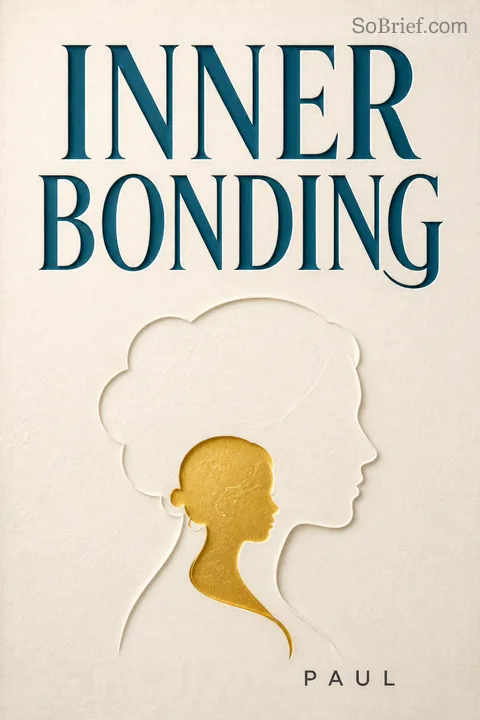


Key Takeaways
Build an inner bond: let reason hear feelings, then act on their needs
Two parts, one person. Inner Bonding is the practice of connecting rational thought with emotional experience so a person can respond to both. The book calls the thinking, action-taking aspect the Inner Adult, and the vulnerable, feeling-oriented aspect the Inner Child. These are metaphors for parts of one personality, not separate people inside the mind. The Adult’s task is to notice feelings, understand what they signal, and choose a response that supports well-being.
Action makes care credible. Tom, an executive who said he had no time to care for himself, suppressed his anger until it erupted at colleagues and threatened his job. When he became curious about the anger and what he needed, he could address its cause instead of discharging it on others. In this model, reassurance alone is not enough: care becomes believable when it informs real choices.
The model gives emotion a practical role without making it the sole decision-maker. That resembles a useful distinction in emotional regulation: feelings provide information, while reflection helps interpret and act on it. The Inner Adult and Child language can make self-talk less abstract, especially for someone accustomed to criticizing or ignoring their reactions. Its value depends on keeping the metaphor flexible. A feeling can deserve attention without dictating the right response, and thoughtful action may sometimes mean tolerating discomfort rather than immediately satisfying a want.
Treat discomfort as a signal to investigate, not an enemy to silence
The body reports first. Paul urges readers to notice tension, a clenched stomach, anxiety, numbness, or sadness before reflexively reaching for relief. Food, alcohol, work, television, anger, and other habits can temporarily mute discomfort while leaving its source untouched. The point is not that every difficult feeling has one hidden explanation, but that ignoring it prevents useful inquiry.
Ask what the feeling needs. Laura, overwhelmed by pressure at work and home, resisted the idea of an Inner Child until she imagined asking what was wrong. The answer that emerged was a sense of being alone with too much to do. Recognizing that experience and responding with support eased her stress. The book recommends a pause between discomfort and habit: notice the sensation, name the emotion, and ask what might help.
This is a strong alternative to treating emotional discomfort as a defect to suppress. Attention to bodily signals can create a pause in which a person notices patterns that automatic coping obscures. The important qualification is that feelings are clues, not infallible diagnoses. Anxiety may reflect a learned expectation, a current threat, a medical condition, or several things at once. Listening inward is most useful when paired with attention to circumstances and, when needed, professional assessment.
Choose curiosity over self-protection before old reactions take the wheel
Two competing intentions. The book describes an intent to learn, openness to understanding feelings and assumptions, and an intent to protect, avoidance of experiences that feel painful or threatening. Protection can look like denial, criticism, anger, caretaking, withdrawal, resistance, or addictive behavior. These strategies may bring brief relief, but they can deepen disconnection and strain relationships.
A different first move. When someone feels rejected, for example, an automatic protective response might be accusation or retreat. The learning response is to ask what is being felt and what belief is shaping the reaction. The book emphasizes that the Adult chooses this intention. That choice does not erase pain or guarantee a comfortable outcome; it creates room to decide what to do rather than repeating the response learned in childhood.
The contrast between learning and protecting is memorable because it turns a vague wish to change into a question about what a person is trying to avoid. It also helps explain why familiar coping strategies persist: they can reduce distress in the moment even when their longer-term cost is high. The framework should not imply that protection is always wrong. In unsafe situations, distance and caution can be essential. The distinction is between protecting against awareness and taking proportionate action to stay safe.
Use five steps to turn an upset into a caring, concrete response
A repeatable sequence. Paul organizes Inner Bonding into five steps: recognize the inner conflict; respond with curiosity; dialogue with the Inner Child; seek guidance from a Higher Power or another trusted source; and take action. A Higher Power means a source of wisdom or spiritual guidance understood according to the person’s beliefs. The dialogue can be spoken, written, or supported by an object such as a doll, though the book treats these as aids, not requirements.
Finish with action. A person upset by a partner’s behavior might first notice hurt, ask what the hurt means, and identify a fear of being unwanted. They might then seek perspective and choose a clear response, such as speaking honestly or setting a limit. The process is not complete merely because an insight appears. The Adult must act in a way that addresses the need while considering real-world consequences.
The sequence translates an evocative inner-work idea into something usable during an ordinary conflict. Its order matters: awareness without kindness can become rumination, and insight without action can leave the pattern intact. Inviting spiritual guidance makes the approach accessible to the book’s intended spiritual audience, but it need not be treated as a required source of truth. A trusted person, therapist, or careful examination of evidence can also help test an interpretation and identify a safe next step.
Question childhood conclusions before letting them choose your adult relationships
Old explanations can linger. Children often interpret events with limited information and may decide they are unlovable, powerless, or responsible for adults’ feelings. Paul calls these conclusions false beliefs when they no longer fit reality but continue to shape behavior. The book links shame-based beliefs to patterns such as seeking approval, trying to control others, or avoiding emotional pain.
Separate history from the present. Jolene felt crushed after a man failed to show up for a date and assumed she must have done something wrong. In exploring the reaction, she connected it to childhood experiences of being blamed when her father did not appear. The adult task was not to deny her disappointment, but to question whether this man’s choice proved anything about her worth. She also noticed a pattern of pursuing emotionally distant men and began reconsidering whom she chose.
The account shows how a present-day event can acquire extra force when it resembles an earlier loss. Naming that link may help distinguish an old expectation from current evidence. Yet inner dialogue is a way to explore meaning, not a reliable method for verifying historical events. Memory can be incomplete, and interpretations can change. For painful trauma or persistent symptoms, this kind of reflection is best held alongside qualified support rather than treated as a substitute for it.
Stop managing everyone’s feelings; take responsibility for your own choices
Two common imbalances. Paul uses codependence to describe abandoning responsibility for one’s own emotional needs and relying on another person to provide worth or relief. One pattern tries to make others responsible for one’s feelings through blame, anger, or demands. The other tries to manage others’ feelings through compliance, niceness, or caretaking. People can shift between these patterns, and the book does not present them as fixed identities.
Patti changes the arrangement. Although Patti and her husband earned similar incomes, she felt afraid to spend money because he disapproved. She had treated his fear as her responsibility and expected him to change before she could feel free. She opened a separate account for an agreed amount of spending money, and offered him the same option. The practical change reduced conflict and let her make her own decisions.
The distinction between overt pressure and covert caretaking is useful because control can appear generous as well as forceful. Patti’s story also makes agency concrete: a change in her own financial arrangement did not require her husband to first agree with her interpretation. Still, responsibility for one’s reactions should not be confused with responsibility for another person’s harmful conduct. A partner’s anger, coercion, or abuse remains consequential, and safety planning may matter more than dialogue.
Risk losing approval rather than abandoning yourself to keep a relationship
A boundary is a choice about participation. The book argues that self-respect sometimes requires saying no, leaving a hostile conversation, or ending an arrangement that repeatedly causes harm. This does not control what another person does; it states what one will accept and what one will do next.
Bridget stops colluding. She became involved with Homer while he remained in a relationship with another woman. Although she cared for him, the secrecy and his broken promises left her feeling compromised. She told him she would not continue seeing him unless he was honest with his partner. When he chose not to change the arrangement, Bridget had to grieve and move on rather than wait for him to become someone else. The case shows that integrity can cost a relationship, but self-abandonment has a cost too.
The book’s strongest relational insight is that honest limits can protect both self-respect and the possibility of genuine connection. A boundary is not a technique for making someone comply; it is a commitment to one’s own next action. That distinction prevents self-care from becoming another form of manipulation. The approach also recognizes a hard reality: a person can act thoughtfully and still lose a relationship. No inner practice can guarantee another person’s honesty or availability.
Show children self-respect by practicing it before correcting them
Parents teach through their own conduct. Paul argues that children learn how adults handle anger, needs, and limits partly by watching how adults treat themselves and one another. A parent who sacrifices every need may model caretaking; a parent who shames or intimidates may model control. The book’s alternative is to stay curious about a child’s behavior while holding appropriate limits.
Karen changes the pattern. Her daughter Hilary had learned that tantrums and demands reliably pulled the household into caretaking her. Karen began taking care of her own needs rather than immediately giving in, while the family stopped rewarding disruptive demands with constant attention. The child was initially angry, then began finding ways to occupy herself. The practical lesson is not to withdraw affection, but to distinguish caring for a child from giving in to every demand.
This section usefully shifts parenting from fixing a child to examining the adult’s contribution to a family pattern. Children need both emotional responsiveness and predictable limits; self-respect can model that combination better than either self-erasure or harsh control. The book’s case examples should not be read as universal discipline instructions. Children differ in age, ability, and need, and withdrawal may be harmful if it replaces connection or supervision. A child’s behavior deserves contextual understanding as well as boundaries.
Build a life that can hold solitude without demanding a rescuer
Inner support and human connection both matter. Paul argues that a partner or friend can offer help but cannot take over the work of understanding and caring for another person’s feelings. He does not suggest that people should need nobody. Rather, he urges readers to develop interests, friendships, and ways to care for themselves so that being alone does not feel like proof of worthlessness.
Lenore rebuilds after loss. After her husband of forty years died, she felt panicked and abandoned. With support from a grief group and renewed inner work, she began traveling, volunteering, and building friendships. Those activities did not erase grief or replace her husband. They gave her life new sources of connection and purpose. The broader practice is to ask what brings aliveness when no one else is available, then make space for it.
The distinction between solitude and isolation matters. A person who can comfort themselves may be less likely to treat a partner as a sole source of identity, while community can make grief and change more bearable. The book’s language of self-sufficiency needs a generous reading: people remain relational, and receiving care is not a failure of inner work. The aim is not independence at all costs, but connection that does not require either person to disappear.
Analysis
Inner Bonding’s central contribution is a practical model of self-relationship: notice emotion, approach it with curiosity, examine the beliefs attached to it, and choose an action that respects both personal needs and other people’s agency. Its “Inner Adult” and “Inner Child” are most useful as conversational roles, not claims that a person contains separate selves. That distinction lets readers use the imagery without confusing a therapeutic metaphor for a literal account of personality.
The book’s strongest examples are relational. Caretaking, angry control, and withdrawal are presented not simply as bad habits but as attempts to manage fear, shame, or dependence. The proposed remedy is neither passive acceptance nor self-indulgence. It is to take one’s own feelings seriously, set limits, and tolerate the fact that others may respond poorly. This makes the method relevant to intimate relationships, family life, and work.
Its explanatory reach is also its main limitation. The text often treats distress as the consequence of internal beliefs and disconnection, a perspective that can restore agency but may understate material hardship, illness, trauma, discrimination, or another person’s actual abuse. Some clinical stories, including medication-related outcomes, are individual anecdotes, not evidence that the same result is safe or likely for others. Likewise, inner dialogue can clarify personal meaning, but it cannot independently establish the accuracy of a recovered memory.
A careful reading therefore keeps the method’s invitation and limits together: attend to emotion without obeying every impulse; take responsibility for one’s choices without taking blame for harm done by others; seek support without surrendering self-trust. Used that way, Inner Bonding is less a promise of permanent peace than a repeatable practice for interrupting self-abandonment and responding with greater clarity.
Review Summary
Inner Bonding receives mostly positive reviews, with readers praising its insights on self-love and healing childhood trauma. Many find the book life-changing, particularly in addressing codependency and relationship issues. The concept of connecting with one's inner child resonates strongly with readers. Some criticize the repetitive nature of examples and dated gender perspectives. The book's practical approach and actionable steps are appreciated, though a few readers find it overly simplistic. Overall, it's considered a valuable resource for personal growth and improving relationships with oneself and others.
People Also Read


Glossary
Inner Bonding
Connecting thought and feelingA practice of bringing rational thought into contact with emotional experience, then taking action that responds to both. The book frames it as a relationship between the Inner Adult, which can choose and act, and the Inner Child, which communicates feelings and needs. It is meant to support self-understanding, self-care, and more direct relationships with others.
Inner Child
The feeling-oriented selfPaul’s term for the vulnerable, instinctive, intuitive, and feeling-oriented aspect of a person. It represents qualities such as emotion, creativity, and a sense of wonder, not a separate person or a claim that childhood was happy. In the method, bodily feelings and emotional reactions are treated as ways this aspect communicates needs and distress.
Inner Adult
The choosing, acting selfThe book’s name for the rational, experience-informed aspect of a person that makes choices and acts in the world. Its role is to notice and understand the Inner Child’s feelings, question beliefs that may no longer fit, and take practical steps on behalf of the person’s well-being. It can respond with care or repeat learned patterns of criticism and neglect.
Intent to learn
Openness to inner experienceA chosen willingness to notice feelings, explore their causes, and question the beliefs shaping them. In Inner Bonding, this intention allows the Adult to listen to the Child rather than dismiss, shame, or numb its distress. Learning does not mean agreeing with every feeling or giving in to every desire; it means staying open long enough to choose a considered response.
Intent to protect
Avoidance of painful experiencePaul’s term for a defensive stance that avoids feeling or taking responsibility for emotional pain. It can appear as denial, criticism, anger, withdrawal, resistance, caretaking, or addictive behavior. The book argues that these strategies may offer short-term relief while maintaining inner conflict. This is distinct from taking sensible protective action against actual danger.
Codependence
Abandoning self-responsibilityThe book’s specialized use of codependence describes a pattern in which a person does not take responsibility for their own emotional needs and instead relies on others to supply worth, comfort, or happiness. It can involve demanding that others manage one’s feelings or caretaking others to gain approval. Paul treats it as a relational pattern, not a fixed identity.
Higher Power
A source of wider guidanceA spiritual or transcendent source of truth, love, and guidance, understood according to an individual’s beliefs. Paul uses the term for the perspective sought after exploring feelings and beliefs, especially when deciding what action would be loving. The book allows varied conceptions, including God, a Higher Self, or another source of wisdom.
Five Steps to Inner Bonding
A process from awareness to actionThe book’s five-part practice: recognize inner conflict; respond as a loving Adult; dialogue with the Inner Child; seek guidance from a Higher Power; and take action. The sequence moves from noticing distress to understanding it and responding in the world. Paul presents action as essential, since insight or reassurance alone does not demonstrate sustained care.
false beliefs
Painful, limiting assumptionsPaul’s term for conclusions about the self, other people, or responsibility that create distress and restrict choices. Examples include believing one is unlovable, powerless, responsible for another person’s feelings, or unable to handle pain. The book suggests that some beliefs originate in childhood interpretations and can be reconsidered when they continue to govern adult behavior.
FAQ
What is Inner Bonding: Becoming a Loving Adult to Your Inner Child by Margaret Paul about?
- Core concept: The book introduces the Inner Bonding process, a therapeutic method for healing emotional wounds by fostering a loving relationship between your Inner Adult and Inner Child.
- Focus on self-responsibility: It emphasizes taking personal responsibility for your feelings and nurturing your Inner Child with compassion and truth.
- Application: The book applies these principles to all relationships—romantic, familial, friendships, and work—using practical steps and real-life case studies.
Why should I read Inner Bonding by Margaret Paul?
- Healing emotional pain: The book offers a clear path to address deep-seated childhood trauma, abandonment, and emotional wounds that often manifest in adult life.
- Empowerment and self-care: Readers learn to stop blaming others, take responsibility for their own well-being, and break free from codependent patterns.
- Practical and universal: The Inner Bonding process is applicable to all types of relationships, helping to foster healthier, more authentic connections.
What are the key takeaways from Inner Bonding by Margaret Paul?
- Self-love is foundational: Healing and joy come from reconnecting your Inner Adult and Inner Child, challenging false beliefs, and practicing loving self-care.
- Codependency is common: Many relationship problems stem from codependent behaviors rooted in childhood wounds, which can be transformed through Inner Bonding.
- Practical steps for change: The book provides a step-by-step process for resolving inner conflict, improving self-esteem, and creating loving relationships.
What is the Inner Child and Inner Adult according to Inner Bonding by Margaret Paul?
- Inner Child defined: The Inner Child is your vulnerable, intuitive, and feelings-driven self—the core part of you that experiences emotions and creativity.
- Inner Adult defined: The Inner Adult is your rational, logical, and action-oriented self, responsible for making choices and caring for the Inner Child.
- Relationship between the two: Healing occurs when the Adult lovingly listens to and meets the needs of the Inner Child, resolving internal conflicts and fostering emotional wholeness.
What is the Inner Bonding process and its main steps in Inner Bonding by Margaret Paul?
- Six-step method: The process involves recognizing your feelings, taking responsibility for them, dialoguing with your Inner Child, confronting false beliefs, seeking guidance from a Higher Power, and taking loving action.
- Adult-Child dialogue: A key technique is the Adult speaking compassionately to the Inner Child, exploring fears and unmet needs.
- Intent to learn: The process encourages an “intent to learn” rather than to blame or control, opening the door to healing and growth.
What are the main false beliefs that Inner Bonding by Margaret Paul helps to challenge?
- Six major false beliefs: These include beliefs such as “I am unlovable,” “I am powerless over my feelings,” and “I must protect myself from pain.”
- Origins: These beliefs are often absorbed in childhood and perpetuate shame, fear, and codependent behaviors.
- Healing approach: Inner Bonding helps identify, question, and clear these beliefs through loving connection and self-responsibility.
How does Inner Bonding by Margaret Paul define loving behavior and self-love?
- Loving behavior defined: It means nurturing and supporting your own and others’ emotional and spiritual growth, taking responsibility for your own pain and joy.
- Self-love in action: Healing past and present pain, challenging false beliefs, and making choices that foster self-esteem and happiness.
- Loving others: Supporting others’ joy and autonomy without controlling or sacrificing your own well-being.
What is the role of intent in the Inner Bonding process in Inner Bonding by Margaret Paul?
- Two core intents: The Adult can choose the intent to protect (avoid feelings) or the intent to learn (open to feelings and responsibility).
- Impact of intent: The intent to protect leads to disconnection and unloving behavior, while the intent to learn fosters healing and loving relationships.
- Empowerment: Shifting your intent is essential for emotional health and breaking codependent cycles.
How does Inner Bonding by Margaret Paul explain codependency and its two aspects?
- Definition of codependency: It occurs when the Inner Adult abdicates responsibility for the Inner Child, leading to dysfunctional relationships.
- Two types: Narcissistic (expecting others to meet your needs) and caretaking (feeling responsible for others’ feelings).
- Path to balance: Healing requires developing a loving relationship between your Inner Adult and Inner Child, balancing self-care and empathy.
How does Inner Bonding by Margaret Paul address the spiritual aspect of healing?
- Higher Power connection: The process includes dialoguing with a Higher Power (God, Higher Self, Divine Source) for guidance and truth.
- Ego vs. Higher Self: The ego is based on fear and false beliefs, while the Higher Self is rooted in love and truth.
- Spiritual healing: Openness to the Higher Self is essential for true healing, love, and wholeness.
How can the Inner Bonding process from Inner Bonding by Margaret Paul be applied to romantic relationships?
- Codependency in romance: Many conflicts arise when partners expect each other to nurture their Inner Child, leading to blame and caretaking.
- Loving conflict resolution: The process teaches staying connected to yourself, taking responsibility for your feelings, and responding with honesty and openness.
- Case studies: Real-life examples illustrate how couples shift from codependence to loving, balanced relationships by healing their Inner Child and Adult connection.
How does Inner Bonding by Margaret Paul guide readers in setting boundaries and handling relationships with parents, children, friends, and at work?
- Boundaries with parents: The book helps readers discern loving behavior from codependent caretaking, encouraging healthy boundaries and self-care.
- Parenting advice: Parents are taught to model self-love and responsibility, avoiding power struggles and fostering children’s self-esteem.
- Friendships and work: The process addresses codependency in friendships and professional settings, teaching readers to advocate for themselves, set limits, and maintain self-respect in all relationships.
Download PDF
Download EPUB
.epub digital book format is ideal for reading ebooks on phones, tablets, and e-readers.








