

Key Takeaways
Pray alongside the Divine, asking for wiser sight rather than favors.
A changed conversation. Myss says her prayer life began after an inner prompting interrupted an otherwise happy afternoon. She defended her spiritual work, then recognized that studying sacred ideas was not the same as speaking intimately with the Divine. Her book reframes prayer as a candid conversation that asks for guidance in how to see, speak, and act, rather than a bargain for preferred outcomes. Grace, defined. Grace is the spiritual support she believes prayer invites, often experienced as qualities such as courage, patience, or hope. The collection offers one hundred prayers, each focused on a particular human difficulty and the grace that might help meet it.
The distinction between asking for an outcome and asking for wiser action gives prayer an ethical dimension: it becomes a pause before speaking or choosing. That makes the practice accessible beyond formal religion, because the central task is honest self-examination. The account also leaves an important question open. A powerful inner impression may feel sacred without proving that it comes from beyond the self. Testing guidance against care for others, practical facts, and personal responsibility keeps intimacy from becoming unquestioned certainty.
Silence is a way to listen, not a test for instant answers.
Listen beneath thought. Myss distinguishes holy listening from merely sitting in a quiet room. It means turning attention inward, noticing the body and the soul, and allowing the mind's constant questions to settle. She describes returning to this stillness during ordinary activities, not only in retreat. No demand for proof. In her experience, guidance may arrive later as an unexpected thought, while silence can itself be an answer. Her prayers do not require formal language or a special setting. A person can begin by naming what feels difficult, waiting without insisting on a sign, and noticing what becomes clearer in the pause.
This practice resembles a deliberate interruption of mental autopilot. A pause can create room between an emotional trigger and a response, which is especially valuable when words could cause lasting harm. The book's strength is its insistence that listening belongs inside daily life, not in a separate spiritual compartment. Still, inward quiet does not make every intuition reliable. Reflection is most useful when paired with evidence, time, and, where appropriate, counsel from people affected by the decision.
Stop demanding a cosmic explanation before taking the next wise step.
The limits of why. Myss argues that asking why a painful event happened often disguises a wish to make life predictable. She recalls repeatedly seeking explanations during crises, then learning that no clear answer arrived, even as she eventually found a way forward. Her counsel is to release the demand for a complete account and focus on what can be chosen now. Acceptance is not approval. This shift does not make grief, illness, or injustice harmless. It can, however, reduce the extra distress created by replaying unanswerable questions. In Myss's spiritual language, trust means holding a larger story without pretending to know its plot.
The distinction between accepting uncertainty and endorsing suffering is crucial. A person can stop searching for a cosmic reason while still seeking treatment, protection, justice, or practical help. The book's references to karma offer one way to imagine a larger order, but that order cannot be verified from an individual's misfortune. If hidden explanations are treated as facts, they can burden people with the suggestion that pain was deserved. Acceptance is strongest when it frees energy for care and accountability.
Treat each choice as a contribution to a world shared with strangers.
Small acts have reach. Myss sees human beings as interconnected participants in the life around them. She calls this co-creation: the idea that choices, words, and actions help shape shared experience, rather than leaving reality entirely to outside forces. Her term Organic Divinity describes the sacred as present throughout nature and life, not separate from them. She also uses psychic free radicals as an image for fear and hostility circulating through a community. These are spiritual metaphors, not measurable mechanisms. A returned smile, a compassionate word, or a deliberate refusal to spread contempt can change an immediate interaction, even if its wider effects remain unseen.
The framework's most useful claim is ethical rather than cosmic: people are affected by the emotional climate they help create. It directs attention away from private intention and toward consequences in relationships and communities. That resembles systems thinking, where many small interactions shape a larger pattern. The metaphor of shared psychic energy can inspire responsibility, but it should not be confused with established physical science. Its practical value does not depend on proving an invisible energy field; considerate conduct matters on its own.
Ask for strength to meet reality, not guarantees that reality will obey.
A closed door can redirect. After Myss failed to get an editorial job she wanted, she understood the rejection as protection and eventually entered a career she had not imagined. She uses this story to challenge the assumption that prayer should secure a particular result. Guidance, in her view, may change a person's direction without explaining the reason or timing. Surrender still acts. Letting go of control does not mean waiting passively for rescue. It means releasing the demand to dictate every outcome, then responding to the choices and responsibilities that remain. Prayer supplies trust and steadiness, not a guarantee that loss will be avoided or plans will unfold neatly.
This is a powerful way to metabolize disappointment: an unwanted ending need not define the future. It can support resilience without requiring a person to enjoy the setback. Yet the interpretation should remain personal rather than universal. Not every rejection hides a better opportunity, and spiritualizing a harmful situation can discourage someone from leaving or seeking help. Trust is most constructive when it accompanies action, preserves agency, and allows uncertainty instead of insisting that every painful event was arranged for a reason.
Use humility to test certainty before fear turns it into harm.
Look at your own part. Myss warns that pride and fear can make people feel entitled to control others or excuse their own conduct. In a conversation with an atheist who focused on evil in the world, she redirected attention toward the smaller choices each person makes, including dishonesty. Her larger point is that moral harm is not only an abstract force outside the self. It can grow through actions people excuse, resentments they feed, and truths they avoid. Humility is protective. It means remembering that one's view is partial and examining one's motives before judging another person. It is not self-hatred or surrendering moral judgment.
The move from diagnosing the world's evil to examining one's own conduct can restore a sense of responsibility. Humility also makes correction possible: certainty becomes something to inspect, not simply obey. A needed qualification is that disbelief in God does not itself weaken conscience, and disagreement is not evidence of wickedness. Moral judgment should focus on conduct and consequences, not a person's religious identity. The book's strongest invitation here is universal: scrutinize the harm one can actually prevent.
Turn compassion into presence or practical help, not just a feeling.
Stay with someone's pain. Myss recounts meeting a homeless veteran who asked her to share a meal. She initially felt uncomfortable, then listened as he described the distress he carried from war. The encounter changed her sense of how easily life could have placed her in a different position. For her, compassion is not pity or sentiment. It is a grace that moves a person toward attention, service, or concrete assistance. Small does not mean empty. A meal, respectful company, or a prayer may not solve homelessness or trauma, but it can offer dignity and connection in a particular moment.
The scene makes compassion specific: it asks someone to remain present when another person's suffering is difficult to witness. That is different from assuming responsibility for fixing everything. The distinction matters because compassion without boundaries can exhaust helpers, while compassion without action can become self-congratulation. Individual care also cannot replace public responses to homelessness, trauma, and poverty. The strongest reading holds both truths together: direct human contact matters, and structural causes still require collective remedies.
Make your spiritual path the ordinary life you actually have.
Purpose is practiced. Myss rejects a sharp division between spiritual life and everyday life. Relationships, work, grief, and routine choices all become part of the path because they reveal how a person treats others and responds to change. She describes gardening as meaningful because it lets her participate in nurturing life, not because the task carries some universal label of importance. Find the distinctive gift. She calls charism the personal grace through which a person's particular capacities for love and service can be expressed. It is not a prize for being extraordinary. The point is to notice what one can offer and use it faithfully in the life already underway.
This view makes purpose less like a hidden job title and more like a pattern of attention and contribution. It can loosen the pressure to find a single grand mission before ordinary responsibilities count. The idea of charism is most useful when it names capacities that are developed and shared, rather than a fixed destiny that someone else must discover. Meaning can be created through care, but that should not romanticize exhausting or unjust conditions. Everyday service is valuable, and people also deserve room to change their circumstances.
Analysis
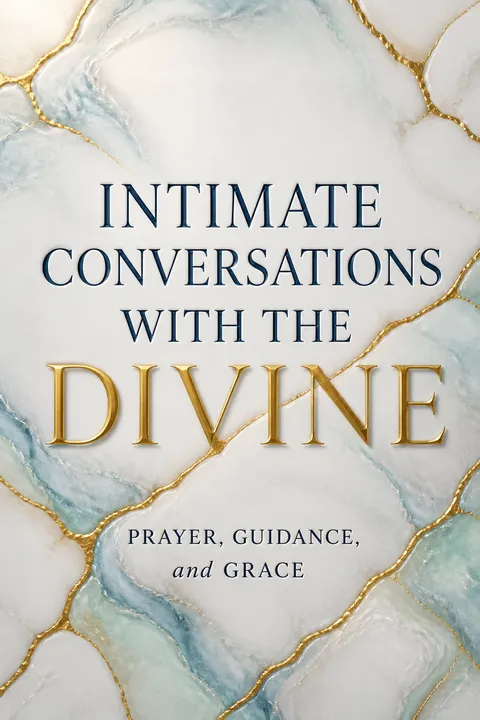
Intimate Conversations with the Divine is a spiritual memoir presented as a practical prayer book. Its one hundred short entries repeat a recognizable movement: a personal disturbance, a conversation with God, an interpretation of the moment, and an invocation of a particular grace. The repetition is part of the argument. Prayer is not reserved for emergencies or religious specialists; it is a daily way of attending to conscience, uncertainty, and other people. The book's narrative line begins with Myss's recognition that teaching spirituality is not the same as maintaining a personal prayer life, then expands toward a vision of human interdependence and responsibility.
Its most persuasive insights do not require accepting its entire metaphysics. Prayer can function as structured reflection: naming fear, loosening a demand for control, and rehearsing a more compassionate response. The recurring emphasis on words and choices also grounds spirituality in conduct. The homeless veteran, the stranger offered company, and the missed career opportunity turn abstract faith into encounters with grief, service, and redirection.
The limits are equally important. Myss treats divine guidance, angels, karma, and collective spiritual forces as realities, but the text offers personal testimony rather than independent evidence for those claims. Its language about illness, suffering, and divine purpose can comfort, yet risks implying that hardship is spiritually assigned or that prayer substitutes for material and professional help. The safest and most useful reading distinguishes her faith from general advice: readers can adopt reflective prayer, humility, and service without accepting every causal explanation. At its best, the book asks not for passive belief but for attention that changes how a person speaks, chooses, and responds to suffering. Its central challenge is practical: if every encounter is spiritually significant, then no stranger is outside the circle of moral concern.
Review Summary
Intimate Conversations with the Divine receives mostly positive reviews, with readers praising its uplifting and comforting nature. Many find the prayers and reflections helpful for personal growth and spiritual practice. Reviewers appreciate Myss's non-legalistic approach to prayer and her ability to address relevant issues. Some readers report feeling more open-hearted and present after engaging with the book. A few criticisms mention redundancy and discomfort with religious language. Overall, the book is seen as a valuable resource for spiritual seekers and those looking to deepen their prayer life.
People Also Read










Glossary
Grace
Spiritual strength for livingMyss uses grace for spiritual assistance that can be requested through prayer and experienced as qualities such as courage, trust, compassion, hope, or endurance. It is not simply a favorable event or a reward for good behavior. In her account, grace helps a person meet experience and make wiser choices, though it does not guarantee a preferred outcome.
Holy Listening
Attentive inner quietHoly Listening is Myss's practice of turning attention inward, becoming quiet enough to notice subtle guidance or a shift in awareness. It differs from merely avoiding noise: it involves observing one's inner reactions without demanding an immediate answer. She describes it as possible during ordinary activities as well as in dedicated periods of prayer.
Co-creation
Choices shaping shared realityCo-creation is Myss's spiritual idea that people participate in forming their lived reality through choices, words, thoughts, and actions. It does not mean that individuals can simply wish for any result. Rather, each choice contributes consequences to a wider human and natural whole, making personal conduct part of collective life.
Organic Divinity
The sacred within all creationOrganic Divinity is Myss's view that the Divine is not an external humanlike figure but is expressed through nature, life, and the laws governing creation. The sacred is therefore present within and around people, rather than confined to religious institutions. Prayer is the intimate means by which an individual relates to this encompassing reality.
Psychic free radicals
Metaphor for circulating negativityMyss uses psychic free radicals as a metaphor for fear, hostility, and other harmful emotional influences that people generate and absorb within a shared social atmosphere. She presents prayer and grace as counterforces that can interrupt this spread. The phrase is spiritual imagery in the book, not a scientific term for a measurable substance.
Charism
Distinctive grace for serviceCharism is Myss's term for the distinctive grace or capacity through which a person can express their particular gifts. It is associated not with fame or exceptional status but with the potential to love, serve, endure, and help others. She presents prayer and self-knowledge as ways of recognizing and sharing this personal capacity.
About the Author
Other books by Caroline Myss







Download PDF
Download EPUB
.epub digital book format is ideal for reading ebooks on phones, tablets, and e-readers.








