

Plot Summary
The Wrong Dinner Stop
Noah Lupescu1 is driving west toward a new veterinary job in Arizona when a failing GPS leads her into Howling Rapids, a Colorado town absent from her map. At Droolies, friendly waitress Zara6 welcomes her, then warns that the men gathered for the evening are keyed up about a local Hunt. Several large men stare at Noah1 with unsettling intensity.
After dinner, a cowboy-hatted stranger and another man watch her outside the coffee shop, but she talks herself out of alarm. At her Bronco, someone shoves her into the door, then tackles her onto the gravel. A hand grips her neck and lifts her away as the street vanishes into darkness.
Noah’s first mistake is not stopping in an unfamiliar town, but explaining away the evidence her instincts collect. Her history of moving and starting over has trained her to treat unease as a nuisance she can outlast. The scene makes that habit consequential: she notices the stares, the watchers, and the empty street, yet keeps choosing the ordinary explanation because ordinary life is the only map she trusts. Zara’s cheerful welcome sharpens the contrast between the town’s hospitable surface and its hidden ritual. The attack abruptly strips Noah of the freedom she thought she could always recover by moving on.
Cloaks Beneath the Moon
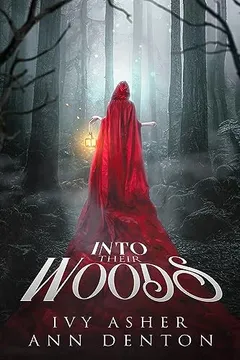
Noah1 wakes alone in the forest, injured and nearly naked beneath a red cloak. More cloaked figures stand spaced between the trees, then scatter when enormous wolves emerge and pursue them. Noah1 runs, grabs a branch, and fights when a black wolf5 attacks her. A much larger red-and-gray wolf2 crashes into the pack, giving her a chance to resist.
The black wolf5 bites her calf, and pain tears through her as memories flash: a foster home, her mother, and a frightened boy in a warehouse. She loses consciousness while someone2 carries her from the forest and promises she will survive. The wounds she remembers will soon be gone, but the bite has begun changing her.
The Hunt turns Noah’s body into contested territory before she understands that anything is being decided. She responds as a trained animal-care worker would, trying not to trigger pursuit, then abandons caution when she sees no other way to survive. Her brief blow against the black wolf establishes her refusal to become passive prey. Yet the bite transforms the encounter from a simple rescue into an irreversible change. The fragmented memories interrupt physical terror with a deeper, unexplained pull toward a boy and her mother. The forest has not only exposed a supernatural world; it has cracked open a past Noah believed she had already lost.
A Jeep Into the Unknown
Noah1 wakes in a luxurious house between Ruger,3 a tattooed shifter, and Perth,4 his red-haired denmate.4 They say their den2 claimed her during the Hunt, but she remembers an assault and refuses to accept their explanation. Still missing her belongings and convinced she must get away, she slips downstairs, steals a Jeep from their garage, and drives back toward town.
At the sheriff’s office, she reports an assault and kidnapping to Deputy Fife.11 Sheriff2 Ellery Arcan2 enters to hear her account and recognizes Noah1 as the woman his den2 claimed. He hides his shock while she describes the wolves as an attack and insists she may have been drugged. The report turns her escape into the beginning of an investigation.
Noah’s escape is both a practical act of self-protection and a way to preserve the story she knows how to tell: she is a victim of a crime, not a participant in a ritual. The Jeep theft also reverses the helplessness of the forest. She can still act, choose a route, and reach for public authority. Ellery’s position as sheriff gives her a plausible source of help, but his recognition of her creates a painful divide between her account and the town’s understanding. The scene’s tension comes from dramatic asymmetry: Noah thinks she is reporting an unknown assailant, while Ellery knows the supernatural event is real and is bound up with his own den.
The Sheriff Knows Her
As Noah1 recounts the attack, pain swells behind her eyes until Ellery2 lifts her onto a couch and summons his father,7 Morgan,7 and the healer Imogen.10 Morgan7 identifies Noah1 as a naif, someone with eerie ancestry who has lived unaware of it. Imogen10 senses that Noah1 is nearing her first shift, but a magical block woven into her prevents the transformation and could make it fatal.
Her spell to help triggers black veins and more pain instead. Noah1 rejects Morgan7’s attempt to calm her through his alpha power. Gannon,5 one of Ellery’s denmates,5 shifts into a wolf to show her that the forest was real. Imogen10 gives Noah1 a potion to dissolve the block before she tries shifting again.
This revelation does not arrive as a comforting answer. It arrives through pain, a failed spell, and the violation of Noah’s body by forces no one has yet explained. Her resistance to Morgan’s calming influence matters: even when frightened, she protects the boundary of her own mind. Gannon’s transformation persuades her because it confirms what she saw rather than asking her to submit to someone else’s interpretation. The magical block adds a second mystery to the first: Noah is not merely discovering a hidden identity, but confronting someone’s deliberate effort to conceal it. Knowledge begins as danger, then becomes necessary for survival.
A Room at the Howliday
After drinking Imogen10’s potion, Noah1’s pain and the black veins recede. Ellery2 explains that Howling Rapids shelters shifters, witches, vampires, trolls, and other eeries, while Morgan7 offers pack support without demanding that she accept the den.2 Noah1 asks for time and Ellery2 takes her to the Howliday Inn.
She learns that Gannon5’s bite started a mate claim linking her to Ellery,2 Ruger,3 Perth,4 and Gannon,5 though Ellery2 says she may still refuse them. Her Bronco and personal belongings are missing, and the sheriff’s early investigation finds no clear suspect. The inn becomes both refuge and waiting room: Noah1 is physically safe for now, but every missing possession reminds her that the life she planned is already slipping away.
The pack’s offer of belonging reaches directly into Noah’s deepest deprivation, but it cannot erase the fact that the claim began without her knowledge or consent. That contradiction gives her gratitude an edge: care feels real, yet so does the loss of control. Morgan’s assurance that she can choose for herself is important precisely because the supernatural system seems to have made a choice on her behalf. The stolen car and belongings deepen the displacement beyond romance or magic. Noah has lost the objects that connect her to her former life, so the inn’s comfort cannot yet feel like home. She must decide whether safety can coexist with autonomy.
Questions Through the Door
Ruger3 and Perth4 take turns waiting outside Noah1’s inn room, bringing food and explaining pack life without stopping her from leaving. Noah1 asks about dens, pack roles, and the Hunt, while Gannon5 challenges her for treating his brothers2 as information sources rather than people.
He also explains that the bite created a mindspeak link, so thoughts can pass between denmates unless Noah1 learns to shield herself. Ellery2 visits with investigation updates, but the stolen Bronco remains unidentified on security footage.
When Noah1 runs with Perth,4 she spots a man watching her from between buildings; he disappears before either can approach. Ellery2 believes her heightened senses and instinct, and arranges extra protection, turning her private unease into an active threat.
The men’s care takes different forms: Ruger feeds, Perth explains, Ellery investigates, and Gannon names the imbalance in Noah’s attention. His criticism stings because it identifies a survival strategy she has mistaken for independence. She gathers facts while keeping people at a safe distance, a habit learned through repeated instability. Mindspeak complicates that strategy by making privacy something she must actively defend. The watcher’s appearance raises the stakes beyond the original attack; Noah is no longer simply recovering from a past event. Someone may still be tracking her, and her growing supernatural senses make disbelief harder to maintain.
Interviews and a Kiss
At the sheriff’s office, Noah1 observes Ellery2 question dens that attended the Hunt. The Bianchi den17 is hostile, while the Sullivan den says a back injury kept its members from running. Its suggestion that a woman might have arranged the swap that placed Noah1 in the Hunt widens the investigation beyond male dens.
During another interview, a cowboy-hatted shifter makes a degrading pass at Noah1 and questions Ellery2’s claim on her. Ellery2 throws the man against a wall, then kisses Noah1 when the room empties. Noah1 wants the kiss but pulls away before it can become a promise she is not ready to make. Karen,9 Ellery2’s sharp-tongued witch deputy, then takes Noah1 shopping, promising to replace the shapeless clothes the men supplied.
The investigation gives Noah a role beyond being protected: she watches, notices, and begins to consider possible motives. But the interview room also exposes how quickly her status becomes a public argument between men. Ellery’s defense feels protective and charged, while his kiss reveals that desire can be as difficult to manage as danger. Noah’s withdrawal is not a rejection of attraction so much as an attempt to keep attraction from making the decision for her. Karen’s entrance changes the emotional register. Her irreverence creates a small space where Noah can be a woman choosing clothes, not only a victim or a supernatural problem.
Dancing Past the Fear
At Witch Stitch, Astrid14 and Trista15 use magic to dress and style Noah.1 A revealing outfit sends Ruger3 surging toward her until Perth4 restrains him and takes Noah1 aside. He teaches her a two-step, using the dance to show that she can learn by listening to her body instead of reasoning through every movement.
Perth4 shares how his parents’ bond fractured after a family death and how they eventually left him, while Noah1 describes losing her mother and moving through foster homes.
His steady presence makes a future with the den2 feel possible, though not yet certain. When Noah1 later returns to the inn, she finds her room’s scents magically erased and her pajamas missing. Her private refuge has been entered, and the threat now reaches inside her door.
The dance translates an abstract question, whether Noah can trust her instincts, into a physical experiment. She follows Perth’s lead and discovers that competence can emerge before conscious certainty. His history of abandonment gives the lesson emotional weight: he does not offer a painless model of belonging, but one in which loss does not make connection impossible. Noah’s confession mirrors his, building intimacy through shared vulnerability rather than supernatural compulsion. The break-in then interrupts that fragile ease. The room’s erased scents remove the most basic evidence of presence, turning a familiar refuge into a space that cannot be trusted simply because it is hers.
The Van Above the Mud
Ellery2 tells Noah1 that her Bronco has been found in a lake, wrecked and abandoned. As he drives her toward a new place to stay, a storm triggers a rockslide that traps a family in an overturned minivan. Ellery2 jumps down the slope to reach them. Noah1 ignores his order to remain in the SUV and follows, discovering that her body can cross the mud and rocks with impossible force.
Together they lift and roll the van, freeing two parents and their children. When a second slide sends a boulder toward them, Ellery2 catches and redirects it. The exertion leaves Noah1 depleted, but the rescue gives her concrete proof that her new strength can protect people. Ellery2 brings her home to recover.
The rescue turns Noah’s transformation from an imposed identity into a usable capacity. She does not simply demonstrate strength; she chooses to risk herself for strangers when Ellery is in danger. That choice echoes her work as a veterinary technician, where care has always meant acting under pressure for a vulnerable life. The mountain gives her body a task too urgent for prolonged disbelief, and instinct becomes practical knowledge. Ellery’s extraordinary feat also reframes his protection: he is not only a sheriff offering safety, but a powerful shifter who can still be vulnerable to catastrophe. Their shared action begins to make partnership feel more credible than custody.
A Deadline Under Moonlight
At the Arcan den2’s house, Noah1 hears a man’s voice in her mind while Gannon5 is outside on patrol. Gannon5 denies speaking to her, and Ellery2 and Ruger3 search the woods. They find a single bootprint but no scent, confirming that an unknown intruder reached the property. Later, Gannon5 tells Noah1 that the den2’s bite has started a claim that must be accepted or replaced by the next full moon.
If its magical bond breaks without another connection, Noah1 could become moon sick and lose control of her mind and power. She confronts the den2 for keeping this deadline from her, then kisses Gannon5 in a volatile attempt to test what she feels. Their attraction deepens, but the new information makes every choice feel timed.
The bootprint gives physical shape to an enemy who can evade the pack’s ordinary senses, while the unexplained voice suggests the threat may reach through mental channels too. The moon deadline compounds danger with coercive pressure: Noah must make a consequential choice before she has had time to understand the world in which she is choosing. The den’s attempt to spare her anxiety becomes a breach of trust because information withheld for her comfort still limits her agency. Her kiss with Gannon is therefore ambivalent. It expresses genuine desire, but it also tests whether she can distinguish her own longing from the bond and the countdown pressing on her.
The Mother in Memory
At dinner with Ellery’s family7 and the den2’s relatives, Noah1 hears the pack discuss the intruder and the possibility that a lone wolf is responsible. Melana Arcan8’s expression triggers a vivid memory of a warehouse where children lived under the control of a violent man. Noah1 recognizes herself as a little girl and her mother as the battered woman the man has brought inside.
Her mother shifts into a brown wolf to defend them, then urges the child to run as a huge gray wolf attacks. The vision explains why Noah1’s memories before age ten are missing and why a witch’s block may have hidden her ancestry. Noah1 realizes that both parents were shifters and that her mother may have been trying to protect her from her father.
The memory does more than supply backstory; it revises Noah’s understanding of her mother’s silence. What once looked like an absence of explanation may have been an attempt to keep a child hidden from danger, though the vision cannot yet answer what happened afterward. The warehouse also reveals that Noah’s lost childhood was not empty but actively concealed. Her identity has been shaped by both institutional abandonment and supernatural violence, neither of which she could name until now. The pack’s family dinner becomes a counter-image to the warehouse: a crowded table offers care, but the remembered family scene shows how kinship can also be a site of threat.
Four Paws, One Self
Perth4 takes Noah1 into the forest for her first deliberate shift. He asks her to find the wolf within rather than force the change, and helps her focus on a happy memory of a shelter dog she once befriended. Noah1 senses her wolf as part of herself, not an invading creature, and then endures the painful reshaping of her body.
When the change is complete, she discovers a powerful brown wolf form. Perth4 runs with her, and the freedom of moving on four legs brings joy she has never experienced in human life. Gannon5 joins the chase, and the three play through the snow. Noah1 pushes too far beyond the agreed boundary, however, and loses contact with the den2 in a worsening blizzard.
The first shift is a bodily threshold, but Perth’s method lets Noah approach it through memory and consent rather than command. The shelter dog links her old vocation to her new nature: her capacity to understand animals was not merely a professional skill, but part of a self she had not yet recognized. Running then offers a relief from self-surveillance, a rare moment when she experiences existence without having to explain or defend it. The danger at the end is not a failure of that freedom. It is its first cost: exhilaration carries Noah beyond the limits she agreed to respect, leaving her exposed when the weather turns.
The Other Mates
Alone in the snow, Noah1 senses wolves before she can see them. Several emerge from the storm and use mindspeak to insist that she belongs to them. Their scent is missing, just like the scent erased from her inn room and the Arcan property. Noah1 realizes they are likely the group that attacked her before the Hunt and answers with a charge instead of retreat.
The supposed mates draw her into a trap, while more wolves flank her. Ellery,2 Ruger,3 Perth,4 and Gannon5 arrive in time to form a barrier around her; the other wolves disappear into the blizzard. Noah1 tells the den2 that the attackers claim her as their mate. The threat is no longer a single unknown assailant, but a rival group determined to take her.
The rival den’s claim mirrors the Arcans’ claim, forcing the story’s central distinction into view: a bond cannot be judged only by who names it, but by how that claim is made and whether Noah can choose it. The attackers use the language of belonging while relying on ambush, concealment, and coercion. Their tactics expose possession without care. Noah’s decision to charge them shows how far she has moved from the frightened woman who ran blindly through the Hunt, though she still needs the den’s intervention. Their protective formation is both a rescue and a visible answer to the rival group’s attempt to isolate her.
Rage at the Bedside
After the den2 returns home, Noah1 learns that Zara6 has fallen into the Fade, a dangerous failure of a new shifter’s transition. Ellery2 goes to help, and Noah1 follows, only to see him bite Zara6 in an attempt to save her. A surge of claiming rage makes Noah1 attack until Ruger3 pulls her into a cold shower and steadies her.
Ellery2’s intervention appears to help Zara,6 whose den18 carries her home for recovery. Noah1 recognizes that her reaction came from attachment, not merely anger. She later shares increasingly intimate encounters with Gannon,5 Perth,4 Ruger,3 and Ellery.2 The physical closeness makes the mate bond feel real to her, though she has not yet completed the formal pair bite that seals it.
Zara’s emergency reveals the cost of shifter bonds in their most urgent form: a bite can save, but it can also fail, and the body’s response is not easily governed by reason. Noah’s attack on Ellery unsettles her because it shows that her instincts can act before her ethics catch up. Yet the episode also makes her attachment visible to herself. The den does not exploit her confusion; Ruger helps her regain control, and Ellery’s attention returns to their relationship afterward. Intimacy follows as exploration rather than a completed magical contract. Desire brings Noah closer, but the unresolved pair bite preserves the difference between wanting the den and formally sealing a bond.
The Name Addison
After Noah1 decides she is ready to claim the Arcan den,2 the men leave to handle a violent incident involving orcs, while Karen9 and Deputy Dillon13 stay with her. Dillon13 suddenly tears out Karen9’s throat and blocks Noah1 from reaching the exit.
He calls her Addison, a name Noah1 does not recognize, and claims her former life belongs to his group. When Noah1 tries to summon her wolf, red crystals around the room suppress her power. She leaps beyond their boundary, but Dillon13’s wolf slams into her and bites her arm.
The new bite breaks something in her existing bond and forces an unwanted connection into its place. Noah1 feels pain and loss as Dillon13 announces that she belongs to them, then blacks out before she can learn who he is or what he wants.
The ending makes the book’s central questions brutally concrete. A supernatural bond can offer connection, but it can also be weaponized by someone who controls the conditions of choice. Dillon’s use of Noah’s former name implies a history she cannot access, while the crystals and bite turn that missing history into immediate physical danger. Karen’s murder removes the person who could have helped Noah resist through magic, and the den’s absence leaves her isolated at the moment the attackers finally act openly. Noah had just chosen a future; the attack answers that choice with forced possession. The cliffhanger refuses resolution, leaving identity, motive, and the fate of her bond unsettled.
Analysis
Into Their Woods builds its romance around a conflict between instinctive recognition and informed consent. Noah1’s denmates2 may recognize her as their mate, but she arrives without knowledge of the Hunt, the bite, or the magical deadline. Their certainty cannot substitute for her understanding. The story makes that tension bodily: the bite activates her wolf, the bond opens mindspeak, and jealousy can seize her before she has found language for it. Her growth is not simply learning to accept supernatural identity. It is learning to distinguish the desires that feel like her own from the pressures of a bond she did not choose.
Noah1’s history gives that distinction emotional force. Her mother’s death, years in foster care, and habit of moving have taught her that relying on others is an invitation to be left. The den2’s care becomes persuasive not through declarations alone, but through repeated actions: Ruger3 cooks, Perth4 teaches, Ellery2 investigates, and Gannon5 tells her the harsh truth. Their attention does not erase her suspicion; it slowly gives her reasons to revise it. The first shift and the landslide rescue are crucial because they let Noah1 experience power as something she can use, rather than something done to her.
The town’s supernatural life is also deliberately social and political. Dens, pack offices, restaurants, family dinners, witch shops, and the Accords make eeries part of a functioning community, not creatures outside ordinary life. That familiar structure makes the breaches more disturbing. Someone can evade security, erase a scent, invade Noah1’s room, and speak through a channel that should require a bond. The apparent safety of Howling Rapids is real but incomplete.
The ending turns the romance’s central danger outward. Noah1 has begun choosing the Arcan den,2 yet Dillon13’s attack uses a new bite to force a different bond and calls her by a name attached to a buried past. The book closes before the attackers’ history or the fate of Noah1’s original bond is resolved. Its cliffhanger tests whether chosen belonging can survive a system in which magical power can still be used to take choice away.
Review Summary
Into Their Woods receives an overall rating of 4.19/5, with readers praising its engaging world-building, devoted male characters, and slow-burn romance with a Little Red Riding Hood twist. Many love the witty banter and steam, though common criticisms include the FMC Noah's prolonged indecision dominating the plot. The spice arrives late (~85%), but readers agree it delivers. Nearly all reviewers mention a shocking cliffhanger, leaving them desperate for the sequel.
Characters
Noah Lupescu
Wandering wolf awakeningNoah is a tall, resourceful veterinary technician whose frequent moves have become both habit and defense. After losing her mother as a child and passing through foster homes, she learned to rely on herself and expect belonging to be temporary. Her appetite, energy, and affinity with animals hint at a nature she does not understand. Noah is funny, direct, and capable of acting under pressure, but she often disguises fear by explaining it away. Her story asks whether accepting help means surrendering independence. She wants connection, yet needs evidence that closeness will not cost her the right to choose.
Ellery Arcan
Sheriff and den leaderEllery is Howling Rapids’ sheriff and the Arcan Pack’s celestial, the next wolf expected to lead. He balances public authority with a fierce instinct to protect his den2 and the town’s supernatural residents. His composure makes him a trusted mediator in disputes, though Noah1’s arrival tests his ability to separate professional responsibility from personal urgency. Ellery is decisive, attentive, and powerful, but he can mistake protection for knowing what another person needs. His relationship with Noah1 asks him to temper instinct with patience and make room for her agency alongside his desire to keep her safe.
Ruger
Den's steady caretakerRuger is a physically imposing wolf shifter with a gentler, more domestic center than his appearance suggests. He owns a restaurant, cooks with care, and notices practical needs others overlook. Within the den2, he offers steadiness through food, touch, and direct reassurance. He wants to protect Noah1 without frightening her, though the intensity of a new mate bond can challenge his usual control. Ruger’s patience gives Noah1 room to ask questions and make mistakes. His quiet caretaking also tests her suspicion that affection always comes with conditions, offering a form of reliability she has rarely experienced.
Perth
Teacher of new shiftersPerth is a red-haired wolf shifter who runs a training program for young or newly awakened shifters. Playful and emotionally perceptive, he uses humor to ease fear without pretending that difficult things are simple. He understands the pain of abandonment: his parents’ troubled bond shaped a childhood in which he felt left behind. Perth’s instinct is to guide rather than command, and his dance with Noah1 turns trust into something she can practice physically. His openness does not make him naïve; he has learned that people may need patience, repeated proof, and room to choose their own pace.
Gannon
The den's guarded survivorGannon is a black wolf shifter whose reserved manner hides a difficult childhood and a strong sense of responsibility. He understands the terror of discovering a wolf nature without guidance because he experienced his first shift as a child. With Noah1, he is blunt where the others are gentle, sometimes turning honesty into a weapon when he fears rejection. His guardedness reflects a survival strategy: anticipate abandonment before it can surprise him. Beneath the provocations, he wants Noah1 to know the stakes and the den2’s expectations plainly, even when the truth makes him seem less patient than he is.
Zara
The diner’s bright waitressZara is the friendly waitress at Droolies who gives Noah1 her first warm welcome in Howling Rapids. She is talkative when nervous, eager to take part in the Hunt, and quick to make a stranger feel included. Her easy kindness makes their brief first meeting memorable and gives Noah1 a human connection to the town before she understands its customs. Zara’s presence also shows that the supernatural community has ordinary friendships, jobs, and ambitions alongside its dangerous traditions.
Morgan Arcan
Pack's protective alphaMorgan is Ellery2’s father and the alpha of the Arcan Pack. He carries authority with practiced calm and sees the pack as a responsibility to protect, not merely a hierarchy to command. His ability to influence pack members emotionally can reassure, but Noah1’s resistance reminds him that care can feel invasive when it overrides consent. Morgan wants her to understand the community waiting to support her, while recognizing that she needs time to trust it.
Melana Arcan
The welcoming pack lunaMelana is Ellery2’s mother and the luna of the Arcan Pack. Warm, sociable, and fond of family stories, she helps make pack life feel lived-in rather than ceremonial. Her memories of the den2’s childhood antics give Noah1 a glimpse of affection among people who have known one another for years. Melana’s kindness also becomes connected to Noah1’s emerging memories, suggesting that a sense of safety can sometimes unlock what fear has kept buried.
Karen
The blunt witch deputyKaren is a witch and one of Ellery2’s deputies, known for sharp humor, unconventional style, and a refusal to indulge self-important behavior. She offers Noah1 practical help, protection, and a welcome dose of irreverence when the town’s supernatural rules become overwhelming. Karen is perceptive beneath her comic bravado and treats Noah1 as a person rather than a fragile problem. Her loyalty to the sheriff2 and her own magical skill make her a useful ally in a town where danger can arrive disguised as routine.
Imogen
Pack's experienced healerImogen is a healer who understands the risks of a first shift and the magical blocks that can interfere with it. She is competent and direct, prepared to intervene when Noah1’s transformation becomes dangerous. Her assistance is imperfect: an initial spell worsens Noah1’s pain because the block was not recognized in time. Imogen represents a community with specialized knowledge, but also one whose confidence cannot guarantee that every unusual case will fit familiar rules.
Fife
The well-meaning deputyFife is a deputy in Ellery2’s sheriff’s office, an earnest and somewhat awkward man who takes Noah1’s report seriously enough to bring it to the sheriff2. He helps connect her account to the supernatural investigation even before he fully understands what she has experienced. His gentle manner contrasts with the town’s more intimidating shifters and makes the station seem approachable. Fife is reliable in ordinary ways, though not always quick to understand the emotional stakes around him.
Bucky
The chaos-loving deputyBucky is a crow shifter and one of Ellery2’s deputies. He enjoys gossip, mischief, and the prospect of turning a tense situation into a wager or joke. His curiosity about Ellery2’s mate1 shows how quickly private events become public interest in Howling Rapids. Beneath his teasing, he performs the practical work of the station and follows the sheriff2’s directions.
Dillon
A familiar town deputyDillon is a deputy whose friendly, easygoing manner makes him seem like a familiar part of Howling Rapids’ civic life. He moves comfortably among the shifters and the sheriff2’s staff, and his presence at official interviews suggests the everyday trust placed in local officers. That outward normality makes him an unsettling figure in a story where appearances do not reliably reveal allegiance.
Astrid
The warm-hearted witch stylistAstrid is a witch who co-runs Witch Stitch with her daughter, Trista15. She brings an exuberant, nurturing energy to the shop and uses magic to create clothing that fits a customer’s body and personality. Her enthusiasm helps Noah1 experience wonder in a supernatural world that has so far delivered mostly fear. Astrid’s warmth is balanced by a practical willingness to indulge the shop’s theatrical side.
Trista
The deadpan witch stylistTrista is Astrid14’s daughter and co-owner of Witch Stitch. Her polished, goth-leaning style and dry delivery contrast with her mother14’s open enthusiasm. Trista uses magic alongside Astrid14 to transform clothing and appearance, giving Noah1 a moment of play amid more serious upheaval. She is socially perceptive and comfortable making a newcomer feel included without demanding that the newcomer pretend to be untroubled.
Kyson
Ruger's antagonistic brotherKyson is Ruger3’s older brother, a beta with a combative streak and a habit of treating social encounters as contests. He needles Ruger3 and disregards boundaries, including Noah1’s, under the cover of flirtation. His behavior exposes tensions within the pack’s family hierarchy and gives Noah1 a chance to answer provocation in her own sharp, professional way.
Joe Bianchi
The hostile den alphaJoe Bianchi leads a den questioned after the Hunt. He is defensive, resentful of Ellery2’s authority, and quick to frame the investigation as an insult. His hostility makes him a plausible suspect without proving that he was involved in Noah1’s attack. The interview shows how pack politics can obstruct a search for facts.
Ezra
The Hudson den's mediatorEzra belongs to the Hudson den and tries to keep its members focused when their mate6 becomes seriously ill. He understands the danger of delay and is willing to ask Ellery2 for help even when the rest of the den reacts with possessiveness. His practical urgency makes him a mediator under pressure.
Brice
The fiercely protective mateBrice is a member of the Hudson den, intensely protective of Zara6 while she is ill. Fear makes him hostile toward Ellery2’s approach, even when Ellery2 may be able to help. Brice’s reactions show how a mate bond can heighten both care and suspicion when someone vulnerable is at risk.
Patrice
The veterinary clinic managerPatrice manages the clinic where Noah1 expects to begin work in Arizona. Abrupt and judgmental, she treats the job as a test of loyalty before Noah1 has even arrived. Their brief phone call gives Noah1 one final reminder of the conventional life she is leaving and of how easily she can refuse a future that no longer fits.
Plot Devices
The Hunt
Ritualized mate pursuitHowling Rapids’ annual Hunt brings together lone shifters seeking mates and dens looking for a match. Participants wear red cloaks and run through the forest, while eligible dens pursue them. A bite can activate a dormant shifter and begin a mate claim. The custom depends on informed participation, which makes Noah1’s forced entry into the Hunt a serious violation rather than a misunderstanding. Its rules shape the central romance, the investigation into who placed her in the forest, and the rival den’s later claim that Noah1 belongs to them.
The Mate Claim
Bond with a deadlineA bite during the Hunt links a lone wolf to the biting shifter’s den through magic and mindspeak. The claim must be accepted or replaced by another before the next full moon. If the link breaks without another bond to stabilize the shifter, the person can become moon sick and lose control. This rule gives Noah1 a real choice, but makes the time available to make it dangerously short. It also explains why the Arcans2 are protective and why Noah1 feels pressure even when they promise not to force her decision.
The Magical Block
Hidden identity and erased memoryA witch’s imperfect spell has suppressed Noah1’s shifter nature, interfered with mental links, and made her difficult to track. When the block begins to fail, her first shift becomes physically dangerous until the healer10 gives her a potion to dissolve it. The spell may also explain why Noah1 remembers little of her childhood before age ten. Its presence suggests someone once had reason to hide her origins, while its failure allows both her wolf and buried memories to surface.
Scent and Mindspeak
Instinct made legibleShifters use scent to recognize emotional states and relationships, while denmates can communicate mentally through mindspeak. The bond makes this easier for Noah1 and the Arcan den2, but it also complicates privacy: she must learn to shield her thoughts. Scent helps the den2 read fear, desire, and familiarity when Noah1 cannot yet name what she feels. The attackers’ ability to speak into her mind despite lacking an apparent connection, and to leave no scent behind, signals that ordinary rules may not explain the threat.
Pack Accords
Law among supernatural factionsHowling Rapids houses several kinds of eeries, including wolf shifters, witches, vampires, trolls, and gnomes. The town’s Accords regulate disputes between groups and establish consequences when one faction harms another. Ellery2’s work as sheriff repeatedly places him between supernatural powers that might otherwise answer conflict with violence. The Accords show that magic does not eliminate politics or law; it gives both a different set of hazards. The local government and pack hierarchy provide protection, but neither can prevent every violation within the town.
About the Author
Other books by Ivy Asher




Download PDF
Download EPUB
.epub digital book format is ideal for reading ebooks on phones, tablets, and e-readers.








