


Plot Summary
Delta Takes the Night Shift
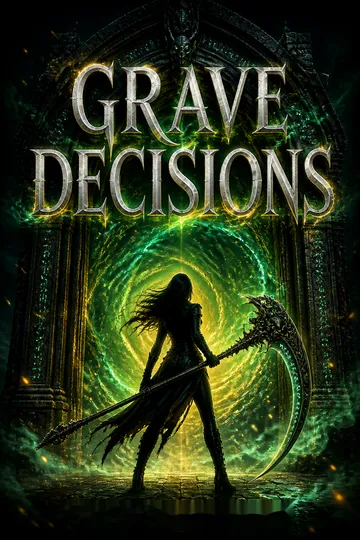
At twenty-eight, Delta Gates is nearly broke: the bar where she has worked for seven years is closing, a former hookup emptied her bank account, and overdue bills threaten the house her parents left her. When a job listing offers eighty dollars an hour to guard a private cemetery, she races to the interview despite arriving almost too late.
Recruiter Susan Atwood hires her with startling speed, explaining that the work involves dusk-to-dawn gate patrols, escorting rare visitors, and reporting trouble to the estate rather than the police. The pay includes benefits and hazard coverage, but Delta barely questions the odd restrictions. She needs a way out of debt, and the job looks like the first decent break life has offered in years.
Delta’s acceptance is less a leap of faith than a decision made under economic pressure. The job’s strange terms should invite scrutiny, but financial precarity has narrowed her sense of choice: a high wage feels less like a warning than rescue. That distinction matters because the supernatural plot begins through an ordinary labor transaction. Delta is not seeking power or adventure; she is trying to keep her home. Her quick humor helps her manage humiliation and fear, yet it also lets her wave away questions she cannot afford to ask. The story makes vulnerability concrete: desperation is not a flaw in judgment so much as the condition that makes exploitation appear reasonable.
Sean Takes the Last Paycheck
On her last night at Ballpark Brew House, Delta takes a customer’s expired beer back to Sean, the cruel owner who has run the bar into the ground. When he refuses to replace it and insults her orphaned past, years of swallowed anger break loose. Delta knocks the bottle from the counter; it shatters liquor bottles, and Sean declares that the damage will consume her final paycheck.
Her coworker Vicky offers her tips, but Delta refuses money the other woman needs for her children. At home, she hides from a thunderstorm, a reminder of the night her parents died, and sleeps on the couch beneath her mother’s quilt. A dream of faceless children playing alone deepens the loneliness she has learned to treat as normal.
Delta’s outburst costs her the money she needs, but the scene also reveals the limit of her habitual accommodation. She has endured Sean’s exploitation because every paycheck mattered; when he attacks the memory of her parents, restraint finally fails. Her action is impulsive, not strategic, and the consequence reinforces how little margin she has for error. Refusing Vicky’s tips shows that Delta’s independence is not simple selfishness: she will absorb hardship rather than take resources from someone more vulnerable. The storm and dream connect present isolation to unresolved bereavement. Her new job therefore arrives not only as income, but as a possible interruption to a life organized around loss.
A Scythe at the Graveyard
At the enormous Perdition Estate, a hostile butler sends Delta around the house to a lonely groundskeeper cabin. Her assigned uniform is constricting black leather, so she keeps the pants and boots but rejects the top. Beside a radio and flashlight, she finds a black walking stick that pricks her palm and begins to tingle as she enters the cemetery.
The radio connects her to a man she nicknames Iceman, who warns her about an estate event and an initiation. Later, strange voices draw Delta to a mausoleum. On her second approach, she finds Echo, a pale tattooed man; Crux, a blond, green-eyed man; and Jerif, whose dark skin and flame-colored hair make him unmistakably unusual. They are startled that she can see them.
The cemetery turns Delta’s practical job into a threshold before she understands what it guards. Its peculiar details, the leather uniform, unlabeled keys, and weapon-like stick, register first as workplace absurdity. Delta’s jokes keep her from interpreting the clues as danger, but the men’s surprise exposes a gap between her assumptions and theirs. The scene’s tension depends on that asymmetry: she thinks she is confronting trespassers, while they recognize her as an anomaly. The scythe’s first prick links bodily sensation to hidden identity, though neither Delta nor the reader yet has enough information to name the connection. Her comic skepticism is a survival strategy, but reality is beginning to outpace it.
The Job Is Hell’s Gate
When Delta swings the walking stick at Jerif, it unfolds into a double-ended scythe, embedding itself in stone before vanishing back into wood. The men identify themselves as the estate’s Gate Guardians and explain that Delta is likely an Inner Ring demon, though she has never known it. They need a fifth person to help stabilize the Hellgate; previous recruits have died.
Delta mistakes their talk of Rings and demons for a bizarre sexual scheme, then panics when Rafferty, the blue-skinned man behind the radio voice, confirms the truth and uses a touch to halt her frantic movements. After she wakes, the Guardians explain that the Gate is failing and propose testing her in Hell. Delta bolts from the estate, taking the scythe with her.
The revelation rearranges every earlier oddity without giving Delta time to absorb the change. Her scythe is not costume equipment, the men are not eccentric employers, and the expensive job is a dangerous obligation. The Guardians’ urgency is understandable, but they present a life-altering truth as though it were an administrative problem, intensifying Delta’s loss of control. Rafferty’s power to stop her panic protects her from injury while also crossing a personal boundary; care and coercion are already difficult to separate. Her flight is therefore more than comic refusal. She is trying to preserve the human identity and ordinary future she has always inhabited, even as the evidence against that identity accumulates.
Mrs. Lee Has Antlers
For a week Delta stays home, expecting the Guardians to pursue her and feeling oddly slighted when they do not. At her Sunday visit to her parents’ graves, she asks whether they could have hidden a demonic heritage from her. Then Mrs. Lee, the neighbor she has quietly shared the cemetery with for years, approaches with gray skin and small antlers instead of her familiar human face.
Delta flees to a grocery store, but on the ride home a dozen green, muscular demons block an alley and combine into a towering creature. She knocks the fused group down by driving her slow moped into its legs, abandons the wrecked scooter, and escapes in a stranger’s car before making her way to the estate on foot.
Delta’s new sight makes the supernatural impossible to contain within the estate. Mrs. Lee’s altered appearance is especially destabilizing because she belongs to Delta’s ordinary world, a fellow mourner whose quiet rituals had offered companionship without demands. The threat on the road transforms knowledge into immediate bodily risk. Delta survives through improvisation rather than mastery: a weak moped becomes a weapon because she commits to using it. The sequence also sharpens the cost of her isolation. She has no trusted friend to call, so she must recruit a stranger and then return to the very people she fled. Her independence keeps her moving, but it cannot keep her safe alone.
The First Trip Fails
Mud-covered and injured, Delta storms into the estate and demands answers. The Guardians say they did not activate her sight; the scythe may have awakened it, though its arrival remains unexplained. They also reveal that their failed recruits died while helping sustain the Gate.
Despite Delta’s objections, they take her through the cemetery mausoleum into Hell’s outer threshold, where she realizes the air itself could destroy a human. Panic overwhelms her, and the Guardians pull her back before testing her Ring. Delta quits and asks to return home. Rafferty respects her choice but promises protection, arranging rotating watches while he searches for a way to restore the block that once hid her from demons.
Delta’s first journey into Hell is a genuine test, but not the one the Guardians intend. The danger is not merely physical; the discovery that her parents withheld an essential truth threatens her understanding of family and self. Her panic is a proportionate response to being brought into a lethal environment without knowing the full risk. Refusal preserves her agency, even though it leaves her exposed to attacks. Rafferty’s decision to protect her without forcing her to stay distinguishes him from the pressure exerted by the group’s mission. The scene refuses an easy heroic conversion: Delta cannot become willing simply because the cause is important, and the Guardians must reckon with her consent.
Twenty Thousand Dollars
Nine days after leaving the estate, Delta cannot sleep and goes outside looking for Crux, who has been the only Guardian to visit her casually. Jerif arrives instead, bloodied from another fight, and explains that demons have attacked her almost every night because they can sense her power and want to steal it.
He wards her front door, then argues that she should live at the estate, where she would be safer. When Delta checks her bank account, she discovers a twenty-thousand-dollar payment from the estate for her hours and hazard pay.
She accuses the Guardians of trying to buy her cooperation; Jerif insists they paid what her signed contract promised. Their argument leaves Delta furious, but his warnings confirm that retreat has not made her safe.
Money, which first drew Delta toward the estate, now complicates her judgment in another way. The payment is legitimate under the paperwork she failed to read, but its scale resembles a bribe to someone accustomed to being cheated. Jerif’s bluntness makes him a poor messenger, yet the attacks reveal that Delta’s refusal cannot restore her former invisibility. Her house remains emotionally important, but its walls do not protect her from a danger she cannot see. The confrontation exposes a conflict between contractual obligation and meaningful consent: Delta accepted a security job, not an existential duty. Jerif treats those obligations as equivalent; Delta experiences their difference as the line between a job and a life.
Rafferty Stays Through Morning
After Jerif leaves, Delta channels her anger into demolishing a kitchen wall and smashing the old tile, wrecking much of the room. Rafferty finds her exhausted among the debris. When she admits she feels trapped between her empty life and an impossible duty, he carries her to bed and stays while she sleeps for more than twenty hours.
The next day he cooks for her and proposes meeting Flint, a Guardian from another Hellgate who once resisted his own post. Delta agrees to hear him out. At the other Gate, she meets Flint and Alder, a flower-patterned demon, before a breach releases a horde of goat-headed attackers. Delta sees the Guardians fight, then uses her scythe to turn several demons to ash when the battle reaches them.
Rafferty’s intervention matters because it answers Delta’s loneliness before it argues for the Gate. He does not solve her uncertainty; he offers company while she faces it. Her destruction of the kitchen is an attempt to convert helplessness into action, and the house’s damage makes her grief visible in material form. The meeting with Flint broadens the moral frame: Delta sees that guarding the Gate is not an abstract estate problem but a recurring defense against real incursions. Her own violence arrives before her confidence does. The scythe answers threat with unnerving efficiency, forcing her to confront a capacity she did not choose consciously and does not yet understand.
The Scythe Makes Its Choice
At the swamp-side Hellgate, Delta watches Flint, Alder, and her four estate Guardians face the breach. Jerif burns attackers, Rafferty freezes one, Echo weaponizes shadows, Crux turns several inside out, and Alder’s pollen kills demons choking on it.
When Rafferty is speared and Alder is surrounded, Delta abandons cover. Her scythe responds as she swings, reducing attackers to ash, and she fights until the breach is contained. The victory leaves her shaken by how readily the weapon kills, even as the Guardians praise her.
On the return journey, they explain that demons can possess humans who invite them and that their role is to test souls without overriding free will. Delta begins to see the Gate as protection, not simply their inherited burden.
The battle converts the Guardians’ explanations into observable stakes. Delta can now distinguish the dangerous demons breaking through from the wider community of beings who live and work in the mortal realm. Her intervention is not a sudden commitment to a doctrine; it is a response to seeing people she knows under attack. The scythe’s power makes her useful while unsettling her, because effectiveness arrives with moral weight. The Guardians’ account of balance complicates the simple human equation of demon with evil, though it does not erase the violence in front of her. Delta’s shift begins in action before belief: she protects others first, then tries to understand the world that made protection necessary.
A Kitchen Without Her Father
After the fight, Echo and Crux bring Delta home, flirt with her, and leave her to sleep. She wakes to find they have renovated her damaged kitchen according to her Pinterest plans, replacing the floor, cabinets, appliances, and counters. Delta is angry because the work was meant to be done by her father, whose unfinished home repairs have kept her connected to him.
Crux apologizes and offers to undo everything; Delta decides to keep the kitchen but asks them not to make more surprises of her home. When the Guardians explain that her sight and scythe may be linked to a suppressed demonic nature, Delta accepts that she must discover her Ring. She agrees to return to Hell and try to become a Guardian.
The kitchen renovation is generous in intention and painful in effect. The Guardians solve a practical problem by erasing the labor through which Delta maintained a relationship with her dead father. Her anger is not ingratitude; it protects a private ritual of remembrance. Keeping the renovation after the apology marks a nuanced change: she can accept help without surrendering the meaning she attached to doing things herself. Her decision to return to Hell grows from this same negotiation. Delta does not stop valuing her old life; she recognizes that refusing all change will not preserve it. She chooses involvement with fear intact, rather than mistaking fearlessness for readiness.
The Vestibule Rings
The Guardians take Delta through the cemetery mausoleum again and farther into Hell, aiming for the Vestibule where portals lead to the five Rings. A sudden gong deafens her and alerts the inhabitants that someone important has entered. They cross the fiery central Hellgate and descend a vast stairway, with Crux guiding Delta and the others scanning for attackers.
When she slips near the edge, Echo catches her by her shirt and Rafferty hauls her back, leaving her scraped and shaken but alive. At the bottom, Delta sees the concentric Ring structure and feels an unexpected sense of belonging. Before the Guardians can test her, demons surge from the outer portals in numbers far beyond what they can easily contain.
The Vestibule makes the hidden order of Hell spatially legible: power is arranged in rings, and Delta’s place within that order remains unknown. The gong suggests that her arrival has significance beyond the small circle of Guardians, raising the danger of being noticed. Her near fall gives physical form to her vulnerability, while the rescue establishes that the group’s promise to protect her is more than rhetoric. The moment of belonging is important because it precedes proof; Delta feels at home before learning why. Then the mass breach interrupts any controlled test. Identity will be decided under pressure, not in the orderly sequence the Guardians planned.
Delta Falls Into Nihil
The invading demons overwhelm the group. Rafferty raises ice barriers, Echo attacks through shadows, and Jerif fights with fire as Crux tries to move Delta toward safety. The barriers break, and Jerif escorts her toward the Duo portal while the others hold back the horde. Demons ambush them from above; Delta is separated from Jerif and fights with her scythe as attackers try to capture her for a figure called the Ophidian.
She reaches Jerif as he is being stabbed and surrounded, but he orders her to flee rather than die beside him. Hounded by net-bearing demons, Delta runs blindly through the portals and backs into the central Nihil gate. It accepts her. Delta discovers she belongs to Hell’s innermost Ring.
The ending turns the long question of Delta’s identity into a physical threshold crossed under duress. The Guardians’ plan to test her systematically collapses when the attack fractures their group, and Delta’s scythe cannot solve the problem of being outnumbered. Jerif’s final instruction forces her to choose survival over loyalty in the moment, a choice that echoes her earlier flight but now carries a different cost: she has tried to stay and fight. Her accidental passage into Nihil is both revelation and cliffhanger. The most powerful Ring is not reached through ambition or mastery, but through a desperate retreat, suggesting that Delta’s place in this world exceeds what the Guardians anticipated.
Analysis
Grave Mistakes makes a supernatural calling arrive through the least romantic doorway imaginable: a job ad found by a woman who cannot afford to be skeptical. Delta’s poverty is not merely background; it determines the terms on which she encounters danger. The promised wage buys attention, but the unread paperwork and unexplained rules reveal how institutions can secure labor before workers understand its cost. Her discovery that she is a demon then destabilizes not only her future but her memory of family, especially the parents she trusted and can no longer question.
The four Guardians embody distinct responses to duty. Rafferty offers care and restraint, Echo tests boundaries through provocation, Crux welcomes Delta with humor, and Jerif insists that obligation outranks preference. Their disagreements prevent the Guardians from functioning as a single moral authority. Delta must decide not only whether the Gate matters, but whether these men can be trusted to let her choose. The story treats consent as a practical issue: she is safer with the group, yet the mission risks absorbing her life.
The scythe gives Delta power before it gives her understanding. In battle, her effectiveness arrives faster than her ethical certainty, and she is shaken by the ease with which she destroys enemies. Her arc is therefore not a simple awakening into strength. She must learn to inhabit capacity without confusing it with virtue, and to accept help without surrendering authorship of her own life. The kitchen conflict makes that distinction intimate: the Guardians improve her home, but their kindness initially erases the labor through which she remembers her father.
The final breach forces the book’s private and collective questions together. Delta chooses to fight for the Guardians, then must flee when she cannot save Jerif. Her accidental passage into Nihil turns identity into an unresolved cliffhanger. The ending does not certify that she is ready; it shows that the world has already become larger than the choices she thought she had.
Review Summary
Grave Mistakes receives mixed reviews, with an average rating of 4.11 out of 5. Some readers praise the humor, engaging characters, and intriguing plot, while others criticize the main character Delta as immature and annoying. The book's crude humor and pop culture references are divisive. Many reviewers found the story slow-paced and repetitive, with Delta's denial and fear becoming tiresome. Despite these criticisms, fans of reverse harem and paranormal romance still enjoyed the book and look forward to the sequel.
People Also Read









Characters
Delta Gates
The reluctant gatekeeperDelta is a twenty-eight-year-old bartender whose purple hair, quick sarcasm, and impulsive temper make her hard to overlook, though she has spent years feeling peripheral to other people’s lives. Her parents’ deaths left her with their unfinished house and a private habit of visiting their graves; fixing the place herself helps her preserve a connection to them. Financial desperation makes her accept a strange security job, but she is not merely reckless: she resists being managed, questions authority, and cares instinctively when others are in danger. Delta uses humor to cover embarrassment and fear, while anger gives her a way to act when she feels powerless. Her central tension is between protecting the life she knows and discovering what she may be capable of becoming.
Rafferty
The cold-blooded protectorRafferty, whom Delta first knows over the radio as Iceman, is a blue-skinned demon with horns and a composed, formal manner. He helps direct the Guardians and often takes responsibility for explaining their world, though his authority does not make him infallible. Rafferty tends to treat danger as something to manage calmly, which can leave him underestimating how frightening it is to someone without his experience. He respects Delta’s right to refuse the role even when her absence puts pressure on the Gate, and he offers practical care rather than demanding immediate trust. His cool physical presence contrasts with a patient attentiveness that becomes important as Delta struggles to accept help.
Echo
The shadow-wielding provocateurEcho is a pale demon with white hair, black eyes, and tattoos that move like living shadows across his skin. He is sharp-tongued, confident in his appeal, and quick to tease Delta, often using provocation to test how she will respond. His shadow abilities make him formidable, but his social habits can be intrusive: he enjoys unsettling people and does not always distinguish flirtation from pressure. Beneath the bravado, Echo is closely invested in the Guardians and reacts strongly when the group’s loyalty is challenged. He has no obvious family presence in the story, a gap his companions sometimes exploit during arguments. Delta’s attraction to him coexists with her wariness of his appetite for control.
Crux
The eager strongmanCrux is a blond, green-eyed demon who looks more human than his companions and carries himself with easy warmth. He is the most openly encouraging of Delta, using jokes and physical closeness to soften unfamiliar situations. His lightness can conceal how dangerous he is: in battle, he can turn opponents inside out, a power he dislikes using because of its gore. Crux is also flirtatious and competitive, especially when Echo pursues Delta, but he rarely presents his attention as a demand. He wants Delta to feel included and believes she could be important to the Gate. His friendliness gives her room to approach the group, though his impulsive confidence sometimes overlooks her need for warning and choice.
Jerif
The fire-hearted skepticJerif is a dark-skinned demon whose orange-red hair and bright eyes resemble living fire. Blunt, proud, and often impatient, he believes the Gate’s needs should take priority over individual reluctance. His contemptuous remarks make him the Guardian most likely to provoke Delta, yet he is also direct about risks the others sometimes soften. Jerif’s temper is matched by a fierce sense of duty and a willingness to enter danger first. He resists sentimentality, especially when it threatens to distract the group from its work, but his fierce reactions reveal strong attachments beneath his abrasive manner. Delta’s defiance frustrates him, and their exchanges become a contest over whether courage means obedience or choosing to act despite fear.
Flint
The other Gate’s veteranFlint is a marble-skinned demon with black hair, gray eyes, and a strong Southern accent. He guards a different Hellgate with Alder and has firsthand experience of resisting the role before accepting its necessity. Boisterous and charismatic, he greets Delta with humor, but his excitement about her scythe reflects the broader stakes he sees in her arrival. Flint is physically formidable, with skin and fists as hard as stone, and he approaches battle with confidence. His presence gives Delta a view of the Guardians’ work beyond the Perdition Estate.
Alder
The pollen-wielding GuardianAlder is a large, lavender-skinned demon whose flower-patterned markings and blossom tucked behind his ear create a striking contrast with his size. He guards a second Hellgate alongside Flint and takes Delta’s unexplained scythe seriously. His manner is smoother and more measured than Flint’s, but he is not gentle in battle: the pollen from his flowers can stop and kill attackers. Alder is practical about the growing danger at the Gates and urges the Guardians to act before further breaches occur.
Strut
The estate butlerStrut is the estate’s elderly butler, stiffly formal and openly disdainful toward Delta when she first arrives. He directs her away from the main entrance and treats her as an inconvenience, later using his service role to aggravate her during breakfast. His polished manners do not conceal his resentment of mess or disruption. Strut represents the estate’s old hierarchy, where a newcomer is expected to know her place before anyone explains the rules.
Susan Atwood
The smiling recruiterSusan Atwood is the polished recruiter who interviews Delta for the cemetery security position. Her warmth and quick approval make the job seem like an improbable stroke of luck, while her careful description of the graveyard duties leaves crucial context unexplained. Susan is not openly threatening; her skill lies in presenting the unusual post as a straightforward opportunity. Her reassurance helps Delta accept before she understands what the estate is guarding.
Vicky
Delta’s gentle coworkerVicky is a longtime coworker at Ballpark Brew House, a pretty, modest woman who has learned to manage Sean’s temper by keeping her head down. She asks Delta to return a spoiled beer because Sean has already berated her, then feels responsible when Delta loses her final paycheck. Her offer of tips shows her generosity, while Delta’s refusal acknowledges Vicky’s obligations to her children.
Sean
The failing bar ownerSean is the self-absorbed owner of Ballpark Brew House, whose mismanagement has driven the business toward closure. He bullies employees, serves expired beer, and treats Delta’s objection as an attack on his authority. His insults about her orphaned past expose how readily he uses private pain to control others. Sean is a mundane antagonist whose power comes from wages and workplace insecurity rather than supernatural force.
Tanya and Ray Gates
Delta’s absent parentsTanya and Ray are Delta’s late parents, remembered through the unfinished house, her mother’s quilt, and the visits she makes to their graves. Ray began repairing their fixer-upper himself, making the house a lasting record of his plans. Tanya comforted Delta through childhood distress, including the moments when her anger frightened her. Their loving presence remains central to Delta’s sense of home, even as unanswered questions about her family complicate her memories.
Mrs. Lee
The neighbor at the gravesMrs. Lee is Delta’s elderly neighbor, who visits her husband’s grave each Sunday and reads beneath a nearby tree. Their quiet routine gives Delta a sense of companionship without requiring either woman to explain her grief. When Delta’s new sight changes what she sees, Mrs. Lee becomes a first sign that the supernatural has entered the ordinary neighborhood.
Missy
The hiring receptionistMissy works at the agency that recruits Delta for the estate. She processes Delta’s paperwork and provides the address for her first shift. Her role is brief, but the documents she sends contain terms Delta does not read, allowing the employment arrangement to carry consequences she never anticipated.
Plot Devices
The black scythe
A weapon and identity keyThe scythe first appears to Delta as an old walking stick left with her cemetery uniform. A prick from its wood coincides with the first signs that her hidden demonic sight is awakening. When Delta swings it at Jerif, blades emerge from both ends, then vanish again when she pulls it free of stone. The weapon later responds in battle, turning demons to ash with each strike. Its unexplained arrival suggests a connection to Delta’s nature, but neither she nor the Guardians understand exactly how it works. The scythe is both practical defense and a clue that her place in the demonic order may be unusual.
The Hellgate network
A failing boundary between realmsThe cemetery mausoleum conceals a portal connecting the mortal world to Hell. The estate’s Guardians maintain the boundary, while other Gates connect different regions and their own Guardian teams. The Gates have begun demanding more power, and demons slipping through them threaten people and the balance between realms. In Hell, a fiery central entrance leads to the Vestibule, where portals open into the five Rings. The network gives the story its geography and urgency: every breach can become an invasion, and the Guardians’ inherited duty is to keep the boundary stable.
The five Rings
A hierarchy measured by passageHell is divided into five Rings, ordered by demonic power. A demon can enter the portal of its own Ring and those farther outward, but not a more powerful Ring. The Guardians intend to test Delta by seeing which portals allow her to pass, beginning with the Rings they believe she might belong to. This system turns an abstract question of ancestry into a physical trial. It also shapes the political stakes, since Inner Ring demons are powerful and scarce, while the Outer Rings contain many beings who resent the hierarchy. Delta’s untested origin complicates every plan the Guardians make for her.
Wards and the hidden block
Sight concealed, danger revealedDemons use wards to hide themselves from humans and less powerful demons. Delta initially appears unable to see through these protections, then begins perceiving the Guardians and other supernatural beings after the scythe enters her life. The Guardians suspect a block had suppressed her abilities, but they cannot restore it or determine what removed it. Once the block fails, demons can sense Delta and attack her for her power. This device turns perception into a source of danger: seeing the hidden world gives Delta knowledge, but also makes her visible to beings who want to exploit her.
The Guardian vacancy
A duty no recruit survivesThe four estate Guardians have long sustained their Hellgate through a familial duty, but the boundary now consumes more power than they can provide alone. They recruit a fifth Guardian through what appears to be an ordinary security listing. Earlier recruits have not survived the strain, making Delta’s possible appointment both a solution and a threat. The job’s contract includes hazard pay and unusual reporting rules, but Delta signs without understanding the true work. The vacancy drives the conflict between her right to choose her own life and the Guardians’ need to keep the Gate from failing.
Hellgate Guardians Series



About the Author
Other books by Ivy Asher








Download PDF
Download EPUB
.epub digital book format is ideal for reading ebooks on phones, tablets, and e-readers.








