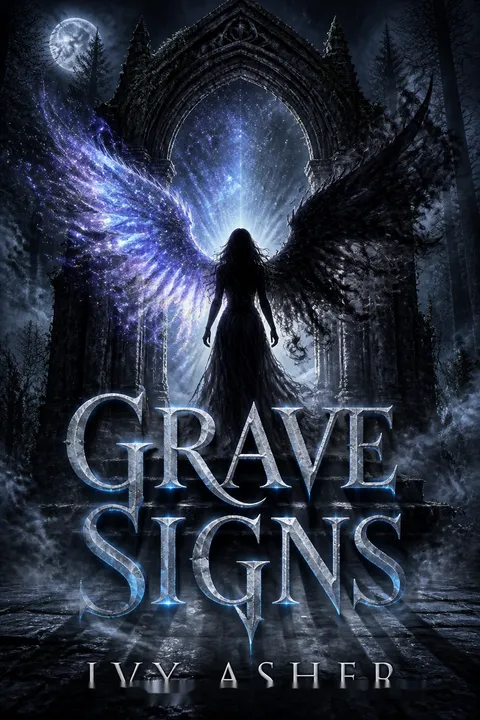


Plot Summary
Prologue
Medley Bell wakes in a cellar cage, drugged and unable to move. Across the room, the demon Morax tortures another captive. When Medley sees the woman’s familiar gray eyes, she recognizes Sable, the missing triplet she and Delta have been searching for. Sable appears lifeless, and Medley believes they arrived too late. Morax has already taken one sister, and Medley fears she will be next.
The opening makes recognition arrive as grief before it can become reunion. Medley sees Sable not as a person she can reach, but as evidence of what Morax has done, and the familiar eyes turn a stranger’s suffering into family loss. The apparent certainty of Sable’s death establishes the danger without explaining the sisters’ history. By then rewinding to Sable’s earlier life, the novel asks readers to carry Medley’s fear forward while learning how the two women came to be separated.
The Ward Closes
At Serenity Peaks Asylum in New York, Sable Pierce learns that the state facility is closing and she will be transferred to Massachusetts. She has spent most of her life institutionalized, convinced her visions of monstrous people prove she is too dangerous to live outside a ward. Her kind doctor, Dr. Gupta, offers hope, but Sable expects another failed treatment.
Nurse Tyson, the closest thing she has to family, packs her belongings and tries to make the departure easier. Before she can say goodbye, the new doctor arrives. Sable sees snakes for hair and wings on him, as she has seen on other people, but this time her fear is not a hallucination. The doctor, Morax, uses a commanding power to send Tyson away and leads Sable into the trees.
Sable’s apparent indifference to relocation is a defense against repeated abandonment, not a lack of attachment. Her belief that she is incurably ill has been reinforced by institutions that interpret her perceptions as symptoms. Tyson’s kindness briefly interrupts that pattern, making Morax’s arrival more than a supernatural abduction: it repeats the familiar structure of a trusted authority deciding where Sable must go. The story’s inciting violence therefore exploits a vulnerability already shaped by human systems, not merely by demons.
The Doctor's Real Face
Sable wakes in a stone cell beside a torture room, where Morax demands that she summon a scythe she does not know she owns. He binds her to a table and cuts her legs with wire. As pain overwhelms her, the dark shutdown that has made her catatonic in the past returns, but it now protects her from feeling what he does while leaving her conscious enough to remember it.
Morax’s power cannot make her obey. During one attack, dark purple wings burst from Sable’s back, and their pain is unmistakably physical. She can no longer explain away the dungeon or the demon as a dream. Her old assumption that she is crazy begins to collapse, even as Morax’s repeated demands make clear that he wants something specific from her.
Sable’s blackouts have been treated as evidence of illness, but in the dungeon they function as an involuntary survival response. Her mind is not simply unreliable; it has been forced to interpret a hidden supernatural world without the information needed to make sense of it. The wings and the genuine pain create a new kind of certainty, one that does not erase her fear but redirects it. She must now doubt the diagnoses that once seemed to explain her, while learning that Morax’s authority is real and deliberately coercive.
Sisters Behind Bars
A second captive, Medley Bell, is thrown into the neighboring cell. Sable initially treats her as another impossible image, but Medley offers warm socks, food, and the certainty that they can escape. Toreon, a green-skinned prisoner chained nearby, explains that their captor is Morax, also known as the Ophidian. When Sable asks why Medley knows her name, Medley reveals that they share a mother and a third sister named Delta.
Sable is one of three triplets, hidden apart in the Mortal Realm for protection. She is not seeing monsters because her mind is broken: demons conceal their true forms from humans, and she has been seeing through those wards since childhood. Her lifelong isolation suddenly has an explanation, but not a comforting one.
The revelation repairs Sable’s trust in her perception while exposing the cost of her family’s secrecy. What she experienced as private madness was an accurate response to a world adults around her could not see, yet that accuracy did not protect her from being abandoned or confined. Medley’s practical tenderness matters as much as her information: socks and food make kinship tangible before Sable can fully accept its meaning. The scene turns validation into a complicated emotion, because being right about the monsters also means confronting the life she lost.
A Scythe Answers
Morax forces Medley under his command and makes her hurt herself while Sable watches from her cell. Toreon tells Sable to close her eyes and summon the weapon bound to her kind. Sable focuses on her anger and need to protect Medley; a long scythe appears in her hand.
Its first blow cannot break the enchanted bars, but its arrival ends Morax’s immediate hold over Medley. She collapses as her own protective darkness takes over. Soon afterward, a massive guard named Vudu visits Toreon in secret.
Vudu reveals that he has infiltrated Morax’s ranks to free his sworn protector, and gives Toreon a small obsidian tool to work on his chains. Their reunion gives Toreon a reason to consider escape, while Sable begins to understand that the prisoners have histories beyond the dungeon.
Sable’s first successful use of the scythe is not a display of mastery; it is an act of attention directed outward. She summons it because Medley is in danger, and that urgent relational motive unlocks a capacity Morax’s threats could not produce. The weapon failing against the bars keeps the moment from becoming an easy escape, while Vudu’s return introduces another form of resistance: patient, concealed loyalty. Each character’s power is limited, but their different kinds of care begin to make isolation less absolute.
Blood Breaks the Wards
Medley explains that Sable’s wings appear and disappear because protective wards placed on the triplets are breaking unevenly. She smears her blood over Sable’s arm, hoping to finish what began when the sisters were reunited.
The blood sinks into Sable’s skin, and heat floods her body as the remaining wards shatter. Sable’s wings become steady, her scythe feels truly hers, and new knowledge of her Annulus inheritance opens inside her. She can also sense the darkness that once shut her down and begins to explore it deliberately.
When Medley tries the same technique, she accidentally falls into paralysis, so Sable has to reassure her that the state will pass. The sisters now share a stronger bond, but turning their defensive power into usable control will take practice.
The blood exchange makes kinship both emotional and bodily: Sable does not merely learn that Medley is family, she experiences their connection as a force that changes what her body can do. Yet the awakening does not remove vulnerability. Medley’s accidental shutdown shows that the power which protects them can also disable them, so freedom depends on learning its limits rather than celebrating it as effortless strength. Sable’s developing relationship with darkness transforms an old source of shame into something she can study, though trust in herself remains a skill in progress.
Three Bonds Awaken
As Sable and Medley compare what they know about their demon heritage, Toreon admits that Sable’s blood strengthens him. When her blood touches his skin, his weakened body absorbs it, and his interest in her shifts toward the possibility of a mate bond.
Vudu explains that he is bound to Toreon as a sworn protector, so any mate bond Toreon forms would also connect to him. Meanwhile, Sable’s anger repeatedly draws a voice into her mind. In a shared inner darkness, she finally meets its owner, Ire, a sharp-tongued demon who recognizes her as one of the missing triplets.
He realizes she is genuinely captive and promises to find her. Sable now has three potential mates, but the immediate work remains survival, learning her powers, and keeping Morax from using her family.
The novel layers supernatural bonds onto Sable’s first experiences of dependable attachment. Toreon’s response to her blood is partly physiological, while Vudu’s oath is a long-standing duty, and Ire’s mental connection begins through Sable’s anger. These different routes resist a simple idea that intimacy is automatically safe or self-explanatory. Sable’s history makes connection desirable but also unfamiliar; she approaches it with humor and questions because she needs agency, not just reassurance. The relationships become a counterweight to Morax’s compulsions, which treat other people as instruments.
Learning to Fool Morax
Sable and Medley spend days practicing ways to shape their darkness without losing control of their bodies. Sable learns to make her face blank while staying alert, allowing her to imitate Morax’s mind control.
Medley gradually breaks his restriction against touching her scythe and retrieves it herself. When Morax returns, he mistakes Sable’s performance for obedience and orders her out of her cell to summon her weapon. She follows each instruction without revealing that her mind is her own.
Believing her defenses have failed, Morax turns his attention to a larger plan. He forces Toreon to make enchanted cuffs and orders Medley to retrieve Delta. The sisters’ new strategy is not to confront him openly, but to make him confident enough to underestimate them.
The sisters’ training turns a survival reflex into a form of performance. Sable’s blank expression, once imposed by trauma and paralysis, becomes a mask she chooses and controls. This is not a simple reversal of power: she must endure Morax’s commands while preserving the ability to act later. Their strategy also depends on reading his narcissism. Morax assumes that visible compliance proves genuine submission, revealing how his own need for control makes him vulnerable to a carefully staged illusion.
Three Cuffs, Three Sisters
Morax orders Toreon to remove his chains and shape three cuffs that can carry the triplets to Morax whenever he activates his ring. Sable helps Toreon withstand the effort by giving him blood, and the contact intensifies their attraction, though they stop before the dungeon can define their first intimacy.
Morax also orders Sable to keep Toreon strong enough to make portals later. He sends Medley, under apparent control, to bring Delta back, with Vudu assigned as escort. Delta arrives furious and tries to strike Morax, but his command stops her.
The demon Shateel then disguises all three sisters, hiding their faces and wings, while Morax lays out his intended attack on the Seven Sins. He expects the triplets to kill them and open the way for his rule over Hell and Heaven.
The cuffs convert Toreon’s rare gift into a mechanism of captivity: his ability to open paths becomes the means by which Morax ensures no one can leave him. The same scene places intimacy under pressure, as Sable’s blood can restore Toreon but also makes their bond harder to separate from survival. Morax’s plan depends on turning the sisters’ scythes against the very powers that might stop him. Their disguises reinforce that coercion by making the triplets look like anonymous tools, even as each sister privately retains her own purpose.
The Cellar Turns
Morax’s followers lead the disguised sisters through a tunnel toward a party held by the Seven Sins. In a wine cellar, Shateel reveals that she knows Vudu has been working against Morax and orders the guards to kill him. Delta signals that she and Medley are ready to act.
The sisters summon their scythes and cut down the guards before they can finish the attack. Sable reaches Vudu after two blades wound him, but her blood does not immediately revive him.
As she keeps contact and begs him to stay alive, her power finally floods into him, healing his injuries and awakening their bond. Toreon, no longer weakened, recovers as well. The sisters knock Shateel unconscious rather than kill her, preserving the disguises she gave them, then continue toward the party.
The cellar attack forces Sable to choose action before she can be certain of the consequences. Her hesitation nearly costs Vudu his life, and the delayed response of her blood makes the rescue depend on persistence rather than instant magical certainty. Once her power takes hold, the scene turns a biological exchange into reciprocal commitment: Vudu is not simply saved by Sable, he accepts the bond that links him to her and Toreon. Sparing Shateel is also tactical restraint, showing that Sable’s capacity for violence does not erase her ability to judge what the next step requires.
Ire Finds Sable
At the Gluttony palace, Sable and Delta slip into the party while Medley searches the crowded rooms. Sable spots Ire, who recognizes her through the false face by sensing the anger that first drew him to her. He is resentful that she hid her identity, but Sable explains that Morax is present and intends to use the triplets to kill the Seven Sins.
Ire believes her and agrees to help stop the attack. Delta approaches Tazreel, the Sin of Pride and their father, using a private clue meant to identify her, but he initially takes the sisters for insolent servants. Wrath intervenes after Ire shares what he has learned. The Sins begin gathering, while Sable and Delta try to find Medley and prevent Morax’s followers from recognizing them.
Ire’s recognition of Sable depends on an emotional signal rather than her face, making their connection unusually resistant to deception. Yet recognition does not instantly resolve their mistrust; his frustration and her urgency have to coexist while they decide whether to cooperate. The meeting with Tazreel adds a different relational wound: even family can fail to recognize Sable when she is hidden behind a role. The scene keeps identity practical as well as emotional. Sable needs allies to see who she is, but she also needs to remain concealed from the enemy.
The Party Was a Trap
The Sins deliberately break Shateel’s disguises, revealing Sable and Delta in their true forms. They explain that the gathering was bait designed to draw Morax into a sealed room. The illusion drops, the party vanishes, and Morax stands exposed among a small group of followers.
Wrath kills the willing conspirators as the doors and windows remain locked against escape. Lucifer arrives after Wrath summons him, and the Sins formally condemn Morax. For a moment, their trap seems successful.
Then Morax grabs Lucifer and activates the enchanted cuffs on the triplets’ wrists. Sable, Delta, and the captured Medley are pulled away from the ballroom. Morax has anticipated the Sins’ plan, and the cuffs he forced Toreon to make have turned the sisters’ disguise into a route straight back to him.
The reversal exposes the difference between controlling a room and controlling the conditions of the conflict. The Sins have planned the venue, the illusion, and the exits, yet Morax’s cuffs operate beyond their trap. Their confidence is not foolish, but it is incomplete: they underestimate how much of the evening Morax has already arranged. The party’s disappearance also strips away the social spectacle that had made the danger seem distant. Sable is returned to the same structure of captivity, now with the added knowledge that even powerful allies can be outmaneuvered.
The Origin Stone's Cost
The cuffs deliver Sable and Delta to the Origin Stone, the foundation of Hell, where Toreon is being forced to build a vast portal into Heaven. Morax has bound Lucifer with a strip of heavenly material that suppresses his power. He explains that the triplets’ scythes can reset Lucifer, but the Devil’s essence would return to its origin in Heaven, leaving Hell without the force that sustains it.
Morax intends to destroy Hell, move through the portal, and seize Heaven. He has also compelled Medley and captured the triplets’ other mates, using them as hostages. When Sable tries to reach Toreon, Morax threatens the captives. With no safe choice, the sisters face the possibility of destroying the realm they are standing in.
Morax’s revelation transforms the sisters’ role from potential assassins into the instrument of a cosmological collapse. The Origin Stone makes the stakes concrete: Lucifer is not merely a ruler whose defeat would change politics, but the living source of Hell’s continued existence. Morax weaponizes moral responsibility by making the triplets choose between obedience and the people they love. Sable’s instinct to rescue Toreon is therefore set against her commitment to her sisters and their mates. The trap works by making every available action appear to betray someone.
The Sisters Become Darkness
As Morax orders the sisters to raise their scythes against Lucifer, Sable’s darkness reaches through the bond she shares with Delta and Medley. Their separate powers join, erupting as a force that throws them into the air and suspends the world around them.
Sable can now see the souls inside those present, including Morax’s corrupted light and Lucifer’s immense white brilliance. She recognizes that their purpose is to restore balance, not obey a ruler. Lucifer, who has been waiting for this change, tells Sable how to free him.
She cuts the binding cloth without touching his skin. Time surges forward again. Lucifer stands free, and his waiting army arrives as Morax’s followers turn to face the attack. The triplets have gained power, but Morax still commands a vast force.
The sisters’ transformation is collective rather than individual: their strength emerges when the power divided among them is reunited through their relationship. The change also gives Sable a new way of seeing, as souls become visible evidence of the moral imbalance Morax has tried to conceal. Lucifer’s apparent helplessness proves to have been strategic, but the decisive act still belongs to Sable, who frees him with controlled precision. Their awakening changes what the sisters can do; it does not end the danger, since Morax’s followers and the forced portal remain active.
Morax Is Erased
Lucifer’s army clashes with Morax’s followers as the Sins fight to contain the assault. Sable reaches Toreon and uses her darkness to restore the strength Morax has drained from him; Vudu and Ire arrive to protect him while he dismantles the portal.
Sable then rejoins Medley and Delta. Together they trap Morax inside a dome of darkness that burns away anyone who tries to enter. Their mother, Nefta, joins them, and the four women form a circle of linked scythes. They invoke an ancient Annulus rite that does not reset Morax but annihilates his soul.
His compulsion vanishes with him, freeing everyone he controlled. The portal stops drawing on Toreon, and the threat to Hell and Heaven ends. The sisters have not merely survived Morax; they have prevented his return.
The climax resolves the novel’s central conflict through the same bonds Morax tried to exploit. Sable’s power restores Toreon, while the sisters’ joined darkness creates the space needed for their mother to stand with them. The final rite rejects the cycle of reset and return: Morax’s corruption is not treated as something that can simply be corrected and allowed to begin again. His annihilation is a hard limit placed on power that has repeatedly violated consent. The ending’s justice is communal, not solitary, and depends on the women acting together.
A Family Sets Terms
After the fighting, Sable confronts Nefta and Tazreel rather than letting their reunion pass as uncomplicated forgiveness. She tells Nefta that being abandoned left her with a lonely, painful childhood, and tells Tazreel that finding his daughters means little if he will not make an effort to know them.
Delta and Medley support her. Later, at dinner, the sisters challenge the Sins when they discuss Annuli as a resource for future conflicts. Wrath agrees that Hell must protect its citizens instead of treating rare bloodlines as tools, and Lucifer calls the rulers to a war council.
Nefta explains that she separated the triplets to protect them and accepts responsibility for the harm that followed. Sable chooses to begin again, while insisting that trust must be earned.
Victory does not erase the earlier injuries that shaped Sable’s life. Her confrontation with Nefta and Tazreel makes reconciliation conditional on recognition: they must hear what their choices cost, not simply welcome her home. The later dispute with the Sins extends that demand beyond the family. The triplets will not be protected if powerful institutions continue to view them as weapons or breeding stock. Sable’s willingness to move forward is therefore neither automatic forgiveness nor a retreat from anger. It is a choice made with boundaries and an expectation of changed behavior.
A Gate and a Home
At Hell’s Embrace, Sable touches the skulls in the Hellgate and witnesses memories of the Annuli who built and protected it. The gate’s fires return to full strength, and Toreon uses his Gatekeeper power to stabilize it, accepting a duty his family had been forced to abandon. The triplets then travel to the former Guardians’ house in the Mortal Realm, where their new home has been prepared.
Medley’s adoptive mother welcomes Sable and Delta as family, while Nefta and Tazreel help with the house. A comic commotion follows when the Bells’ pet alligator steals Medley’s scythe and accidentally destroys a squirrel. Sable’s life now includes sisters, partners, parents willing to try again, and a home she recognizes as hers.
The restored gate and the shared house answer different forms of displacement. Toreon repairs a passage that his people were hunted for protecting, while Sable gains a home that is chosen rather than assigned by an institution. The memory of the Annuli ancestors places the triplets inside a history larger than their trauma, but the ordinary work of living with family gives that history a future. The alligator’s mischief punctures the grandeur of destiny with domestic comedy. Sable’s belonging is not only metaphysical; it is made through meals, awkward relatives, and a place where she can stay.
Analysis
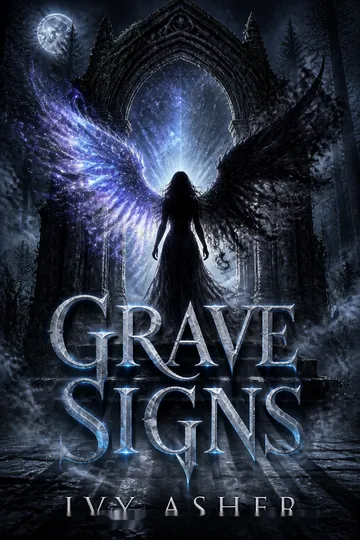
Grave Signs builds its fantasy conflict around a question of who has the authority to define reality. Sable has been punished for perceiving demons accurately, and the revelation of her heritage vindicates her senses without pretending that vindication can restore the childhood she lost. That distinction gives the book’s supernatural premise a psychological consequence: being right does not undo the harm done by people who refused to listen.
Morax’s power is coercion made visible. He commands bodies, disguises identities, and turns the triplets’ gifts into instruments for his political ambition. The sisters’ resistance develops through an opposing practice: they learn to read each other, coordinate, and protect one another without requiring identical temperaments. Medley’s hope, Delta’s aggression, and Sable’s wary persistence become complementary rather than competing styles of survival. Their shared darkness matters because it becomes usable through connection, not because darkness itself is inherently virtuous.
The novel also refuses to treat intimacy as a cure for trauma. Sable’s bonds with Toreon, Vudu, and Ire offer affection and safety, but she still has to articulate what she needs, set terms with her parents, and confront institutions that regard rare people as resources. Toreon’s history makes that political issue especially concrete: his family has been hunted for a role the realms depend on, while those in power have treated their protection as someone else’s responsibility.
The ending therefore resolves more than a villain’s plot. Restoring the Hellgate repairs a neglected civic duty, while the move into a shared home gives Sable a form of belonging that is ordinary enough to matter. The story’s deepest promise is not that pain secretly had to happen, but that survival can lead to relationships and choices no one else gets to define. Balance, here, requires both cosmic repair and personal accountability.
Review Summary
Grave Signs received mostly positive reviews, with an average rating of 4.51/5. Readers praised the world-building, character development, and satisfying conclusion to the series. Many found Sable's story compelling and enjoyed the blend of darkness, humor, and romance. Some felt the relationship development was rushed, while others appreciated the focus on plot. The book's ending was widely praised for tying up loose ends and providing a satisfying conclusion to the series. Overall, fans of reverse harem and paranormal romance found it an entertaining read.
People Also Read



Characters
Sable Pierce
The self-doubting scythe bearerSable is a perceptive, sarcastic woman who has spent much of her life being told that her visions are symptoms of mental illness. Institutionalization has taught her to distrust her own judgment and to hide attachment before someone can abandon her. Humor gives her a way to speak through fear without pretending it is absent. Her resilience is not fearlessness; she keeps acting while frightened, especially when another captive is in danger. As she learns about her heritage, she must distinguish genuine vulnerability from the old belief that she is fundamentally broken. Her central need is not simply power, but the right to interpret her own experience and choose whom to trust.
Medley Bell
The hopeful, stubborn captiveMedley is warm, direct, and persistent, with a gentle manner that can turn instantly fierce when someone is threatened. She approaches danger with practical care, offering Sable food, warmth, and information instead of demanding immediate trust. Her optimism is not naïveté; it is a deliberate refusal to let captivity dictate what the future can contain. Medley’s easy humor helps the people around her breathe, but she can also be blunt when passivity risks someone’s safety. She represents a form of resilience built through connection. Her kindness does not make her compliant, and her Southern manner sits comfortably beside her capacity for decisive violence.
Delta Gates
The sharp-edged fighterDelta is forceful, quick to challenge authority, and experienced in surviving the supernatural world that Sable is only beginning to understand. Her anger often arrives first, but beneath it is fierce loyalty to her family and mates. She is willing to laugh at herself, especially when a plan goes wrong, which keeps her confidence from hardening into self-importance. Delta’s bluntness can antagonize people, yet it also makes her difficult to silence. She has learned to act under pressure and expects others to take responsibility for the consequences of their decisions. Her bond with her sisters gives her a rare place where she can be both warrior and vulnerable sibling.
Toreon
The wounded GatekeeperToreon is a rare demon whose power is tied to creating portals, a role that has made his family vulnerable to anyone seeking passage between realms. Years of hiding and captivity have left him exhausted and fatalistic; he often treats hope as a danger because he has watched it fail. Beneath that guarded pessimism is a strong sense of duty and a capacity for tenderness he rarely offers freely. Sable’s refusal to surrender unsettles his resignation, while his care for her grows through small acts of honesty and trust. Toreon’s conflict is between protecting himself from further loss and accepting that his abilities and relationships can still serve a chosen purpose.
Vudu
The devoted sworn protectorVudu is a physically imposing Terra demon whose defining quality is disciplined loyalty. His bond with Toreon is an oath inherited across generations, but he expresses it through present-tense action: infiltrating Morax’s forces, bringing help, and refusing to leave Toreon behind. His size and guarded presence can appear intimidating, yet he is notably gentle with people he considers vulnerable. Vudu’s sense of responsibility can become self-sacrifice, making him reluctant to accept care in return. He trusts through deeds more readily than words, and his protective instinct extends to Sable once their connection forms. His challenge is learning that being protected and loved does not diminish his strength.
Ire
The irascible mind-linked demonIre is the progeny of Wrath, marked by sharp wit, a temper, and an instinct to meet vulnerability with provocation. His mental connection with Sable begins in teasing arguments, which lets him approach her without the solemnity she might distrust. Beneath his arrogance is a capacity for fierce attention: he searches for her when he realizes she is truly in danger and eventually listens when she explains the stakes. Ire values strength, candor, and mutual challenge, but his possessiveness can make him mistake protection for authority. His relationship with Sable requires him to make room for her judgment rather than assume that his anger gives him the right to decide for her.
Morax
The coercive OphidianMorax is an Abdicated demon known as the Ophidian, distinguished by snake-like hair, wings, and a power that can compel others through his voice. He treats people as instruments and believes that control is proof of superiority. His patience is strategic: he studies what he needs from captives and constructs elaborate plans around their abilities. Yet his dependence on obedience makes him underestimate forms of resistance that do not look like open defiance. Morax is not driven only by conquest; his ambition is also a response to a grievance against the order that defines his place in the realms. His self-justification cannot conceal the violence he inflicts to satisfy it.
Nefta
The guarded Angelic motherNefta is the triplets’ mother and a high-ranking figure in Heaven’s Angelic Legion. She is strategic, disciplined, and accustomed to making decisions under threat. Her effort to protect her children through secrecy reflects both care and a willingness to accept the cost of acting without their consent. She often hides emotion behind military composure, which can make concern look like distance. Nefta’s relationship with her daughters requires her to explain what she believed was necessary and to acknowledge the harm her choice caused. She embodies the painful difference between intending protection and providing the kind of care a child can actually feel.
Tazreel
The prideful Sin of PrideTazreel is the Sin of Pride and the triplets’ father, a formidable figure whose self-confidence often overshadows his sensitivity. He is used to being obeyed and struggles to respond gracefully when his daughters challenge him. Beneath the grand manner is genuine concern, particularly when he learns that they have been endangered. His efforts to understand ordinary human life can be awkward, producing gifts such as an electric can opener and frozen tater tots. Those gestures reveal a man trying to offer care without yet knowing what his daughters need. Tazreel’s central difficulty is learning that fatherhood requires attention, humility, and repeated effort, not status alone.
Lucifer
The architect of HellLucifer is the Devil and the original architect of Hell, a ruler whose presence combines enormous power with dry, theatrical humor. He understands that the balance between realms depends on more than force, and he is willing to let others underestimate him when strategy requires it. His relationship to the Seven Sins is both political and personal, and his authority shapes how Hell responds to crisis. Lucifer’s confidence can make him seem untouchable, but he is not indifferent to the systems that protect his realm. He values initiative in the triplets and recognizes that old institutions must adapt when their failures become impossible to ignore.
Wrath
The battle-ready SinWrath is a powerful Sin and Ire’s mother, a warrior whose directness matches her name. She is capable of terrible violence, but she does not reduce every problem to a fight. Her approval of Sable comes from recognizing courage and decisiveness, not from expecting submission. Wrath is also willing to criticize the complacency of the other Sins, especially when they treat vulnerable bloodlines as resources. Her combination of maternal warmth and battlefield ferocity makes her a significant ally, though her protection comes with the formidable weight of her authority.
Shateel
The disguise-weaving demonShateel is a snake-haired demon who serves Morax and uses powerful magic to alter appearances. She is composed, stylish, and comfortable treating people as objects in another person’s plan. Her work gives the triplets access to a crowded gathering while concealing their identities, but her confidence rests on the assumption that Morax’s command cannot be resisted. Shateel’s polished manner contrasts with the cruelty of the tasks she carries out. She is dangerous because she combines practical skill with moral indifference.
Alder
Medley's attentive mateAlder is one of Medley’s mates, recognizable by lavender skin and intricate tattoos. He is gentle and attentive, offering steadiness alongside Medley’s more openly exuberant temperament. His care is expressed through closeness and calm rather than command, giving her room to be both playful and forceful. Alder’s loyalty places him within Medley’s intimate circle and the wider group that must learn to trust one another.
Flint
Medley's teasing mateFlint is one of Medley’s mates, a dark-haired demon with pale, marble-like skin. He is physically capable and fond of teasing, but his humor is paired with deep affection. He helps create an atmosphere in which Medley can be playful without being underestimated. Flint’s bond with Alder and Medley shows intimacy as a shared practice of trust, attention, and mutual amusement.
Jerif
Delta's fiery protectorJerif is one of Delta’s mates, a dark-skinned demon with fiery hair. He is protective and intense, often responding quickly when Delta is threatened. His loyalty can look severe, but his moments of laughter reveal a less guarded side. Jerif’s relationship with Delta balances her confrontational energy with a dependable presence.
Crux
Delta's easygoing mateCrux is one of Delta’s mates, a blond, human-looking demon whose relaxed manner offsets the tension around him. He is affectionate and playful, comfortable letting Delta take the lead without treating her independence as a challenge. His lightness does not make him passive; he stands with her when danger arrives.
Echo
Delta's shadow-wielding mateEcho is one of Delta’s mates, marked by pale skin and dark patterns that move like shadows across his arms. He is observant and controlled, with a dry wit that surfaces around people he trusts. His abilities and composure make him a formidable presence, while his affection for Delta is quietly evident.
Rafferty
Delta's blue-skinned mateRafferty is one of Delta’s mates, a blue-skinned demon with horns and a calm, considerate manner. He is attentive to the group’s needs and offers practical support without trying to dominate decisions. His steady temperament helps counterbalance Delta’s volatility and the pressures surrounding the sisters.
Tyson
Sable's chosen familyTyson is a compassionate nurse at Serenity Peaks and the first person in Sable’s life to make consistent care feel ordinary. He and his husband offer residents warmth, celebrations, and small acts of affection that the institution otherwise lacks. His kindness gives Sable a rare experience of attachment that is not conditional on behaving perfectly.
Dr. Gupta
Sable's kind psychiatristDr. Gupta has treated Sable for years and is one of the kinder professionals she has encountered. He hopes that a new facility and different therapies might help her, though he misunderstands the source of her visions. His concern is sincere even when his framework cannot explain her experience.
Acedia
The unhurried SinAcedia is the Sin of Sloth, often appearing relaxed or disengaged when others are anxious. His dry observations reveal that he is more attentive than his languid manner suggests. He brings an understated counterpoint to the more volatile Sins.
Envy
The possessive SinEnvy is one of the Seven Sins and represents the older ruling order’s instinct to protect its interests. She is sharp-tongued and quick to defend the Sins’ authority. Her confrontations with the triplets expose the assumptions that make reform necessary.
Gluttony
The feast-loving SinGluttony is the Sin whose palace hosts the gathering, a setting that reflects his appetite for elaborate food and drink. He is practical when the crisis demands it, though his indulgent habits remain part of his presence.
Lust
The provocative SinLust is one of the Seven Sins, flamboyant and attentive to desire as both pleasure and power. Her bold manner can make others underestimate her political importance. She is quick to react when challenged and contributes to the Sins’ charged social atmosphere.
Rick
Tyson's devoted husbandRick is Tyson’s husband and shares his habit of treating Serenity Peaks residents as people worth celebrating. Though mostly present through Sable’s memories and Tyson’s stories, his generosity helps make their care feel like a small family rather than a clinical service.
Plot Devices
Demonic wards
Hide the supernatural worldDemons use wards to conceal their true appearance in the Mortal Realm. Sable’s ability to see through them is misread by human adults as hallucination, shaping her childhood and institutionalization. Protective wards placed on the triplets also keep their heritage and connection hidden. As the sisters reunite, their wards break unevenly, causing Sable’s wings and hair to change before Medley’s blood finally shatters the remaining barrier. The device makes secrecy materially effective while showing its psychological cost: the people who can perceive the hidden world may be treated as unreliable precisely because everyone else is protected from seeing it.
The blackness
Protect and transform the mindSable’s darkness first appears as a catatonic shutdown that numbs her to pain while leaving her aware of what happens around her. After she learns about her Annulus heritage, she and Medley discover that the darkness can be shaped to block Morax’s compulsion and imitate obedience. The sisters later combine their separate darknesses into a larger force, allowing them to resist the control that has threatened their choices. The power’s development links trauma, self-protection, and agency, but it is not a simple cure. Early attempts can immobilize them, and mastery depends on practice and mutual trust.
Annulus scythes
Judge and alter soulsAn Annulus’s scythe is a bound weapon that can act upon souls, rather than merely cut a physical body. Morax wants the triplets because their weapons can threaten beings ordinary weapons cannot reach. Sable first summons hers when Medley is under compulsion, then learns that it can be called and dismissed as she develops her inheritance. The scythes also define an inherited responsibility to maintain balance among the realms. Their ultimate use distinguishes resetting a soul from annihilating it, making the weapon’s meaning ethical as well as martial.
Blood and mate bonds
Transfer strength through intimacySable’s blood carries power that can strengthen certain demons, while blood shared between the triplets reinforces their connection and helps break their wards. Toreon absorbs Sable’s blood and regains strength, and Vudu later draws on her power when he is gravely wounded. Toreon’s sworn-protector bond with Vudu means their lives are tied together, so danger to one affects the other. These mechanisms turn care into both a physical resource and a relational commitment. The story repeatedly complicates the idea of sacrifice: Sable’s instinct to give can save those she loves, but she must also retain the right to decide what she gives and when.
The portal cuffs
Make escape feed Morax's planMorax compels Toreon to create three enchanted cuffs that transport their wearers to him when he activates a matching ring. He presents them as a tool for controlling the sisters and later uses them to pull Sable and Delta out of the Sins’ apparent trap. The cuffs are an extension of Toreon’s Gatekeeper power, repurposed against the people he wants to protect. Their later activation demonstrates that Morax has anticipated the sisters’ resistance and makes the false victory at the ballroom collapse in an instant.
Hellgate Guardians Series
About the Author
Other books by Ivy Asher




Download PDF
Download EPUB
.epub digital book format is ideal for reading ebooks on phones, tablets, and e-readers.








