


Plot Summary
The Ring Breaks
After her grandmother’s death, Falon Umbra rides from Colorado to a remote Alberta address to scatter her ashes. She has spent her life believing she is a wolf shifter, though she has never managed to transform. Her grandmother’s moonstone ring, the keepsake she has worn since childhood, is the one comfort she can carry.
In the clearing, an unseen barrier throws Falon into a tree as she approaches the place marked in her grandmother’s instructions. The impact breaks her bones, and the ring blackens, cracks, and disappears. When Falon wakes, she is no longer in the mountains she knows. The journey meant to give her grandmother a resting place has instead severed her from the life she understood.
The opening makes grief an active force rather than a mood: Falon follows her grandmother’s instructions because the dead woman’s wishes are the last reliable thread in her life. The ring embodies both intimacy and restriction, offering comfort while concealing the truth about Falon’s body. Its destruction turns a private family mystery into a physical rupture. Falon’s ordinary world does not gradually reveal its limits; it is abruptly broken by the same act of trust that she hoped would bring closure.
Wings Over Strange Mountains
Falon comes to in the air with powerful black wings and a body she cannot identify. A lake reflects her true shape: a white-feathered gryphon with a beak, fur, talons, and violet eyes. The familiar wolf she thought lived inside her is nowhere to be found, and she suspects the destroyed ring kept her from shifting. Before she can understand the change, a dark gryphon attacks her from above.
Falon fights back instinctively, but neither of them can avoid the ground. She wakes naked and uninjured in a carved stone room inside a cliffside stronghold. Armed guards search for her, and one of them, Ryn, finds her. When she recognizes the attacker among the leaders, her new world begins with fear, anger, and no clear explanation.
Falon’s transformation is both a liberation and a loss of orientation. The ring’s removal gives her access to a body she had grieved as impossible, but the new form arrives without instruction or consent. Her first flight is not a triumphant awakening; it becomes a fight for survival against a stranger who will later control her surroundings. The shift therefore complicates the usual fantasy of discovering one’s hidden nature. Falon gains power at the exact moment she loses the language and context needed to use it safely.
A Tribunal Without Answers
At a table of seven leaders, Falon gives her name and Colorado as her home, but neither means anything to the gryphons questioning her. Their seer, Ami, verifies that she believes what she says. That does not settle the matter: the leaders call her a highborn stranger without the expected vow, and Ryn suspects she may be connected to a figure named Lazza.
When Ryn presses her, Falon’s black wings burst from her back, astonishing the room and confirming that her body can change even when she cannot control it. Ryn orders her subjected to a magical cleansing. Falon refuses to let Loa touch her, escapes through a high window, and crashes into a market stall before fleeing toward the forest.
The tribunal turns Falon’s ignorance into evidence against her. The leaders recognize signs on her body that she cannot interpret, so truthfulness alone cannot protect her from suspicion. Their procedures are designed to secure the community, yet the imbalance of power makes every demand feel like coercion to the person being examined. Falon’s wings briefly disrupt that hierarchy: her body produces proof the leaders did not expect, but not enough to earn trust. Her escape is a rational refusal of an institution that treats vulnerability as a security problem.
The Hot Spring Test
Falon hides in a tree, but Ryn tracks a fallen black feather to her hiding place. She slips away and reaches a steaming pool, hoping to clean herself and escape under cover of night. Ryn finds her there, and Zeph joins him.
They explain that the Hidden must rule out magical deception before deciding whether she threatens their people. Falon finally agrees to the cleansing, but insists on controlling what she can, including washing herself. The clarity water and truth tincture confirm that she knows nothing about the Ouphe, the Avowed, or the local conflict.
She asks to go home; Zeph admits they do not know how she crossed worlds or how to send her back. He carries her toward the stronghold, but Falon kicks free, flies alone, and crashes onto a balcony before exhaustion overtakes her.
The cleansing sequence gives Falon a narrow, hard-won form of agency. She cannot refuse the leaders’ test without worsening her captivity, but she negotiates the terms of her own bodily exposure. The result confirms her honesty without producing the knowledge she needs, a distinction the Hidden struggle to accept. Their security logic can establish that she is not lying, but it cannot explain her presence or repair the danger created by their control. Falon’s escape attempt shows that physical freedom matters to her even when it comes at the cost of another painful fall.
Among the Hidden
An alarm wakes Falon to a stronghold scrambling for battle; Tysa, a seamstress, helps dress her and leads her into a crowded hall. There Falon learns that the Hidden are gryphons resisting the Avowed, whose leaders use an inherited vow to control their people. The Ouphe once enslaved gryphons, and some still argue for restoring the vow.
Tysa’s account gives Falon her first map of the conflict, though she remains an outsider whom many residents distrust. Ryn later takes her through the territory and introduces Sutton, a seasoned trainer, who is tasked with teaching her to fight. Falon’s first tentative foothold comes not from the commanders but from Tysa, whose practical kindness makes it possible for her to participate in daily life.
Falon’s first lesson in the Hidden’s politics arrives through Tysa, not through the leaders who interrogated her. That difference matters: Tysa translates the conflict into a history of coercion and resistance, giving Falon a way to understand why the community is wary. Yet the Hidden’s own habits of rank and suspicion remain visible in the way they treat her. Belonging is not granted simply because Falon shares their species. Her initial connection is built through useful work and mutual exchange, a more reciprocal structure than the authority she has encountered so far.
A Fall That Wakes Her
After three weeks of training, Falon can barely use her wings and cannot summon her gryphon reliably. Sutton pairs her with Ami, who shares her difficulty relating to his animal as one self. During a private lesson, Ami suddenly pushes Falon from a cliff and attacks her as she dangles, believing mortal danger will force her gryphon to emerge.
Zeph arrives, and his presence triggers the response that fear alone could not. Falon’s gryphon takes control, flies with exhilarating confidence, and communicates through images and sensations.
Falon calls her Pigeon, learns that she has been present but difficult to reach, and realizes their attraction to Zeph and Ryn comes partly from the gryphon’s instincts. When Pigeon retreats, Falon manages to call her wings herself, but Zeph catches her in the air and their crash leaves them injured and stranded.
Ami’s method is an act of care expressed through a dangerous, ethically fraught gamble. He trusts the instinct he believes Falon possesses, but his confidence temporarily overrides her consent and makes her survival depend on a power she has not learned to command. The crisis does produce a new relationship between Falon and Pigeon: not a single seamless identity, but two presences that can share control and communicate. This reframes Falon’s earlier sense of abandonment. Pigeon was not absent so much as inaccessible, and their work now depends on negotiation rather than forced unity.
The Prince in Her Past
Zeph carries the injured Falon through the forest to a hidden cave, where he resets her shoulder and damaged wing while warning that Avowed patrol the area. Their hostility gives way to uneasy cooperation as they share shelter and food. When Falon recognizes a local fruit as the one her grandmother used to put on pizza, she understands that Sedora had ties to this world.
Falon remembers that her father, Awlon Umbra, came from an island and had green eyes. Zeph identifies him as Awlon the Dark, the last Ouphe prince, believed murdered years earlier. Falon also supplies her mother Noor’s name, but Zeph conceals his reaction. The revelation links her family to the history the Hidden fear, while leaving her parents’ full story unresolved.
The cave scene converts a family detail into political evidence. A taste Falon associates with childhood makes the unfamiliar world intimate, then Zeph’s identification of Awlon turns that intimacy into danger. Her family is no longer only a private source of grief; its history may shape the conflict around her. Zeph’s partial disclosure also preserves the book’s central asymmetry: Falon is discovering facts about herself through people who already know more than they admit. Their temporary tenderness does not erase that imbalance, but it makes the withheld information more personal.
The Call Answered
On the journey back from the cave, Zeph and Falon are ambushed by gryphons who bind him with a rope that prevents shifting. When one attacker threatens Falon, Pigeon erupts and kills him, then turns on the second captor and helps free Zeph.
Her actions reveal a fierce protective instinct that Falon has only begun to understand. Zeph shifts and charges her, but their eyes meet and a powerful, painful connection surges through both of them. Falon collapses as the call between them takes hold.
Ryn arrives, drawn by the same crisis, and his presence triggers another overwhelming joining. Falon loses consciousness. She will remain asleep for a week, while Zeph and Ryn argue over what the connection means and what they are not yet willing to tell her.
The rescue makes Falon’s power consequential to someone beyond herself: Pigeon does not merely defend her own body but intervenes to free Zeph. The resulting call is not a reward for their closeness; it is an involuntary event that produces pain, confusion, and a loss of consciousness. The scene thus complicates romantic destiny with questions of agency. Falon experiences connection as force before she can understand its terms, while Zeph and Ryn possess enough context to argue about it in her absence. Their silence sustains both suspense and mistrust.
Vedan Beneath the Castle
After a week unconscious, Falon wakes in the stronghold and learns that a magical rope toxin contributed to her collapse. Once she has recovered enough to leave her room, a giggling child’s presence draws her down hidden stairs. A green-lit figure named Nadi leads her through sealed doors into Vedan, a deserted city built inside the mountain.
Nadi says Falon’s blood awakened her and identifies her as a Bond Breaker who could undo the vow binding gryphons to the Ouphe. Falon questions whether the Ouphe deserve to return after their history of enslavement, and Nadi admits that the words needed to break the vow are lost. When Ryn finds Falon, he knows the city exists but does not explain what her discovery means.
Vedan gives the story a second history beneath the one Falon has learned from the Hidden. The city is both material evidence of Ouphe power and a living archive that responds to Falon’s blood. Nadi’s designation of Falon as a Bond Breaker offers purpose, but it also threatens to reduce her to a solution for other people’s political crises. Falon’s skepticism is therefore more than distrust of a ghost. She resists being recruited by either side before she understands what freedom would mean for the people who were once controlled.
A Promise at the Stronghold
Ryn tells Falon he must leave on an assignment and insists she remain at the stronghold until he returns. She wants to go home, but agrees after he kisses her and asks her to wait. During his absence, Falon trades her mechanical skills for clothes, helping Tysa and her mate Moro build a system that brings hot water to their home.
Their gratitude offers a rare experience of being welcomed for what she can do rather than feared for what she might be. At the seasonal celebration, Falon dances with Sutton and sees Zeph sitting with another woman. She tries to accept the apparent rejection by turning toward Sutton, but Zeph intervenes before their intimacy can develop, claiming Falon as his own and carrying her away.
This section places intimacy beside labor. Falon’s agreement to wait for Ryn is emotionally charged, but her clearest path toward community comes through a practical exchange with Tysa and Moro. Repairing the hot-water system lets her contribute without accepting the role of a political symbol. The celebration briefly opens a social space in which she can choose companionship; Zeph’s intervention abruptly closes it. His possessive conduct exposes a conflict between desire and autonomy, making the romantic triangle inseparable from the same power structures Falon has struggled against.
Zeph Claims the Night
Zeph tells Falon she cannot pursue another gryphon, and she pushes back against his assumption of authority. Their argument becomes a physical struggle, then a sexual encounter in which Falon ultimately responds to the attraction she and Pigeon feel for him. The encounter is intense and leaves Falon asleep beside Zeph, but it does not resolve their distrust or explain the connection between them.
In a dream, Falon recalls being a child when her father warned her that spoken words could compel others and that she must never use them to control anyone. The memory gives new weight to her buried language, though she has not yet connected its power to the conflict around the vow.
The encounter is deliberately unstable: Falon’s desire is real, but it unfolds after Zeph has ignored her attempts to refuse his control. Her pleasure does not retroactively make his possessiveness harmless. The scene asks the reader to hold erotic attraction and violated boundaries in view at the same time, especially because Pigeon’s instincts intensify Falon’s responses. The childhood memory then shifts the stakes from sexual power to linguistic power. Falon’s father had already taught her that words can act upon others, making her untrained inheritance a moral responsibility as well as a threat.
Loa Forces the Fight
At training, Loa takes over from Sutton and singles Falon out, striking her and warning her to stay away from Ryn. The blow finally wakes Pigeon. Falon shifts, and the two fight Loa in gryphon form, badly injuring her before Zeph intervenes. Rather than protect Falon, Zeph blocks her from reaching Loa, while several trainees move to defend him.
Falon reads their response as proof that the Hidden’s promises of resistance do not extend to her when she is the one attacked. She and Pigeon fly away from the stronghold. Seeking a way out, Falon returns to Vedan, where Nadi offers a map to an Ouphe meeting point and a chance to learn more about the gate.
Loa’s attack transforms Falon’s struggle for belonging into a test the Hidden fail in her eyes. Pigeon’s violence is not simply a spectacular display of strength; it gives Falon the ability to answer a threat that the surrounding community does not stop. Zeph’s intervention intensifies the rupture because he protects the person who attacked Falon, regardless of the earlier warning. Her departure is a refusal to keep interpreting neglect as a temporary misunderstanding. The map offers a concrete alternative to waiting for powerful people to decide what happens to her.
The Word That Banishes
Falon returns to her room carrying food and the map, but Zeph is waiting. He objects when she says she will leave and kisses her while trying to keep her from thinking clearly. Falon uses a word from her childhood that she had not spoken in years. Zeph recoils and explains that the word was used to immobilize him as a boy while guards assaulted his mother and killed his father; his brother later died after the trauma broke him.
Falon realizes the language her father taught her can compel others, and tells Zeph that Nadi believes she can break the vow. Zeph sees her as a potential threat and orders her to leave, warning that he will kill her if she returns. Falon packs and departs alone.
The revelation makes Falon’s hidden inheritance ethically immediate. A word she used to stop an argument carries a history of bodily violation for Zeph, so intent cannot erase its impact. His trauma explains the ferocity of his response without making his threat just or inevitable. Falon’s own shock is sharpened by the discovery that her father’s lessons were not merely cultural remnants; they may connect her to the power that once enslaved gryphons. Zeph’s banishment is both protection and rejection, and it leaves Falon choosing flight without the explanations she had hoped to receive.
Ryn at the Net
Falon flies through the night toward the Amaranthine Mountains, hoping to find the gate that brought her to this world. The range proves far larger than the map suggested, and after hours in the air she spots a camp beside a stream.
Gryphons launch after her and herd her toward a lake, where nets shoot upward and wrap around her wings. The weight drags her underwater. Falon shifts back to human form, escapes the mesh, and surfaces, but the hunters seize her before she can flee. Their citrus-laced scent identifies them as Avowed.
A blue-eyed captor questions her, and another gryphon lands as commander. Then Ryn arrives, wearing the same unfamiliar scent as the hunters. Falon’s attempt to reach home ends with her trapped among enemies and unable to tell where Ryn stands.
The ending converts Falon’s decision to leave into a new captivity, but it is not a return to the earlier helplessness: she recognizes the trap, shifts deliberately, escapes the net, and strikes back. Her remaining vulnerability comes from numbers and unfamiliar politics, not from passivity. Ryn’s arrival destabilizes the categories Falon has relied on. The book closes before she can determine whether he has changed sides, been captured, or belongs to a faction she does not understand. The unresolved image makes the central question not only how to get home, but whom she can trust while seeking a way there.
Analysis
The novel makes identity a matter of contested access. Falon’s body contains knowledge that her grandmother concealed, her gryphon does not always share, and the Hidden interpret politically before she can understand it herself. Each institution offers a different claim on her: family protection through secrecy, communal safety through confinement, romantic protection through possessiveness, and ancient history through the role of Bond Breaker. Falon’s recurring insistence on choosing for herself is therefore not a simple rejection of intimacy or duty. It is a response to people who keep treating her life as a resource they may manage.
The book also distinguishes truth from trust. Ami can verify Falon’s sincerity, and the cleansing ritual can rule out deception, yet neither result makes the Hidden willing to let her leave. Information is similarly unevenly distributed: Zeph and Ryn know more about the world and their connection to Falon, while she must make decisions with fragments. Her mechanical work with Tysa and Moro offers a countermodel. There, skill creates reciprocity without requiring Falon to surrender authority over herself.
Falon’s relationship with Pigeon deepens this argument. Their shared body does not erase their differences; they communicate, clash, and sometimes leave one another without support. Their growing cooperation suggests that self-knowledge is not a single revelation but a practice of negotiation. The cliffhanger extends the same problem into politics: Ryn’s appearance among the Avowed makes allegiance unreadable just as Falon’s attempt to reach the gate fails. She has gained power and purpose, but the book refuses to pretend either can substitute for informed choice.
Review Summary
The Hidden received mixed reviews, with an average rating of 4.14 out of 5. Readers praised the unique concept of griffin shifters and the engaging world-building. However, many criticized the aggressive and possessive behavior of the male love interests, with some finding it bordering on abusive. The main character, Falon, was generally well-received for her strength and humor. Some readers found the plot intriguing but wished for more character development and less focus on sexual tension. The ending left many eager for the next book despite reservations.
People Also Read

Characters
Falon Umbra
Stranded gryphon mechanicFalon is a tall, sharp-tongued mechanic raised in Colorado by her grandmother after her parents died. She values independence, physical competence, and the right to make decisions about her own body, which is why confinement and unexplained authority provoke her as strongly as danger does. Her humor helps her keep fear at a manageable distance, but it can also conceal how much she wants reliable connection. She begins with a fixed belief that she is a wolf shifter who cannot transform; her identity is complicated by a new body, an unfamiliar society, and a family history she was never allowed to examine. Her practical skill and stubbornness give her ways to contribute even when others distrust her.
Pigeon
Falon’s inner gryphonPigeon is the gryphon sharing Falon’s body, a white-feathered, black-winged creature whose instincts and emotions are distinct from Falon’s. She is powerful in flight and combat, but does not always appear when Falon needs her, which makes their relationship one of negotiation rather than effortless unity. Pigeon communicates through images, sensations, and emotional impressions. Her attractions and protective impulses can intensify Falon’s feelings, but Falon does not simply accept every instinct as an instruction. Their developing partnership raises questions about identity, bodily autonomy, and what it means to share control without erasing difference.
Zeph
Leader of the HiddenZeph is the imposing leader of the Hidden, a black gryphon with honey-colored eyes and a strong sense of responsibility for his people. He is suspicious of Falon when she first appears, partly because he fears the danger she may bring into a community already threatened by the Avowed. His command of the group sits uneasily beside his personal history of trauma and his tendency to control situations rather than explain them. Zeph’s attraction to Falon is entangled with the instincts of their gryphon forms, but desire does not make his authority uncomplicated. He is protective, volatile, and difficult to read, especially when his public duties collide with private vulnerability.
Ryn
The Hidden’s second-in-commandRyn is a powerful gray-eyed gryphon and Zeph’s second-in-command. He helps oversee Falon’s questioning, training, and place within the stronghold, often responding to uncertainty with direct action rather than explanation. His initial hostility gives way to moments of humor and attraction, though he remains bound to duties that Falon does not understand. Ryn can be both physically protective and emotionally opaque; he asks Falon to trust him while withholding important context. That tension makes his relationship with her difficult to separate from the Hidden’s larger struggle over loyalty, command, and the right to decide another person’s future.
Sutton
Falon’s patient combat trainerSutton is a skilled trainer whose size and confidence are balanced by patience. He teaches Falon to fight and recognizes that her difficulty is not simply lack of effort. His encouragement gives her a rare relationship in the stronghold that is not based on suspicion or command. Sutton is also attentive to her, and their growing ease offers Falon the possibility of attraction on more ordinary terms. He represents a form of strength that can guide without immediately demanding obedience.
Ami
Young seer and risky mentorAmi is a young gryphon shifter with a seer’s ability to perceive changing colors in people. He helps assess Falon’s truthfulness and later trains with her because he understands the difficulty of relating to a gryphon as a distinct presence. His insight is valuable, but his belief in forcing a crisis leads him to push Falon from a cliff. Ami combines perceptiveness with reckless certainty, making him both a possible guide and a reminder that good intentions do not remove the cost of taking risks on someone else’s behalf.
Tysa
Falon’s first local allyTysa is a warm, industrious seamstress who makes clothing for Falon and explains the conflict between the Hidden and the Avowed. She treats Falon with more curiosity and generosity than the stronghold’s leaders do, while still navigating the rules of her community. Their relationship grows through practical exchange: Falon repairs a household water system, and Tysa provides clothes and friendship. Tysa’s kindness gives Falon a first glimpse of belonging that is based on mutual contribution rather than bloodline or political usefulness.
Moro
Tysa’s devoted mateMoro is Tysa’s affectionate mate and a broad-shouldered member of the Hidden. He welcomes Falon into their household and supports the practical work she undertakes for them. His ease with Tysa offers a visible contrast to Falon’s uncertain relationships with Zeph and Ryn. Moro is not central to the political conflict, but his kindness helps establish the everyday community Falon might have joined if she had felt safe.
Loa
Hostile stronghold enforcerLoa is a physically formidable woman who enforces security and training rules among the Hidden. She views Falon’s unusual appearance and unknown origins as a threat, and her suspicion hardens into personal hostility. Loa’s actions expose the gap between the Hidden’s resistance to domination and their own treatment of outsiders. She is disciplined and forceful, but her reliance on intimidation makes her authority feel especially dangerous to someone already stripped of familiar protections.
Nadi
Spirit of the lost cityNadi is the lingering essence of a former Ouphe council member who guides Falon through Vedan, the abandoned city inside the mountain. She believes Falon may help undo the vow that binds gryphons to the Ouphe, and offers a route toward learning more. Nadi speaks with patience and a touch of dry humor, but her mission places pressure on Falon to accept a role she has not chosen. She represents a past that is still active in the present, not merely a set of ruins.
Sedora Sterward
Falon’s secretive grandmotherSedora raised Falon after the child lost her parents and remained her closest family connection. She gave Falon the moonstone ring and, after her death, directed her granddaughter to a remote Alberta address. Sedora rarely discussed her own origins or Falon’s father, leaving affection intertwined with silence. Her choices appear protective, but their consequences force Falon to question whether keeping someone safe can become another way of controlling what they are allowed to know.
Awlon Umbra
Falon’s absent fatherAwlon is Falon’s father, remembered as a loving man with bright green eyes. He died when Falon was young, leaving her with only fragments of his identity and lessons about the power of language. His past connects Falon’s family to histories she has not yet understood.
Noor
Falon’s lost motherNoor is Falon’s mother, remembered through brief childhood impressions and the tenderness of her family life. She died when Falon was young, and her name carries significance in the unfamiliar world Falon enters. The absence of fuller memories leaves Falon with more questions than answers about her maternal heritage.
Sarai
Young sparring traineeSarai is a young trainee who spars with Falon during her early lessons. Her skill with weapons makes clear how much Falon still has to learn, while her presence represents the younger generation being prepared for conflict within the Hidden.
Plot Devices
The Moonstone Ring
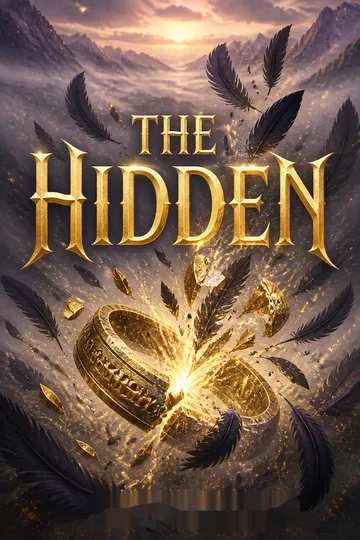
Conceals Falon’s natureSedora gave Falon a moonstone ring that she wore from adolescence onward. Falon believes it is a family keepsake, but it is linked to her inability to shift and to the appearance she has known all her life. When the ring is destroyed at the Alberta clearing, Falon’s body changes and she crosses into the gryphon world. The ring makes the book’s central mystery tangible: the protection Falon received also withheld knowledge and constrained her identity. Its destruction begins the plot, while its purpose remains part of the family history Falon must piece together.
The Alberta Gate
Connects two worldsAn old passage associated with the Ouphe once allowed travel between worlds. Falon reaches its location because Sedora names the clearing as the place to scatter her ashes, and the barrier there throws her into the hidden realm. The gate gives Falon a possible route home and a destination for the story’s central mystery. Its operation is not understood by Falon or the Hidden, so simply finding it does not guarantee escape. The distinction between crossing through it and knowing how to control it keeps Falon’s return uncertain.
The Avowed Vow
Enforces inherited obedienceThe vow is a magical bond historically used by the Ouphe to control gryphons. The Hidden resist its restoration, while the Avowed preserve a system in which leaders can compel loyalty from those beneath them. Falon learns that the vow is not only a political institution but a magical structure that might be broken through a lost branch of power. The vow gives the conflict its history and material stakes: any attempt to dismantle it could free people, but the history of its abuse makes every claimant to that power suspect.
The Truth Cleansing
Tests Falon’s accountThe Hidden use clarity water, verity moss, and a truth tincture to test Falon for illusion or deception. The ritual confirms that she genuinely does not know where she is or why she arrived, but it cannot answer those questions for her. The device establishes the Hidden’s fear of infiltration while showing the limits of their methods: certainty about Falon’s honesty does not translate into trust or freedom. Its coercive setting also puts bodily autonomy at the center of Falon’s first interactions with the community.
The Gryphon Call
Binds instinct and attractionWhen Falon’s gryphon and Zeph meet after she frees him from magical rope, a painful connection called a call surges between them. Ryn’s arrival triggers another joining that leaves Falon unconscious for a week. The connection makes Falon’s attraction to the leaders more complicated, because her own feelings and Pigeon’s instincts are not always easy to separate. It functions as both a romantic force and a source of uncertainty about choice, consent, and the bodily cost of inherited magic.
Shadowed Wings Series


About the Author
Other books by Ivy Asher




Download PDF
Download EPUB
.epub digital book format is ideal for reading ebooks on phones, tablets, and e-readers.








