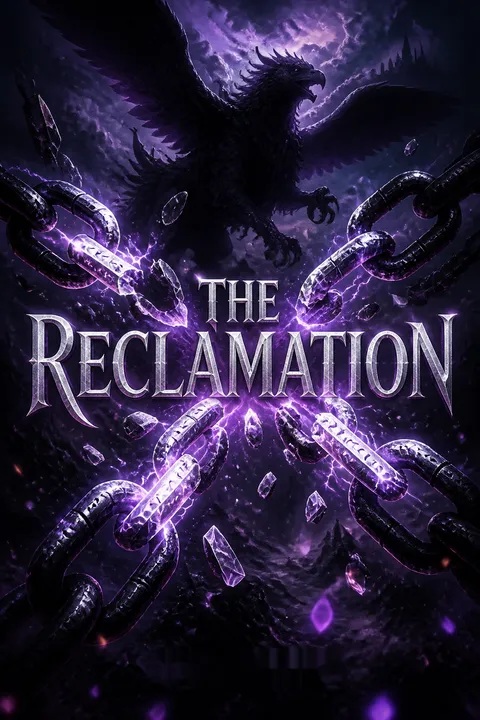


Plot Summary
Prologue
Loa, a Gryphon woman Falon once trusted, cuts Falon’s throat during the chaos of a betrayal. The wound echoes through Falon’s new mate bonds: Treno collapses clutching his own neck, while Ryn and Zeph are caught in the violence around them.
As Falon bleeds, a huge black gryphon finds her and carries her away. She slips toward death believing her mates may die with her, until a voice promises protection and her consciousness goes dark.
The opening makes intimacy a matter of life and death before Falon understands what binds her to the Gryphons. Loa’s blade cuts more than flesh: the matching pain in Treno reveals that Falon’s survival is already entangled with other people’s bodies. The black gryphon’s rescue offers a fragile counterimage to the attack, care arriving in a form she cannot yet identify. Falon’s guilt as she fades also establishes the emotional cost of connection. The danger is not simply that she may die, but that her death could carry others with it.
The Cave of Betrayals
Falon wakes outside her own body and finds Ryn, the Hidden Gryphon leader, arguing with Zeph, his powerful ally. Ryn blames Zeph for driving Falon away and admits that he hid the truth about her. Zeph reveals that Falon is his mate, though he never told her, and Ryn confirms that he suspected the bond too.
When Falon steps into view, Ryn mistakes her for dead and rushes to her body. Treno, the third man bound to her, is still breathing nearby. Falon confronts Zeph and Ryn over their secrecy, but the wound in her throat reopens before they can resolve anything. She collapses again, leaving the others to fear that she is dying.
Falon’s first clear knowledge of the mate bonds comes through eavesdropping, not trust. That form matters: the men’s private argument gives her facts while confirming that they have treated her as a problem to manage. Ryn’s grief at her apparent death complicates her anger, but it cannot erase the choice to conceal what they knew. The scene frames intimacy as both involuntary connection and withheld information. Falon is already physically tied to the men, yet emotionally excluded from decisions affecting her life. Her second collapse keeps that contradiction unresolved and turns knowledge itself into another source of danger.
A Cave Full of Enemies
Falon wakes beside Treno, whose matching throat scar confirms their bond, and finds Ryn and Zeph returned from the battle. Ryn apologizes, but Zeph defends their deception. Falon learns that Loa betrayed Ryn’s people, then argues with Treno when he accuses her of ruining his life by bonding with his enemies.
Ryn and Treno clash over the Avowed, the faction Treno serves, while Zeph and Ryn’s old hostility keeps the cave close to violence. Falon refuses to soothe them at her own expense. With the rebels exposed and Lazza, Treno’s brother, preparing to hunt them, she proposes seeking help from the Ouphe, the magic-using people the Gryphons distrust. No one offers a safer plan.
The cave strips away the convenient roles Falon had assigned the men. Treno’s warmth gives way to anger; Ryn’s remorse exists alongside his political loyalties; Zeph still treats suspicion as protection. Falon’s refusal to apologize for surviving by withholding information is not an evasion of responsibility. It is her first attempt to distinguish harm from self-defense. Her proposal to approach the Ouphe converts that emotional boundary into strategy: rather than spend the group’s strength reenacting old loyalties, she searches for a way to stop the conflict that made secrecy seem necessary in the first place.
Pigeon Takes the Vault
A childhood memory of her mother saying goodbye returns to Falon, and she realizes it was a real visitation on the night her parents died, not an invented dream. She also recognizes how little she has understood about her own past. Hoping to repair things with Pigeon, her Gryphon half, she opens the mental vault where she locked her away.
Pigeon traps Falon inside instead. Falon reshapes the prison into a birdcage, then speaks to Pigeon through it until they agree to stop shutting each other out. When Pigeon shifts and tries to solve the mates’ hostility by building a nest, Falon lets her act, even though the gesture cannot mend the men’s history. The group sets out for the Quietus Mountains.
Falon’s relationship with Pigeon makes internal conflict concrete: control becomes a literal prison that either half can impose on the other. Falon does not regain trust by insisting that her apology should suffice. She changes the structure she created and accepts that cooperation requires Pigeon’s separate agency. The mother’s farewell works similarly, revising Falon’s understanding of memory without restoring the childhood she lost. Pigeon’s nest is a generous but imperfect attempt to solve a human political conflict through instinct. Falon’s willingness to let it stand marks a shift from command toward negotiation, even when she cannot guarantee the result.
Wekun Stops the Rune
During the journey, Treno suddenly chokes, and the same force begins suffocating Falon, Ryn, and Zeph through their bonds. Wekun, a mysterious Ouphe magic user, appears and discovers a concealed rune behind Treno’s ear. He blocks it, ending the attack and saving all four. Zeph and Ryn still distrust him, while Treno blames Falon for the danger his brother caused.
Hurt by their continued suspicion, Falon asks Wekun to take her away from them. He portals her to the Ouphe stronghold and sends the three Gryphons elsewhere, forcing them to confront the possibility of losing her. For Falon, leaving is no longer just a tactical choice. It is a refusal to remain the group’s safest target for blame.
The concealed rune shows that the bond is not merely a romantic or emotional tie. It is also a channel that an enemy can weaponize, making trust a practical security problem. Wekun’s intervention establishes that outside help is possible, but Falon’s departure makes clear that rescue alone does not repair relationships. She stops absorbing the men’s suspicion as the cost of belonging. That boundary carries risk because the group needs her, yet it also tests whether they value her as a person rather than as a resource whose magical usefulness outweighs her consent.
The Last Bond Maker
At the Ouphe stronghold, Falon finds a wary, diminished community rather than the powerful ruling people she expected. Wekun explains that the Ouphe helped create the Vow, the magic that binds Gryphons to a political order, and that Falon descends from two of its makers. She is uniquely placed to undo it.
As Wekun works to restore her suppressed abilities, Falon is drawn into an encounter with her dead father’s preserved magic. He reveals that her parents had another child who was killed, and that Falon’s death could also end the Vow. He insists that she can break it while alive. The news gives her a way forward, but it makes the cost of failure brutally clear.
The revelation turns Falon’s private history into a political inheritance. Her power is not a simple gift: it is connected to the same legacy that produced a system of coercion and violence. The Ouphe camp’s condition also unsettles the assumptions the Gryphons have taught her. The people blamed for past rule are now vulnerable and divided, so ancestry cannot neatly distinguish oppressor from victim. Her father’s message offers belief, but it also places an intolerable burden on her survival. The central question shifts from whether Falon belongs in this conflict to whether she can transform inherited power without repeating its original use.
The Bonds Refuse to Break
Wekun restores Falon’s magic, revealing runes that grant her weapons, shields, teleportation, concealment, and a mark connecting her to a future Sept of Bond wielders. Falon asks him to sever her mate bonds as part of the same process. He manages to cut two connections, but the third, to Zeph, resists. The attempt drains Wekun and causes the severed bonds to return even stronger.
Falon’s restored marks appear on Zeph, triggering a traumatic memory of the violence done to his family through similar symbols. She finds him at the bathing pool and grounds him with her presence until he can speak about his fear of wearing marks associated with oppression. They begin to consider how he might reclaim their meaning.
The failed severing makes fate feel less like a promise than a structure Falon must negotiate with. Her desire to escape the bonds is reasonable, yet magic answers by strengthening the connection instead of respecting the boundary she intended to set. Zeph’s reaction prevents the runes from becoming mere visual shorthand for power. On his body, they carry a history of imposed control and personal trauma. Falon’s care for him does not erase her own decision or transform their relationship instantly. Instead, she helps him name a choice: whether to remove the marks or learn to use them without surrendering ownership of himself.
Cree’s Trial in the Pit
The Ouphe community refuses to join the fight, wary of being blamed or attacked by Gryphons on either side. Falon then approaches Cree, the formidable leader of an exiled Gryphon camp. Cree questions whether Falon will claim her mates and uses the camp’s customs to challenge her worthiness to lead them into battle. Falon confronts Cree over her treatment of Ryn and fights her in the pit.
When Pigeon cannot overpower Cree, Falon switches control, releases a blast of purple magic, and summons unfamiliar blades. She nearly loses before forcing Cree to yield. The camp accepts her as a credible ally, and its people agree to prepare for the coming conflict. Falon’s authority now rests on demonstrated ability, not merely ancestry.
Cree’s test exposes the social cost of Falon’s refusal to perform a conventional mating role. Rather than answer the challenge by claiming ownership over the men, Falon defends their right to choose and puts herself at risk. The pit gives that ethical stance a physical consequence. Her victory is not effortless proof that she is destined to rule. She needs Pigeon, her newly awakened magic, and the willingness to change tactics when instinct alone fails. The camp’s acceptance remains practical and conditional, but it is earned through action. Falon begins to exercise authority without imitating the coercive customs she wants to dismantle.
The Treehouse of Grief
After a charged kiss with Ryn, Falon pulls away, still uncertain that attraction can repair their history. She overhears Ryn, Zeph, and Treno acknowledging how their suspicion and divided loyalties have hurt her. Zeph then takes her to his childhood home, hidden among enormous trees.
He tells her how his brother Issak cared for abandoned sparrow chicks after their parents were killed, and how Lazza later tortured the birds until Issak intervened and died. Falon and Zeph tear apart the house where their suffering began. Pigeon and Zeph’s gryphon then chase one another through the sky, sharing a rare moment of play. Falon sees that Zeph’s fury grew from grief, though understanding it does not make trust automatic.
The destroyed treehouse gives Zeph’s history a place that can be touched and altered. His account of Issak’s care for small birds mirrors Falon and Pigeon’s effort to protect their own bond, but the parallel does not reduce either loss to a symbol. Falon’s choice to help dismantle the house is a form of witness: she does not ask Zeph to become harmless before offering companionship. The gryphons’ play offers a different model of connection from the human political rivalry surrounding them. Their ease suggests possibility, not resolution. Falon still requires repeated evidence that the men can change their behavior.
A Lesson Returns
Training with her runes lets Falon teleport, summon different blades, shield herself, and fight several opponents, while Wekun helps her understand what the marks can do. A childhood memory finally returns: her father taught her to destroy harmful magic in a rune, using a marked pig as practice.
Treno, meanwhile, admits that he once believed the Avowed’s control through the Vow was protection. He now understands the harm of forcing that belief on others, and Falon lets him approach her again.
Their intimacy reconnects them, including their Gryphon halves. The scene brings tenderness without erasing the political choice Treno must face. Falon has the missing technique in reach, but she still has to understand how her own will is meant to direct it.
The remembered lesson shifts the source of power away from inherited language and toward intention. Falon has mistaken the words her father taught her for the mechanism itself; the deeper lesson is that magic follows the will behind them. This distinction becomes ethically significant because the Vow’s original force depended on one group imposing its will on another. Treno’s admission parallels Falon’s recovery of the lesson: both require him to question what he once called protection. Their physical reconnection is meaningful, but it is not a substitute for that reckoning. Intimacy becomes a choice made amid accountability, rather than proof that previous harm no longer matters.
Lazza Calls Her Back
Ryn explains that he killed Loa after she slit Falon’s throat, ending Falon’s chance to confront her herself. As Ryn and Falon begin to reconnect, the dead mark on Falon’s neck activates and transports her to Lazza. He attacks while her mates are left behind. Pigeon fights the surrounding Gryphons, but Lazza’s control of air crushes her body and leaves her badly injured.
Falon uses her runes to armor Pigeon, then returns to human form as the attack worsens. Lazza threatens Saner, a captive whose mark helped summon Falon, and uses another prisoner to pressure her. Falon recognizes that the mark she thought harmless has made her reachable, and that the battle is now personal as well as political.
The dead mark turns an earlier act of apparent safety into a mechanism of capture. Falon is not summoned because she chooses to enter the fight, but because an old power can still reach her body. That loss of control echoes the Vow itself, yet Falon responds differently from the men who built their authority around it. She protects Pigeon by adapting her runes rather than treating her Gryphon half as expendable. Lazza’s use of Saner and another captive shows how he converts relationships into leverage. The scene brings the story’s private injuries into the open war without allowing Falon to mistake vengeance for a secure plan.
The Vow Breaks
Falon’s first attempt to destroy Lazza’s Vow mark fails because she relies on her father’s words instead of her own will. As the Gryphons battle around her, Zeph, Ryn, and Treno arrive with Wekun’s reinforcements. Ryn carries Falon toward the aerial fight, and she uses her whip swords to wound Lazza’s wings before Zeph helps bring him down.
When Lazza feigns unconsciousness and stabs her, Falon finally understands the lesson: the language is not the source of power. She commands the rune with her own intent, strips away its magic, and kills Lazza. The Vow’s marks crumble across the Gryphon people, and the stored power surges into Falon. She survives the backlash only long enough to collapse.
The climax depends on a change in Falon’s understanding, not simply an increase in force. Her first failure comes from treating inherited words as a formula; success comes when she claims responsibility for what she wills the magic to do. That distinction separates her act from the Vow’s coercive logic, though she still uses force to end Lazza’s rule. The battle makes the costs visible: Pigeon is gravely hurt, Falon is stabbed, and help arrives only after she has already risked everything. Breaking the marks releases the Gryphons from the system, but it cannot instantly heal the history that system produced.
A Gate Closes Behind Her
After the battle, Falon recovers with Ryn beside her and learns that defeating Lazza has not ended the Gryphons’ internal fighting. Ryn admits that he and Zeph once considered whether her death might be necessary to end the Vow, though their choices changed as they grew attached to her. Falon accepts the painful truth without excusing the secrets that preceded it.
While she and Cree walk toward food, Cree leads her to the clearing where Falon first entered this world. Cree says that sending her back is the only way to protect Falon and her mates, then pushes her through the gate and closes it permanently. Falon lands alone in a snowy Colorado clearing, separated from the men she has chosen and unable to reopen the passage.
The victory exposes the difference between ending a system and repairing the people shaped by it. Falon and Ryn can acknowledge an unthinkable past choice without pretending that disclosure would have been harmless. Cree’s decision then imposes another separation in the name of protection, repeating the pattern of other people choosing Falon’s future for her. The gate’s closure is especially cruel because it comes after Falon has stopped treating home as her only possible refuge. Her loss is not simply of the Gryphons, but of the agency and belonging she had begun to build. The ending of one conflict becomes the beginning of another search.
Griffin Automotive Reopens
Three months later, Falon runs an auto shop in her hometown and hires investigators to search for Tierit, the hidden Sentinel world. She keeps working and flying with Pigeon, but neither can stop missing their mates.
Teo, a wolf shifter with troubled cars, arrives at the shop and reacts strongly to Falon’s runes. Before they can discuss it, his pack summons him away. Wekun later brings Falon’s three mates to her world, and their reunion confirms they never believed she abandoned them.
When Teo returns with his pack and Vinna, a marked woman investigating missing wolves, Wekun recognizes Vinna’s runes as belonging to the same Sept as Falon’s. He suspects a third member is in danger. Falon agrees to help find her, beginning a new search with her mates beside her.
The garage gives Falon a practical life rather than a temporary waiting room. Repairing cars cannot resolve the separation, but it restores competence and routine while she searches for a way back. The reunion then answers the emotional fear created by Cree’s intervention: Falon’s absence was not interpreted as a rejection. Vinna’s arrival widens the story’s scale from a single political conflict to a network of Bond wielders and missing people. The book closes on chosen movement rather than simple restoration. Falon returns to danger, but this time she enters it with her mates, Pigeon, and a clearer understanding of what her power asks of her.
Analysis
The Reclamation treats power as a question of consent before it treats it as a question of victory. The Vow is a system of magical control, but the intimate bonds around Falon repeatedly show how easily care can become another form of management. Ryn and Zeph withhold information because they believe secrecy protects their people. Treno defends a system he has been taught to call protective. Falon herself locks Pigeon away when fear overwhelms her. The novel makes these actions distinct in scale, but links them through the same psychological temptation: to reduce uncertainty by controlling another being.
Falon’s development is therefore not a simple passage from weakness to strength. Her abilities become extraordinary, yet her more consequential growth is relational. She learns that Pigeon is not an instinct to suppress, that an apology does not erase injury, and that attraction does not guarantee trust. Her victories depend on collaboration, whether she is accepting Pigeon’s judgment, letting Cree’s community test her, or helping Zeph face a past he has survived by fighting against it. Even the mating bonds do not settle these questions. They intensify connection while leaving the work of respect unfinished.
The climax turns on a precise reinterpretation of inheritance. Falon first believes her father’s words are the key to breaking the Vow. She succeeds only when she understands that her own intent, not the inherited language, gives the magic direction. That shift distinguishes using ancestral power from obeying ancestral authority. Yet breaking the Vow cannot immediately unite the Gryphons. Political freedom does not undo grief, fear, or learned hatred, and Cree’s forced separation of Falon confirms that protection can reproduce the very coercion it claims to prevent.
The ending consequently offers reunion without closure. Falon regains her mates and discovers a wider network of Bond wielders, but the new mystery asks her to continue choosing engagement over retreat. Her reclamation is not ownership of a world or a group of people. It is the growing ability to decide what her power means, and to make connection answerable to choice.
Review Summary
The Reclamation receives mixed reviews, with ratings ranging from 1 to 5 stars. Readers appreciate the world-building, character development, and plot twists. Many enjoy the continuation of the Shadowed Wings series and its connection to the Lost Sentinel universe. However, some criticize the rushed pacing, unresolved plot points, and character behaviors. The relationship dynamics and mate bonds are contentious topics, with some readers finding them problematic. Despite divided opinions, many fans eagerly anticipate future installments in the Sentinel World.
Characters
Falon Solei Umbra
Reluctant Bond BreakerFalon is a mechanic from Colorado who is thrust into a world of Gryphon factions, ancient magic, and political violence. Her practical humor and stubborn self-reliance help her survive, but she often mistakes endurance for having to accept whatever others decide for her. She is drawn to connection, yet secrecy and coercion make her wary of the bonds that form around her. Her relationship with Pigeon, the Gryphon half she once believed absent, forces her to confront how often she tries to control what she fears. Falon’s defining strength is not fearlessness. It is her growing willingness to question inherited rules and to take responsibility for what she chooses.
Pigeon
Falon’s Gryphon HalfPigeon is Falon’s fierce Gryphon self, with instincts, desires, and a point of view distinct from Falon’s human reasoning. She communicates through images and feeling, and her directness often clashes with Falon’s suspicion or need for control. She values movement, flight, play, and the bonds she recognizes as meaningful, even when Falon sees only political danger. Their conflict is not a struggle between a person and an animal, but between two partners who have both felt abandoned. Pigeon’s force can be reckless, yet her loyalty is constant. She presses Falon toward a fuller understanding of herself rather than letting her settle for survival as a diminished half.
Zeph
Wary Hidden LeaderZeph is the fierce Syta, or leader, of the Hidden Gryphons and one of Falon’s mates. His suspicion comes from a life shaped by violence, family loss, and a struggle against the Avowed. He often expresses fear as anger and treats control as a form of protection, which makes him dangerous to trust even when his care is sincere. Under that hard exterior is a man whose grief has never been given room to change shape. His connection with Falon challenges the idea that loyalty must mean obedience. Zeph’s difficulty is not learning to feel, but learning to offer care without turning it into another demand.
Ryn
Gryphon Rebel and MateRyn is Zeph’s Altern, a close ally in the Hidden rebellion, and one of Falon’s mates. His easy humor initially softens the danger around him, but his loyalties and withheld knowledge reveal a more complicated man. Ryn believes in the cause of freeing the Gryphons and has spent years preparing for political change. That commitment can make him treat Falon as part of a larger strategy rather than as a person entitled to decide for herself. He is capable of remorse and tenderness, though both must be tested by action. Ryn’s central tension is between the obligations he inherited and the relationships he wants to choose.
Treno
Avowed Warlord and MateTreno is the Altern of the Avowed and Lazza’s younger brother. His humor and apparent ease can make him seem less dangerous than the political power he holds. He has trusted the Vow as a source of protection and order, and that belief shapes how he sees the Hidden and his own responsibilities. Falon’s arrival unsettles the assumptions that once made his life legible. His bond with her puts personal desire beside inherited allegiance, while his water magic makes him a formidable fighter. Treno’s most important trait is his capacity for self-questioning. He can face the possibility that a system he defended has harmed the very people it claimed to protect.
Wekun
Bond Weaver GuideWekun is an Ouphe Bond Weaver who can see and alter magical connections, travel between worlds, and block certain runes. He helps Falon understand the hidden structure of her abilities, though his knowledge is incomplete and his interventions sometimes carry consequences he cannot predict. Wekun approaches danger with calm curiosity, a quality that both reassures Falon and irritates the more suspicious Gryphons. He is also marked by personal loss, having outlived the members of his Sept. His instinct is to guide rather than command, but his power gives him influence over other people’s lives. The story asks whether even benevolent intervention can avoid reproducing the control it intends to undo.
Lazza
Ruthless Avowed LeaderLazza leads the Avowed and is Treno’s older brother. He uses air magic and political authority to keep power in his hands, regarding people as resources to be managed or threats to be removed. His family history gives him proximity to Treno and the Gryphon leadership, but not the empathy that might make that position humane. Lazza’s willingness to weaponize the Vow makes him a direct danger to Falon and everyone bound by its marks. He represents an extreme version of the order Treno once trusted: stability secured through force, with little regard for consent. His confidence depends on other people believing resistance is impossible.
Cree
Exiled Gryphon CommanderCree commands an exiled community of Gryphons whose Ouphe heritage leaves them distrusted by both major factions. Scarred, direct, and accustomed to making hard decisions, she measures potential allies through action rather than reassurance. She initially tests Falon’s strength and principles before asking her people to risk their lives. Cree understands that survival often requires choices that will look cruel from the outside, and she does not soften that reality for others. Her leadership carries the pressure of protecting a community with few safe options. She and Falon share a willingness to take responsibility, but differ over how much authority one person may claim in the name of another’s safety.
Loa
Ryn’s Troubled SisterLoa is Ryn’s sister and a Gryphon with access to the Hidden community and its plans. Falon encounters her as a trainer whose conduct raises questions, while Ryn’s history with her makes her presence emotionally charged. Loa’s relationship to her brother carries the strain of family loyalty in a world where political allegiance can be deadly. She is not simply a personal obstacle for Falon: her choices affect the security of an entire rebel group.
Awlon
Falon’s Remembered FatherAwlon is Falon’s father, remembered through childhood lessons and the fragments of a past she has not fully understood. He taught her to approach magic as something that can be directed and questioned, rather than merely feared. His influence lingers in her habits of thought even when she cannot recall the lessons clearly. For Falon, remembering him means revisiting both the comfort of being taught and the pain of growing up without his guidance.
Sedora
Falon’s Protective MotherSedora is Falon’s mother, whose choices were shaped by danger, love, and the effort to keep her family hidden. Falon remembers her tenderness most clearly through a childhood farewell that takes on new meaning as her own abilities emerge. Sedora’s absence leaves Falon with incomplete memories rather than simple answers. Her story links parental protection to the difficult question of when keeping a secret shields a child and when it leaves that child unprepared.
Noor
Falon’s Lost MotherNoor is the name associated with Falon’s mother in the record of her death. Falon’s childhood memory of Noor’s farewell becomes important as she begins to question which parts of her past were real.
Gran
Falon’s Steadfast GuardianGran raised Falon after her parents died and gave her a stable home in Colorado. She was not Falon’s blood relative, but served as her mother’s trusted protector and carried secrets about the family’s past. Her care gave Falon a life beyond the conflict she had been hidden from. The house and workshop she leaves behind become practical anchors as Falon tries to make a life for herself.
Issak
Zeph’s Lost BrotherIssak was Zeph’s older brother, remembered as a protective and compassionate presence in their childhood. His care for vulnerable creatures reveals a gentler model of strength than the brutality that surrounds the brothers. Zeph’s memories of Issak are inseparable from the family violence that shaped his adult life, making his name both a source of love and a measure of what was taken.
Saner
Gryphon Lie DetectorSaner is a Gryphon whose unusual ability makes her valuable in a world where trust is scarce. She places a mark on Falon that appears harmless, but its connection to magic gives it greater significance than either of them initially understands. Saner’s position shows how specialized gifts can make people useful to leaders and vulnerable to those who want to exploit them.
Nadi
Ouphe Spirit GuideNadi is an Ouphe spirit who gives Falon a possible route toward help in the Quietus Mountains. Her brief guidance points Falon toward a people and a history she has barely begun to understand.
Vinna
Marked InvestigatorVinna is a marked woman investigating missing wolves with a close-knit group of companions. Her arrival at Falon’s repair shop reveals that unusual runes and magic are present in the world Falon once considered ordinary. Vinna is observant and composed, and she responds to uncertainty by assessing the people around her rather than rushing to trust them. Her investigation draws Falon toward a wider network of supernatural connections.
Teo
Wolf Shifter ClientTeo is a wolf shifter who comes to Falon’s garage seeking help with his pack’s vehicles. His reaction to Falon’s markings suggests that the runes are recognizable to others, even in her old world. Teo is polite but distracted by an urgent matter involving his companions. His visit provides a practical reason for two very different supernatural stories to cross.
Vian and Wrye
Gryphon Healer BrothersVian and Wrye are brothers whose healing ability can reach both a Gryphon and the person sharing its body. They help Falon and Pigeon recover from physical trauma, though the work leaves them exhausted. Their skill offers relief in a world where injuries often carry consequences beyond the visible body.
Plot Devices
The Vow
A magical system of controlThe Vow is a magical bond imposed on Gryphons and tied to their political factions. Its marks can grant abilities, establish authority, and allow leaders to exert control through connections between people. The Vow shapes the war between the Avowed and the Hidden, while also making Falon’s relationships physically dangerous. It is rooted in the Ouphe’s history and the magic of its makers. Falon’s task is not simply to defeat a leader, but to understand how the magic works and end the structure that lets one group command another.
Mate Bonds
Instinct made consequentialFalon’s bonds with Zeph, Ryn, and Treno form through encounters neither she nor all three men fully understand at first. The connections create emotional and physical consequences, including shared pain and the danger of being targeted through a bonded partner. Falon’s attraction to the men does not automatically produce trust, and the bonds cannot make their political histories disappear. Pigeon experiences the same relationships through a more instinctive sense of belonging, creating another conflict inside Falon. The bonds make intimacy unavoidable, but the story distinguishes magical attachment from freely earned respect.
Falon’s Runes
A body mapped with abilitiesWhen Falon’s suppressed magic awakens, runes appear across her body. Different combinations produce blades, shields, teleportation, concealment, and other powers. The marks connect her to her mates’ abilities and can adapt to Pigeon’s Gryphon form, giving her tools that are useful in training and combat. Their meaning is not always obvious, so Falon must learn by testing them with Wekun’s help. Because similar marks have been used to control people, the runes also carry an ethical burden: power is not neutral merely because Falon possesses it.
Gates Between Worlds
Home becomes a moving targetA hidden gate takes Falon from Colorado into the Gryphon world, where her knowledge of home offers little protection. Wekun’s portals can move people between camps and worlds, making him an essential guide. The gate also gives Falon a continuing choice between the life she left and the relationships she builds in the new world. Its existence makes return seem possible, but access can be controlled or lost. The mechanism turns physical travel into an emotional question about belonging, safety, and who has the authority to send someone home.
The Sept Rune
A map to future alliesA Sept is a group of Bond wielders linked by a shared rune. Its members can strengthen and connect one another through their magic, though a complete Sept is not assembled during Falon’s initial struggle against Lazza. Wekun identifies the mark on Falon’s body and later recognizes a matching mark on Vinna. The device expands the story beyond the immediate Gryphon conflict and gives Falon a new reason to act after she is separated from her mates. It suggests that her ability belongs within a larger network, not only within the bonds she already knows.
Shadowed Wings Series
About the Author
Other books by Ivy Asher


Download PDF
Download EPUB
.epub digital book format is ideal for reading ebooks on phones, tablets, and e-readers.








