

Key Takeaways
Write the invisible structure, not just the lines people quote
Beyond the dialogue. Brian McDonald calls the visible words and images the surface of a story. The invisible ink is the underlying craft: which events happen, in what order, why characters act as they do, and how these choices shape an audience’s response. Viewers may not name this structure, but they feel when it works. The book compares it to recognizing tracks in grass: a skill that becomes visible once someone knows what to look for.
A story’s hidden design. Dialogue can be witty and sentences beautiful, yet a story still feels hollow if its events have no meaningful connection. The craft is not a secret code reserved for experts. It is a set of choices that guide attention, build expectations, and make the ending feel earned.
What's striking is the distinction between noticing a story and being able to explain why it works. Audiences routinely infer motives, anticipate consequences, and recognize patterns without conscious analysis. That makes structure less like hidden machinery than like grammar: mostly unnoticed until it breaks. The metaphor is useful for readers as well as writers, since it encourages attention to cause, order, and character behavior. Its limitation is that a coherent structure is not automatically a compelling one. Technical fluency creates the conditions for resonance, but voice, subject, and audience still matter.
Give every story a causal spine audiences can follow
Seven useful movements. McDonald’s story pattern moves from introducing a world and its routine, to a disruptive event, to the consequences of that event. A later turning point changes the direction of the struggle; a final turn drives the climax, and a brief aftermath shows what life is like afterward. These are not seven mandatory scenes. They are questions about what the audience needs to understand and what causes the next development.
Consequences create momentum. In the film Double Indemnity, a couple first plans an insurance murder, then carries it out, shifting the story toward whether they will escape punishment. That change of focus gives the long middle section shape. The initiating event can present an opportunity as readily as a threat. What matters is that the protagonist’s response drives what follows.
This structure resembles causal models used in fields such as history and social science: an event matters because it changes the range of later possibilities. That is why the pattern can clarify a draft without dictating its style. A story may begin in the middle, withhold information, or use several protagonists and still preserve cause and consequence. The danger comes when the outline becomes a checklist. If every beat is present but the character’s choices do not generate the next beat, the result can feel mechanically complete and dramatically inert.
State your point as a claim, then make every scene prove it
A subject is not a point. McDonald uses armature for the specific idea that supports a story, similar to the hidden frame beneath a sculpture. Saying a story is about competition names a topic; claiming that competition can destroy the people it should bring together gives the writer a position to dramatize. The distinction gives the writer a test for choices: does this character, event, or image help express the claim?
King Midas makes the case. In the old tale, a greedy king receives the power to turn whatever he touches into gold, then turns his daughter into gold. The plot is shaped to make the cost of his wish unmistakable. A clear armature does not require a sermon. It requires a focused idea and story events that let the audience see its consequences.
A sentence-sized claim acts like a design constraint: it helps a writer decide what belongs and what is merely attractive. This resembles a scientific hypothesis in one respect: the idea becomes meaningful when evidence in the work supports it. But a story is not a proof, and characters should not become cardboard exhibits for a moral. The strongest claims leave room for tension, exceptions, or competing goods. A writer can remain precise without pretending that one story settles a question that real life keeps open.
Turn the theme into choices audiences can feel
Show the idea at work. Dramatizing an idea means making characters’ actions and consequences communicate it, rather than relying on speeches to do the job. In The Wizard of Oz, the Scarecrow claims to lack a brain, yet repeatedly devises plans. The audience sees his intelligence before the story gives him a diploma. His behavior carries the point more persuasively than an explanation would.
Emotion carries the lesson. In Jaws, Chief Brody fears water, yet faces the shark in the final struggle. His physical danger gives his inward change a visible form. The audience can experience his fear and courage without translating the film into a written moral. The same principle applies beyond fiction: a story can make an abstract idea memorable by letting people witness its human consequences.
Dramatization works because people learn not only from propositions but also from imagined situations: who acts, what it costs, and what follows. That makes stories potent vehicles for ethical and social ideas. It also makes them persuasive, which calls for care. A moving example can illuminate a claim without proving it universally true. The writer’s task is to make the emotional experience specific and credible, not to disguise a simplistic argument as a powerful scene. Audiences can feel a lesson deeply and still deserve space to question it.
Make the protagonist face the condition they most want to avoid
Change needs pressure. McDonald calls the painful ordeal that forces a character to confront a flaw or fear ritual pain. In his story model, the protagonist rarely changes just because a better option appears. The plot places the character in a personal hell: the very situation that exposes the limits of the old way of living. King Midas learns the cost of greed only after his wish harms his daughter.
The struggle reveals growth. In Jaws, Brody must confront the water he fears. In E.T., Elliot wants to keep his alien friend but must accept the pain of helping him leave. Sacrifice can make change legible because it shows what the character values when desire and responsibility collide. Some protagonists refuse to change; that refusal can itself be the story’s point.
The idea has an affinity with exposure: fear or avoidance becomes workable when a person encounters it rather than organizing life around escape. In fiction, however, suffering is a dramatic instrument, not evidence that pain is inherently ennobling. Trauma does not reliably produce wisdom, and characters should not be punished merely to make a plot feel serious. The useful question is whether the pressure tests a particular belief and creates a consequential choice. When ordeal and change connect, hardship has meaning in the story instead of functioning as spectacle.
Use supporting characters as forecasts of the protagonist’s choices
Build meaningful mirrors. McDonald calls characters who reflect possible outcomes for the protagonist clones. They need not be literal doubles. In The Lord of the Rings, Gollum shows Frodo what surrendering to the Ring’s power might make of him. In The Three Little Pigs, the first two pigs’ failures help the audience understand why the third pig’s preparation matters.
Side plots should support. The book prefers supporting plots to the usual term subplot because these stories should reinforce the same central idea. In Rear Window, the neighbors’ different romantic situations mirror possible versions of the central couple’s future. Opposites can also illuminate one another: McDonald calls such contrasting characters flip-flops. Their differences generate conflict and reveal what each lacks, but they still need to feel like people, not just thematic equipment.
Mirrors help audiences compare outcomes without requiring characters to announce the lesson. This resembles counterfactual reasoning: seeing what might happen under another choice clarifies the stakes of the choice at hand. The technique can make an ensemble feel unusually coherent. Its risk is instrumentalizing every secondary character until the world feels like a set of diagrams. A strong supporting figure has a life beyond the protagonist’s development, even when the story uses that figure to sharpen its central question.
Pair external events with the inner cost they create
Action needs an inner life. McDonald labels external events and plot movement masculine elements, and internal feeling and relationships feminine elements. His central craft point is that a story often needs both: events give it momentum, while emotional consequences make those events matter. In Saving Private Ryan, the beach assault combines physical chaos with the soldiers’ fear, panic, and grief. The violence lands differently because the audience is given a sense of what it feels like to endure it.
Apply the distinction carefully. Jaws is not only a struggle against a shark; Brody’s fear is part of the conflict. McDonald argues that stories lose resonance when they show dramatic events without showing their human effects. The labels can be used as prompts for balancing action and emotion, but they should not be mistaken for rules about what men or women write or enjoy.
The external and internal dimensions offer a practical diagnostic: what happens, and what does it do to the people involved? This resembles trauma-informed accounts of experience, which distinguish an event from its psychological meaning and aftermath. The book’s gendered labels are less robust than that distinction. The claims about male and female brains and audience tastes are broad, dated generalizations, and the same craft capacities vary widely among individuals. Keeping the useful contrast while dropping its gender essentialism makes the tool more accurate and more inclusive.
Teach the audience the rules before you bend them
Make surprises feel fair. Superior position is the audience’s advantage when it knows something a character does not. In Alfred Hitchcock’s familiar example, viewers who see a bomb placed under a table feel suspense as the characters continue talking. Without that knowledge, the explosion is merely a surprise. Both can work, but they create different experiences.
Set expectations first. Spielberg’s television episode about a trapped bomber’s gunner tried to resolve its crisis with cartoon-style landing wheels, despite establishing a realistic wartime world. The rescue felt unearned because the story had not taught viewers that such a possibility belonged in its reality. Likewise, showing a plan succeed once can make its later failure tense: audiences know what should happen, so they feel the break in the pattern.
Suspense depends on managing information, while surprise depends on withholding it. The audience is not a passive recipient but an active predictor, continually testing what the story has taught it. That is why a rule-breaking payoff can feel delightful when the story has prepared its logic, and arbitrary when it has not. Not every world needs realism; a cartoon can establish cartoon physics. The key is consistency of expectation, not realism itself. A twist should revise the audience’s understanding, not erase the contract that made it care.
Make dialogue sound human, but let subtext do the heavy lifting
Words carry more than words. Subtext is the meaning beneath what characters say, shaped by their history and the situation. McDonald describes a mother asking her grown daughter about a lingering cold. Once the audience knows the daughter has AIDS, the ordinary questions take on a second meaning: the mother’s concern is sharpened by what she cannot say directly.
Give each line a job. Dialogue can reveal character, deliver necessary information, or clarify the story’s central idea. In Some Like It Hot, two musicians’ argument about spending their first paycheque tells the audience both that they are broke and how each man thinks. McDonald also identifies address and dismiss, where a character voices and defuses an audience’s likely objection, and address and explain, where dialogue teaches the audience how to interpret something unfamiliar.
Subtext invites the audience to participate, using context to infer what the speaker cannot or will not say. That participation can make a simple exchange feel intimate or suspenseful. Natural speech, however, is not a transcript of everyday conversation. Fictional dialogue is selected and shaped, so its apparent spontaneity depends on craft. The useful test is not whether a line sounds exactly like real life, but whether it sounds plausible for this character, in this moment, while doing necessary work.
Revise for story logic, not applause or packaging
Treat criticism as evidence. McDonald advises writers to separate a reader’s diagnosis from the reader’s proposed fix. If several people lose interest at the same point, the problem may be real even if their explanations differ. Confusion and a weak ending are worth investigating; a preference for another writer’s style may not be. His practical standard is to inspect whether the work communicates clearly and whether each element supports its central idea.
Story matters commercially. The book contrasts early 1990s comic publishers who marketed collectible covers to speculators with Frank Miller’s Daredevil stories, which drew readers through craft and character. Packaging may attract attention, but it cannot substitute for a story people want to continue. Genre and medium are vehicles, not guarantees of quality. Revision means serving the work’s needs, even when that means abandoning a favorite scene or effect.
This approach treats feedback as imperfect data rather than a verdict. Repeated reactions can reveal a shared problem, while a reader’s preferred solution may reflect taste rather than diagnosis. That distinction is useful in any creative practice, where audiences are often better at reporting experience than prescribing technique. The commercial example also resists the easy assumption that novelty or marketing can replace engagement. Still, a story’s craft is only one factor in success; distribution, timing, and cultural context also shape what finds an audience.
Analysis
Invisible Ink is a craft book organized around a single corrective: stories are not primarily the words characters speak, but the designed relationships between events, choices, and consequences. Its strength is that it repeatedly demonstrates concepts through familiar films and fables, then gives writers a practical vocabulary for noticing them. The seven-part narrative pattern helps organize causality; the armature gives scenes a shared purpose; mirrors and supporting plots turn secondary characters into structural evidence; and information control explains why suspense can hold attention. Together, these ideas make story construction feel learnable rather than mysterious.
The book’s most valuable claim is also its most demanding: a writer must serve the story rather than personal attachment to a clever line, genre, or scene. This shifts revision from self-expression toward communication. It also offers a useful account of audience trust. When a story establishes rules, prepares a payoff, and makes character choices consequential, viewers can relax into the experience even when the premise is fantastic.
The framework is strongest as a diagnostic, not a universal formula. Its emphasis on one armature can encourage clarity, but can also narrow stories that thrive on ambiguity, unresolved conflict, or multiple legitimate interpretations. The model’s gendered distinction between external action and internal feeling is more problematic: the craft distinction is useful, but the book’s broad claims about gender and brain differences should not be treated as settled explanations of writing or audience response. Likewise, examples such as the preferred ending for Close Encounters of the Third Kind are interpretive judgments, not laws of structure. The enduring lesson is more flexible: choices should feel motivated, consequences should matter, and the audience should have enough information to participate. A good story is not a machine that proves a single answer. It is a designed experience that makes an idea felt, tested, and remembered.
Review Summary
Invisible Ink receives mostly positive reviews, praised for its insights on storytelling structure and theme. Readers find it concise, practical, and applicable across various mediums. Many appreciate McDonald's focus on "invisible" elements like armature and character development. Critics note its simplicity and lack of depth on certain topics. The gender-related content in one chapter is controversial. Overall, it's viewed as a valuable resource for both novice and experienced writers, offering a fresh perspective on crafting compelling narratives.
People Also Read





Glossary
Invisible Ink
Underlying story designThe elements of storytelling that operate beneath the dialogue and visible wording. These include the order and selection of events, the reasons characters behave as they do, the expectations established for an audience, and the way the story’s parts reinforce its central idea. Audiences may feel these choices without consciously identifying them.
Seven Easy Steps to a Better Story
A seven-beat story patternMcDonald’s practical outline for narrative movement: establish the story’s world and routine, introduce a disruptive event, show the consequences, develop a major shift within the struggle, move toward a final turning point and climax, then show a brief aftermath. The pattern is a guide to causality and audience understanding, not a requirement for seven literal scenes.
armature
The story’s central claimMcDonald’s term for the specific idea that supports a story, comparable to the hidden frame that holds a sculpture together. It is more precise than a broad subject such as competition or love. Characters, events, and images should help dramatize the claim, giving the writer a way to judge whether a story element belongs.
ritual pain
Pressure that tests characterThe painful ordeal a story imposes to force a protagonist to confront a fear, flaw, or entrenched belief. This pressure can be physical or emotional and may lead to growth, refusal, or corruption. The term describes a dramatic device, not a claim that real-world suffering reliably improves people.
clones
Characters reflecting possible outcomesCharacters who mirror what could, should, or might happen to a protagonist if a particular choice or path is taken. They help audiences compare behavior and consequences without relying on direct explanation. A clone can be a foil, a cautionary example, or a character whose failure or success clarifies the protagonist’s journey.
flip-flops
Opposites who expose differencesMcDonald’s label for contrasting characters whose opposing traits generate conflict and illuminate what each lacks or could learn. The pairing can create comedy, as in an orderly person living with a messy one, or reveal complementary capacities. The contrast is most useful when it affects the relationship and the story’s central idea.
masculine and feminine elements
External action and inner lifeMcDonald’s labels for two dimensions of story: external events and plot movement, which he calls masculine, and emotional, relational, or internal experience, which he calls feminine. The craft distinction can help writers examine whether action has human consequences. The gender labels reflect the book’s framework, not a reliable rule about an individual’s sex, ability, or taste.
superior position
Audience knowledge advantageA storytelling situation in which the audience knows something a character does not. The information gap can create suspense, comedy, or dread because viewers anticipate consequences the character cannot yet see. Hitchcock’s example of an audience aware of a hidden bomb illustrates how shared knowledge can sustain attention beyond the moment of surprise.
supporting plots
Secondary stories reinforcing the main ideaMcDonald’s preferred term for storylines that support the main plot by strengthening its central idea, increasing pressure, or reflecting the protagonist’s choices. They are not included merely to make a fictional world feel busy. Their connection to the central story should give them a dramatic purpose.
address and dismiss
Preempt an audience objectionA dialogue technique in which a character voices a likely audience concern and then answers or undercuts it within the story. It can preserve immersion when a situation risks seeming implausible. The response must fit the scene and character, since an overly self-conscious explanation can draw attention to the storytelling.
address and explain
Clarify unfamiliar story informationA dialogue technique that helps the audience understand an unfamiliar object, situation, or judgment by having a character explain it naturally. McDonald illustrates it with a character calling a celebrated spaceship a piece of junk, signaling that the audience’s impression differs from the vehicle’s reputation in that world.
FAQ
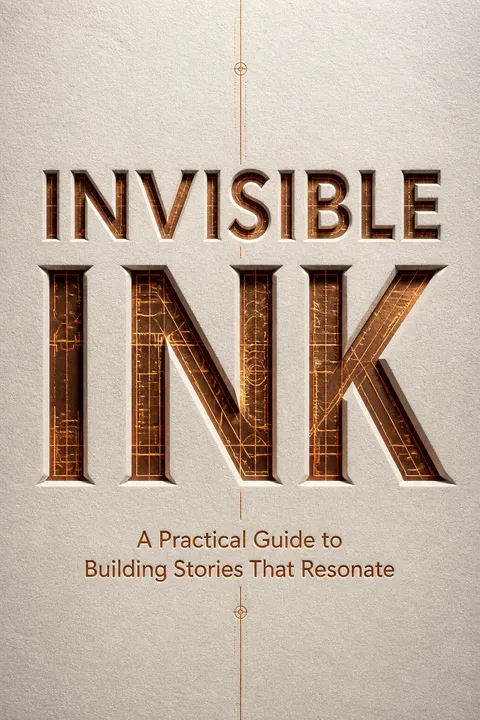
What's "Invisible Ink: A Practical Guide to Building Stories That Resonate" about?
- Story Structure Focus: The book delves into the concept of "invisible ink," which refers to the underlying structure and elements of storytelling that aren't immediately visible but are crucial for a story's success.
- Author's Expertise: Written by Brian McDonald, an award-winning screenwriter, the book offers insights from his experience teaching story seminars at major studios like Pixar and Disney.
- Practical Guide: It provides practical tools and techniques for writers to create compelling stories and for readers to understand the art of storytelling.
- Examples and Analysis: The book uses examples from popular movies and scripts to illustrate its points, making it accessible and relatable.
Why should I read "Invisible Ink" by Brian McDonald?
- Enhance Storytelling Skills: Whether you're a writer or a reader, the book offers valuable insights into the essential elements of storytelling that can improve your understanding and craft.
- Unique Perspective: It introduces the concept of "invisible ink," focusing on the unseen elements that make stories resonate with audiences.
- Expert Advice: Learn from Brian McDonald's extensive experience in the industry, including his work with major studios and his award-winning projects.
- Practical Application: The book provides actionable techniques and exercises that can be directly applied to your writing projects.
What are the key takeaways of "Invisible Ink"?
- Invisible Ink Concept: Understanding the importance of the underlying structure in storytelling, which is often more impactful than the visible elements like dialogue.
- Story Structure: The book emphasizes the significance of a well-structured story, using the "seven easy steps" framework to guide narrative development.
- Character Development: It highlights the importance of creating characters that undergo meaningful change, often through "ritual pain" or personal challenges.
- Theme and Armature: The book stresses the need for a strong theme or "armature" that supports the entire story, ensuring all elements contribute to the central message.
What are the "seven easy steps" to a better story according to Brian McDonald?
- Once upon a time: Establish the setting and introduce the main characters, setting the stage for the story.
- And every day: Show the normal world and routine of the characters, creating a baseline for the narrative.
- Until one day: Introduce the inciting incident that disrupts the normal world and propels the story forward.
- And because of this: Detail the consequences and reactions to the inciting incident, driving the plot.
- Until finally: Lead to the climax where the main conflict reaches its peak and is resolved.
- And ever since that day: Provide a denouement that shows the new normal and the impact of the story's events.
How does Brian McDonald define "Invisible Ink"?
- Below the Surface: "Invisible ink" refers to the elements of storytelling that are not immediately visible but are crucial for the story's success.
- Story Structure: It includes the order of events, character motivations, and thematic elements that support the narrative.
- Impact on Audience: These elements are felt by the audience, even if they are not consciously noticed, making the story resonate more deeply.
- Foundation of Storytelling: Invisible ink is the foundation upon which the visible elements, like dialogue and action, are built.
What is the "armature" in storytelling according to "Invisible Ink"?
- Core Idea: The armature is the central idea or theme that the story is built around, similar to the moral of a fable.
- Structural Integrity: It acts as the skeleton of the story, providing structural integrity and ensuring all elements support the central message.
- Guiding Principle: The armature guides the storyteller's decisions, helping to maintain focus and coherence throughout the narrative.
- Dramatization: The book emphasizes the importance of dramatizing the armature, making it an integral part of the story rather than an overt message.
What role does "ritual pain" play in character development in "Invisible Ink"?
- Transformation Tool: Ritual pain is a narrative device used to transform characters, often through significant challenges or personal hells.
- Character Growth: It forces characters to confront their flaws and undergo meaningful change, making them more relatable and compelling.
- Story Impact: The pain and struggle experienced by characters enhance the story's emotional depth and resonance with the audience.
- Universal Element: Ritual pain is a common element in storytelling across cultures, symbolizing the journey from one state of being to another.
How does "Invisible Ink" address the balance between masculine and feminine elements in storytelling?
- Masculine Elements: These are external, plot-driven aspects of a story, such as action and events that move the narrative forward.
- Feminine Elements: These are internal, character-driven aspects, focusing on emotions, relationships, and personal growth.
- Balance for Resonance: The book argues that a balance between these elements creates a more truthful and resonant story.
- Universal Appeal: By incorporating both elements, storytellers can appeal to a broader audience and create more impactful narratives.
What are some of the best quotes from "Invisible Ink" and what do they mean?
- "There is no art which does not conceal a still greater art." This quote emphasizes the importance of the unseen elements in storytelling that contribute to its overall impact.
- "A wise man speaks because he has something to say; a fool because he has to say something." It highlights the importance of having a clear purpose or message in storytelling.
- "Everybody wants to go to heaven, but nobody wants to die." This reflects the resistance to change and the necessity of ritual pain for character growth.
- "Don't give me logic, give me emotion." It underscores the importance of emotional truth over factual accuracy in storytelling.
How does Brian McDonald suggest using "superior position" in storytelling?
- Audience Knowledge: Superior position involves giving the audience information that the characters do not have, creating suspense or humor.
- Engagement Tool: It engages the audience by making them active participants in the story, as they anticipate the characters' reactions.
- Suspense Creation: This technique is often used to build suspense, as the audience knows something significant is about to happen.
- Humor and Irony: It can also be used for comedic effect, as the audience is in on a joke that the characters are unaware of.
What are some common mistakes in storytelling that "Invisible Ink" highlights?
- Ignoring Structure: Overlooking the importance of a well-structured story can lead to a lack of coherence and impact.
- Lack of Theme: Failing to establish a strong armature or theme can result in a story that feels aimless or shallow.
- Character Stagnation: Characters that do not undergo meaningful change or face ritual pain can seem flat and unengaging.
- Overemphasis on Dialogue: Focusing too much on dialogue without considering the underlying story elements can weaken the narrative.
How can "Invisible Ink" help improve your storytelling skills?
- Understanding Structure: The book provides a clear framework for constructing well-structured stories that resonate with audiences.
- Character Development: It offers insights into creating compelling characters that undergo meaningful change through ritual pain.
- Theme Integration: Learn to integrate a strong theme or armature into your story, ensuring all elements support the central message.
- Practical Techniques: The book includes practical exercises and examples that can be directly applied to your writing projects.
Download PDF
Download EPUB
.epub digital book format is ideal for reading ebooks on phones, tablets, and e-readers.








