

Key Takeaways
Make characters real through choices made under pressure
Behavior creates presence. A woman in evening clothes reaches for peaches at a grocery store, climbs the shelves, sends cans tumbling, then breaks down crying. Without a biography or detailed portrait, her actions suggest a want, an obstacle, an oddity, a mishap, and a hidden hurt. The scene makes readers wonder what is happening inside her because it gives them behavior to interpret, not a list of traits to memorize.
Build, then stay curious. The scene is a diagnostic, not a formula. Character is made through a back-and-forth between deliberate invention and discovery: the writer supplies circumstances and choices, then revises when the person on the page feels too predictable. A character should not merely fill a plot function. The plot should test someone whose desires and responses matter beyond the demands of the story.
What's striking is how quickly readers infer an inner life from action. Cognitive science studies how people use small behavioral cues to form and revise impressions of others. Fiction can exploit that instinct: a detail becomes memorable when it changes the audience's interpretation of a person. Yet ambiguity alone is not depth. A puzzling action earns attention only when the surrounding scene gives readers enough evidence to build and adjust a plausible understanding. The writer's task is not to explain every mystery, but to make the mystery feel attached to a living person.
Use emotional memory, research, and imagination to cross unfamiliar worlds
Start with emotional truth. Corbett urges writers to revisit scenes of fear, joy, shame, courage, loss, and forgiveness in their own lives. Specific sensory memories help a writer understand how people behave when their usual composure fails. This is more useful than borrowing a dramatic life event as decoration: a quiet, ordinary memory can reveal how someone handles rejection or longs for approval.
Build a bridge, not a copy. Personal experience cannot explain every character. Research the social rules, power relationships, work, food, and daily routines of unfamiliar places and communities, then connect that knowledge to emotions the writer can genuinely recognize. A performer playing a queen, for instance, must grasp the authority her position gives her, rather than importing a familiar habit of confrontation. Real people, dreams, photographs, and music can all spark characters, but none is a finished character.
This approach resembles ethnographic fieldwork: observation and context help keep empathy from collapsing into assumption. Research can reveal what a writer's own experience cannot, while emotional memory offers a point of connection rather than a claim of equivalence. That distinction matters especially when depicting people across differences of race, class, gender, or culture. The method is strongest when curiosity remains active and revision follows evidence. It is weaker when a personal emotional parallel is treated as proof that another person's social experience is fully understood.
Give each character a visible want that conflict can frustrate
Desire starts the story moving. A character who wants nothing has little reason to act, and little for the reader to anticipate. Wants can be tangled, denied, or misunderstood, but the writer benefits from giving the character an identifiable objective in a scene or story. That concrete pursuit gives readers a line to follow while deeper desires emerge through the struggle.
Let the goal carry more than itself. In Junot Díaz's novel about the Cabral family, Belicia cannot neatly name the life she longs for. Her drive to escape poverty and the constraints around her gives that diffuse longing a clear direction. Similarly, a character may chase a job, a lover, or revenge while pursuing something harder to name. Conflict can change what the character thinks the goal means. Without a goal, though, the story risks becoming a report of circumstances rather than a struggle.
A clear objective gives readers a prediction to make: will the character succeed, and what will success cost? That resembles the way goal-directed behavior organizes attention in everyday life. The device also helps writers distinguish productive ambiguity from simple vagueness. A character may not understand the need beneath a pursuit, but the audience should usually understand what the character is trying to do right now. One qualification: not every meaningful narrative needs a conventional external quest. Even a quiet story can give a character an immediate social or emotional objective that makes a scene change.
Show what a character does when a cherished want is denied
Frustration reveals a strategy. Drawing on George Vaillant's discussion of a long-running Harvard study, Corbett emphasizes how responses to stress shape a person's capacity to manage setbacks. He calls the unconscious responses people use to manage pain and conflict adaptations, or defense mechanisms. They range from denial and projection to humor, altruism, and postponing a problem until it can be faced. For fiction, the label matters less than the behavior under pressure.
Make the response visible. Joe Buck, in Midnight Cowboy, adopts the image of a confident hustler while longing for intimacy and fearing another rejection. The persona helps him avoid pain, but also gets in the way of the connection he needs. A writer can put a character in a stressful scene and watch for the familiar move: blame someone else, retreat, joke, drink, or finally confront the problem. That response creates conflict and shows what change would require.
The idea that coping style matters has broad relevance to psychology, where researchers distinguish strategies that reduce distress in the moment from those that help a person adapt over time. The book's study-based support needs careful framing, however. The Harvard cohort consisted of men from a narrow social and historical setting, and an observational study cannot establish that coping style alone causes life outcomes. For storytelling, the framework is most useful as a prompt for behavior, not as a clinical diagnosis or a universal ranking of how people ought to cope.
Use vulnerability, secrets, and contradictions to make behavior matter
Give the reader something at risk. Vulnerability may be physical, situational, or moral. A character who can be hurt, exposed, or abandoned has a concrete stake in the scene. Shame is especially powerful because it threatens belonging: the character fears others will reject what has been revealed. A secret gives that fear a form, whether the hidden fact is disgraceful or simply too painful to share.
Let one trait complicate another. Contradiction piques curiosity: a character may be generous with family yet guarded with strangers, or present a polished public self while hiding an incompatible private life. In The Talented Mr. Ripley, Tom's shifting identities make it hard to locate a stable self beneath his performances. But opposites should feel rooted in a life, not pasted together for surprise. A contradiction becomes convincing when scenes suggest how the person learned to live with it.
These elements work because human judgment is social. People monitor what can be disclosed, whom they can trust, and which version of themselves a setting seems to demand. Research on impression management and cognitive dissonance offers useful parallels: people often try to preserve a valued identity even when their actions complicate it. The craft challenge is to avoid treating pain as a shortcut to sympathy. A wound does not automatically make a character deep, and a secret does not automatically create suspense. Their importance comes from how they shape choices and relationships.
Build character biographies from revealing scenes, not lists of facts
Make background behave. A list of age, job, family, and appearance may be useful reference material, but it does not show how a person acts. Instead, imagine scenes that put those facts into play: a tense conversation with a parent, a mistake at work, an awkward date, or a moment of public embarrassment. In Arthur Miller's play The Price, two brothers argue over the lives they chose. Their conflict reveals both what each values and what each fears he gave up.
Give each scene movement. Corbett describes a scene as a situation that turns and produces a new state of affairs. Characters pursue objectives, meet obstacles, and take actions to get around them. A following reflective passage, sometimes called a sequel, lets them absorb what happened and decide what to do next. Together, action and reflection make an inner life visible without turning the story into an inventory.
Scenes turn biography into evidence. In narrative terms, an action is more than a fact about a character because it alters relationships and closes off some future choices. This gives the writer a practical test: does a background detail change what happens between people, or is it merely accumulated lore? Reflection still has a place, particularly when it reveals how someone interprets an event. The balance matters. A story made only of action can feel mechanical, while uninterrupted analysis can drain a character's choices of consequence.
Make the protagonist's choices test a way of life
Connect desire to moral stakes. A protagonist needs more than a goal. The reader should understand why it matters and what the character may risk to pursue it. The opponent is the person or force with the power to block that goal, and the strongest opposition has its own intelligible reasons. Corbett calls the irreconcilable struggle between these forces the Unity of Opposites.
Let the story earn its meaning. A premise is the moral claim that emerges from the characters' choices and their consequences, not a slogan imposed on the action. In Michael Clayton, a lawyer who makes a living cleaning up other people's messes faces the cost of continuing to evade responsibility. Some protagonists mainly gain strength through difficulty; others recognize a damaging limit in themselves and change direction. Their endings feel earned when the conflict, not a sudden authorial lesson, produces the shift.
The strongest version of this method treats moral conflict as a contest between lived commitments, not a debate between labels such as good and evil. That aligns with moral psychology's attention to competing values and duties. It also creates a useful test for antagonists: can their position be understood without being endorsed? There is a limit, however. Giving an oppressive opponent a coherent worldview need not make the conflict morally symmetrical. Context can deepen understanding while the consequences of an action remain condemnable.
Give secondary characters distinct pressure to exert on the protagonist
Make relationships do dramatic work. Corbett gives recurring roles to supporting characters. A ghost embodies an influence from the protagonist's past. A revenant brings that unresolved influence into present conflict. A counterweight pulls the protagonist toward familiar behavior or the status quo. A crucial ally supplies help, expertise, or companionship. These roles are useful ways to imagine what a relationship contributes, not fixed molds for characters.
Let the cast reveal a whole life. In Midnight Cowboy, Joe Buck's relationship with Ratso forces a choice between pursuing his self-protective image and caring for someone who has become important to him. Other characters can reveal different sides of a protagonist, including family loyalties, class pressures, politics, work, and belonging. Even a brief supporting role feels necessary when it changes the choices available to a main character or shows what that character's preferred way of life depends on.
This is a relational view of characterization: a person does not present the same self in every relationship, and each supporting character can draw out a different response. Social psychology and network analysis offer related insights, since identity and behavior are partly shaped by roles, group membership, and ties to others. The risk is turning the supporting cast into a set of therapy tools for the protagonist. Giving each person an independent want prevents the story's social world from feeling like a collection of props.
Choose a viewpoint, voice, and dialogue strategy that reveal character
Perspective controls what readers know. Choosing a point of view means deciding why the story is told, who has authority to tell it, and what effect the telling should create. A close perspective offers intimacy, while a more detached one can sharpen the impact of intense events. Either way, the viewpoint needs a clear relationship to the story's central action.
Treat dialogue as behavior. Characters use words to persuade, evade, tease, threaten, or protect themselves. The real conflict may sit beneath polite or indirect speech, as in Hemingway's story of a couple discussing a pregnancy without naming it outright. Dialogue should sound shaped and selective, not like a transcript of everyday talk. Distinct voices come from word choice, rhythm, worldview, and attitude. Small actions and setting can carry as much meaning as a speech tag.
Point of view is not merely a camera angle. It determines which evidence the audience receives, whose interpretation seems credible, and where uncertainty enters the story. Dialogue works similarly: the same sentence can function as reassurance, control, or evasion depending on the relationship. These tools reward restraint, but restraint is not automatically elegant. If readers cannot tell who is speaking, what is at stake, or why a silence matters, withholding has become obscurity. Precision lets implication feel rich instead of vague.
Analysis
Corbett's central claim is that character is not a dossier of traits but a pattern of choices made among other people. That claim organizes an unusually wide-ranging craft book, connecting the writer's raw materials, the psychology of desire and defense, the social world around a protagonist, and the technical decisions of scene, point of view, voice, and dialogue. Its strongest practical move is repeatedly converting abstract questions into scenes. Instead of recording that a character is ashamed, imagine the moment shame changes how she speaks, what she conceals, or whom she avoids. This turns analysis into dramatic material.
The method also offers a useful account of why characters surprise readers without seeming arbitrary. A convincing person has enough history and behavioral coherence to create expectations, but enough contradiction and freedom to violate them. The author calls for both intellectual attention and intuitive openness. In modern terms, this resembles model-building: readers form a working picture of a character, then revise it as new actions arrive. Good characterization gives them grounds for both prediction and surprise.
The broad scope is also the book's main difficulty. Its many examples and prompts can make character work seem limitless, and the author rightly warns against importing every invented detail into the finished story. The writer needs to distinguish exploratory work from narrative necessity. Some psychological language, especially the ranking of defense mechanisms, is more useful as a dramatic vocabulary than as a contemporary clinical map. Likewise, no technique can replace careful research when a character's circumstances differ from the writer's own.
The lasting lesson is less a formula than a discipline: study people closely, test characters through conflict, and let actions expose the distance between what they claim and what they do. A reader need not know everything about a character. The reader needs enough particular evidence to care about what the character chooses next.
Review Summary
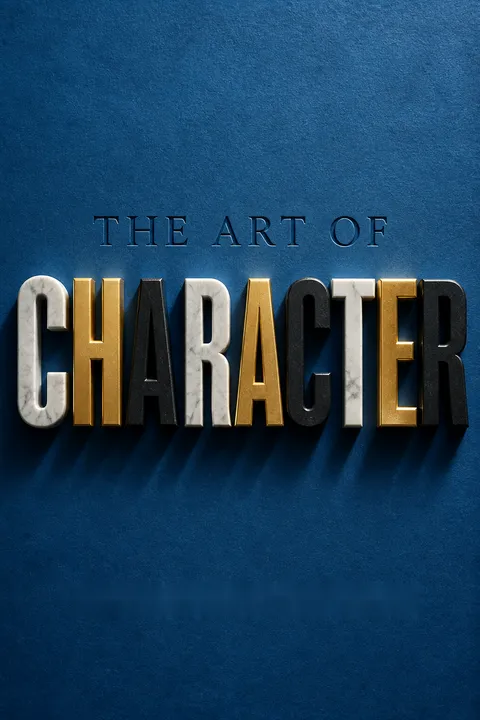
The Art of Character receives overwhelmingly positive reviews, praised for its comprehensive approach to character development. Readers appreciate Corbett's insights, practical exercises, and diverse examples from literature and film. Many consider it an essential resource for writers, highlighting its depth and usefulness. Some find the writing style occasionally dry or pretentious, and a few struggle with the philosophical aspects. Overall, reviewers commend the book for its thoroughness and ability to enhance their writing process.
People Also Read






Glossary
Tyranny of Motive
Overexplaining behaviorThe pressure writers feel to identify a single clear cause for every character action. Corbett argues that this can reduce a person to a predictable mechanism. A vivid character's behavior should arise from the interaction of desire, fear, history, relationships, and contradiction, even when no single motive explains it completely.
adaptations
Responses to distressUnconscious thoughts and behaviors people use to manage pain, stress, loss, conflict, and uncertainty. Drawing on psychoanalytic writing and George Vaillant's work, Corbett discusses responses such as denial, projection, intellectualization, humor, altruism, and suppression. In character development, the term helps writers imagine how a person reacts when a desire is blocked.
ghost
A past influenceA person from the protagonist's past who embodies a continuing source of emotional, moral, or psychological difficulty. The ghost may be dead, absent, or still present in the story. Its influence shapes the protagonist's current behavior, such as fear of abandonment or guilt over an earlier failure.
revenant
A present challengeA character who brings a protagonist's unresolved past into the present and forces a response. The revenant may help or challenge the protagonist, intentionally or not. Through the relationship, an internal struggle becomes visible in scenes and may prompt insight, change, or a clearer refusal to change.
counterweight character
A pull toward the familiarA supporting character whose influence preserves the status quo or draws the protagonist back toward an old behavior, relationship, or way of life. The counterweight may be harmful, comforting, or simply resistant to change. The role is defined by its effect on the protagonist, not by a fixed personality type.
Unity of Opposites
Irreconcilable dramatic conflictA dramatic struggle between opposing desires that cannot both prevail. The protagonist and the opposing force each pursue a goal and have reasons for doing so. Their conflict escalates through actions and counteractions until a decisive outcome changes the balance of power or makes further conflict impossible.
premise
A story's moral claimThe moral or thematic proposition a story's actions and consequences appear to test. For Corbett, a premise is not a general slogan attached to a plot. It grows from the particular characters, their competing ways of life, and the outcome of their choices. It is most useful during revision, when it can clarify the story's dramatic direction.
sequel
Reflection after dramatic actionA passage or episode that follows a scene and shows characters processing what has happened, considering their options, and deciding what to do next. A sequel gives emotional and practical consequences time to register. Alternating scenes of action with shorter reflective passages can keep a story both dynamic and psychologically legible.
FAQ
What's The Art of Character about?
- Character Development Focus: The Art of Character by David Corbett is a guide on creating memorable characters for fiction, film, and TV, emphasizing the importance of character in storytelling.
- Exploration of Human Nature: It delves into the complexities of human nature, encouraging writers to create authentic and relatable narratives by engaging deeply with their characters.
- Practical Techniques: The book offers practical techniques and exercises for writers at all levels to enhance their character development skills, serving as both a resource and a pedagogical tool.
Why should I read The Art of Character?
- Invaluable Resource: Considered an indispensable resource for writers, it provides insights that can elevate a writer's craft and understanding of character.
- Broad Applicability: The principles outlined apply across genres and formats, helping writers create characters that resonate with readers.
- Expert Guidance: David Corbett combines his experience as a writer and teacher to offer wisdom and clarity on character creation, making it accessible for all writers.
What are the key takeaways of The Art of Character?
- Character as the Heart of Story: Compelling stories stem from well-developed characters, with understanding desires and motivations being crucial for effective storytelling.
- Dynamic Characterization: The importance of creating characters that evolve throughout the story, driven by desires and conflicts, is emphasized.
- Exploration of Vulnerability: Vulnerability and wounds shape a character's actions and interactions, drawing readers into the character's journey.
What specific methods does David Corbett suggest for character creation?
- Five Cornerstones of Characterization: Corbett outlines desire, frustration, vulnerability, secrets, and contradictions as key elements for dramatic characterization.
- Scene-Based Exploration: Developing characters through scenes that reveal their inner lives and conflicts makes them more relatable and dynamic.
- Character Exploration Questions: Asking detailed questions about a character's background, motivations, and relationships helps create nuanced and believable characters.
How does The Art of Character define desire in character development?
- Central Role of Desire: Desire is portrayed as the crucible that forges character, creating conflict and driving the narrative forward.
- Complexity of Desire: Desires can be layered and complex, often masking deeper wants, which writers are encouraged to explore.
- Identifying Core Desire: Understanding a character's core desire is essential for effective storytelling, revealing motivations and conflicts.
What role do vulnerability and wounds play in character creation according to The Art of Character?
- Attraction of Vulnerability: Vulnerability draws readers to characters, making them more relatable and compelling.
- Impact of Past Wounds: A character's past wounds shape their present actions and relationships, influencing behavior and interactions.
- Connection to Shame and Guilt: Vulnerability is tied to feelings of shame and guilt, complicating a character's journey and enhancing authenticity.
How does Corbett suggest handling secrets in character development?
- Power of Secrets: Secrets create tension and intrigue, with the tension between what is revealed and what is not being crucial for engagement.
- Character Depth: Exploring how secrets shape a character's identity and relationships can reveal vulnerabilities and drive the narrative.
- Timing of Revelation: Secrets should be revealed strategically to maintain suspense and interest, impacting character development and plot.
What are the contradictions Corbett discusses in The Art of Character?
- Nature of Contradictions: Contradictions pique interest by defying expectations, with the spirit of creation being the spirit of contradiction.
- Types of Contradictions: Physical, situational, and moral contradictions deepen character complexity and engage curiosity.
- Dramatic Purpose: Contradictions create tension and suspense, prompting readers to question motivations and actions, enhancing depth and intrigue.
How does The Art of Character address the relationship between character and action?
- Action Reveals Character: Characters reveal themselves through actions rather than thoughts or feelings, showing true nature.
- Testing Character: Challenging situations allow true nature to emerge, revealing desires, fears, and motivations.
- Dynamic Interactions: Interactions between characters showcase complexities and contradictions, illuminating inner life and driving narrative.
How does Corbett define the concept of conflict in character development?
- Conflict as Central Element: Conflict is essential for character development, with characters facing challenges that reveal true selves.
- Unity of Opposites: Conflicting desires create drama and tension, helping structure narratives around character conflicts.
- Moral Choices: Characters must make moral choices in conflict, shaping development and leading to an emotionally affecting climax.
What techniques does Corbett recommend for writing dialogue in The Art of Character?
- Subtext in Dialogue: Characters should be doing things to each other through dialogue, such as persuading or mocking.
- Realism in Speech: Avoid overly realistic dialogue; capture the essence of real speech while maintaining clarity and purpose.
- Use of Beats: Using beats—brief actions or descriptions—enhances dialogue, providing context and conveying emotional stakes.
What are the best quotes from The Art of Character and what do they mean?
- "The limits to that exploration are ultimately up to you alone.": Emphasizes creative freedom in character exploration, with depth depending on the writer's willingness.
- "The protagonist is the character who conveys that moral revelation.": Highlights the protagonist's role in delivering the story's moral message through challenges and growth.
- "You don’t know yourself by yourself.": Reflects the interconnectedness of character development and personal experience, suggesting self-discovery through understanding characters.
Download PDF
Download EPUB
.epub digital book format is ideal for reading ebooks on phones, tablets, and e-readers.








