

Key Takeaways
Build the plot around what your story is really saying
Theme gives plot meaning. Theme is the central human concern beneath the events, such as love, loyalty, or power. It is more useful when made specific: a story about power might ask whether authority corrupts, or whether resistance can restore a person's freedom. Munier recommends shaping this into a theme statement that combines the main action, emotional meaning, and distinctiveness of the story. For example, The Maltese Falcon is not only about a detective pursuing a stolen object. Sam Spade's hunt tests his loyalties and his personal code.
Difference gives it a hook. A unique selling proposition, or USP, explains what makes a familiar kind of story distinct. A story can be pitched as one known idea meeting another, or as a familiar premise with a crucial complication. The theme statement helps guide drafting and can also clarify how to present the story to readers and publishers.
A theme works best as a pressure system, not a thesis pasted onto the story. It shapes which conflicts feel consequential and what counts as a satisfying choice. This makes theme useful to readers, too: it offers a way to interpret events without requiring a single moral verdict. The commercial emphasis on a distinct hook is also practical, though a pitch is only a doorway. A crisp premise can attract attention, but the pages must deliver the complexity promised by the theme.
Let one central theme generate subplots with conflicting answers
Variation creates depth. A subplot is a secondary line of action, while a variation on theme explores a different facet or counterargument to the main theme. If a story centers on love, its subplots might examine jealousy, loyalty, lust, self-respect, or unrequited affection. These threads make the main idea more complicated rather than merely repeating it.
Austen shows the method. In Pride and Prejudice, Elizabeth and Darcy's courtship sits beside her sisters' relationships and Charlotte Lucas's practical marriage to Mr. Collins. Those parallel stories offer contrasting versions of love, security, desire, and social pressure. Their connections also help carry the narrative through its middle. Munier suggests brainstorming theme variations, including through related proverbs, then assigning characters and conflicts to the most promising ones. The result should be an interwoven story, not a pile of unrelated side quests.
The musical analogy behind this approach is apt: a theme becomes memorable through variation, tension, and return. Subplots can act like experiments, testing what the central idea looks like under different circumstances. That structure also prevents the protagonist from monopolizing the story's meaning. The risk is overloading the cast with illustrative examples that feel engineered to prove a point. A subplot earns its place when its people have independent desires, not simply when they represent a concept.
Make character contradictions force visible choices
Opposing traits create motion. Munier calls a character who contains conflicting qualities a walking contradiction. A person can be brave in public yet frightened of intimacy, or devoted to family while resenting its demands. These tensions create internal conflict, and they suggest situations in which the character must act. A character profile can help a writer track history, relationships, secrets, desires, fears, and personal beliefs, but the most useful details are those that affect behavior.
Action reveals character. Hamlet's hesitation does not mean the play lacks action. His doubts coexist with rash decisions, grief, anger, and a drive to avenge his father. Likewise, Sam Spade pursues his partner's killer while behaving disloyally in his personal life. Supporting characters can mirror or oppose the protagonist's traits, while a complicated antagonist gives the hero a meaningful challenge.
Contradiction is a strong bridge between psychological realism and dramatic structure. Real people often hold competing motives, and fiction can make those motives legible by placing them under pressure. The key is not to give every character a long inventory of traits, but to make conflict consequential: a choice should reveal which motive prevails, at least for the moment. This approach also guards against flat villains. Understanding an antagonist's logic need not excuse the harm that antagonist causes.
Give every scene a question that pulls into the next
Scenes are continuous action. A scene shows events unfolding in a particular stretch of time, rather than merely reporting what happened elsewhere. It can be quiet or dramatic: a difficult conversation can generate as much tension as a chase if something important is at stake. The writer's job is to make the reader experience the action and its consequences alongside the characters.
Questions create momentum. Story questions are uncertainties that invite the reader to continue. A leading question drives the whole plot, such as whether a detective will identify a killer. Larger questions organize major scenes, while smaller ones arise from moment-to-moment events. In Star Wars, the mission to rescue Leia and defeat the Death Star contains questions about Luke's choices, the rescue itself, and whether he can use what he learns. Each answer should open the next meaningful problem.
This model resembles curiosity-driven learning: people stay engaged when they can identify a gap in what they know and have reason to expect an answer. The nested questions also help a writer diagnose scenes that feel inert. Still, constant suspense is not the only kind of engagement. A scene may hold attention through intimacy, surprise, or a shift in interpretation, even when no literal question hangs over it. The question is a diagnostic tool, not a demand that every page end with a cliffhanger.
Use three acts to escalate the test, not fill a template
Three acts orient the reader. Act One introduces the character and the change that disrupts the existing situation. Act Two follows the complications, obstacles, and learning that change demands. Act Three brings the character to a decisive test and shows what follows. Munier also maps six major plot points: an inciting incident, two act-turning events, a midpoint, a climax, and a denouement.
Transformation is another lens. The hero's journey traces a protagonist from familiar circumstances through a call to act, resistance, guidance, trials, a major confrontation, and a changed return. It can help develop character as well as structure, but it is not suited to every protagonist or story. For an initial long-form outline, Munier proposes about sixty scenes, roughly fifteen in Act One, thirty in Act Two, and fifteen in Act Three. These are planning aids, not laws.
The value of a structure is that it makes a sprawling draft discussable. A writer can ask where the situation changes, where pressure peaks, and whether the climax tests the character's learning. The danger is mistaking a map for the terrain. Stories with multiple protagonists, circular forms, or deliberately static characters may resist a neat transformation arc. A structure should clarify the story's own movement, not force every narrative into the same emotional itinerary.
Track each scene by what its viewpoint character gains or loses
Each scene needs a stake. First identify the viewpoint character, ideally the person most affected by what happens. Then identify that character's goal in the scene. If the character achieves the goal or moves closer to it, the scene may have a positive charge. If the character fails or faces a setback, it may have a negative charge. A scene can contain both, as when a character saves someone but takes on a new danger.
Emotional variation sustains attention. Munier's plus-and-minus method also considers emotion, action, and the positive or negative aspects of the theme. Marking scenes this way can reveal long stretches of unbroken success or failure. Reordering scenes to create reversals, or alternating gains and setbacks, can improve the story's rhythm. The point is not to make every scene a simple win or loss, but to notice the direction of change.
This method turns a vague question, does the scene work, into several testable ones: whose experience matters, what do they want, and how does their position change? That is especially useful in revision, when a scene may be beautifully written but structurally redundant. The binary plus-or-minus label is necessarily rough. A character may gain power while losing trust, or feel better while making a worse decision. Mixed outcomes are often where the most interesting scenes live.
Weave voice, setting, dialogue, and action into the same fabric
Story elements work together. A scene is strongest when its parts reinforce one another. Dialogue can reveal character, advance events, and express a story's concerns. Setting can shape what characters can do, establish atmosphere, and carry thematic weight. Point of view determines what the reader can know, while tone and style influence how events feel. Munier's central image is a tapestry: the threads should be integrated rather than delivered in separate blocks of exposition, description, and action.
Let details earn their space. Backstory can explain a character, but too much delays the present action. The same information may work better when disclosed briefly within a scene or dramatized as an event. A setting should be more than a familiar room used by default; the particular place should matter to the conflict or the characters. The goal is not to include every element everywhere, but to make each one serve the story.
This is a systems view of craft: changing point of view affects suspense, changing setting affects available actions, and changing tone alters how a conflict is interpreted. The elements gain force through interaction. The metaphor of seamlessness, however, should not imply that every scene needs a uniform blend. A stark dialogue-only exchange or a stretch of interior reflection can be powerful when contrast is intentional. Integration means purposeful design, not sameness.
Raise pressure with deadlines, reversals, and obstacles that matter
Pacing is causal momentum. A story slows when scenes do not lead naturally to one another, the protagonist's motives are unclear, or backstory and explanation crowd out action. Munier's tools include tightening transitions, cutting scenes that repeat work, and increasing pressure on the protagonist. A ticking clock is a deadline with consequences, whether the threat is a catastrophe or a missed opportunity. A MacGuffin is an object, goal, or person that motivates characters and drives the plot, as the sought-after falcon does in Hammett's novel.
Change the situation. Reversals turn apparent gains into setbacks, or setbacks into gains. Subplots can maintain momentum by raising questions that remain unresolved while the main plot continues. Stronger opposition, lost resources, danger, and secrets can also increase pressure, provided they matter to the protagonist. Shorter chapters and punchier sentences may help, but they cannot substitute for meaningful change.
The strongest pacing advice here is causal rather than cosmetic. Short chapters can create a sense of speed, but readers feel genuine urgency when a choice changes the available options. A deadline matters because it compresses deliberation; a reversal matters because it forces adaptation. The caution is that adding danger indiscriminately can numb readers. Pressure is effective when it targets something the character values and exposes a difficult tradeoff, not simply when the plot becomes louder.
Add an organizing principle only when it deepens the story
A framework is not the plot. An organizing principle is the structure used to tell a story, rather than the events that happen in it. It can give a narrative an extra layer and help distinguish it from similar works. Munier describes thematic, chronological, and methodological approaches. A thematic principle might use beekeeping throughout a novel; a chronological one might organize chapters by months or stages of a life; a methodological one might follow a sustained project or source material.
Make the structure meaningful. In Eat Pray Love, the three-part structure is echoed by the title and the protagonist's journey through eating, spiritual practice, and love. In a story organized around diaries, letters, or another document form, the format can also shape what the reader knows and when. A framework should connect to plot, theme, point of view, or setting. Used only as decoration, it becomes an extra device the story must carry.
An organizing principle can give readers a pattern to notice, making the form part of the pleasure rather than a container for events. It can also solve a practical problem: how to shape a large body of material into a readable sequence. The useful test is whether the structure changes the meaning of the material. If chapters could be rearranged or retitled without consequence, the principle may be ornamental rather than integral.
Make the protagonist earn the ending and honor the genre's promise
The climax belongs to the protagonist. In the final act, the central character should drive the decisive action, confront the antagonist, and demonstrate what has changed. A rescue from outside, a convenient confession, or a sudden solution can weaken the payoff. The ending should also resolve the important threads created by the main plot and subplots. A final line can reinforce the story's meaning, while a series installment should still provide a complete experience of its own.
Revise for the reader. Genre conventions establish expectations, but a familiar scene needs a distinctive treatment to feel fresh. Check whether the opening begins with consequential action, whether the middle develops enough complications, and whether the ending has room to unfold. After drafting, step away, then review structure, point of view, clarity, repetition, and unnecessary backstory. Revision is not polish applied after the real work; it is where the story's design becomes legible.
A satisfying ending links agency to consequence: the protagonist's choices should shape the outcome, and the outcome should reveal what those choices cost. Genre expectations help readers orient themselves, while variation supplies surprise. Neither obligation should be absolute. A story can deliberately withhold closure or frustrate a convention, but the effect needs to feel designed rather than accidental. Revision provides the chance to distinguish an intentional breach from an unresolved plot.
Analysis
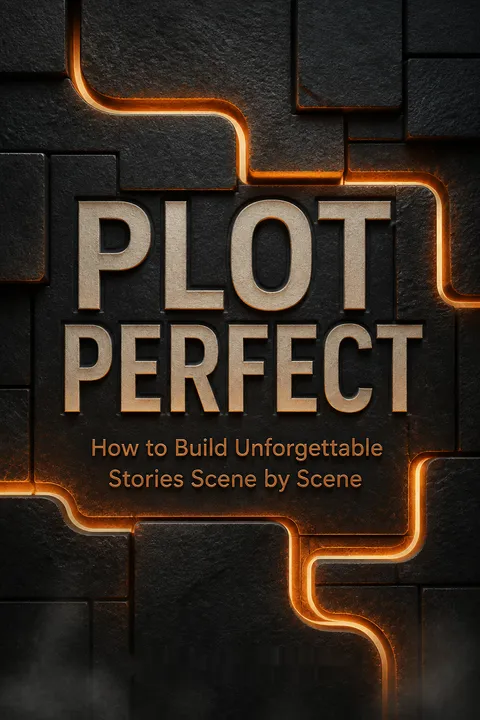
Plot Perfect treats storytelling as a craft of connected decisions. Theme informs the conflicts; conflicts expose character; character generates action; scenes create questions; and structure arranges those questions into a pattern of pressure and release. The system's real strength is not any single template, but its repeatable movement between abstraction and evidence. A writer can start with a broad concern such as loyalty, turn it into a specific thematic claim, embody competing interpretations in different characters, and test those interpretations in scenes where someone has something to lose.
The book is unusually attentive to the needs of both the reader and the working writer. Its tools make a draft visible from the outside: index cards expose structural gaps, scene charges show emotional rhythm, and plot questions reveal weak transitions. These methods reduce the mystique around plotting without pretending that invention can be entirely procedural. The extensive case study of The Maltese Falcon demonstrates that genre mechanics and thematic complexity can coexist. Sam Spade's investigation moves the crime plot, while his personal code makes its resolution emotionally meaningful.
The framework also carries a tension. It often describes commercial readability as a central goal, emphasizing swift openings, dramatic scenes, clear genre signals, and efficient prose. Those are useful editorial tests, but they are not universal measures of literary value. A quiet story, a fragmented narrative, or a deliberately opaque opening may create meaning through resistance rather than momentum. Similarly, the hero's journey and three-act model can illuminate a story, but they can flatten one when treated as mandatory stages.
The most durable practice is therefore diagnostic rather than prescriptive. Use the structures to ask what the draft is doing, where its energy comes from, and what the reader is invited to anticipate. Keep what intensifies the particular story, revise what merely obeys a formula, and make every technique answer to character, theme, and consequence.
Review Summary
Plot Perfect receives overwhelmingly positive reviews, with readers praising its practical advice on structuring plots, developing themes, and creating complex characters. Many find it helpful for both planning and revising novels. The book's exercises, checklists, and examples are highly valued. Some readers appreciate its fresh perspective and encouraging tone. A few criticisms include excessive examples and occasional tedious sections. Overall, it's considered a must-have resource for writers at various stages, offering insights to improve their craft and storytelling skills.
People Also Read



Glossary
Theme statement
Story's guiding claimA concise account of a story's central action, emotional meaning, and distinctive angle. It gives the writer a guiding idea for planning plot and character, and can also help explain the story to potential readers or publishers. It should be specific enough to distinguish this story from other works concerned with the same broad subject.
Unique selling proposition (USP)
Story's distinguishing hookThe feature that makes a story distinct within a familiar genre or marketplace. It can arise from an unusual protagonist, point of view, setting, premise, or combination of elements. A USP helps a writer articulate why readers might choose this story over comparable ones, while the story itself must still deliver on that distinction.
Story questions
Questions that propel readingUncertainties planted in a narrative that encourage readers to continue. A leading question drives the main plot, larger questions organize major scenes or subplots, and smaller questions arise within individual scenes and passages. The writer manages attention by answering some questions while keeping others open, without leaving basic information needlessly confusing.
The hero's journey
A transformation-based story modelA structure that traces a protagonist from familiar circumstances through a disruptive call, resistance, guidance, trials, a major confrontation, and a changed return. It emphasizes the character's transformation rather than only the sequence of external events. Munier presents it as a flexible guide, not a required order of stages or a structure suited to every story.
Plot points
Major turning eventsKey events that organize a story's large-scale movement. Munier identifies an inciting incident, a first act turn, a midpoint, a second act turn, a climax, and a denouement. These events start or redirect action, renew attention, force a decisive confrontation, and show the immediate consequences of the outcome.
Plus and minus scenes
Scenes marked by changeA planning method that labels a scene according to whether the viewpoint character gains ground or suffers a setback. The assessment can consider the character's goal, emotional state, actions, and the scene's thematic direction. A scene may contain both gains and losses. Reviewing the pattern can help a writer identify monotony and create more varied dramatic movement.
MacGuffin
Plot-driving object or goalAn object, person, goal, or event that motivates characters to pursue, protect, hide, or destroy it, thereby driving the plot. Its importance lies chiefly in what it makes characters do, rather than in the object's intrinsic value. In The Maltese Falcon, the disputed artifact propels the pursuit and conflict among the characters.
Organizing principle
Framework for telling a storyA structural framework that shapes how the story is presented, distinct from the events that make up its plot. It may organize material around a theme, a period of time, or a method such as a sustained project or documentary form. When integrated with the story's concerns, it can add coherence, meaning, and a distinctive formal identity.
Walking contradiction
Character with opposing traitsA character whose conflicting qualities create internal tension and dramatic possibilities. Someone may be generous yet envious, brave yet fearful, or committed to a principle while violating it in private. These opposing motives become useful to plot when they lead to difficult choices and visible actions, rather than remaining a list of personality traits.
About the Author
Other books by Paula Munier
Download PDF
Download EPUB
.epub digital book format is ideal for reading ebooks on phones, tablets, and e-readers.








