

Key Takeaways
Make page one prove the title, genre, protagonist, and promise belong together.
A fast first test. A reader approaches a new story with basic uncertainties: What kind of book is this? Who is leading it? Where are we, and why should this matter? An opening does not need to answer everything, but it should establish enough for readers to trust the journey. The book cites the under-sixty-second decision many buyers make and the agent’s experience of finding only one or two compelling openings in hundreds of queries. Those numbers make the practical stakes plain: a strong pitch cannot rescue pages that fail to deliver the promised experience.
Promise, not checklist. The opening examples signal genre and premise in different ways: an astronaut stranded on Mars announces a survival story, while a girl’s missing mother launches a search. The first page should make the book’s identity felt, not mechanically explain it.
A first page functions like a compact contract under uncertainty. The title and jacket create expectations, and the opening either confirms those expectations or asks readers to revise them. That is why genre signals can help: they reduce the effort required to understand what kind of pleasure the story offers. Yet a contract is not a cage. Some books deliberately unsettle classification, as the book’s example of Vonnegut shows. The useful distinction is between purposeful ambiguity, which invites interpretation, and accidental ambiguity, which leaves readers unsure what they are being asked to read.
Start with a scene where someone acts, then make readers feel the consequence.
Drama begins in motion. A scene is a continuous unit of action, not merely a block of description or thought. Its basic engine is simple: something happens to someone, that person responds, and the reader reacts. In the opening of Jaws, a swimmer is pulled beneath the water while her companion sleeps on the beach. In E.T., a small alien is left behind as the spacecraft departs. Each incident creates immediate concern and makes the next moment matter.
Give the scene an arc. A strong opening scene has a beginning, middle, and end. The character encounters a problem, the situation develops, and something changes. The event need not be a car chase. A child hiding under a bed after flooding a bathroom is action because it forces a response and exposes her fear.
This model resembles causal reasoning: readers track what caused an event, how a character adapts, and what consequence follows. That chain is more gripping than activity without stakes. A character can cross a room, talk, or remember something without changing the situation; visible motion alone does not create narrative momentum. The practical test is therefore not whether the opening is loud, but whether each beat alters the character’s options or the reader’s understanding. Quiet scenes can carry strong drama when a choice, threat, or revelation changes the balance.
Make the premise recognizable, then combine it with a detail only you can supply.
Distinctiveness is designed. A book-length idea must do more than sound intriguing. It must sustain a long narrative, reach an identifiable audience, and stand apart from similar books. Munier’s examples show that originality often comes from recombination rather than invention from nothing. The Martian uses the familiar castaway predicament but places it on Mars and grounds survival in practical science. Jane Smiley relocates King Lear to a twentieth-century Iowa farm. Markus Zusak brings a book thief into a story shaped by the Holocaust.
Find your own ingredient. Personal history, unusual research, a distinctive setting, an overlooked news item, or an unexpected pairing can make a familiar premise feel newly alive. The test is whether the combination changes what happens, not merely whether it sounds clever in a pitch.
The strongest case for recombination is that stories gain meaning from the relationship between elements. A setting can pressure a character; a historical fact can complicate a familiar plot; a personal preoccupation can lend emotional specificity. This is close to how innovation works in other fields, where new arrangements of known components produce useful novelty. Still, market distinctiveness and artistic value are not identical. A pitchable concept may attract attention, but execution must make the characters’ choices consequential. The concept opens the door; it cannot carry the whole book.
Treat idea generation as a practice of noticing, capturing, and recombining.
Collect before judging. Munier recommends deliberate observation, a notebook or other capture system, research, playful exercises, and conversation with other creative people. Her bubble-chart exercise asks writers to list personal interests, people, places, and experiences, then combine items to produce story possibilities. An idea box or visible board can preserve details that might otherwise disappear from memory.
Give the mind room. Walking, meditation, chores, sleep, exercise, and time outdoors are presented as ways to support attention and creative association. The book cites a Leiden University study on meditation and creative thinking, and a Stanford finding that walking increased creative output. The point is not to wait passively for inspiration. It is to create conditions for noticing connections, then write them down before they vanish.
This approach treats creativity as both generation and retrieval. Writers need fresh inputs, but they also need a reliable way to preserve them and recombine them later. That resembles research practice: observations accumulate before a pattern becomes visible. Incubation can help because attention is not equally productive when forced onto a problem continuously. The caution is that claims about creativity benefits should not become another productivity scoreboard. A walk or a notebook cannot guarantee a good plot. Their value is more modest and durable: they increase contact with material that deliberate drafting can shape.
Make the protagonist’s desire legible through choices, not biography alone.
Show a person choosing. Readers need a reason to care about the protagonist, and action is one of the quickest ways to provide it. The character may be sympathetic, capable, funny, flawed, or placed in a predicament that invites concern. What matters is that the protagonist does something that reveals what they want and how they respond to resistance. In The Accidental Tourist, Macon Leary’s improvised breakfast routine shows his grief more vividly than a label such as depressed would.
Build resistance around them. A worthy antagonist should have motives and abilities that make the protagonist work. Supporting characters can act as allies, rivals, mentors, lovers, or mirrors. A small, purposeful cast gives the lead people to affect and be affected by, rather than leaving the protagonist alone in extended reflection.
Behavior offers readers evidence. Instead of being told that a character is generous, frightened, or controlling, readers infer those qualities from decisions and their costs. That inference creates participation: the audience interprets the person rather than simply receiving a description. Likability, however, should not be reduced to niceness. Competence, vulnerability, wit, or moral conflict can also invite investment. The deeper craft question is whether the protagonist’s actions expose a desire that can be challenged. Without resistance, even an appealing person has little dramatic work to do.
Let point of view and setting make this story unmistakably specific.
Control the reader’s access. Point of view determines whose perceptions shape a scene. Munier recommends first person or third-person limited as comparatively clear choices, and warns that rapid shifts between characters can confuse readers. George R.R. Martin’s A Game of Thrones demonstrates how multiple viewpoints can work when each section stays with a character long enough to establish investment and the transitions remain clear.
Make place consequential. Setting should affect the story, not sit behind it like painted scenery. Hemingway’s war-shadowed landscape and Shirley Jackson’s unsettling Hill House create distinct emotional worlds from their first descriptions. A useful test is to imagine relocating the scene. If the story would remain unchanged, the setting may not yet be doing enough.
Point of view is a form of information design. It determines what the audience can know, when they can know it, and which details carry emotional weight. Setting performs a related task by constraining movement, shaping opportunity, and giving abstract conflict a physical environment. Together, they can make a scene feel inevitable rather than generic. The book’s rules are useful defaults, especially for writers still mastering clarity, but they are not universal laws. A deliberate violation can work when the reader can perceive its pattern and purpose.
Give each scene a conflict that changes what the protagonist can do.
Resistance creates drama. Conflict may pit a character against another person, society, nature, the self, fate, the paranormal, or technology. Strong openings often combine several kinds, but inner conflict gives the event personal meaning. A bullet striking near a police officer creates physical danger; her response can also reveal fear, judgment, and resolve.
Make dialogue work. Conversation should reveal character, move the plot, or do both. Subtext, the meaning beneath the spoken words, can make a simple exchange tense without spelling everything out. The opening of The Pilot’s Wife uses a brief conversation to show a woman realizing her husband has died and to suggest that the death may involve more than an accident. Dialogue loaded with background explanations, by contrast, can sound like characters briefing each other for the reader.
Conflict is not simply hostility. It is incompatible aims, limited resources, or competing interpretations that force a choice. This broader view allows domestic, intellectual, and emotional scenes to carry as much pressure as physical danger. Dialogue is especially effective because speech is action: people conceal, persuade, test, threaten, and retreat through words. Subtext adds social realism because conversation rarely contains everything its speakers mean. The risk is overengineering every exchange. A scene also needs breathing room, but its central pressure should alter the protagonist’s options or understanding.
Shape Act One around yearning, escalation, and an irreversible turn.
Plan the story’s frame. Munier presents the three-act structure as setup, main action, and resolution. Act One introduces the protagonist’s situation and desire, then moves toward Plot Point One, the event that redirects the story into its main action. The midpoint, a second major turn, climax, and denouement complete the broad framework. A crime story might begin with a murder, develop through investigation, and resolve when the killer is exposed.
Connect plot to desire. Robert Olen Butler’s term “yearning” names the protagonist’s deep want, while plot tests that want through obstacles. In Star Wars, Luke’s immediate goal of becoming a Jedi connects to a deeper desire for belonging and purpose. A writer need not know every scene in advance, but should understand what the protagonist wants and what changes when the goal is challenged.
Structure is most useful as a diagnostic, not a template to obey by the page. Plot points help identify whether events build on one another or merely accumulate. The yearning model deepens that test by asking what an external goal means to the person pursuing it. A mission can concern survival on the surface and belonging underneath. Yet a hidden desire should emerge through behavior and consequence, not a clinical explanation. Formal symmetry is secondary to pressure: each turning point should make the protagonist’s next choice harder or more revealing.
Use genre conventions as a promise, then distinguish your delivery.
Know the shelf before bending it. Genre helps readers, booksellers, and publishers understand what experience a story offers. A mystery needs a crime and an investigation; romance centers the developing relationship; speculative fiction must establish its world without drowning the reader in explanation. Munier argues that an opening should signal its category early and avoid familiar shortcuts that make it feel derivative.
Choose a telling pattern. An organizing principle is a structure or recurring device layered over the plot. In Where’d You Go, Bernadette, documents such as emails and reports help tell the story through varied evidence. Like Water for Chocolate uses monthly installments and recipes to connect its narrative to food and domestic life. Such devices matter when they reinforce the story’s themes, not when they are decoration.
Genre functions as shared shorthand between writer and audience. It lets a reader make an informed choice, while conventions provide a scaffold that a story can satisfy, complicate, or overturn. The most productive originality often comes from changing one dimension while preserving enough familiar structure for orientation. An organizing device can do that by altering how information arrives. The limitation is that market categories shift and overlap, so rigid genre formulas can narrow a writer’s imagination. Conventions are better treated as reader expectations to understand than rules that guarantee a sale.
Revise around the questions that pull readers through every scene.
Track curiosity at three scales. A macro story question drives the whole plot, such as whether a stranded astronaut will survive. Meso questions propel individual scenes, while micro questions arise from smaller details: Why has the dog stopped? What is hidden in the room? Each question should create a reason to continue, and its answer should open a new possibility or sharpen the central problem.
Cut what stalls the chain. Munier’s revision method is to mark backstory, description, and inner thought, then examine whether they obscure the action. In her Spare These Stones case study, she revised a long opening about a former military police officer and her bomb-detection dog, cutting about a thousand words before arriving sooner at the abandoned baby. The aim is not brevity for its own sake, but sustained momentum and clear prose.
Questions create controlled gaps in knowledge. Readers keep going when those gaps feel consequential and answerable, not when confusion becomes a substitute for intrigue. The three scales are useful because a novel can have a compelling overall premise yet contain scenes with no local tension. Revision then becomes a test of function: does this paragraph deepen a question, answer one, or change its stakes? Cutting is not automatically improvement. A pause, memory, or description can intensify a scene, provided it earns its place in the reader’s attention.
Analysis
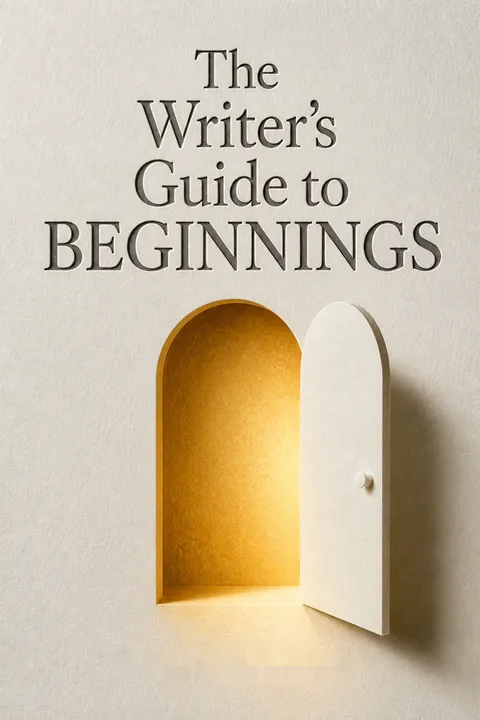
Munier’s central craft claim is that an opening is not an ornamental doorway. It is a compressed demonstration of the whole book’s competence. The first scene must establish a credible reading contract, introduce a person worth following, and begin a chain of events that can sustain a longer narrative. This explains why the book repeatedly joins artistic choices to publishing realities: genre, premise, pacing, and clarity are both compositional decisions and signals to gatekeepers.
The most useful synthesis is the movement from promise to pressure. A premise gives the reader a reason to enter; a protagonist’s desire gives that premise emotional direction; conflict turns desire into action; scene structure and story questions keep the action legible. The advice to cut backstory follows from this model, not from a blanket suspicion of reflection. Information belongs when it sharpens the present conflict or changes how a reader interprets it.
The book’s strongest contribution is its practical diagnostic vocabulary. Asking what happens, who reacts, and what question remains makes revision more observable than a vague instruction to make the opening stronger. Its case study is especially instructive because the author shows a long draft being reshaped, not merely celebrates a polished result.
The commercial emphasis also deserves proportion. Munier writes from an agent’s experience in a particular publishing context, so some numerical expectations and categorical rules are best treated as situational guidance rather than timeless laws. A demanding literary opening may invite uncertainty rather than quickly resolve it; a deliberate point-of-view violation may be the book’s central formal invention. Such choices still need control, but control is not the same as conformity. The durable lesson is to understand the reader’s likely expectations, then make departures purposeful and coherent. A strong beginning does not tell everything. It makes the reader feel that every withheld answer, introduced detail, and shift in direction belongs to a story with intention.
Review Summary
The Writer's Guide to Beginnings receives overwhelmingly positive reviews, with readers praising its practical advice, specific examples, and invaluable insights for crafting compelling story openings. Many found it helpful for revising their work and attracting agents' attention. Reviewers appreciated the author's expertise as a literary agent and writer. Some critiqued the abundance of quotes and repetition in parts. Overall, it's highly recommended for both aspiring and established writers seeking to improve their craft, particularly in creating strong beginnings that captivate readers and publishers alike.
People Also Read





Glossary
Narrative thrust
Forward-moving story pressureNarrative thrust is the momentum created by tightly connected action, scene by scene. Events, character responses, and new complications push the story forward and give readers a reason to continue. Munier uses the term for the opposite of an opening that stalls in backstory, description, or thought without creating meaningful movement.
Macro story question
The central plot questionThe macro story question is the main uncertainty that drives the entire narrative. It can be framed as a question about whether the protagonist will achieve a central goal, such as surviving, solving a crime, or finding love. It helps the writer keep the plot focused and gives readers a broad reason to stay engaged.
Meso story question
A scene-level uncertaintyA meso story question is the uncertainty that drives an individual scene or sequence. It concerns what may happen next in that local situation, such as whether a character will escape, persuade someone, or discover a clue. A chain of meso questions gives the larger plot movement and prevents scenes from feeling incidental.
Micro story question
A detail-level curiosityA micro story question arises from a small detail, action, or piece of information within a scene. It might concern an unfamiliar object, an unexplained reaction, or a character’s motive. Micro questions create moment-to-moment curiosity, provided their answers clarify the story or lead to more consequential questions rather than producing confusion.
Organizing principle
A pattern layered over plotAn organizing principle is a structural pattern or recurring device placed over a story’s plot. It can shape how scenes or information are presented without replacing the underlying events. Examples in the book include documents used to tell a novel and recurring recipes that connect narrative structure to theme. The principle is most effective when it reinforces the story’s meaning.
MacGuffin
A plot-driving object or goalA MacGuffin is an object, event, goal, or person that motivates characters to pursue, protect, conceal, or destroy something. Its importance often lies less in its intrinsic qualities than in the conflict it generates. Munier describes it as a device for driving plot by placing characters in competition over a shared focus.
Unified field theory of yearning
Story unified by deep desireRobert Olen Butler’s phrase, as presented by Munier, describes the way a protagonist’s deep desire can unify a story’s elements. The character’s yearning informs the plot, while obstacles challenge and frustrate that desire. The idea helps connect an opening scene to the larger arc without requiring the writer to plan every detail in advance.
About the Author
Other books by Paula Munier
Download PDF
Download EPUB
.epub digital book format is ideal for reading ebooks on phones, tablets, and e-readers.








