


Plot Summary
The Party Turns Violent
Bliss’s1 birthday celebration for Nash5 ends when gunfire and panic erupt through Psychos. She has just learned that Nash5 once arranged sex work for women, a revelation that collides with her history of watching her mother7 suffer under an abusive pimp.10 She runs toward Vincent,2 known to her as Scythe,3 only to see prison guards beat him and carry him away.
Nash5 drags her from the gunfire, and they find her mother,7 Kim,7 taking drugs from Bliss’s1 safe. Kim7 insists she is protecting her daughter,1 but officers storm the club before they can escape. Bliss,1 Kim,7 and Nash5 are arrested, while War4 is left outside wounded and unable to reach Bliss.1
The raid strips away the club’s carefully staged pleasure and exposes the liabilities underneath it: drugs, violence, concealed histories, and a missing man. Bliss’s reaction is less about choosing among lovers than about refusing to abandon anyone once danger becomes visible. Her attempt to reach Vincent makes love an action before it becomes a settled identity. Kim’s apparent theft also complicates the family history: a woman who has often failed Bliss may now be acting from protection, though Bliss has no reason yet to trust that change.
Kim Takes the Fall
In the holding cell, Kim7 asks Bliss1 to let her accept responsibility for the club’s drugs and gun. Bliss1 refuses to decide anything before she has a lawyer, so her father15 sends Liam Banks,8 an attorney who knows Vincent2 from prison and has a personal reason to help him. Nash5 is released after Kim7 confesses, and Liam8 arranges for Kim7 to receive legal representation and access to rehabilitation.
The gun is not linked to Axel’s14 murder, easing one fear, but Vincent2 remains missing and War4 has no news either. When Bliss1 asks what happened to them, Liam8 can offer no reassurance. Kim’s7 decision saves Bliss1 from the immediate charges, but leaves her feeling that her mother’s7 sacrifice is another debt she must somehow repay.
Kim’s confession reverses the familiar direction of care: the daughter who once wished she could rescue her mother is now the person being protected. That does not erase Kim’s addiction or the years of harm, and the uncertainty keeps the sacrifice emotionally uneasy rather than neatly redemptive. Liam’s connection to Vincent also widens the story’s network beyond the club, showing that people formed in prison can become practical kin. For Bliss, release is not relief so much as a new responsibility, because freedom leaves her outside the cell while the people she loves remain unaccounted for.
A Father’s Death Reopened
War4 stitches his own bullet wound and goes to the station, where officers deny that Vincent2 was ever brought in. With no sign of him at the hospital either, War4 fears the prison guards have taken him somewhere unofficial. After Nash5 is released, the men regroup with Bliss,1 who is desperate to find Vincent.2 War4 admits his club came to Psychos intending to kill him because Vincent2 had killed War’s father, Army.
He then reexamines the crash report and Vincent’s2 claim that Army was already impaled when he reached the wreck and asked for a mercy killing. Nash5 points out that failed brakes could explain the lack of skid marks. The possibility of sabotage unsettles War’s4 certainty and turns revenge into an investigation.
War’s crisis is not simply a conflict between loyalty and desire. His authority depends on a code that makes vengeance legible to his club, while the evidence suggests that the story supporting vengeance may be incomplete. By looking again at a report he once skimmed through grief, he begins to treat certainty as something he has chosen, not something the facts have earned. Nash’s practical question opens that space. The shift matters because War’s next decisions will affect both his presidency and the person he may love, making leadership a test of whether he can tolerate ambiguity.
The Barracks Rescue
Liam,8 prison guard Rowe,21 and Vincent’s2 former prison allies Heath20 and Ophelia18 help identify an abandoned training barracks where the missing prison van may be hidden. Bliss,1 Nash,5 War,4 Rebel,6 and Jezebel19 join the search. Inside, War4 finds Vincent2 chained up beside the dead warden, Tabor.25 The keys are within reach, but War4 hesitates, caught between the club’s demand for revenge and his feelings for Vincent.2
Vincent2 tells him that Scythe3 loves him, and War4 chooses to unlock the cuffs. Bliss1 and Nash5 arrive moments later, and the group carries the injured man out. They release the remaining guards after Vincent2 secures their silence. Caleb,9 Bliss’s abusive former fiancé,9 escapes the barracks before they can catch him.
The rescue forces War to make his choice physically. A gun would preserve the club’s version of justice; a key gives Vincent a future and makes War responsible for that decision. Vincent’s message crosses the boundary between his two selves, giving War permission to recognize a love he has struggled to name. The escape is not a clean victory: Caleb remains free, and Vincent is badly hurt. The group’s refusal to punish every guard also marks a different kind of power, one that can spare people when violence is no longer necessary.
Axel’s Unfinished Letter
While Vincent2 recovers, Nash5 visits Lucy,24 one of the women he once managed, and learns that she and the others were left vulnerable after his imprisonment. Bliss1 has been troubled by his past, but when Nash5 explains that he tried to shield the women from violent pimps and pay them fairly, she recognizes how little choice he had.
They reconcile, and Nash5 admits he wants to help the women now. At Axel’s14 house, Bliss1 and Vincent2 collect papers for Psychos and find a letter addressed to Axel from someone who believes their intimate encounter mattered.
The handwriting is distinctive, but the sender is unknown. The discovery sharpens Bliss’s1 sense that the police have overlooked her brother’s14 private life, while Vincent’s2 growing desire draws him closer to her.
The two strands here expose the difference between guilt and accountability. Nash cannot make his past harmless by explaining it, but he can stop avoiding the women affected by it and help repair what he can. Bliss’s forgiveness follows understanding, not denial. The letter performs a similar function for Axel: it interrupts the convenient assumption that his murder must have come from criminal business and redirects attention toward private relationships. Both revelations ask the characters to look beyond the stories that keep them comfortable, whether that story is about a good man’s past or a dead brother’s life.
Gus Sells the Debt
Bliss’s1 financial troubles deepen as the police seize Psychos’s drugs and cash, while her father15 pressures her to sell the club. Gus,11 the drug dealer who supplied the club, kidnaps her from Vincent’s2 garden and takes her to Jerry,10 the man who abused her mother.10 Jerry10 buys her debt and demands that she work for him as a prostitute, threatening the women she loves if she refuses.
At the same time, Siren,12 War’s4 childhood friend, tries to reclaim him and invokes an old marriage promise between their fathers. Gus11 uses the debt as leverage, offering to erase it if War4 marries Siren.12 War4 does not know that Gus11 has already transferred Bliss’s debt to Jerry,10 so the bargain is built on a lie.
Bliss’s abduction attacks the identity she has fought to build. Jerry tries to return her to a childhood in which other people controlled her body and her choices, while Gus converts her financial mistake into ownership. The threat works because Bliss’s protectiveness is real: she is willing to absorb harm rather than let it reach Verity or Rebel. War faces a parallel coercion, with club tradition and Gus’s manipulation pushing him toward a marriage he does not want. Their danger is different, but both are being asked to mistake surrender for responsibility.
The Brakes Tell
War4 visits his mother,13 Fancy,13 at the hospital and admits he is considering marrying Siren12 to keep Bliss1 safe. Then Fancy13 wakes from her coma and rejects the plan. She remembers Siren working on the car shortly before Army drove it over the cliffs, and says Army had returned from a trip just before the crash. War’s4 grief hardens into suspicion.
Bliss1 tells him she has already dealt with Gus’s debt, and he understands that Gus’s11 proposal was meant to control them both. He chooses Bliss1 instead of Siren,12 but the danger is immediate: Siren has already tampered with Bliss’s brakes. When War4 drives Bliss’s1 car away from the hospital, it fails to stop and crashes. Vincent’s other self3 begins forcing its way back into control.
Fancy’s recovery converts the crash from a tragic uncertainty into a question of motive and opportunity. Her memory is specific enough to matter, but War still has to resist letting fury supply the rest of the answer. His decision to choose Bliss is not a simple romantic gesture; it breaks a pact that has shaped his sense of duty since childhood. The crash immediately tests that choice. At the same time, Scythe’s return shows that Vincent’s divided identity is not a problem that love can solve by wishing one part away.
The Trailer Burns
After Rebel6 confirms Bliss’s1 pregnancy, Bliss1 keeps the news private while trying to honor her agreement with Jerry.10 At a spa appointment, Jerry10 appears with Verity17 and forces Bliss1 into his car. He takes her to the trailer where he abused her mother7 and prepares to assault her.
Meanwhile, Vincent2 discovers Bliss’s1 pregnancy note in her jacket; when Nash5 learns she is missing, the men race toward Saint View. War’s damaged brakes send him off the road, and the shock lets Scythe3 take control. The group reaches the trailer and breaks inside.
Scythe3 kills Jerry10 as he attacks Bliss.1 Rather than leave the trailer standing, Bliss1 pours gasoline around it and sets it alight. The rescue ends Jerry’s10 immediate threat, but brings the group face to face with the violence they have used to survive.
The pregnancy raises the stakes without turning Bliss into a passive symbol of motherhood. She is still making decisions under coercion, and her secrecy grows from fear that the men she loves will take over a danger she believes is hers to manage. Scythe’s return is both rescue and warning: the violent self Vincent has tried to suppress remains capable of decisive action. Bliss’s choice to burn the trailer is not merely destruction. It is an attempt to deny Jerry’s house the power of standing as the last word on her childhood, though the fire cannot undo what happened there.
Siren Loses the Club
Once Fancy’s13 memory and the brake failure point toward Siren,12 War4 confronts the woman he grew up expecting to marry. He does not kill her, but expels her from the club and orders its members to treat her as if she no longer exists. The punishment costs Siren12 the community and future she was raised to expect.
War4 accepts that he may have to give up his presidency rather than make the club’s code his excuse for killing someone he once considered family. Meanwhile, Bliss1 and Nash5 discuss a safer workplace for Lucy24 and the other women trapped under pimps. Bliss1 sees that Psychos’s unused rooms could offer paid sex work with security, health checks, and the women in control. Her plan turns survival into a chance to build something better.
War’s sentence is severe, but it differs from the violence his club’s code would demand. He chooses a consequence that protects the community while refusing to make himself executioner. That restraint is not cost-free: Siren loses her social world, and War risks his authority. Bliss’s response to the women’s circumstances also shifts her from personal rescue toward structural care. She does not assume every woman wants to leave sex work. Instead, she asks what safer conditions would look like for the women who choose it, a distinction that respects their agency.
The Killer at Dinner
At dinner with her father,15 David,15 and stepmother,16 Nichelle,16 Bliss1 recognizes the handwriting on the place cards as the same writing found in Axel’s letter. Nichelle16 admits she had a relationship with Axel14 after meeting him at Psychos, and David15 reveals that he knew about it.
When Bliss1 asks whether Nichelle16 killed her brother,14 David15 confesses that he shot Axel14 because he feared losing his marriage and expected Bliss1 to sell Psychos and rescue his failing finances. Nichelle16 grabs a gun and shoots David15 before the others can stop her.
He survives and is taken to hospital; police arrest Nichelle16 for attempted murder. Bliss1 is left to confront the fact that her father’s15 affection and financial pressure had concealed the person who killed her brother.14
The murder’s motive emerges from the collision of intimacy and property. David treats Axel’s death as a way to preserve his marriage and gain control of a business, reducing people to pieces in a financial calculation. The letter and place cards expose how private handwriting can carry evidence across apparently unrelated parts of a life. Nichelle’s shooting of David does not restore justice or undo Axel’s death; it creates another crime and another family fracture. Bliss’s refusal to excuse her father because he loved her marks a painful step toward separating affection from moral innocence.
Psychos Becomes Home
David15 survives surgery and pleads guilty, while Nichelle16 awaits trial. Bliss1 brings Verity17 and Everett into the home she shares with Nash,5 War,4 Vincent,2 and Scythe,3 and the men accept her pregnancy without demanding to know which of them fathered the child. Psychos reopens, its rooms repaired and its staff treated as part of the family.
Bliss1 and Nash5 begin planning a protected workplace for Lucy24 and other sex workers. At a later party, Bliss1 steps into a performance cage and chooses to be seen on her own terms, while her men support her without taking control. Vincent2 also returns to the prison family who helped save him, bringing his new family to meet them. The club becomes not just a business, but a place Bliss1 can shape.
The resolution does not restore the old arrangement. It replaces inherited family roles and exploitative business practices with a chosen household and a workplace designed around consent and safety. The men’s acceptance of uncertain paternity resists the possessive logic that has governed so many of the story’s threats. Bliss’s public performance completes a more intimate change: the body once used by others as evidence of her worth becomes a source of pleasure she chooses to share. Psychos remains imperfect and risky, but its meaning changes because Bliss and her people decide what it will protect.
Epilogue
At Ripley’s23 birthday party, Vincent2 wears a Spider-Man costume and reunites with Heath,20 Mae,22 Rowe,21 and Liam.8 He introduces Bliss,1 Nash,5 and War4 as the family he has made, while Bliss1 finds solidarity with Mae22 and another woman who understands a shared relationship.
The bonus epilogue shifts to Rebel,6 who accepts a ride home from Callum, the charming real estate agent she has been seeing. At his house, she discovers he is Caleb,9 Bliss’s abusive former fiancé.9 Two men arrive, and Caleb9 helps restrain Rebel6 as she fights back. The book closes on her assault, leaving the danger unresolved.
Vincent’s return to Ripley’s party gives the novel a quiet image of repair: the man who once watched other people’s safety from a distance can now stand among them with a family of his own. The bonus epilogue deliberately breaks that comfort. Caleb’s assumed identity shows that the past has not been neutralized simply because Bliss escaped him, and Rebel’s independence cannot protect her from a coordinated attack. Ending on her danger makes the larger world feel unfinished, even as Bliss’s household has found a form of belonging.
Analysis
The novel places erotic intimacy inside a landscape where bodies are repeatedly treated as property. Jerry10 controls Kim7 and threatens Bliss1 through sexual violence; Gus11 converts a financial debt into a person; Caleb9 mistakes a former engagement for permanent ownership. Against that pattern, Bliss’s1 relationships with Nash,5 War,4 Vincent,2 and Scythe3 matter not simply because they are unconventional, but because they require ongoing negotiation, care, and recognition. The men’s willingness to share her is meaningful only when Bliss’s1 own choices remain central.
The story also asks what protection costs. Nash’s5 past shows that good intentions cannot undo the conditions that make women vulnerable, while his later willingness to listen and organize help marks a shift from private guilt toward material responsibility. Bliss’s1 plan for a safer workplace follows the same logic: it does not demand that women abandon the work they know, but seeks to change who holds power within it.
War’s4 conflict makes leadership an ethical problem. His club expects him to enact a code of retaliation, yet he increasingly sees that inherited rules can preserve injustice rather than repair it. Vincent and Scythe embody a parallel internal conflict, as the violence that once ensured survival remains difficult to separate from the person who wants love and family.
Finally, the mystery of Axel’s14 murder reveals how affection can coexist with betrayal. David’s15 love for Bliss1 does not absolve his self-interest, and Nichelle’s16 pain does not erase the harm her choices create. The ending offers a chosen family and a transformed Psychos, not a claim that trauma has vanished. The bonus epilogue undercuts that security by showing Caleb’s9 violence continuing beyond Bliss’s1 own escape. Survival, the book suggests, is a beginning that must be made durable through solidarity, resources, and repeated acts of choice.
Review Summary
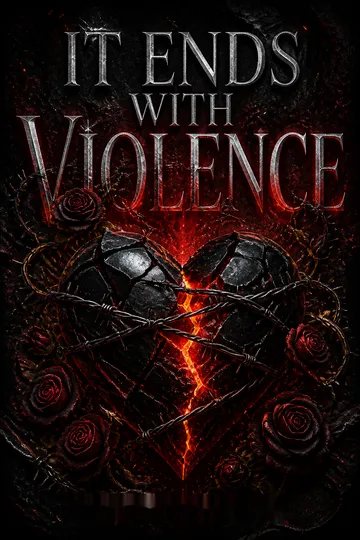
It Ends With Violence, the third book in Elle Thorpe's Saint View Psychos trilogy, receives mixed reviews averaging 3-4 stars. Readers praise the intense plot twists, particularly Axel's killer reveal, and the romance between War and Scythe/Vincent. However, many criticize the heroine Bliss for making frustrating decisions, the pregnancy trope, excessive focus on body image, unresolved plot threads (especially regarding Gus and Siren), and underdeveloped character Nash. The spicy scenes and dark themes appeal to some, while others find the story dragged with too many perspectives and unrealistic elements.
People Also Read









Characters
Bliss Arthur
The club’s fierce inheritorBliss is the daughter of Kim7 and the younger sister of Axel14, who leaves her Psychos. Raised partly in Providence after a childhood in Saint View, she moves between two worlds without fully belonging to either. Her history with abuse makes her alert to coercion, but it can also drive her to take every burden onto herself. She is generous, stubborn, and increasingly willing to trust her own judgment rather than the names others give her. Her relationships with Nash5, War4, and Vincent2 challenge the idea that love must fit a single conventional shape, while her work at Psychos gives her a practical way to protect people who have fewer choices.
Vincent Atwood
The quiet, guarded loverVincent is an escaped prisoner whose careful, literal manner can make him seem distant. He carries a history of violence and a deep attachment to the few people who have treated him as more than a danger. His tenderness toward Bliss1 sits beside a capacity for lethal precision, and he often tries to manage that contradiction by controlling what he allows himself to feel. Bliss1 draws out a desire for intimacy and family that he has rarely permitted himself to imagine. His bond with War4 is complicated by the different self3 he shares his life with, and his bond with Nash5 grows through their common devotion to Bliss1.
Scythe
Vincent’s dangerous other selfScythe is the forceful, sarcastic persona Vincent2 experiences as another self, shaped by the same body and memories but more comfortable with violence, risk, and desire. His humor can be disarming, though it often masks a readiness to harm anyone he sees as a threat. He loves Bliss1 and feels a powerful attraction to War4, making his presence central to the novel’s unusual romantic arrangement. Vincent2 and Scythe do not simply represent good and evil; they are competing ways of surviving the same history. Their struggle is also about whether Vincent2 can accept his own whole self without surrendering the quiet life he wants.
War Maynard
The divided club presidentWar is the president of his motorcycle club and the son of its former leader. He has been taught that loyalty means answering injury with force, and that a president’s private desires must yield to the club’s expectations. Beneath his imposing presence, he is emotionally open with the people he loves and deeply afraid of losing them. Bliss1 draws him toward a life that does not fit the club’s assumptions, while Vincent2 and Scythe3 expose feelings he has kept hidden. His central struggle is learning to lead without confusing authority with obedience to tradition.
Nash Sorensen
Psychos’s protective keeperNash runs the bar at Psychos and has been a steady presence in Bliss’s1 life since she was a child. He is observant, protective, and often the practical one when the others are overwhelmed. His past arranging sex work weighs on him because he knows that even his attempts to protect vulnerable women did not give them lasting security. Bliss’s1 judgment forces him to explain rather than hide, and their relationship deepens when he faces the people he left behind. His devotion is expressed through care, work, and a desire to make the club safer for the people who depend on it.
Rebel
Psychos’s fearless fixerRebel is Bliss’s1 closest friend and a resourceful, sharp-tongued member of the Psychos community. She solves practical problems with whatever tools are available, often ignoring instructions to rest or keep out of danger. Her humor helps other people endure crises, but her independence also comes from a deep fear of becoming a burden. She cares fiercely for Bliss1 and is willing to put herself at risk for the people she considers family. The novel gives her a life beyond the role of best friend, including her own desires and vulnerabilities.
Kim
Bliss’s struggling motherKim is Bliss’s mother1, shaped by addiction and years of abuse at the hands of Jerry10. She has often failed to offer her daughter1 stability, which makes Bliss1 wary of believing her promises. Yet Kim retains a fierce instinct to protect Bliss1 and a clear understanding of the danger surrounding them. Her character shows how survival can coexist with harm done to others, and how a parent’s love may arrive in imperfect, costly forms.
Liam Banks
The connected defense lawyerLiam is the lawyer Bliss’s father15 hires after the raid. His connection to Vincent2 comes from prison, where Vincent2 helped people he loves, so he treats the crisis as personal as well as professional. Confident and resourceful, Liam can move between legal procedure and the dangerous networks around Saint View. He offers Bliss1 access to help when she has little money or influence of her own.
Caleb
Bliss’s controlling former fiancéCaleb is Bliss’s former fiancé1, a cruel and possessive man who regards women as property and interprets resistance as an insult. His fixation on Bliss1 is bound up with entitlement, humiliation, and a desire to dominate. He is also Vincent’s2 enemy, and his presence connects intimate abuse to the wider violence of the plot. His polished presentation can conceal the danger beneath it.
Jerry
The family’s abusive pimpJerry abused Kim7 and profited from controlling women in Saint View. He uses threats, debt, and family vulnerability to make coercion appear like a transaction. His cruelty is most frightening when he treats other people’s suffering as ordinary business. For Bliss1, he embodies the danger she escaped as a child and the reason she is determined to protect women from being left without options.
Gus
The manipulative dealerGus supplies drugs to Psychos and belongs to War’s4 club’s older generation. He is calculating, willing to use family ties and money to get what he wants, and skilled at presenting coercion as a fair bargain. His treatment of Bliss1 shows how criminal power often depends less on open force than on making vulnerable people believe they have no alternative.
Siren
The promised club brideSiren is Gus’s daughter11 and grew up expecting to become War’s4 partner and the club’s first lady. She has been taught that loyalty, appearance, and sexual availability are tools for securing a future. Her attachment to War4 is tangled with family pressure and a desire for status, leaving her threatened by anyone who changes the plan she has relied upon. She is also skilled with motorcycles and cars, a competence that complicates the feminine role she has been trained to perform.
Fancy
War’s formidable motherFancy is War’s mother4 and the wife of Army, a woman whose toughness and loyalty have shaped her son’s4 understanding of family. Even when she is physically vulnerable, she retains a sharp memory and a forceful sense of what is right. Her relationship with War4 combines affection with blunt honesty, and her history links the club’s present conflicts to its older promises.
Axel
Bliss’s absent older brotherAxel is Bliss’s older brother1 and the former owner of Psychos. His business gave Bliss1 a foothold in the community, but she discovers how little she knows about his private life. He remains present through the club, his home, and the unanswered questions surrounding his relationships. Axel’s absence becomes a demand that Bliss1 look beyond the public image of the man she thought she knew.
David Arthur
Bliss’s wealthy fatherDavid is Bliss’s father1, who raised her in Providence after her early childhood in Saint View. He is accustomed to money and influence, and his instinct to manage problems can make his care feel controlling. He wants to protect Bliss1 from the world she came from, but his understanding of that world is limited. His strained business circumstances add pressure to a family relationship already shaped by secrets.
Nichelle
Bliss’s stepmotherNichelle is David’s wife15 and a stepmother to Bliss1. Younger than David15 and eager for a life that feels emotionally alive, she is caught between the comfort of her marriage and desires she has not been able to speak openly. She is affectionate toward Bliss’s younger siblings17 and attempts to keep the household functioning, even when tensions rise.
Verity
Bliss’s younger half-sisterVerity is Bliss’s younger half-sister1, a lively girl whose trust in Bliss1 makes her especially important to her. She is still young enough to depend on adults for safety, but she shows courage when frightened. Bliss’s1 protectiveness toward her reflects the older sister’s determination to give the next generation a safer childhood.
Ophelia
Vincent’s armed older sisterOphelia is Vincent’s older sister2, independent and capable, with a blunt manner and a clear appetite for danger. She has separated herself from her mother’s expectations and is protective of her brother2 without pretending he is harmless. Her practical confidence makes her a valuable ally when a rescue requires people who can act quickly.
Jezebel
Vincent’s knife-loving allyJezebel is close to Vincent’s2 family and joins the effort to find him. She has a taste for knives and a dry, unbothered manner that can make her seem unnerving. Beneath the theatrical menace, she is loyal and willing to put herself in danger for the people she considers hers.
Heath
Vincent’s prison friendHeath was Vincent’s2 friend in prison and part of the family Vincent2 once watched from a distance. He is physically imposing but guided by loyalty and tenderness toward the people he loves. His willingness to help Vincent2 again reflects a bond built through shared danger rather than obligation.
Rowe
The prison insiderRowe works as a prison guard and knows the institution’s layout, staff, and neglected buildings. His knowledge makes him crucial when the official system cannot be trusted to locate Vincent2. He is steady under pressure and connected to a family that gives him reasons to risk his position.
Mae
Vincent’s former prison teacherMae taught Vincent2 in prison and helped create a space where he could be seen as more than his crimes. She is compassionate without being naïve and has built a loving household with the people closest to her. Her acceptance represents the possibility of belonging that Vincent2 once believed he could only observe from afar.
Ripley
Heath’s young sonRipley is Heath’s young son20, a spirited child who remembers Vincent2 fondly. His affection gives Vincent2 a glimpse of ordinary family life and a reason to imagine returning to the people who once sheltered him.
Lucy
A worker Nash once protectedLucy is one of the women Nash5 once managed and now works under Jerry’s10 control. She is practical about the money she needs to support her children and wary of promises that cannot meet those needs. Her clear-eyed account of what she wants challenges Bliss1 to offer safety without assuming she knows what every woman should choose.
Tabor
The corrupt prison wardenTabor is the warden of Saint View Prison, persistent in his pursuit of Vincent2 and willing to use his position outside proper oversight. He sees control as proof of competence and treats prisoners as objects to be managed. His actions make the prison’s authority feel less like justice than a personal weapon.
Plot Devices
Vincent and Scythe
Two selves, one lifeVincent2 experiences Scythe3 as a distinct, more forceful self who can take control in moments of danger. Their different temperaments shape his relationships with Bliss1 and War4, and the changes in who is present create real emotional consequences. The story uses this divided identity to explore survival strategies that once protected Vincent2 but now compete with his desire for a quieter family life.
The Debt
Money becomes leverageThe confiscated drugs and cash leave Bliss1 owing money to Gus11, giving him leverage over her and War4. He converts that debt into a coercive bargain, while Jerry10 uses the same vulnerability to force Bliss1 into sex work. The device links the club’s financial risks to the larger history of exploitation in Saint View and drives Bliss1 toward a safer-workplace proposal.
The Brake Evidence
A crash becomes a clueThe lack of skid marks and the report of mechanical failure initially complicate War’s4 belief that Vincent2 killed Army in a straightforward act of murder. Fancy’s13 memory that Siren12 worked on the car shortly before the fatal drive gives the evidence a new direction. The brake failures connect Army’s death to the later threat against Bliss1 and force War4 to question the club’s inherited story.
Axel’s Letter
Handwriting exposes a secretA personal letter in Axel’s14 papers hints at a relationship that the police have not explored. Bliss1 later recognizes the writer’s distinctive handwriting on place cards at her father’s15 dinner. The physical clue links her brother’s14 private life to her family’s present tensions, turning an intimate scrap of paper into evidence that changes the meaning of his murder.
Saint View Psychos Series
About the Author







Download PDF
Download EPUB
.epub digital book format is ideal for reading ebooks on phones, tablets, and e-readers.








