


Plot Summary
The Bluff in the Rain
Caleb, Bliss’s abusive former fiancé, attacks her beside her car and threatens to leave her at the bottom of the cliffs. Vincent, the quiet man she trusts, freezes while the more dangerous Scythe takes control at her desperate request. Scythe pulls Caleb away and offers Bliss a knife, urging her to kill him.
She refuses, but lets Scythe guide her hand as she carves her name into Caleb’s chest. Then she orders Scythe to spare him. Shaken by her own violence and certain the police will come, Bliss climbs into her car with Scythe and leaves the injured Caleb in the mud. The man who protected her has also made her complicit in a choice she cannot undo.
Bliss’s choice is not a clean passage from victimhood to vengeance. She resists killing Caleb, yet accepts a smaller act of retaliation under Scythe’s direction, discovering that agency can feel both liberating and frightening. The scene also establishes the central tension between Vincent’s restraint and Scythe’s appetite for violence. Bliss needs protection, but the protection offered comes with its own moral cost. Her refusal to let Caleb die is important: she does not mistake survival for becoming like the person who harmed her.
A Mother Claims the Bar
While Bliss is missing, Nash, the manager of Psychos, watches the door and worries that she has not returned from a meeting. Her mother, Kim, arrives instead, demanding a share of the bar and insisting it should belong to her. Nash reminds Kim that she neglected Bliss and left her vulnerable to Jerry, the man who abused the children.
In anger, he reveals details of Bliss’s childhood to the staff, then regrets exposing her history. Kim answers by hinting that she knows a damaging secret about Nash and can reveal it to Bliss. She leaves him with a bargain: keep her from her daughter’s business, and she may tell the truth about him. Her demand turns Bliss’s inheritance into a new family conflict.
Kim’s arrival makes the bar more than a business asset: it becomes the material ground on which competing versions of family are tested. Nash protects Bliss, but his outburst also shows how easily protective anger can override her right to control her own story. Kim, meanwhile, exerts power through information rather than stability or care. Her threat implies that Nash’s past is not safely buried, linking his loyalty to Bliss with his fear of exposure. The scene makes secrecy a form of currency, one that both characters use because neither trusts ordinary negotiation.
Scythe Takes the Wheel
At Scythe’s house, Bliss watches him treat Vincent’s little dog roughly, break a window before finding the spare key, and behave as if Vincent is already gone. Scythe explains that he expects Vincent’s presence in his mind to fade, leaving him in control. Bliss wants the gentle man she knew back, but hides at the house because she cannot explain her bruised face to her father or the children.
Overnight, Scythe secretly collects her belongings from home. At Psychos, they find Rebel, Nash, and War cleaning up after a fight among War’s motorcycle-club guests. Bliss learns her mother has also been there demanding the bar, while police have released Axel’s body. Her rescue has left her with grief, danger, and nowhere simple to retreat.
The change in Vincent’s behavior destabilizes Bliss precisely when she most needs predictable care. Scythe can be attentive, even practical, but his humor and casual aggression make safety feel conditional. The dog becomes a useful measure of this difference: Bliss intervenes when Scythe dismisses the animal’s vulnerability, just as she is trying to defend her own. Meanwhile, Psychos connects private trauma to public responsibility. The damaged bar, Kim’s claim, and Axel’s returned body all demand decisions from Bliss before she has had time to understand what happened to her.
Caleb Beneath the Bed
Scythe takes Bliss to Caleb’s house to prove that the wounds she helped inflict did not kill him. Caleb is hiding beneath his bed, alive but terrified, with Bliss’s name stitched across his chest. He claims he has said nothing to police, and Bliss warns him not to harm another woman. Scythe adds a private threat before leaving him behind.
Earlier, Caleb had dragged himself to the police station to report the attack, where prison warden Steven Tabor recognized Scythe’s name and took him aside for information. Bliss does not know that her enemy has already connected Scythe to the authorities. Seeing Caleb alive eases her fear of having killed him, but the encounter confirms that both men remain dangerous in different ways.
The visit converts Bliss’s imagined worst outcome into a more complicated reality: Caleb is alive, but his survival does not restore control to her. His terror is evidence that the balance between them has shifted, while his earlier appeal to authorities means the threat has not disappeared. Scythe frames intimidation as protection, but his private menace keeps Bliss close to the violence she is trying to refuse. Tabor’s interest quietly widens the story beyond the former couple. A personal act of survival has entered a larger machinery of criminal records, institutional power, and pursuit.
The Trailer Still Waits
Nash accompanies Bliss into the trailer park where they grew up, holding her hand as they approach Kim’s home. Jerry, Kim’s abusive partner, greets Bliss with the same predatory contempt she remembers from childhood. Nash nearly attacks him, but Bliss steps between them and confronts her mother about the hunger, neglect, and danger she endured as a child.
Kim insists that giving Bliss up was the worst day of her life, while Bliss remembers it as her escape. She tells Kim when Axel’s funeral will be held. The moment Kim asks again for half the bar, Nash rejects her claim and walks Bliss away. Bliss leaves without the reconciliation she hoped for, but she has faced the place and people she once feared.
The trailer park brings Bliss’s adult independence into direct contact with the child who once depended on other people to get out. Nash’s hand offers solidarity, yet Bliss chooses to speak for herself rather than hide behind him. Kim’s grief may be genuine, but it cannot erase the difference between feeling love and providing care. By ending the visit on Kim’s demand for money, the scene denies an easy emotional reward and makes Bliss’s boundary concrete. Her courage is not forgetting the past; it is returning to it without surrendering her present.
Kisses Behind Closed Doors
War’s father has died, his mother Fancy remains hospitalized, and War has taken over the Slayers motorcycle club. He is also expected to marry Siren, daughter of founding member Gus, although he continues seeing Bliss. When Nash and Bliss share an intimate moment at Psychos, War recognizes his jealousy but still refuses to define their relationship.
Later, Scythe follows Bliss to War’s compound and watches War pleasure her. The two men then meet for drinks and bowling, where War’s teasing turns into a kiss outside the alley. Photographs of them circulate through the club, prompting Gus to warn War that other members may reject a president attracted to men. War’s private desire has become a public challenge to his authority.
Desire in this world is never only private: War’s intimacy with Scythe becomes evidence that can be weaponized against his leadership. The club’s expectations make heterosexuality part of its political structure, not merely a personal preference. War’s response is still uncertain, but his refusal to deny his attraction marks a break with the discipline his father taught him. Scythe, who has spent much of his life outside ordinary attachment, finds himself drawn toward friendship as well as sex. Their connection gives both men something to lose, which makes the photographs more than gossip.
Axel’s Last Gathering
At Axel’s funeral, Bliss stands between the wealthy family she grew up with and the people from Saint View who knew her brother. When grief stops her from moving toward the service, Nash takes her hand and leads her forward. He gives an impromptu eulogy, describing how he and Axel watched over one another in the trailer park and how Axel found Bliss’s father so she could have a safer childhood.
His words make Bliss’s two families briefly acknowledge each other. After the burial, Bliss leaves the gathering alone to cry in her car. A masked man holds a gun to her head and demands the money she owes for Psychos’ drugs. Bliss hands over the cash, then persuades him to supply three times as much for future parties.
The funeral gathers the novel’s competing histories around Axel’s body. Nash’s account gives Bliss a way to see her brother’s absence as an act of care that shaped her survival, while also exposing how much time they lost. Her decision to negotiate with the armed dealer immediately afterward reveals how grief and responsibility coexist without waiting for one another to finish. She is not simply reckless: she believes the bar’s income can support the people around her. But turning a threat into a larger transaction also ties her future more tightly to a business that can endanger her.
The Wake Turns Violent
During Axel’s wake, Kim and Jerry collide with Bliss’s father and stepmother, and Jerry reveals that Bliss’s father once paid him for access to Kim. When Jerry raises a hand toward Bliss, Nash, War, and Scythe restrain him. Jerry then directs his attention toward Bliss’s younger sister, Verity, and Nash breaks his nose while Bliss gets the children out of the room.
Kim collapses emotionally, describing years of being controlled and abused. Bliss takes her to Nash’s office and offers her a room, work, addiction counseling, and safety from Jerry. Later, Nash admits how long he has wanted Bliss, and they kiss. Their new intimacy grows alongside Bliss’s attempt to help a mother whose past has left her unable to trust protection.
The wake overturns Bliss’s childhood interpretation of Kim without absolving her. Kim appears not only as a neglectful parent but as someone trapped in the same abusive system that harmed her children. That recognition creates compassion, but Bliss’s conditions for shelter show that compassion need not mean abandoning limits. Jerry’s threat to Verity sharpens the cost of allowing him near the family. Nash’s confession and kiss offer Bliss a different kind of risk: he is familiar and protective, yet their history makes intimacy feel loaded with loyalty, age, and fear of rejection.
Jezebel at Breakfast
After a night shared by Bliss, Scythe, and War, Scythe’s mother arrives with Jezebel, a knife-carrying woman she expects Scythe to marry. Bliss hears the arrangement as proof that she has been deceived and leaves the room. Scythe follows her and explains that the marriage is a family demand, not a relationship he chose.
He also reveals the deeper threat behind his compliance: his mother can tell War that Scythe killed War’s father. Bliss learns that Vincent and Scythe are bound to the same body and that the death was not a simple assassination. She refuses to expose him, knowing War might retaliate, but tells Scythe she cannot make the decision for him. His secret now places her between two men she cares about.
The arranged marriage turns Scythe’s apparent freedom into a bargaining position controlled by his mother. Jezebel is not merely a romantic rival; she is part of a family system that treats marriage as a tool for maintaining power. Scythe’s confession asks Bliss to carry knowledge that could destroy her bond with War, making silence an ethical choice rather than simple loyalty. Her response does not excuse the killing. Instead, she refuses to become the instrument of an immediate revenge she believes will cost more lives. The scene makes intimacy inseparable from the consequences of hidden histories.
Nash’s Birthday Bargain
At Nash’s fortieth-birthday party, Bliss lets him control a discreet vibrator while they dance, then joins him in a private room and explores sexual boundaries she once feared. Their closeness grows from trust rather than pressure, although Nash admits he cannot promise what their relationship will become.
During the party, Kim tells Bliss that Nash once worked as a pimp, a past he has never shared with her. She also suspects Jerry killed Axel: after their final argument, she saw Jerry cleaning a gun he had hidden in the trailer’s oven.
Kim has kept the weapon. Bliss places it in Psychos’ safe rather than alerting police, fearing Jerry’s retaliation and doubting whether her mother can testify. The gun turns family pain into an unresolved investigation.
The birthday sequence pairs Bliss’s expanding sexual agency with a destabilizing revelation about the people she trusts. She chooses an experience with Nash because she feels safe with him, yet their relationship remains provisional and his past complicates that safety. Kim’s story reframes her earlier behavior without resolving whether her account is reliable or whether she can act against Jerry. The gun is both evidence and danger, stored beside the club’s drugs and cash. Bliss’s attempt to protect her mother therefore places her in the role of custodian for a possible murder case she is not equipped to control.
War Sets the Trap
While Bliss’s party fills Psychos, War moves from private doubts to club duty. A Slayers informant supplies a phone number said to belong to Scythe, the contract killer believed responsible for War’s father’s death. War and his officers arrange a meeting in a rough part of Saint View, with Hawk riding in as bait and the others waiting nearby.
War expects a direct chance to avenge his father, unaware that Scythe’s mother is involved in the same criminal world and that Bliss already knows the identity he is seeking. At the meeting, War recognizes a clue linking Scythe to Vincent and understands that the man he kissed is the killer he has been hunting. He arrives at Psychos with a gun and demands the truth.
War’s decision to pursue Scythe is both a responsibility inherited from his father and a response to a club culture that measures leadership through retaliation. The informant offers the clarity War wants, but the trap he plans is built on incomplete knowledge. His personal attachment to Vincent makes the discovery feel like betrayal, even though War does not yet know the full circumstances of the death. Bliss’s withheld knowledge sits at the center of this collision. Her silence was meant to prevent violence, but it cannot prevent the past from arriving on its own timetable.
The Raid at Psychos
War pins Scythe with a gun and accuses him of killing his father. Scythe admits he fired the shot but explains that War’s father had already driven over a cliff with Fancy in the car. Fancy was unconscious but alive; War’s father, impaled by wreckage, begged Scythe to end his pain.
War cannot accept the distinction and attacks him. Police then storm Psychos as the Slayers arrive, and gunfire scatters the crowd. War’s men drag him away, while prison warden Tabor and several guards seize Scythe.
The raid leaves Bliss, Nash, and the people inside the club in immediate danger, with the drugs stored there and Axel’s possible murder evidence unresolved. Tabor tells Scythe he will face something worse than prison, ending the story with him in custody.
The revelation complicates culpability without dissolving it: Scythe killed War’s father, but the act followed a desperate request after a crash whose cause remains unknown. War’s grief cannot absorb that nuance in the moment, and Scythe’s refusal to fight back suggests both guilt and exhaustion with his divided self. The police raid then makes private revenge part of a wider institutional threat. Tabor’s capture of Scythe is not a resolution but a transfer into a more dangerous form of control. The novel closes with several relationships and investigations suspended at once.
Analysis
Half the Battle builds its romance around people who have learned that safety is never uncomplicated. Bliss has escaped one abusive relationship, but her return to Saint View exposes her to old family wounds, a threatening drug business, and men whose forms of protection can involve coercion. Her growth is not measured by becoming invulnerable. It is measured by choosing when to accept help, when to refuse violence, and when to set terms, even when those choices remain imperfect.
The book’s central psychological device, Vincent and Scythe sharing one body, makes that question of responsibility unusually literal. Scythe’s violence can keep Bliss alive, yet his capacity for attachment destabilizes the simple division between dangerous and safe. Vincent’s gentleness, meanwhile, does not erase the harm associated with their shared past. The story asks whether a person can be understood through intention when consequences are shared, and whether love can survive knowledge that changes the beloved’s moral image.
War and Nash provide different versions of loyalty. Nash’s devotion to Axel has delayed his willingness to claim Bliss, while War must choose between club legitimacy and an honest account of his desire. Their relationships with Bliss do not neatly resolve into competition; instead, each exposes her to a different form of trust. The novel’s sexual openness is paired with emotional uncertainty, making consent and self-definition more consequential than simple attraction.
Family, meanwhile, is portrayed as both inheritance and trap. Axel’s care gave Bliss a route out; Kim’s remorse arrives only after years of damage; Gus and Scythe’s mother use marriage and tradition to control the next generation. By ending with Scythe captured, War wounded by a partial truth, and the club under attack, the book refuses to offer safety as a finished reward. Its title points toward a battle that is only half fought, because surviving the past does not settle what anyone owes the people still living inside it.
Review Summary
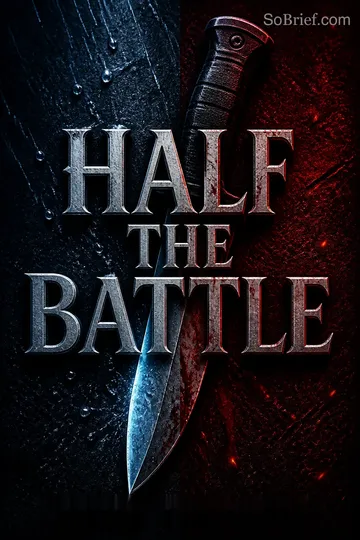
Half the Battle, the second book in Elle Thorpe's Saint View Psychos series, receives mixed reviews averaging 4.33/5 stars. Readers praise the introduction of Scythe, Vincent's alter ego, calling him funny, snarky, and compelling. The steamy romance between Bliss and her three love interests (Nash, War, and Scythe/Vincent) intensifies, with particularly popular M/M scenes. However, many complain about excessive sex scenes overshadowing plot development, slow pacing in the middle, and minimal progress on solving Axel's murder. The cliffhanger ending receives universal acclaim for being shocking and dramatic, leaving readers eager for book three.
People Also Read






Characters
Bliss Arthur
The bar’s stubborn new ownerBliss is Axel’s younger sister, raised away from the poverty and abuse of her childhood home. She returns to Saint View to take charge of Psychos, where loyalty, grief, and business quickly become inseparable. Her past with Caleb has damaged her confidence in her body and her right to set limits, but she is not defined by helplessness. She protects others, negotiates with dangerous people, and gradually chooses intimacy on her own terms. Her impulse to forgive and provide for family can become a vulnerability, particularly when people mistake kindness for permission. Bliss’s central struggle is to remain compassionate without surrendering the authority she has worked to claim.
Vincent Atwood
The quiet man with a shadowVincent is reserved, earnest, and deeply protective of Bliss, with a life shaped by prison and complicated ties to people inside it. He struggles to communicate desire directly and is more comfortable caring for others than asking to be cared for. His gentleness contrasts with the violent impulses that exist within the same body, creating uncertainty about where responsibility and choice begin. Vincent’s attachment to Bliss pushes him toward a future beyond crime, though his family and history resist that possibility. He is not simply the opposite of Scythe: their shared history, impulses, and memories make the boundary between them difficult to understand.
Scythe
The blade beneath VincentScythe is Vincent’s more volatile self, a skilled killer who jokes, provokes, and treats danger as ordinary. He initially understands relationships as leverage or appetite, but Bliss and War unsettle that distance by becoming people he wants to keep near. His humor can disguise both insecurity and a limited ability to read others, while his violence offers him a sense of control he does not otherwise possess. Scythe’s conflict with Vincent is not a simple contest between evil and good. Each carries part of their shared past, and Scythe’s emerging capacity for attachment makes him vulnerable to the same losses he once dismissed.
Warrick War Maynard
The club’s unsettled presidentWar leads the Slayers motorcycle club after his father’s death and is expected to inherit the club’s traditions, including a future with Siren. He is confident, sexually adventurous, and accustomed to treating desire as something temporary. Bliss challenges that habit by making him want tenderness and continuity; Scythe complicates it further by awakening an attraction War has been taught to hide. As president, War must balance private honesty with the trust of a club that can turn prejudice into a threat to his authority. Beneath his swagger, he is grieving, loyal, and frightened of losing the family and status his father left behind.
Nash Sorensen
Axel’s watchful best friendNash runs Psychos and was Axel’s closest friend, a bond that makes him fiercely protective of Bliss. He is older than her, disciplined by years of responsibility, and prone to treating work as a substitute for a life outside the bar. His feelings for Bliss collide with his loyalty to Axel and his fear of crossing a line he cannot uncross. Nash’s reserve can look like indifference, but it conceals loneliness and a deep capacity for care. His history in Saint View is more complicated than Bliss initially understands, and his decisions force him to confront whether protection means keeping someone at a distance.
Caleb Black
Bliss’s controlling former fiancéCaleb is a wealthy businessman who treated Bliss as property and used humiliation and physical force to keep control of their relationship. His sense of entitlement depends on believing Bliss has nowhere better to go, so her independence feels to him like an insult. When he is frightened or injured, he turns to authority rather than reflecting on the harm he caused. Caleb represents the polished face of abuse: his money and social standing disguise a private belief that other people exist to serve him.
Kim
Bliss’s damaged motherKim is Bliss and Axel’s mother, a drug-addicted woman whose life has been shaped by poverty and Jerry’s control. She has failed her children in profound ways, yet her capacity for remorse and affection is difficult to separate from the harm she caused. Kim often reaches for money or theatrical displays when direct honesty would require her to face that history. Her relationship with Bliss carries both a longing for repair and a deep imbalance of trust. She is a portrait of how victimhood and responsibility can coexist without canceling one another.
Jerry
The trailer park predatorJerry is Kim’s partner and a violent presence from Bliss’s childhood. He uses threats, physical force, and sexual exploitation to maintain control over Kim and the people around her. His apparent confidence depends on others expecting him to get away with it. Jerry’s contempt for women is not a passing cruelty but a worldview that treats vulnerability as an invitation. He is the most immediate human source of danger in Bliss’s family history.
Axel
The brother who made a wayAxel is Bliss’s older brother and Nash’s closest friend. Growing up in the trailer park, he took responsibility for protecting the people he loved, often at personal cost. He helped Bliss reach a safer life and later built Psychos with Nash, leaving behind a business that becomes both an inheritance and a burden. Though absent from the present action, Axel’s decisions shape Bliss’s sense of family and Nash’s enduring grief.
Rebel
Psychos’ sharp-tongued allyRebel works at Psychos and is one of the first people to welcome Bliss into the bar’s rough-edged community. She is energetic, outspoken, and quick to defend the people she considers hers. Her humor helps ease tension, but she also recognizes when Bliss is hiding pain and offers practical support. Rebel’s loyalty makes the bar feel less like a workplace and more like a chosen family.
Gus Finazzo
The club’s founding patriarchGus helped found the Slayers with War’s father and carries the authority of an older generation. He can be generous and politically astute, stepping in to support the club when War is overwhelmed. At the same time, Gus believes tradition and family arrangements are ways to preserve order. His concern for War is genuine, but it can shade into pressure when War’s choices challenge the club’s expectations.
Siren Finazzo
War’s expected old ladySiren is Gus’s daughter and has long expected to become War’s partner within the Slayers. She is self-assured, polished, and aware of the status her family name gives her. Her confidence can turn dismissive when she views Bliss as a temporary diversion, yet Siren is also navigating a future arranged around her by others. She represents the club’s inherited assumptions about who War should become.
Scythe’s mother
The assassin’s demanding parentScythe’s mother controls access to the jobs and expectations that structure his life. She is affectionate when it suits her, but her warmth often carries an agenda, and she treats marriage as a family strategy. Her pressure exposes how little freedom Scythe believes he has. She understands his attachments well enough to use them as leverage.
Jezebel
The knife-loving proposed brideJezebel is presented as a possible match for Scythe through their families’ criminal connections. She is composed, carries a knife with ease, and shares Scythe’s interest in blades. Her willingness to enter the arrangement is not fully explained, leaving her less a conventional romantic rival than a reminder that powerful families treat marriage as strategy.
Steven Tabor
The prison warden in pursuitTabor is the warden of Saint View Prison and recognizes Scythe’s name when Caleb tries to report the assault. He is willing to bypass normal procedure to question Caleb, revealing that his interest in Scythe is personal and persistent. Tabor presents institutional power as another force capable of coercion, though his precise motives remain unclear.
Nichelle
Bliss’s guarded stepmotherNichelle is Bliss’s stepmother and the partner of Bliss’s wealthy father. She is image-conscious and uncomfortable with reminders of his earlier relationships, but she shows up for the family during Axel’s funeral. Nichelle’s presence represents the polished life Bliss was given, a world that cannot easily absorb the history she has returned to face.
Verity
Bliss’s compassionate younger sisterVerity is Bliss’s younger half-sister. She is observant and instinctively kind, offering comfort even to people who have frightened or hurt her family. Her vulnerability makes Jerry’s attention toward her especially alarming, while her compassion reminds Bliss of the childhood innocence she wants to protect.
Everett
Bliss’s younger half-brotherEverett is Bliss’s younger half-brother, energetic and eager to assert his independence. He belongs to the safer family life Bliss was raised into, but his presence makes clear why she is careful about letting Saint View’s violence reach home.
Fancy
War’s hospitalized motherFancy is War’s mother and the former president’s partner, remembered as a forceful presence in the Slayers community. Her hospitalization leaves War grieving and increasingly alone at the moment he must assume leadership. She represents the family history and expectations that continue to shape him.
Plot Devices
Vincent and Scythe
One body, competing selvesVincent and Scythe are distinct selves sharing one body, with different temperaments and approaches to violence. Their shifting control drives the danger of Bliss’s early rescue and makes intimacy difficult: the people around Vincent must decide which self they are addressing and what each can be trusted to do. Scythe’s claim that Vincent may fade turns their internal conflict into an immediate threat to Bliss’s emotional security. The device also complicates responsibility, since Scythe and Vincent share memories and history even when they disagree about what their actions mean.
Psychos
Business built on riskPsychos is the bar and private party venue Axel left to Bliss and Nash. Its parties bring in money through sex-club events and drug sales, allowing Bliss to imagine an independent future while exposing her to suppliers, police, and criminal networks. The bar also operates as a gathering place for chosen family, grief, work, and desire. Each role makes it harder for Bliss to separate business decisions from personal loyalties. The club’s eventual raid turns the place that sheltered her into a site of immediate danger.
Kim’s hidden gun
A clue against JerryKim’s account of finding Jerry cleaning a hidden gun after Axel’s death gives Bliss a possible link between Jerry and the murder. The weapon could support an investigation, but Kim fears retaliation and is unsure whether the gun proves anything. Bliss stores it in Psychos’ safe, placing potential evidence beside the drugs and cash that already threaten the business. The gun changes Kim’s story from a private plea for shelter into a criminal accusation, while leaving the claim unresolved at the novel’s end.
The Slayers’ expectations
Tradition polices desireThe Slayers’ traditions bind leadership to inherited roles, including expectations that War will marry Siren and present himself as exclusively heterosexual. These rules turn his attraction to Scythe into a political liability after photographs of their kiss reach the club. Gus’s influence and the members’ reactions show how private identity can affect public authority in a violent organization. The same family logic shapes Scythe’s proposed marriage to Jezebel. In both cases, intimate choices are treated as tools for preserving power.
Saint View Psychos Series
About the Author







Download PDF
Download EPUB
.epub digital book format is ideal for reading ebooks on phones, tablets, and e-readers.








