

Key Takeaways
Earn the sale with useful conversation before asking for the sale
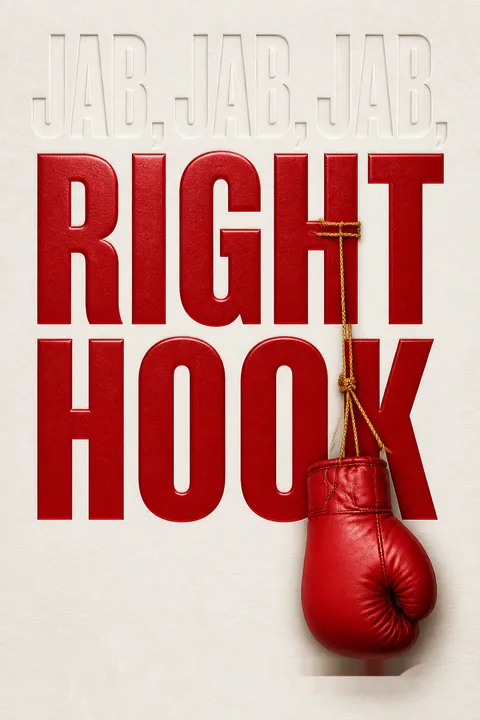
Build before you ask. The book’s boxing metaphor separates two jobs: a jab is content that gives the audience something worthwhile, while a right hook is a direct request, such as buying a product. A sales pitch without the groundwork is easy to ignore. In the author’s story, Wine Library TV found an audience not only because he worked hard, but because its informal wine videos suited YouTube and invited people to return. The relationship and the content worked together.
There is no fixed count. Marketers often want a precise number of posts to publish before making an offer. The book argues that no universal ratio exists. The right balance depends on the brand, its audience, and what people respond to. The point is to make the request feel earned, not to follow a mechanical posting schedule.
The metaphor is useful because it separates attention-building from conversion, two aims that marketing dashboards often blur together. A series of generous interactions can lower skepticism by showing that a company understands its audience before it asks for money. That is a form of reciprocity, but it should not be treated as a hidden debt the customer must repay. A person may enjoy a brand’s helpful content and still choose a competitor. The approach works best when the value is real on its own, rather than a thinly disguised down payment on a purchase.
Make every post feel at home in the feed where it appears
Fit the setting. Native content is made to suit a platform’s visual style, tone, habits, and audience expectations. The same story may need different forms in different places. A striking image might work in a fast-moving visual feed, while a longer explanation belongs somewhere readers expect to spend more time. Simply copying a television ad or a website link onto a social platform ignores the context in which people encounter it.
Keep the identity, change the expression. Native storytelling does not mean pretending to be an ordinary user or abandoning the brand’s character. It means expressing that character in ways that belong in the audience’s experience. The book contrasts intrusive ads that interrupt a program with content that can sit naturally beside entertainment, news, or conversation.
This principle resembles good translation: the meaning stays recognizable, while the form changes to work in a new environment. It also aligns with user-centered design, where a tool succeeds by fitting the setting in which it is used. The important boundary is transparency. Content can feel natural without concealing who made it or why. When a brand borrows a community’s style too aggressively, it risks sounding like an outsider wearing borrowed clothes. Audience familiarity should shape the delivery, not erase the source.
Give people entertainment, utility, or connection, not another interruption
Offer something people want. The book groups useful social content into three broad kinds of value: connection with other people, entertainment or escape, and practical service. A cosmetics brand, for example, might share a short makeup tip, make a playful post about music its customers enjoy, or join a conversation about getting ready for a stressful day. These posts need not sell a product directly to strengthen the audience’s connection to the brand.
Make the ask occasional. The author compares a sudden sales pitch to asking for a favor before building goodwill. A useful post should not routinely end by demanding a click, purchase, or sign-up. Pop culture can offer a natural subject for a brand to join, provided the connection feels relevant rather than opportunistic. The aim is to make the audience glad the content appeared in its feed.
The value categories are a practical antidote to the assumption that every post must advertise. They also map to basic human motives: belonging, enjoyment, and solving a problem. Yet goodwill is not a reliable currency that guarantees conversion. Audiences are not obligated to buy because a brand made them laugh or offered a tip. The strongest version of this approach treats helpfulness as part of the product experience itself. That keeps the content worthwhile even when no purchase follows.
Treat each platform as a different language, not a syndication outlet
Learn the local grammar. The book’s platform examples illustrate why identical posts often underperform. Facebook is framed around sharing with a community; Twitter around public conversation, news, and fast replies. Pinterest rewards organized, attractive images that express interests and aspirations. Instagram favors personal-looking visual art, while Tumblr offers a home for image-led posts and animated GIFs. These are strategic distinctions, not a demand to be present everywhere.
Adapt the execution. A product photo with a direct purchase link may suit one platform, while a witty caption, a customer’s image, or a short visual sequence may suit another. The brand’s underlying identity remains stable, but its format and tone should respond to what users expect there. These descriptions reflect the platforms as the book understood them in 2013; their specific features and audiences can change.
The language metaphor makes a memorable point about competence: a brand can technically post everywhere while still failing to communicate fluently. Platform literacy is more than knowing button locations. It includes understanding why people show up, what they share, and which actions the platform makes easy. The risk is turning every network into a separate production burden. A better approach is to keep one clear brand story, then adapt only where a meaningful audience and a distinctive format justify the effort.
Let engagement teach you which stories deserve money and wider reach
Test before amplifying. The book describes Facebook’s EdgeRank, the platform’s then-current system for selecting which posts appeared in users’ News Feeds. It used signals such as likes, comments, and shares to estimate relevance. A purchase could matter to a business without necessarily helping a post travel further, so the author urges marketers to create content people want to interact with, then use that response to guide distribution.
Treat metrics as clues. In the book’s 2013 account, ordinary brand posts might reach only a small share of followers, while paid sponsored stories could extend the reach of posts that had already shown promise. The suggested sequence is to publish, observe, improve, and amplify. This is not proof that engagement equals sales. It is a way to avoid spending heavily on content that the audience has already ignored.
The underlying method resembles experimentation: expose a small audience to a version, observe a response, and use the result to make a better decision. That can reduce waste, especially when creative alternatives are easy to test. But engagement is a proxy, not a business outcome. A funny post can attract reactions without producing qualified leads, and a useful purchase message can generate few public interactions while converting well. The sound practice is to connect attention measures to downstream outcomes instead of allowing the platform’s preferred metric to define success.
On Twitter, listen for the conversation before adding your own angle
Join the open conversation. The book presents Twitter as unusually suited to discovering what people are discussing publicly, whether they mention a company or a related subject. A business can search for relevant conversations, answer a customer, or contribute a useful point of view without waiting for someone to visit its page. This makes listening part of marketing, not merely a way to monitor complaints.
Add context, not just links. The author calls “trendjacking” the practice of connecting a brand’s story to a timely topic or popular phrase. A movie theater might share a sharp opinion about a new film instead of posting a bare link to a review. The connection must be relevant and sound like the brand. A clumsy attempt to borrow a trend can feel like a stranger barging into a conversation.
Listening first reflects a broader principle of conversation analysis: meaning depends on what was said before, by whom, and in what setting. A timely reply can make a brand seem attentive because it demonstrates that someone is actually present. Public listening can also reveal needs that formal surveys miss. Still, visibility is not the same as permission to exploit every trending subject. Relevance, sensitivity, and timing matter, especially around tragic or polarizing events. The best contribution improves the conversation, rather than merely attaching a logo to it.
Make visual platforms fuel identity, aspiration, and discovery
Understand the image’s job. Pinterest is described as a place where people collect images that express tastes and imagined futures. The book cites a survey from that period reporting that Pinterest users were more likely than Facebook users to buy products they encountered there. Businesses could create useful boards, link pins to relevant pages, or share images that connect a product to a broader interest. A tea shop, for instance, could post not only teas, but also the settings and occasions associated with drinking them.
Make art native to the platform. Instagram is treated as a visual showcase, where polished commercial imagery may feel out of place beside personal photographs. Tumblr rewards distinctive visual material, especially animated GIFs. These platforms offer different routes to discovery, but each requires an image worth pausing for. A beautiful photograph or clever loop can establish a mood before a caption explains the brand.
Images do more than display objects. They let people project identity, test an aspiration, and imagine how a product might fit into a life. That helps explain why visual discovery can influence desire before a shopper has formed a precise intention. It also creates a responsibility: idealized images can make ordinary life seem inadequate, and aspiration can slide into status pressure. Brands can temper that effect by pairing inspiration with practical detail, such as how an item is made, used, or accessed, instead of selling a fantasy alone.
Your social advantage is the effort competitors refuse to sustain
Effort compounds through attention. The book tells how boxer James “Buster” Douglas prepared for his upset victory over Mike Tyson. Douglas studied his opponent, improved his training, and entered the fight in far better condition. After months of attention and celebration rather than comparable preparation, he was knocked out by Evander Holyfield in the fourth round. The story illustrates a business point: one burst of excellent work is not enough if the discipline disappears.
Show up in the replies. Social media effort means more than publishing often. It includes noticing responses, answering questions, correcting confusion, and treating customers as people. A small business may not match a large company’s staffing or budget, but it can compete through quicker, more personal care. The book’s emphasis is sustained attention, not simply a high volume of posts.
The Douglas story makes maintenance visible: success can create the conditions for complacency just as readily as failure can create urgency. In business, attention to customers is a capability that weakens when it becomes nobody’s explicit responsibility. However, constant availability is not the same as good service, and a 24-hour mindset can produce exhausted teams and careless replies. Effort becomes durable when organizations support it with clear ownership, sensible response standards, and enough capacity to keep promises.
Turn the company into a transparent publisher, not just an advertiser
Tell stories beyond the product pitch. The author argues that companies can create useful media of their own instead of relying only on paid placements. Michelin published restaurant guidance that encouraged people to travel, while Guinness created a book of records that gave customers something to discuss. Wine Library TV served a similar purpose by combining wine education and opinion with the retailer’s business.
Earn trust through honesty. A company can publish reviews, explain its field, or report on a community it serves, but it must not pretend to be an independent outlet. The book sees transparency as essential: audiences can accept a commercial source when its interests are clear and its content is fair. It also urges businesses to experiment with emerging platforms rather than waiting for every uncertainty to disappear.
Publishing changes a company’s role from buying attention to earning repeated attention through useful material. This can create a durable asset: expertise, audience relationships, and content that can be reused across channels. It also raises the standard of accountability. A brand that reports on its own industry has an incentive to favor itself, so disclosure alone may not be enough; accuracy, corrections, and a willingness to acknowledge inconvenient facts matter too. The strongest brand media earns trust by being informative even when the immediate payoff is not a sale.
Analysis
The book’s lasting contribution is less a catalogue of platform tricks than a change in the unit of marketing. Instead of treating a campaign as a finished advertisement distributed to a passive audience, it treats communication as an ongoing sequence: observe people, make something suited to their setting, learn from their response, and ask for action when the relationship can bear it. The boxing metaphor makes this sequence vivid, while the case studies show how small execution decisions, such as a poor image crop or a link that leads to the wrong page, can undo sound strategy.
Its most useful tension is between art and measurement. The author urges marketers to study analytics, but also says there is no permanent formula for compelling content. That is not a contradiction so much as a division of labor: data can reveal where attention gathers, while creative judgment is needed to understand why a story matters. Metrics are strongest as feedback, weakest when mistaken for the goal. Likes and shares can indicate resonance, but neither guarantees trust, revenue, or long-term value.
The book was written in 2013, so platform descriptions, advertising products, audience statistics, and predictions about specific services belong to that moment. Their short shelf life reinforces the deeper lesson: learn the audience and the medium rather than memorize a platform recipe. The advice to publish constantly also deserves a practical limit. Continuous communication requires staff, judgment, and boundaries; simply increasing volume can create noise or burnout. The book is most persuasive when effort means attentive service and careful adaptation, not endless posting.
Ultimately, the model is a call for reciprocal communication. A business is not merely buying an interruption; it is trying to become a welcome presence in a person’s media life. That ambition is commercially useful, but it also sets a higher ethical bar. Native content should not disguise persuasion, and real-time relevance should not excuse opportunism. When a brand gives genuine value, listens carefully, and makes its commercial purpose legible, storytelling can become a relationship rather than a louder advertisement.
Review Summary
Jab, Jab, Jab, Right Hook receives mixed reviews, with many praising its practical advice on social media marketing. Readers appreciate the real-world examples and Vaynerchuk's straightforward approach. The book emphasizes tailoring content to each platform and building relationships before selling. Critics note the content is somewhat outdated and may be elementary for experienced marketers. Some find the writing style engaging, while others consider it repetitive. Overall, it's viewed as a valuable resource for those new to social media marketing.
People Also Read









Glossary
Jab
Audience-first contentA jab is a piece of brand communication that gives an audience value without making an immediate sales demand. It might entertain, inform, offer a useful service, or invite conversation. In the book’s boxing metaphor, repeated jabs build familiarity and goodwill, preparing a stronger basis for a later commercial request.
Right hook
Direct sales requestA right hook is content that asks the audience to take an action that benefits the business, such as buying, registering, or visiting a store. It is most effective when the brand has already earned attention through relevant communication. The term distinguishes conversion-focused marketing from content intended primarily to serve or engage the audience.
Native content
Platform-fitting storytellingNative content is designed for the conventions, tone, appearance, and audience behavior of the platform where it appears. It does not merely reuse an advertisement made for another medium. It also offers a kind of value people already seek there, while preserving the brand’s identity and making the source clear.
Micro-content
Small, timely story unitsMicro-content is a compact piece of information, humor, commentary, or inspiration shaped for quick consumption and sharing. It can respond to a cultural moment or a community’s interests, and may be created frequently rather than as one large campaign. Its brevity does not remove the need for clear storytelling, quality, and brand consistency.
EdgeRank
Historical feed-ranking systemEdgeRank was the name used in the book for Facebook’s then-current method of selecting and ordering News Feed content. It considered user interactions, such as likes, comments, and shares, as signals of interest. The book uses it to explain why engagement could influence visibility. It describes a 2013-era system, not a current guarantee about Facebook ranking.
Trendjacking
Joining a timely conversationTrendjacking means connecting a brand’s content to a topic, event, or phrase that people are already discussing. The brand adds its own angle rather than simply repeating the news or attaching an unrelated sales pitch. The technique can create timely visibility, but depends on genuine relevance, appropriate tone, and sensitivity to the subject.
Birdiebrag
Retweeting praise of oneselfA birdiebrag is the book’s label for a brand retweeting or sharing favorable comments about itself. Occasional customer recognition can be useful, but repeatedly broadcasting praise can come across as self-congratulation and provide little value to followers. The term captures the difference between responding to a customer and using the customer’s compliment as an advertisement.
Sawdust
Underused brand materialSawdust refers to assets a business already has but tends to overlook, such as ordinary products, spaces, staff knowledge, or customer experiences. With a fresh idea, these materials can become engaging content. The concept encourages businesses to find storytelling potential in what is readily available, while still presenting it with care and quality.
FAQ
What's "Jab, Jab, Jab, Right Hook" about?
- Author's Focus: The book, written by Gary Vaynerchuk, is about how to effectively tell your brand's story in a crowded social media landscape.
- Boxing Metaphor: It uses a boxing metaphor to explain marketing strategies, where "jabs" are the small, value-driven interactions with customers, and the "right hook" is the call to action that leads to sales.
- Platform-Specific Advice: Vaynerchuk provides detailed advice on how to tailor content for different social media platforms like Facebook, Twitter, Instagram, and more.
- Engagement and Storytelling: The emphasis is on engaging with customers through storytelling and building relationships before making a sales pitch.
Why should I read "Jab, Jab, Jab, Right Hook"?
- Practical Strategies: The book offers practical strategies for businesses to improve their social media marketing efforts.
- Platform Insights: It provides insights into the unique characteristics of each social media platform and how to leverage them.
- Real-World Examples: Vaynerchuk includes real-world examples and case studies to illustrate successful and unsuccessful social media campaigns.
- Author's Expertise: Gary Vaynerchuk is a well-known entrepreneur and social media expert, bringing credibility and experience to the advice he offers.
What are the key takeaways of "Jab, Jab, Jab, Right Hook"?
- Content is King, Context is God: Creating great content is crucial, but understanding the context of each platform is even more important.
- Engagement Over Sales: Focus on building relationships and engaging with your audience before trying to sell to them.
- Platform-Specific Content: Tailor your content to fit the unique language and culture of each social media platform.
- Effort and Consistency: Consistent effort and engagement are key to building a successful social media presence.
How does Gary Vaynerchuk define "Jabs" and "Right Hooks"?
- Jabs: These are the small, value-driven interactions that build relationships with your audience. They are not sales pitches but rather content that entertains, informs, or engages.
- Right Hooks: These are the calls to action that aim to convert engagement into sales. They should be clear, direct, and well-timed.
- Balance: The book emphasizes the importance of balancing jabs and right hooks to maintain audience interest and drive sales.
- Strategic Planning: Both jabs and right hooks require strategic planning to be effective in the long term.
What are the best quotes from "Jab, Jab, Jab, Right Hook" and what do they mean?
- "Content is King, but Context is God": This quote emphasizes the importance of not just creating great content but also understanding the platform and audience context where it will be shared.
- "There is no sale without the story; no knockout without the setup": It highlights the necessity of storytelling in marketing, where engagement and relationship-building precede sales.
- "Effort is the great equalizer": This underscores the idea that consistent effort can level the playing field, regardless of a company's size or budget.
- "The right hook gets all the credit for the win, but it’s the ring movement and the series of well-planned jabs that come before it that set you up for success": This quote illustrates the strategic importance of jabs in setting up successful right hooks.
How does "Jab, Jab, Jab, Right Hook" suggest using Facebook for marketing?
- Understanding EdgeRank: The book explains Facebook's algorithm, EdgeRank, and how it affects the visibility of your posts.
- Engagement Focus: It emphasizes creating content that encourages likes, comments, and shares to increase visibility.
- Targeted Content: Vaynerchuk advises using Facebook's targeting features to tailor content to specific audience segments.
- Sponsored Stories: The book discusses the use of sponsored stories to amplify successful content and reach a broader audience.
What advice does Gary Vaynerchuk give for using Twitter effectively?
- Listening and Engaging: Twitter is described as a platform for listening and engaging with your audience, rather than just broadcasting messages.
- Trendjacking: The book suggests using trending topics to join conversations and increase visibility.
- Unique Voice: It emphasizes the importance of developing a unique voice and context for your tweets.
- Hashtags: Vaynerchuk advises using hashtags strategically to reach a wider audience and join relevant conversations.
How does "Jab, Jab, Jab, Right Hook" recommend using Instagram for business?
- Visual Storytelling: The book highlights the importance of high-quality, artistic images that align with Instagram's visual nature.
- Hashtag Use: It encourages the use of multiple hashtags to increase discoverability and engagement.
- Engaging Content: Focus on creating content that resonates with the younger Instagram audience.
- Occasional Right Hooks: While primarily a platform for jabs, occasional right hooks can be effective if done sparingly and creatively.
What strategies does "Jab, Jab, Jab, Right Hook" suggest for Pinterest?
- Aspirational Content: Pinterest is described as a platform for aspirational and visually appealing content that inspires users.
- Creative Board Titles: Use creative and engaging board titles to attract followers and organize content.
- Repinning and Community Building: Engage with the community by repinning content and adding your own context.
- Linking and Pricing: Include links and pricing in pins to drive traffic and encourage purchases.
How does "Jab, Jab, Jab, Right Hook" view the role of effort in social media marketing?
- Effort as Equalizer: Effort is seen as a key factor that can level the playing field, regardless of a company's size or resources.
- Consistent Engagement: Consistent and genuine engagement with your audience is crucial for building relationships and brand loyalty.
- Quality Over Quantity: The quality of interactions and content is more important than the sheer volume of posts.
- Long-Term Commitment: Social media success requires a long-term commitment to effort and engagement.
What does "Jab, Jab, Jab, Right Hook" say about the future of social media platforms?
- Constant Evolution: The book emphasizes that social media platforms are constantly evolving, and marketers must adapt quickly.
- Emerging Platforms: It highlights the importance of being early adopters of emerging platforms like Vine and Snapchat.
- Integration and Innovation: Future platforms will likely integrate more social features and require innovative storytelling approaches.
- Staying Ahead: Marketers who stay ahead of trends and adapt to new platforms will have a competitive advantage.
How does "Jab, Jab, Jab, Right Hook" suggest businesses become media companies?
- Content Ownership: The book suggests that businesses can become their own media companies by creating and owning their content.
- Transparency and Trust: Transparency is crucial to maintaining trust with consumers when businesses act as media companies.
- Expanding Reach: By producing their own content, businesses can expand their reach and influence beyond traditional media channels.
- Long-Form Content: While micro-content is important, there is still value in producing long-form content that tells a deeper story.
About the Author
Other books by Gary Vaynerchuk





Download PDF
Download EPUB
.epub digital book format is ideal for reading ebooks on phones, tablets, and e-readers.








