

Key Takeaways
Make every customer feel known, because digital word of mouth travels like a town
The old shop returns. Vaynerchuk opens with a customer who asks a liquor store to honor a coupon after buying wine. A manager refuses, protecting a few dollars but losing the customer’s goodwill. The customer comes back months later, not to shop, but to announce he is leaving for good. In a small town, that story would travel by conversation. Social networks give it a far wider, faster route.
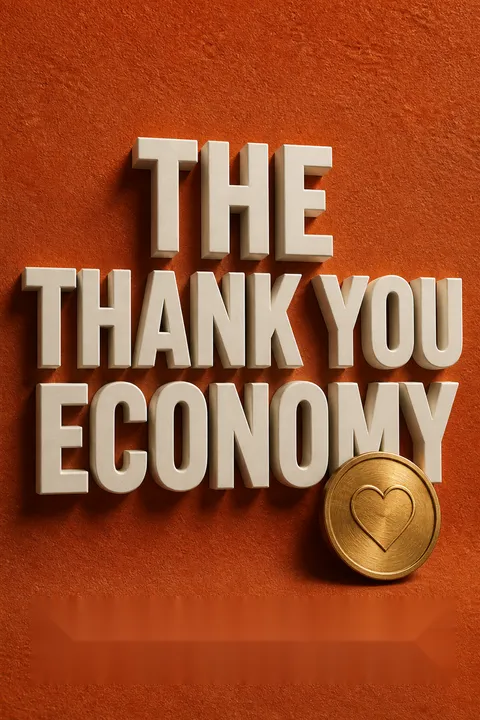
Technology revives a habit. The Thank You Economy is Vaynerchuk’s name for an economy in which digital communication restores the personal attention once common in local businesses. Social media is not merely another advertising channel: it lets customers and companies talk directly. The platforms may change, but the expectation of being heard and treated as a person remains. A business must make that care visible, not just claim to value customers.
The small-town comparison makes a useful distinction between reach and relationship. Digital networks can distribute a story at scale, but the source of its persuasive force is still a person’s trust in the person telling it. That means good service is not only a frontline task; it is a form of reputation management embedded in ordinary operations. There is a practical limit, though: one-to-one attention takes labor. The goal cannot be endless bespoke favors for everyone. It is to build systems and give employees enough discretion to make considerate responses routine, while reserving exceptional effort for situations where it matters most.
Treat complaints as invitations to repair trust in public
A complaint is a chance. The book contrasts an AT&T customer’s unresolved service problems and a threatening response from the company with Ann Taylor LOFT’s reaction to criticism of a pair of pants. LOFT employees posted photos of themselves wearing the garment after customers said the marketing images were unrealistic. Some critics still disliked the pants, but the brand showed it had listened and was willing to answer openly.
Service has economic value. A 2010 customer-experience report cited in the book found that 85 percent of U.S. consumers would pay 5 to 25 percent more for a superior experience. That is evidence of stated preference, not a guarantee that every service investment will pay off. Still, ignoring criticism gives a business no chance to understand the problem, correct it, or demonstrate fairness to everyone watching.
Public complaint handling resembles procedural justice: people care not only about the outcome, but whether the process feels respectful, intelligible, and consistent. A company may be unable to grant a refund or change a product, yet it can explain its reasoning and treat the customer seriously. That visible response can reassure bystanders as much as the original complainant. The nuance is that a loud online exchange is not a representative poll. Businesses should listen for recurring patterns and operational defects, not let the most persistent poster dictate policy or absorb all available attention.
Earn attention through genuine conversation, not follower counts
Reach is not a bond. Vaynerchuk argues that a large audience is not the same as a valuable relationship. A company that posts only sales pitches may accumulate followers without earning anyone’s interest or trust. The meaningful measure is whether people are willing to talk, return, recommend, or buy because the interaction feels worthwhile.
Quirky changes its approach. The invention website initially used Twitter mainly to promote itself. It shifted toward replying to people and joining conversations, including discussions about products and ordinary interests. That gave the company feedback as well as attention. Its aim was not simply to draw people to a website, but to invite exchanges that helped it learn what customers wanted. Good intent, in this account, means putting relationship-building ahead of a click or a vanity metric.
This distinction is a corrective to treating online popularity as a proxy for trust. A follower count measures access to an audience, not the audience’s willingness to pay attention or act. Conversation can reveal needs that a dashboard cannot explain, especially when people describe why an idea appeals to them. But sincerity is not proven by a friendly tone alone. If a brand solicits opinions and never responds to them, the performance of listening can deepen cynicism. The credible version pairs openness with some capacity to change, explain, or follow through.
Build customer care into the employee experience first
Culture starts inside. Vaynerchuk’s argument is that employees cannot reliably create a warm customer experience in a workplace that treats them as interchangeable or untrusted. He describes giving staff room to manage their work and time, while holding them accountable for results. Zappos appears as a large-scale example: Amazon’s 2009 purchase valued the company at $1.2 billion, and Vaynerchuk interprets the deal as recognition of its customer-focused culture, not just its sales figures.
Leaders set the example. At Boloco, CEO John Pepper noticed a customer complaining online that the restaurant’s music was too loud. He contacted the manager, who turned it down and checked that the adjustment helped. Employees saw a leader model the kind of practical responsiveness expected of them. The broader lesson is to hire for care, trust capable staff, and let leaders demonstrate the behavior they want repeated.
This is an organizational design claim, not merely a morale slogan. Frontline employees often see customer problems before executives do, so trust and local decision authority can shorten the distance between noticing a problem and fixing it. Culture also provides consistency when no script covers the situation. Still, discretion needs boundaries: employees need training, clear escalation paths, and support when a reasonable decision goes wrong. Otherwise, calls for authenticity can become a way to transfer risk downward without giving staff the resources to act.
Make every ad hand the conversation to another channel
Extend the encounter. Traditional media can introduce a story, while social channels let interested customers continue it. The book’s example of Reebok’s hockey advertisement ended before viewers saw the result of a contest between two players. The ad directed them to the company’s Facebook page to find out who won, encouraging a next step instead of ending the interaction when the commercial stopped.
A missed invitation. Denny’s aired Super Bowl ads promoting a free breakfast, but did not use the moment to invite viewers into an ongoing online relationship. Vaynerchuk argues that brands should design traditional and social media to work together: the first catches attention, and the next offers something worth doing, discussing, or sharing. Simply printing a social-media address on an ad is not enough. The handoff needs a reason to matter to the audience.
The useful idea here is continuity. A paid message can create awareness, but a follow-up channel gives customers a way to act, ask questions, or encounter more of the brand’s story. That can make a campaign easier to learn from than a one-way exposure. Yet a click or a page follow is permission to communicate, not evidence of affection. The next interaction has to earn its place in the customer’s attention. Otherwise, the handoff merely converts an expensive advertisement into an equally forgettable stream of promotions.
Keep engaging after the campaign spike disappears
Attention can fade quickly. Old Spice paired a popular television campaign with a burst of online replies. The brand’s spokesperson recorded roughly 200 short videos answering questions over two days. The channel drew more than 11 million views and over 160,000 subscribers. The book reports that body-wash sales rose sharply during the campaign, but notes that a coupon offer may also have contributed, so the sales lift cannot be assigned confidently to the videos alone.
The follow-through faltered. Vaynerchuk’s criticism is that the brand largely stopped interacting after the highly visible campaign ended. The activity created attention and new connections, but did little to sustain them. A campaign should be treated as the start of a relationship, not a self-contained event. Regular, useful exchanges give new audiences a reason to remember the brand after the spectacle has passed.
The case separates campaign performance from relationship performance. Views and sales spikes can indicate that creative work broke through, but they do not show whether customers stayed, returned, or felt recognized. In that sense, the campaign’s achievement is also a test of the organization behind it: can it sustain the human attention its creative work invites? The author’s causal caution matters. A rise in sales around a campaign does not prove the campaign caused it, especially when promotions overlap. Follow-up measures should include retention and repeat behavior, alongside reach.
Spend on memorable care that customers want to retell
Small gestures can become stories. Joie de Vivre Hotels encouraged staff to create personal guest experiences through its DreamMaker program. One employee learned that a mother was staying nearby while her son underwent cancer treatment at university. She brought the guest tea, a ceramic mug, sunflowers, and a note of support. The gesture did not solve the family’s hardship, but it made the guest feel noticed during a painful period.
Care need not be lavish. Vaynerchuk calls memorable, unexpected gestures Shock and Awe. The point is not to spend heavily or manufacture a viral moment. A thoughtful note, a practical fix, or a personal welcome may be more meaningful than a standard discount. Such acts can generate word of mouth because people have a human story to share, not merely a branded offer. The effort should fit the customer and the business’s means.
The hotel story illustrates how attention to a person’s circumstances can turn a service transaction into a durable memory. In experience design, details matter because they signal that the guest is not being processed as a generic booking. The gesture is powerful precisely because it responds to what the employee learned, rather than following a universal script. There is also an ethical boundary: personal information should be used with sensitivity, never as raw material for publicity. The guest’s dignity must come before the company’s hope that the story will spread.
Use customer conversations as live research, not just damage control
Listen for unmet needs. Avaya, a business communications company, monitored Twitter for people discussing phone systems and offered help when one prospective buyer asked for advice. Thirteen days later, the exchange led to a $250,000 sale. The buyer’s public post gave Avaya a timely signal of a real purchasing need that a broad advertising campaign might have missed.
Invite customers into the work. Milwaukee restaurant AJ Bombers asked patrons to help shape menu items, prices, hours, and promotions. Customers also shared recommendations online. One customer-created burger became more popular after other diners described enjoying it. The restaurant’s social gatherings and local online community helped it double revenue within seven months, according to the book. These examples make social media a listening post and a place to test ideas, not only a channel for replying to complaints.
The examples show two distinct forms of market intelligence: detecting immediate intent and learning how a community uses an offer. In B2B sales, the person behind the organizational purchase still has concerns, deadlines, and trusted advisers. In a local restaurant, customer participation can reduce guesswork about what people will order. But a vocal online community is not automatically representative of every customer. Businesses should treat comments as evidence to investigate, then compare them with purchasing behavior, service data, and quieter customers’ needs.
Start before perfect metrics arrive, then adapt where customers move
Waiting has a cost. Vaynerchuk challenges companies that dismiss social media because the platforms are young, the returns are hard to measure, or an early effort did not work. He argues that relationship-building takes time and cannot simply be purchased later through a larger ad budget. The book also rejects an all-or-nothing shift: traditional media can still help, especially when it points audiences toward a useful conversation.
Platforms change; expectations persist. Zagat’s restaurant guide was established long before Yelp, but the book presents its paid online reviews and costly app as a slower response to changing consumer habits. Zagat eventually added mobile and social features, showing that a late mover can adapt, though it must work to catch up. The durable investment is not loyalty to one app. It is the ability to listen, respond, and follow customers to new places.
The strongest strategic claim is about organizational learning, not a prediction that any particular platform will dominate. Starting early creates time to discover what customers value and to develop internal habits before engagement becomes urgent. That advantage is real but not automatic: first movers can waste resources, and later entrants can learn from their mistakes. The sensible response to uncertainty is a bounded experiment with clear learning goals, rather than either a massive bet or indefinite delay. Measures should include service resolution, repeat behavior, and customer insight, not just clicks.
Analysis
The Thank You Economy reframes marketing as relationship infrastructure. Its central shift is from broadcasting a claim about a product to participating in the social context through which people form opinions, ask for advice, and decide what to buy. Digital communication matters not because a platform is inherently persuasive, but because it restores a recognizable human exchange at a scale that once seemed impossible. The recurring contrast between the local shop and the impersonal corporation makes the argument intuitive: courtesy and memory were once competitive necessities, then seemed expendable as firms grew, and are now newly visible in public conversation.
The most useful contribution is organizational. Customer responsiveness cannot be delegated to a social-media account while incentives, staffing, and decision authority continue to reward speed, cost-cutting, and short-term reporting above all else. Internal trust and external care are linked. The case studies show the same logic across a restaurant, hotel, dentist, technology supplier, and consumer brand: notice a person’s need, respond in context, and allow the resulting experience to travel through word of mouth.
The argument is strongest when it treats engagement as a practice and weakest when it predicts that social platforms will reliably improve financial results. The examples illustrate possibilities, not controlled comparisons. A sales increase after a campaign may have multiple causes, while the labor required for thoughtful service can be substantial. A customer community can also amplify dissatisfaction, expose poor products, or reward a small vocal group at the expense of others. No amount of warmth repairs a fundamentally bad offering. A sound application therefore combines genuine care with operational competence, privacy, fair limits, and measurement that looks beyond vanity metrics. The book’s durable insight is not that every business must behave like a charming shopkeeper online. It is that scale does not absolve a company from treating customers as people, and technology makes the consequences of forgetting that harder to contain.
Review Summary
The Thank You Economy receives mostly positive reviews for its insights on social media marketing and customer relationships. Readers appreciate Vaynerchuk's emphasis on caring for customers, authenticity, and adapting to technological changes. Many find the book inspiring and practical, with valuable case studies and actionable advice. However, some critics feel the content is repetitive or outdated. The audiobook version is particularly praised for Vaynerchuk's energetic narration and additional commentary. Overall, most reviewers recommend the book for businesses looking to improve their social media strategy and customer engagement.
People Also Read








Glossary
The Thank You Economy
Relationship-led businessVaynerchuk’s term for an economy in which digital communication restores the importance of personal attention, trust, and word of mouth. Customers can publicly share experiences and speak directly with businesses, making individual interactions more visible and consequential. Companies compete not only through price or product, but through how consistently they make people feel heard and valued.
Shock and Awe
Unexpected customer careA memorable, often unexpected gesture intended to make a customer feel unusually appreciated. It can be a personal gift, a thoughtful solution, or an experience that exceeds routine service. The author argues that the gesture need not be expensive: its impact comes from relevance, creativity, and sincerity, and customers may choose to share the story.
Relationship Context Value (RCV)
Long-term value of a gestureThe additional value a business may gain when an act of customer care strengthens a relationship beyond the immediate transaction. Vaynerchuk uses the idea to account for loyalty, future purchases, and word of mouth that can follow a personal experience. It is a strategic way to think about long-term effects, not a standardized accounting measure.
Pull tactics
Invitations that earn attentionMarketing approaches designed to make people choose to engage, rather than simply pushing a sales message at them. In the book, effective examples create an interesting or useful reason to respond, share, or continue a conversation. A tactic works best when it reinforces an existing relationship, rather than standing alone as a trick for generating clicks.
media Ping-Pong
Cross-channel story extensionVaynerchuk’s metaphor for connecting traditional advertising with social media so each channel gives the audience a reason to move to the next. A television or print message can introduce a story, while an online exchange continues it. The goal is more than displaying social-media information in an ad: each handoff should offer a meaningful next interaction.
FAQ
What's "The Thank You Economy" about?
- Focus on customer relationships: "The Thank You Economy" by Gary Vaynerchuk emphasizes the importance of building strong, genuine relationships with customers in the digital age.
- Social media's role: The book explores how social media has transformed the way businesses interact with consumers, making it essential for companies to engage authentically.
- Cultural shift: Vaynerchuk argues that businesses must adapt to a new era where customer service and personal connections are pivotal to success.
- Long-term success: The book suggests that companies that prioritize customer care and engagement will thrive in the long run.
Why should I read "The Thank You Economy"?
- Understanding modern marketing: The book provides insights into how social media has changed the marketing landscape and why traditional methods are no longer sufficient.
- Practical advice: Vaynerchuk offers actionable strategies for businesses to improve customer engagement and build lasting relationships.
- Real-world examples: The book includes case studies of companies that have successfully implemented the Thank You Economy principles.
- Future-proofing your business: Reading this book can help you stay ahead of the curve by understanding the cultural and technological shifts affecting businesses today.
What are the key takeaways of "The Thank You Economy"?
- Customer-centric approach: Businesses must prioritize customer satisfaction and engagement to succeed in the modern economy.
- Social media engagement: Companies should use social media to build genuine relationships with their customers, not just as a marketing tool.
- Cultural transformation: A strong company culture that values employees and customers is essential for long-term success.
- Adaptability and innovation: Businesses need to be flexible and open to new ideas to thrive in the rapidly changing digital landscape.
How does Gary Vaynerchuk define "The Thank You Economy"?
- Customer-first mindset: Vaynerchuk defines "The Thank You Economy" as a business approach that prioritizes customer relationships and satisfaction.
- Social media's impact: He highlights the role of social media in enabling businesses to connect with customers on a personal level.
- Cultural shift: The Thank You Economy represents a shift from traditional marketing to a more customer-focused, relationship-driven approach.
- Long-term value: Vaynerchuk emphasizes that businesses that embrace this mindset will see long-term benefits and increased customer loyalty.
What are the best quotes from "The Thank You Economy" and what do they mean?
- "Outcare your competition": This quote emphasizes the importance of providing exceptional customer service to stand out in a competitive market.
- "The Thank You Economy is much, much bigger than social media": Vaynerchuk highlights that while social media is a tool, the real focus should be on building genuine relationships.
- "It's not the number of followers you have, but the strength of your bond with them": This quote underscores the value of quality over quantity in customer relationships.
- "The companies that can figure out how to mind their manners in a very old-fashioned way—and do it authentically—are going to have a prayer of competing": Vaynerchuk stresses the importance of authenticity and traditional values in modern business.
How can businesses implement the principles of "The Thank You Economy"?
- Engage authentically: Businesses should use social media to engage with customers in a genuine and personal way, rather than just pushing marketing messages.
- Focus on customer service: Prioritize exceptional customer service to build loyalty and encourage word-of-mouth marketing.
- Empower employees: Create a company culture that values and empowers employees to provide the best possible customer experience.
- Adapt and innovate: Stay open to new ideas and technologies that can enhance customer engagement and satisfaction.
What role does social media play in "The Thank You Economy"?
- Facilitates connection: Social media allows businesses to connect with customers on a personal level, fostering genuine relationships.
- Amplifies word-of-mouth: Positive interactions on social media can lead to increased word-of-mouth marketing and brand advocacy.
- Real-time feedback: Social media provides businesses with immediate feedback from customers, allowing for quick adjustments and improvements.
- Platform for engagement: It serves as a platform for businesses to engage with customers, answer questions, and address concerns in real-time.
How does "The Thank You Economy" suggest businesses handle customer complaints?
- View complaints as opportunities: Vaynerchuk suggests seeing complaints as opportunities to improve and strengthen customer relationships.
- Respond promptly: Address complaints quickly and sincerely to show customers that their concerns are taken seriously.
- Personalize responses: Tailor responses to individual customers to demonstrate genuine care and understanding.
- Learn and adapt: Use feedback from complaints to make necessary changes and prevent future issues.
What are some real-world examples from "The Thank You Economy"?
- Zappos: The book highlights Zappos as a company that excels in customer service and has built a strong brand through genuine customer engagement.
- AJ Bombers: This Milwaukee burger joint used social media to build a community around its brand, leading to increased customer loyalty and sales.
- Joie de Vivre Hotels: The hotel chain uses personalized customer experiences and social media engagement to create memorable stays for guests.
- Avaya: A B2B company that successfully uses social media to engage with customers and address their needs in real-time.
How does "The Thank You Economy" address the challenges of traditional marketing?
- Declining effectiveness: Vaynerchuk argues that traditional marketing methods are becoming less effective in the digital age.
- Need for authenticity: Customers are increasingly seeking authentic interactions, which traditional marketing often fails to provide.
- Integration with social media: The book suggests integrating traditional and social media to create a cohesive marketing strategy.
- Focus on relationships: Emphasizes the importance of building relationships over simply pushing products through traditional channels.
What is the significance of company culture in "The Thank You Economy"?
- Foundation for success: A strong company culture is essential for implementing the principles of the Thank You Economy.
- Employee empowerment: Empowered employees are more likely to provide exceptional customer service and contribute to a positive brand image.
- Alignment with values: Company culture should align with the values of authenticity, care, and customer focus.
- Long-term impact: A positive culture can lead to increased employee satisfaction, reduced turnover, and long-term business success.
How does "The Thank You Economy" suggest businesses measure success?
- Beyond traditional metrics: Vaynerchuk encourages businesses to look beyond traditional metrics like ROI and focus on customer engagement and satisfaction.
- Customer lifetime value: Emphasizes the importance of understanding and maximizing the lifetime value of each customer.
- Earned media: Highlights the value of earned media, such as positive reviews and word-of-mouth, as indicators of success.
- Emotional connection: Success should be measured by the strength of the emotional connection between the brand and its customers.
About the Author
Other books by Gary Vaynerchuk





Download PDF
Download EPUB
.epub digital book format is ideal for reading ebooks on phones, tablets, and e-readers.








