

Plot Summary
A Crown Among the Dying
Cerato’s new queen, Vale, has survived the plague, but her silver-white hair marks her as one of the few lucky ones. Her parents, older brother Aspen, palace healers, and countless subjects have died. As Vale sits beside her childhood friend Leilani, whose partner Thistle has already succumbed, Rose arrives with an ancient ritual for summoning Arawn, the god of death.
The rite requires nine willing lives at one of his earthly pits. Vale recoils at the price, but Leilani, lucid despite her agony, volunteers so the ritual might save Rose’s little sisters and other children. Rose will help gather the other dying volunteers. Vale accepts the book, knowing that if she proceeds, the crown will not shield her from the guilt.
Vale’s first choice as queen is not a policy but a moral limit: whether she can use willing people’s deaths as a means to save others. The plague has already made ordinary authority feel useless, while grief has narrowed her life to immediate acts of care. Leilani’s offer changes the ritual from an act imposed on the sick into a sacrifice they choose, but it does not make the choice clean. Vale’s crown intensifies rather than resolves the dilemma: she can decide for a kingdom, yet remains answerable to each person whose life she spends.
The Pit Takes Its Price
At the forest pit, Vale and Rose arrange nine plague victims around the opening. One is already dead, so his blood cannot complete the rite. Vale has killed the other eight, including Leilani, whose death ends her suffering; to supply the ninth living sacrifice, Rose cuts her own throat. Arawn rises from the pit to find ten bodies and a queen collapsed in grief.
Vale demands that he spare plague victims worthy of more life for a year. The request binds him far longer than he expects. When Vale slips toward the pit, Arawn catches her rather than letting her fall and free him. He is now trapped in Cerato, and Vale must live with what she and Rose have done.
The ritual’s failure at the ninth body makes the story’s central bargain bodily and immediate. Vale is not merely asking a remote deity for help; she has to kill people she loves, then watch Rose choose the same fate. Arawn’s rescue of Vale complicates the power arrangement from its first moment: the captive god acts according to his own justice, not simply the summoner’s commands. The binding is both a political instrument and an intimate constraint. Vale gains an extraordinary resource, but only by entering a relationship in which neither party can remain untouched.
Mercy in Rose’s House
Vale takes Arawn to the home of Rose’s family, where her two little sisters lie gravely ill. He cannot heal their symptoms, but he judges that they deserve more time and marks them so the plague will not kill them. Their parents receive a promise of survival, not an instant cure. Vale conceals Arawn’s identity by presenting him as a foreign healer, while grief and exhaustion press her toward collapse.
At the palace, he carries her to bed; when a nightmare makes her fight, guards mistake him for an attacker and stab him. He heals, and Vale stops the guards before they can strike again. The incident leaves the two wary strangers aware of each other’s vulnerability, even as Vale must face the Council’s coming demands.
Arawn’s mercy is not conventional healing: he cannot remove pain, only refuse a premature death. The distinction keeps the children’s survival from becoming a simple miracle and gives his power an ethical structure. Vale, meanwhile, cannot afford to grieve without interruption. Her body collapses into sleep, nightmares, and panic, while the palace around her still requires decisions. Arawn’s awkward attempt to steady her, followed by the guards’ attack, turns physical vulnerability into a shared fact. Their early closeness grows not from trust but from a sequence of emergencies in which each sees the other exposed.
The Queen Faces Two Crises
Lord Venniroth and his allies use Vale’s inexperience to pressure her into marrying him, threatening a Council vote that could remove her from the throne. Vale refuses to choose a husband on their schedule, then returns to the city’s sick with Arawn. He marks those he judges worthy of surviving the plague, while some condemned patients die soon after he leaves.
Angry residents call him a killer, and a protester’s thrown ice cuts Vale’s cheek. Arawn silences the crowd and publicly reminds them that Vale has shared their hardship and that children he marked are surviving. Vale follows with a candid account of her own losses and asks the people to wait. The near-riot subsides, and more families bring their sick forward.
The political and medical crises expose two different forms of judgment. Venniroth dresses ambition as concern for the kingdom, attempting to turn Vale’s grief and youth into evidence of incompetence. Arawn’s judgments are more literal but harder for the public to accept: lives are saved selectively, and his criteria remain hidden. When Vale is injured, Arawn uses force to defend her, then she uses personal testimony to restore the crowd’s trust. Their contrasting methods matter. His authority can stop violence; her willingness to stand among the injured gives that authority a human purpose.
Macha’s Hidden Conditions
After several days of work, Arawn returns to Annwn to inspect his realm. There he finds Macha, the goddess of war, waiting with two of his hounds. She reveals that she altered the summoning ritual: because the sacrifices were given out of love, Arawn has been partly incarnated, his life tied to Vale’s. If Vale dies, he dies too.
If he falls in love during the year-long contract, he will lose his throne and Macha can take Annwn. She also warns that the hounds may turn against him. Arawn returns to Cerato, unable to dismiss the queen as a mere jailer. His growing physical needs and the new danger make the bargain far more consequential than either he or Vale understood.
Macha’s amendment converts a temporary summoning into a trap with consequences for body, attachment, and political power. Arawn’s vulnerability is no longer only the inconvenience of being confined to a human world; he can be destroyed through Vale, and love itself threatens his authority over the dead. This design makes intimacy a strategic danger before it becomes an emotional desire. Macha treats attachment as a weakness to exploit, while Arawn has spent ages avoiding it. His return to Vale therefore begins a shift from resentment toward protective dependence, though he does not yet understand what that shift means.
Hounds in the Garden
At Vale’s crowded candidate dinner, two hounds from Annwn ambush her in the dark garden. Arawn destroys one and drives the other away, then admits that Macha’s spell links his survival to Vale’s. He insists he must stay near her, but the admission makes Vale see that his concern may be self-preservation.
With Venniroth pressing to control her marriage and the Council ready to exploit her absence, Vale proposes marrying Arawn himself: a public union would keep him beside her and protect her rule. Arawn agrees.
Vale announces him as her future consort before the assembled candidates, including Venniroth, whose anger hardens. The marriage begins as political cover and mutual protection, though the attraction between the queen and the god is already difficult to disguise.
The hound attack turns Macha’s abstract curse into a physical threat in Vale’s own garden. Arawn’s intervention is protective, but his explanation initially reduces that protection to mutual survival, giving Vale reason to distrust its emotional meaning. Her marriage proposal is accordingly pragmatic: she repurposes a forced political institution to secure proximity and agency. Yet the choice also places their attraction in public view, where it can be mistaken for strategy or used as leverage. The scene advances both plot and romance by making the same act serve two incompatible purposes, a convenient alliance that neither can keep emotionally neutral.
A Carriage Becomes a Confession
On the journey beyond the city, Vale and Arawn use the privacy of the carriage to ease the strain of their bond and their grief. Their encounter is a first for Arawn, whose divine existence has never included bodily pleasure. They then spend the day marking plague victims in outlying villages. At night, rebellious hounds attack the party, killing two guards and badly wounding Vale.
Arawn carries her by air to an inn, where the family’s young son, Emitt, secretly uses his healing gift to repair her heart and lung. Arawn rewards the boy with protection that lets him use his magic without risking his life. Vale and Arawn, shaken by how close they came to losing each other, become physically intimate again.
The carriage encounter makes sensation a form of return to life for both characters, though neither is ready to name it as love. The road attack then strips away the safety of their bargain: Vale’s injury could kill Arawn as well, and his godlike powers cannot repair her wounds. Emitt’s concealed healing gift saves them both, revealing that ordinary human care remains essential even in a story crowded with divine forces. The sequence refuses a clean hierarchy between gods and mortals. Arawn can preserve a life from death, but a child’s practiced compassion is what repairs the body.
The Wedding at Allenaye
A Reckless Rider reaches Vale at Allenaye with news that the Council has voted to block her marriage and force her to wed Venniroth. To make her union with Arawn legally binding before she returns, Vale arranges a ceremony at Beirgid’s temple.
The marriage vows promise devotion neither has intended to admit, while the temple’s sensual rites unsettle them both. During the reception, Macha appears and reveals that she persuaded Beirgid, goddess of fertility, to unleash the plague on Cerato as revenge against Vale’s stepmother, a former lover who rejected her.
The temple and its devotees were spared. Macha also declares that Arawn’s love for Vale could cost him Annwn. Vale now knows the plague was deliberate, and their marriage is entangled with divine danger.
The wedding resolves Vale’s immediate political vulnerability while tightening the emotional and supernatural conflict. Its vows describe mutual devotion before either character can safely acknowledge such feeling, giving the ceremony an irony that is more painful than playful. Macha’s revelation reframes the plague from catastrophe to targeted violence: Cerato’s suffering is collateral in a divine grievance. The temple’s safety exposes how selectively the gods distribute harm. Vale’s anger is therefore not simply grief amplified; it is a moral response to discovering that the losses she tried to manage were engineered by beings who treated human lives as expendable.
Venniroth Sends Assassins
Back in the capital, the Council tries to remove Vale after her marriage, but Arawn threatens to withhold help from their sick relatives and ages Venniroth’s hand until the motion collapses. That night, assassins lure Arawn away from Vale and attack him with poisoned blades.
He heals, learns Venniroth hired them, then enters Annwn and finds Macha blocking newly dead souls from reaching the Furnace. Arawn draws the souls onward and uses the power of Cerato’s worship to banish Macha from his realm.
He then confronts Venniroth, discovers the lord’s history of abusing young women and poisoning his wife, and transforms him into a feeble old man. Arawn returns to Vale with Aspen’s dagger, unaware that Venniroth will still get one final chance to strike.
Venniroth’s political maneuvering becomes openly lethal when he targets the god saving Cerato, revealing that his concern for the kingdom was always subordinate to control. Arawn answers violence with a mixture of mercy and retribution: he frees the dead, banishes Macha rather than destroying her, and punishes Venniroth by stripping away the power his abuses depended on. His use of worship as strength also reverses the earlier isolation of his role. The god once ignored by most mortals gains power through the gratitude of those he has helped, linking public trust to the survival of the afterlife itself.
The Knife Beneath the Bedpost
Arawn returns Aspen’s dagger to Vale and reveals a second weapon hidden inside a bedpost: a godsblood blade once used by her stepmother to wound Macha. Vale keeps it concealed beneath her clothes. During a public visit to the sick, Venniroth disguises himself as a patient and stabs Vale in the chest. Macha appears, intending to carry Vale to the pit and seize Annwn as Arawn’s life and power fail.
Vale feigns unconsciousness until Macha sets her down near the pit, then drives the hidden blade into the goddess’s foot. The weapon annihilates Macha and breaks her spell. Arawn regains his power and reaches Vale with Tilda, a healer whose gift had remained secret. Tilda repairs Vale’s heart and lung, though she must later recover.
The dagger joins generations of conflict: Vale’s stepmother once used it to defend her autonomy, and Vale now turns it against the goddess who caused her kingdom’s devastation. Its concealment beneath the bedpost makes protection domestic and inherited, not merely royal or divine. Vale’s feigned unconsciousness is a crucial act of agency. Arawn cannot save her by strength alone, because his power is collapsing with her life; she must create the opening herself. Tilda’s healing completes the rescue through another hidden human capacity, making the climax depend on a chain of women’s knowledge, courage, and care.
Cerato Claims Its Future
With Macha gone, Arawn’s spell is broken, and Tilda survives the healing after receiving one of his protective marks. Arawn tells Cerato’s leaders the truth about his identity, while Vale offers Emitt’s family a place at court and respects their choice to remain at their inn. Arawn proposes marking hidden healers so they can treat plague symptoms without dying from exhaustion.
He also uses his life-light to speed the growth of greenhouse crops and later the kingdom’s fields. As the plague recedes and food returns, the people accept Arawn as Vale’s consort and begin worshiping him openly. Vale and Arawn turn the crisis into a new arrangement of shared government, divine service, and practical human care.
The aftermath rejects the idea that killing the antagonist alone repairs a damaged society. Cerato still needs healers, food, trusted institutions, and a ruler willing to listen. Arawn’s power becomes useful in ways beyond judging death: life-light accelerates crops, while protective marks let healers work without paying for each cure with their own lives. Vale’s respect for Emitt’s family’s refusal to move to court shows her growth as a ruler; she offers support without converting gratitude into obligation. Their alliance becomes civic rather than merely romantic, with divine power made accountable to local needs.
The Dead Come Home
On the first anniversary of their summoning, Arawn takes Vale to the forest pit where their story began. As the year-long contract ends, its chains fall away, but Arawn chooses to remain incarnate and stay with her. He has arranged for six souls to become lesser deities who will govern Annwn in his absence: Vale’s parents and brother, Rose, Leilani, and Thistle.
Vale embraces her restored family and friends, learning that Arawn has kept them informed of her life. He also gives her an eternal tethermark that preserves her youth and health for as long as he exists. The people of Cerato can now be governed by others when Vale is ready to leave, and she and Arawn plan a life together beyond the throne.
The ending answers the opening’s arithmetic of loss without pretending to reverse death in general. Arawn cannot return every victim of the plague, but he uses new authority to reunite Vale with the specific people whose absence shaped her choices. His decision to share Annwn’s governance also resolves the false opposition between love and duty: he does not abandon the dead to remain with Vale. Vale’s enduring mark offers a future beyond immediate survival, while her eventual freedom to leave the throne preserves the agency that the Council tried to take from her.
Analysis
The novel makes grief an engine of action rather than a private stage the heroine must pass through before the plot can begin. Vale’s first decisive act is sacrificial: she uses the people who are already dying to summon help, then carries the moral cost of making that choice. Her leadership is measured not by invulnerability but by continued presence among those who suffer. She speaks to angry crowds, shares their deprivation, and accepts that saving some people will not save everyone.
Arawn’s arc reverses the usual fantasy hierarchy between the divine and the human. At first he sees mortals as brief, needy creatures whose souls arrive for his judgment. Incarnation forces him to experience the bodily limits he has only observed: cold, hunger, arousal, pain, and the exhaustion of sustained labor. These sensations do not simply make him more human. They make his abstract justice answerable to particular lives. His choices remain severe, but he learns that judgment without attention to the living can become another form of distance.
The romance is built around a genuine conflict between attachment and responsibility. Macha’s spell makes love appear selfish because it threatens Arawn’s authority over Annwn, yet Arawn ultimately finds a way to remain with Vale without abandoning the dead. The resolution therefore does not dismiss duty as an obstacle to happiness. It asks whether duty can be reorganized through shared governance and delegated care. Vale and Arawn survive not by escaping consequence, but by making new structures capable of holding both love and obligation.
The story also contrasts two responses to loss. Vale turns grief into care, even when self-sacrifice threatens to consume her. Macha turns rejection into revenge and spreads that wound across an entire kingdom. Their conflict suggests that suffering does not determine what a person becomes; what matters is whether pain is treated as a claim on others or as a reason to protect them. The novel’s final gift is not the erasure of death, but the possibility that love can change how the living and the dead are cared for.
Review Summary
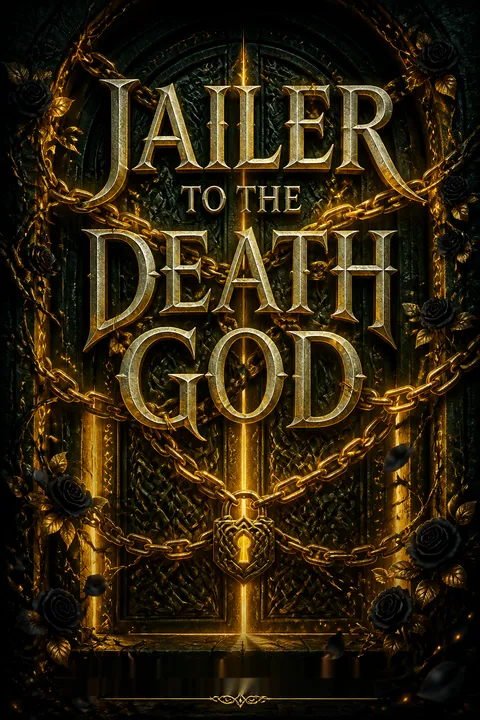
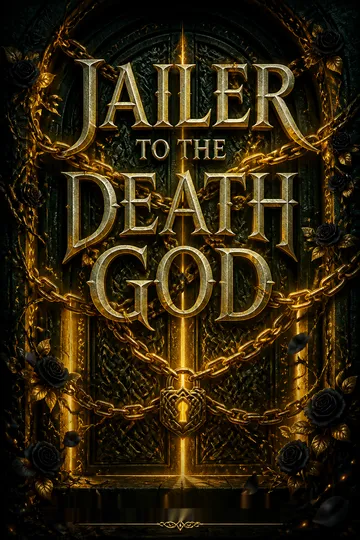
Jailer to the Death God receives mostly positive reviews, with readers praising its captivating storyline, well-developed characters, and emotional depth. Many appreciate the unique take on the enemies-to-lovers trope and the virgin hero concept. The book's dark themes, including plague and grief, are balanced with moments of humor and romance. Some readers critique the pacing and predictability of certain plot elements. Overall, the novel is commended for its world-building, spicy scenes, and the compelling relationship between Vale and Arawn.
People Also Read


Characters
Vale
Grieving survivor queenThe young queen of Cerato survived the plague that killed much of her family and court, leaving her with silver-white hair and a kingdom in crisis. Vale is compassionate but not passive: she signs emergency orders, makes brutal choices when time runs out, and repeatedly stands among frightened citizens rather than ruling from a distance. Her grief makes her vulnerable to exhaustion and self-punishment, yet her instinct is still to protect others. She has little taste for political performance and must learn to meet a Council that treats her youth as an opening. Her defining tension is between self-sacrifice and the conviction that her own life and desires also matter.
Arawn
Bound keeper of soulsArawn governs Annwn, the realm where human souls pass after death, and judges them according to their deeds. Ancient, powerful, and initially detached from mortal life, he considers sensation and emotional attachment distractions from his duties. Vale’s binding forces him into a body susceptible to cold, hunger, desire, and pain. His pride and threats conceal a strict sense of justice, though his standards can be severe and incomprehensible to ordinary people. As he works beside Vale, he encounters human grief not as a procession of souls but as an ongoing burden carried by the living. His growing curiosity makes him less certain that distance is the same as wisdom.
Rose
Vale’s steadfast confidanteRose is Vale’s close friend and an observant, practical woman who finds the ritual that might give Cerato a chance against the plague. Her own family is at risk, but she continues to support Vale and helps her face choices neither can make lightly. Rose knows when humor can briefly loosen despair and when direct action is needed. Her loyalty is not blind obedience; she understands the cost of the plan and remains beside Vale when it becomes unbearable.
Leilani
Vale’s dying childhood friendLeilani has been one of Vale’s closest friends since their youth. She cared for her partner, Thistle, through the plague and now lies in its final stage herself. Even in terrible pain, she remains lucid enough to make her own choice about the ritual. Her bond with Vale is affectionate and long-standing, shaped by shared gardens, celebrations, and the possibility of a romance neither pursued.
Aspen
Vale’s elder brotherAspen was Cerato’s crown prince and an older brother who combined affection with a serious sense of duty. He tried to confront the plague and save the kingdom, even as the crisis overwhelmed the resources available to him. Vale remembers him through ordinary intimacies: books, rides, games, and time spent together. His dagger becomes a personal link to the brother whose example still shapes her decisions.
Macha
War goddess and schemerMacha is a goddess of war, conflict, and appetite for upheaval. She treats divine power as a means to manufacture excitement and pursue personal grudges, and she is accustomed to regarding mortal suffering as negligible. Her charm is playful on the surface, but her pleasure in manipulation makes her dangerous. She is intelligent enough to build layered schemes, yet her hunger for revenge narrows her judgment and leaves her unable to distinguish justice from retaliation.
Lord Venniroth
Power-hungry council lordVenniroth is an influential member of Cerato’s Council who presents himself as an experienced alternative to a young queen. He uses procedural rules, public concern, and pressure over marriage to expand his authority. His polished manners make his threats easier to disguise, and his confidence rests on the assumption that Vale can be maneuvered into surrendering control. He represents a political danger that cannot be addressed by healing alone.
Vale’s Stepmother
Queen and careful scholarVale’s stepmother raised her for many years and offered both affection and a model of public composure. A princess from Yurstin, she studied Ceratan history and culture closely, while remaining cautious around the gods. She could be playful in private and firm when needed. Vale remembers her as a loving parent whose careful knowledge of divine customs hints at a past she never fully explained.
Vale’s Father
The late kingVale’s father ruled Cerato and built a loving, respectful marriage with her stepmother. He and Aspen tried to manage the plague before Vale inherited the crown. His presence persists through the rooms he shared with his family and the standards of care and duty Vale carries into her own rule.
Emitt
Hidden young healerEmitt is the young son of an innkeeping family and a gifted healer whose parents have kept his ability secret. He wants to help people, but understands that healing plague victims can drain a healer to death. His calm, practical compassion contrasts with the fear surrounding his talent. He acts when Vale’s life depends on it, despite the risk and the pressure his gift could bring.
Tilda
Quiet palace servantTilda is a reserved palace servant whom Vale trusts with sensitive tasks because she is unlikely to gossip. She notices the danger Arawn presents and worries about Vale’s safety without challenging her authority. Tilda keeps her own abilities private and remains loyal even when the palace’s demands grow perilous. Her watchfulness makes her a quiet source of protection.
Beirgid
Goddess of fertilityBeirgid governs fertility, love, and pleasure, and her temple in Allenaye draws devoted worshipers. She possesses a destructive power that contrasts with her public associations, and her choices can affect entire populations. Beirgid is social and amused by romance, but her willingness to entertain divine schemes makes her influence morally uncertain.
Aine
Goddess of love and youthAine is a goddess associated with youth, beauty, and love. She belongs to Arawn’s divine circle and enjoys human romance, though her concern for mortal suffering appears limited. Her presence helps show that the gods are not a unified moral authority.
Otin Venniroth
Venniroth’s estranged sonOtin is Lord Venniroth’s son and a former acquaintance of Vale, Rose, and Leilani from their school days. His distance from his father’s circle and his knowledge of family matters make him an important contrast to Venniroth’s public image.
Thistle
Leilani’s beloved partnerThistle is Leilani’s partner, whom she cared for during the plague. Their relationship gives Leilani’s final choices a personal context and remains part of Vale’s grief for the life her friends shared.
Farley
The queen’s trusted driverFarley drives Vale’s carriage after the plague has reduced the palace staff. He follows her orders through dangerous journeys and helps maintain the practical routines that keep the queen and her party moving.
Hessie
An eager kitchen maidHessie is a nervous but good-hearted palace maid who brings food to Vale and Arawn. Her curiosity and enthusiasm make her a source of small, human warmth amid the crisis.
The Chief Manager
Keeper of palace affairsThe Chief Manager coordinates palace staff and resources as sickness empties the household. Though overwhelmed, he supports Vale’s efforts to keep royal duties functioning and makes the best of shortages when ceremonies and public events must be organized.
Lady Elanann
Cautious council allyLady Elanann is a Council member who recognizes Venniroth’s threat and quietly supports Vale. She is cautious about political risks but willing to pass information through unofficial channels when the queen’s safety and authority are at stake.
Lord Redglaive
A practical council allyLord Redglaive is one of the Council members Vale trusts to manage the city in her absence. He is skilled with words and helps communicate difficult news to Cerato’s people without inflaming panic.
Master Coors
A steady civic allyMaster Coors is a Council member whom Vale appoints to help manage the city. He works with the guards to answer public fears and keep unrest from escalating.
Plot Devices
The Summoning Ritual
Binds god to queenAn ancient rite summons Arawn at one of the entrances to Annwn. It requires correctly arranged candles and incense, a pit, and nine living people who willingly give their lives. Vale and Rose complete the rite under impossible pressure, after one of their chosen victims has already died. The ritual gives Vale a year of access to Arawn’s power, but its terms are shaped by Macha’s hidden addition. It is the story’s initiating mechanism and the source of both the plague response and the danger surrounding their relationship.
Macha’s Added Spell
Makes love dangerousMacha alters the summoning rite so Arawn becomes partly incarnate and his life is tied to Vale’s. The spell also makes his love for anyone during the contract a threat to his rule over Annwn. These conditions turn romantic attachment into a supernatural and political risk, while allowing Macha to endanger Arawn through Vale. The spell gives the central relationship a real cost beyond disapproval or separation.
Arawn’s Marks
Delays death and grants protectionArawn marks plague victims he judges worthy of more life, ensuring the sickness will not kill them even though they must endure its symptoms. Separate tethermarks protect people from death for a set period, including healers whose work would otherwise exhaust them. The marks do not make suffering vanish, and Arawn’s selective judgments create resentment as well as hope. Their different functions let the story distinguish survival from healing and divine favor from ordinary treatment.
The Godsblood Dagger
Makes a goddess vulnerableA dagger containing Macha’s blood can harm or kill a god. Vale’s stepmother used it to wound Macha in the past, then hid it inside a bedpost. Arawn senses the weapon, explains its power, and gives Vale the chance to carry it. Its history links the hidden past of Vale’s family to the present conflict, while its concealment lets Vale act at the decisive moment when Arawn cannot protect her.
Worship and Life-Light
Turns gratitude into powerArawn’s powers include shadow magic, which can overwhelm beings of Annwn, and life-light, the opposing force that harms his deathly hounds and encourages plant growth. Human worship can strengthen him, especially after Cerato sees the results of his work. The same divine system that first makes him seem confined to death eventually lets him help restore food production and regain strength against Macha. His power grows through service and public trust rather than domination alone.
Dark Rulers Series
Download PDF
Download EPUB
.epub digital book format is ideal for reading ebooks on phones, tablets, and e-readers.








